Greetech OG Brown Switch Review
Despite having only shared a small number of plans for my Thanksgiving week off at the top of the last full length switch review, I’m sad to say that I didn’t get nearly as much done in that time off as I had hoped for. Like not even close to what I had intended to do. It’s not because I didn’t end up getting the brakes swapped out on my car nor skipping Ohio State very squarely putting Michigan in their place for the first time in several years, but all because I just had too many switches to go through. That’s right, there’s such a thing as too many switches even for me! After having added nearly 200 switches to the collection formally, and measuring force curves for a solid 80 or so of them along the way, I looked up from my work and found myself at the tail end of Sunday afternoon with piles more of switches to go through and no lunch week meals made quite yet. And while it certainly didn’t feel great to go back to work this past week with a pile of “still need to add these” switches on my desk at home, the time and effort that was spent was certainly worthwhile for the stuff that I did manage to get. I honestly can’t wait to share them all with you with switches like Co-Gain’s Magnetic Paragraph Axis that have tactility despite no apparent mechanism for such, Chinese Nintendo FC-inspired switches with first of their kind Chinese nameplates, Keylist Muffins, Zorro Purples with blood-red colored LEDs, Outemu Pi series switches with gold embossed top housings, and so many making for awesome displays. Even the Greetech OG Browns which have brought us all here today were parts of those dozens of packages I had to sort through. Despite wanting to share every detail I possibly can about all of those switches above with you, it’s very likely that I’m not going to have time to fully write out review or even short articles for each and every one of those incredible switches. As I’ve proven very well in recent weeks, sometimes I don’t even have time to look at all of my switches, much less give them that degree of thorough treatment. But there are still other ways that I share switches – I post aesthetically neat switches to Instagram and X a couple of times a week, I upload force curves for almost everything I bring in every few weeks on Github, and I even maintain a couple of free photograph and measurement repositories under the ‘Archive’ tab at the top end of this website. It’s been a minute since I’ve shouted out these other resources, so if you’re wanting to see me get to share even more switches than what I cover here every other week, consider combing through those thousands of photos, force curves, and measurements too sometime this next week. Not only does it make me glad to know that these resources are getting used, but you may even find your next new favorite switch in there as well…
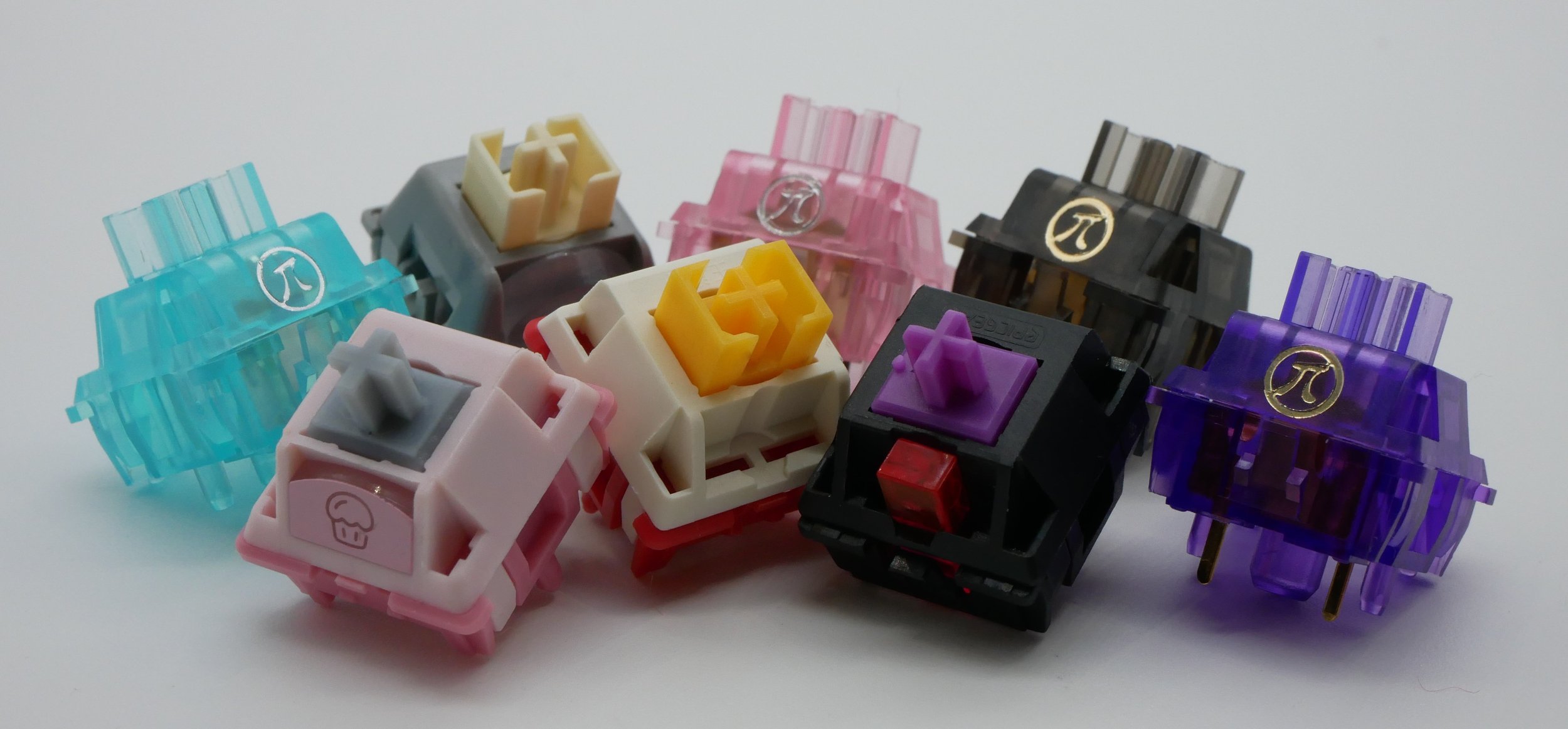
Figure 1: These definitely look like they could be one of your new favorite switches.
Switch Background
Every now and then one of the questions I get asked from readers of this website is if I had any reviews I personally disliked or even regretted writing. (Or at least these are the much more interesting questions I remember trying to answer instead of “What’s your favorite switch, Goat?”) As surprising as it feels for me to admit, the answer to both questions regarding disliked and regretted reviews is actually ‘yes’. Some reviews just never feel like they come out right no matter how many times I try and rewrite them, and there have also been a select rare few over the years that I just don’t think in hindsight were the correct switch to review. One of those reviews that stands out the most to me to this very day is actually that of my Cherry MX Brown Switch Review. Probably shockingly so, I imagine. I’m sure many of you reading this are probably wondering how I could ever regret reviewing one of the most recognizable and classic mechanical keyboard switches of all time, though I can assure you it’s almost certainly not for any reason you’d probably imagine. It’s not because I dislike Cherry as a company, nor is it because I think that they’re bad switches, rather it’s because I truly feel like I had no way of ensuring that specific set of Cherry MX Browns I reviewed were actually representative of what a “Cherry MX Brown” switch is. Having been produced for almost 40 years at this point with several different design iterations, countless numbers of mold adjustments, a new switch design platform with MX2A, and now even a production facility shift as Cherry moves from Auerbach to China, is there really any singular set of switches that could capture the subtle differences of all of those iterations in time? Is it even possible to pin down what an average of those various incarnations might be? Or put another for those of you who are linear fans out there, if I was going to one day write a review on Cherry MX Blacks, which ones should I choose: Cherry MX Blacks, Cherry MX2A Blacks, Cherry MX RGB Blacks, “old” Cherry MX Blacks, Vintage MX Blacks, NOS Cherry Blacks, or something entirely different altogether?

Figure 2: They've got Cherry MX Black, Cherry MX RGB Blacks, Cherry MX Vintage Black, NOS Cherry MX Blacks...
One of the things that makes it so hard to truly gauge the performance of any “legacy” switch a la the Cherry MX Browns or Cherry MX Blacks at a singular point in time is the fact that they’ve been produced for so long that they have clearly and obviously subtly morphed over that stretch of time. It’s one of those weird situations where you can’t tell the difference between two minor changes on a day to day basis but if you look at the changes over the span of years or even decades its blatantly obvious. Trying to accurately summarize the performance for all of those subtle shades of switches from over the years into just one review at one point in time feels… wrong. Vintage switches also suffer from a similar issue as well, but more so in the way that they slowly break down and wear as they have aged with time. Alps brand switches are especially notable for this issue as most Alps switches available today have come from keyboards that have been harvested from a whole range of conditions spanning from fresh out of boxes sealed away in a closet for decades to seemingly pulled straight from the frozen, dusty, and surprisingly rust-filled depths of hell itself. With it borderline being impossible to find truly NOS, still sealed in the plastic Alps switches to review in 2025, is it even possible to accurately assess how they would perform in their truest of stock forms? It may not even be fair to do that since so few people will ever try truly stock Alps switches as such. Turning it back to the manufacturing side of things, one feature of their designs that modern Cherry-made and also vintage Alps-made switches share that is truly the root cause of their subtle shifts in production over time that I can’t well assess is the concept of a “retooling”. Retooling is the process of manufacturers making tweaks or adjustments to existing sets of molds in order to improve them, update them, or at extreme minimum touch them up for continual usage. Ranging anywhere from chemical cleaning and polishing of molds all the way out to recarving designs with lasers or advanced CNC machines to shave away wear and tear marks, retooling is just a known feature of manufacturing switches. Though you know what isn’t a baked in feature of the retooling process? Transparency with your customers as to when and how those retooling efforts are taking place. Yes, despite being well aware of the fact that Alps, Cherry, and every other manufacturer throughout history has carried out tweaks to their molds multiple times over the years to keep their switches being produced, there’s really no way we can ever tell when these retools are being done – despite what anyone who claims to know a thing or two about vintage switches online will tell you. So unless a company goes out of their way to make a dedicated, marketed retooling of a switch that they’ve not had available for many, many years… kind of like Greetech Brown switches in full nylon housings… it’s impossible to really know which version of a switch you’re truly getting. This may be one of the only times I’ll ever get an OEM-style switch at the intersection of rarely produced and recently, cleanly updated to be able to do a review with as much confidence as this one.

Figure 3: Greetech OG Brown marketing render from initial ZFrontier post.
Focusing a bit more in on the manufacturer that has made this all possible, Greetech is quite the exceptional manufacturer of mechanical keyboard switches – not because they produce an insane volume of switches or are aesthetically unique in their capabilities, but rather because they are uncharacteristically slow in producing switches. Despite having been around since the earliest days of manufacturing following the lapse of Cherry’s patent, I can only count a dozen or so Greetech switches that have ever been made, with the vast majority being their OEM-style full black and clear over white housing designs from 2015-2016. Their one and really only substantial foray into the custom end of the switch market didn’t come a few years after those earliest days when everyone else jumped on board alongside Durock/JWK, nor at peak market in COVID either, but rather just last year in the middle of 2024 and alongside the shutting down of the vendor that ran them in 415Keys. While I did try and detail what little public history exists of Greetech in that Greetech Sunset Switch Review and would highly encourage you all to go read it, for those of you who want to stick to just one article per cup of Sunday morning coffee, you can temporarily picture that history as one very empty, cobweb filled closet. Save for the Greetech sunsets and some very, very old Razer collaborations, Greetech has firmly found its spot reliably on the sidelines of the broader community with an exceptionally present and exceptionally small number of offerings. Even if you go ahead and assume that all of the Unionwell brand of switches were produced by Greetech over the years, something that western switch collectors only recently put together with the release of the Unionwell Magnetic Polar Pro+ switches, folding those switches into the fray hardly increase Greetech’s footprint at all. Though perhaps this may just be the Greetech of the past. In addition to the Polar Pro+ switches which debuted this year under the Unionwell branding, Greetech made the announcement of June 2025 that they would be returning to production of their classic, full black nylon OEM style switches in a truly retooled and revitalized fashion – dubbing these returns to the spotlight the Greetech “OG” switches, coming in both classic flavors of tactile Brown and linear Black. And you know what they did after that? They even hinted that there may be another switch coming out following the Greetech OG switches too. Yes, despite only effectively three new switches having been produced by Greetech in the last year and a half since we last revisited them, things are really looking like their starting to heat up on their end…

Figure 4: Unionwell brand marketing teasing at new switches from a Greetech ZFrontier post one month after the debut of Greetech OG Browns.
First announced on June 27th, 2025, by way of a ZFrontier post, the Greetech OG Brown switches are among Greetech’s latest in a very not so long line of switches. With the entirety of the debut post consisting of very little explicit information other than Greetech suggesting that they were taking the old, original molds used to produce their full black housing switches and updating them to be “more modern”, it wasn’t until July and August that more information by way of other announcement would come. July saw not one but two updates by ZFrontier come showing off their Unionwell Pro and Pro+ magnetic switches and hinting at a future black and white version to come eventually, with August 1st debuting the actual ‘groupbuy’ for the OG switches. Only selling the Greetech OG Browns and OG Black switches despite the marketing at the top of this ZFrontier post containing renders of Red and Blue ‘OG’ switches as well, this post contained TaoBao links pointing to places to purchase 3- or 5-pin variants of both OG Brown and OG Black switches in a whole range of quantities from 30 up to 110 switches at a time at a price of 1 Chinese Yuan or $0.14 USD per switch with no price breaks for larger quantities. Despite being labeled as a groupbuy, no definitive statements were ever made regarding a time frame during which they were available nor the degree to which they would continue to be stocked or manufactured by Greetech as a whole. Much like with how Greetech has historically operated, even with a relatively large amount of marketing and documentation behind the release of their switches, there’s really very little information that exists about them at all.

Figure 5: Greetech OG switch render from ZFrontier groupbuy post showing black, brown, and currently unreleased red and blue colorways.
OG Brown Performance
Appearance
At the highest level, the Greetech OG Brown switches come in a classic, presumably full nylon black housing scheme that is not only spot on with the source material switches that inspired them but arguably makes these some of the only switches deserving of the name ‘OG’. (Sorry TTC, your LNY serialized switches are great and all but nothing screams ‘OG’ keyboard switch like a full black housing and a brown colored stem.) As a result of directly copying classic Greetech switches nearly to the letter, as well as invoking a classic design that virtually every switch manufacturer has copied at some point in their history, from a distance the OG versions of the Greetech Browns are effectively indistinguishable from dozens of different historical switch offerings. Up close, though, it does seem much more evident that these are cleanly manufactured, freshly updated Greetech switches as a result of the sharpness of many features of the housings including their nameplates and through switch LED slot. In fact inspecting the Greetech OG Brown switches up close there are quite a few details at the part and sub-part levels that appear new and indicative of their more recent manufacturing origin. Or, it’s entirely possible that these have always been features of OEM-style Greetech switches and I’ve never gotten a chance to crack one open for a deep dive inspection as such before. Either way, discussion of these details of note both at the part and sub-part level may be found in the paragraphs and photos below.
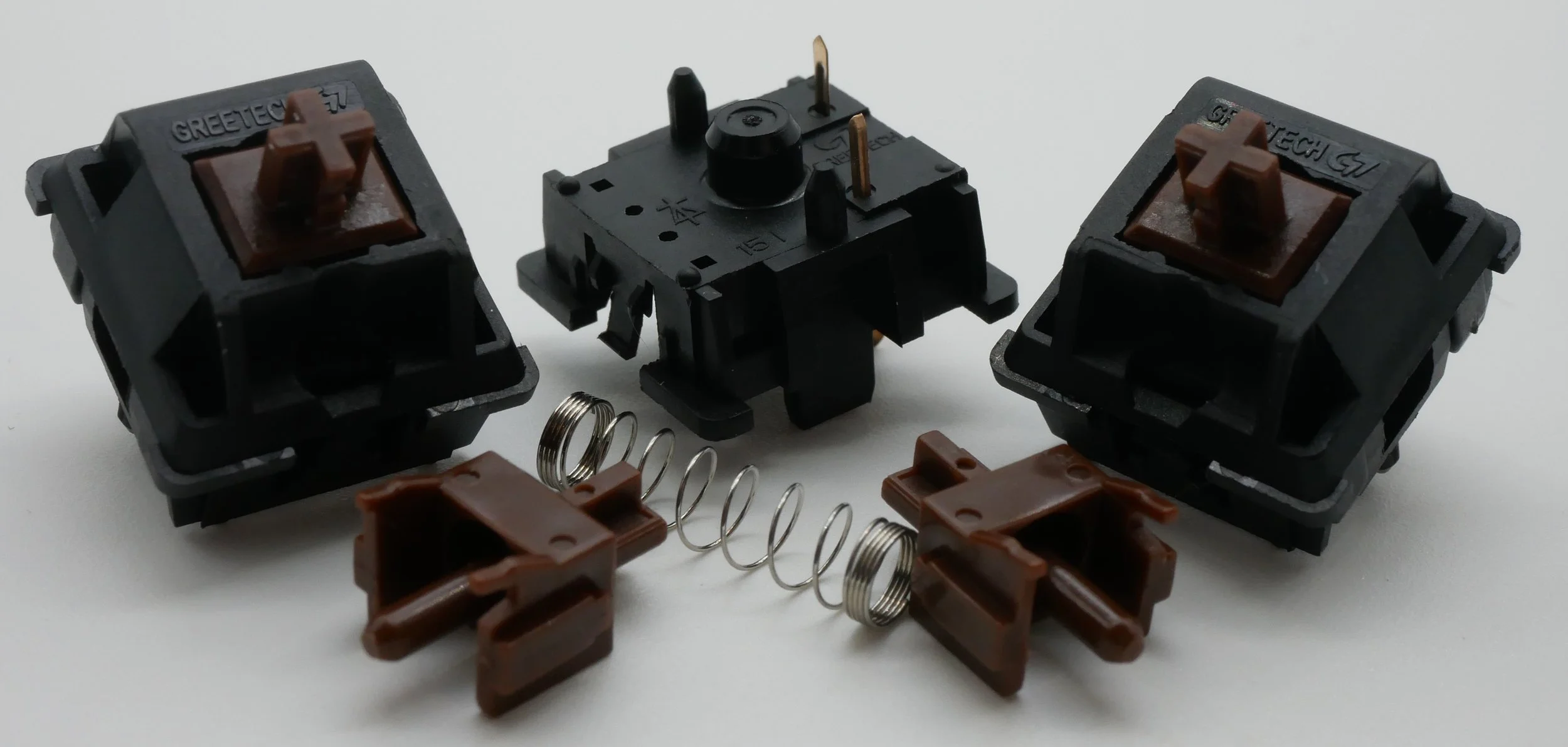
Figure 6: Greetech OG Brown switches and their components.
Looking first to the full matte black, assumedly nylon top housings of the Greetech OG Brown switches, one of the first details that jumps out to the eye is that of their crisp ‘Greetech GT’ nameplates. Without any contextual comparison to other historical Greetech switches, this nameplate looks rather sharp in its details and would almost certainly lead someone to believe these had to be the new ‘OG Browns’ as a result of how clean these details are. However, upon comparison to other OEM-style Greetech switches, the nameplates of the OG Browns hardly are any more or less sharp than their ancestors. Instead of a difference in sharpness, the most notable difference between these and older Greetech switches which helps properly identify them is that the OG Brown’s nameplate is sunken into the rectangular nameplate slot and only minorly textured instead of fully raised like older switches. Externally, though, the OG Browns otherwise look just like older Greetech switches with a rather restricted through-switch LED slot and four-pin housing attachment style. Internally the top housings are almost entirely barren of any interesting details or performance features that might make them perform any differently than original mechanical keyboard switches. The only detail of note herein is the presence of the mold markings for the OG Brown switches in the upper right- and left-hand corners on the underside of the curvature of the nameplate for the switch. While a large number of manufacturers will include their top housing mold markings in the lips and edges near the backside of the nameplate, this is the first one I’ve ever seen to actually put the mold marking on the backside of the nameplate itself.
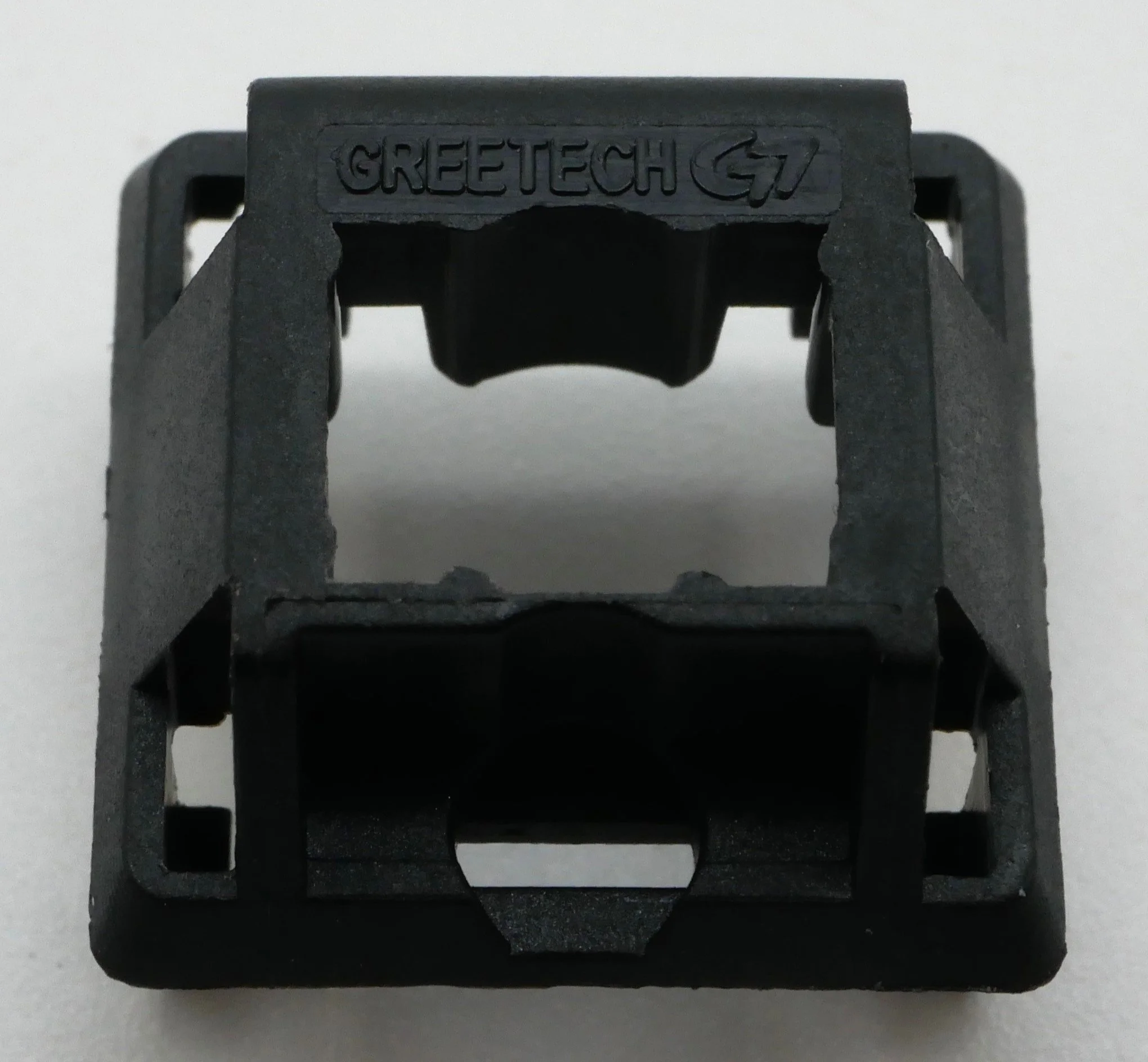
Figure 7: Greetech OG Brown top housing externals showing slightly raised 'Greetech' nameplate and severely restricted through-switch LED slot.
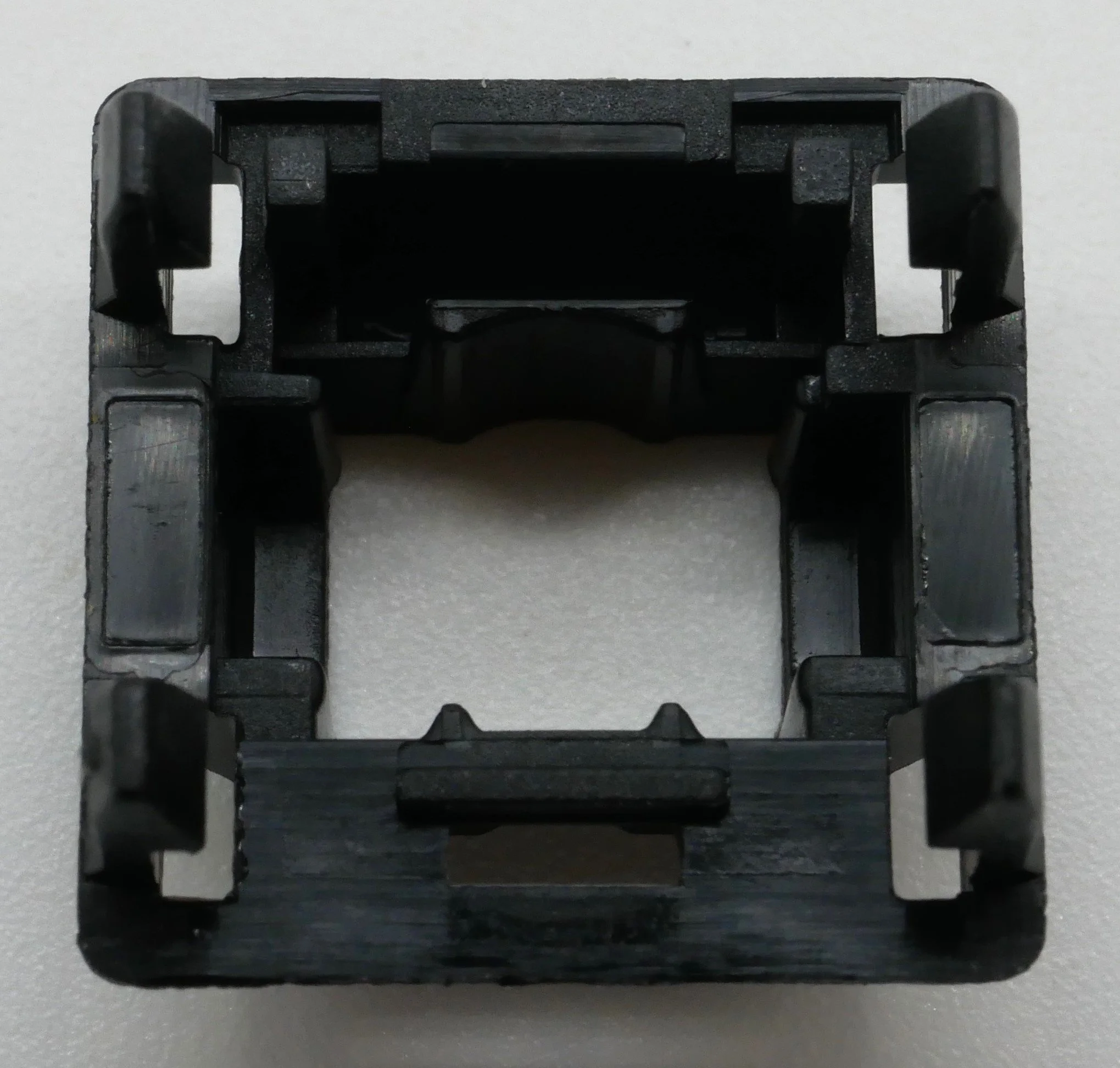
Figure 8: Greetech OG Brown top housing interior showing distinct lack of factory lubing and functionally relevant features.
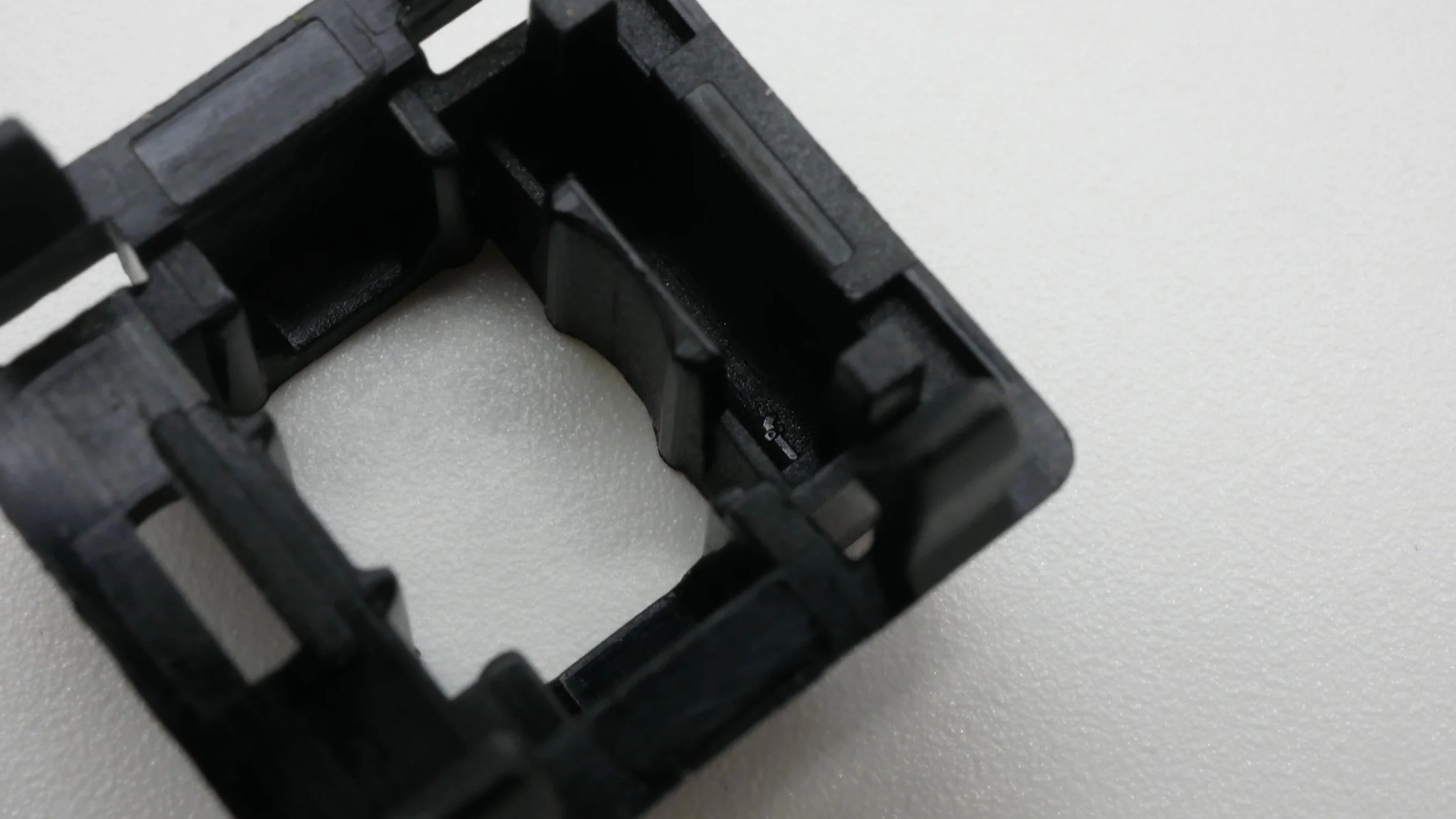
Figure 9: Alternative view of Greetech OG Brown top housings showing mold markings located on the backside of the nameplate region.
Arriving next to the brown POM stems of the Greetech OG Brown switches, there’s not a single feature of these stems that doesn’t absolutely perfectly match the classic mechanical keyboard switch stem design. Everything is here from the non-tapered slider rails to the normal length, slightly rounded center pole, and even the small mold ejector circles on the front plates of the perfectly squared off front and back plates. I even feel like there’s the faintest traces of factory lube on the sides of the stems that make them feel as if they rolled freshly out of a time machine from ~2016 onto my desk right in front of me for this review. Sure, these probably measure up a bit more consistently than those switches that would have been produced all of those years ago, and they likely have better than average factory lubing for that era, but these just look exactly like what comes to my mind when I think of as tactile brown switch stems. (Editor’s Note: Just wait for a few more paragraphs after this one.) I’m not sure they could have done anything else to them without having ruined this classic vibe.
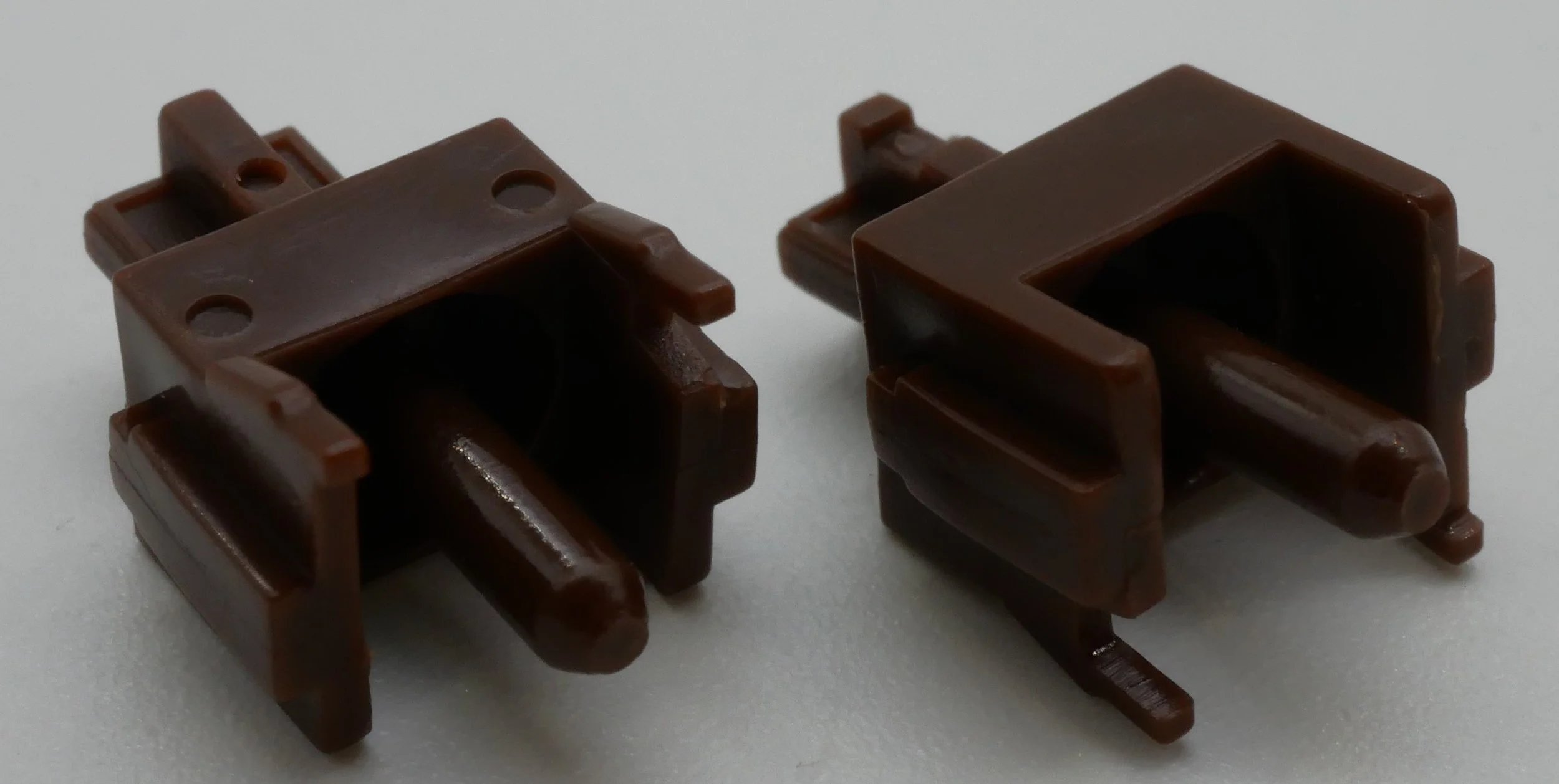
Figure 10: Greetech OG Brown stems front and back showing non-tapered slider rails, normal length stem pole, and mold ejector circles on the front plates of the stems.
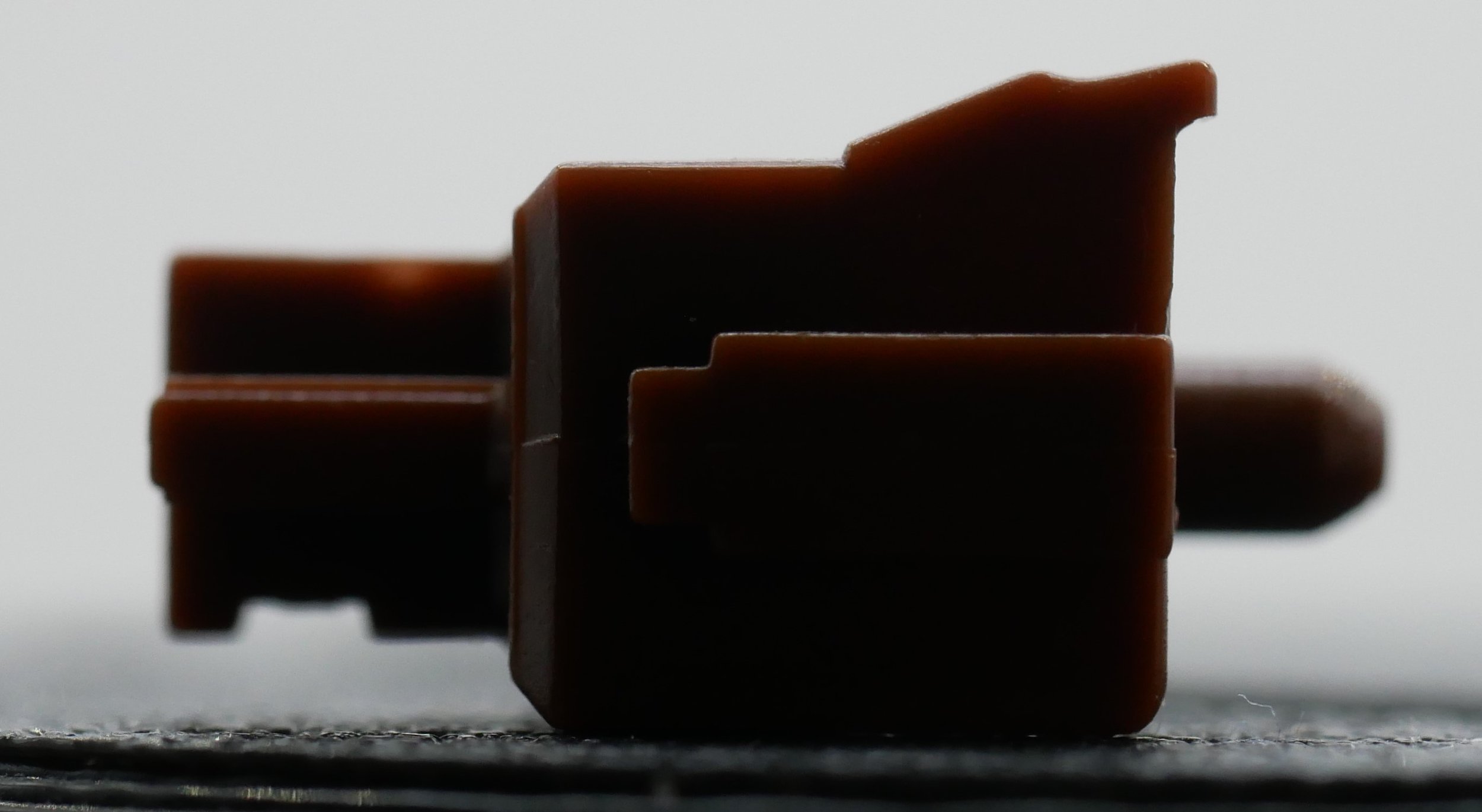
Figure 11: Greetech OG Brown stem side profile emphasizing subtle stem leg curvature for a light tactile bump.
Finally arriving to the similarly full matte black, likely nylon bottom housings of the Greetech OG Brown switches, much like the top housings these too feature a similar overall shape and structure as classic OEM switches, though with small hints as to their modernity in the details. Internally, the housings are actually incredibly void of details, having no south side spring collar, no dampening pads of the base of the slider rails, no texturing on the slider rails whatsoever, and not even any mold features in the base of the housing. In keeping with historical convention as closely as possible, it doesn’t even seem that Greetech OG Browns were hardly lubed at all as not an ounce of factory lubing can be seen in the bottom housings at all – even on the stem leg/leaf interfaces where manufacturers traditionally glob on the lube. Externally these specific Greetech OG Brown switches come in 5-pin/PCB mount variety, though it should be noted that 3-pin variants were available for purchase as well. While the sideways ‘Greetech GT’ embossment between the metal PCB pins may initially strike many of you as being a surprisingly modern feature, this is actually not the detail that stands out as new, as Greetech switches going as far back as the ~2015 Greetech Razer switches featured this detail. Much like the top housings, its actually the subtlety of this embossment as well as the number-letter mold marking in the lower right-hand side of the housing that makes these less like conventional Greetech switches which were more aggressive and stand out in the text height of these features to my eye.
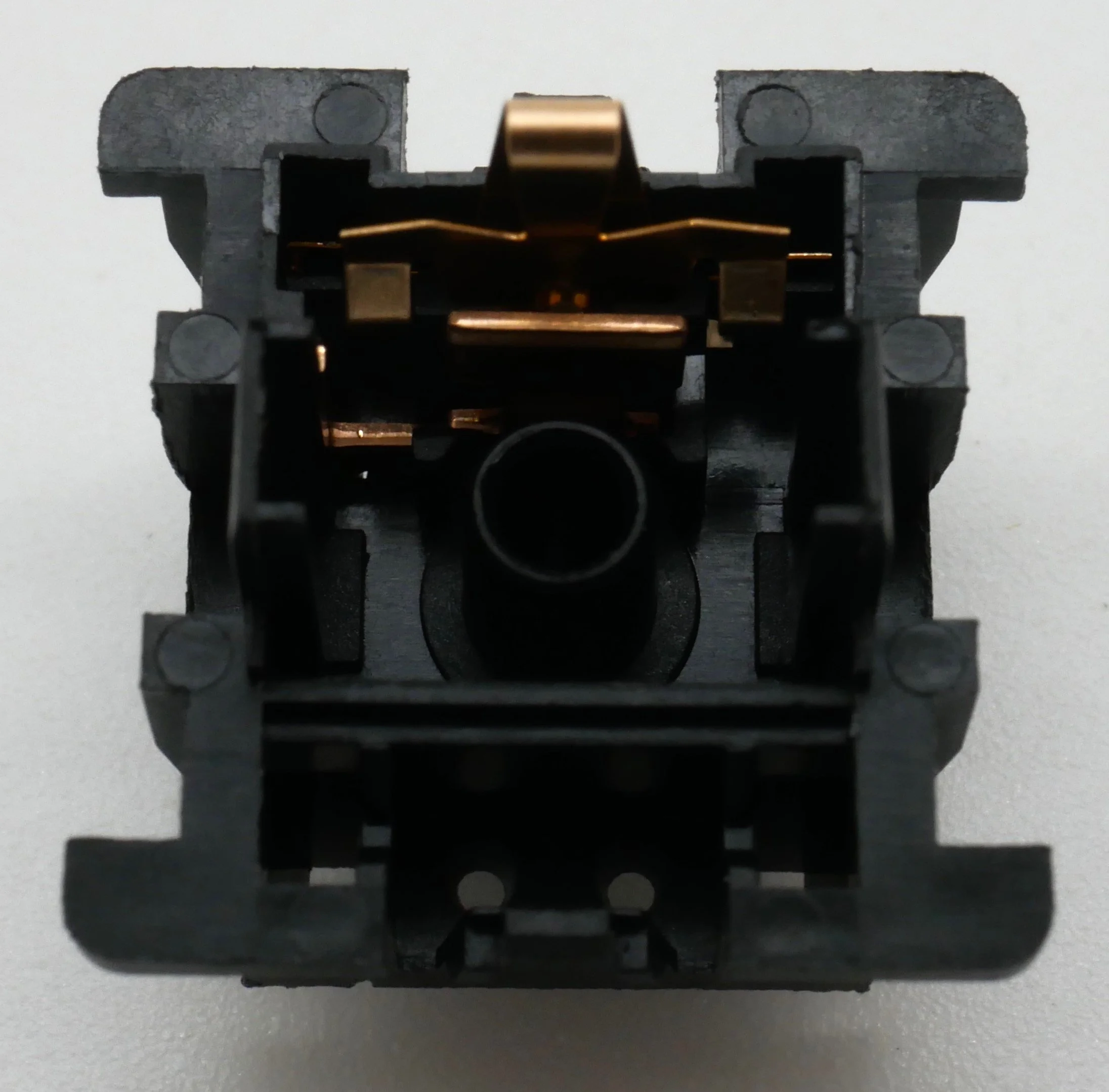
Figure 12: Greetech OG Brown bottom housing interior showing no dampening pads, no south side spring collar, and not a trace of factory lubing anywhere.
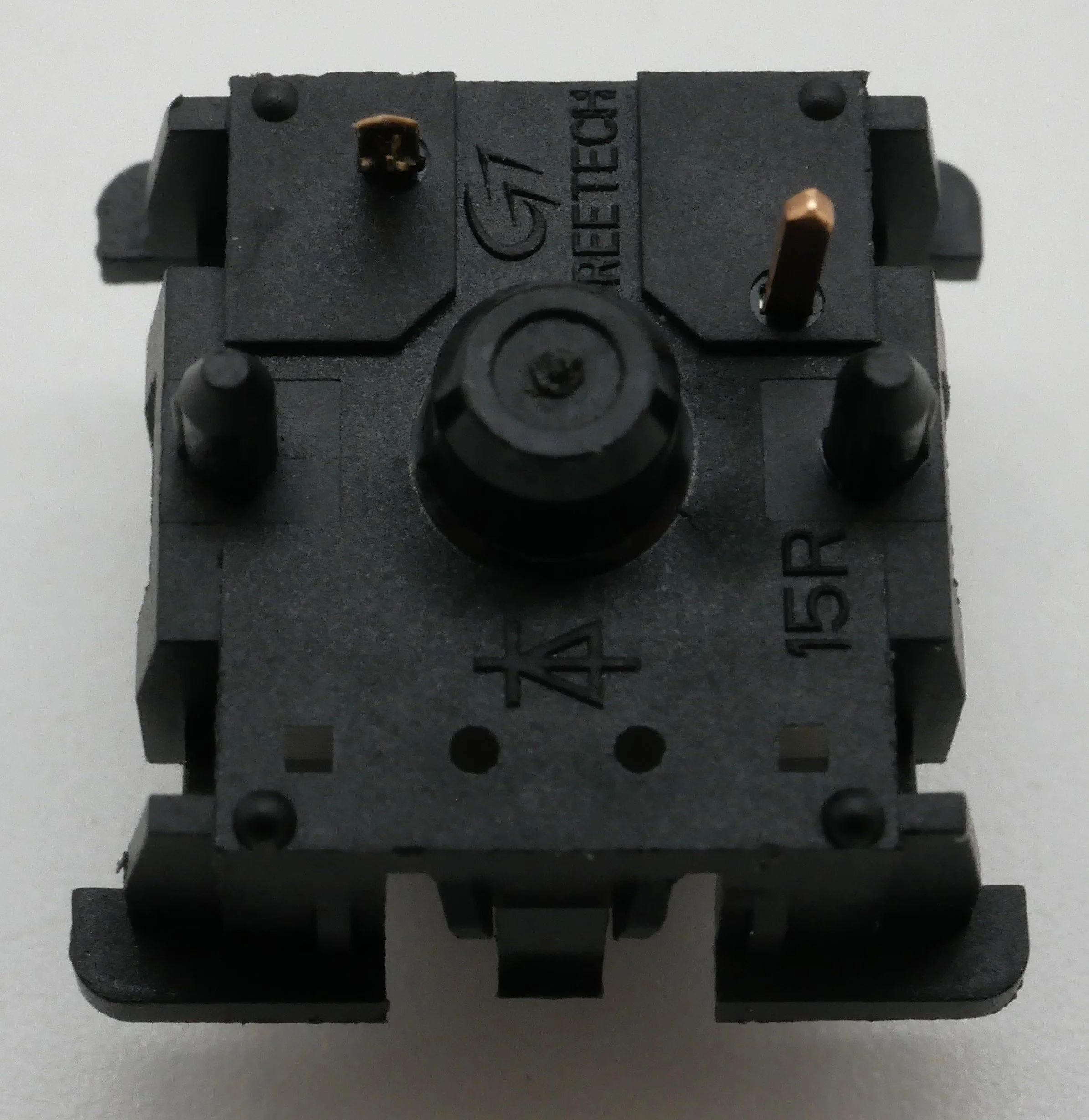
Figure 13: Greetech OG Brown 5-Pin bottom housing exterior showing PCB mounting pins, 'Greetech' anticounterfeit marking between metal PCB pins, and lower right-hand side numerical mold marking.
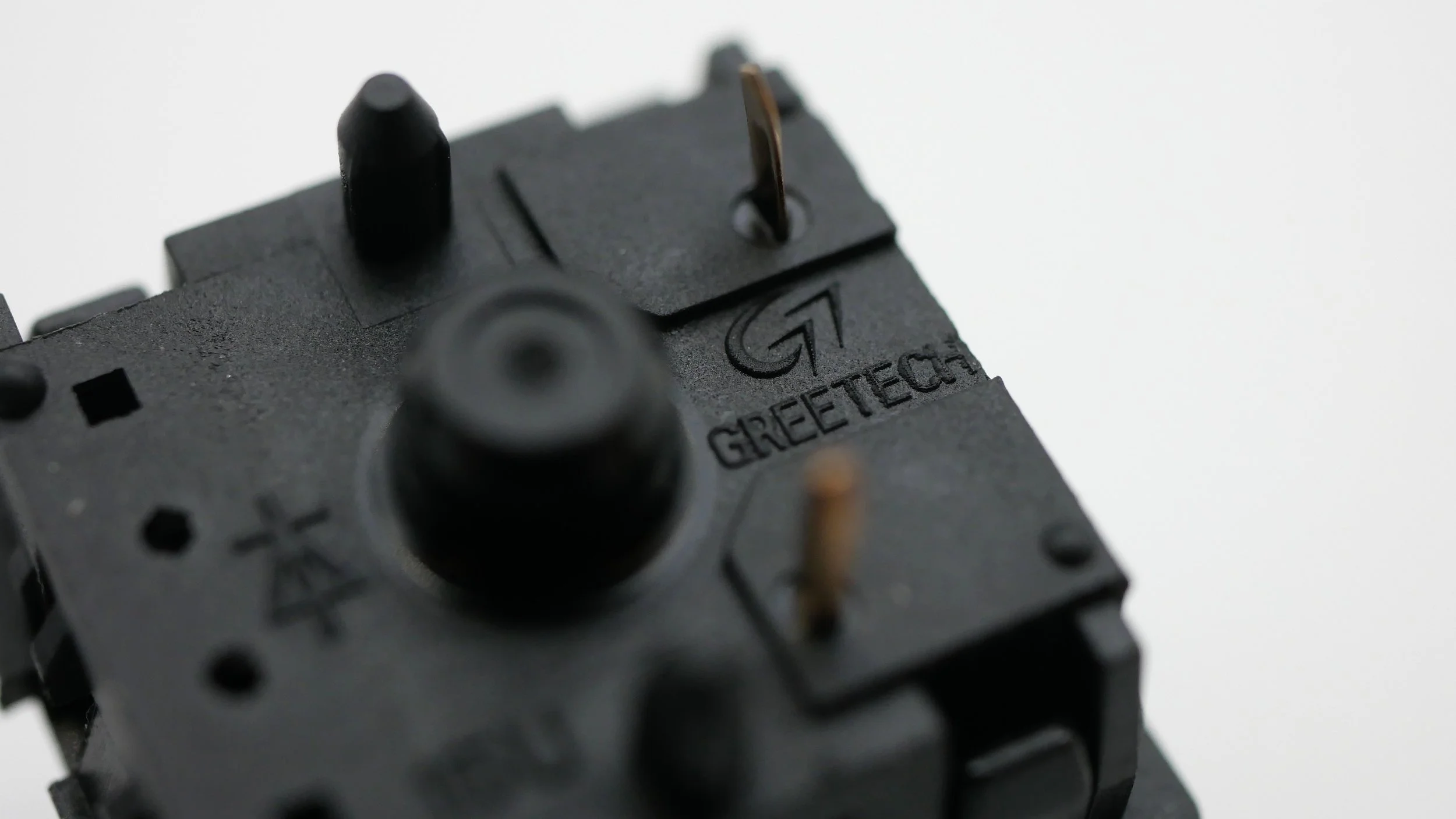
Figure 14: Alternative view of Greetech OG Brown bottom housing exterior emphasizing texture on the 'anticoutnerfeit marking' logo.
Push Feel
For all of the best and worst reasons, the Greetech OG Brown switches are the quintessential light tactile switches in their most classic form. These OG-inspired switches feature a light, small, and rounded tactile bump that is not just situated in the middle of a comparatively long, yet still conventional 4.00-mm stem travel distance, but also between slightly firm, solid housing collisions. The peak of the tactile bump, itself, is just the tiniest bit snappy, though with just enough force to let you know that it’s there and absolutely no more. It’s just enough feedback that you could easily use them comfortably for writing an entire switch review like this one and feel really no strain at all. And yet like all of the questionably good brown stemmed, full black housing tactiles that inspired the design of these, the Greetech OG Browns have a whole host of flaws. What little factory lubing I thought I saw during my inspection of their parts above may well have been leftover processing residue from manufacturing, some sort of localized weather event that led to internal condensation, or a straight up hallucination as these switches do not feel as if they have even an ounce of lubrication. None. That isn’t to say they have a scratch that is sharp enough or grating enough that you could sand down a portion of your desk with their strokes, though it is scratchy enough to be more than just a little bit of character in the stroke. The Greetech OG Browns are scratchy all the way through their stroke – out of the gate, through their tactile bump, rounding the corner at bottom out, and the entire way back through their upstrokes as well. I can’t even think of the last time a tactile switch’s upstroke was so scratchy that it stood out to me more so than the bump itself. Much to my surprise, the sum of these push feeling notes is exactly what light tactile switches felt like back in the day when I first started ~2017. Despite being clearly at odds with Greetech’s marketing of these being inspired by and improve upon their original switch design, by all standards and metrics they seemingly have directly reproduced tactile switches from 2015-2016.
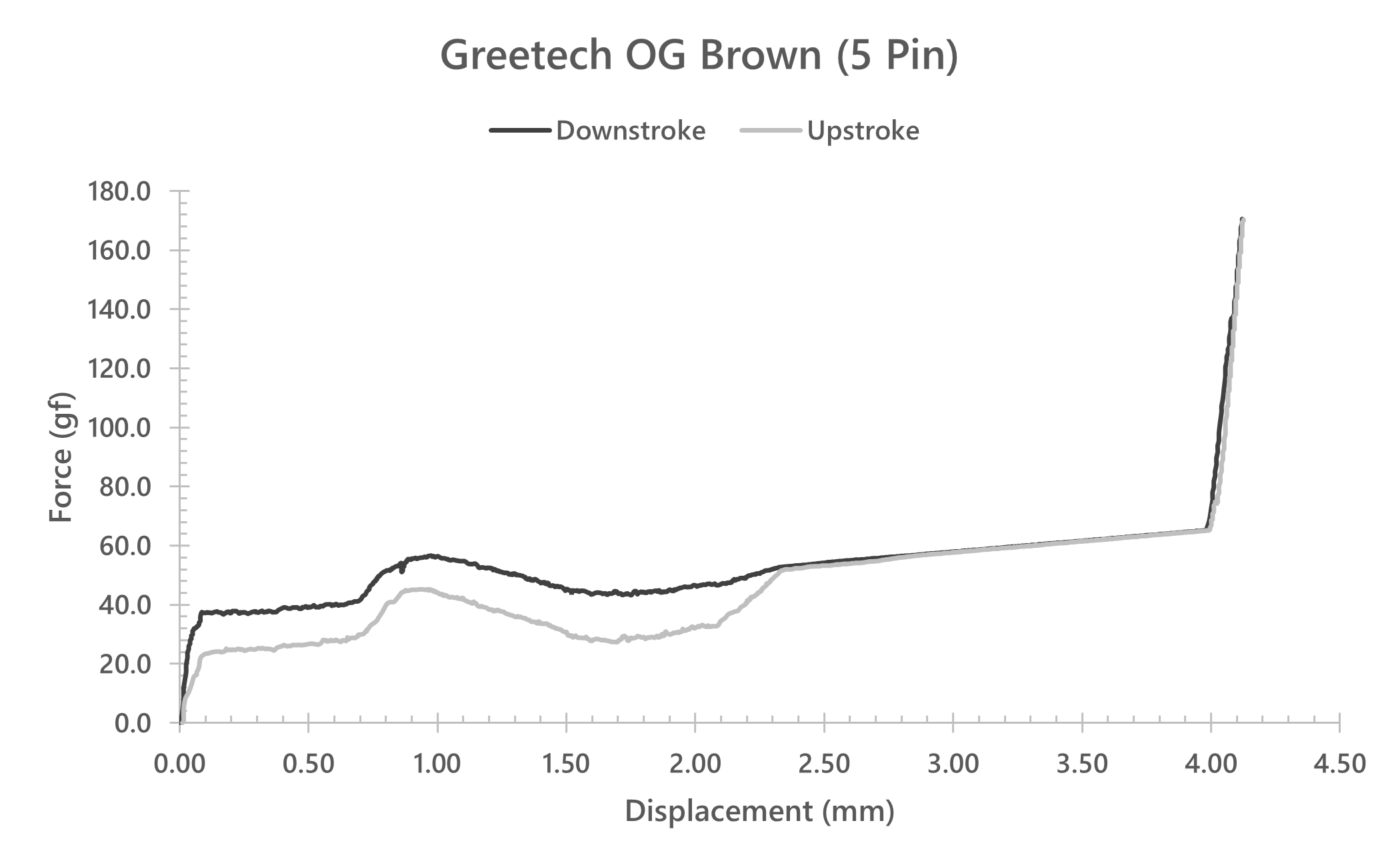
Figure 15: Force curve diagram for the stock Greetech OG Brown switch.
Sound
I really have no way to sugar coat this one here, or even long-windedly wind my way up into it – the sound of the Greetech OG Brown switches is just simply not great. Maybe they’re even worse than just ‘not great’, though it feels a bit harsh to just summarize it all as “sucks”. The fine grain scratch noted above is both ever present throughout the strokes of these switches and also effervescent in an alliteratively accurate sense as well; The scratch is quite contrastingly bright and warm, giving the slightly snappy tactile bump and firm, solid housing collisions a bit of a twang that just otherwise wouldn’t be present in them. The topping and bottom outs of the Greetech OG Browns, despite being deeper as a result of the presumably nylon housing materials, are a bit louder and higher pitched than similar sounding OEM-style switches. This isn’t all that surprising, though, as historically clones or near approximations of the classic Cherry MX Brown switches such as Greetech’s tactiles always struggled to reach the same degree of depth and complexity with their housing materials. With these housing collision sounds being a bit more forward and less muted than MX Browns, though, it also means that its much more apparent that they mismatch in depth and pitch, especially at faster typing speeds. Did I also mention that these switches have some occasional spring ping too? It’s just everything you never wanted to hear in a classic tactile switch in a way that is just shy of aggressively annoying. If you weren’t ever one of those “silly people” that were convinced that lubing your switches by hand can actually improve them in any substantial, meaningful way, the Greetech OG Browns are among the best modern, non-trashed, non-dust-filled switches that I can think of that will prove to you beyond a shadow of a doubt that lubing your switches can make a difference. And I mean a massive difference. Even rudimentary hand lubing skills could make the Greetech OG Browns sound likely entirely different switches than what their stock forms sound like.
Wobble
When Greetech went out of their way to revive their classic, OEM style switches in a ‘new and improved form’, they clearly did so sparing no expense at reviving the classic stem wobble of old mechanical keyboard switches. The Greetech OG Browns have a substantial amount of N/S and E/W direction stem wobble that is not only questionably consistent across the batch that I received, but so large that some stems are almost able to be circularly rotated around in their housings – something which I’ve not been able to do, much less talk about in a switch for many, many years. While this clearly far from acceptable by truly modern switch production standards, I can say with confidence that this is, in fact, what it used to be like back in the day.
Measurements
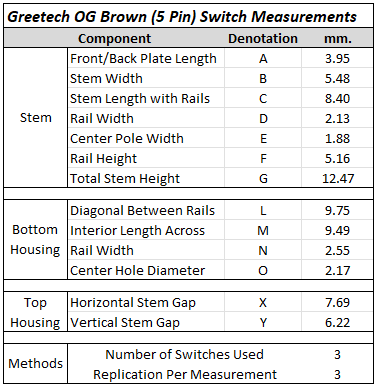
If you’re into this level of detail about your switches, you should know that I have a switch measurement sheet that logs all of this data, as well as many other cool features which can be found under the ‘Archive’ tab at the top of this page or by clicking on the card above. Known as the ‘Measurement Sheet’, this sheet typically gets updated weekly and aims to take physical measurements of various switch components to compare mold designs on a brand-by-brand basis as well as provide a rough frankenswitching estimation sheet for combining various stems and top housings.
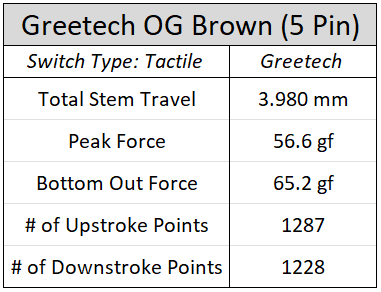
Figure 17: Numerical details regarding the force curve for the stock Greetech OG Brown switches.
Have you ever wanted to be bombarded with more switch data than you’ve ever seen at any point in your life before? Consider checking out the ‘Force Curve Repository’ hosted on my GitHub that contains all force curves that I take both within and outside of these full-length reviews. In addition to having these graphs above, I have various other versions of the graphs, raw data, and my processed data all available for over 1500 different switches for you to use however you see fit. Check it out via the ‘Archive’ tab at the top of this page or by clicking any of the force curve cards above.
Break In
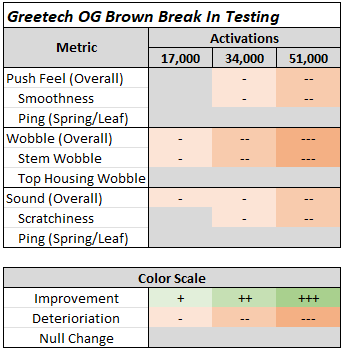
Break In Notes
17,000 Actuations
- After just 17,000 actuations, the Greetech OG Brown switches are already in for quite the slide in quality, having shown both noticeable increases in the stem wobble and inconsistency in sound of the switches throughout the batch. While the stock OG Browns were not overly consistent in their own right, the ones broken in to this point had more sporadic scratch sounds and inconsistent housing collision noises.
34,000 Actuations
- At 34,000 actuations, the Greetech OG Brown switches yet again increase in wobble, having substantially more N/S and E/W direction stem wobble than both their stock counterparts and those that were only broken in to 17,000 actuations.
- In addition to noted inconsistencies in the sound profile of the switches and increased prevalence of a scratch tone, the Greetech OG Browns broken out to this point also began to feel more scratchy too – something which defies conventional understanding and behavior of how switches tend to break in over time.
51,000 Actuations
- After 51,000 actuations the stem wobble in the Greetech OG Brown switches has shifted so much compared to the stem wobble in stock form that I believe these are the first to ever receive a ‘---’ rating in the stem wobble category anywhere. It makes me wonder if the stems would just fall out of the housings altogether if I whipped these around in the break in machine for a million cycles or so.
- The uptick in both scratch sound and feeling only continues to worse for the Greetech OG Brown switches broken out to 51,000 actuations. It’s so bad in fact that I’m not even certain that lubing these switches prior to breaking them in could have prevented this kind of ostensibly full mechanical breakdown of these switches.
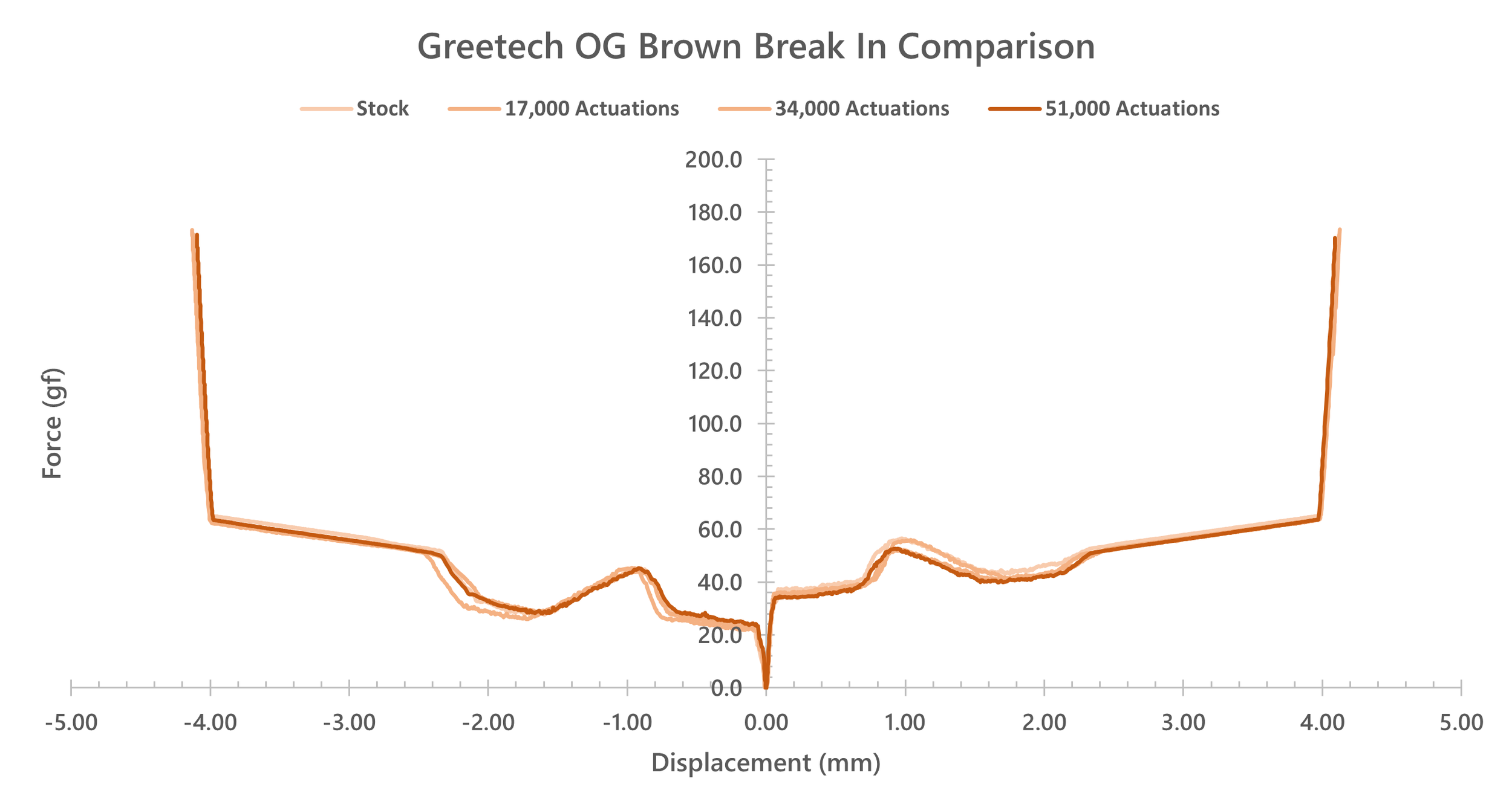
Figure 19: Comparative force curve diagram showing no substantial, consistent change in the force curves of the Greetech OG Brown switches throughout the break in process.
Comparison Notes to Other Notable Tactile Switches
Note – These are not aimed at being comprehensive comparisons between all factors of these switches as this would simply be too long for this writeup. These are little notes of interest I generated when comparing these switches to the Greetech OG Brown switches side by side.
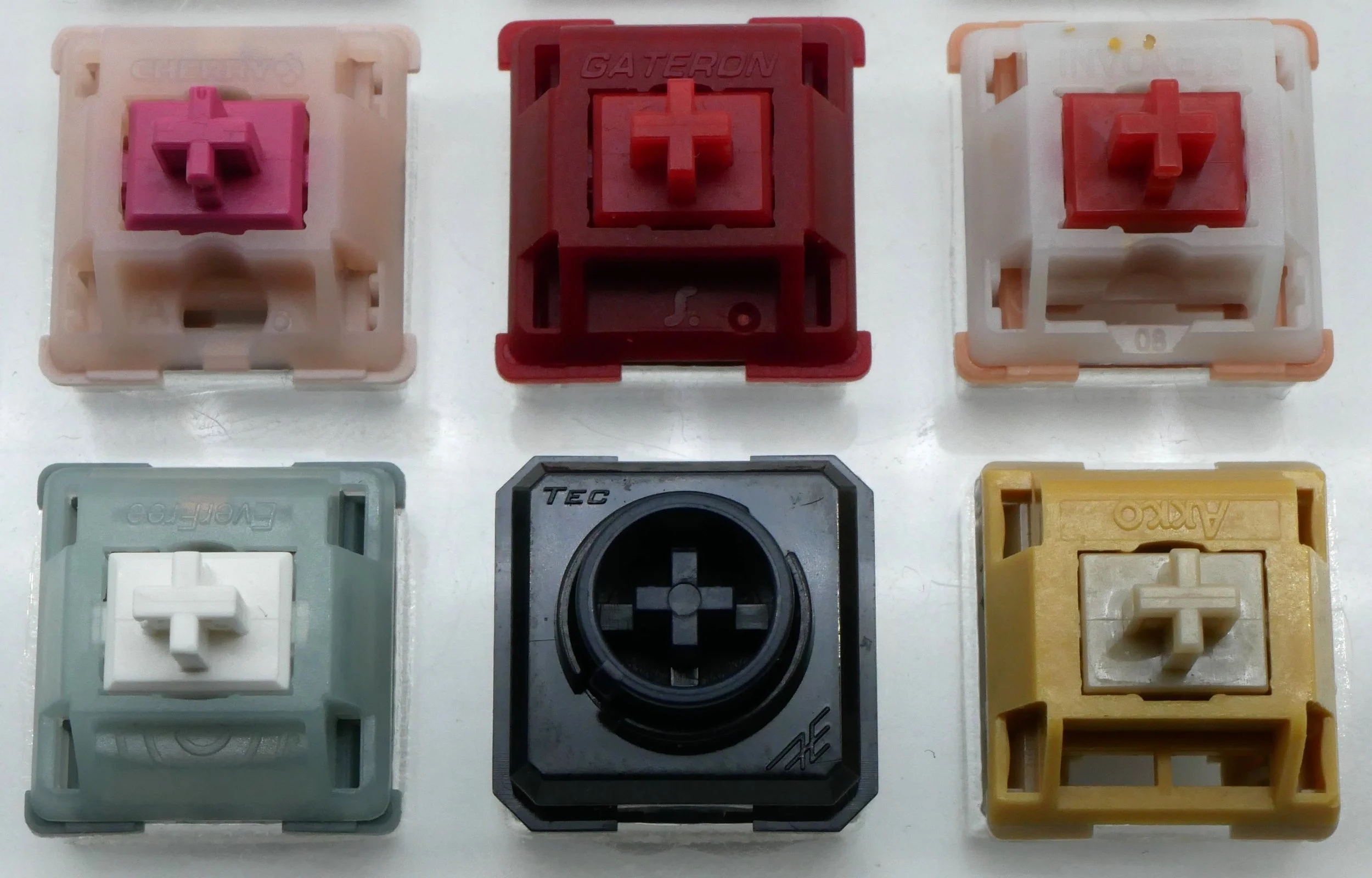
Figure 20: Switches for comparison. (L-R, Top-Bot: Cherry MX Petal, Sillyworks x Gateron Type R, Invokeys Goji Reserve, EverFree Grayish Tactile, AEBoards Naevy EC, and Akko Bittersweet)
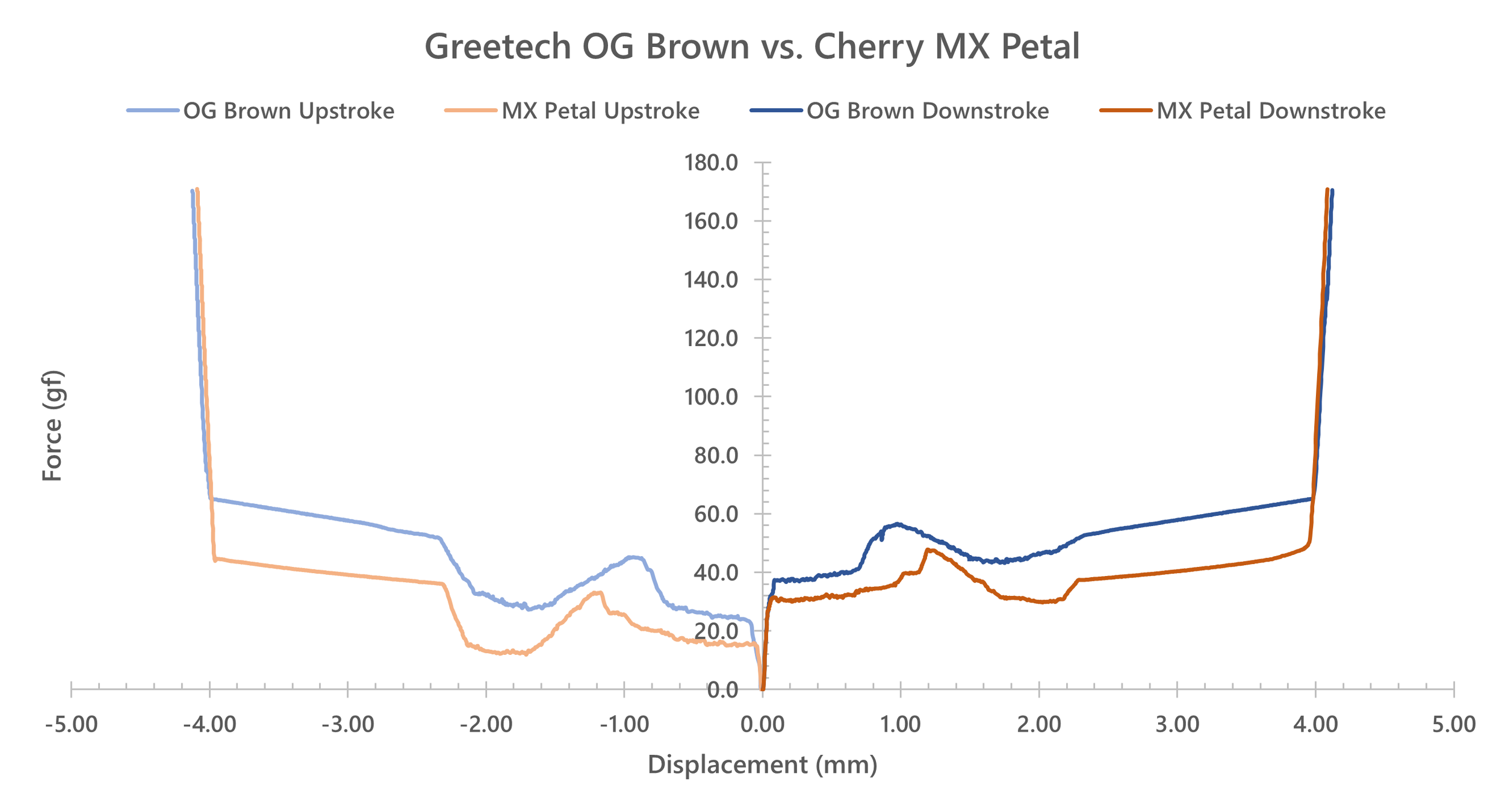
Cherry MX Petal
- There is less N/S and E/W direction stem wobble in the Cherry MX Petal switches than the Greetech OG Brown switches, even in spite of the MX Petals being below average on this particular metric.
- In line with what the comparative force curve between these two switches below shows, the tactile bump of the MX Petals is a bit sharper, snappier, and carries a tiny bit more of a bite to it than the slower, more rolling tactility of the Greetech OG Browns. The difference in directness of this tactile bump, as well, does also make them feel more similar in weight at peak force than what the actual difference measures out to be.
- In stock form, the Greetech OG Browns just simply have the worse sound profile of these two – they’re scratchier, more inconsistent in the housing collisions at either end, and also more likely to occasionally ping than the MX Petals.
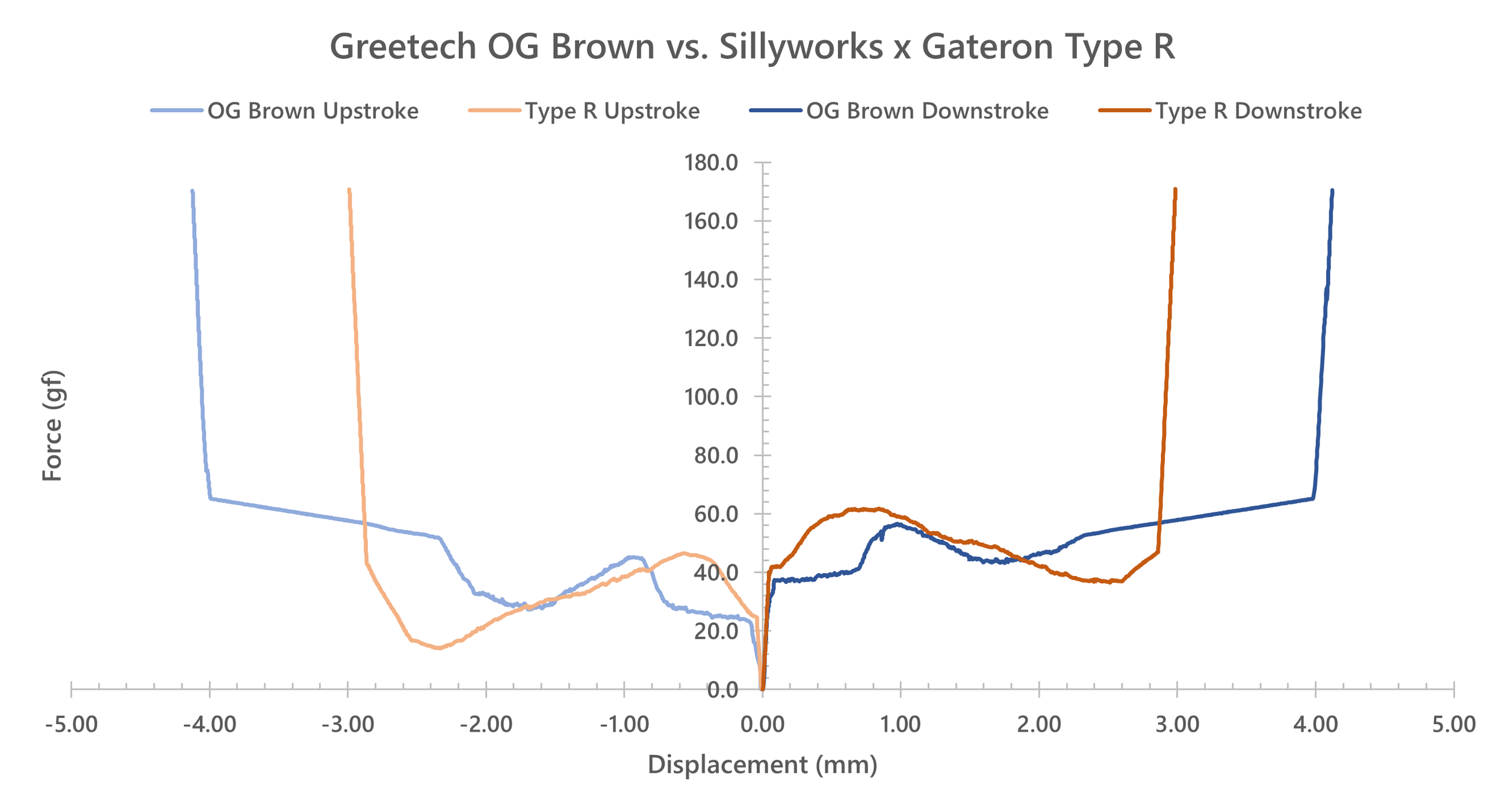
Sillyworks x Gateron Type R
- While these two switches are already well known to exist on the extreme opposite ends of the price premium and manufacturing effort spectrums, comparing them head to head really does show just how much more you can get out of stock switches that cost more. The Type R switches are analogously the brand new, freshly off the lot car while the Greetech OG Browns are the beater with a flat tire and a dented in door from the junkyard auction that require a significant amount of care.
- Much like the note above in the Cherry MX Petal comparisons about differences in perceived peak tactile force as a result of sharpness of the tactile bump, the Sillyworks x Gateron Type R switches feel significantly heavier through their tactile peak than both the OG Browns and what the comparative force curve between them below would suggest.
- There is substantially less N/S and E/W stem wobble in the Type R switches than there is even in the best Greetech OG Brown switches.
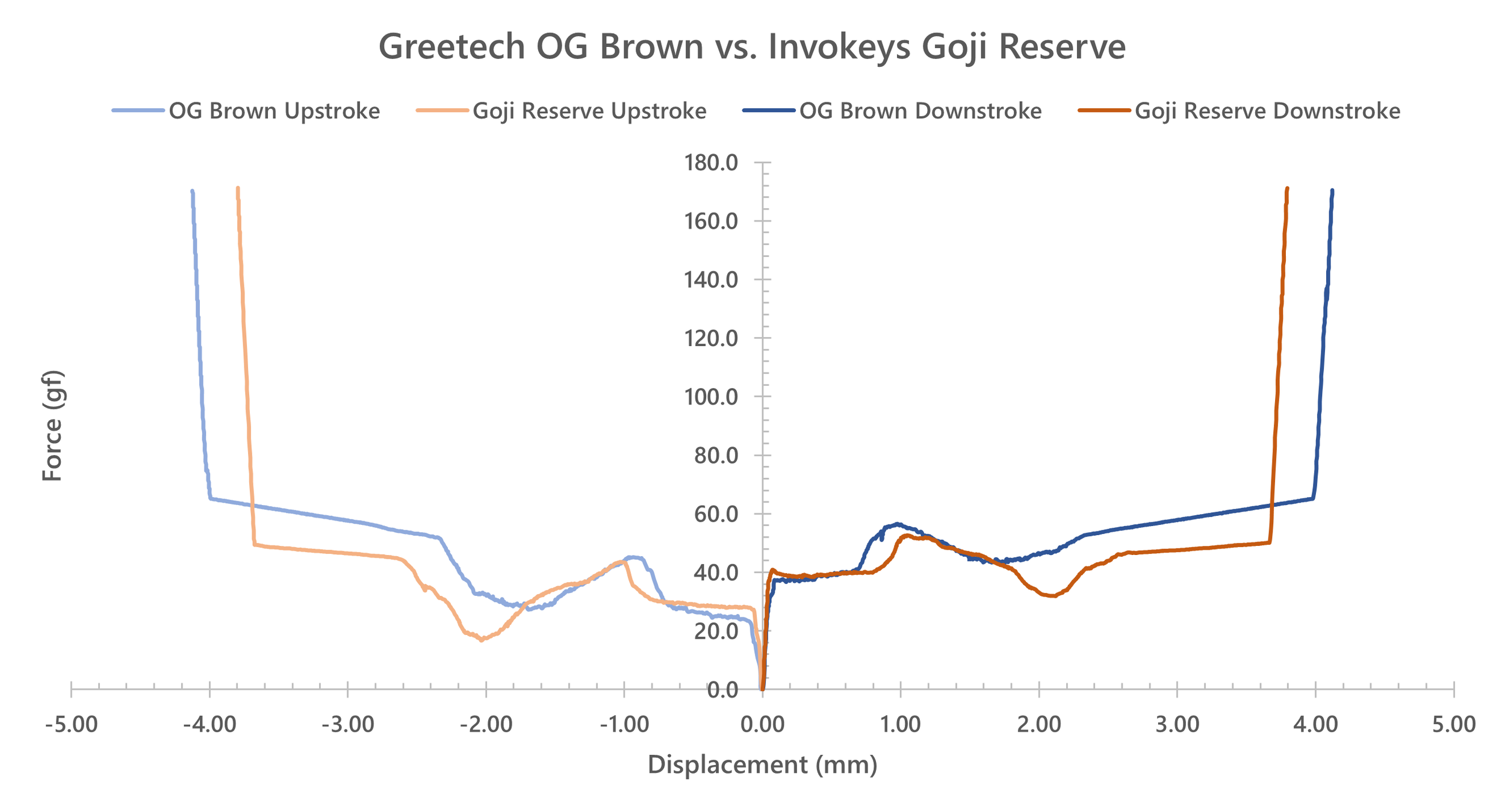
Invokeys Goji Reserve
- Much to my surprise, the Greetech OG Brown switches actually feel a bit sharper and more forceful through their tactile bump than the Invokeys Goji Reserve switches. As well, their housing collisions also are a bit more flat, forceful, and less dampened than the Goji Reserves.
- Comparing the overall sound of these two switches, the Goji Reserves are substantially more subdued, muted, quiet, and occasionally forcefully snappy at their point of bottom out compared to the all over the place, louder, and more chaotic sounds of the OG Browns.
- There is a whole world of difference in the stem wobbles of these two switches, with the Greetech OG Browns being substantially worse in both N/S and E/W directions.
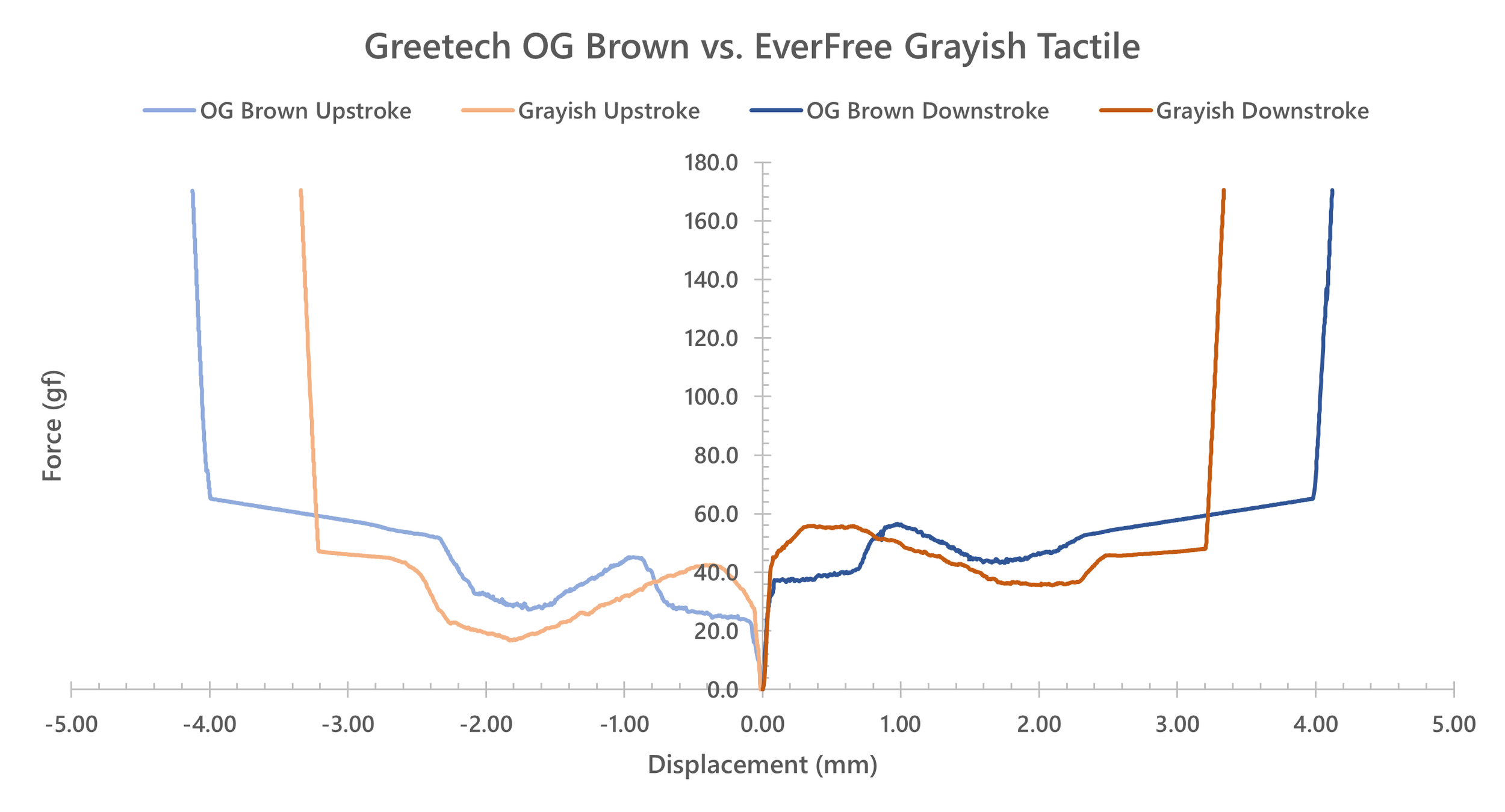
EverFree Grayish Tactile
- Of all of the switches on this comparison list, the Everfree Grayish Tactiles are the ones that feel most similar to the Greetech OG Browns through their tactile bump. In addition to actually feeling like they are more or less the same strength, the more slowly unraveling nature of the bumps in the Grayish Tactiles centers them more in their downstrokes than what their force curve below for them would suggest.
- The Greetech OG Brown switches have quite a bit more N/S and E/W direction stem wobble than the Everfree Grayish Tactile switches.
- Comparing the sound of these two switches, the Grayish Tactiles are louder than the OG Browns only because of their stem pole bottom out which hits quite forcefully and cleanly on their bottom housings. The OG Browns, by comparison, are quieter but still all over the place with inconsistencies in housing tone, scratch, and occasional ping.
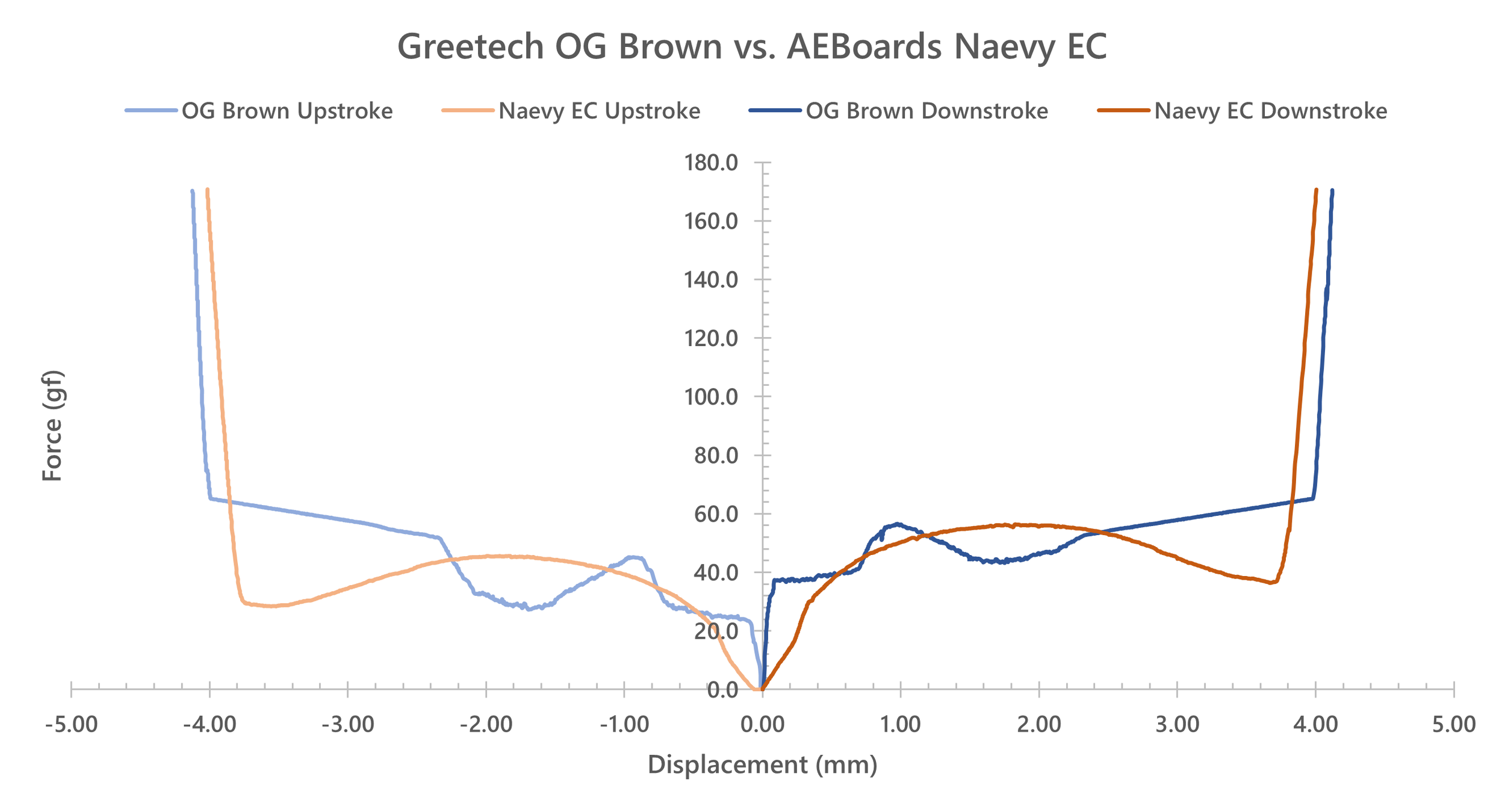
AEBoards Naevy EC
- There’s less stem wobble even in the non-traditional housing and stem structure of the AEBoards Naevy EC switches than there is in the Greetech OG Brown switches – a design that has been around and able to have been incrementally improved on by Greetech at any point in nearly the last decade.
- While these two switches have similar overall strength in their tactile bumps, the longer, arcing nature of the rubber domes used in the Naevy EC switches makes their bump feel larger and more imposing than the Greetech OG Brown switches.
- With really no sound from scratch or ping by comparison, the AEBoards Naevy EC switches are substantially more quiet and well organized in their sound profile than the Greetech OG Brown switches.
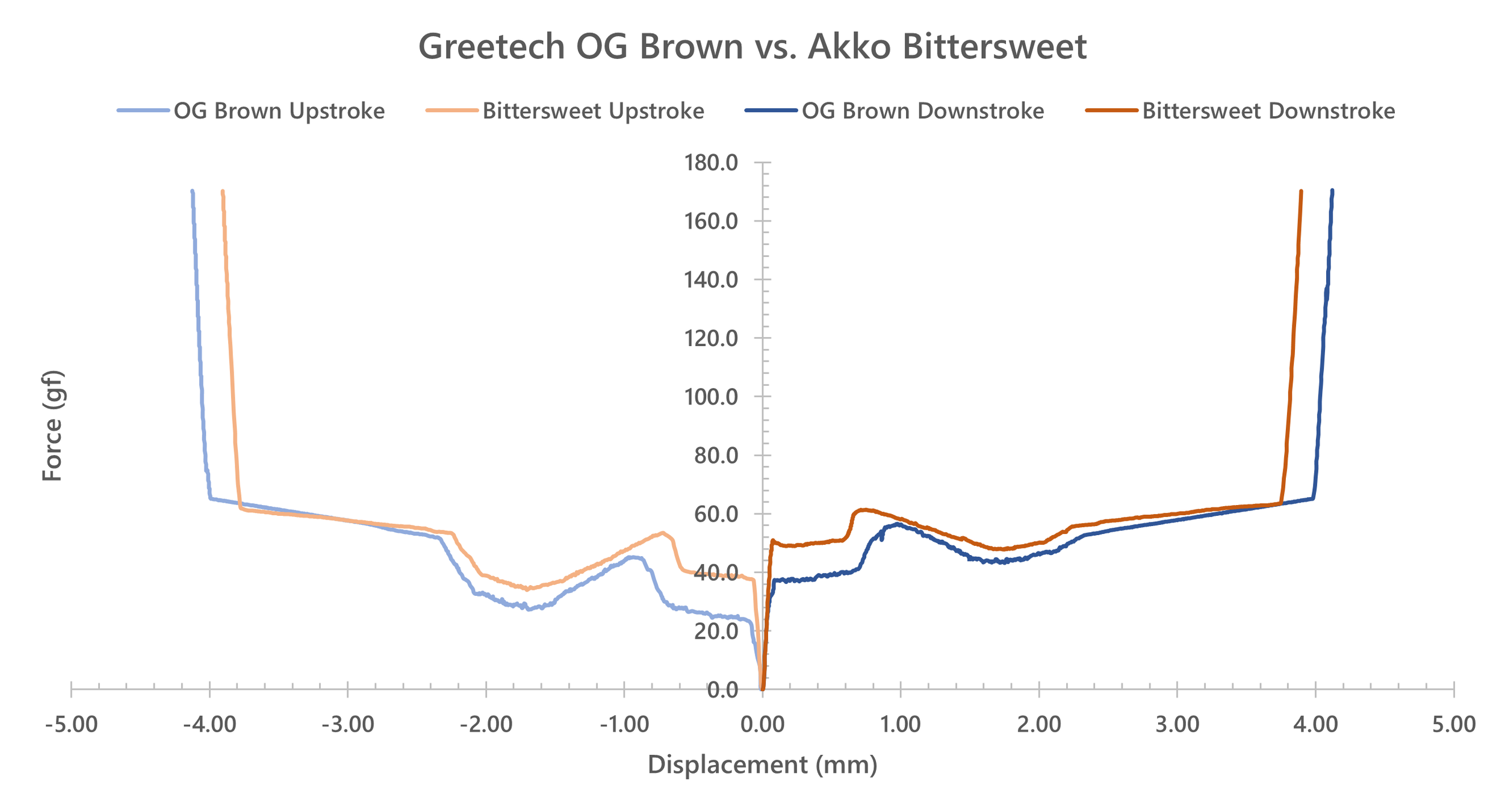
Akko Bittersweet
- Despite what the comparative force curve between these two switches below would suggest, the Greetech OG Browns surprisingly feel snappier and more strong through their tactile bump than the Akko Bittersweets. My best guess is that this is due mainly to the differences in height from their respective linear pre-travel regions to their peak tactile force between the two switches, something which is larger in the OG Browns.
- There is less stem wobble in both the N/S and E/W directions of the Akko Bittersweet switches than the Greetech OG Browns.
- In terms of their sound profiles, these two switches are fairly close to each other in terms of their overall volume and only in terms of their overall volume. The Bittersweets are more consistent, sharper, and cleaner sounding than the scratchier Greetech OG Brown switches.
Scores and Statistics
Note – These scores are not necessarily completely indicative of the nuanced review above. If you’ve skipped straight to this section, I can only recommend that you at least glance at the other sections above in order to get a stronger idea of my opinion about these switches.
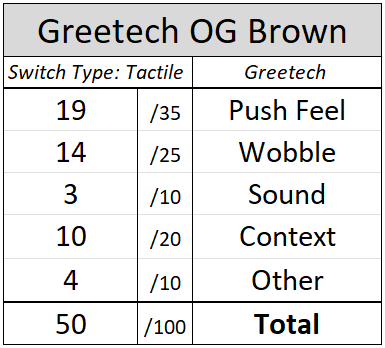
Push Feel
With a fairly centered, low strength and short tactile bump that is sandwiched on either side by long linear regions and somewhat firm housing collisions, the OG Brown switches are the quintessential full nylon, black OEM-style housing light tactile. That being said, though, they also carry no effective factory lubing, a strong amount of sandpapery scratch that gets worse with break in, and inconsistencies in the firmness and sharpness of bottom outs.
Wobble
While the Greetech OG Browns were designed to be improved versions of the classic OEM style browns that Greetech produced nearly a decade ago, not an ounce of work was done to improve stem wobble. These have massive amounts of N/S and E/W direction stem wobble that make their stems almost able to circle around in their top housings with a bit of force.
Sound
Painfully scratchy, inconsistently pingy, sometimes snappy through the bump, and variable housing collisions are all ways to describe the Greetech OG Browns. Really the only redeeming portion of their sound profiles are their deeper, solid housing collisions but even these feel cheapened and less enveloping than the classic Cherry-style nylon housings that they are clearly attempting to emulate.
Context
Marketing, long term availability, and community awareness are far from reasonable strong suits for Greetech and even so here in spite of being part of a renewed push for community attention. The only thing even minorly redeemable of these switches , as questionably so as this is, is the fact that they are dirt cheap at sub $0.20 per switch from Greetech’s Taobao storefront.
Other
The only reason this has any points is to applaud Greetech for openly and clearly delineating retooling of their switches, something which other manufacturers historically have never done.
Statistics
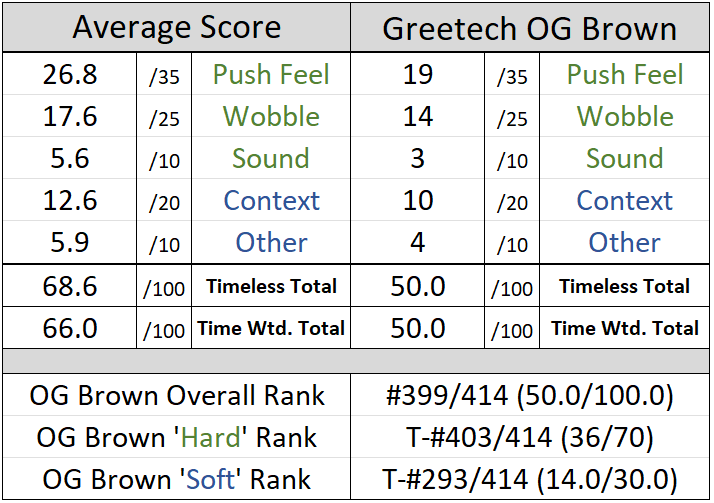
If you are looking at this statistics section and wondering what the heck ‘Timeless’ and ‘Time Weighted’ scoring is, consider checking out my short article titled ‘A Scorecard Time Change’. As a result of scoring becoming a bit anachronistic over the years, switches are now ranked in this statistics table using a “time weighted total” as opposed to their day-of scoring as discussed in that article. If you’d also like to learn about what ‘hard’ versus ‘soft’ ranks refer to specifically, I’d encourage you to head on over to my GitHub linked in the table above or at the links in the top right hand of this website to check out my database of scorecards as well as the ‘Composite Score Sheet’ which has a full listing of the rankings for each and every switch I’ve ranked thus far.
Final Conclusions
That was a lot for me to write and for you to read through, and I don’t mean with respect to the word count either. Let’s all take a collective step back and reanalyze the Greetech OG Brown switches at a really high level. After having hardly produced any switches ever, much less their OEM-style switches from nearly a decade ago back when Razer Greens were still noteworthy clicky switches, Greetech’s decision to claw their way back into the switch manufacturing spotlight was to retool and improve those very same OEM style light tactile switches. And in attempting to gain some notoriety for their other upcoming switches in doing so, they did almost visibly nothing to their brown tactile switches, chose not to invoke any number of the techniques shown off by manufacturers at large in the last decade to improve their switches, and made the performance almost inseparable from that of the original switches that inspired these newest rehashes. How did I or Greetech expect these switches to turn out literally any better than what they are? (Which is not great, by the way.) The Greetech OG Brown switches are a scratchy, wobbly, inconsistent mess of a classic light tactile switch that is exactly what I remember feeling from those kinds of switches when I first joined the hobby all those years ago, and that’s not a good thing in 2025. The lack of differences between these switches here now and those original switches there and back then is astounding. For those of you who have only joined the hobby in the last few years reading this now, don’t get any false pretenses that this just means the switches will be fixable with a little bit of tender love and aftermarket care, either – those of us who were there in those early days know that switches like these are the kinds that both absolutely need those aftermarket modifications and are also not likely to be completely fixed by said changes. Even breaking in these switches in these switches in stock form doesn’t improve them, so there’s surely nothing that I or any of us can do to fix them getting substantially worse only a fraction of the way through their reported life cycles. They’re simply a hot mess, and so much so I’m almost at a loss for words on such. The only truly fitting portion of these switches may be their “OG” name as the entire intrinsic and extrinsic design of these switches that were supposedly (?) produced in recent memory are entirely indistinguishable for the real and really poor quality of the original Greetech Brown switches.
Sponsors/Affiliates
Mechbox UK
- A wonderful UK based operation which sells singles to switches that I’ve used above in my comparisons for collectors and the curious alike. Matt has gone out of his way to help me build out big parts of my collection, and buying something using this link supports him as well as my content!
KeebCats UK
- A switch peripheral company based out of the UK which sells everything switch adjacent you could ask for, they’ve been a huge help recently with my film and lube supply for personal builds, and they want to extend that help to you too. Use code ‘GOAT’ for 10% off your order when you check them out!
proto[Typist] Keyboards
- An all-things keyboard vendor based out of the UK, proto[Typist] is a regular stocker of everything from switches to the latest keyboard and keycap groupbuys. While I’ve bought things from the many times in the past, they also are a sponsor of my work and allow me to get some of the great switches I write about!
Divinikey
- Not only do they stock just about everything related to keyboards and switches, but they’re super friendly and ship out pretty quick too. Divinikey has been a huge help to me and my builds over the last year or two of doing reviews and they’ll definitely hook you up. Use code ‘GOAT’ for 5% off your order when you check them out!
ZealPC
- Do they really need any introduction? Zeal and crew kicked off the custom switch scene many years ago with their iconic Zealios switches and the story of switches today couldn’t be told without them. Use code ‘GOAT’ (or click the link above) for 5% off your order when you check them out!
MechMods UK
- A rising vendor based in the UK, Ryan and crew have been a pleasure to work with and have nearly everything you’d need to build your first or fourteenth keyboard. Go build your latest or greatest one right now with them by using code ‘GOAT’ at checkout for a 5% discount!
Dangkeebs
- A longtime supporter of the website and the collection, Dangkeebs has quite possibly the widest variety of switches of any vendor out there. Not only is their switch selection large, but it rotates and is constantly adding new stuff too. You’re going to need 5% off your order with my affiliate to save off the cost of all those switches!
SwitchOddities
- The brainchild of one my most adventurous proxies, SwitchOddities is a place where you can try out all the fancy, strange, and eastern-exclusive switches that I flex on my maildays with. Follow my affiliate code and use code ‘GOAT’ at checkout to save 5% on some of the most interesting switches you’ll ever try!
Cannonkeys
- Does anybody not know of Cannonkeys at this point? One of the largest vendors in North America with keyboards, switches, keycaps, and literally everything you could ever want for a keyboard always in stock and with an incredibly dedicated and loving crew. Follow my affiliate link above in their name to support both them and I when you buy yourself some switches!
Kinetic Labs
- One of the most well-rounded keyboard vendors out there, Christian and crew have been supporters of all my switch and switch-adjacent needs for some years now. I’m honored to have them as an affiliate and think you should check them out using my affiliate link above to support both them and I when you check out their awesome products!
Keebhut
- Want to try out some switch brands that fly under most vendor’s radars? Keebhut is always seeking out that next latest and greatest and has been super helpful in hooking me up with new brands over the past year. They are all about sharing that love as well, and want to give you 5% off your next order with them when you use code ‘GOAT’ at checkout!
Kailh
- No, you’re not mistaken – this is actually that Kailh that manufactures switches. As one of the longest running manufacturers in the hobby, they have a massive variety of switches available over on their website at any point in time. I’m lucky to be affiliated with them now, and so consider using my affiliate link above when ordering some Kailh switches to support me!
Keebz N Cables
- Australia and Oceania’s very own is now a part of the sponsor list here and I couldn’t be happier to add this long time supporter of the collection to it. They’ve always got an amazing selection of switches (and other keyboard parts) in stock and they want to share the love that they’ve shown me with you all too! Use code ‘thegoat’ for 5% off your first order when you visit!