Odd Switch Short V: Kailh Mix-7
As it turns out, I did not forget that short articles existed on this website. Rather, I just haven’t gotten around to them because of the crushing weight of work and then even stronger crushing force of my own perfectionism driving me to publish full length switch reviews every two weeks and not just any old written content. But why should I let my own mental shortcomings about my articles stop me from sharing a good short read with you all? Another less fourth wall break-y reason for not having returned to short articles like the ‘Odd Switch Short’ series in some time is because I’ve really not encountered the narrow set of conditions that led me to do them in the first place over the last year or so. Historically, across the whole whopping four ‘Odd Switch Shorts’ that I did before this one, these types of articles were always saved for switches that I just didn’t have enough substance behind to flesh out a full length review. These would be the rare situations where for one reason or another I didn’t have enough context to fill a background section, not enough performance quirks or features to justify a deep dive on their performance, or the truly rarest of circumstances where I just don’t have enough switches to actually analyze. Thankfully though, (or would it be ‘unfortunately’) I actually have encountered the last and rarest of those scenarios here with the Kailh Mix-7 switches.
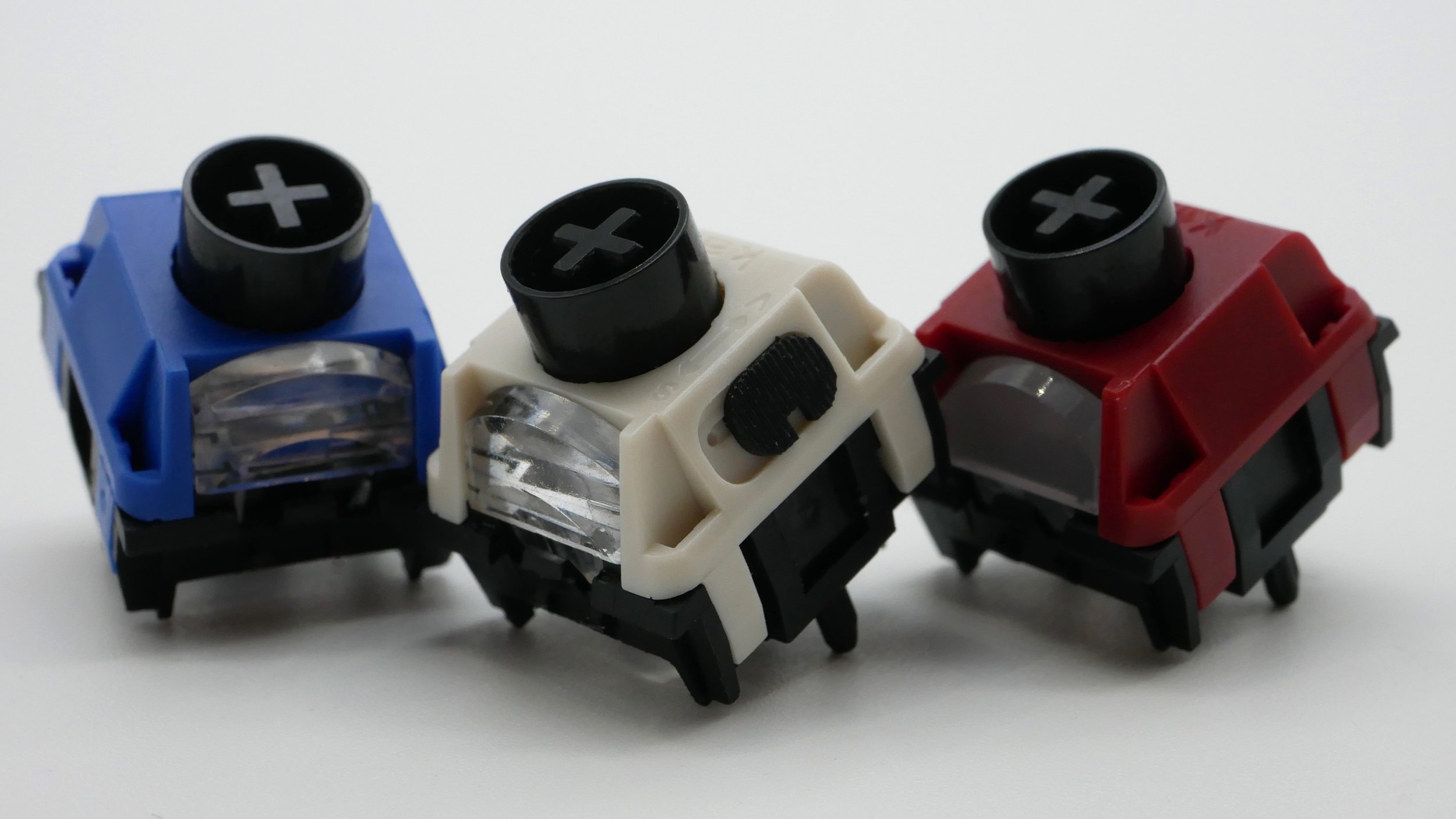
Figure 1: Quite literally all I have for us to discuss today. Kailh Mix-5 Blue (Left), Mix-5 Red (Right) and Mix-7 (Center).
Before I get into breaking down the Mix-7 switches and what makes them noteworthy of being nominated for the first Odd Switch Short in well over a calendar year, I’m sure there’s quite a few of you wondering what Kailh Mix-7s even are. If your next thought was to then wonder how you managed to miss the first six iterations of Mix switches before these, rest assured that you didn’t miss anything except the Mix-5s and that your lack of awareness is entirely because of Kailh, not you. Those of you who aren’t among the more switch obsessed types in the community likely don’t follow specific manufacturers close enough to recognize patterns in their behaviors, and so when they carry out a subtle pattern like I’ll reveal to you in the very next sentence, it’s completely reasonable that you’d never even know such a thing even happened if not for people like me. Kailh has an interesting habit of not just designing switches that they can’t sustain production on long term, but also actually selling a very limited number of those switches to the public before realizing that they can’t keep up the shtick. Think of the classic “failed R&D experiment” from any company that engages in creative thinking, but instead of the issues stopping the idea long before it hits production, it instead dies after you’ve already invested in the tooling, manufactured a couple thousand of the parts, and then packaged them up and shipped them around the globe. In the event you don’t believe me that this is a practice of Kailh, I’d like to see if you remember the Kailh Midnight Grey and Yellow silent linear switches. No, I’m not talking about the ones that had corresponding grey and yellow bottom housings either, as those are actually Kailh Midnight Pros. It turns out that there was actually a very, very limited run of black bottom housing versions of these very Kailh Midnight switches that Kailh pulled off the shelves almost as quickly and as silently as when they pushed them out. (I feel like I remember this being stated as having something to do with licensing or vendor agreements that Kailh had thought had cleared but actually hadn’t, though I can find no proof to this claim I recall hearing.) So very much like how the original, amateur Kailh Midnight switches were memory holed before our very eyes and replaced with the Midnight Pros, the Kailh Mix-7s and Mix-5s were announced all the way back in July of 2025, made somehow available somewhere between now and then, and just as quickly erased off of sales pages. Released as a trio, all three switches came in Kailh’s newer Box style designs with LED diffusers and rounded dustproof stems with the Mix-5s coming in red and blue top housings and the Mix-7s with white top housings over black bottom housings and black stems. While the Mix-5 Red switches were linear, and the Mix-5 Blue switches clicky, it turns out their similarity to the Mix-7s wasn’t just in their aesthetic design but also their functionality too: The Kailh Mix-7s were actually both clicky and linear, featuring a sliding button on the outside of their housing that allowed users to change the mode of the switch from linear to clicky and back without ever opening them up.
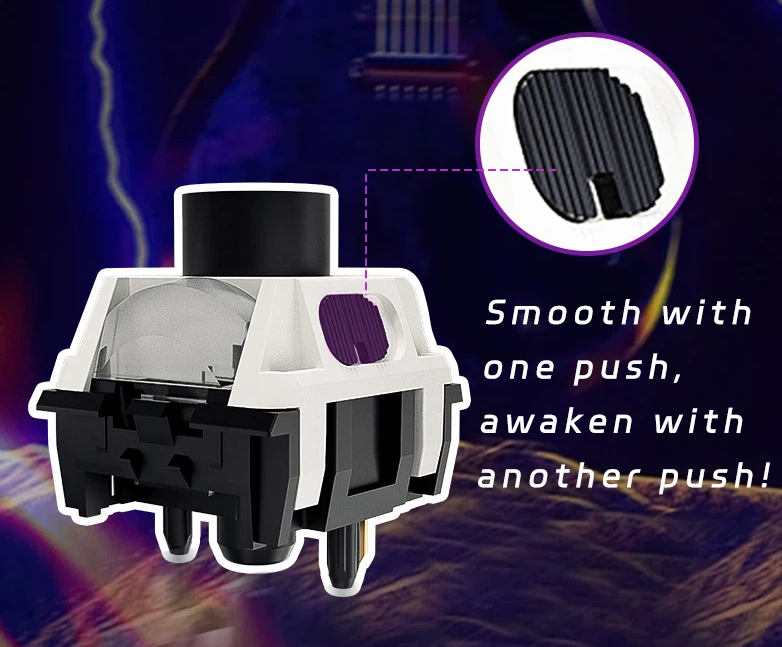
Figure 2: I literally couldn’t have described the mechanism of note in the Mix-7s any better than Kailh did here with their… interestingly designed advertisement for the Mix-7 switches.
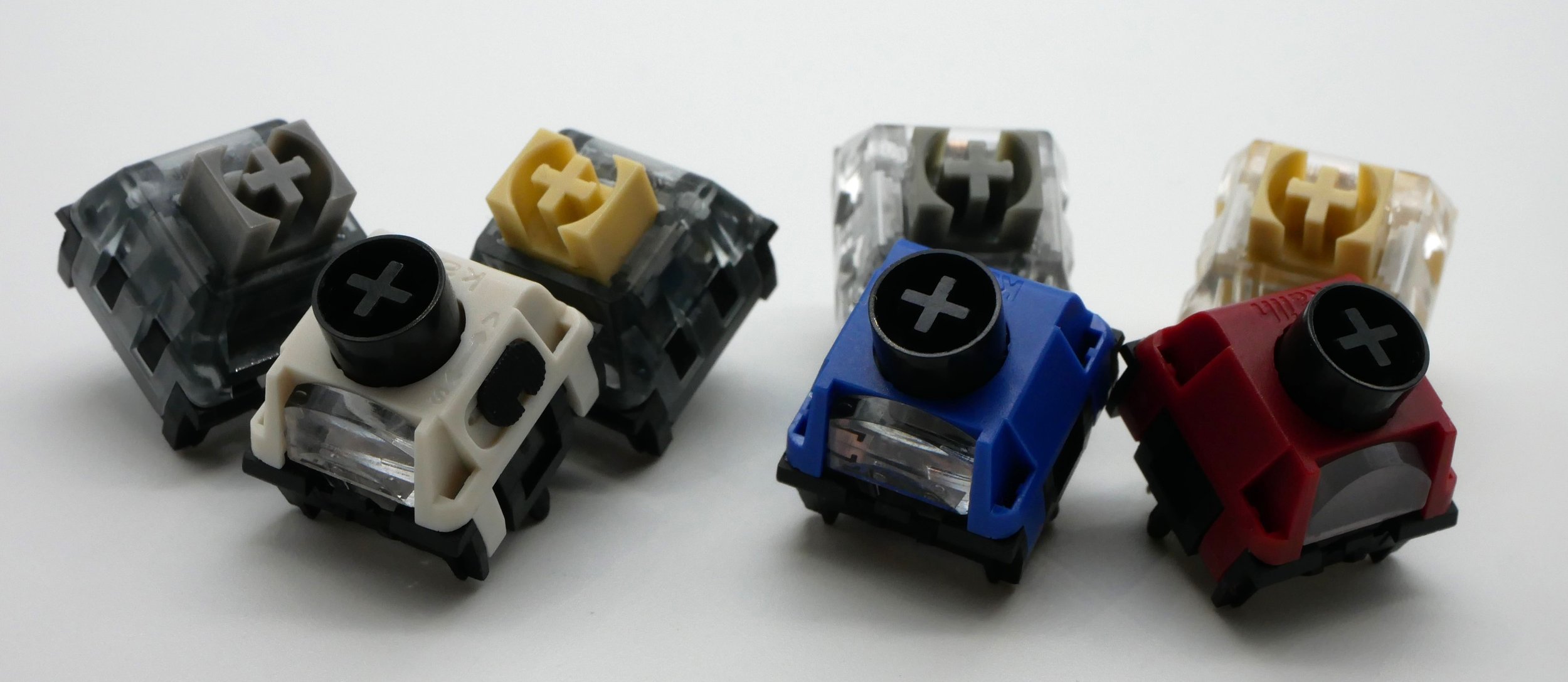
Figure 3: Birds of a feather flock together. Left is some of Kailh's quickly abandoned designs in the Midnights and Mix-7s and on the right is the continued versions of these switches in the Mix-5s and Midnight Pros.
Sticking it directly in the face of Gateron and Zeal who had been the first to develop and market a multi-modal modern MX switch with the Zeal 3-in-1 Clickiez, Kailh actually found a way to introduce a multi-functional switch design within the MX footprint that didn’t require the switches to be opened up! (This also isn’t nearly as surprising when considering just how much Kailh has been innovative with over the years such as the dampening pads of the Kailh Midnights, the clicking mechanism of the Novelkeys Cream Clickies, the entirety of the Box stem and leaf design, and so much more.) Coming in two modes, labeled on the top housings as “S” and “V”, the Mix-7 switches effectively combined the types of both Blue and Red Mix-5 switches and were able to be linears when the slider was set to “S” mode and clicky when it was set to “V” mode. Clearly these specific letters were chosen because the linear mode was “Silent” and the clicky mode was “Very Loud”. (This is not clear as anything but a joke, by the way.) While perhaps an obvious thought to some readers when shared that these switches didn’t need to be opened to be switched between linear and clicky mode, I feel that its increasingly important to emphasize that this also means the modes of the Mix-7s are in theory able to be toggled when the switches are soldered into a keyboard. It’s one thing that a switch can be changed around and reconfigured when in hand, but doing so entirely seamlessly after it is already soldered into a keyboard is a truly novel experience and one only tangentially reserved for magnetic style switches presently.
So what exactly gives, Goat? You’ve explained that these switches are truly novel and introduce a functionality in the MX footprint that has literally never been achieved before by anyone and yet you’re also telling us that Kailh pulled these off the shelves and is presently pretending they were never produced. They’d have to be shooting themselves in the foot by not releasing these to the community, right? You would certainly think so, except that you’re missing one small, very tiny, definitely not important caveat about the Kailh Mix-7 switches – their mode switching sliders don’t actually reliably work. Half spoiling the photos and mechanistic breakdown below, the Kailh Mix-7 switches struggle significantly to not only be switched from their default clicky mode into their linear mode, but also remaining in that linear mode once switches and then put through the percussive act of being typed on. (In fact, I couldn’t even get my single Mix-7 to convert from clicky into linear mode at all when installed in a plate for collecting its force curve!) Somehow recognizing this flaw only after they had shipped a good few of these switches out, Kailh largely folded on the Mix switch project, swept it under the rug, and have made it so that basically nobody else on the planet could ever get these switches again – not even the few among us with good working relationships with Kailh! Thankfully for all of us, though, SwitchOddities was able to track down exactly one single Mix-5 Blue, Mix-5 Red, and Mix-7 switch for me and the website, so I’ll break my long standing rule of not opening one-off switches for the collection just so that I can well document for the world this interesting mechanism.
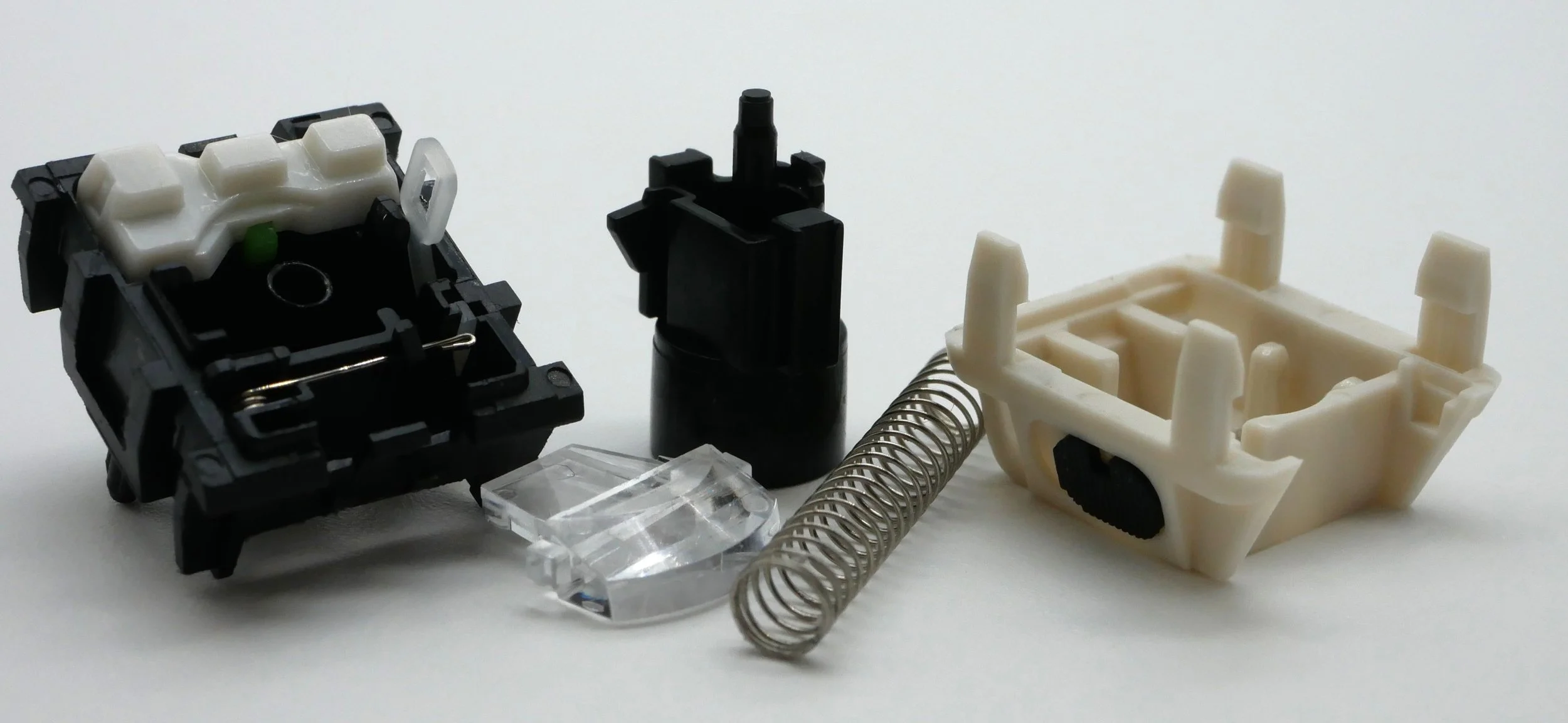
Figure 4: Behold! The overly complex inner workings of the Kailh Mix-7 switches.
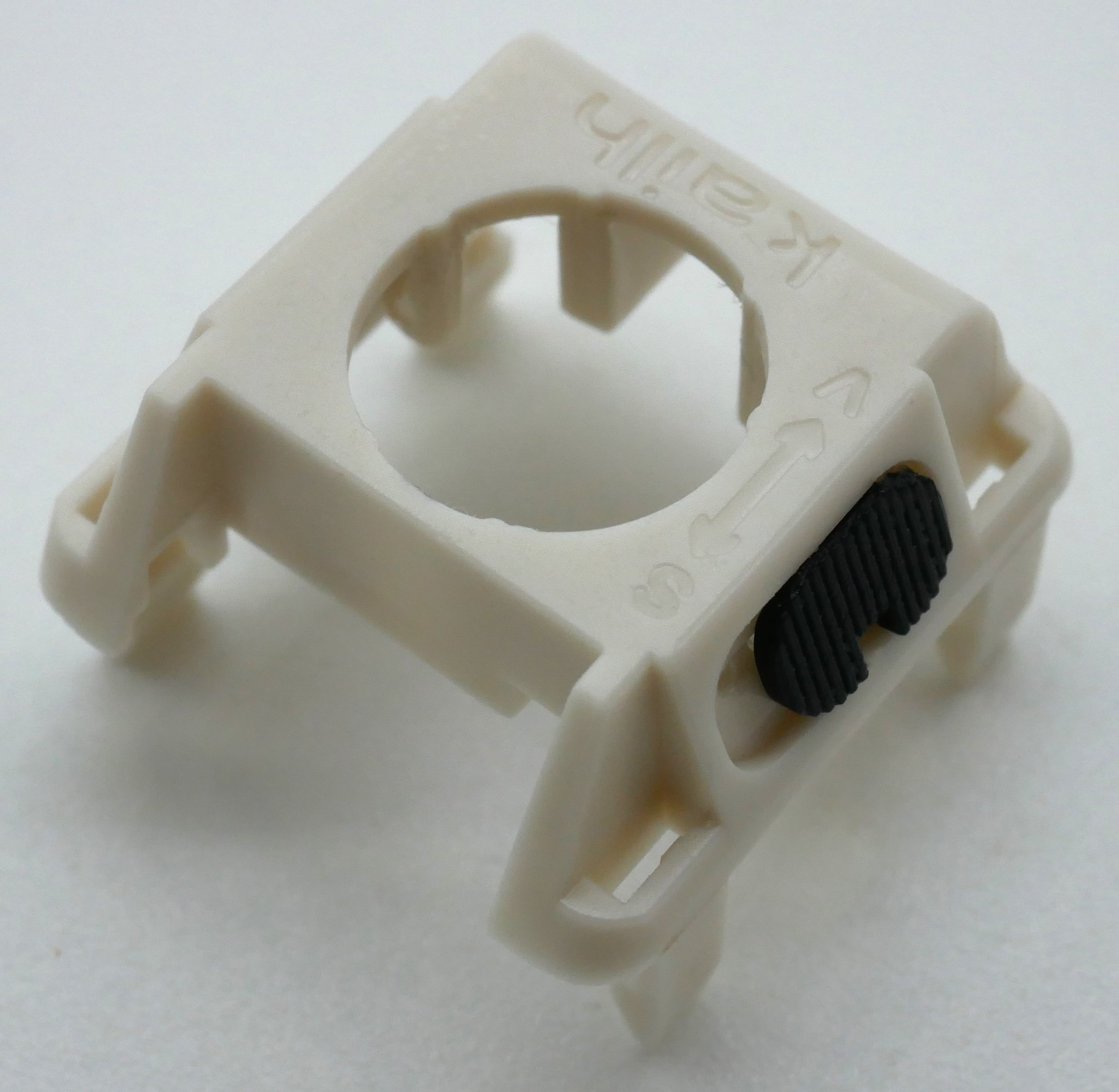
Figure 5: Kailh Mix-7 top housing exterior showing off the embossed nameplate, type adjustment slider, and 'S' to 'V' designations for Linear (S) and Clicky (V) modes.
Almost certainly the least difficult portion of the design Kailh Mix-7 switches to understand is the type adjustment slider located on the right-hand side of the housing as shown above. As you can see, there are two modes to the switch – ‘S’ standing for linear and ‘V’ standing for clicky. On the inside, this black slider sticks out as one tiny nub that articulates between a set of top housing uprights as can be seen below.
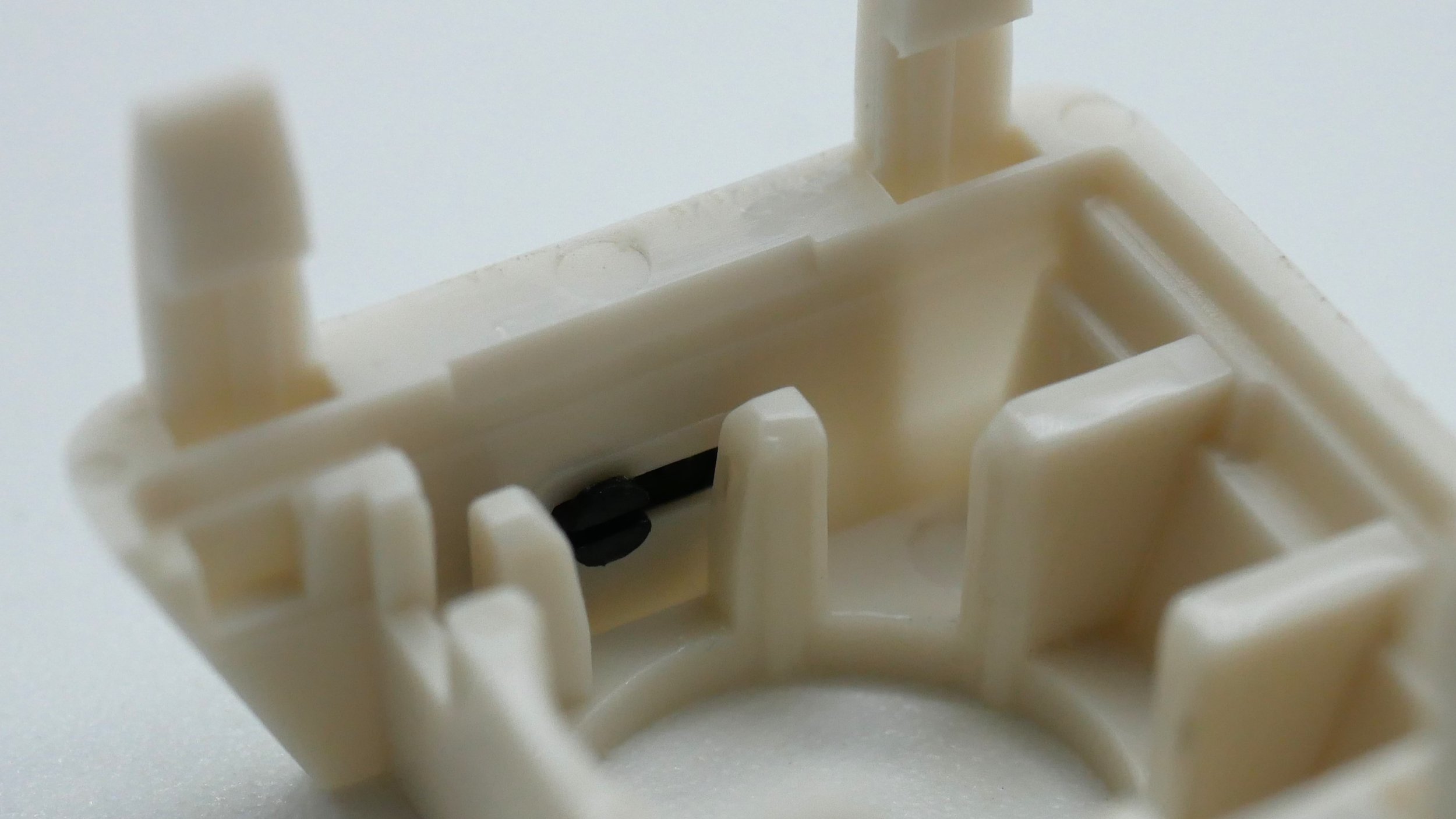
Figure 6: Internal view of the Kailh Mix-7 top housing type adjustment slider.
At this stage of disassembly, it’s not entirely clear how exactly this little black slider mechanism directly changes the mode of the switch from linear to clicky and back. While some of you may guess that this is interacting with the stems of the Mix-7s as those are traditionally the only other part of a switch that touches that part of the top housing interior, it actually is interfacing with an entirely new piece added to the bottom housings of the Mix-7s. Looking to the next photo below, you can see a protruding, clear plastic ‘loop’ that has an arm extending towards the click bar of the Mix-7s – this is the mechanism this slider is interacting with.
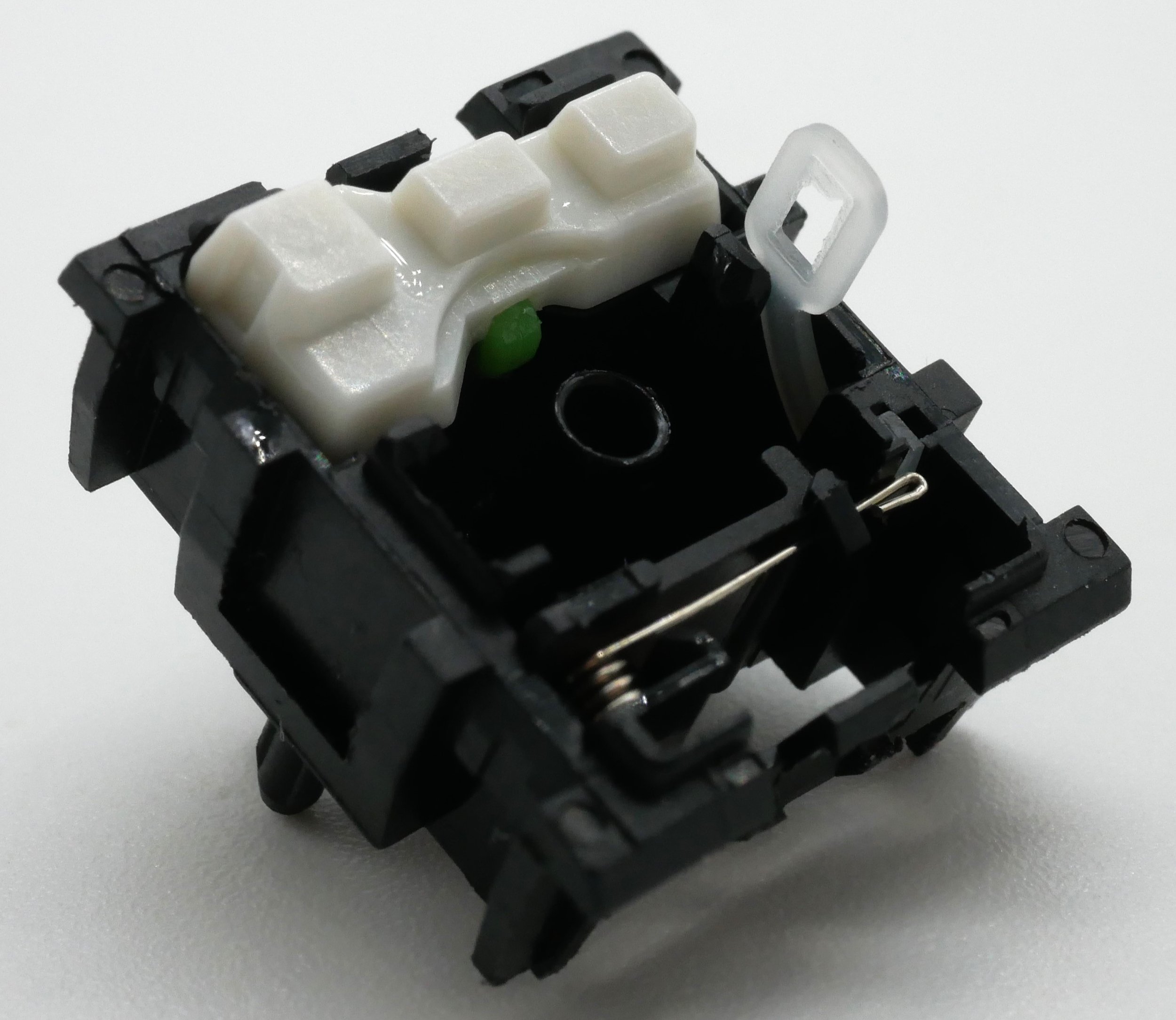
Figure 7: Interior of the Kailh Mix-7 switches. Note that the white and lime green feature on the top side of the photo is Kailh's 'box' leaf design and the clickbar at the bottom is a standard clickbar. The new, intriguing piece of tech here is the clear plastic loop on the right side of the housing.
When the top and bottom halves of the Mix-7 switches are combined, the clear plastic hoop slots in between the small uprights and the outer wall of the top housing such that the interior black nub of the slider sits inside of the loop of the mechanism. While it is a bit hard to see in the photo above, as you move the external slider from side to side, it causes the clear loop and attached arm to move similarly left to right. When pushed all the way in linear mode, the small plastic arm shooting off of the clear loop pushes the click bar down and out of the way such that the stem can’t interact with it. A more clear shot of this connection point can be seen from the next angle below.
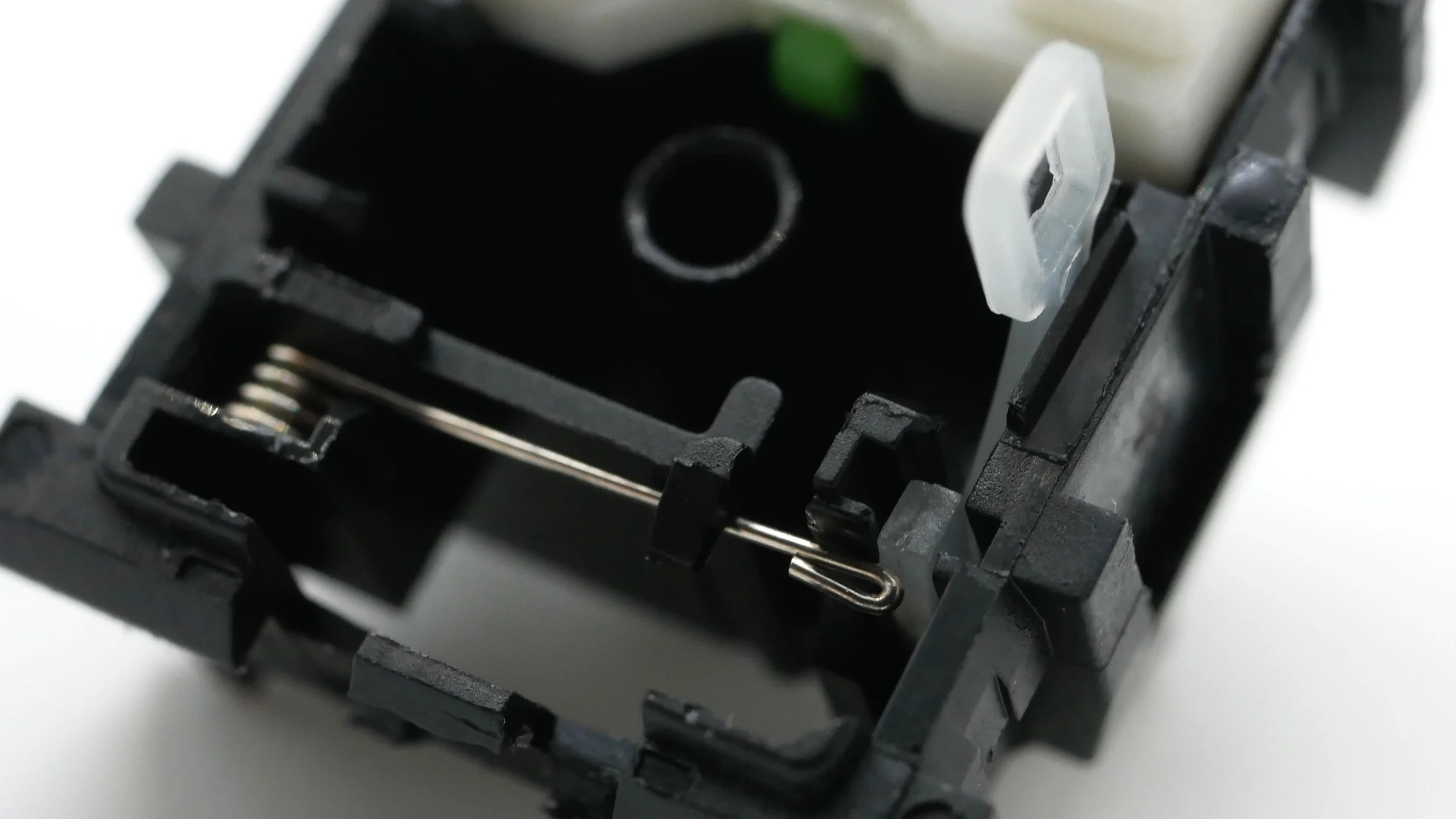
Figure 8: Kailh Mix-7 switch interior showing the arm coming off of the clear plastic loop which pushes the clickbar into or out of place to change the mode of the switch between clicky and linear.
While I didn’t include much discussion of it here given that this isn’t a full appearance section of a typical review, the stems of the Mix-7 switches are also of interest as well as they’re a bit differently shaped than conventional Kailh Box stems. In most modern Kailh Box stems, the actuating nub for the leaves (seen above in lime green) is not centered, but offset towards the same side as the click bar. Since this is centered, however, this means that the Mix-7 stems have a centered protrusion on one side to actuate the actual switch itself and an offset protrusion on the other side to activate the click bar.
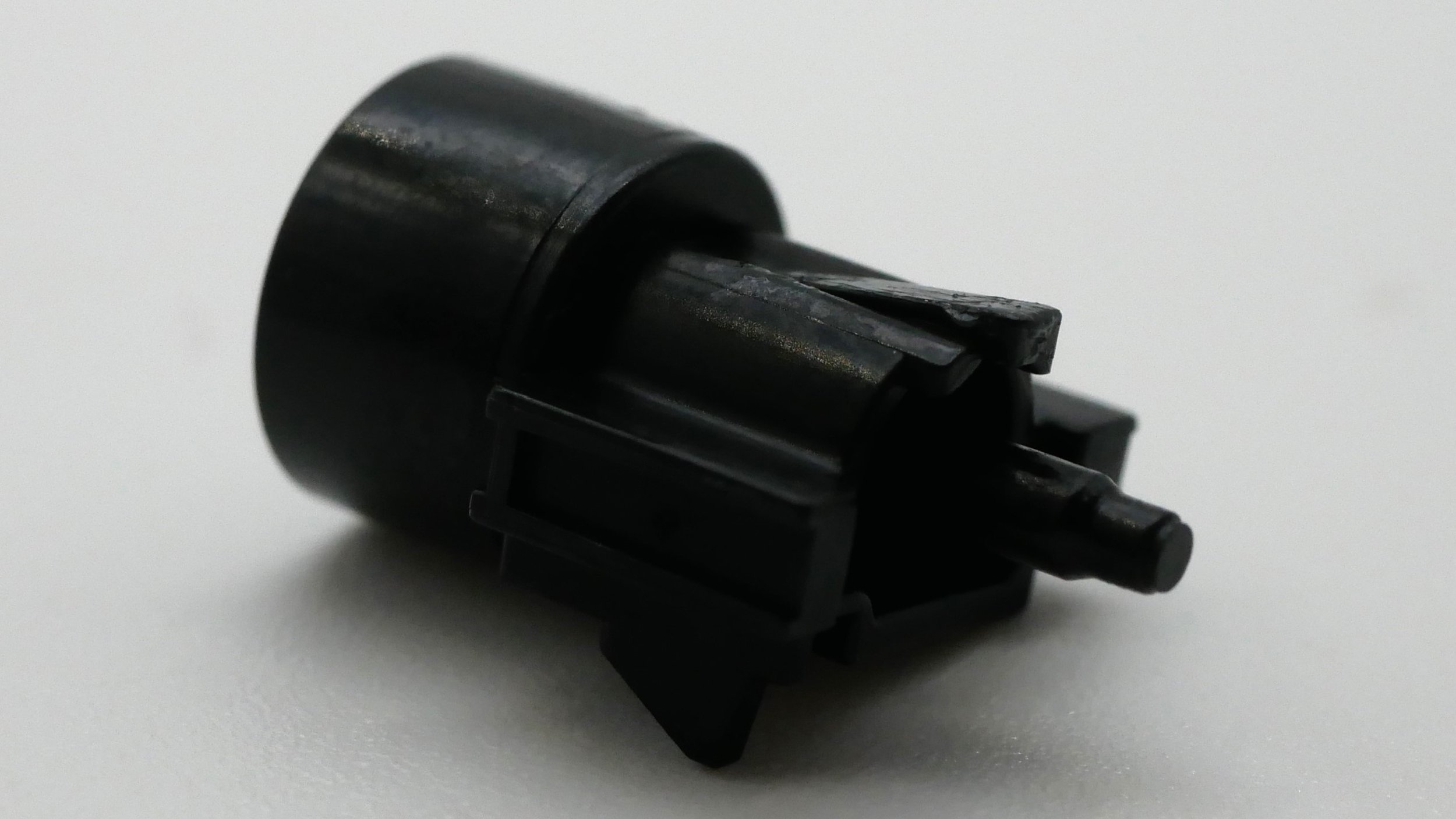
Figure 9: Kailh Mix-7 stem side profile showing the centered switch leaf actuating protrusion on top and the click bar actuating mechanism on the bottom.
One thing that I also rather badly want to stress here is that in addition to the Mix-7 switches not being designed well enough to function on their own, they certainly weren’t designed well to be disassembled and reassembled either. The reassembly process is particularly hellish on account of trying to balance the stem on top of the spring, the loose-ish LED diffusion diode in between the top housing edges, as well as trying to slot the clear loop inside of the black slider nub for the switching mechanism. While your first instinct might be to press the stems all the way down to get them out of the way, the box mechanism on this switch was so loose that trying to move the stem back up to realign parts together causes the box enclosure to come off and the lime green actuating nub to come loose. This is, in fact, the only reason I was given the opportunity to have a photo as such:
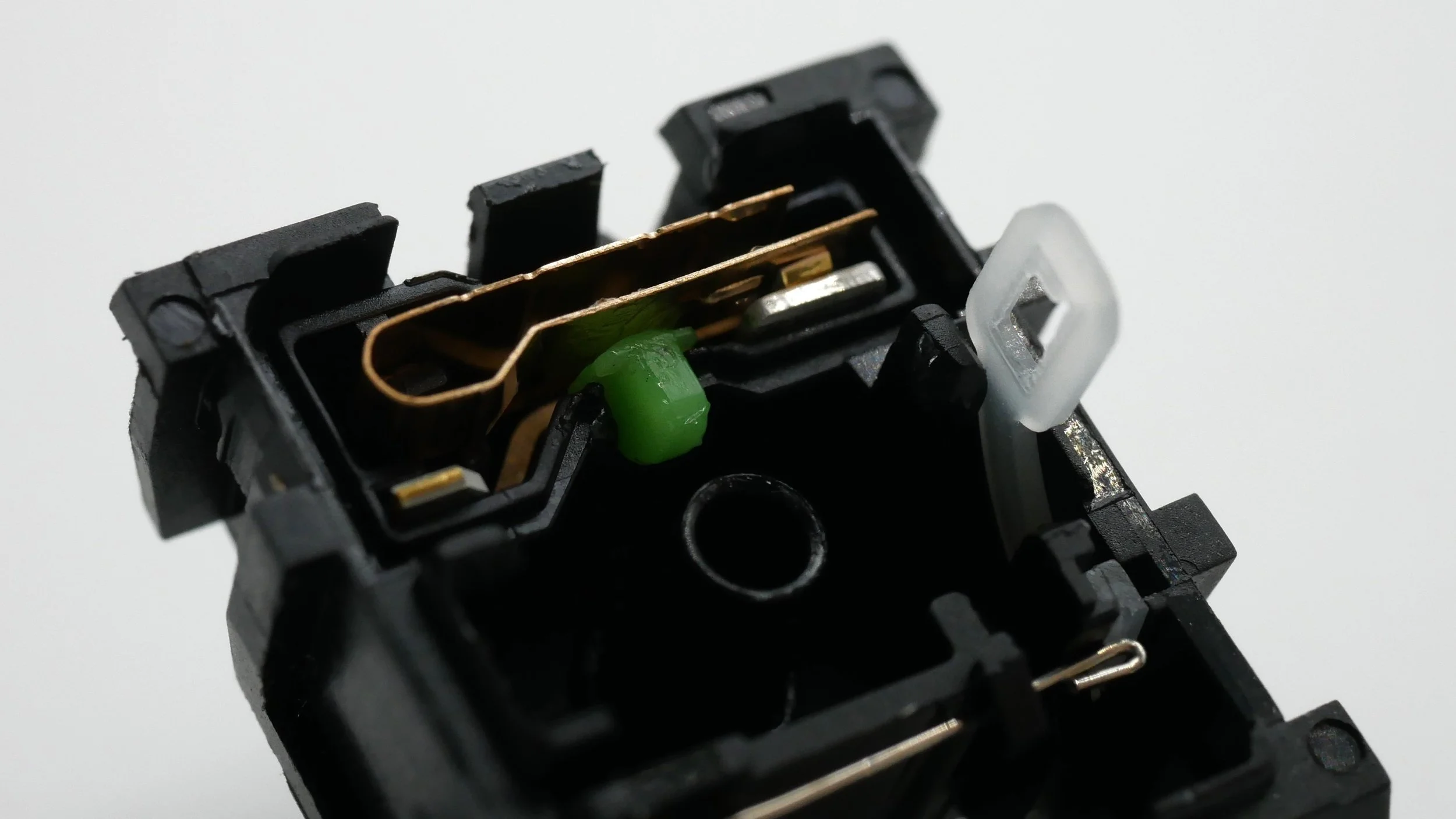
Figure 10: I had to use pencil lead and tweezers to slot the lime green actuating nub back in since it is barely 1 millimeter in diameter.
If the interior of that switch just looks absolutely too complex to comprehend, don’t worry – Kailh had a marketing photos where they included all of these parts as well as the spring and the LED diffuser to give you a “good sense” as to how they were assembled.
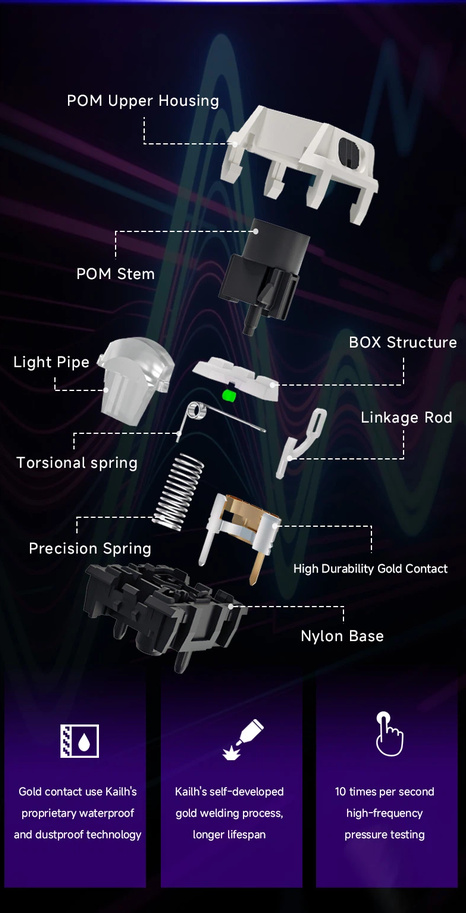
Figure 11: Whoever the engineer was that had the Kailh Mix-7s as their personal passion project at work definitely is deserving of a raise for the concept. Maybe not a substantial one, though, on account of the execution.
While this hardly ended up as a ‘short’ article on account of all of the photos above, it definitely ended up being the perfect format to share the Kailh Mix-7s. I would have loved to have had a full set of these to properly pontificate on in a full length switch review, though I guess for whatever reason I wasn’t Kailh’s go-to person to do the full and proper breakdown on these switches. As well, I can’t simply do a full length performance and judgement on one singular switch – much less one that is likely to never be sold or recognized by the manufacturer again! It really is a shame that the Kailh Mix-7 switches ended up going the way of a quickly fossilized dinosaur as they are a truly unique, novel premise just barely not well brought to life. Had they managed to have successfully held their linear mode in place, I have no doubt that they would have been cheaper and presumably better at they core selling point of switch-ability that the Zeal 3-in-1 Clickiez made such a splash in the community with. Unless Kailh ever decides to revisit and revamp this mechanism, the Kailh Mix-7s will forever go down in switch history as one of the biggest “what could have been” designs ever…