Cherry MX Firefinch Switch Review
And just like that with one quick click into this review, we’re officially through 2025 and into the start of an entirely new calendar year. (Finally!) While I’m sure just about everyone you’ve heard from has made trite comments about how they “can’t believe it’s 2026 already” or that “they just remember 2016 like it was yesterday”, please know that I am not bringing any novel energy to that party. I too am becoming increasingly socially and physically old by the year and I find myself slowly slipping into the same boomeristic pitfalls of pitching these exact kinds of cliché comments out when the time is right. On Wednesday I may have even told one of my coworkers that I would “see them next year” since we had to report back on Friday for a single, solitary day of work to ring in the new year. (I know, this cliché disease might be turning fatal for me.) Though while I have demonstrably assimilated into the hivemind of feelings surrounding this time of year, also know that I am still truly and personally deeply against the idea of New Year’s resolutions and so you can safely assume that none will be coming from me personally or on behalf of this website. For very much the same reason I hardly share my future content plans at all, my life feels like a constant chaotic barrage of situations and events that lead to what few plans I do try and set becoming wildly delayed if not altogether pushed off to some vague point in the future when the chaos will be less. All of that is to say that I’m really bad at keeping promises that are invoked in something like a ‘New Year’s resolution’, and thus I’ll be damned if I willingly do so permanently in writing. The only thing that I can loosely kind of believe will happen is that 2026 will be filled wall to wall with switch reviews, measurements, scorecards, and everything else you’ve come to expect of me over the years – something which I’m only willing to state based on the confidence of it having survived for the last five years or so despite the chaos that is my life as described above. 2026 will be a year with switches just like 2025 was, and 2024, and 2023, and so on, and the only thing that I can hope for is that this year’s switches (and the content that comes out alongside them) will continue to keep you all as interested in them as I have been for all of this time. So here’s to another new year of switches and long winded writings about them! Hopefully at least some of the loose plans that I have floating around in my head actually make their way onto the website finally this year…
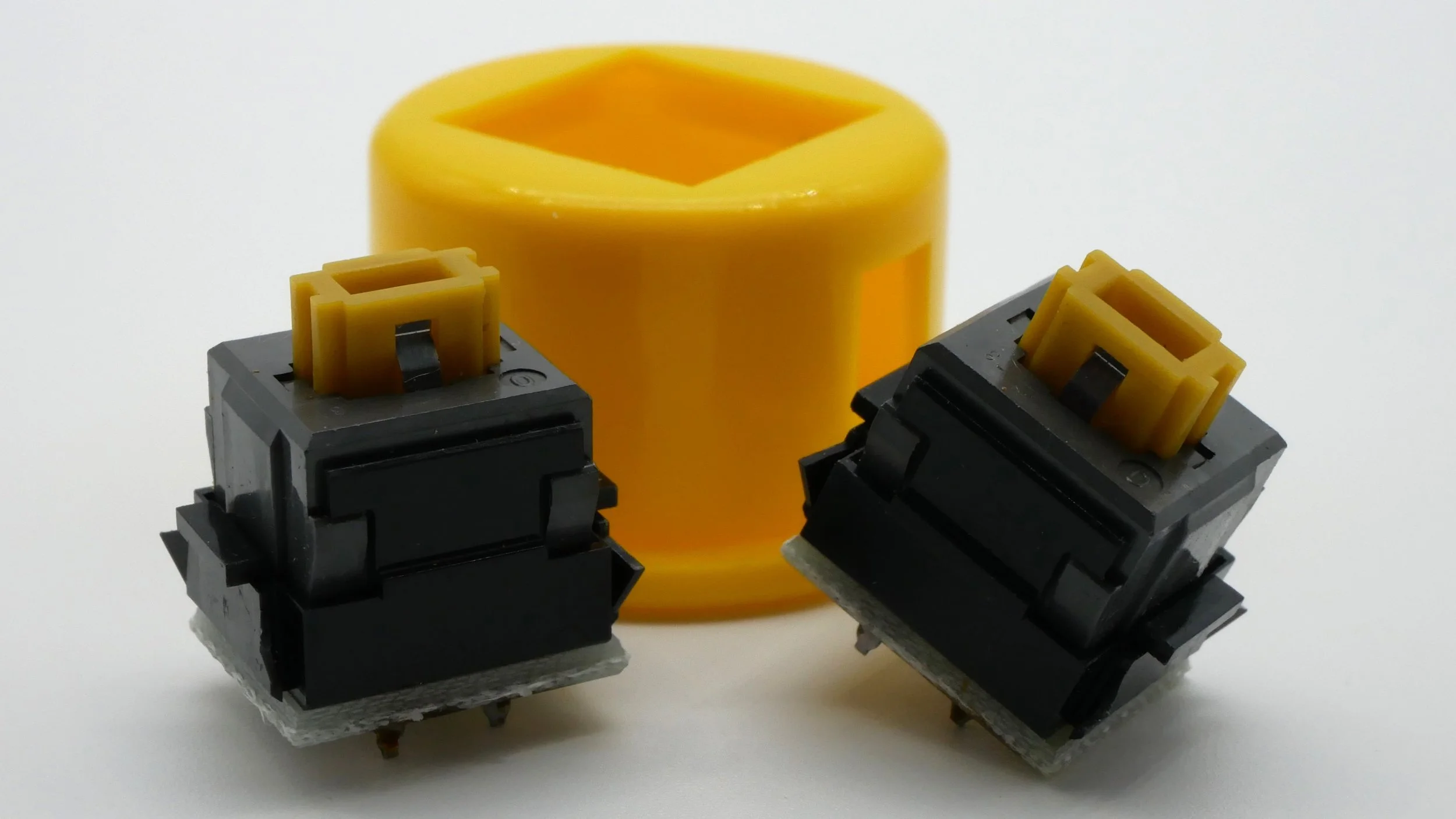
Figure 1: Perhaps finally writing a short article about these very special switches that have been sitting on my desk for a few months now...
Switch Background
Dedicated readers from the last year of switch reviews will likely have furrowed their brows a bit at seeing yet another Cherry-made switch hit the full length switch review roster. After having covered the Cherry MX Northern Lights last summer and then the Cherry MX Honeys and Petals in that vague in between fall-and-winter space that occurs towards the end of the calendar year, the thoughts that came to mind in this confusion were likely ones centered around there surely not being much more of a story to tell regarding Cherry at this point in time. After all, they’ve historically been among the most consistently and steadfastly “boring” and disconnected from the community manufacturers as possible over the years. As the past couple of years have unfolded, though, that last historical critique of Cherry from the community at large is coming a bit undone. Collaborations with content creators in the form of Glarses’ Cherry MX Purples, inspirations from the custom keyboard community in the form of “New Nixies” or Cherry MX Ergo Clears, and now even a custom switch designed in collaboration with a vendor in Whiplash really shows that Cherry is decidedly coming out of their shells after all of those decades looking inward. However, the story of Cherry is continuing to evolve beyond those criticisms, most recently in the form of them sunsetting production of switches in their Auerbach facility and firmly pushing switch production to China for the foreseeable future, shutting down the doors of the very factory that has sustained them for multiple decades on end. With reports coming from German headlines quoting Cherry’s COO as stating that all switch production was ceased in Germany as of late November, 2025 colliding with the sales pitches of the Cherry MX Firefinches being “Designed by Whiplash, Made in Germany, and for sale as of October of 2025”, these very switches may well be the last to have been made in Cherry’s iconic German facility. Or, they could be from the very startup of their new Chinese facility. Either way, the Cherry MX Firefinches are interesting enough to carry out a full length review on them as they mark probably the cleanest, most singular pivot point of keyboard switch production in Cherry’s history that we’ve ever been directly witness to.
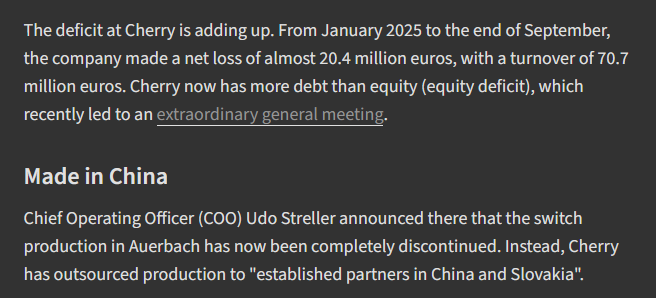
Figure 2: Snippet from Heise Online article from November 26th discussing Cherry's planned movement of production to China.
Without strong confirmation as to exactly where this batch of Cherry MX Firefinches were produced, I can really only look at them and the swirling news surrounding Cherry’s future as an opportunity to document the current community temperature on the subject and where it falls in the grander scheme of things. (Who knows, maybe one day this will be cited by some future vintage tech enthusiasts looking back through time to see how the community viewed MX and MX2A switches before everything turned into Hall Effect or Cherry’s latest “MZ” switch platform.) Put most simply, the majority of opinions that I seem to have encountered regarding this massive change by Cherry have been negative. It probably wouldn’t be incorrect to call a lot of the takes “doomerist”, even. On one extreme there’s plenty of “normie takes” that are seemingly thinly racist gripes stating that “Cherry’s quality will just go to shit like every other made-in-China product” and completely missing out on the fact that almost every keyboard switch ever produced in the modern era has been made in China with exceedingly rare exception. On another extreme of the negative viewpoints is a more modest, nuanced concern from more involved enthusiasts that suggests this transit to China may lead to Cherry losing their identity as a company and as a brand; In the rush to try and get up to snuff with other major manufacturers with their fingers on the pulse like Kailh, TTC, Gateron, etc. – Cherry could just end up churning out junk switches that don’t move the needle in the community in any meaningful ways. Viewed from this angle the changes for them to seize opportunities in teaming up with vendors such as Whiplash or community content creators (like maybe a special someone you read reviews from every other week) almost seem doubly negative despite being the exact sorts of ideas that propelled manufacturers like Durock/JWK and Tecsee through meteoric rises going into and out of the COVID pandemic. So while I can appreciate the fact that times are different and tactics from 2018-2022 will likely not float manufacturers the same way in 2025-2027, it just seems overly pessimistic to me – and especially the thoughts that Cherry could be ‘losing themselves along the way’. In fact I’d argue that you don’t really know who Cherry is as a company en masse, and rather you only know of Cherry as the company that produces Cherry MX switches. I don’t claim to know Cherry all that well either, for the record. The brand that both you and I think of as “the one that makes MX switches” is actually just an exceedingly small slice of a much broader company with a much longer history that neither of us really stop to consider all that much.
Despite us only largely thinking about Cherry as the MX-switch producing company that has been churning out the classic keyboard switch mechanism since 1983/1984 when they were first introduced, that’s truly just a small sliver of Cherry’s history. (A history that I should certainly write about more in depth, by the way, but will only here sparse us both with the briefest of highlights to point out the absurdity in the doomerist viewpoints.) There have been dozens of different switches and switch types that have come from Cherry over the years – a company that was originally founded in the United stated by Walter Cherry in 1953, might I add – and many of those switches existed long before the debut of the MX platform. The ‘S31 series’, Cherry reed style switches, and multiple M- iterations such as the M5-M9 all were popular and used in various platforms until the debut of the MX switches in late 1983/early 1984. And by the way, that MX platform that is popularized today in modern sentiments through that Auerbach facility may not have actually started in Germany (at a facility different than Auerbach) at all, nor in the US where Cherry was founded, but potentially in Japan where Hirose Cherry was located and producing at the time. That’s right – Cherry has historically had switch producing manufacturing facilities on three entirely different continents, with none of those facilities still being used today. So do I think that Cherry deciding to move production to China – where the entirety of the supply chain and manufacturing networks for switches currently exists today – the end of it all? Hardly. If anything, I think that this is just another twist in the long history of a computing hardware company in an industry where those kinds of adjustments and reorganizations aren’t that unexpected at all. If you think think that I’m still missing some larger point here that this is an unusual amount of twists, turns, and transitions for a company as such, I’d encourage you to go take a gander as to where Alps is today. No, Alps the switch company is not dead despite what you may think. While Alps Electric has long since stopped the production of their (to us) famous SKCL/SKCM switch types that we enthusiasts like to think of as premium technology, Alps Alpine still makes “switches” to this day in the most technical of senses. And they produce a lot more types than they ever did back in the day. Let’s take a brief look at how Alps Alpine came to be as per their own informational page and you tell me if you think Cherry’s would be more or less confusing:
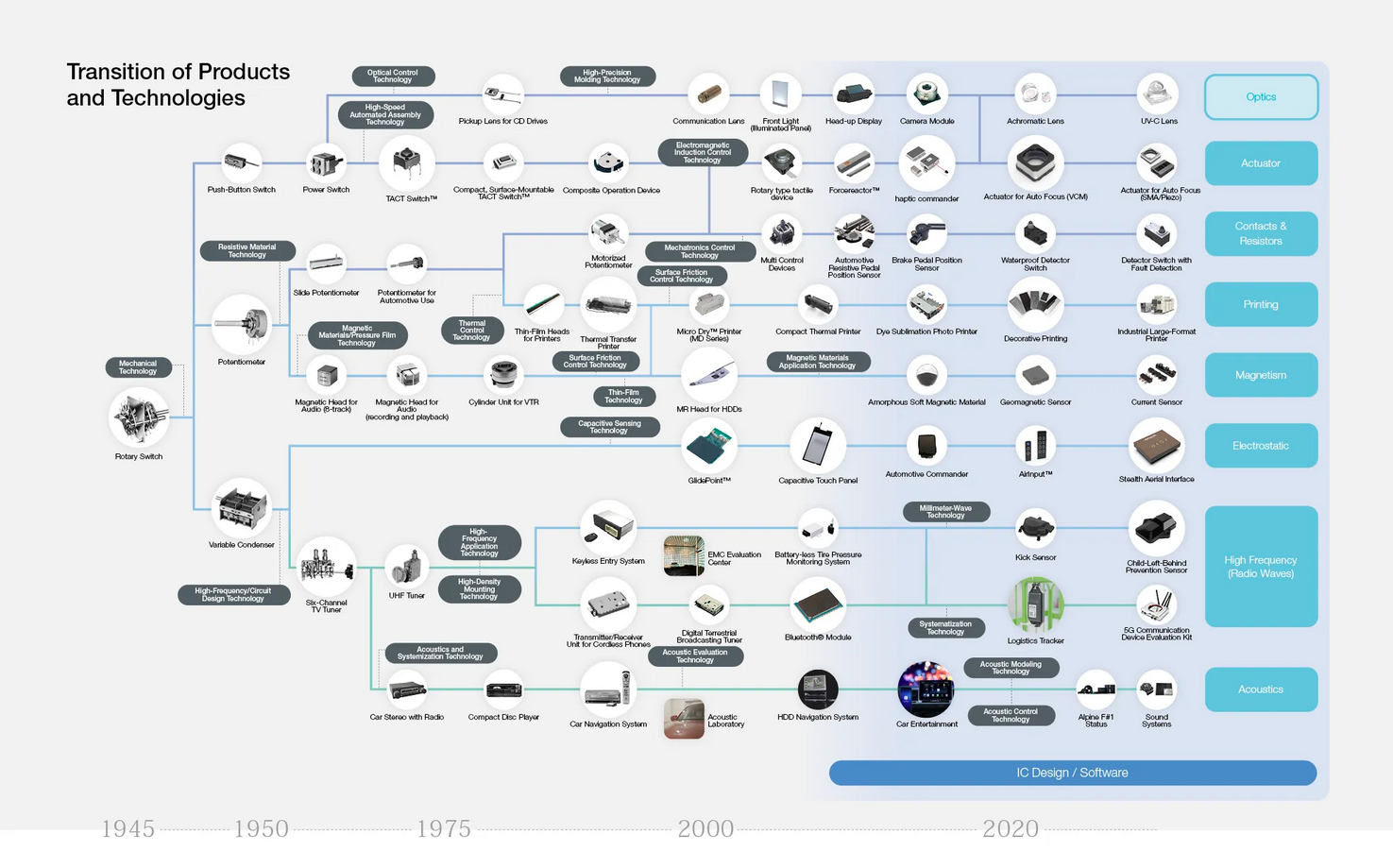
Figure 3: For perspective, not a single one of these over 50 products is an SKCL/SKCM switch. Despite being spun off of an early relationship with Apple, keyboard switches aren't even a blip in Alps Alpines' memories.
In order for companies to continue to compete in an ever complexifying and demanding market that is the norm these days, adaptation and adjustments to the way things are are necessary. I certainly don’t think that Cherry runs the risk of turning into a “Cherry Alpine” of their own and moving entirely out of the keyboard switch scene entirely in the next decade, though Cherry itself is going to go through some changes in the interim. Their switches will likely change as well. The Firefinches through, aside from their timely straddling of the end of one Cherry era and the start of another, are perfect examples of how things are changing as they are the first vendor ordered, custom specified Cherry switches of the modern era* – a feat which used to be rumored to require MOQs of millions of switches just a few years ago. (*Don’t forget that Cherry MX Browns were technically born of a customer request for less noisy Cherry MX Blues many years ago!) Coming in with a bottom out force of ~50 gf and a conventional stem travel of 4.00 mm, the Firefinches are marketed as retaining all of the classic Cherry switch characteristics with some slightly modern updates such as 18 millimeter-long single stage springs as well as factory lubed and unlubed options. While originally starting by way of collaboration with EU vendor ‘Whiplash’, whose website is strangely entire down as to the time of writing this review, worldwide proxies of the switches have picked them up in PantheonKeys, ThoccExchange, BowlKeyboards, Novelkeys, and a couple of others – all similarly priced at ~$0.70 per switch regardless of them being facotry lubed or not. While the longevity of these switches is incredibly uncertain given the aforementioned shifting in Cherry’s production, the ostensible maintaining of production of all custom community-inspired and later switch releases throughout this transition in the last couple of months suggests that the Firefinches may be available for quite some time into the future.
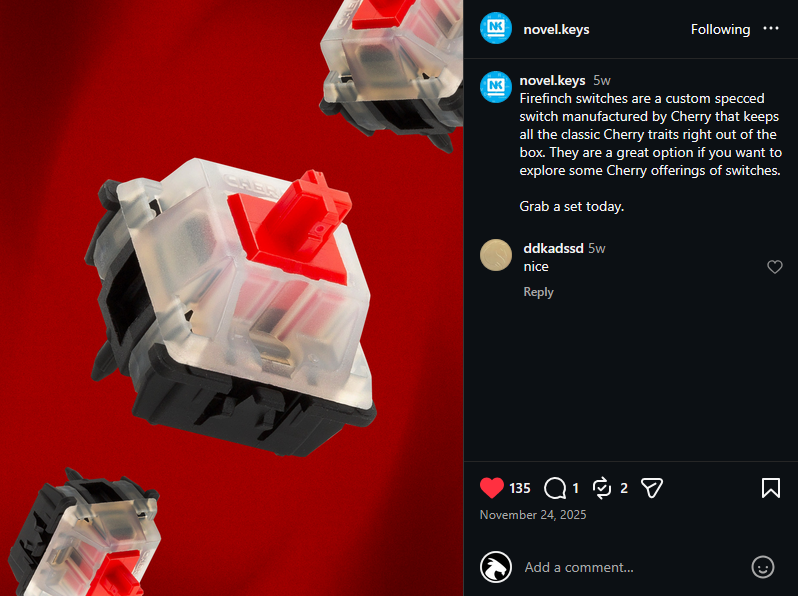
Figure 4: Instagram announcement from Novelkeys announcing their availability for sale as of late November 2025.
MX Firefinch Performance
Note: As of the time of writing, Cherry MX Firefinch switches were available for purchase in both unlubed and factory lubed varieties. The review below specifically covers the factory lubed variant of the Firefinches. Any and all references to dry, unlubed MX Firefinch switches will be clearly marked as such.
Appearance
At the highest level, the Cherry MX Firefinch switches come in a three-part colorway that screams “classic OEM-style linear” more so than it does anything custom or necessarily worthy of a special name. However, I suppose if you had to name any standard looking linear red switch something that isn’t already a type of fruit that some other switch is named after, a type of bird that comes in varying shades of red and black isn’t exactly the worst of choices. (My birding girlfriend would certainly argue that these would be more aptly named Cherry MX Rock Firefinches or Cherry MX Black-faced Firefinches, but I won’t torture you with that discussion that I was involved with.) Jokes about the name aside, these very much invoke a classic switch look that remind me a lot of early Gateron KS-9 Reds from the 2014-2016 era before custom colored switches took over. While it’s technically not the first modern Cherry switch to feature a “milky” white top housing, on account of both the New Nixies and the MX Northern Lights, spiritually this is certainly the closest I think we’ve ever come to a “milky topped Cherry switch” – something which enthusiasts have wishfully discussed for over a decade leading up to this modern Cherry era. While from a distance these may blend in well with old batches of standard switch offerings, up close their modern ‘CHERRY’ nameplate with bubble letters more than clearly marks these as being from Cherry and nobody else. There are also a few other details on each of the parts of the MX Firefinches which clearly mark them as having been made by Cherry, though all of those details occur at a sub-part level. Discussion of these identifying details may be found in the paragraphs and photos below.
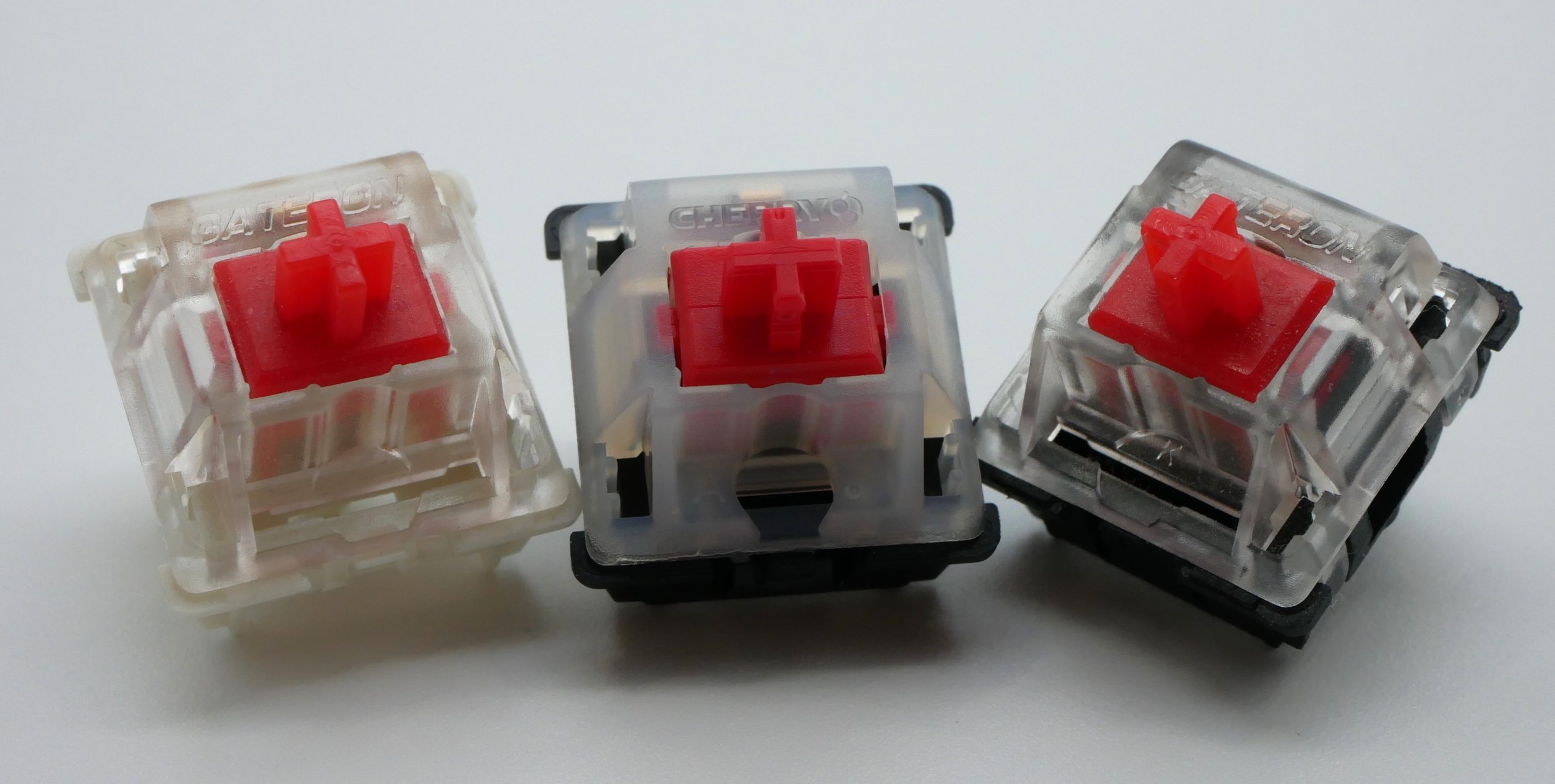
Figure 5: Appearance comparison between Cherry MX Firefinch (Middle) and early OEM-style Gateron Red switches.
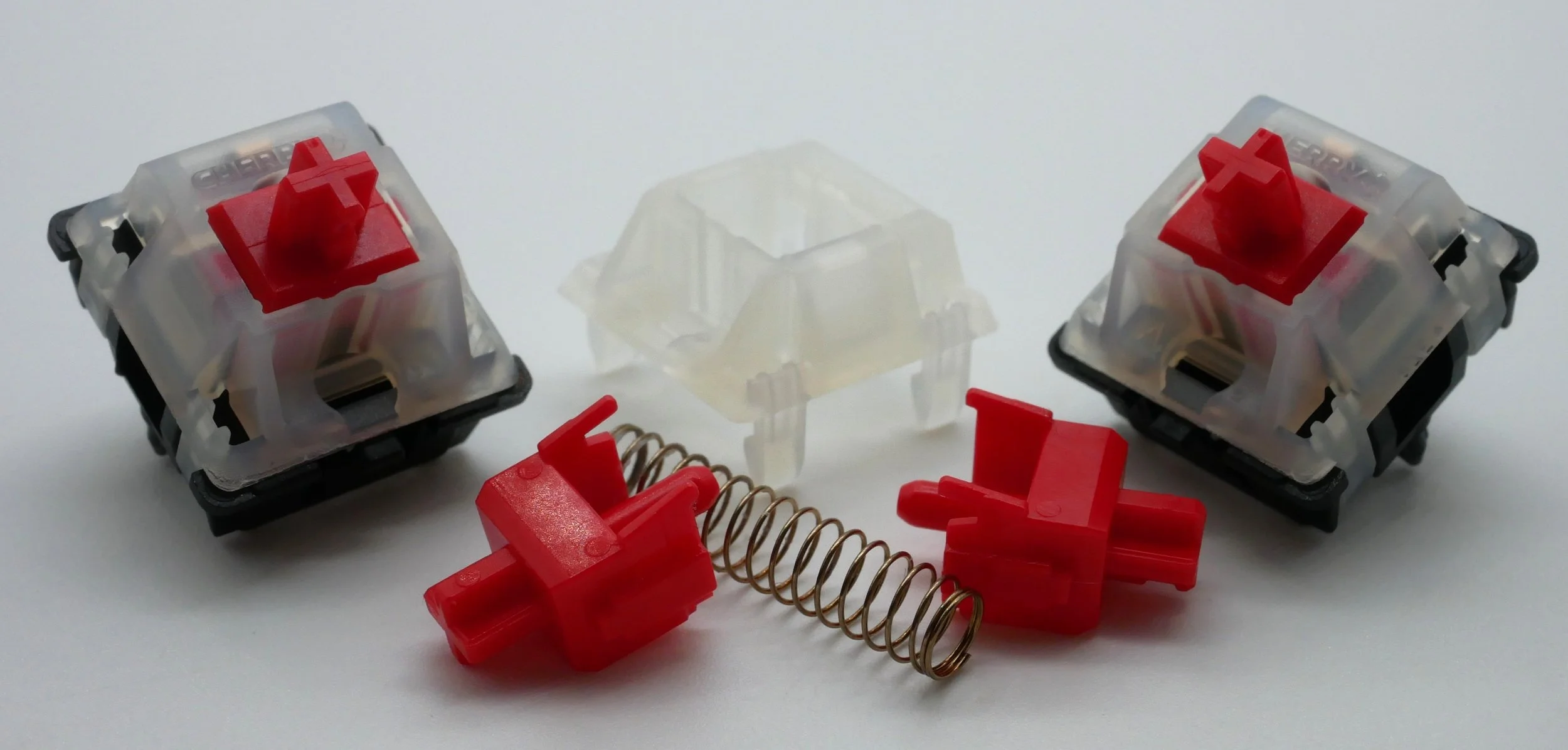
Figure 6: Cherry MX Firefinch switches and their components.
Looking first to the milky white, translucent nylon top housings of the Cherry MX Firefinch switches, we’re greeted with a slew of features that very clearly denote these as being of the MX2A switch platform and closely tied to the top housings of the Cherry MX Northern Lights. Despite Cherry not having any formal documentation of these switches for me to ascribe a part number to as of the time of publishing this review, the fact that these are beat-for-beat identical to the MX2A-8C7D Northern Light switches makes this ostensibly likely to be true. Externally these matching features include in the modernized ‘CHERRY < Logo >’ nameplate with large, bold bubble letters, a severely restricted through-switch LED/Diode slot with only a small centered circular indentation for LEDs, and a single, capital letter mold marking on the left-hand side of this slot. Internally the shape of both north and south side guider rails as well as the mold marking being located on the left-hand side edge of the housing where only Cherry puts top housing mold markings lines up perfectly with the Northern Lights. Both of these MX2A platform switches have mold markings here that are three numbers followed by a solid dot, something which may be usable to distinguish from the MX-platform milky top housings of the Cherry MX ‘New Nixies’ which do not appear to feature this dot after the mold marking. (I’m not certain that is necessarily true, though, of modern ‘New Nixies’ being manufactured today as those markings are from when the switch was first released in late November of 2022.) Do note though that this may not work for all MX vs. MX2A comparisons and potentially only for recent, more customized MX2A releases as the top housings as shown in my Cherry MX2A RGB Black Switch Review do not feature the dot following the mold marking discussed above.
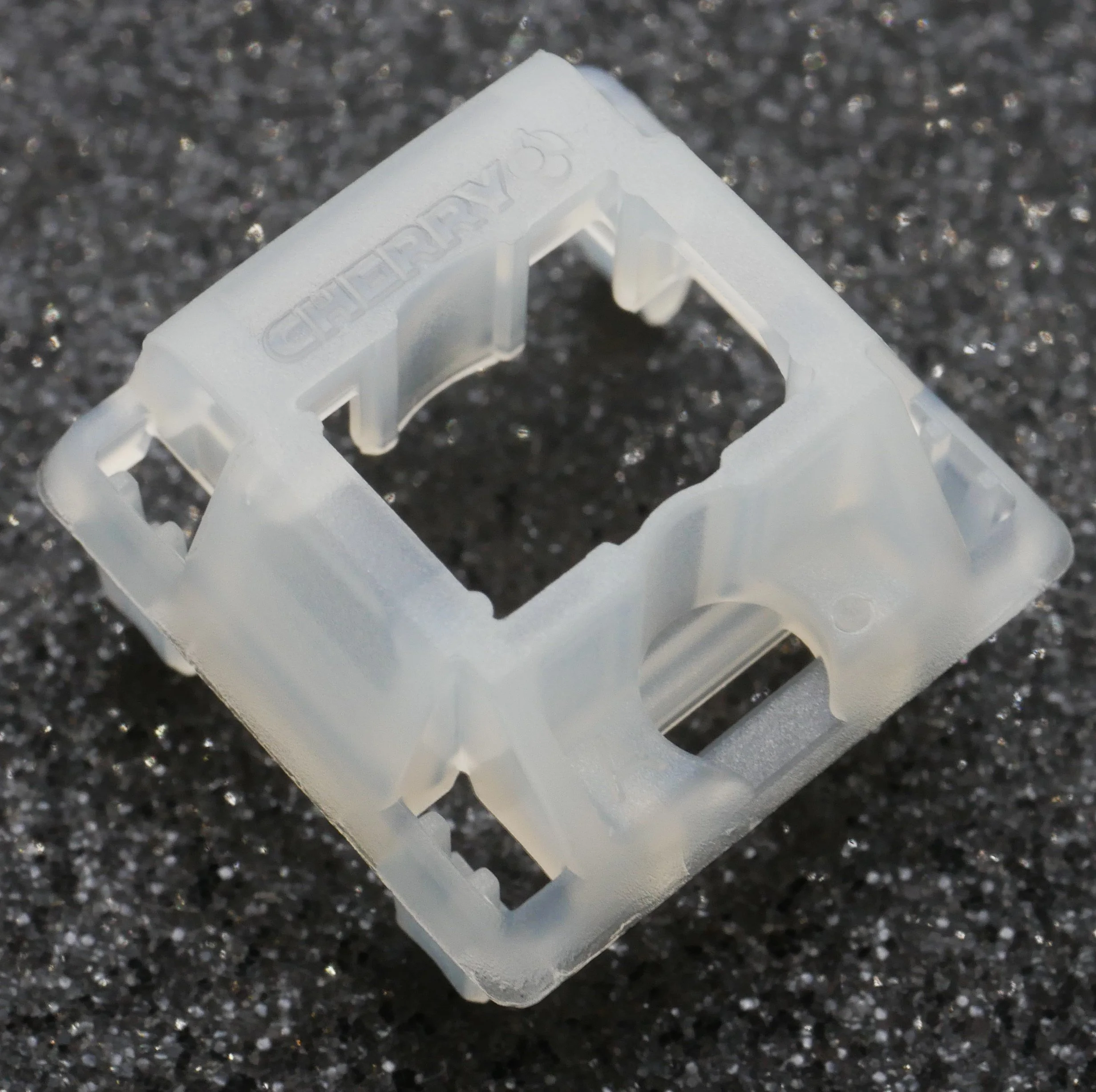
Figure 7: Cherry MX Firefinch top housing exterior showing modernized, bubble letter nameplate, restricted LED/diode slot, and single capital letter marking to the left of that slot.
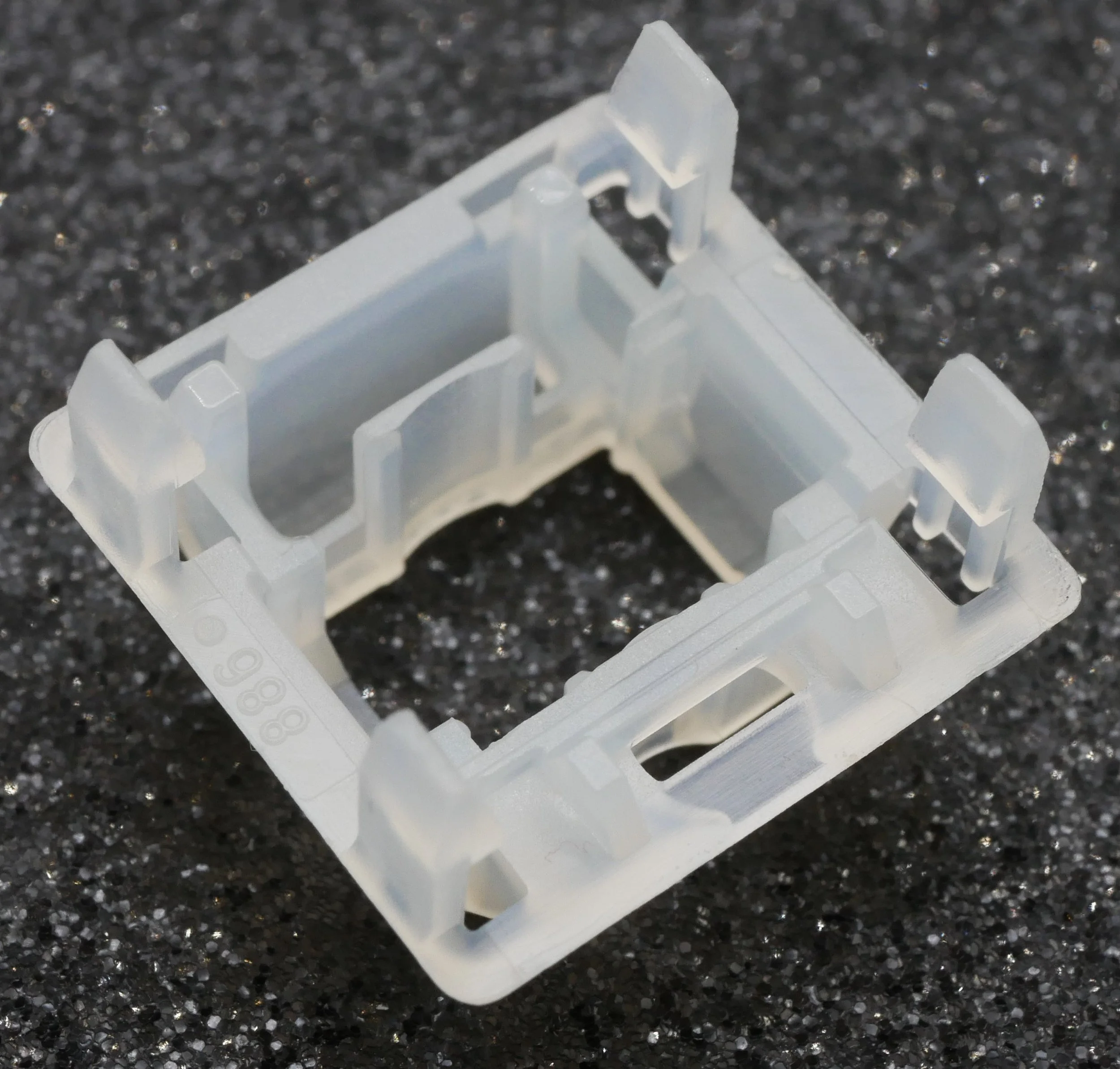
Figure 8: Cherry MX Firefinch bottom housing interior showing identical features to other milky Cherry MX2A top housings such as the triple digit + dot mold marking on the left-hand side of the housing.
Moving next to the red, presumably POM stems of the Cherry MX Firefinch switches, I’m met with a distinct lack of details that kind of throws a wrench in the MX vs. MX2A conversation from the previous paragraph. While the switches very much do look like Cherry stems – featuring non-tapered slider rails of average length, an ostensibly short stem pole with a tiny bit of tapering, mold ejector circles on the stem front plates, and squared off back capes – the internal ‘crowns’ added to the inner connector between the stem pole and the body of the stem as noted as part of the MX2A platform simply aren’t here. While I struggled quite a bit to see these nubs where they were first introduced in the Cherry MX2A RGB Black Switch Review, I don’t see them at all here in the MX Firefinches suggesting the stems are actually of… the MX platform? Without these key features present in the stems that were directly marketed by Cherry as being hallmarks of the MX2A platform, I’m not entirely sure what it makes these switches out to be as I’m not aware of any switches from Cherry to date that feature partial MX2A parts and partial MX parts. (I can’t even imagine what Cherry would try and classify these stems as then…) Beyond this incredibly strange mismatch in details versus expectations, the stems are otherwise unremarkable as most Cherry stems are and feature only the slightest amount of factory lube on all sides of the stem – and especially the stem pole.
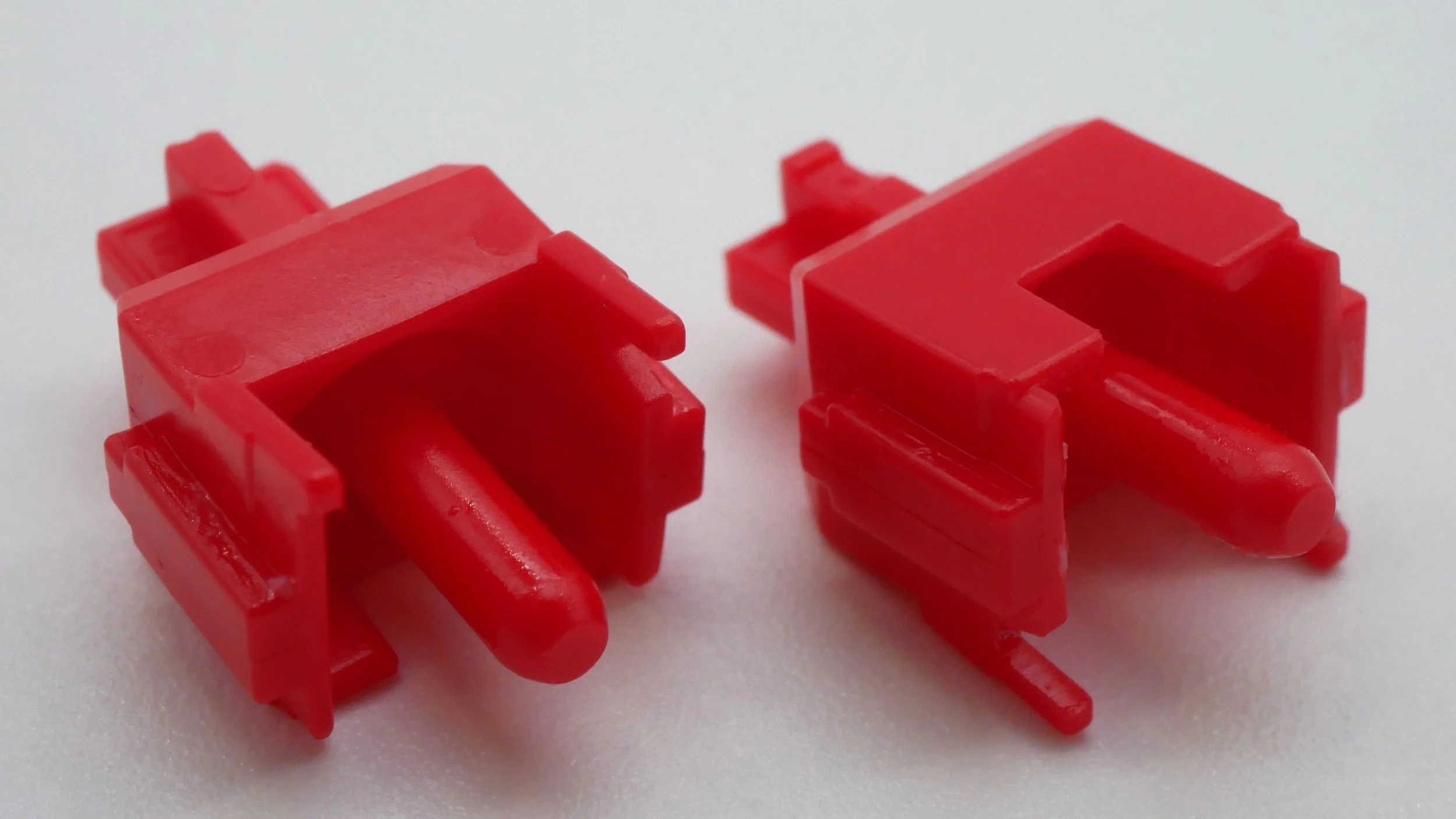
Figure 9: Cherry MX Firefinch stem front and backs showing non-tapered slider rails, normal length stem pole, and squared off back plate capes as is common in Cherry-made switch stems.
Finally arriving to the black, nylon bottom housings of the Cherry MX Firefinch switches we’re again met with a lack of MX2A platform features that were expected here. While the square holes noted in the LED/diode slot regions of the Cherry MX2A RGB Black, MX Northern Light, Cherry MX Honey, and Cherry MX Petal switches which I’ve reviewed were not explicitly stated as being key parts of the MX2A switch design… all of them share it. The Cherry MX Firefinches do not. Instead, they opt for a traditional four small holes exterior where LEDs/diodes thread through the housings. Stranger yet, though, is the fact that the MX Firefinches do feature the double slider rails and increased factory lubing details that were espoused by Cherry as being keys to the MX2A platform – making these a weird straddle of MX and MX2A features. Trying to not wrestle too hard with the fact that this switch is now almost perfectly 50/50 MX and MX2A in its details with a clean split down the middle for bottom housing features, the only other real details of note here are the external PCB mounting pins and internal globs of factory lubing present throughout the housings’ interiors. Much like was noted in the Cherry MX Honey Switch Review, there’s a large amount of factory lube in the base of these switches that have yet to be dispersed in their stock forms.
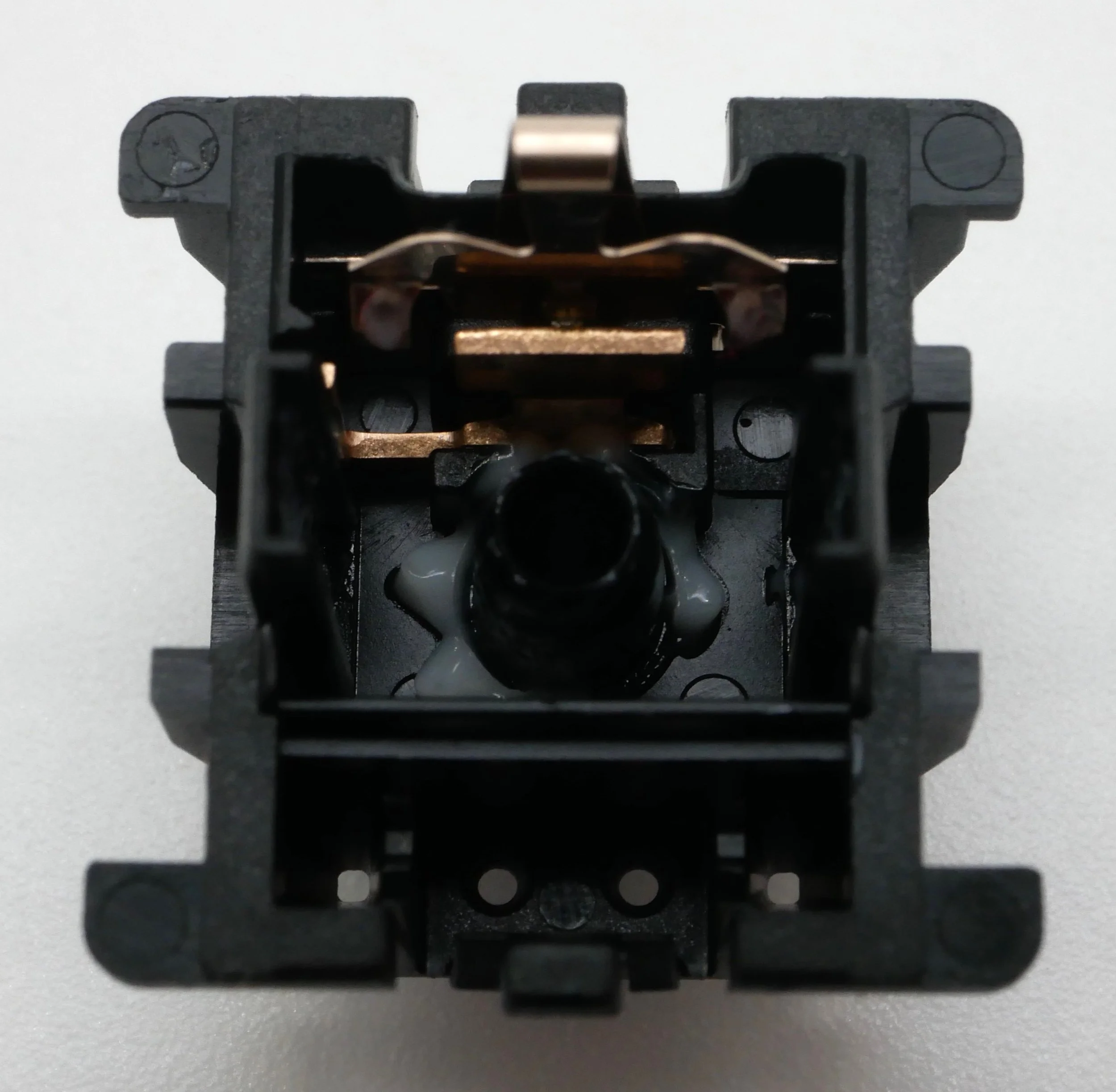
Figure 10: Cherry MX Firefinch bottom housing interior showing ridged slider rails and large amounts of factory lubing in the base of the housing as well as on the switch leaves.
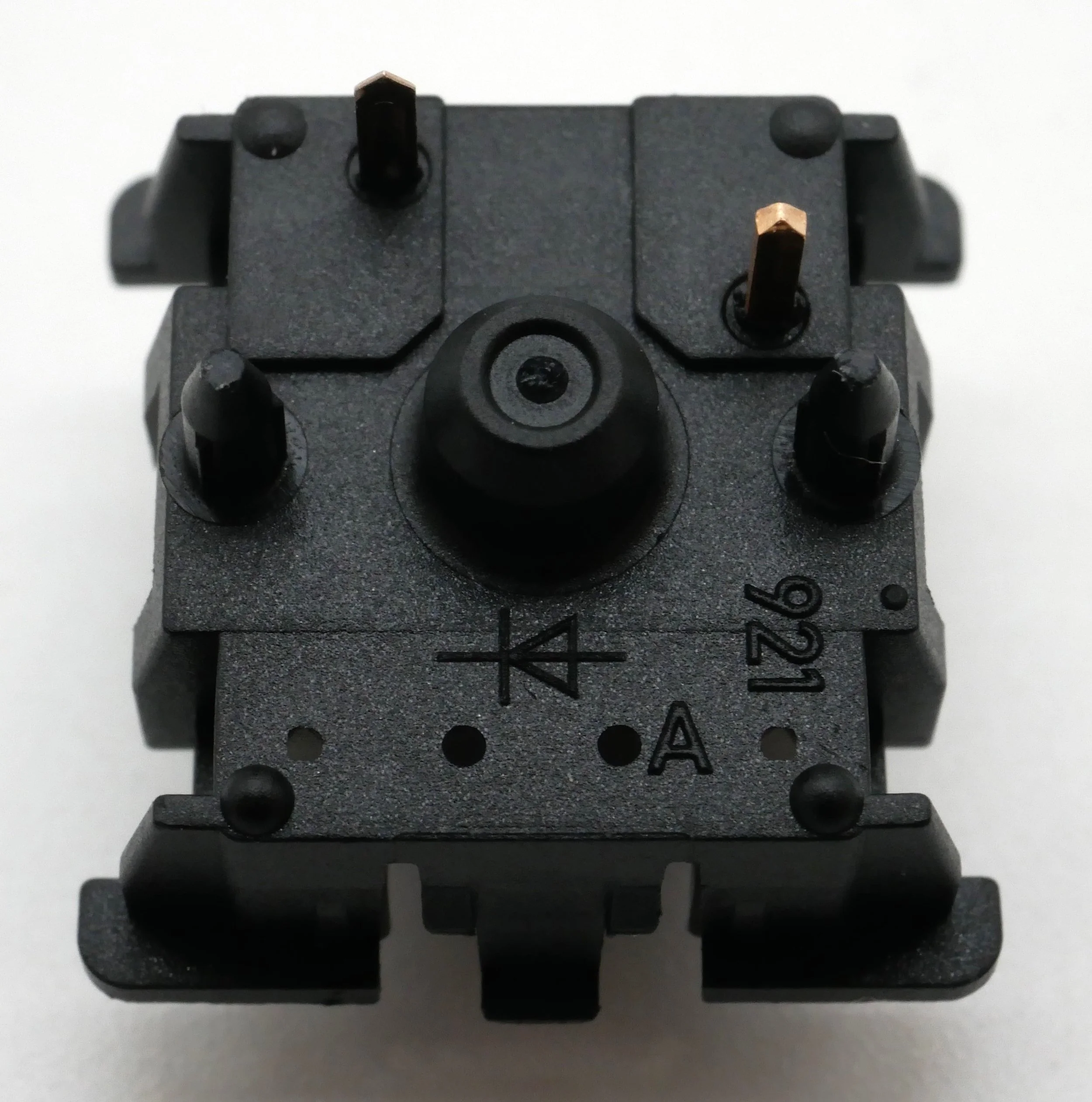
Figure 11: Cherry MX Firefinch bottom housing exterior showing PCB mounting pins and Cherry-specific three digit and single capital letter mold markings in lower right hand corner.
Push Feel
While the Cherry MX Firefinch switches physically straddle the line between the MX and MX2A, and historically straddle the line between old school, German-made Cherry switches and the future that is Chinese-produced Cherry switches, their in hand feeling is more or less in line with the peak of the MX2A platform thus far. Packing no surprise punches that might come amidst production reorganization, the entirety of the strokes of the Firefinch switches are clean, simple, straightforward, and exactly what you would expect of a modern, decently well-built Cherry switch. The clearest impact on the feeling of these switches can be felt in their generous factory lubing that gives them just a barely scratchy sort of feeling that is surprisingly consistent both throughout the strokes of each switch as well as from switch to switch. Editorially I’m really torn about using the word “scratchy” here as the “scratch” is so subtle that is almost feels more like deliberate texturing than improperly polished and touched up molds. This nuance I’m trying to parse here is almost the same as it would be for me to say that running one’s finger across the top housings of the Cherry MX Firefinches produces a ‘smooth’ feeling. While this is clearly not smooth in a glassy, perfectly flat sort of sense, the little bit of stippling that is there feels deliberately textured and purposeful. On either end of the linear strokes are firm, solid, and ever so dampening housing collisions that are balanced and pack in the exact sort of depth that is not only expected of Cherry but why keyboard enthusiasts keep reaching for them even to this day. While the MX Firefinches obviously represent linears that feel technically better and more clean than the vast majority of Cherry’s switches leading up to this point, it feels right at home with the expectations they set out for in announcing the MX2A platform and have shown to be working towards in recent iterations.
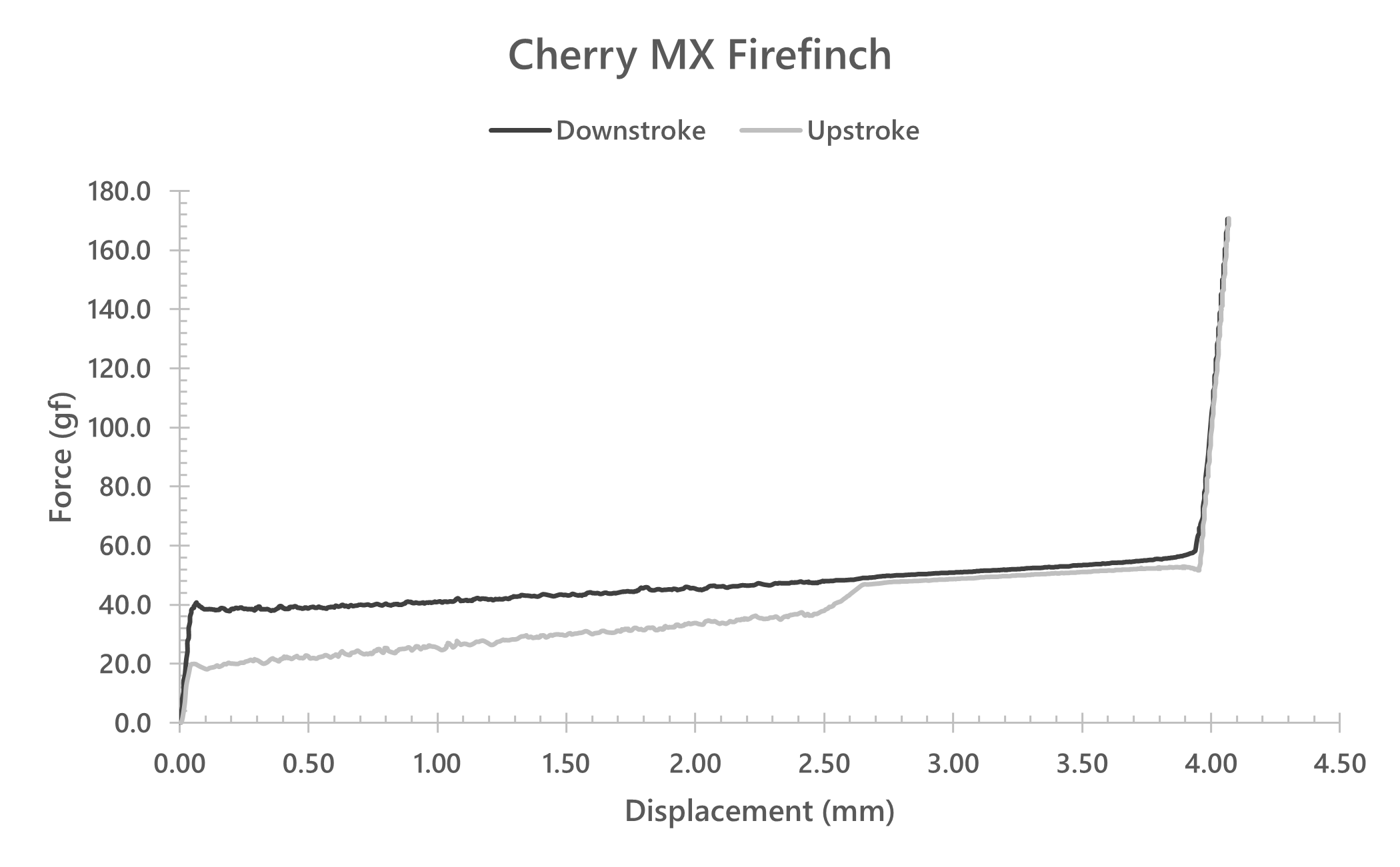
Figure 12: Force curve diagram for the stock Cherry MX Firefinch switch.
Sound
As a result of the combined effects of the visibly over the top factory lubing of the MX2A platform and the composition of Cherry’s specific nylon housings, it’s not all that surprising to imagine that the MX Firefinch switches are fairly quiet linears, all things considered. Even when being typed on quite aggressively, they don’t really change all that much in volume with only a slight pickup in topping out pitch with faster speeds. Pivoting on that not-as-positive note for the sound profile of the switches, it’s probably not all that surprising to imagine that a Cherry linear that does have some physical scratch feeling also has its less than stellar points to its sound profile. The most notable of these features is a bit of a shuffling sound that can be heard throughout the upstrokes and downstrokes of all of the switches in the batch that I received, which while not overly bad nor aggravating on the ears like aggressive spring ping or gravelly, large grain scratch simply isn’t what most people want to hear in their linears. Returning back to the pitch shifting of housing collisions at different speeds, the housings of the Cherry MX Firefinches are not nearly as balanced in terms of their sound profiles as they are in their push feeling. Much like has been noted in other recent Cherry switches with milky top housings like the Cherry MX Northern Lights, the topping outs are a bit thinner, a tiny bit higher pitched, and just don’t nearly carry the same engulfing depth that the solid, black nylon bottom housings have. While the MX Firefinches are certainly very far from the bad Cherry switches I’ve heard and tried out over the years, they have a frustrating mix of tiny imperfections at each of the points of note in their sound profile that really stops them from having a truly clean, singular signature sound point to focus on. Simply not having spring ping just isn’t enough to really hang one’s hat on.
Wobble
The stem wobble of the Cherry MX Firefinches is in line with most other recent MX and MX2A platform switches, with slightly more E/W direction stem wobble than N/S direction wobble. While neither of these directions are overly bothersome, it is notably more than most other premium modern switches at the Firefinch’s price point.
Measurements
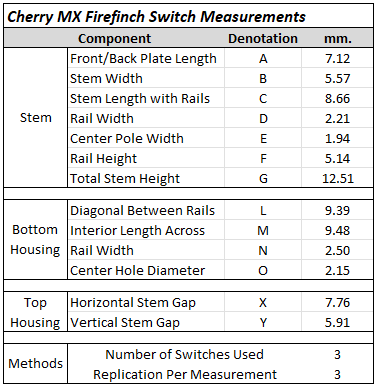
If you’re into this level of detail about your switches, you should know that I have a switch measurement sheet that logs all of this data, as well as many other cool features which can be found under the ‘Archive’ tab at the top of this page or by clicking on the card above. Known as the ‘Measurement Sheet’, this sheet typically gets updated weekly and aims to take physical measurements of various switch components to compare mold designs on a brand-by-brand basis as well as provide a rough frankenswitching estimation sheet for combining various stems and top housings.
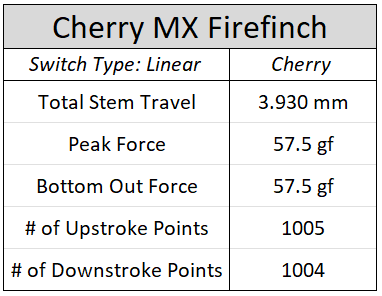
Figure 14: Numerical details regarding the force curve for the stock Cherry MX Firefinch switches.
Have you ever wanted to be bombarded with more switch data than you’ve ever seen at any point in your life before? Consider checking out the ‘Force Curve Repository’ hosted on my GitHub that contains all force curves that I take both within and outside of these full-length reviews. In addition to having these graphs above, I have various other versions of the graphs, raw data, and my processed data all available for over 1500 different switches for you to use however you see fit. Check it out via the ‘Archive’ tab at the top of this page or by clicking any of the force curve cards above.
Break In
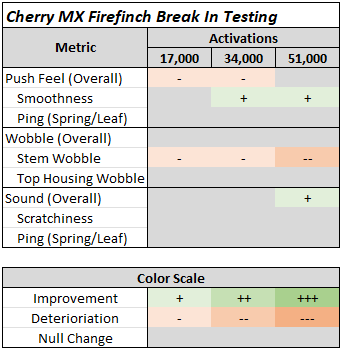
Break In Notes
17,000 Actuations
- After 17,000 actuations, the most notable change in the Cherry MX Firefinches is that they simply just feel more inconsistent from switch to switch than their stock counterparts. Likely due to migration of the heavy amount of factory lubing present in the switches as seen above, some switches just feel more heavily lubed, smoother, and more muted at bottom out than others.
- There’s a slight increase in the stem wobble of the Cherry MX Firefinch switches after 17,000 actuations, most notably so in the E/W direction.
34,000 Actuations
- After 34,000 actuations, the factory lube migration in the Cherry MX Firefinch switches really begins to become noticeable, with quite a few switches feeling distinctly smoother than their stock counterparts. However, the noted inconsistencies from the last break in stage are still prevalent here.
- The 34,000 actuation batch of Cherry MX Firefinches have more stem wobble than their stock counterparts but not the batch of them that was broken in to 17,000 actuations.
51,000 Actuations
- After 51,000 actuations, the inconsistency issues that plagued the Firefinches above all but seem to disappear with all switches feel smoother, more well lubed, and as if they were designed to come out of the box that way. Additionally, they even sound deeper and more balanced at both topping and bottoming out as well.
- There was again a slight increase in the stem wobble of the Cherry MX Firefinches that were broken out to this point, with it being more noticeable in the E/W direction than the N/S direction.
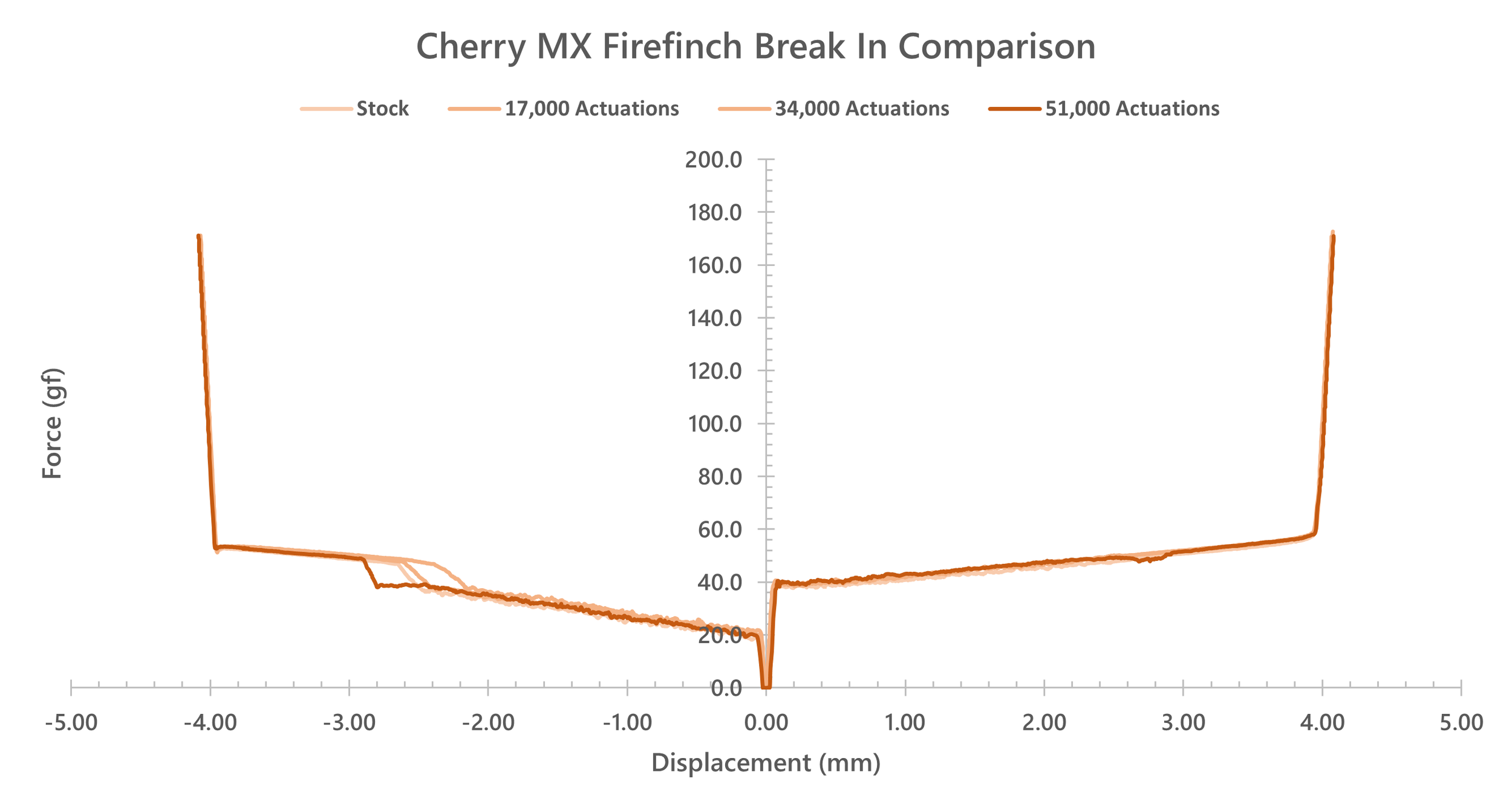
Figure 16: Comparative force curve diagram showing the force curves of the Cherry MX Firefinch switches throughout the break in process.
While the comparative break in force curves above would suggest that something is occurring to the leaves of the MX Firefinches throughout the break in process, its worth noting that the dip in the force for the stock switches around -2.70 mm is in between the dips for the 17,000 and 51,000 actuation switches. Since there is not a coherent trend in this change, I suspect these differences are largely due to stock switch variation more than anything else.
Comparison Notes to Other Notable Linear Switches
Note – These are not aimed at being comprehensive comparisons between all factors of these switches as this would simply be too long for this writeup. These are little notes of interest I generated when comparing these switches to the Cherry MX Firefinch switches side by side.
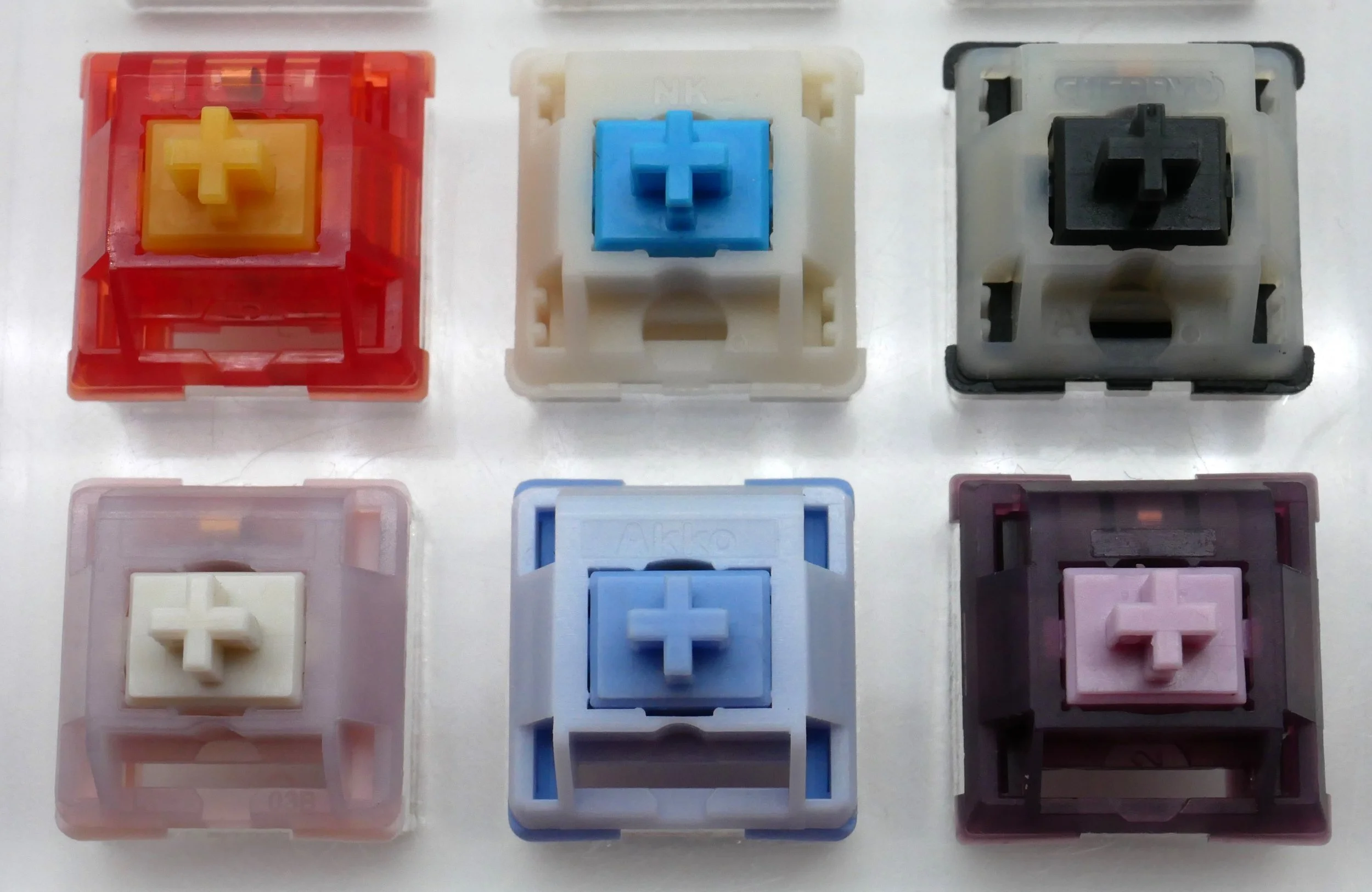
Figure 17: Switches for comparison. (L-R, Top-Bot: Keygeek Y2, Novelkeys Classic Blue, Cherry MX 'New Nixie', HMX Anti, Akko Mirror, and Keygeek Athena)
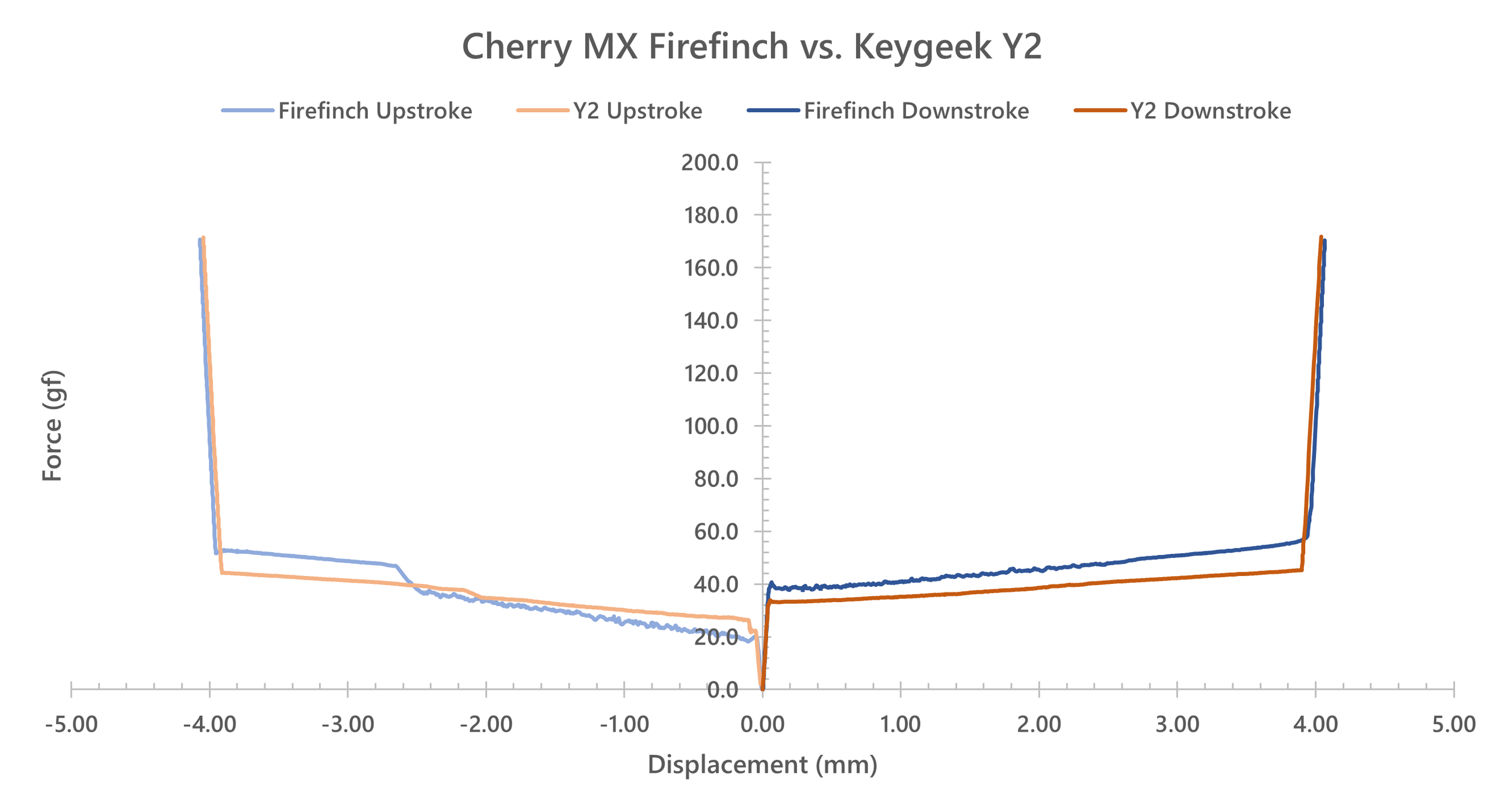
Keygeek Y2
- There is quite a bit less stem wobble in both directions of the Keygeek Y2 switches than there is in the Cherry MX Firefinch switches. This is especially true in the E/W direction where the Firefinches are more wobbly.
- While the comparative force curve between these two switches below would suggest that the Firefinches are slightly heavier than the Y2s, the more generous and consistent factory lubing on the Y2 switches actually makes them feel more ‘thick’ and forceful throughout their strokes than the Firefinch switches.
- While the MX Firefinch switches are not among the worst sound stock Cherry switches, they exist quite a ways away from the Keygeek Y2 switches in terms of overall sound quality. The Keygeek Y2 switches just simply sound more coherent, singular, and polished while featuring none of the scratch or inconsistency sounds noted in the Cherry MX Firefinches.
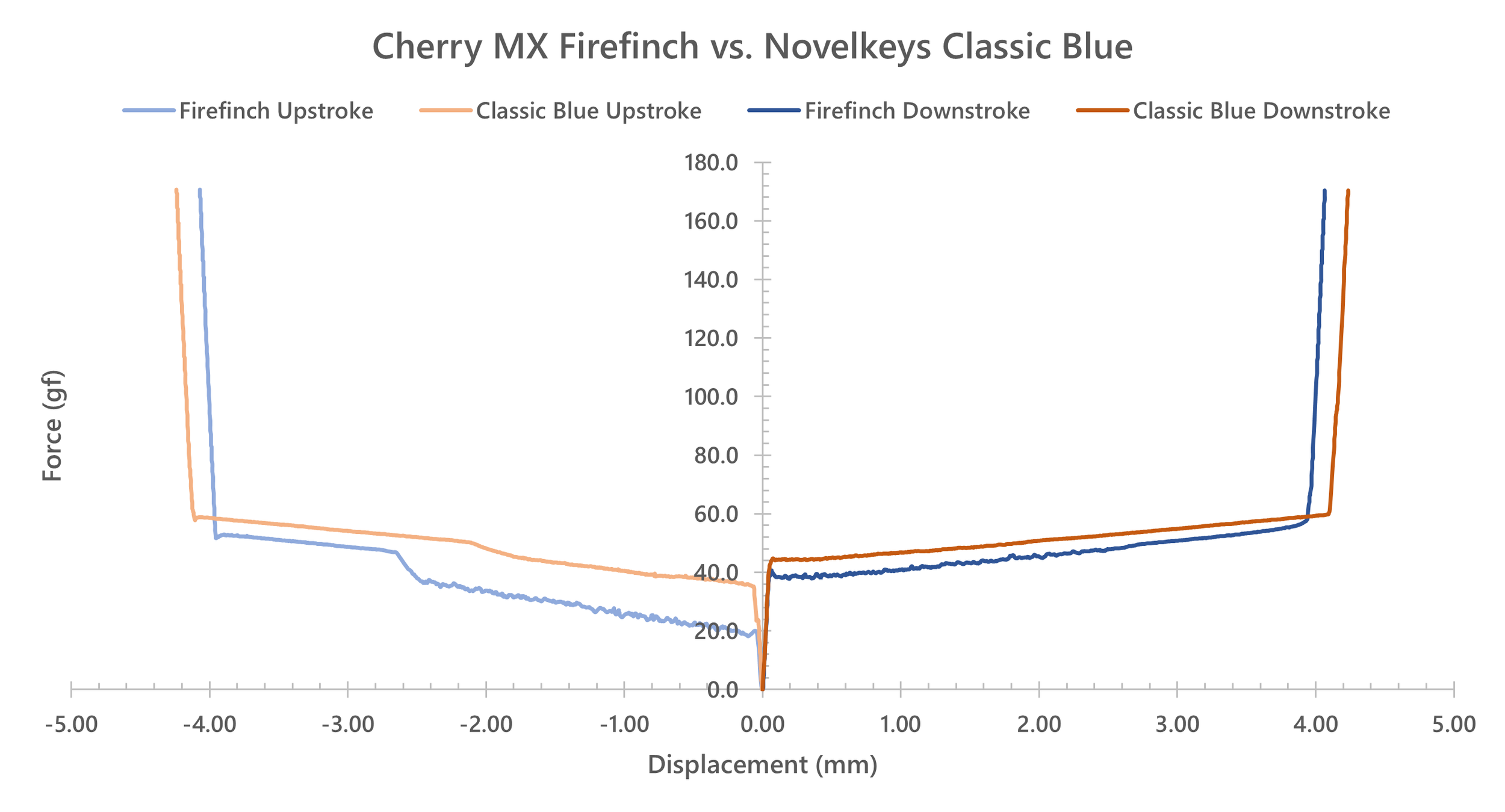
Novelkeys Classic Blue
- The housing collisions of the Novelkeys Classic Blues are more singular, pointed, and springy than the more muted, engulfing housing collisions of the MX Firefinch switches. Even excluding the inconsistencies between topping and bottom outs, the MX Firefinches just feel more inconsistent from stroke to stroke than the Classic Blues.
- Overall the factory lubing on the Novelkeys Classic Blue switches is more dialed in and consistent from switch to switch than the Cherry MX Firefinches. This causes the Classic Blue switches to feel more effortlessly smooth and usable out of the box based on this metric than the Firefinches.
- In terms of their stem wobble, the Classic Blues absolutely blow away the Cherry MX Firefinches and all MX2A platform switches as of the time of writing this review. They really only have the faintest amount of E/W direction stem wobble and hardly a touch more.
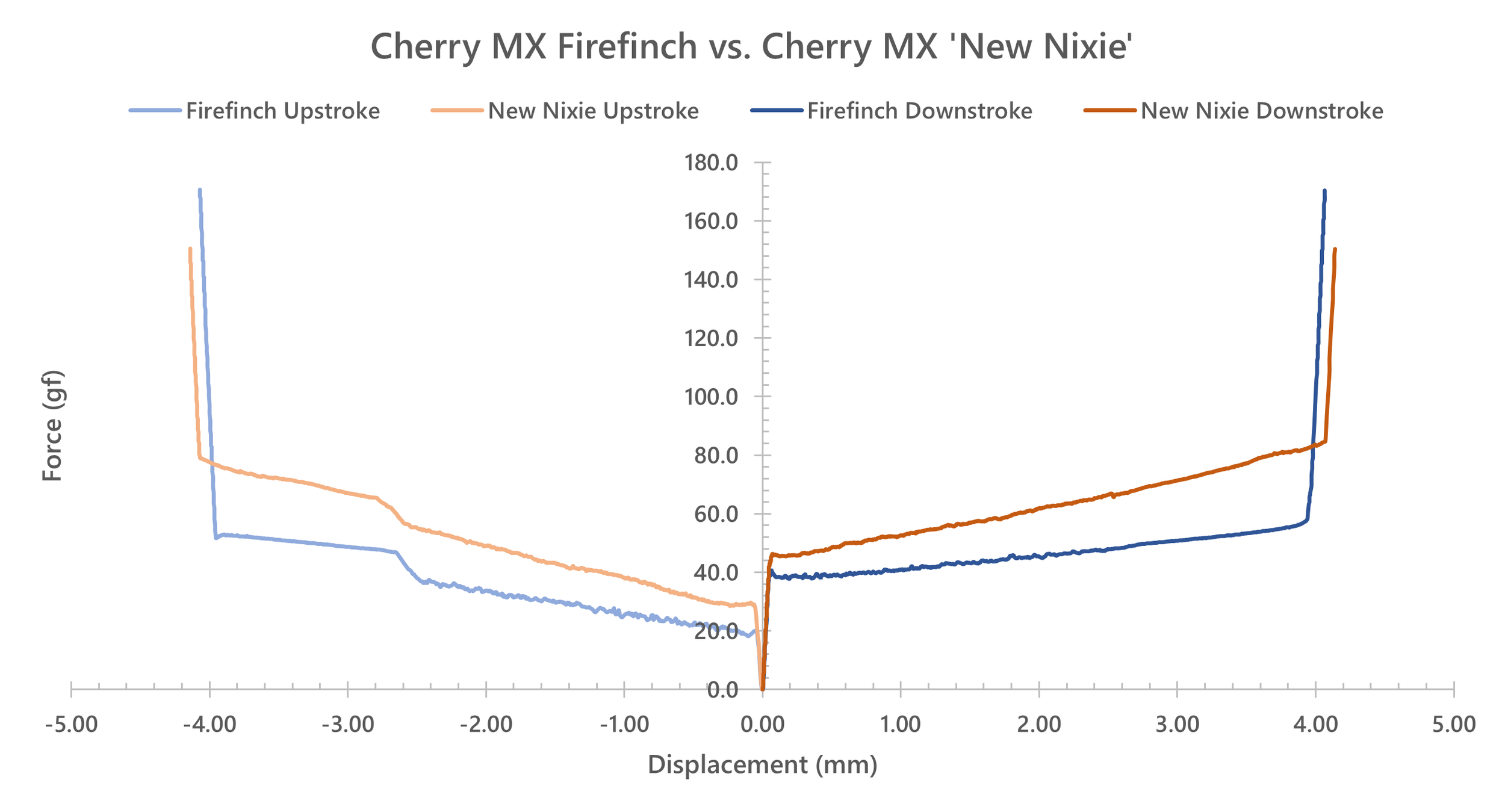
Cherry MX ‘New Nixie’
- Comparing the Cherry MX ‘New Nixies’ from some of the first production batches that were ever made of them to the Cherry MX Firefinches, it is evident that Cherry is improving their factory lubing capabilities and processes. While there’s still quite a bit of room to improve on this point, the Firefinches are noticeably smoother and pack in less of a leathery scratch feeling than the stock ‘New Nixie’ switches.
- In addition to feeling smoother, the MX Firefinches also simply sound better as well and don’t pack in the really thin topping outs and fine grain scratch noise that is rather prominent in the ‘New Nixie’ switches.
- The stem wobble of these two switches are fairly comparable, though I could swear that my New Nixies that I’m using for this point of comparison have less stem wobble than the MX2A platform Firefinches. Something in my gut tells me though that this is definitely an outlier though and may not be the same for others who compare these switches…
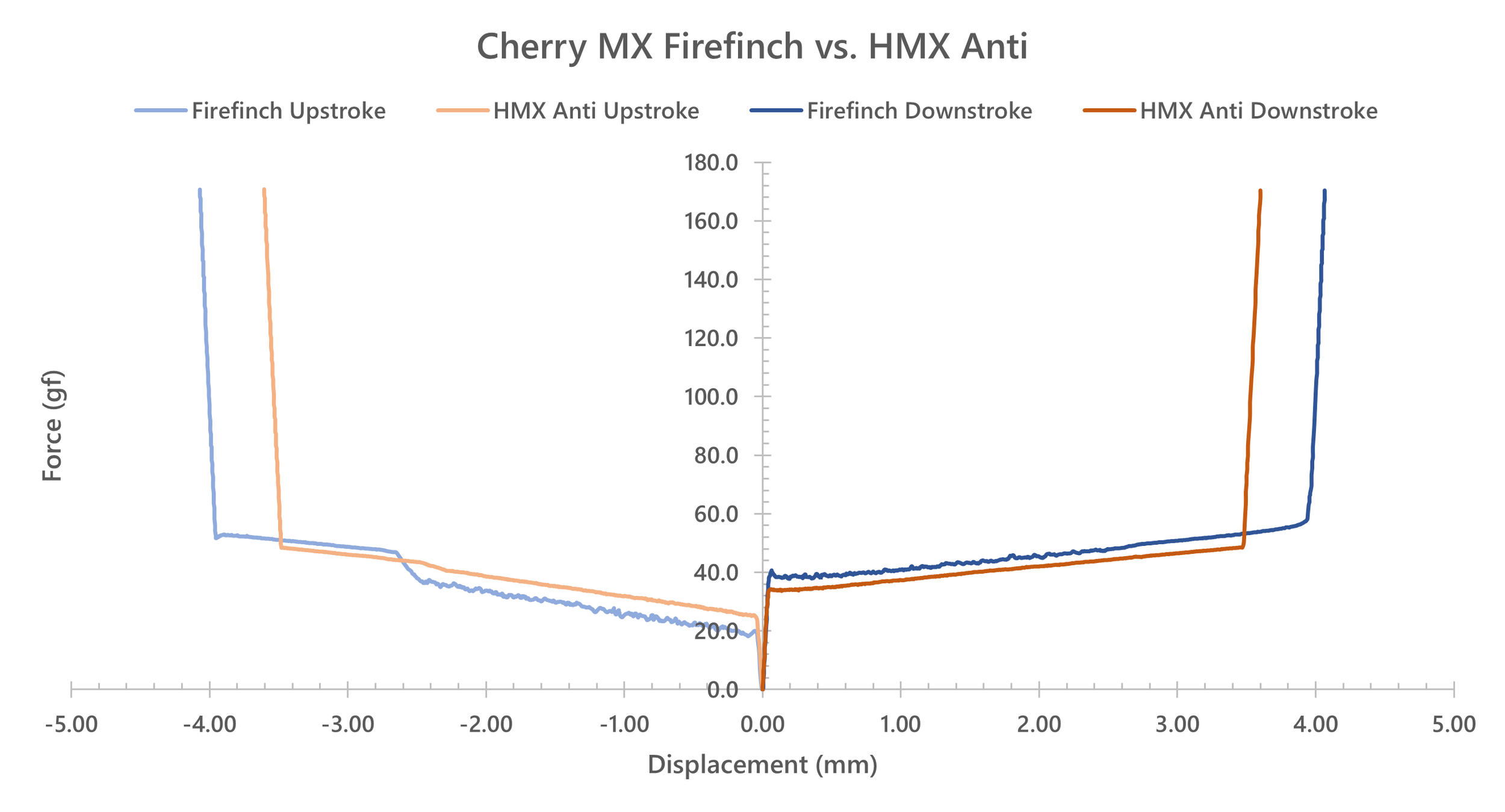
HMX Anti
- Despite the comparative force curve between these two switches below showing that they bottom out at noticeably different points of their downstroke, in hand these switches actually feel as if they both complete full, 4.00 mm travels. I suspect this is the case because of the HMX Anti switches not relying on early bottom out methods commonly employed such as longer stem poles.
- While these two switches are comparable to each other in terms of their smoothness, the housing collisions on the HMX Anti switches actually feel a bit more consistent and deep despite not being made with Cherry nylon housings.
- There’s more stem wobble in both N/S and E/W directions of the HMX Anti switches than there is in the Cherry MX Firefinch switches.
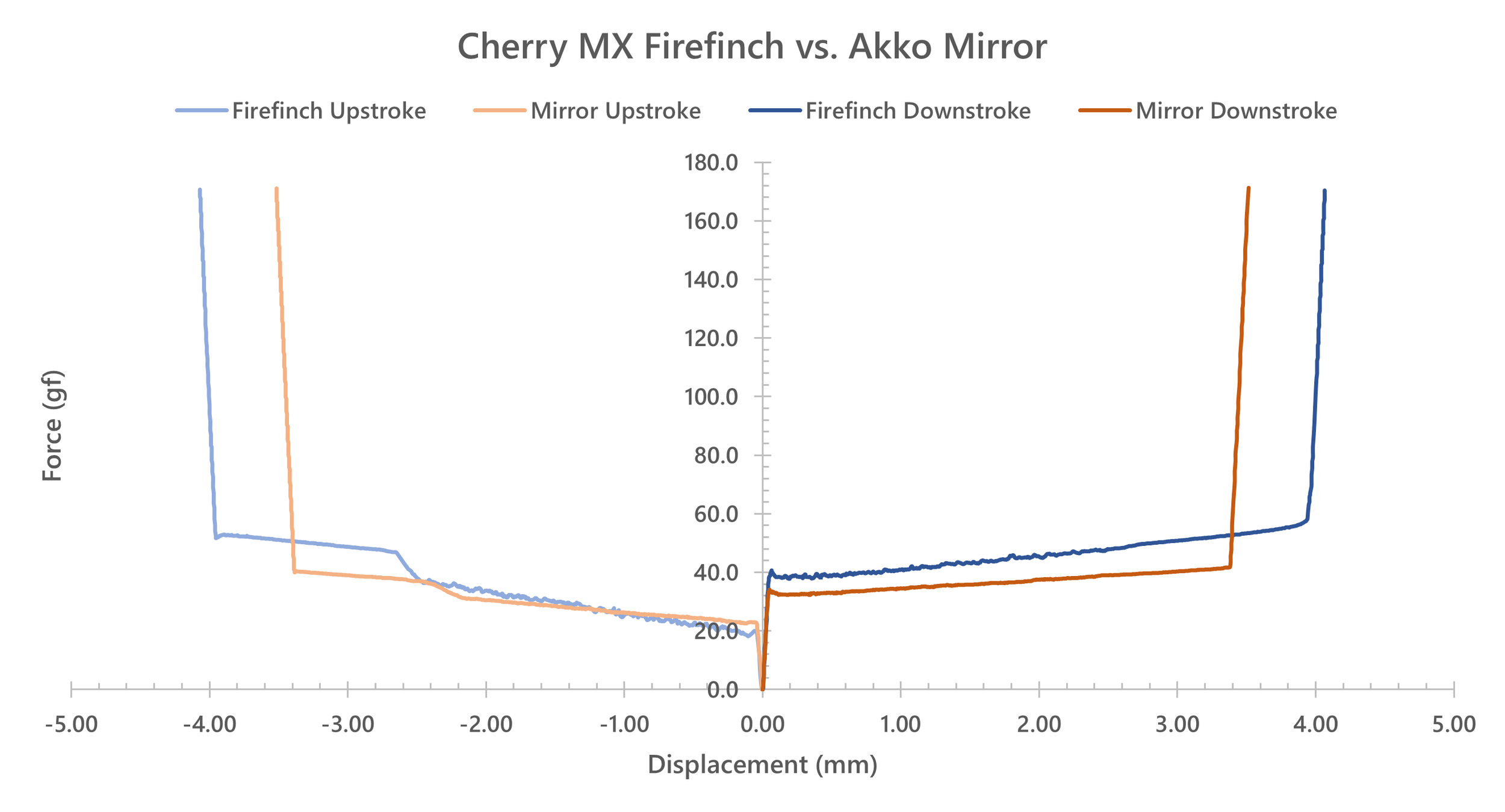
Akko Mirror
- The Akko Mirror switches are far and away the better linear switch of these two, being smoother, more consistent, and more well-constructed than the MX Firefinch switches on nearly every metric that I compare switches on.
- The bottom outs of the Akko Mirror switches are more pointed and slightly more sharp than the Cherry MX Firefinch switches on account of their bottom outs onto their stem pole. While this may not be a point of contention for many users, some linear fans like me actually prefer switches that aren’t as aggressive at the point of bottom out.
- The Akko Mirror switches are both slightly louder and higher pitched than the MX Firefinch switches, though not to such a degree as to make them drastically different.
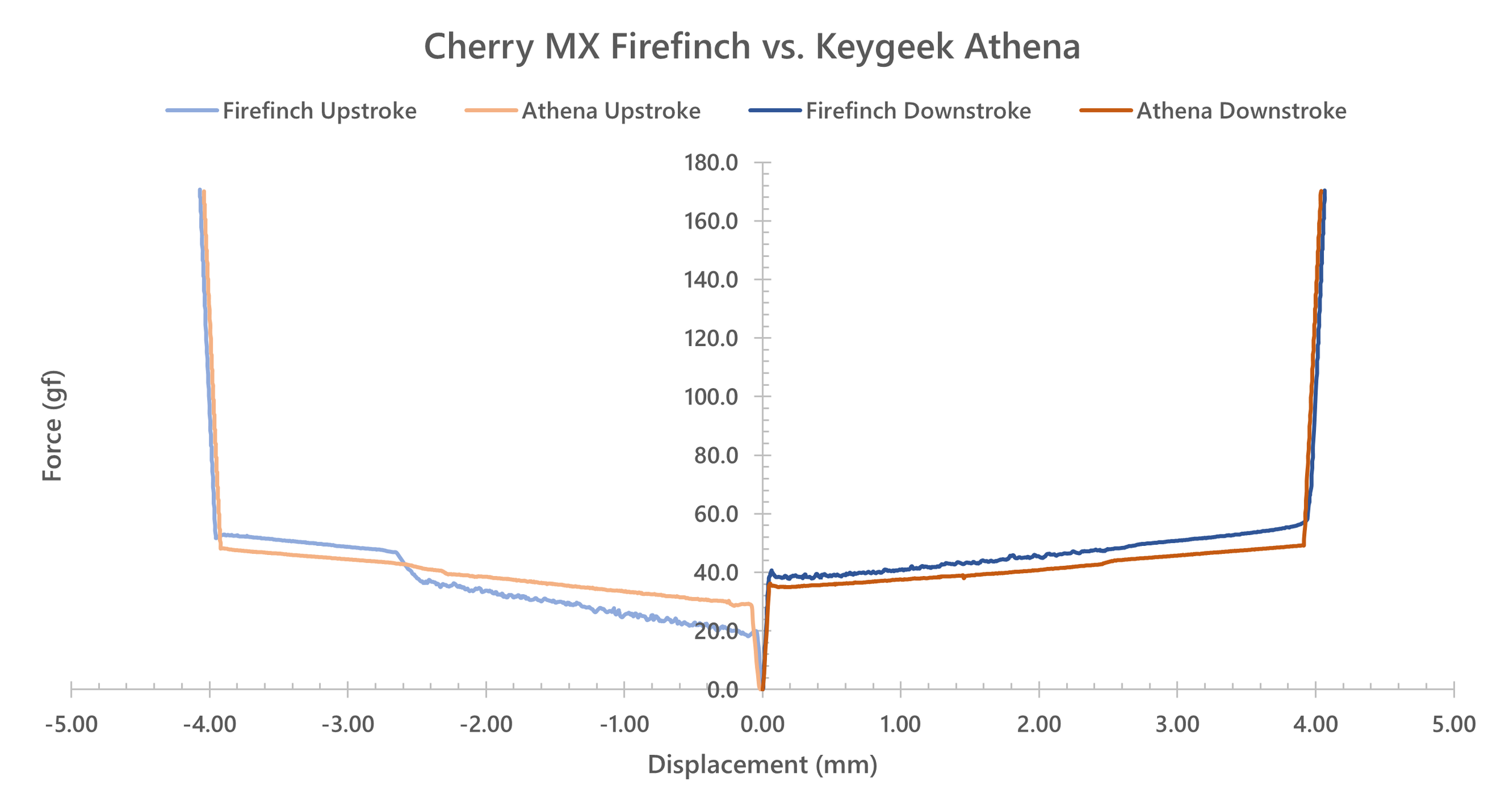
Keygeek Athena
- Of these two switches, the Keygeek Athenas are the more subtle, subdued, and deep sounding with both their strokes and housing collisions being not nearly as noticeable as the inconsistent and slightly scratchy sounding Cherry MX Firefinches.
- There is less stem wobble in both N/S and E/W directions of the Keygeek Athena switches than there is in the Cherry MX Firefinches.
- The Keygeek Athena switches are also more smooth out of the box than both the stock Cherry MX Firefinches as well as those that showed increased smoothness after 51,000 actuations above. In order to get the Firefinches onto the same level as the Athenas based on smoothness, aftermarket switch lubing would definitely be required.
Linearity
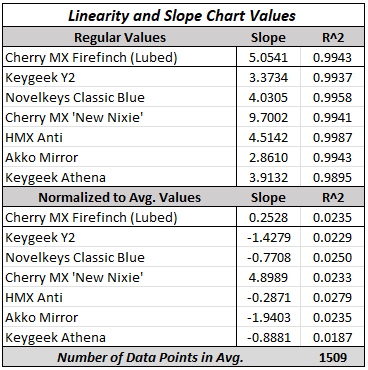
Figure 24: Absolute and relative Linearity and Slope values for each switch in this comparison section.
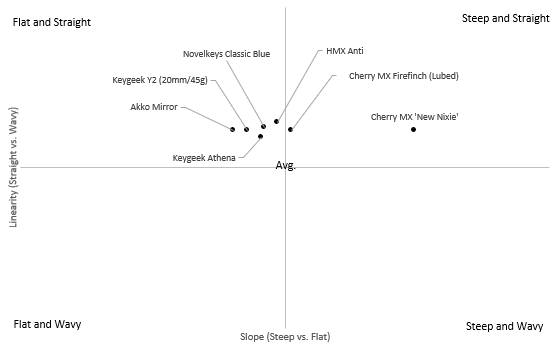
Figure 24: Qualitative comparison of the normalized Slope and Linearity for each switch in this comparison section.
If you are just now seeing this section for the first time and are a bit confused as to what I am talking about when discussing ‘Slope’ and ‘Linearity’, I highly suggest checking out my article titled ‘On Differences in Linear Switches’ where I explain what this section is for and how it came to be! For a bit of a shorter answer, know that this is part of my ongoing attempt to better quantify and articulate differences between linear switches which have historically not been captured in discussions about them.
Scores and Statistics
Note – These scores are not necessarily completely indicative of the nuanced review above. If you’ve skipped straight to this section, I can only recommend that you at least glance at the other sections above in order to get a stronger idea of my opinion about these switches.
Push Feel
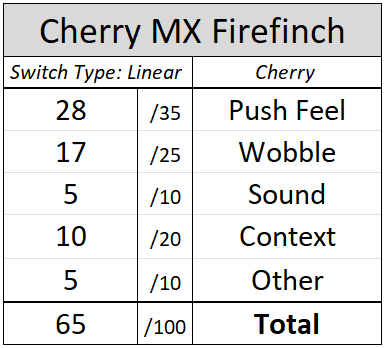
In their stock form, the Cherry MX Firefinches are classic Cherry linears with a ~4.00 mm travel and 58 gf. weighting and the better part of the MX2A platform’s upgrades. These switches are smoother than conventional Cherry linears and with decently firm, slightly muted bottom outs. However, they still do suffer from a slight bit of texturing in their strokes as well as inconsistency between topping and bottom outs that have been noted in other MX2A platform switches that also feature milky Cherry top housings.
Wobble
More so in the E/W direction than the N/S direction, there is a minor but not unnoticeable amount of stem wobble in the Cherry MX Firefinches that is consistent from switch to switch.
Sound
While the overall sound of the Cherry MX Firefinch switches is one that is quieter, more subtle, and fairly subdued compared to the wide range of linear switches that have been produced over the years, they are frustrating in that they have minor issues at seemingly each and every turn. There’s noticeably more scratch sound than in the push feeling, thinner topping outs than bottom outs, and even not insubstantial movement in these features at faster typing speeds.
Context
Like all other recent Cherry switch offerings as of the start of 2026, the availability of the MX Firefinches is certainly without question. However, their price point at $0.70 per switch as assumed to be related to their custom specifications from EU vendor Whiplash make these quite a bit weak on the price per performance ratio. There have been better Cherry switches made in recent memory at or below this price point.
Other
Marking the end of Cherry’s Germany era and the start of their Chinese production facilities, these switches show great promise of the future and how Cherry can continue to develop.
Statistics
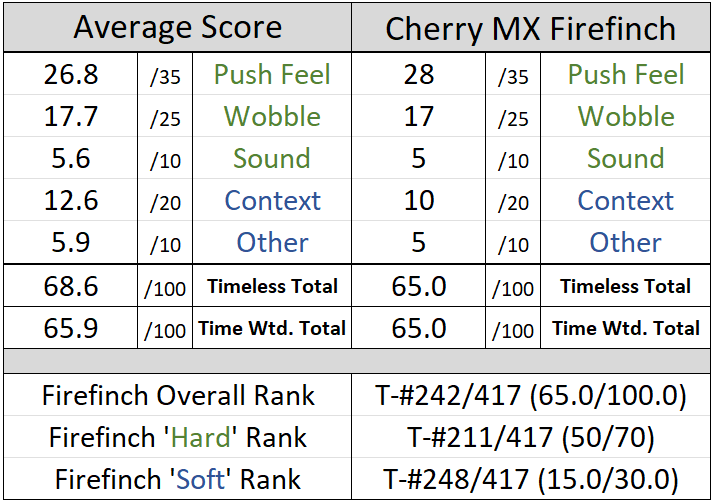
If you are looking at this statistics section and wondering what the heck ‘Timeless’ and ‘Time Weighted’ scoring is, consider checking out my short article titled ‘A Scorecard Time Change’. As a result of scoring becoming a bit anachronistic over the years, switches are now ranked in this statistics table using a “time weighted total” as opposed to their day-of scoring as discussed in that article. If you’d also like to learn about what ‘hard’ versus ‘soft’ ranks refer to specifically, I’d encourage you to head on over to my GitHub linked in the table above or at the links in the top right hand of this website to check out my database of scorecards as well as the ‘Composite Score Sheet’ which has a full listing of the rankings for each and every switch I’ve ranked thus far.
Final Conclusions
At the tail end of this review, I think I can accurately summarize both the Cherry MX Firefinches as well as my own feelings surrounding them as a big mixed bag filled with a little bit of everything good and bad inside. (Super descriptive, I know.) Without these being mainline Cherry switches that were pitched with the same marketing flare and fluff as some of their more recent MX2A releases, I really didn’t have any idea that they were coming nor did I have much in the way of expectations of them prior to landing on my desk. And yet, in hand the Firefinches demonstrably show a better side of the MX2A platform than I think I’ve been exposed to in some time and it really highlights the impacts of all of the small, incremental steps that Cherry and the teams there have been taking to improve their switches in recent years. Sure, these switches are not without their flaws in inconsistent housing collisions or scratch that is present both audibly and physically, but the tolerances on the parts for the Firefinches as well as the factory lubing make for some of the smoothest and most coherent linears that I’ve encountered fresh out of the box from Cherry in some time. Digging back around in the bag of mixed feelings again, I also must say that it feels quite great to see Cherry collaborating with vendors such as Whiplash to make staple linear offerings such as these available to the public from their newest production lines… but not as positively so at $0.70 per switch. The Cherry MX Firefinches have many things going for them while simultaneously working against them as well, and if they were just a bit more mechanically unique, just a bit cheaper, or just a bit more polished and with a good colorway and marketing scheme behind them, maybe all of those other shortcomings would be just a bit more excusable. At the end of the day I doubt that these will be among the most memorable of Cherry’s linears for their performance. Rather, I think that they’ll be remembered in context as a switch that straddles quite a few lines to switch up analogies on you here at the end. For me, they’ll straddle the line between calendar years number 5 and 6 of writing full length switch reviews. For Cherry, they’ll straddle the line between both the MX and MX2A platforms as well as between their old German production facility and their new Chinese one. And for you all, the Cherry MX Firefinches will likely straddle the line between painfully okay and surprisingly good values for an everyday Cherry-made linear switch.
Sponsors/Affiliates
Mechbox UK
- A wonderful UK based operation which sells singles to switches that I’ve used above in my comparisons for collectors and the curious alike. Matt has gone out of his way to help me build out big parts of my collection, and buying something using this link supports him as well as my content!
KeebCats UK
- A switch peripheral company based out of the UK which sells everything switch adjacent you could ask for, they’ve been a huge help recently with my film and lube supply for personal builds, and they want to extend that help to you too. Use code ‘GOAT’ for 10% off your order when you check them out!
proto[Typist] Keyboards
- An all-things keyboard vendor based out of the UK, proto[Typist] is a regular stocker of everything from switches to the latest keyboard and keycap groupbuys. While I’ve bought things from the many times in the past, they also are a sponsor of my work and allow me to get some of the great switches I write about!
Divinikey
- Not only do they stock just about everything related to keyboards and switches, but they’re super friendly and ship out pretty quick too. Divinikey has been a huge help to me and my builds over the last year or two of doing reviews and they’ll definitely hook you up. Use code ‘GOAT’ for 5% off your order when you check them out!
ZealPC
- Do they really need any introduction? Zeal and crew kicked off the custom switch scene many years ago with their iconic Zealios switches and the story of switches today couldn’t be told without them. Use code ‘GOAT’ (or click the link above) for 5% off your order when you check them out!
MechMods UK
- A rising vendor based in the UK, Ryan and crew have been a pleasure to work with and have nearly everything you’d need to build your first or fourteenth keyboard. Go build your latest or greatest one right now with them by using code ‘GOAT’ at checkout for a 5% discount!
Dangkeebs
- A longtime supporter of the website and the collection, Dangkeebs has quite possibly the widest variety of switches of any vendor out there. Not only is their switch selection large, but it rotates and is constantly adding new stuff too. You’re going to need 5% off your order with my affiliate to save off the cost of all those switches!
SwitchOddities
- The brainchild of one my most adventurous proxies, SwitchOddities is a place where you can try out all the fancy, strange, and eastern-exclusive switches that I flex on my maildays with. Follow my affiliate code and use code ‘GOAT’ at checkout to save 5% on some of the most interesting switches you’ll ever try!
Cannonkeys
- Does anybody not know of Cannonkeys at this point? One of the largest vendors in North America with keyboards, switches, keycaps, and literally everything you could ever want for a keyboard always in stock and with an incredibly dedicated and loving crew. Follow my affiliate link above in their name to support both them and I when you buy yourself some switches!
Kinetic Labs
- One of the most well-rounded keyboard vendors out there, Christian and crew have been supporters of all my switch and switch-adjacent needs for some years now. I’m honored to have them as an affiliate and think you should check them out using my affiliate link above to support both them and I when you check out their awesome products!
Keebhut
- Want to try out some switch brands that fly under most vendor’s radars? Keebhut is always seeking out that next latest and greatest and has been super helpful in hooking me up with new brands over the past year. They are all about sharing that love as well, and want to give you 5% off your next order with them when you use code ‘GOAT’ at checkout!
Kailh
- No, you’re not mistaken – this is actually that Kailh that manufactures switches. As one of the longest running manufacturers in the hobby, they have a massive variety of switches available over on their website at any point in time. I’m lucky to be affiliated with them now, and so consider using my affiliate link above when ordering some Kailh switches to support me!
Keebz N Cables
- Australia and Oceania’s very own is now a part of the sponsor list here and I couldn’t be happier to add this long time supporter of the collection to it. They’ve always got an amazing selection of switches (and other keyboard parts) in stock and they want to share the love that they’ve shown me with you all too! Use code ‘thegoat’ for 5% off your first order when you visit!