Gateron Magnetic Jade Delta Dark Switch Review
If the introduction to the HMX Frog Switch Review had you believing that my life was pretty boring, then I’m here to surprise you with the fact that it has been at least that boring, if not even more so, over the past couple of weeks since. And I mean boring to the point of not even having some weird grammatical syntax fact to torture you with for this intro, either. The past few weeks of my life can only reasonably be described as “the most midwestern of late winters” with the large snowstorm that hit half of the United States burying us in 14 inches (~35 cm) of snow just last weekend and an additional 6 inches or so in the days before and afterwards. When I’m not in my warm house either watching TV or working on switch reviews, I’ve either been at work making money or “at work” shoveling the driveway and sidewalk again – no fun social outings, no places to really be, and certainly not an ounce of anything exciting to do other than hunker down on just wait for spring weather to finally hit. I suppose these frozen midwestern weeks are even more so stereotypical in that I did enjoy watching the CFP college football national championship and likely will enjoy watching this year’s NFL Superbowl as well, though with my teams being out of contention before the big games for both leagues I can’t say I have all that much of a stake in it all. It’s just how things kind of go this time of year around here, I think. The girlfriend and I are making plans for the garden and flower bed area surrounding the house once everything thaws out enough to begin working so I suppose that is something worth sharing. Maybe we’ll plant a couple of trees in the side yard, get another bird feeder or six, or even work on an indoor/outdoor herb garden if we can. Honestly we’ve got nothing but time to speculate as there’s so much snow that we can’t even tell the yard apart from the garden. Perhaps I could have started out this review with something about the discourse surrounding both ‘Sinners’ and ‘Marty Supreme’ that I’ve been hate watching online over the past few weeks. (To clarify, I’m hate watching the stupid takes to movies that I both enjoyed for different reasons.) Maybe one day I’ll get around to writing some movie reviews as well? But for now, this cold and partially frozen goat just feels as if everything in the world right now – life, the job, and even some of my own thoughts and plans – are buried out there somewhere in the snow just waiting to be thawed out and get to it.

Figure 1: Another reference to a great movie in such a short few sentences. This one is at least applicable for being a somewhat accurate depiction of what it's like living in the Midwest US in February.
Switch Background
While I will actually physically fight anyone who tries to honestly say that the MX switch platform has been dead and laid in its grave by any of the alternatives that exist out there, even I can admit that there has been a ton of Hall Effect / magnetic style switches produced over the past couple of years. Whether they come from manufacturers like Gateron or TTC with their winding lists of offerings or by way of one- or two-off popups from manufacturers like Greetech, Co-Gain, or Leobog, there’s no doubt that everyone who is anyone wants a part of this new market for keyboard switches. And whenever a trend, type of switch, or new switch technology like this begins to hit escape velocity and start showing up in mainstream, everyday keyboard offerings while simultaneously being made by every manufacturer out there, there’s always discussions about whatever it is the pinnacle or eclipsing of the tried and true MX platform. Are magnetic switches the true future for all of our keyboards? Will Hall Effect switches perform better than my stock MX ones for my personal favorite game, < insert something I’m ranked silver in here >? For better or for worse, Hall Effect switches have churned up a whole range of discourse, spanning everywhere from entry level newcomer questions to long ranging techbro predictions about the future of input devices as a whole. However, despite the sheer volume of discourse that these switches are generating I think there’s a finer point that so called ‘mechanical keyboard enthusiasts’ that are talking about these switches are missing. A faint whisper of modern mechanical keyboard history that is slowly disappearing faster and faster right in front of us as magnetic switches get more popular, if you will. See, the rise of magnetic style keyboard switches is slowly starting to cause the practice of ‘frankenswitching’, or combining pieces and parts of different switches to create one entirely unique from their host switches, to disappear from the hobby altogether.
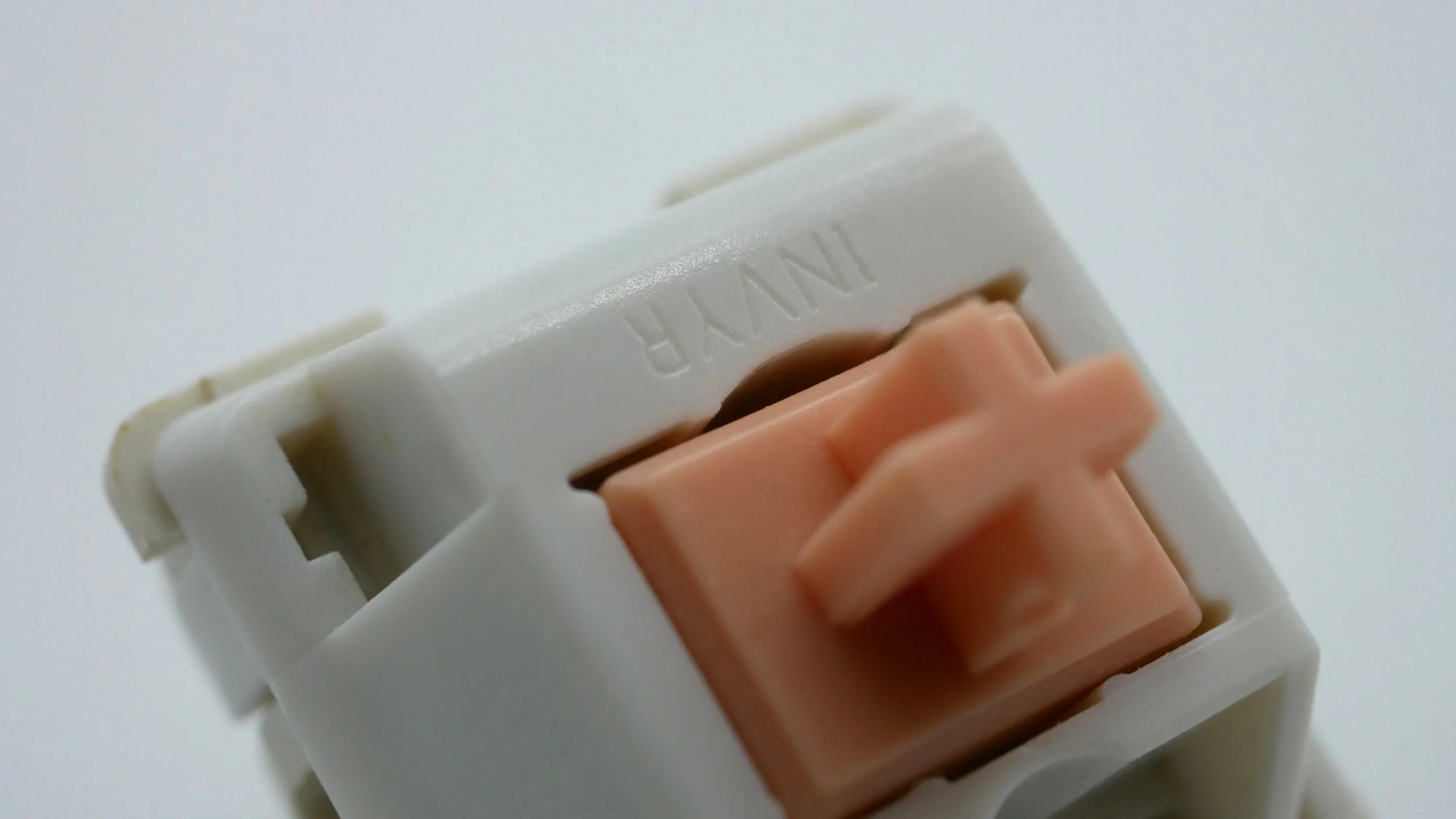
Figure 2: Where really would this hobby be if not for frankenswitching?
With the community full of people incredibly opinionated about switches, and likely quite a few of them reading reviews of an equally as opinionated person like myself, I’m sure there’s quite a few different ways that the intersection of frankenswitching and Hall Effect switches was considered at the end of that paragraph. Those that are among the most nerdy of switch enthusiasts will probably conclude this is a larger, overarching statement built on the fact that each new manufacturer is trying to establish their own platform and design as the future of Hall Effect switches as opposed to trying to conform the widely accepted standard design that was the MX platform. Less pedantic but equally as nerdy individuals may have interpreted this as being a shot towards the fact that Hall Effect switches at large are predominantly linear in type and that linear switches generally are not the ones frankenswitched for by enthusiasts as they don’t have as much return on investment as trying to create a new type of tactile or clicky switch. However, I hate to break it to all of you (including those among you who came up with other ideas not represented in those two strawmen above) as my thoughts about how Hall Effect switches are leading to the decline of frankenswitches are much more simple and easily represented than either of those. I just find it odd that Hall Effect switches as a mechanism seem to be pushing manufacturers towards increasingly odd, obtuse, and oblong stem shapes that are incompatible with every other switch that has ever existed before. Some of these manufacturers, in fact, seem to be doing this to such a degree that none of their own magnetic offerings can even be reasonably assumed to be cross compatible with one another despite wanting to take over the market at large for some odd reason… (Yes, that’s you, Gateron.) Without leaves needing to be present in HE switch housings as they serve to activate the conductive mechanism of the conventional MX style switch, effectively half of the roughly 1/8th cubic inch worth of internal space inside of a switch is rendered entirely unnecessary for HE switches. And with these manufacturers still needing to conform to the MX footprint and rough switch size to stay in line with the rest of the standards that mechanical keyboards have conformed to over the decades, it really means that this space is just left for them to do… whatever they want. They could put unique modular parts or type-changeable mechanisms in this space. Or manufacturers could solidify it and fill it with solid or hollow plastics to give HE style switches unique acoustics from traditional MX switches. And yet, it just seems like they fill all of this prime real estate for unique designs with larger stems… something which prevents not only unique feelings from being developed in their switches but also the ability for any given person to induce those unique feelings in their switches by mixing and matching parts.
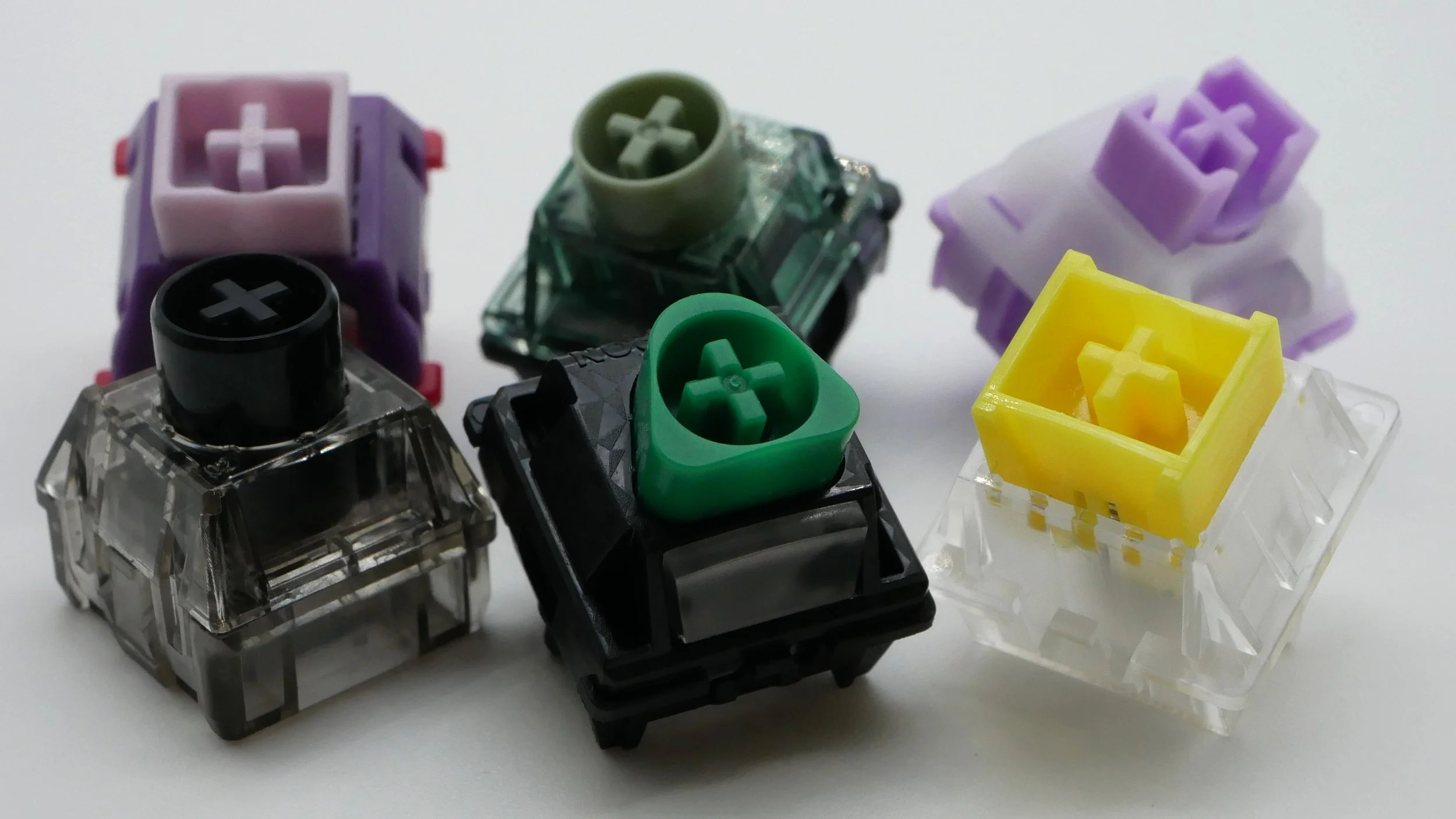
Figure 3: A random scattering of Hall Effect switches currently available today without an ounce of inter-compatibility amongst them.
Despite not having yet introduced any magnetic switch with stems that are truly radically different than the designs seen in the conventional MX platform, it simply appears as if HE switch manufacturers are simultaneously squandering both their own prime real estate for inventive switch designs as well as your real estate too. TTC appears to be invoking thicker dustproof style stems with large, rectangular walled housings that are bigger in gauge than any of their other silent, clicky, or tactile stems they’ve produced over the years. SOAI’s Leobog brand of HE switches doesn’t even pretend to look cross-compatible with any of their previous offerings either with stems that almost seem larger than the housings they sit in. And as for Gateorn, well, Gateron has made just a little bit of everything in their Hall Effect switches – none of which crosses over well with itself or the hundreds of other Gateron switches that you probably have sitting around right now. They’ve made magnetic switches that have normal, rectangular dustproof stems, stems with curved north and south side edges, entirely round stems as well – and seemingly some of all of these in both split rail and normal conventional slider rail mechanisms as well. The absurdity in their magnetic switch offerings and their lack of compatibility with one another is no more strongly emphasized than here in the Gateron Magnetic Jade Delta switches which have brought us here to this review today as they have triangular stems. Yes seriously, triangular stems. While Gateron is clearly leveraging the attention that they are getting from the broader market with a zany style and unique aesthetic in switches like these, as well as some of the others they’ve released recently such as the Jade Sapphires and Sakuras, they don’t appear to be establishing a clear, singular platform for the future that will eclipse their MX switch lines at all. Hardly any combination of parts from any of the switches in Gateron’s magnetic switch lineup are interchangeable, and so if you don’t have something you perfectly like in front of you you’re rendered completely out of luck. (Don’t even think about trying to get springs for Hall Effect switches either as their gargantuan stems require springs larger in diameter than even pens and have virtually no aftermarket availability at all.) It just really seems odd to me that a company that probably garnered a lot of volume from the custom community over the years on account of people buying milky Gateron Yellows for their incredible housings and acoustics they produce are trying to seemingly entirely push away from that while still catering to the custom community through releases like these. Why would you turn away from the customizability and interchangeability that propelled you to where you are today by trying to push HE switches that are about as interchangeable as all of the various Alps switch types? So while everyone else goes about arguing what switch mechanism is superior for their game of choice, I’ll continue to look at releases like the Magnetic Jade Deltas (and likely everything Gateron puts out after this review) as contextual data points not in the discussion of HE versus MX switches, but in the discussion of inter-connectivity and compatibility versus standalone, monolithic technology platforms. HE switches may not just be the rise of magnetic designs over the conventional MX platform, but the death knell for enthusiast customizability altogether.
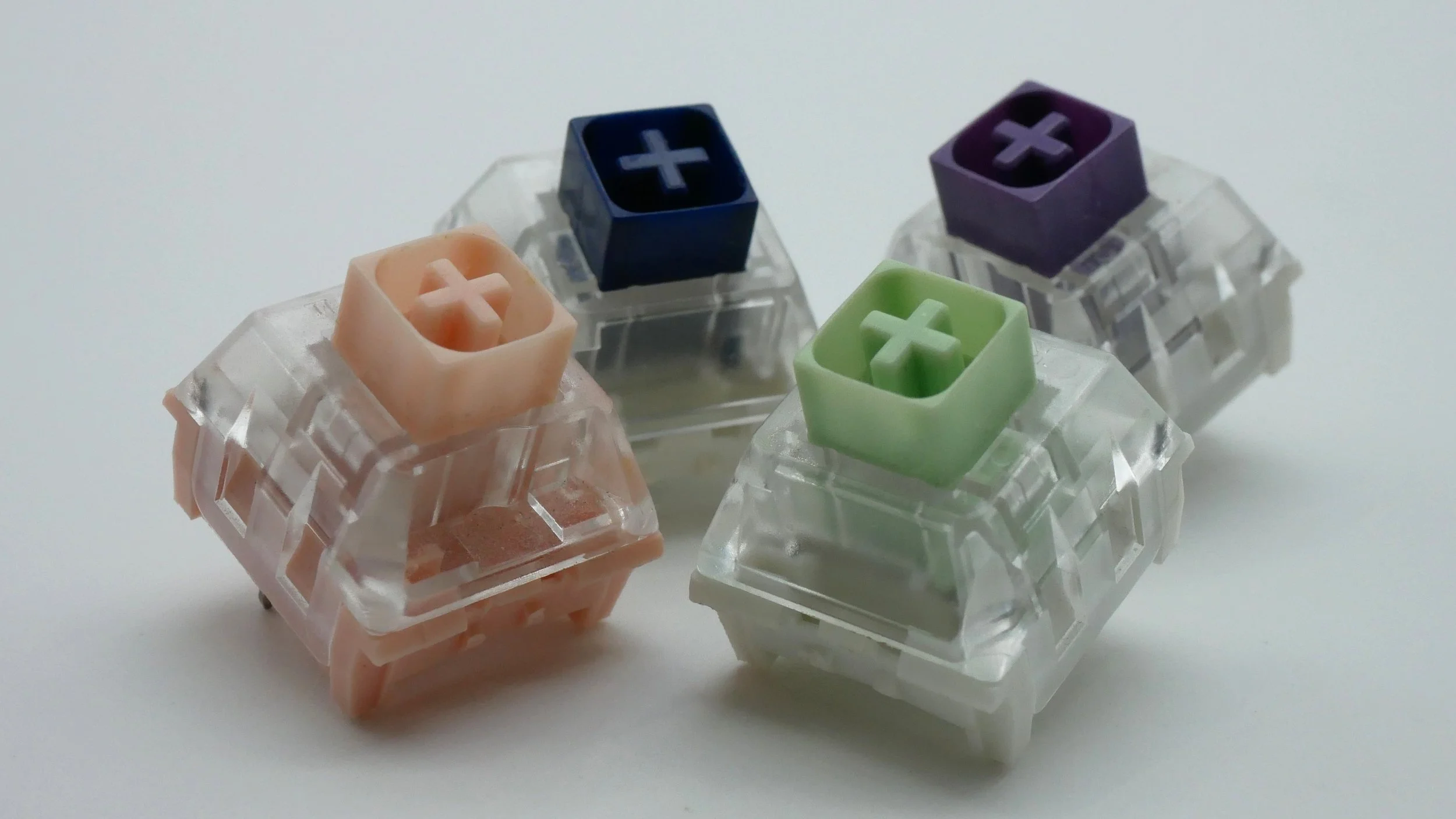
Figure 4: Does anyone else ever consider that the success of Kailh's BOX mechanism for switches was only successful because of unique offerings like these above rather than trying to directly compete with existing switch designs from other manufacturers?
As of the time of writing this review the award for modern Hall Effect switch with the most unique and questionably bizarre stem shape very clearly goes to that of the Gateron Magnetic Jade Delta switches. With these switches not receiving nearly as much marketing from Gateron as their Magnetic Jade Emerald and Magnetic Spark switches which were headliners for 2025’s technology expo shows for Gateron, the Delta Jades snuck onto Gateron’s roster towards the tail end of the year sometime around early November of 2025. Coming in both ‘Dark’ and ‘Light’ varieties differentiated only by minor variations in stem color and their “operating” force at 38 and 33 gf, respectively, these switches have since constituted the majority of Gateron’s HE switch marketing throughout 2026 and are available from a couple of different distributing vendors. (I stress Hall Effect, here, as they have also been simultaneously buffing out existing ‘customized’ families of traditional MX offerings such as the ‘Jelly’, ‘Snowy’, and ‘Full POM’ families with offerings as well.) Sourced directly from Gateron, the Magnetic Jade Delta switches boast a fairly steep price tag of $1.40 per switch with no price breaks for bulkier purchases at 70 or 90 switches at a time. While it is strongly assumed that Gateron will continue to offer the Delta HE switches for many years to come into the future on account of their unique, differentiable aesthetics and presumed large R&D costs associated with development and manufacturing, ultimately their timeline of availability is unknown. Time has shown that Gateron does eventually move on from what appear to be their flagship offerings after several years of sustained success (read: Gateron ‘Ink’ family), though nearly all of their HE switches they’ve produced to date still seem to be fairly well supported.
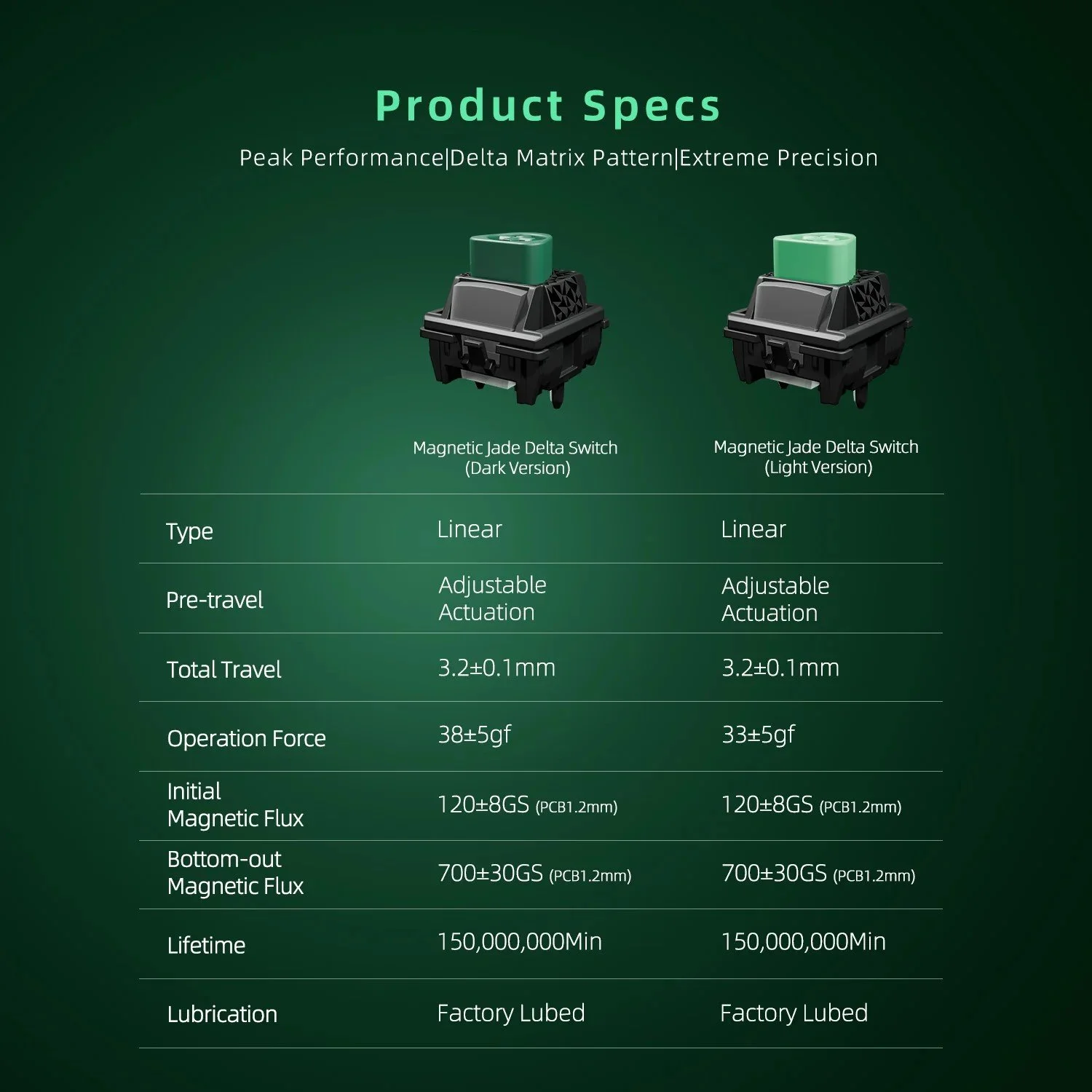
Figure 5: Comparison of the Gateron Magnetic Jade Delta Dark and Light switches from marketing details.
Jade Delta Dark Performance
Note: The Gateron Magnetic Jade Delta switches come in both a ‘Dark’ and ‘Light’ variety. As of the time of this review I did not have any Delta Light switches on hand due to an order mishap. All discussion below will pertain exclusively to the Delta Dark switches.
Appearance
At the highest level, the Gateron Magnetic Jade Delta Dark switches are so unique in their design that even amongst the thousands of keyboard switches that have been produced throughout time there’s absolutely nothing they could be confused with. Even reaching deep into the recesses of my brain and the link rotted vintage keyboard documentation sources that I will occasionally check out, I genuinely don’t think we’ve ever had a keyboard switch with a truly triangular stem as such. And as if the large, rounded corners on the triangular stems of the Jade Delta Dark switches wasn’t certainly differentiable enough, both Jade Delta Dark and Light switches both boast additional top housing etchings in the form of a pseudo-random triangular pattern with alternating amorphous regions of flat, glossy triangles and matte, textured ones. While Gateron has certainly been stepping up the aesthetics of their switches in recent years with some of their premium Hall Effect switches such as the Jade Sapphires and Sakuras, these are very clearly in a realm of their own and are distinctively impressive in and of themselves. As a result of their complete top to bottom redesign to accommodate their chunky, frankenswitching-killing triangular stems there’s a whole host of details everywhere in the Magnetic Jade Delta Dark switches which are worth discussing. Discussion of all of the unique details of these switches, both at the part and subpart levels, may be found discussed in paragraphs and photos below.
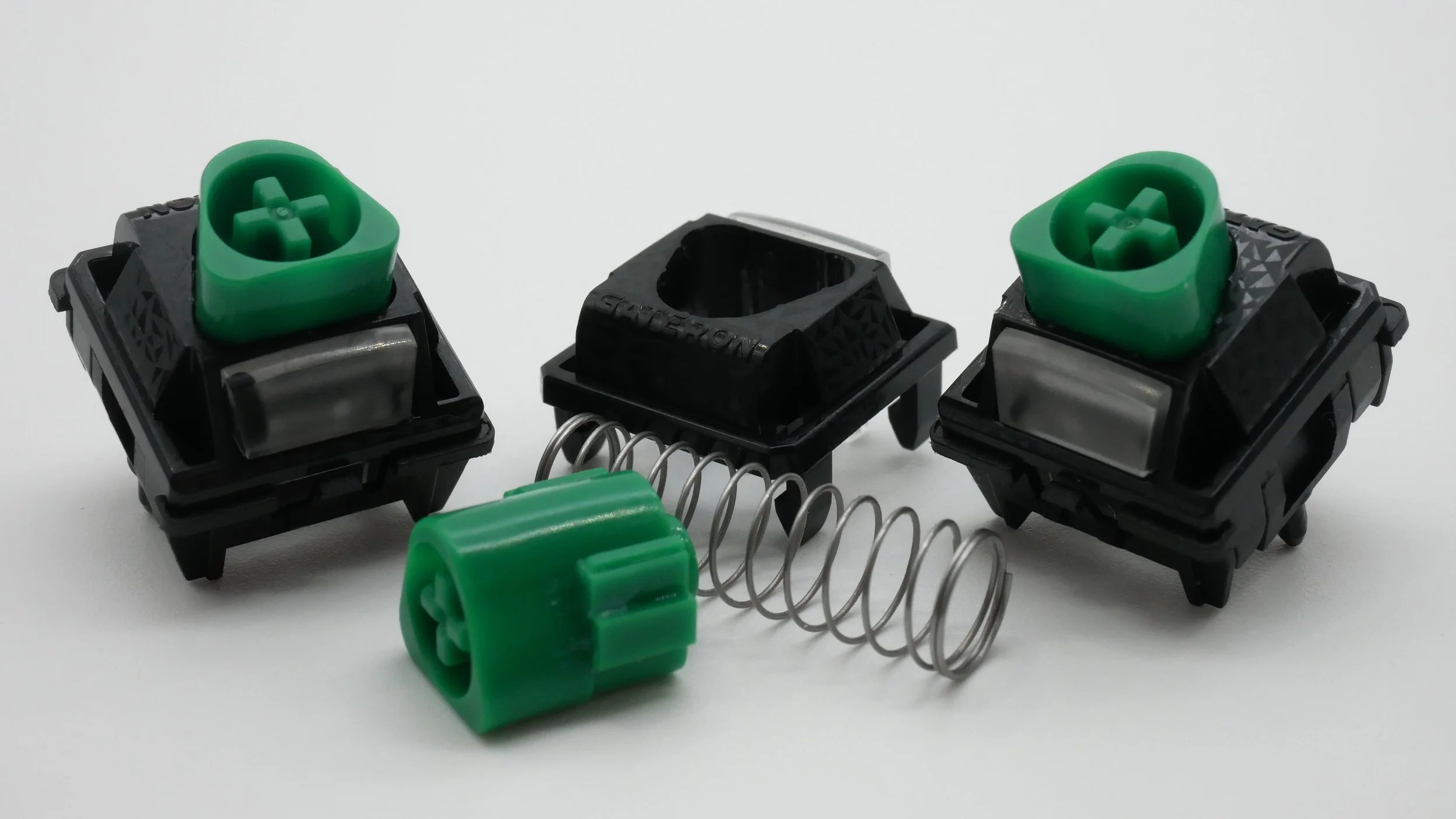
Figure 6: Gateron Magnetic Jade Delta Dark switches and their components.
Looking first to the modified POM, black top housings of the Gateron Magnetic Jade Delta Dark switches, this is where the truly impressive aesthetic efforts by Gateron are most clearly realized. On all four sides of the top housing as well as the entirety of the top side surrounding the triangular stem, Gateron has textured the Delta housings with an irregular pattern of alternating light, glossy black triangle and matte, textured triangles of varying shapes and sizes. Interestingly, though, the housings themselves are fairly smooth indicating that this texturing is incredibly light, with fractions of a millimeter difference in height between the two types of triangles. In order to create an effect of this type without such a noticeable difference in surface topography, it is assumed that this was done through the use of a microtexture pattern engraved on the surfaces of the injection molds used to make the housings. To date, and to my best knowledge, while some texturing of top housing parts have been done sparsely by other manufacturers, no other switch has seen such a large effect done on such a large area as these switches. (Other top housings which have invoked full housing decorative designs such as the Huano Hi and Fi switches have been done, though they utilized dye sublimation techniques rather than embossment.) Despite the seemingly random nature of this patterning at first glance, I was only able to find one style of pattern across all of the switches in my batch, suggesting either a singular set of molds used in their production or carbon copied molds that do not have alternatively unique geometric patterns. Externally, the Jade Delta Dark housings also feature a raised, inverted ‘GATERON’ nameplate along the curve separating the top and north sides of the housing as well as a fairly firmly locked in wedge shaped LED/diode diffuser. Fairly strong attempts to remove these diffusers from the housings not only led to me bending a few of them but also hurting my fingernails in the process, suggesting these were not supposed to be removed easily despite what marketing for the switches would suggest.
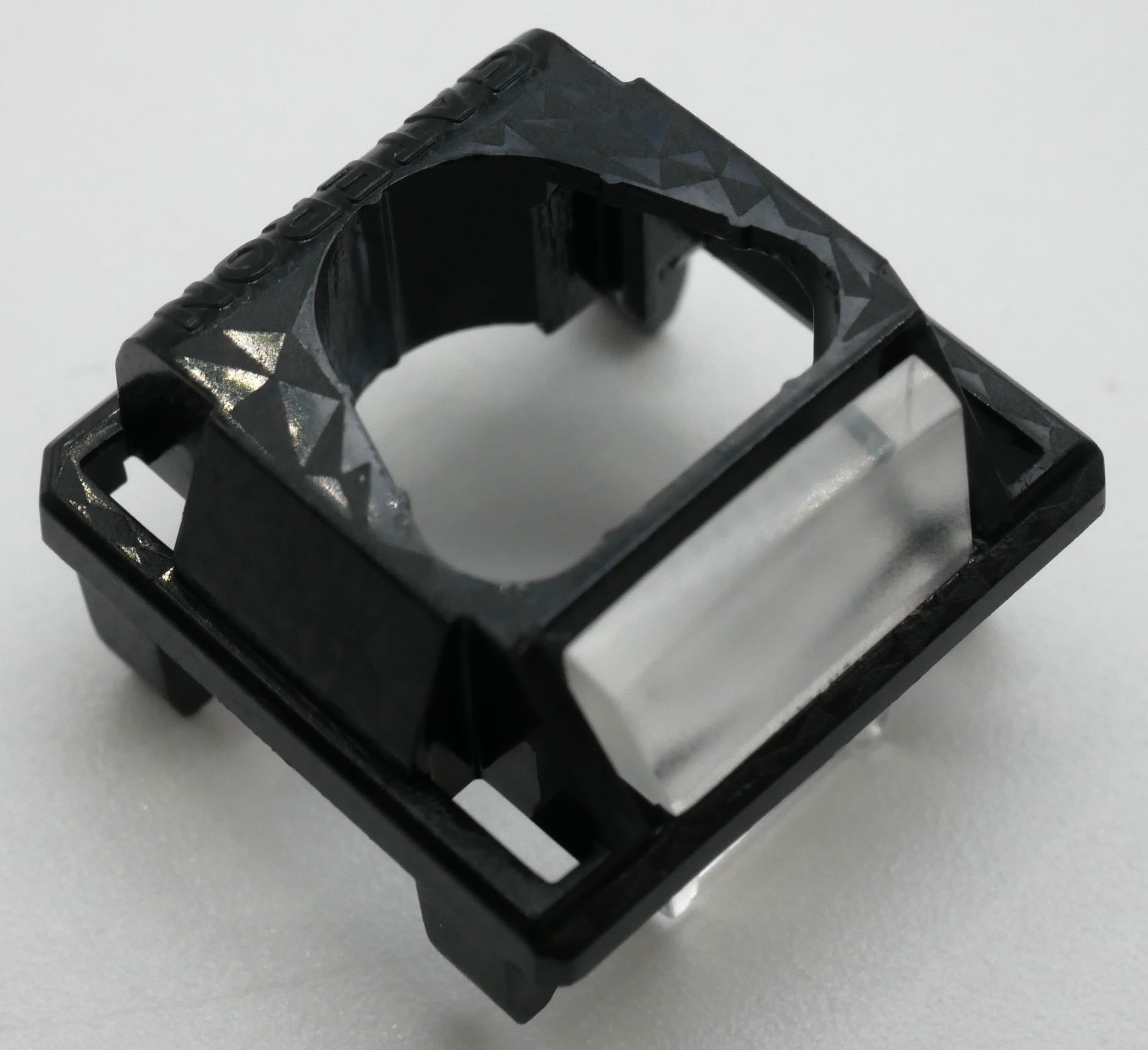
Figure 7: Gateron Magnetic Jade Delta Dark top housing exterior showing triangular stem hole, affixed wedge-shaped LED/diode diffuser, 'GATERON' nameplate on top edge of the housing, and triangular texture patterning on the housing.
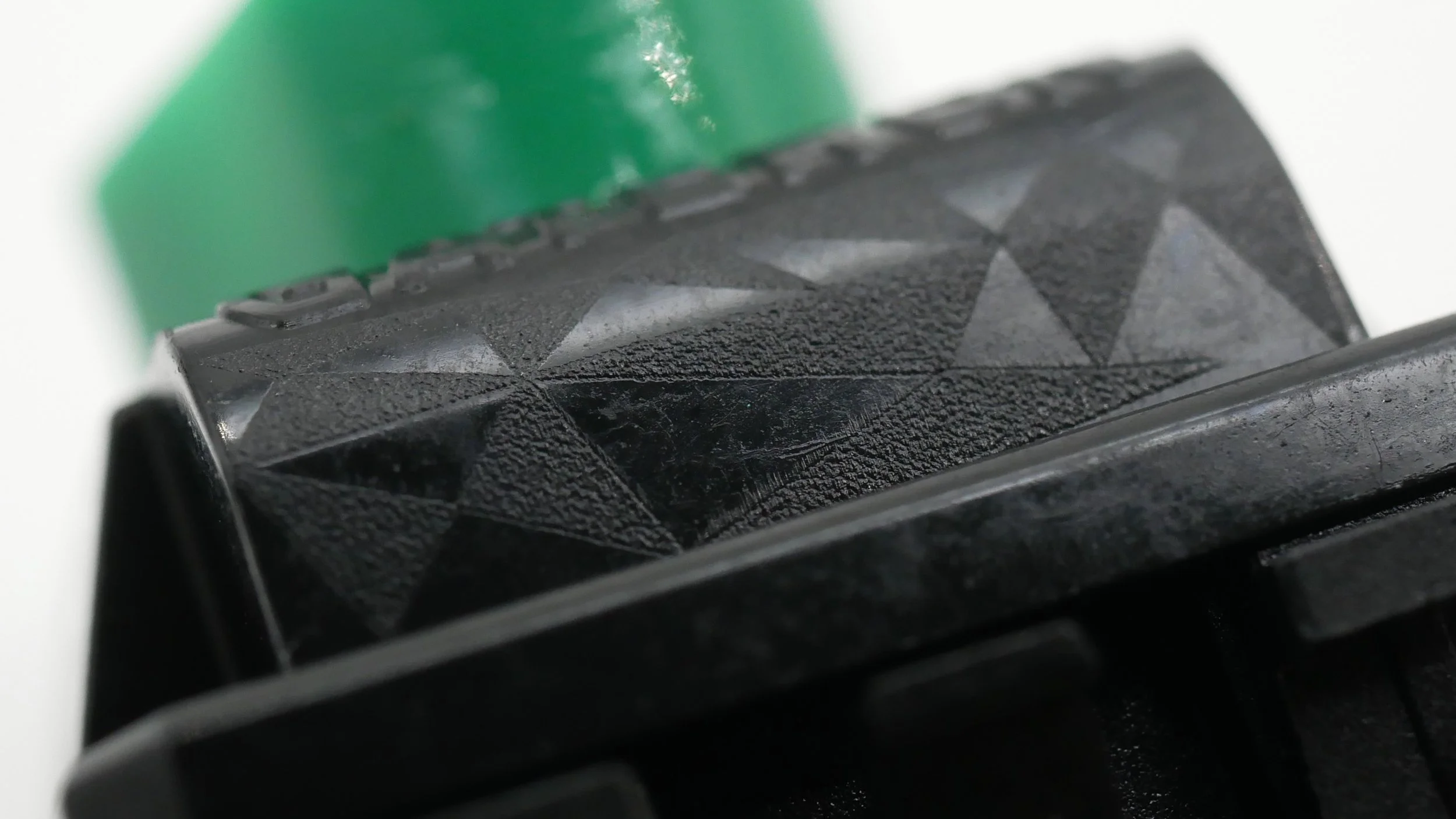
Figure 8: Close up of the Gateron Magnetic Jade Delta Dark top housings showing alternating matte and glossy triangular pattern.
As for the interior of the Gateron Magnetic Jade Delta Dark housings, the uniqueness in design and structure continues like the outside though without the fancy embossment patterns. (Though it does certainly make you wonder what physical effects a manufacturer could imbue in their switches if they took this patterning to something like the slider rails.) Internally the entirely of the housings are triangularly shaped to accommodate the large stems though surprisingly feature four sets of guiding rails – two in the conventional locations on the east- and west- sides of the housings, one at the apex of the triangle, and one along the flat edge of the triangle adjacent to the LED/diode diffuser. Yes, despite only having three sides to the stem upon which the top housing could rub, the housing actually has four different guiding rails for it, something which leaves it feeling unfortunately a bit mundane for what it could like. Throughout the internals there are also trace amounts of factory lubing, indicating that not only all four sides of the three sides stems make contact with the housings but that they regularly contact all of these guiding rails. The only other feature of note to put into words about the Jade Delta Dark housins is the present of a single numerical mold marking located in the bottom right hand corner of the housing between the stem hole and through-housing LED/diode.
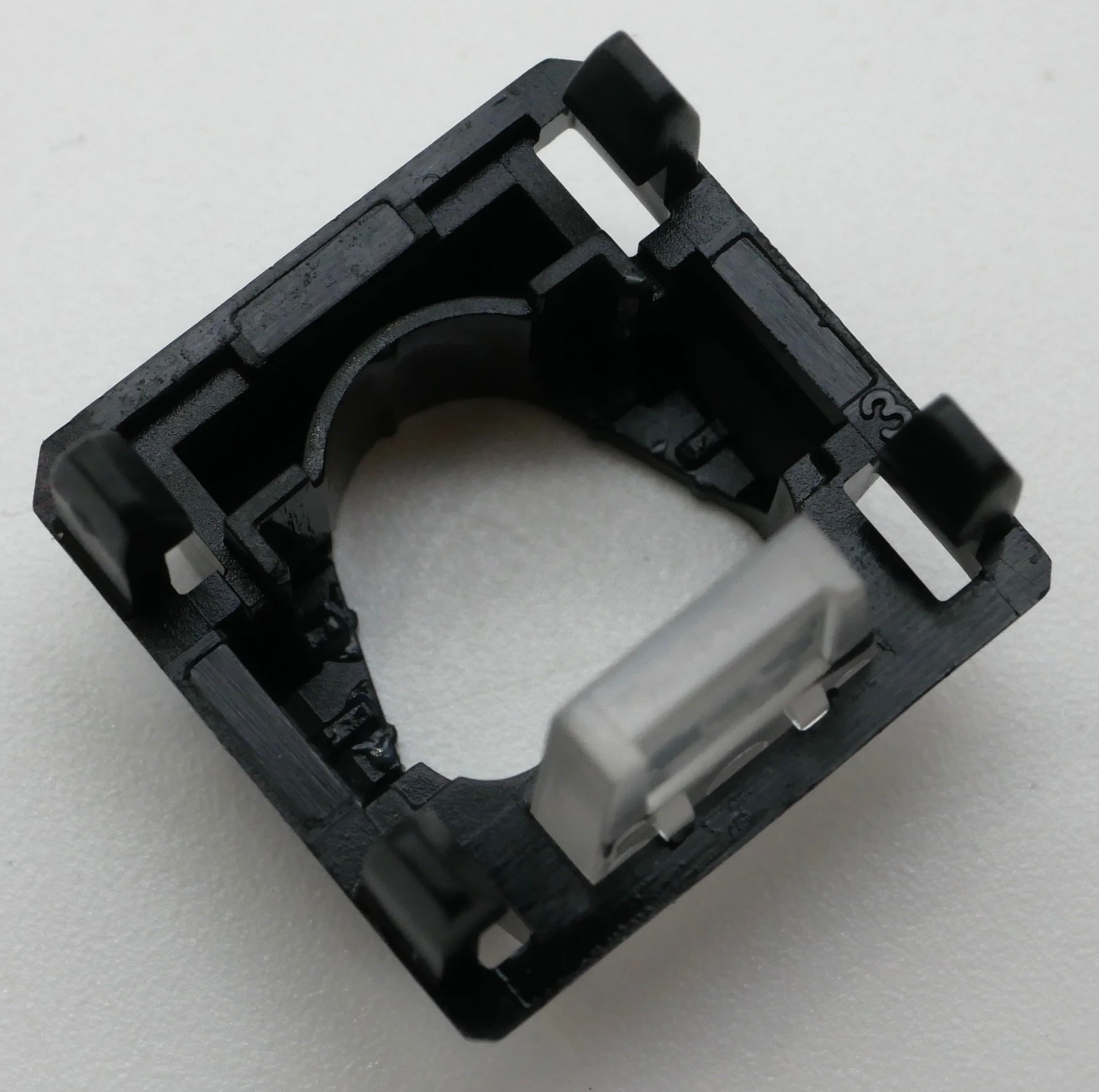
Figure 9: Gateron Magnetic Jade Delta Dark top housing interior showing triangular shaped stem hole, dampening nubs on the housings where the stems top out, trace amounts of factory lubing, and a single number mold marking on the lower right-hand edge of the housing.
Moving next to the dark jade green, presumably POM stems of the Gateron Magnetic Jade Delta Dark switches, we’re greeted with features that are a bit disappointing, to say the least. When I had first seen the marketing for a triangular shaped stem, and especially one within a magnetic mechanism that has all of the internally free space to introduce something like three guider rails at ~60 degree angles to one another around a center pole hole, I suppose I had expected it to truly have three slider rails. And yet the stems of the Jade Delta Dark switches have exactly two slider rails that don’t hug the edges of their triangular outline, but protrude out at an angle to come parallel to one another and in line with the functionally rectangular width of a normal stem. (It should be noted as well that these slider rails aren’t even tapered or curved either, protruding as flat rectangular shapes off of the curved edges of the housings.) While I guess the rounded northern apex of the stem wall and the flat third south side do act as sort of slider rails in tandem with the top housings, it feels a bit like a consolation prize of a design than one that actually leans into a triangular stem shape. Below the level of the housing, the third, flat south side of the triangle stem is open and reveals the stem to have a large center pole that consists of a flush, north side down magnet.
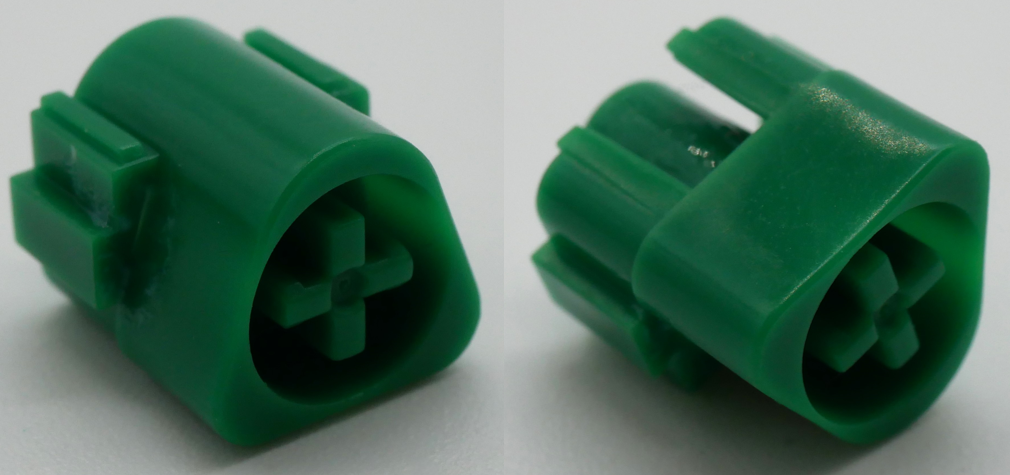
Figure 10: All three sides of the Gateron Magnetic Jade Dark stems showing their parallel, protruding slider rails as well as trace amounts of factory lubing.
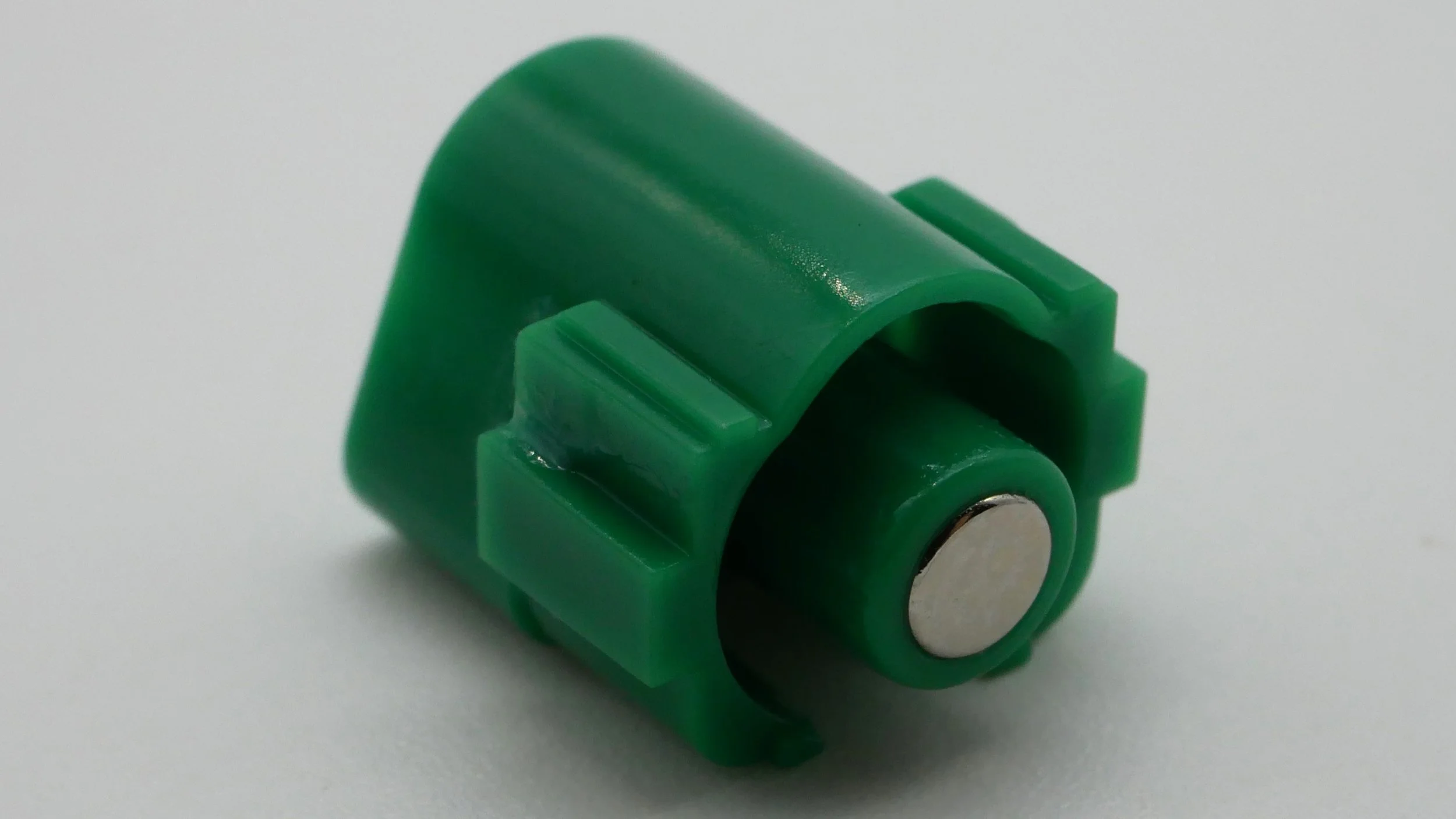
Figure 11: Underside of the Gateron Magnetic Jade Dark stems showing the center pole embedded magnet and emphasizing the split in the housing walls for one edge of the triangular stem.
Finally arriving at the matte black bottom housings of the Gateron Magnetic Jade Delta Dark switches, we completely lose all semblance of a triangular shaped switch design. While the top housings of these switches very clearly scream of a triangular mechanism, and the stems vaguely suggest a triangular shape to a very commonplace stem design, the bottom housings could be able to be confused for just any other magnetic switch offering from Gateron. Featuring two normally placed slider rails and a large open stem pole hole to accommodate the large magnet in the stems, the only real indication of anything being slightly different here is on account of these features being slightly southwardly shifted. This shift, of course, accommodates the northern apex of the triangular stem sitting where the leaf in a conventional switch would be and the southern, flat side of the triangle stem being pinned between the center pole hole wall and the housing edge. Externally the Magnetic Jade Delta Dark housings come only in 5-pin/PCB mount variety and feature markings inline with other Gateron housings such as mold markings below the PCB mounting pins and an inverted brand marking in the form of Gateron’s new two-stroke dragon logo where previous Hall Effect switches from Gateron have a stylized ‘G’ instead.
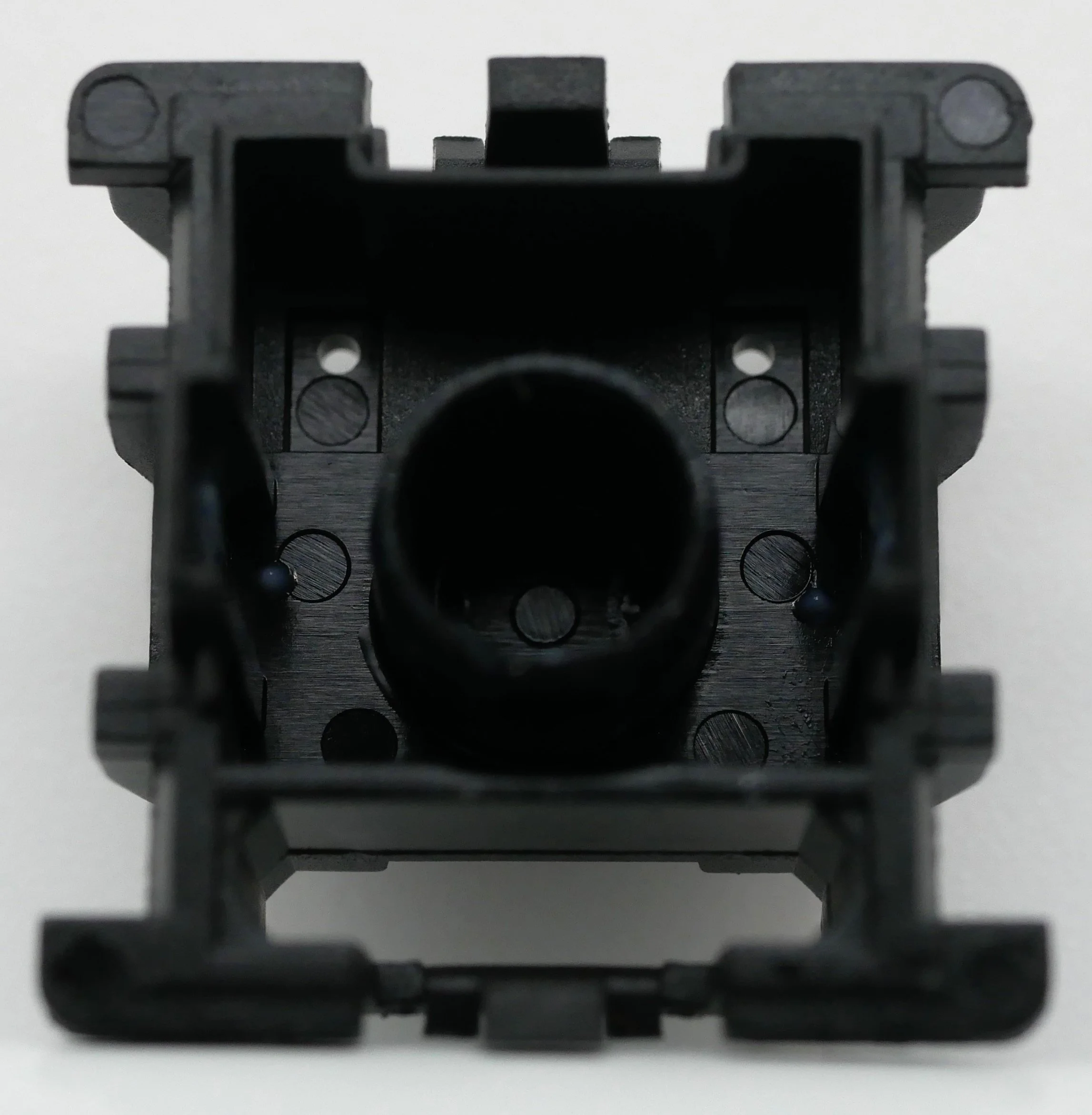
Figure 12: Gateron Magnetic Jade Delta Dark top housing interior showing a series of mold ejector circles as well as trace amounts of factory lubing in the slider rails.
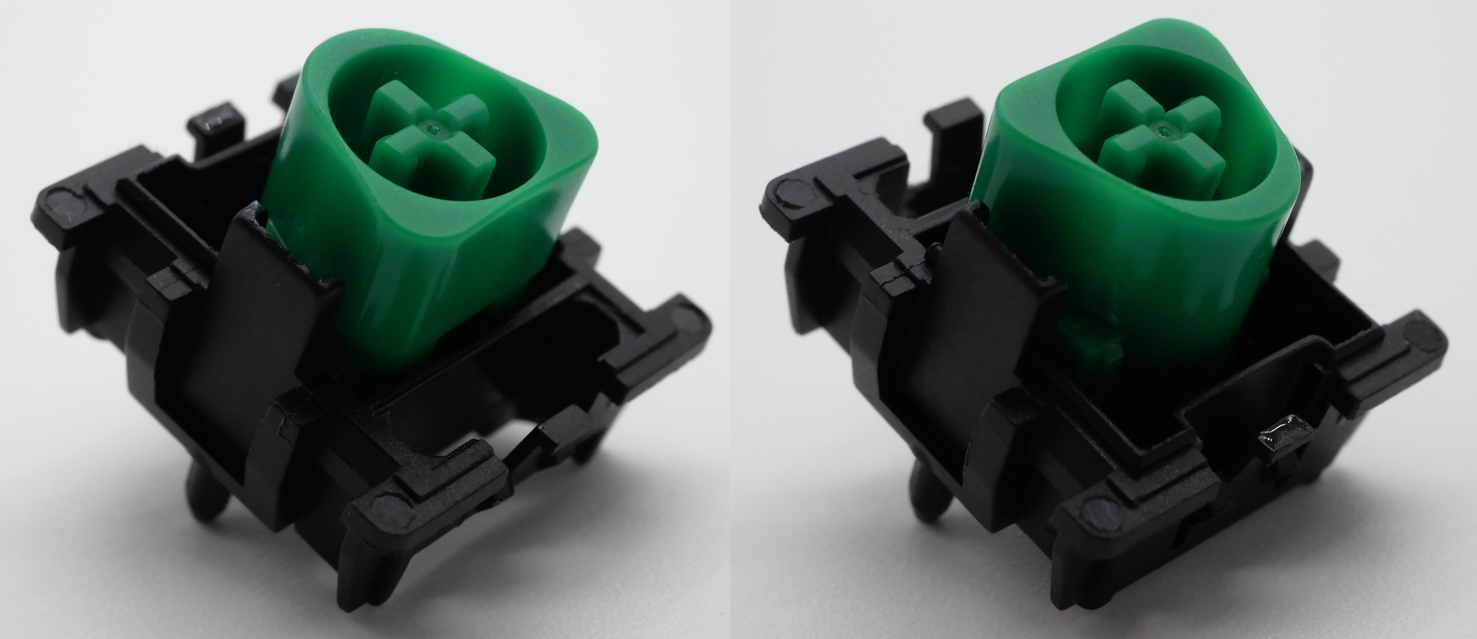
Figure 13: Gateron Magnetic Jade Delta Dark bottom housings and stems combined without springs in order to show the orientation of the stems and the free space remaining in the housing.
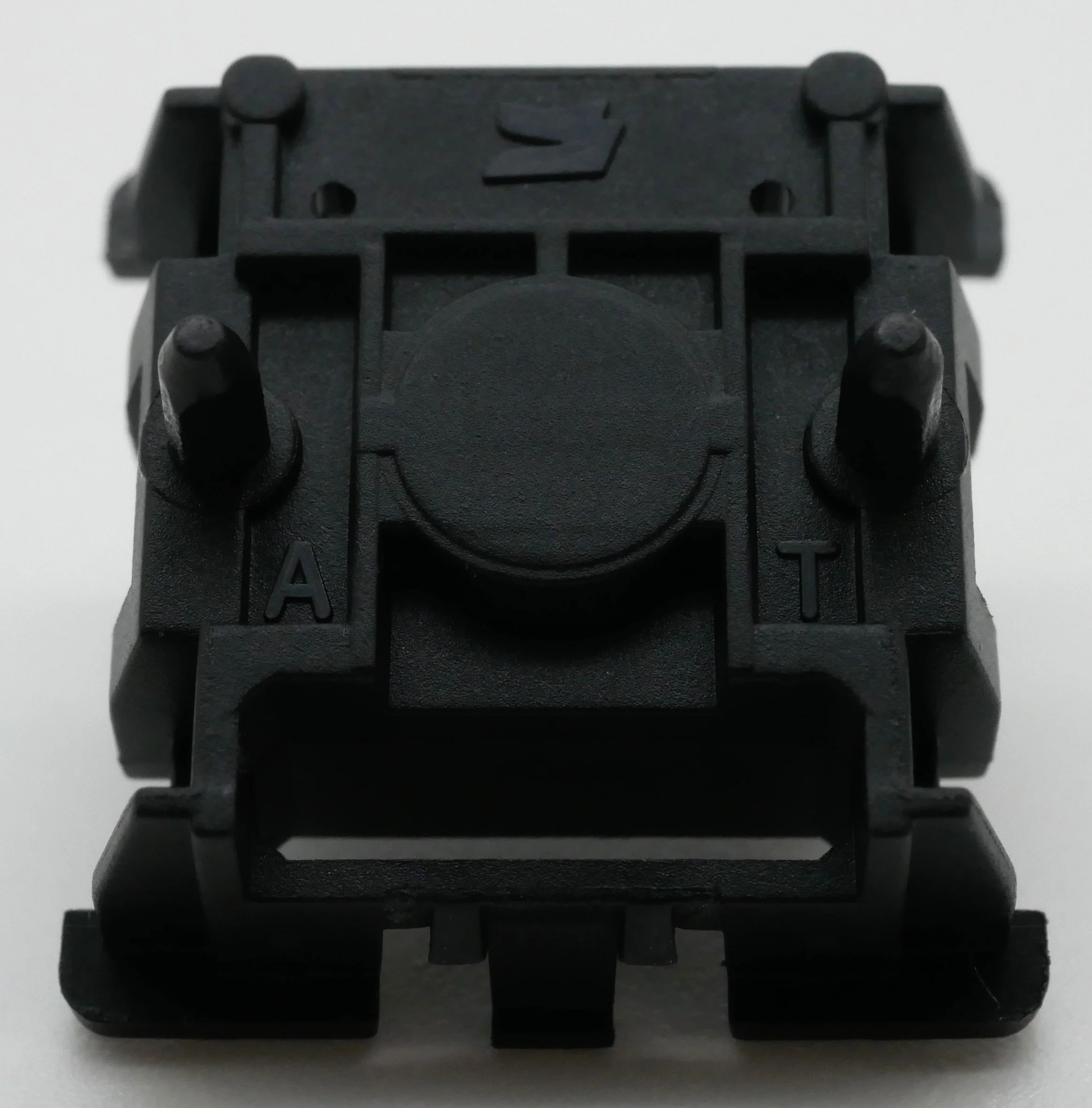
Figure 14: Gateron Magnetic Jade Delta Dark bottom housing exterior showing enclosed bottom out zone, PCB mounting pins, capital letter mold markings, and new Gateron two-stroke logo as an additional embossment.
Push Feel
Due in no small part to the not so small areas of contact between the stems and bottom housings of Gateron’s various magnetic switches they’ve produced, on the whole the linear magnetic switches they’ve produced can be… quite aggressive… if you’re not expecting such. Some of them come out short and stabby, with bottom outs that act like exclamation points on half word-long sentences whereas others have both bottom and top outs that are large, flat, and overwhelming, leading them to feel as if they are separate by only the thinnest of a linear stroke veil. Surprisingly, the Magnetic Jade Delta Dark switches break away from both of these extremes of expectations and have a surprisingly well balanced feeling while still a bit more towards the aggressive end than not. These switches definitely do have a wide, strong bottom out feeling that pokes with an authoritative feeling, though it has a certain roundedness to it and a similar force as the topping out that doesn’t make it stand out quite so much. Between the two ends of the Gateron Magnetic Jade Delta Darks is a surprisingly long feeling ~3.40-3.50 mm stem travel distance that hangs on a smooth glide a bit longer than other switches set to this sort of travel distance. As for the factory lubing, it is certainly good though not among Gateron’s best work. The Delta Jade Darks are overall generally smooth with no scratch feeling to them, though variations in this lubing density from switch to switch does cause some of the strokes to feel a bit more heavy than others and some bottom outs to feel a bit more dampened than the rest. While a bit of a strange final and technical point to include, it does also appear that there is a notable discrepancy between the marketed weight of the Delta Jade Darks (~38 gf) and what I actually measured. Perhaps I’m just misunderstanding what “operating force” is supposed to refer to from their sales page, though the force curve that I collected for them below shows that they both start their downstrokes ever so slightly above this ~38 gf mark and end significantly above it around 50 gf or so.
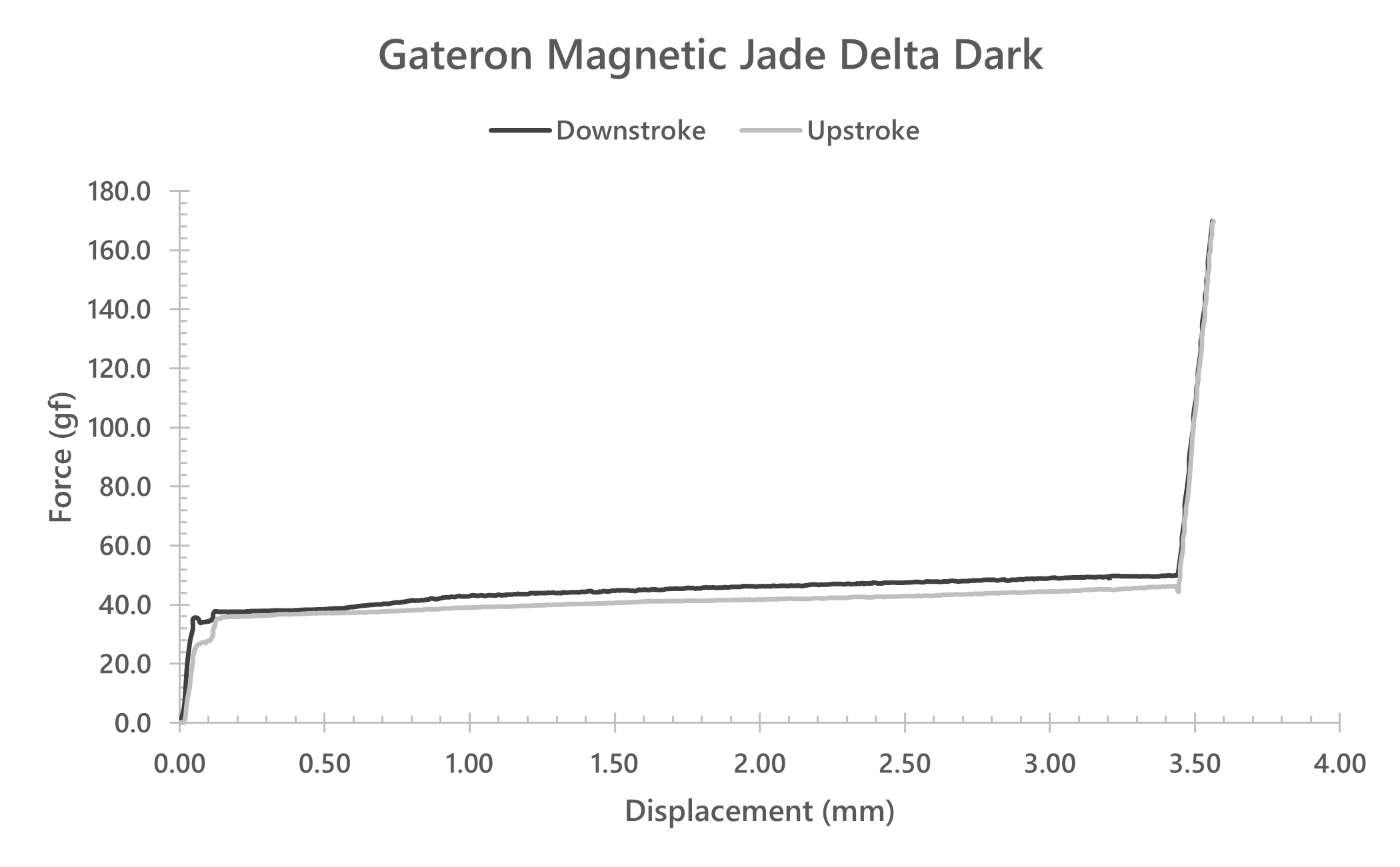
Figure 15: Force curve diagram for the stock Gateron Magnetic Jade Delta Dark switch.
Sound
While quite a few of Gateron’s magnetic switches they’ve made in the past few years have an equally sharp, stabby, and high pitched tone to match the overarching push feeling notes that I opened the previous section with, some combination of features present in the Magnetic Jade Delta Dark switches just makes them sound a bit more coherent, solid, and firm than those other Gateron HE offerings. Even though these switches carry a similarly large area of stem contact with their bottom housings, the Delta Jade Darks have a mildly loud housing collision that at first hits with a loud slapping sound, but rounds out with subtle depth and bass notes that helps deaden their impact just a bit. The topping out of these switches, as well, can be described similarly, though on a much smaller and less aggressive scale giving these switches a similarity between both ends that are not the most balanced though still complementary. Is this a combination of the enclosed Hall Effect bottom housings matched up with the modified POM top housings of these switches? Or is it a combination of a slightly different surface area as a result of the triangular shaped stems and the strong factory lubing present throughout the housings. I’m not sure I’m able to put my finger on what quite balances the sound of the Magnetic Jade Delta Darks as well as it does, though it definitely makes for a smoother and more easily digestible HE switch sound even if it is still a bit on the louder end. Beyond these features, though, there’s really nothing else that jumps out as noteworthy about the sound profiles of the Delta Jade Darks for better or for worse; They have no spring ping, no fuzzy tones, and not even all that much of a drift in their tones or volumes as you work up or down in actuation speed either.
Wobble
One would certainly expect that a triangular shaped stem would produce a switch that has a unique style of stem wobble to it. However, on account of the fact that the triangular nature of the stems and top housings is apparently more aesthetic in nature than functional as shown in the sections above, the Magnetic Jade Delta Dark switches have a surprisingly banal amount of stem wobble. A bit greater in the E/W direction than the N/S one, these switches certainly don’t have enough stem wobble as to bother too many users and are fairly consistent across the batch that I received. They are definitely not among Gateron’s least wobbly of switches, though.
Measurements
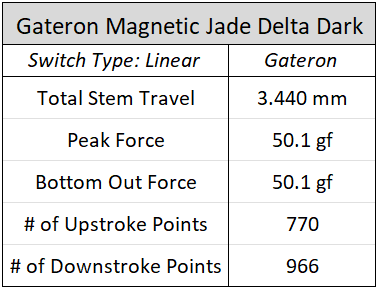
Figure 16: Numerical details regarding the force curve for the stock Gateron Magnetic Jade Delta Dark switches.
Have you ever wanted to be bombarded with more switch data than you’ve ever seen at any point in your life before? Consider checking out the ‘Force Curve Repository’ hosted on my GitHub that contains all force curves that I take both within and outside of these full-length reviews. In addition to having these graphs above, I have various other versions of the graphs, raw data, and my processed data all available for over 1500 different switches for you to use however you see fit. Check it out via the ‘Archive’ tab at the top of this page or by clicking any of the force curve cards above.
Break In
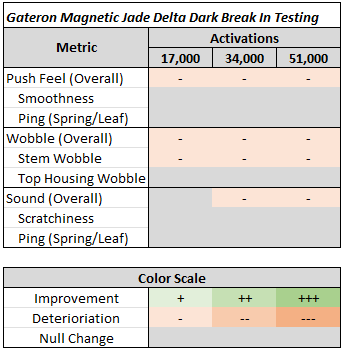
Break In Notes
17,000 Actuations
- After 17,000 actuations, the Gateron Magnetic Jade Delta Dark switches don’t get uniformly worse with respect to their overall push feeling. Rather, there’s a slight but noticeable increase in the switch to switch variability in bottom out feeling which is presumably due to factory lube migration.
- As well, after being broken in to this stage there is a slight increase in both the N/S and E/W direction stem wobbles of the Magnetic Jade Delta Dark switches.
34,000 Actuations
- Whereas after 17,000 actuations the Jade Delta Darks really only had bottom outs that felt noticeably different than their stock counterparts, those that were broken out to 34,000 actuations also picked up a noticeable difference in their bottom out tone as well. Some switches broken in to this stage simply sounded deeper, flatter, and less complex at their bottom outs than others.
51,000 Actuations
- Despite there being no noticeable changes in the Gateron Magnetic Jade Delta Dark switches broken in to 34,000 actuations versus 51,000 actuations, it is worth noting that the stem wobble on all of these broken in switches may be a tiny bit greater than what you would expect from a single ‘-‘ marking. I certainly wrestled with deciding what I wanted put here as all of these switches are really on the borderline of what is a one or two mark classification to me.
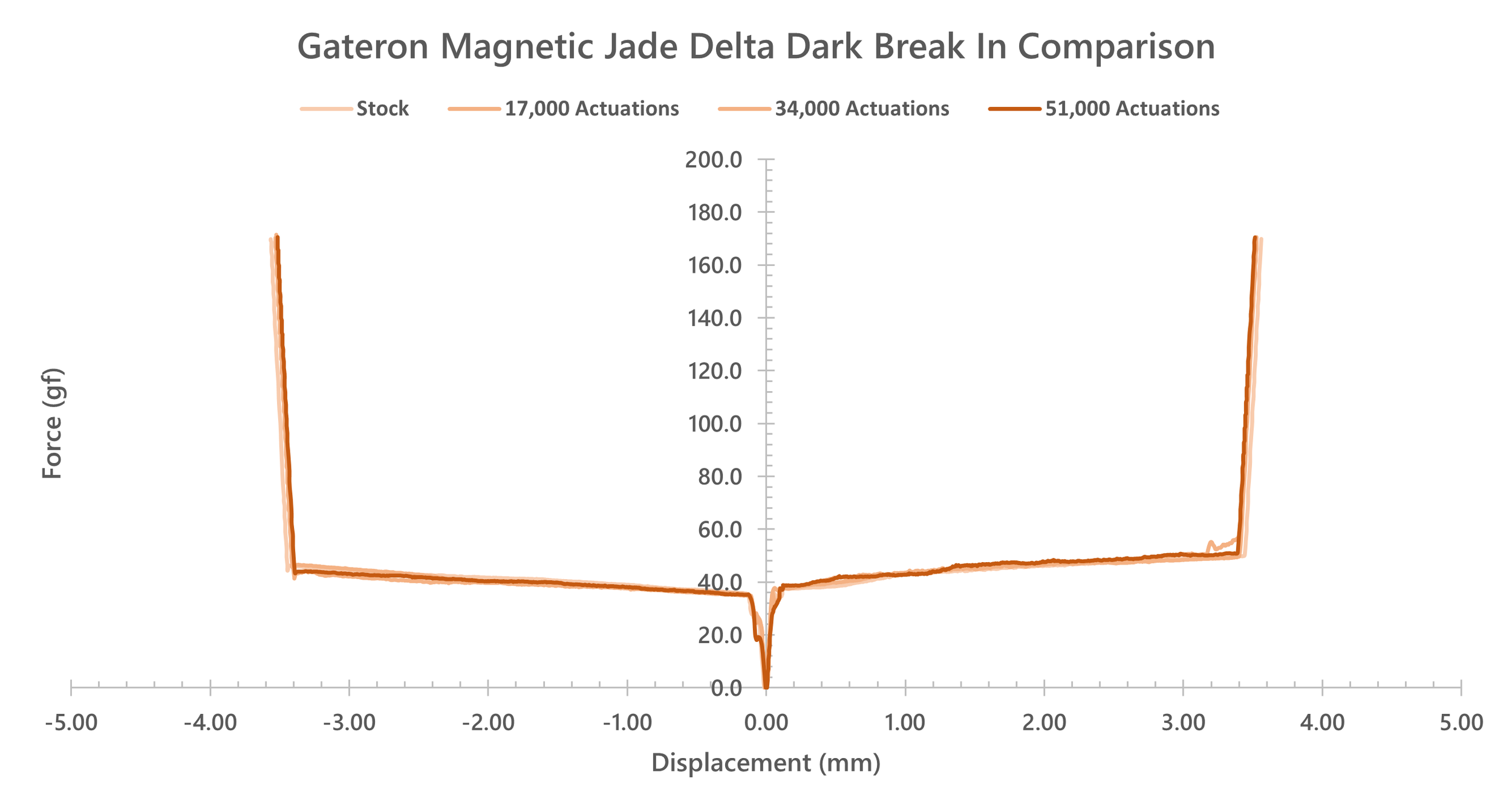
Figure 18: Comparative force curve diagram showing no substantial, consistent change in the force curves of the Gateron Magnetic Jade Delta Dark switches throughout the break in process.
Comparison Notes to Other Notable Linear Switches
Note – These are not aimed at being comprehensive comparisons between all factors of these switches as this would simply be too long for this writeup. These are little notes of interest I generated when comparing these switches to the Magnetic Jade Delta Dark switches side by side.
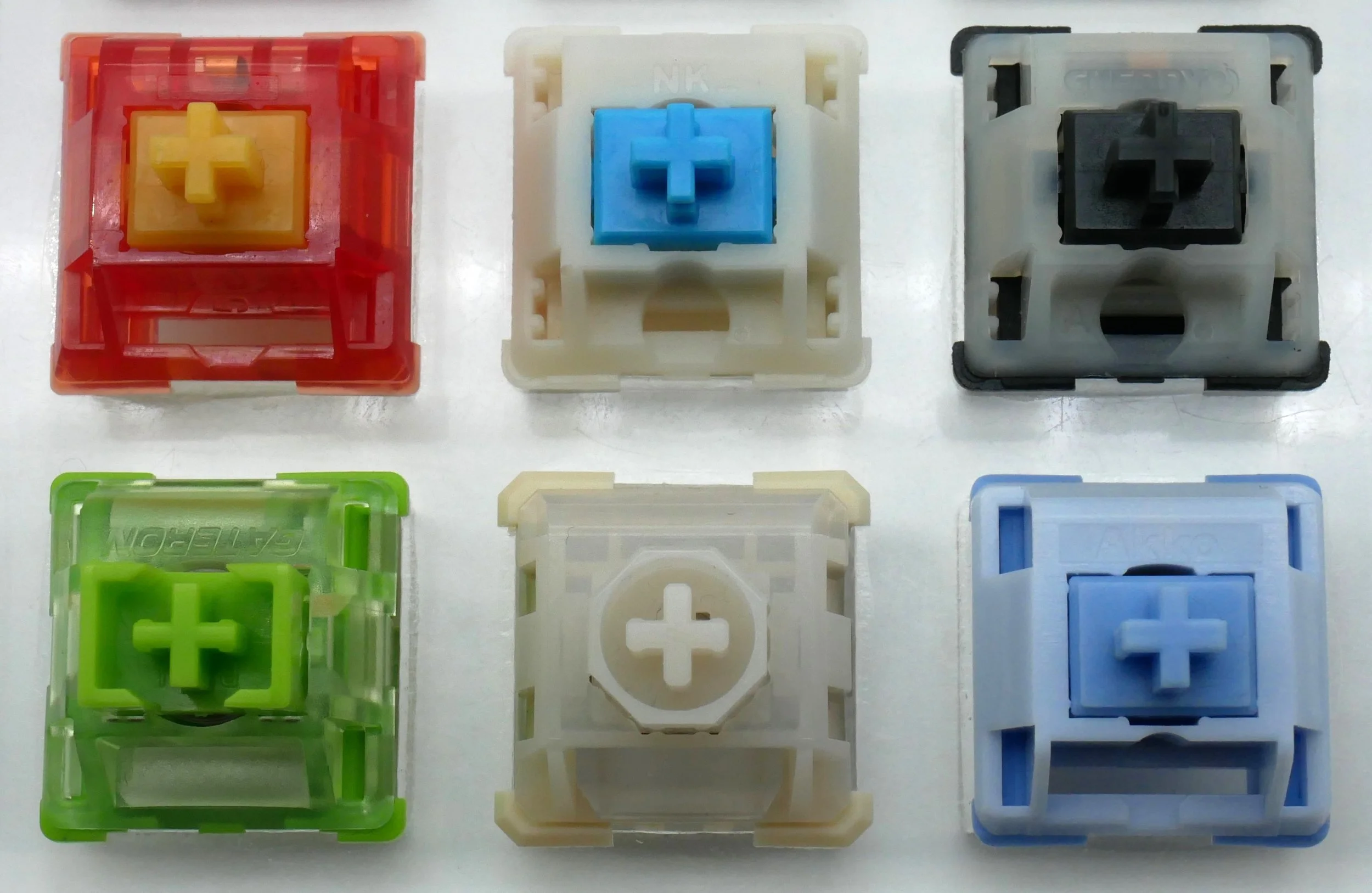
Figure 19: Switches for comparison. (L-R, Top-Bot: Keygeek Y2, Novelkeys Classic Blue, Cherry MX 'New Nixie', Gateron Magnetic Green Dragon HE, WS Flux HE, and Akko Mirror)
Keygeek Y2
- Overall, the Keygeek Y2 and Gateron Magnetic Jade Delta Dark switches have a similar amount of N/S and E/W direction stem wobble, with the Jade Delta Darks perhaps being a tiny bit better on this metric.
- In terms of their sound profiles, these two switches are fairly far apart with the microtexturing on the bottom of the stems of the Y2 switches giving them a deep, rounded, and slightly echoing bottom out as compared to the higher pitched, slappier, and only subtly rounded tones of the Jade Delta Darks.
- Despite what the comparative force curve between these two switches below would suggest, the downstrokes of the Keygeek Y2 switches actually feel a tiny bit heavier in hand than that of the Jade Delta Darks. I imagine this is likely due to the differences in factory lubing between these two switches as the Y2s definitely have a more all-encompassing, heavy handed lube than the Deltas.
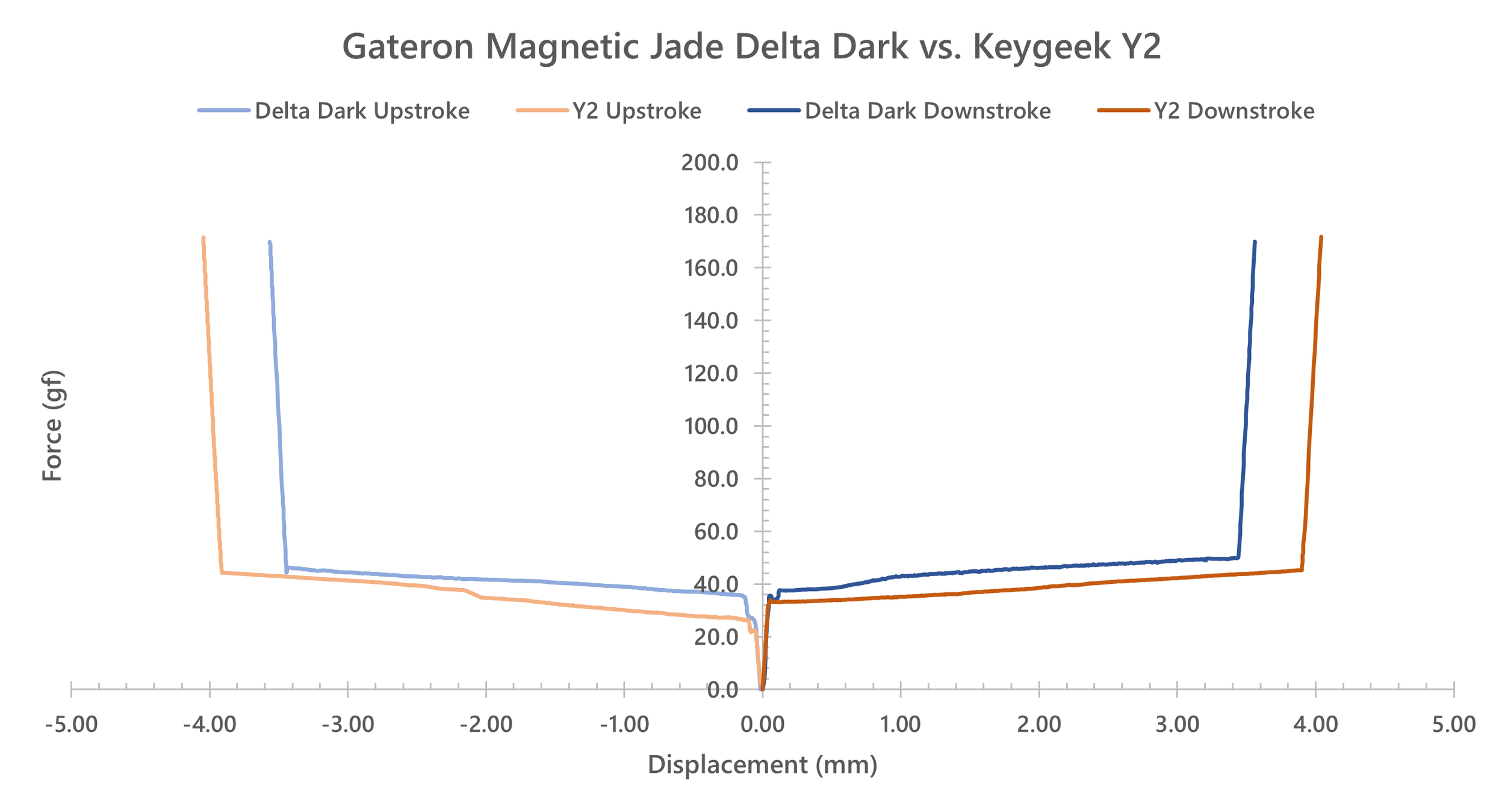
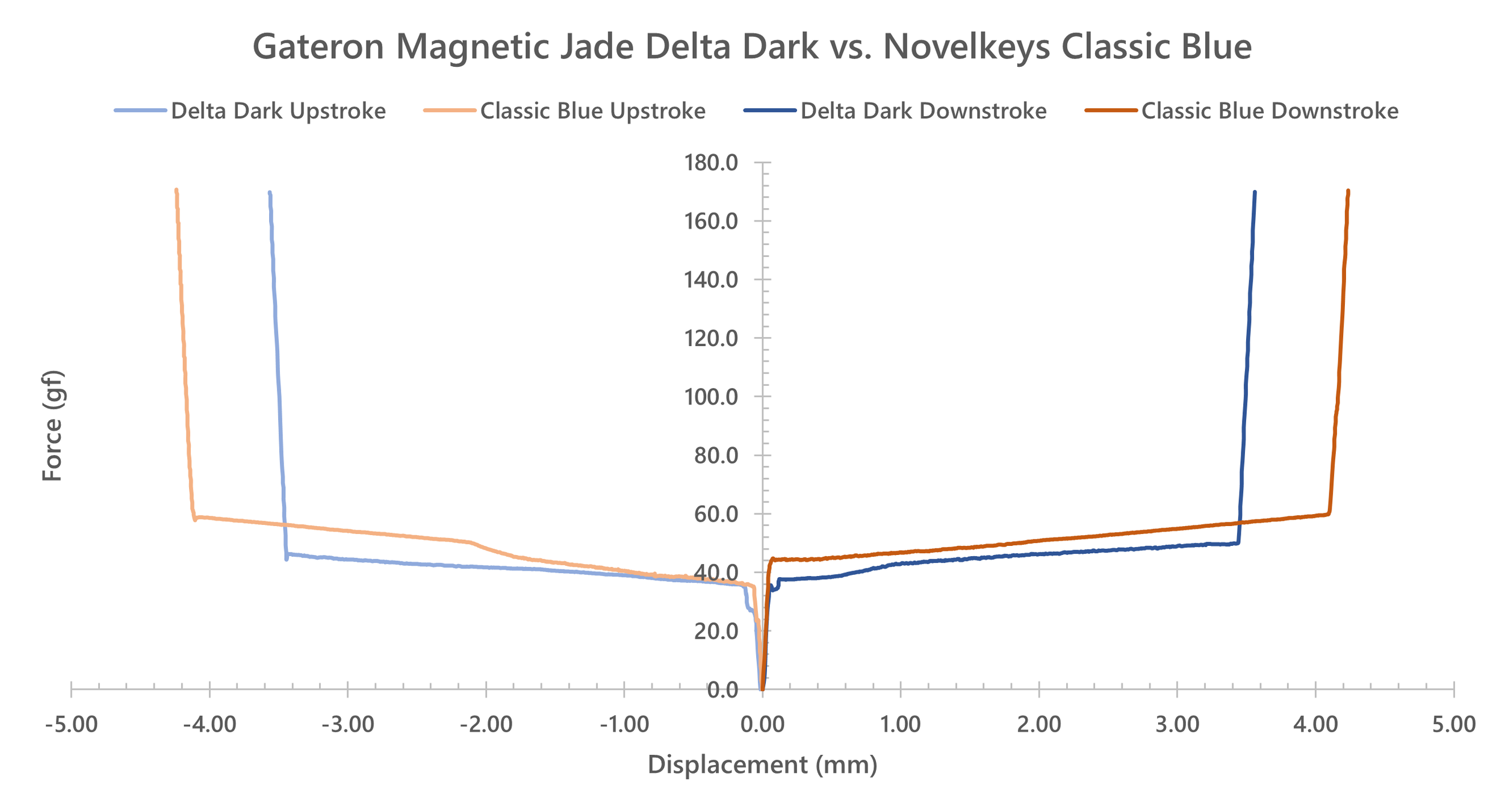
Novelkeys Classic Blue
- While both of these switches have a similar sort of tacky, pointed bottom out to them, the difference in the in hand experience between them is rather large on account of the differences in their stem shapes. Whereas the Classic Blues are more focused and pinprick like, by comparison the Jade Delta Darks are larger, harsher, and more slap-like in their force.
- There is quite a bit less stem wobble in both directions of the Novelkeys Classic Blue switches than there is in the Gateron Magnetic Jade Delta Dark switches.
- As for the smoothness between these two switches, the Jade Delta Darks are definitely the smoother linear. While the Classic Blues are quite far from being “scratchy” by any strongly negative sense of the word, they do have a slight shuffling or small grain scratch feeling that the Jade Delta Darks just simply do not have.
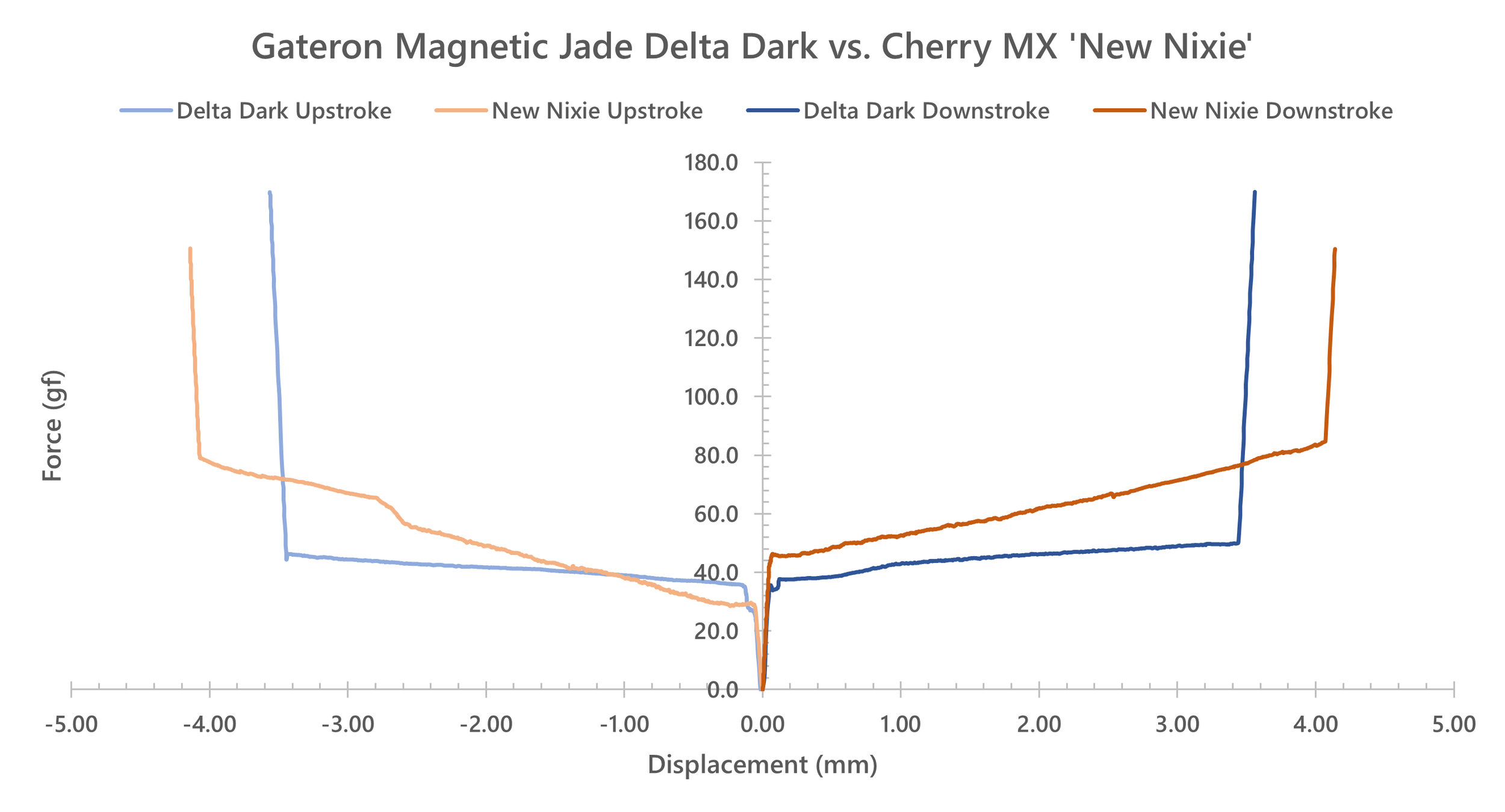
Cherry MX ‘New Nixie’
- If ever there was a case that not all linears are the same as one another, it would be the comparison between these two switches. The differences in slope of the New Nixie’s force progression and that of the Magnetic Jade Delta Dark switches is extremely apparently not only in their comparative force curve below but under finger as well.
- There is a comparable amount of overall stem wobble between these two switches, with a matching asymmetry between them; Both switches have slightly more E/W direction stem wobble than N/S direction wobble.
- These two switches exist on fairly opposite ends of the sound profile spectrum with the New Nixies having a scratchier, duller, and more bass-focused tone as compared to the Jade Delta Darks which have louder, shaper, and more crystal clear sounding housing collisions.
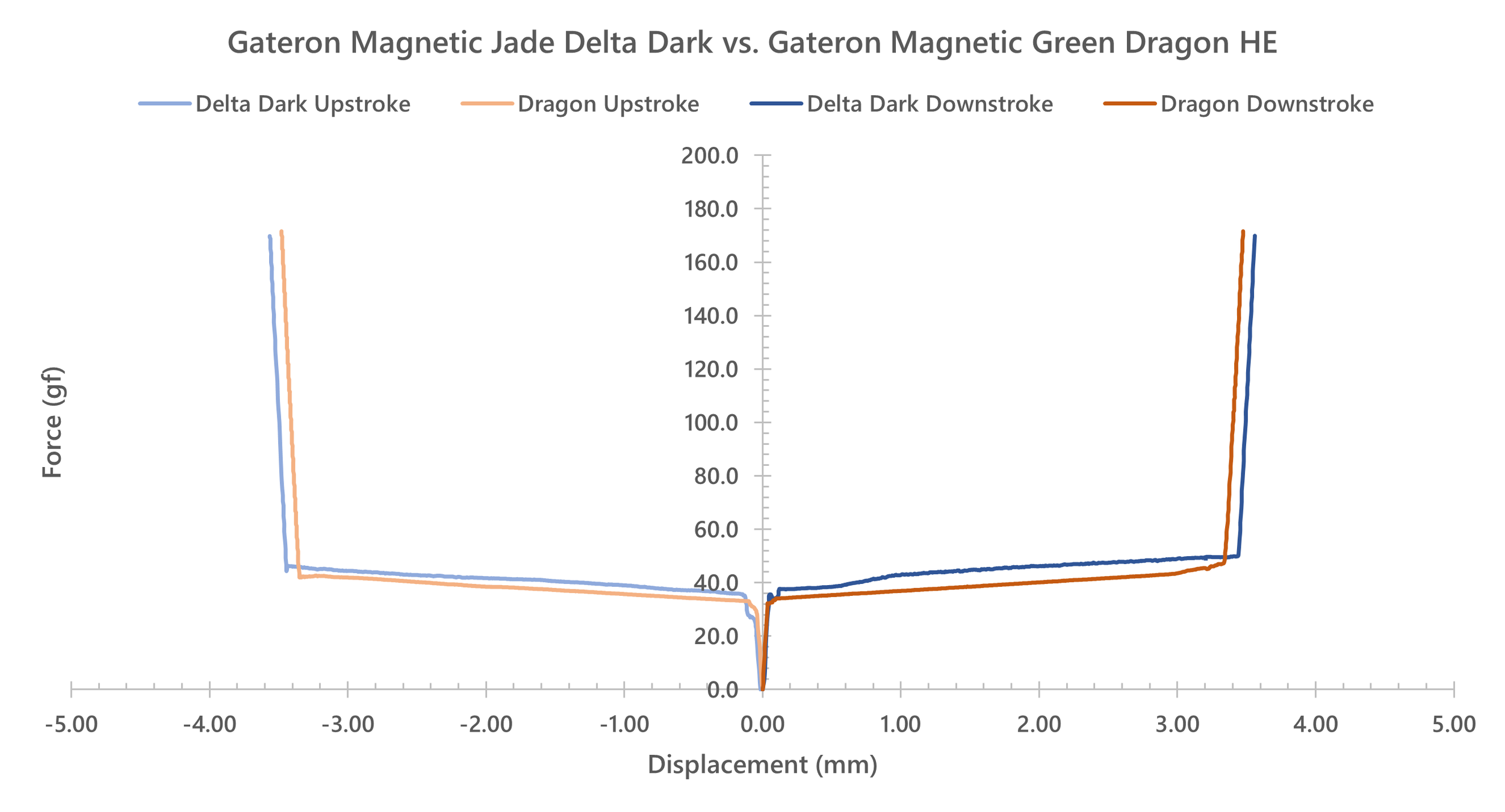
Gateron Magnetic Green Dragon HE
- While these two switches are similar to each other in terms of their overall volume and forwardness of their bottom outs in their sound profiles, the sounds of the Magnetic Green Dragons is much more singular and focused towards a sharp, pointy tone than the Jade Delta Darks. The Jade Delta Darks not only have a more rounded, highs and lows sound to their housing collisions, but also one that is slightly less consistent from switch to switch than the Green Dragons.
- These two switches have a comparable amount of N/S direction stem wobble though the Jade Delta Dark switches have a slightly greater E/W direction wobble to them.
- Both the Gateron Magnetic Green Dragon HE and Magnetic Jade Delta Dark switches have a similar degree of smoothness and factory lubing to one another.
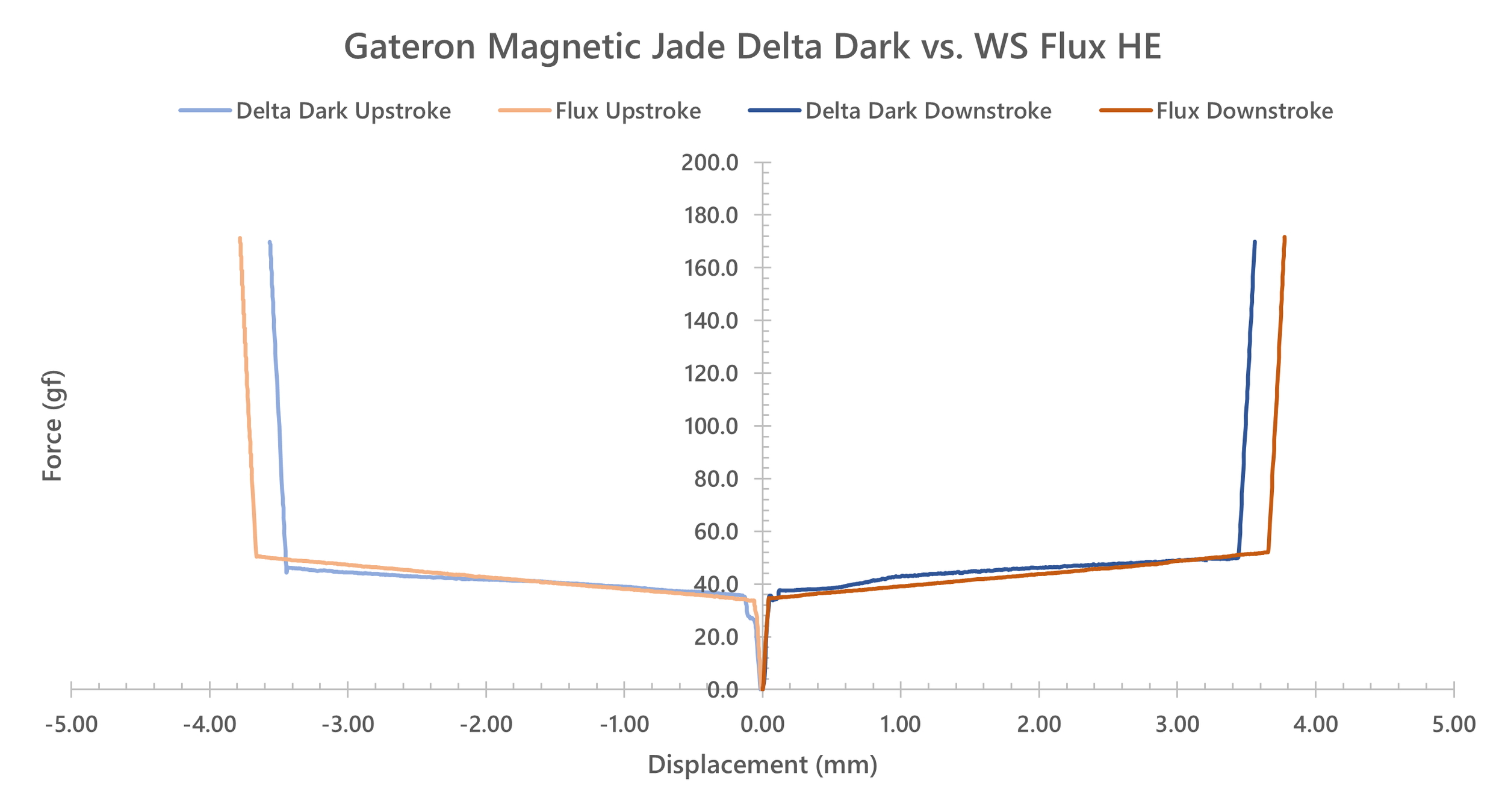
WS Flux HE
- Of all of the switches on this comparison list the WS Flux HE and Gateron Magnetic Jade Delta Dark switches have the most similar sounding bottom outs to one another. However, the bottom outs of the Flux HE switches are just simply more consistent, more crisp, and slightly more solid sounding than that of the Jade Delta Darks.
- There is a bit less overall stem wobble in the Jade Delta Dark switches than there is in the WS Flux HE switches.
- While the factory lubing on the Jade Delta Darks is fairly well done and consistent from switch to switch in their stock forms, the WS Flux HE switches simply have a more consistent and overall less noticeable presence of lube in their strokes than the Delta Darks.
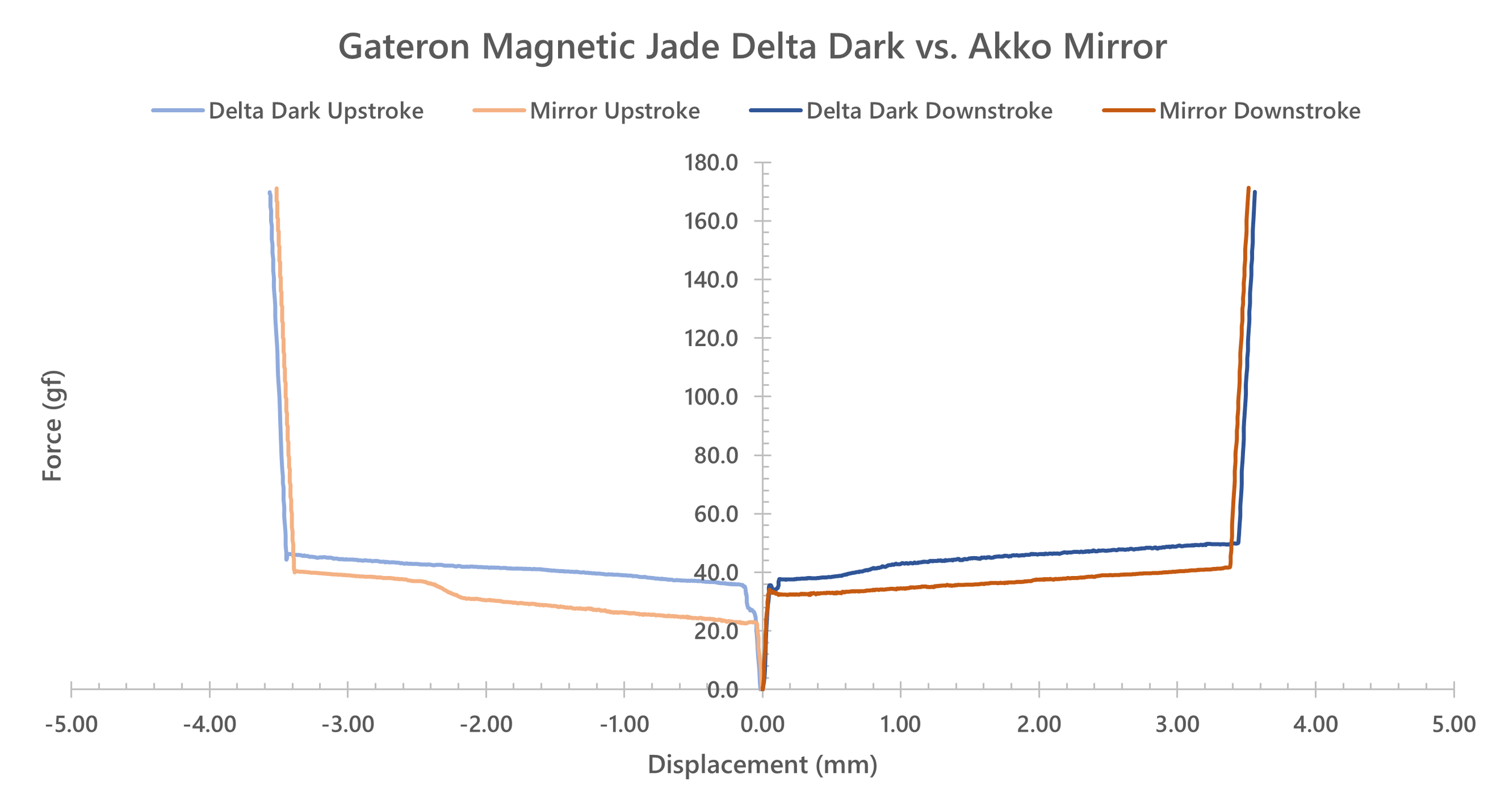
Akko Mirror
- There is substantially less stem wobble in the Akko Mirror switches than there are in the Gateron Jade Delta Dark switches and it’s a bit mean of me to compare the two based on such.
- Despite having a similar overall stem travel as one another, the more subtle, pointed bottom outs of the Akko Mirror switches makes it feel as if their stems travel ever so slightly further than the Jade Delta Darks, which by comparison feel like running headfirst into a massive wall at bottom out.
- Much like the WS Flux HE switches above, the Akko Mirror switches just have a more subtle and consistent factory lubing application to them than the Gateron Magnetic Jade Delta Darks.
Linearity
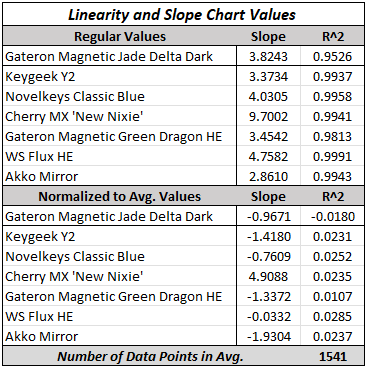
Figure 26: Absolute and relative Linearity and Slope values for each switch in this comparison section.
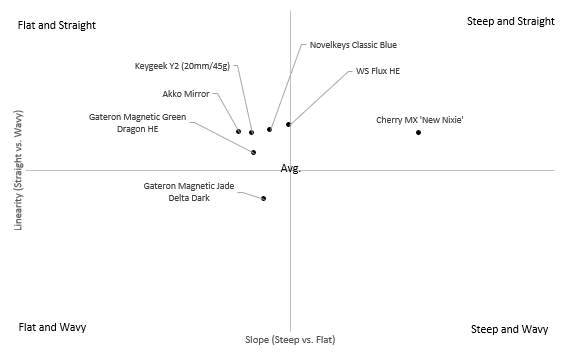
Figure 27: Qualitative comparison of the normalized Slope and Linearity for each switch in this comparison section.
If you are just now seeing this section for the first time and are a bit confused as to what I am talking about when discussing ‘Slope’ and ‘Linearity’, I highly suggest checking out my article titled ‘On Differences in Linear Switches’ where I explain what this section is for and how it came to be! For a bit of a shorter answer, know that this is part of my ongoing attempt to better quantify and articulate differences between linear switches which have historically not been captured in discussions about them.
Scores and Statistics
Note – These scores are not necessarily completely indicative of the nuanced review above. If you’ve skipped straight to this section, I can only recommend that you at least glance at the other sections above in order to get a stronger idea of my opinion about these switches.
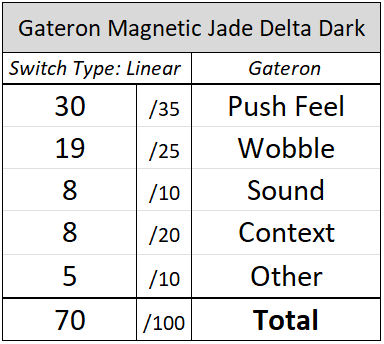
Push Feel
While the Gateron Magnetic Jade Delta Dark switches boast the same large, forceful bottom out as most other Gateron HE switches, they carry a bit of snappy depth to them that is well accented by the modified POM housing topping outs that leaves these a bit more multi-dimensional than not. With solid factory lubing and not much movement in feeling (or really sound) across various typing speeds, the only thing really holding back the push feeling of these switches is some subtle switch to switch inconsistencies.
Wobble
With slightly more stem wobble in the E/W direction than the N/S one, these switches have a small but still noticeable amount of conventional wobble despite their unique stem shape.
Sound
Despite being fairly loud linear switches, the Jade Delta Dark switches have a more sonorous and wide sounding bottom out that comes across way more complex than most other switches with large areas of contact between stem and bottom housing. With a topping out that is all these things but a little bit less, they have a great overall tone just slightly unbalanced and inconsistent across the batch that I received.
Context
With the Gateron Magnetic Jade Delta Dark switches boasting a steep price tag of $1.40 per switch, as well as numerous new molds, you’d think they would be marketed more or more widely available. And yet, these just don’t seem to reach as far as previous Gateron HE offerings or have nearly as much community excitement about them even in spite of their new stems.
Other
While the Jade Delta Dark switches are genuinely striking with their triangular stems and textured top housing designs, the lengths to which Gateron went to do such ultimately end at the aesthetics and provide no real, expected performance differences over their other switches.
Statistics
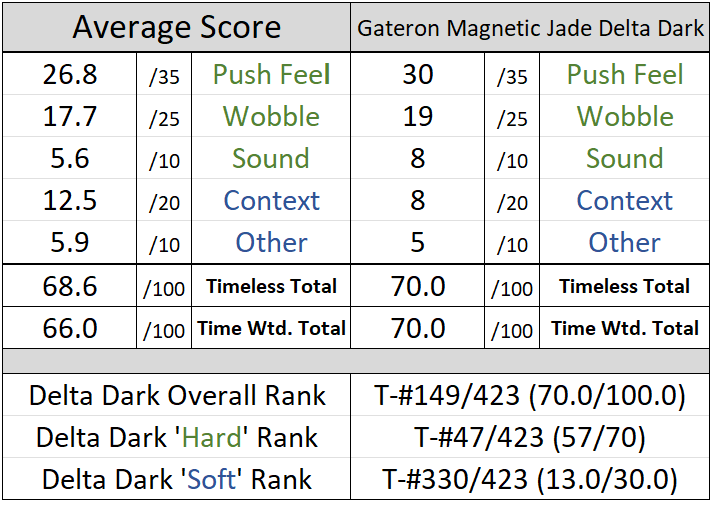
If you are looking at this statistics section and wondering what the heck ‘Timeless’ and ‘Time Weighted’ scoring is, consider checking out my short article titled ‘A Scorecard Time Change’. As a result of scoring becoming a bit anachronistic over the years, switches are now ranked in this statistics table using a “time weighted total” as opposed to their day-of scoring as discussed in that article. If you’d also like to learn about what ‘hard’ versus ‘soft’ ranks refer to specifically, I’d encourage you to head on over to my GitHub linked in the table above or at the links in the top right hand of this website to check out my database of scorecards as well as the ‘Composite Score Sheet’ which has a full listing of the rankings for each and every switch I’ve ranked thus far.
Final Conclusions
This is one of those rare reviews that makes it all the way to the final leg here just to leave me with two diametrically opposed sets of opinions about the switches at hand. Objectively, the Gateron Magnetic Jade Delta Dark switches are among some of the more technically interesting and well-conceived Hall Effect linears that Gateron has made to date. Breaking away from their trend of producing magnetic switches that just hammer home on the loud, pointed, and in your face bottom outs, the use of a unique stem geometry here paired with precise housing material choices such as a modified POM top housing lead to the Jade Delta Darks having a deeper, richer, and more complex sound that hardly moves at all at different typing speeds. Sure, there’s some switch to switch inconsistencies with such that become more noticeable throughout the break in process, but lube migration in switches is more so the expectation than the exception to the rules. As for their push feeling, in their stock form the Jade Delta Darks are well balanced, smooth, and genuinely solid linear switches. Subjectively, however, I’m about as disappointed in a strong performing linear switch as I think I’ve ever been before. (Hence the disparity in tone between this paragraph and all of the ones preceding it.) With an ostensibly brand new attempt to push the design limitations of the MX footprint, Hall Effect or otherwise, forward in the form of a triangular shaped stems and an equally as steep pricing of $1.40 per switch that would indicate such an extensive R&D effort and design overhaul, my expectations were way beyond what these switches actually delivered. The stems of the Jade Delta Darks, despite being triangular in shape, are certainly not triangular in function and effectively look, feel, and perform just like normal stems below the line of the top housing. What’s the point of going out of one’s way to engineer and develop an entirely new stem structure and housings to accommodate such if you don’t lean into it and derive any technical advantages out of such? This is especially mind boggling of a decision from Gateron when you consider that there’s no internal housing mechanism that needs to be designed around on account of these being magnetic switches! They had all of the canvas space to paint a beautiful masterpiece of switch technology and instead chose to push for an aesthetic gimmick that is somehow even more incompatible with their existing lineup of offerings than all of the incompatible iterations they’ve had before. We could have had a switch with three slider rails nestled inside of a not square housing that could give a feeling or sound profile truly unlike any other. Or, we could have had microtexturing inside of the housings that provides just as much of a physical uniqueness as it did to the aesthetics on the outside of the housings. And yet we got none of those benefits but with all of the costs associated with developing such. We not only could have but should have had more from the Gateron Magnetic Jade Delta Darks.
Sponsors/Affiliates
Mechbox UK
- A wonderful UK based operation which sells singles to switches that I’ve used above in my comparisons for collectors and the curious alike. Matt has gone out of his way to help me build out big parts of my collection, and buying something using this link supports him as well as my content!
KeebCats UK
- A switch peripheral company based out of the UK which sells everything switch adjacent you could ask for, they’ve been a huge help recently with my film and lube supply for personal builds, and they want to extend that help to you too. Use code ‘GOAT’ for 10% off your order when you check them out!
proto[Typist] Keyboards
- An all-things keyboard vendor based out of the UK, proto[Typist] is a regular stocker of everything from switches to the latest keyboard and keycap groupbuys. While I’ve bought things from the many times in the past, they also are a sponsor of my work and allow me to get some of the great switches I write about!
Divinikey
- Not only do they stock just about everything related to keyboards and switches, but they’re super friendly and ship out pretty quick too. Divinikey has been a huge help to me and my builds over the last year or two of doing reviews and they’ll definitely hook you up. Use code ‘GOAT’ for 5% off your order when you check them out!
ZealPC
- Do they really need any introduction? Zeal and crew kicked off the custom switch scene many years ago with their iconic Zealios switches and the story of switches today couldn’t be told without them. Use code ‘GOAT’ (or click the link above) for 5% off your order when you check them out!
MechMods UK
- A rising vendor based in the UK, Ryan and crew have been a pleasure to work with and have nearly everything you’d need to build your first or fourteenth keyboard. Go build your latest or greatest one right now with them by using code ‘GOAT’ at checkout for a 5% discount!
Dangkeebs
- A longtime supporter of the website and the collection, Dangkeebs has quite possibly the widest variety of switches of any vendor out there. Not only is their switch selection large, but it rotates and is constantly adding new stuff too. You’re going to need 5% off your order with my affiliate to save off the cost of all those switches!
SwitchOddities
- The brainchild of one my most adventurous proxies, SwitchOddities is a place where you can try out all the fancy, strange, and eastern-exclusive switches that I flex on my maildays with. Follow my affiliate code and use code ‘GOAT’ at checkout to save 5% on some of the most interesting switches you’ll ever try!
Cannonkeys
- Does anybody not know of Cannonkeys at this point? One of the largest vendors in North America with keyboards, switches, keycaps, and literally everything you could ever want for a keyboard always in stock and with an incredibly dedicated and loving crew. Follow my affiliate link above in their name to support both them and I when you buy yourself some switches!
Kinetic Labs
- One of the most well-rounded keyboard vendors out there, Christian and crew have been supporters of all my switch and switch-adjacent needs for some years now. I’m honored to have them as an affiliate and think you should check them out using my affiliate link above to support both them and I when you check out their awesome products!
Keebhut
- Want to try out some switch brands that fly under most vendor’s radars? Keebhut is always seeking out that next latest and greatest and has been super helpful in hooking me up with new brands over the past year. They are all about sharing that love as well, and want to give you 5% off your next order with them when you use code ‘GOAT’ at checkout!
Kailh
- No, you’re not mistaken – this is actually that Kailh that manufactures switches. As one of the longest running manufacturers in the hobby, they have a massive variety of switches available over on their website at any point in time. I’m lucky to be affiliated with them now, and so consider using my affiliate link above when ordering some Kailh switches to support me!
Keebz N Cables
- Australia and Oceania’s very own is now a part of the sponsor list here and I couldn’t be happier to add this long time supporter of the collection to it. They’ve always got an amazing selection of switches (and other keyboard parts) in stock and they want to share the love that they’ve shown me with you all too! Use code ‘thegoat’ for 5% off your first order when you visit!