Gateron Oil King Silent Tactile Switch Review
Despite having taken course over quite literally one whole, thirty day month, the saga of the french drain as described at the top end of last switch review, the entirety of the last review itself, and the full weekend of visiting Chicago for Keycon 2026 has flown by leaving me feeling as if it were all crammed into the space of a couple of days, at most. You know, the same length of time it took to work through that run on sentence. I seriously don’t know how I managed to be present for all of those things while also starting a brand new job in that same space of time and I could probably write a couple of paragraphs about just how that has went, let alone everything else. However, as it is tradition following meetups that I attend, I’m going to dedicate the rest of this introductory section to celebrating it and giving some insight as to how it went. Keycon 2026, as hosted by the Chicago crew who have put on absolutely great meetups over the last handful of years, was an absolute success. The venue itself in Chicago’s Irish American Heritage Center was stunning and had a ton of space, the vendors row was absolutely stacked front to back with keyboard vendors, artisan makers, and everything in between (read: SwitchOddities), and there was significantly more table space for everyone to spread out their boards, boxes, and collections. Despite having copious amounts of table space for me to spread out, I opted to pack lighter than I ever have for any meetup throughout my nine years now of attending them – bringing only a single NIB SSK and pair of artisan boxes – in an attempt to try and be as much of a normal hobbyist as possible and talk to all of my friends I haven’t seen in person in well over a year. It turns out though that no matter if I bring the entire switch collection or virtually next to nothing at all by my normal standards, I still don’t have enough time to catch up with every old familiar face, have conversations about peoples boards or collections, and get to make as many new friends as I would like. In a way I suppose that this is a good problem to have as it means that there’s that much of a community that I’ve become enmeshed with that I couldn’t possibly catch everyone in person and hear how their life has been over the past 12 months, though I still wish there had been more time. The longer than normal meetup with less than ever obligations came and went by so fast that it felt equally as much a blur of circumstance as has the last handful of weeks of real life and everything going on with that. So even though the meetup itself was so much shorter than I could have possibly wanted for and I didn’t get to talk to everyone that I had planned to, it was an absolute blast of a time and I’m glad that I got to speak to those of you who did attend. As is also traditional following meetups, here’s a couple of sights from Keycon 2026 this year – including some that I took, some of my favorites setups I saw, and even some fun keycaps I picked up along the way that I want to flex…
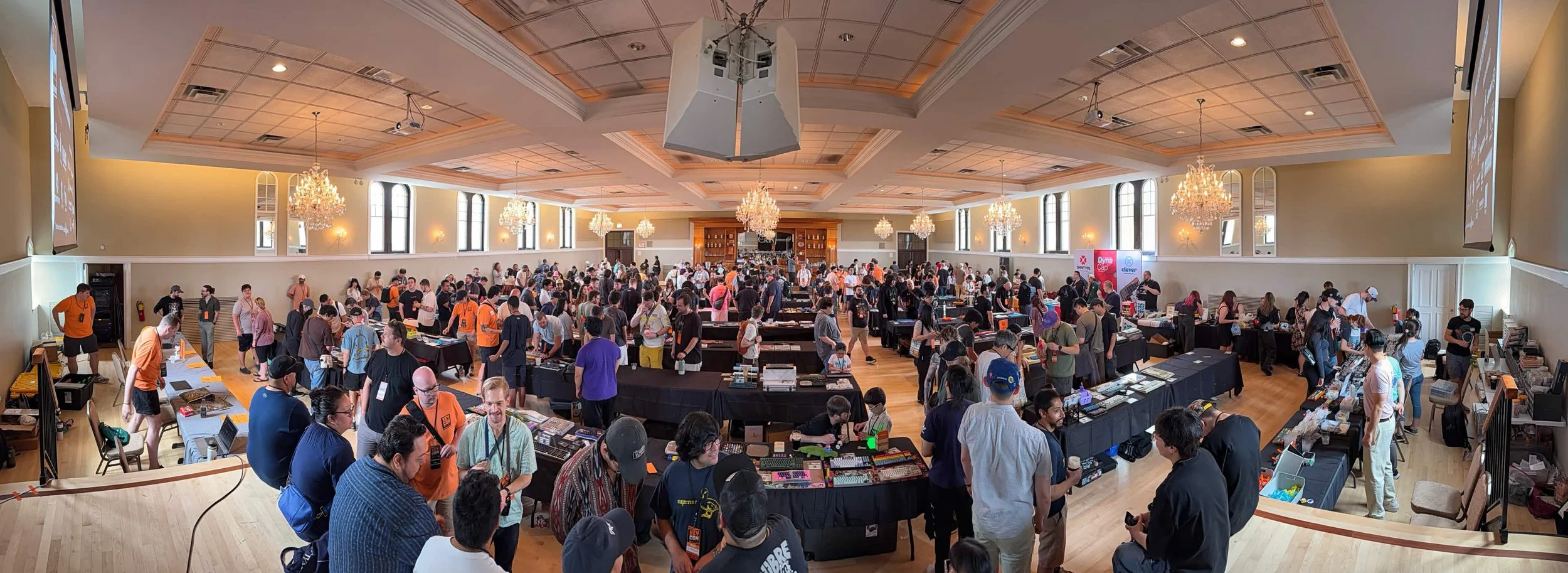
Figure 1: Panorama photo of Keycon 2026 and attendees as taken by Rmendis.
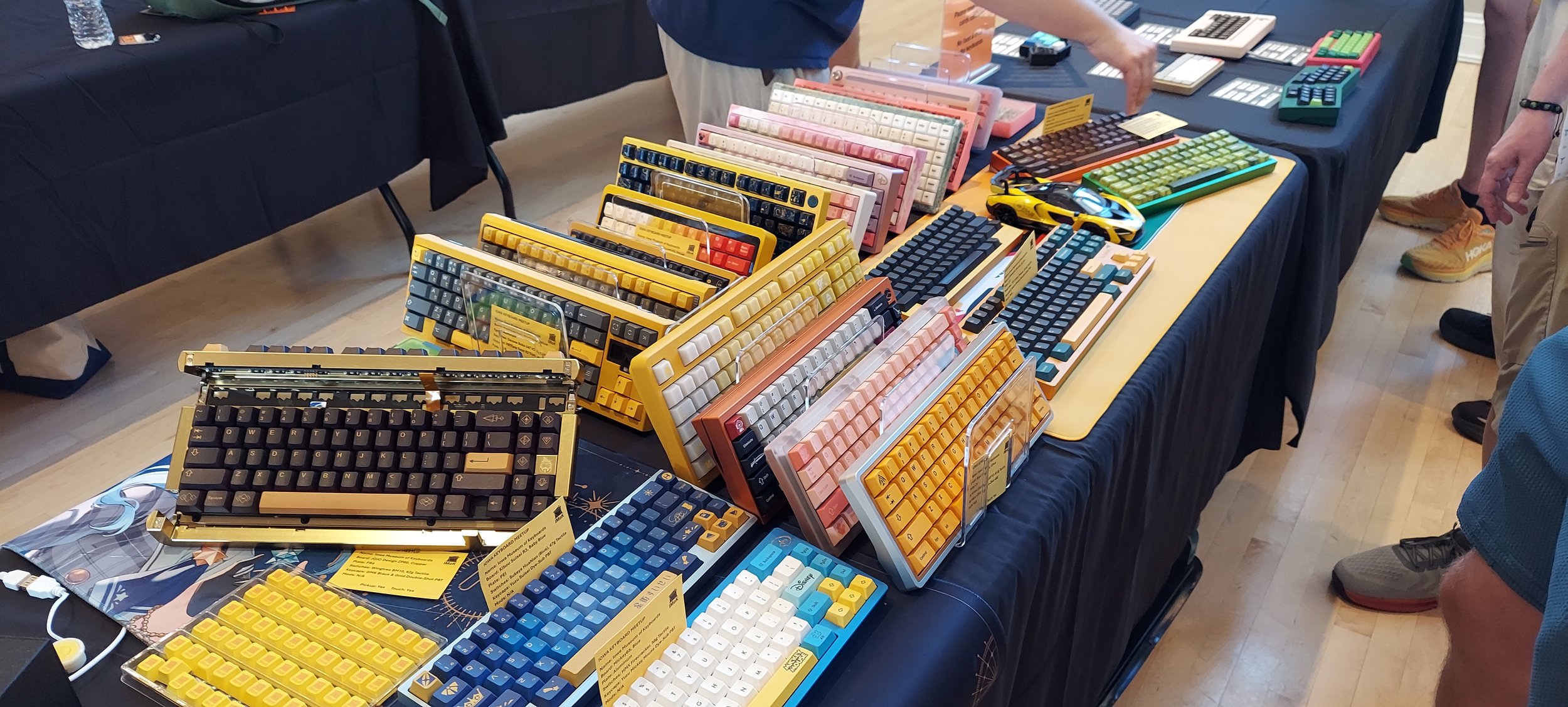
Figure 2: The "Iowa Museum of Keyboards" was an especially fun sight to see and their sheer dedication to yellow-colored Matrix boards is impressive to say the least.
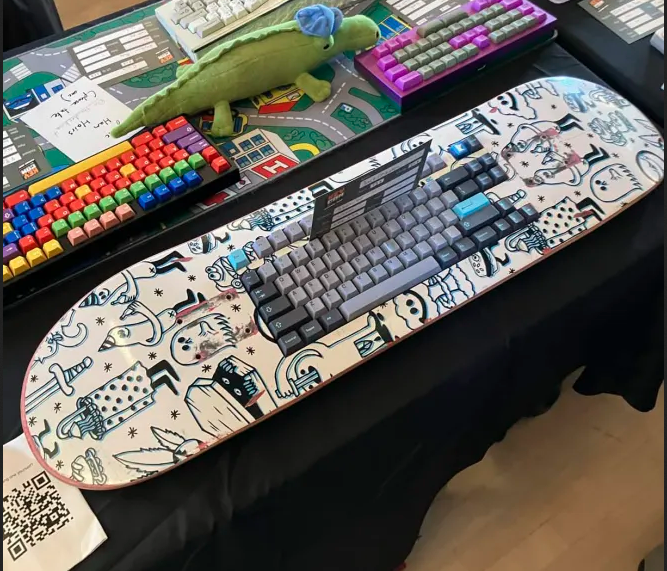
Figure 3: No, your eyes are not deceiving you - that is in fact a keyboard built directly into the underside of a skateboard by Jack of PikaTea.
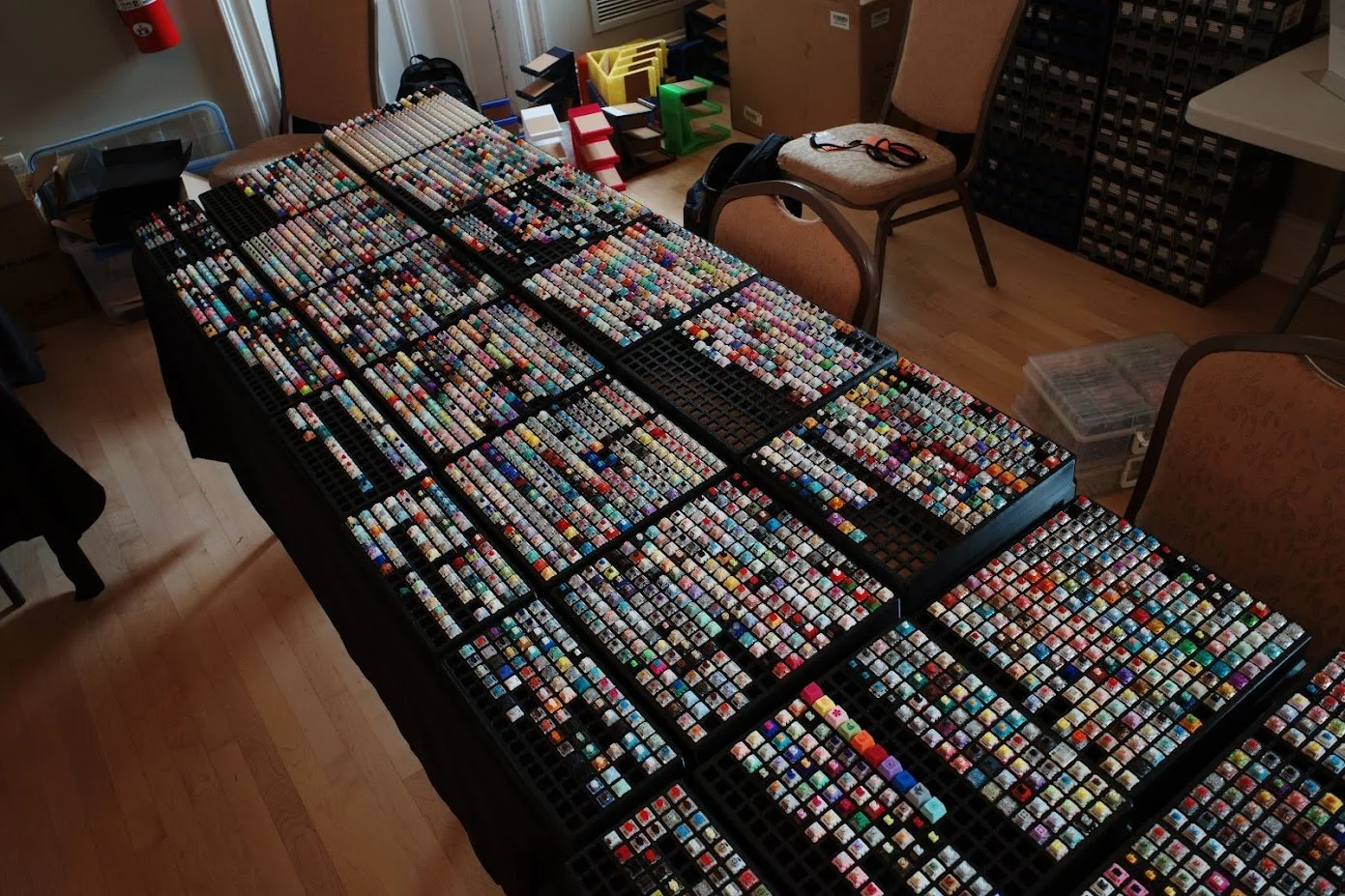
Figure 4: What it really be a proper meetup without a switch collection? SwitchOddities full collection on display with brand new custom tester displays from Clackify!
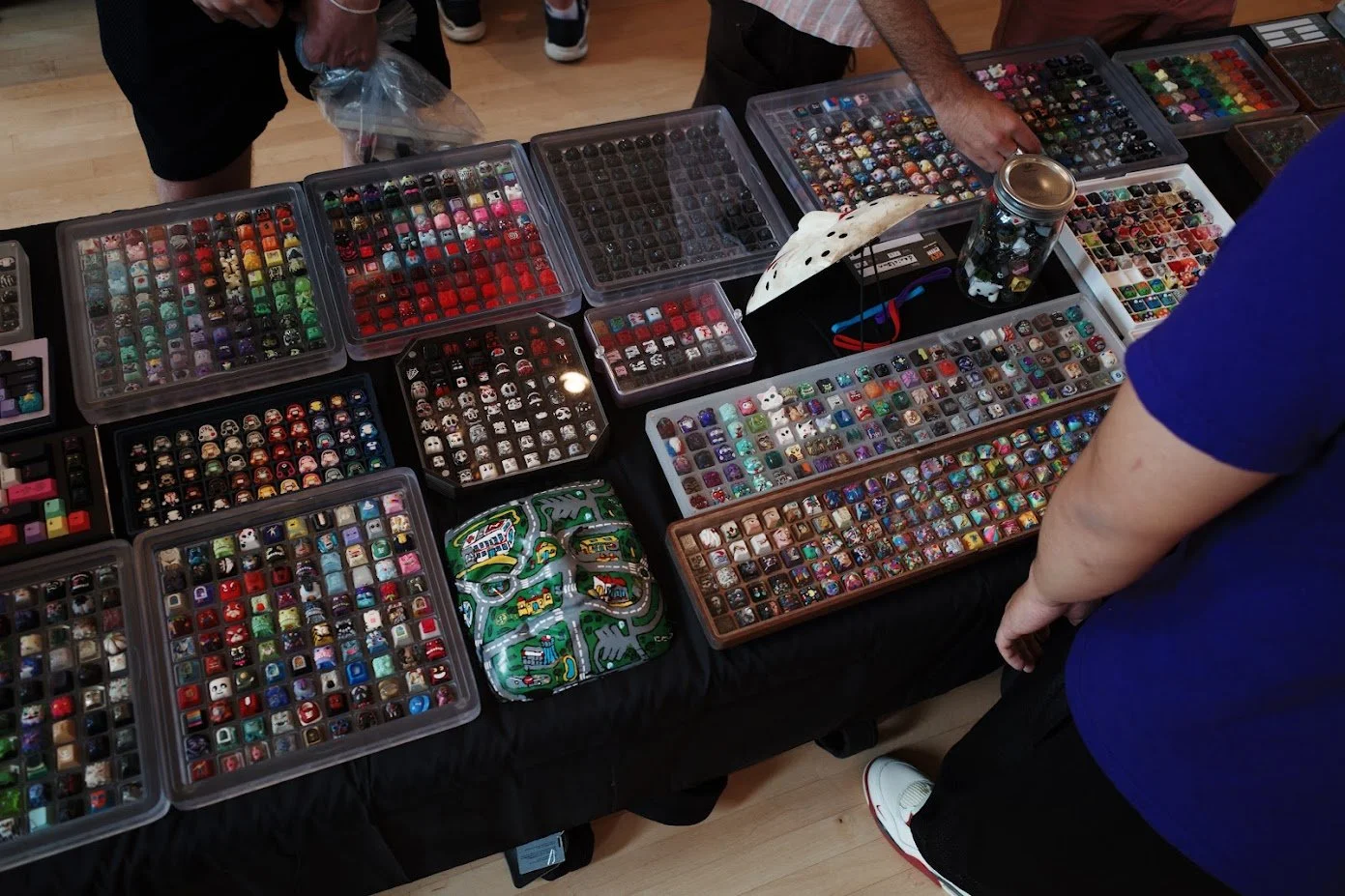
Figure 5: Just one brief smidge out of artisan row. This doesn't even include my box, JQ's famous jewelry boxes, and hundreds of other well-known caps from across a dozen different collections...
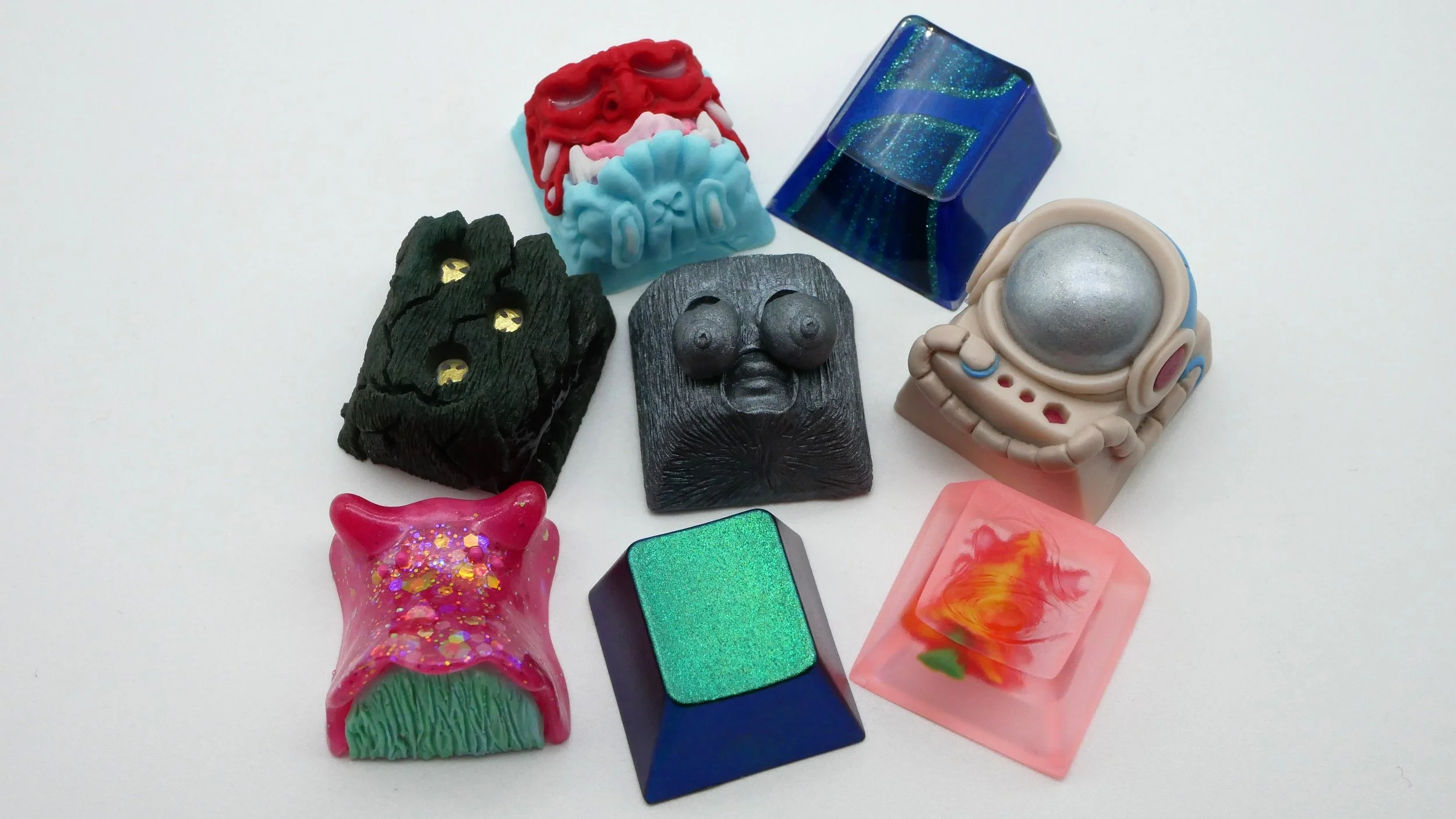
Figure 6: My own personal artisan haul from the meetup including caps from WheatKeys, Alheckz, Booper/Omniclectic, JQ, Mastonon, and KWK as well!

Figure 7: And while this isn't a keyboard, the girlfriend and I got to witness one of our favorite birds on Montrose Beach before leaving town Sunday. This is Imani, a storied, well-traveled, and endangered Piping Plover. He's not only named but got an entire history online which made it feel like seeing a real life celebrity in person!
Switch Background
While the several month stretch in which I was exploring all of the nooks and crannies of the BSUN Identity Crisis and all of the switches that were falling out of such may have felt a bit contrived (and it most certainly was), another minor reason that I kept going back to that well was because I genuinely have been struggling to understand the modern switch market for a fair while now. No seriously, even after all of these years of following the largest names in the industry and collecting damn near every switch that they’ve made along the way, the directions they all seem to be choosing are not what I would have imagined were what they were posturing towards. Cherry folding up production to move to China was kind of hard to stomach after them having spent well over a year pivoting into more custom mechanical keyboard community minded designs spearheaded by their C-Lab team, for one. Or we could take a brief stop at TTC who seems to have completely lost the plot on why their OG switches were as popular as they were during the Years of the Tiger and Rabbit and seem to think that oddly shaped, multi-dollar costed HE switches are the future. As well, bigger names that were more ‘recently’ in the limelight like Tecsee and Durock/JWK have chosen to slow to a crawl in terms of output rather than trying to compete with smaller up and coming manufacturers feels a bit odd considering that they managed to grow strong directly in the faces of giants like Kailh and Gateron back in their prime. Even Gateron themselves have been a bit confusing to me as of late for more than a handful of reasons. For one, their Everfree line of switches – which were true to form high quality, Gateron-made switches at budget friendly, entry level prices – seemed to fold out from underneath them to the point they’ve stopped supporting it entirely. (Or are perhaps rebooting it in the form of UKeebs collaborations?) As well, they’ve not only doubled or tripled down on Hall Effect style switches, but effectively done whatever the word is for twenty-seven-times-ing down on an idea would be at this point. And furthermore, they’ve not just stopped their EverFree family of switches and exploded their Hall Effect offerings, but they’ve seemingly done all of this over the past year of time while nearly entirely halting their progress on producing Gateron-led switches in the classic MX footprint. You know, those tiny switches that they put through endless runs of KS-X iteration over the years that grew them to the degree of popularity that they have today. None of these directions from really any manufacturer in the space feels like it has made sense in well over a year now at this point. So naturally when I saw Gateron post a whole range of new, MX style switches in relatively familiar dressing on their website just a couple of months ago, I assumed we had finally broken out of this spiral. Don’t these look like long lost switches that Gateron just forgot to push out to the community between 2014 and 2018?
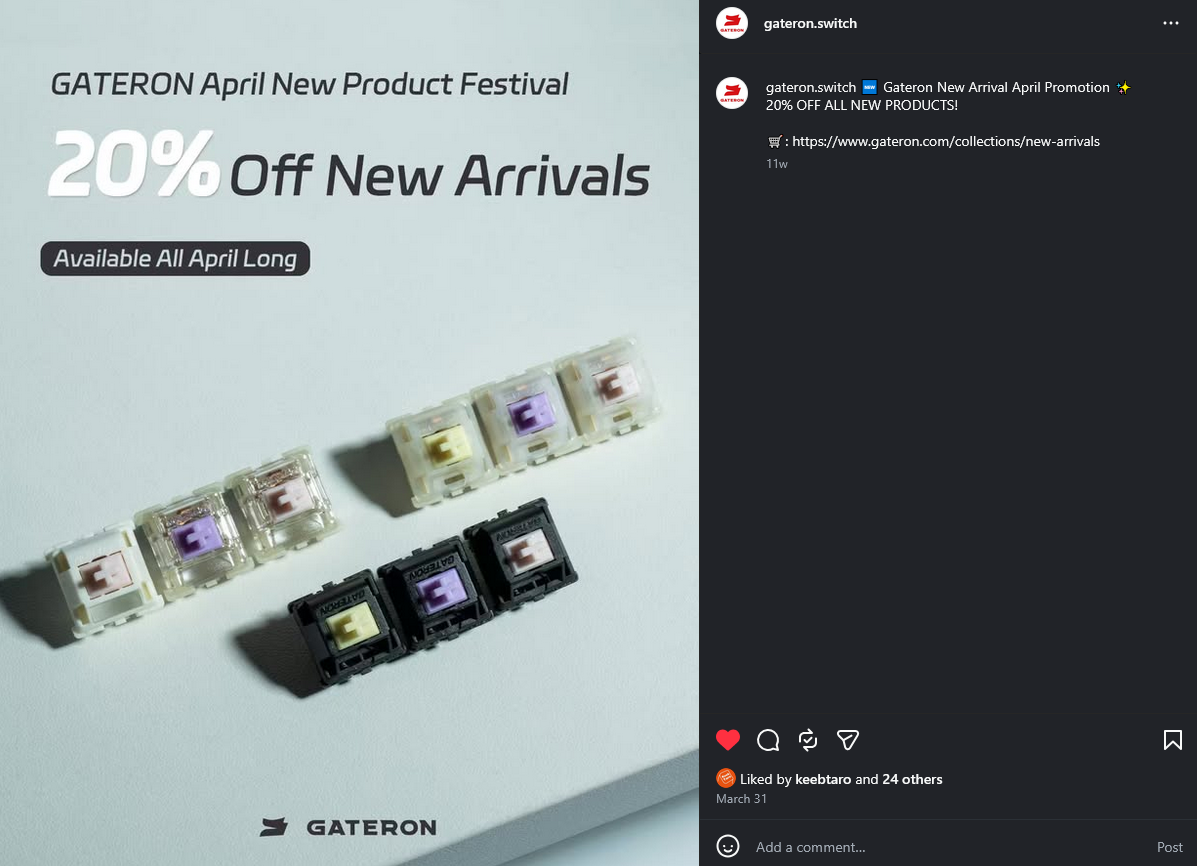
Figure 8: Finally, some good fucking food. Gateron switches that invoke classic KS-1 and KS-3 housing designs in 2026 is a sight for sore collector eyes.
Mixed into the span of seemingly endless months of Gateron posting and then reposting yet another iteration of a jade green colored HE switch on Instagram, somewhere around late February to early March of 2026, Gateron broke free of their MX-style switch fast by not just posting one or two new switches, but nine entirely brand new releases to the world. Or, at the least they encapsulated all of these releases that they sprinkled out bit by bit over a few weeks into one nice, tightly packaged post for a sale on their website that I chose to easily reference above. Ostensibly looking to be an expansion of old classic designs, the first and ‘newest’ of the designs that were added was that of the Gateron POM Smoothie Pink Silent Linear – a first silent entry of a family stretching all the way back to very late 2023 / early 2024 in conception. Followed by this were a pair of KS-9 style, clear top over opaque white bottom housing silent switches in the form of ‘3.0 Pink Silent Linears’ and ‘3.0 Purple Silent Tactiles’. Going even further backwards into their catalogue, Gateron also to supplement their very well loved, historically classic KS-3X1 full milky switch universe by making a run of ‘Pro’ milky switches featuring a pink stemmed silent linear, a similarly purple silent tactile, and then yet another iteration of a milky yellow switch. Wait a minute, these aren’t Gateron Pro Milky Yellows? These aren’t the recent re-release of one of their single most successful linear switches of all time? No, they’re actually heavy tactiles. Gateron KS-3X1, full milky housing, yellow-stemmed heavy tactiles. On a chance to revive, rejuvenate, reinvigorate, re-celebrate, or just re-anything-that-could-be-a-positive-verb-here, their single most iconic linear switch to the custom keyboard community in their most typecast linear colorway ever, Gateron punted the yellow stem to a heavy tactile design. (Newer hobbyists amongst you reading this have to recognize that I don’t recognize Gateron Jupiter/Jelly/Smoothie Banana switches as actually real at all. The Keychron-pushed decision for Gateron to abandon their “yellow = linear” style design for some cheap, entry level bullshit tactiles is one of the worst things they could have ever done and I wish they never had. You can’t push the “yellow = linear” button for 8+ years, switch it to tactiles in the last 1, maybe 2 years and expect anyone sincere to agree with the decision.) Well, never mind this confusing decision – there’s still three, all black-housing switches left that I haven’t introduced. While we can anticipate that Gateron probably made the same crunchy yellow mistake here like the KS-3X1 inspired switches above, at least their paying homage to the true, original KS-1 switches that started them off! Yeah, about that… It turns out those black housing, pink/yellow/purple stemmed switches are actually the new “Oil King” switches. No, seriously.
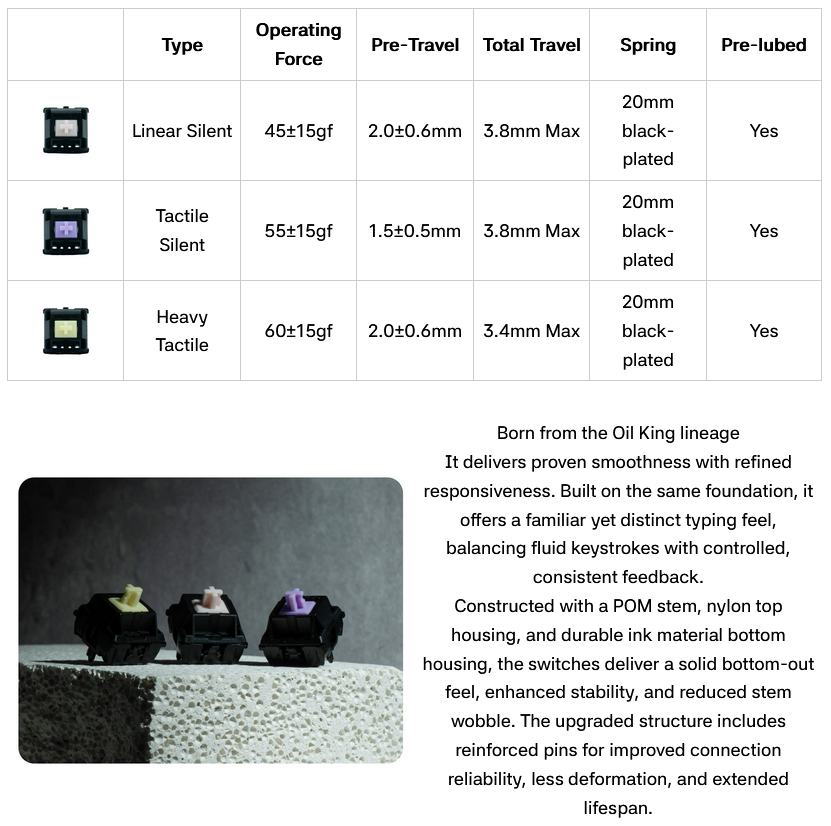
Figure 9: Seriously. This is on Gateron's sales page for these switches right now.
Over four and a half years since the Gateron Oil Kings were initially debuted to the world, long after their reign of supremacy as some of the de facto best stock lubed switches available, and seemingly long after Gateron moved on from the MX conducting platform into the world of magnets, they chose to revive the Oil King switches and expand them into a new ‘family’. Perhaps the word ‘reanimate’ may have made more sense contextually. As of this announcement post in early 2026 there was now not just one, but four Gateron Oil King switches – an all-black linear, a pink silent linear, a purple silent tactile, and a yellow heavy tactile. Hopefully my more off kilter, fourth wall breaking tone in this background really conveys just how off all of this feels. While I know that newer Gateron hasn’t been as pious about keeping its lineages of switches simple, coherent, and well-guarded against shenanigans – with their Keychron “Phantom Ink” spin offs, infinite iterations of Jade HE switches, or even their “V4 Azure Dragons” that were literally nothing like the three iterations before them – but this feels uncharacteristically blasphemous even for them. And these feelings are even heightened by the fact that they did all of this with a sheer absence of marketing altogether. You’d imagine that if they were going to go grave digging and bring back to life one of their most iconic, marketable switch housing material combinations that they would have at least done something to tease the return of Oil Kings. They could have even spun it as a whole “we’ve not forgotten about the MX standard that brought us to where we are today” sales pitch too. Or even just temporarily leveraged the corpse to pivot into HE Oil King switches would have made sense here. But I can’t think of a single solid, coherent plan as to why these, why now, and why in this fashion. It truly doesn’t make all that much sense to me, but it clearly has to have made some cents for them.

Figure 10: I'm not saying that it's often by any stretch, but sometimes rounding of paragraphs with snappy quotes like that truly does feel like this.
In the longest of ways around, I suppose I can see some poetic silver lining in the Gateron Oil Kings getting unceremonious spin offs when considering that they, themselves were equally as questionable spin offs of the success of Gateron’s 2021-era Ink Family of switches, but I never would have guessed I’d be bringing that fact up to you in a review about “Gateron Oil King Silent Tactiles” in 2026. I figured that if we’re going to completely break from tradition and shake up every design norm we spent nearly a decade putting into people’s heads that I might as well take the furthest-from-normal position to look out on the new landscape of Gateron switches. Introduced first in that sale post in early March of 2026 and then more singularly by way of an Instagram post on April 2nd, 2026, the Gateron Oil King Silent Tactiles were part of this new expansion of Gateron’s MX offerings pushing new twists on older, more familiar faces. Available at a range of vendors around the world including Gateron’s own newer direct to customer selling website, the Oil King Silent Tactiles and associated siblings were first posted for sale at $0.65 per switch, closely mirroring not only the nylon over ‘ink thermoplastic’ design of their significantly older inspirations but also the price point that was somewhat staggering back in 2022 but far from crazy given the steep HE switch prices of the modern day. While I would love to take a complete shot in the dark as to whether or not these will continue to be produced beyond the rest of 2026, and normally I feel like I might be able to give Gateron’s longevity and relative stability, I’d hate to break from the theme in this section and feel certain about everything. Maybe next week they’ll stop producing these switches or we could be greeted with a whole classic switch rainbow of Oil King housed switches. (I will absolutely be devastated if this inspires them to make Gateron Oil King Green clickies with click jackets in 2026.)
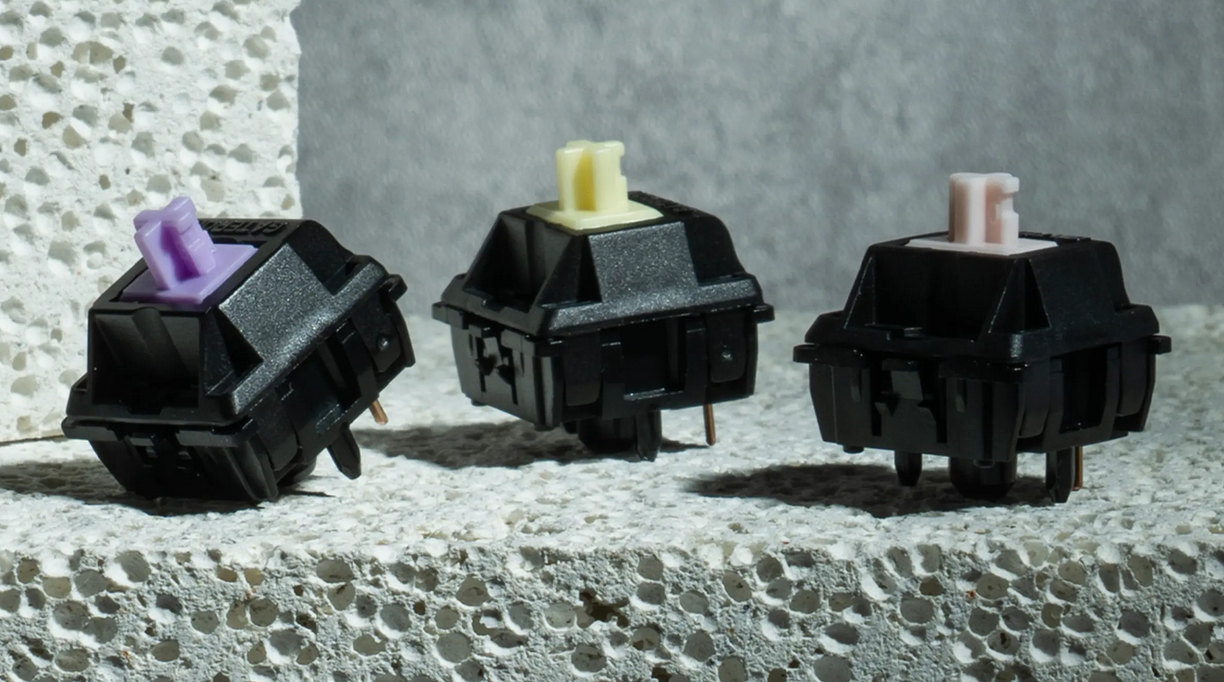
Figure 11: Gateron storefront marketing photo for the Oil King Silent Tactiles (Left), Oil King Heavy Tactiles (Middle), and Oil King Silent Linears (Right).
Oil King Silent Tactile Performance
Appearance
At the highest level, the Gateron Oil King Silent Tactile switches come in all black housings with lilac purple colored stems that could and really will be construed as literally anything other than a modern Oil King switch from a distance. I don’t know, something about all black housings with colored stems being the standard for switch design across all manufacturers for more than half a decade when this hobby was first setting its roots and people were writing the foundational literature still referenced to this day makes it kind of hard to invoke said design in the present day and it be interpreted as anything modern in the slightest. While this confusion is somewhat assuaged when viewed up close by the presence of an inverted Gateron nameplate, it might actually be one of those situations where newer hobbyists may be more confused than older hobbyists despite the inverted Gateron nameplate being a newer feature. With the vast majority of modern Gateron switches that people seek out in this day and age featuring these flipped nameplates, newer hobbyists may not recognize these as being newer or from the family of Oil Kings where the first molds from Gateron to use inverted nameplates were first introduced; The original KS-1 runs of Yellow, Red, Black, etc. switches all feature right-side-up nameplate orientations. Continued complaining about the lack of historical preservation in the design of these switches aside, actually touching them during any confused identification phase will almost certainly elucidate their origin on account of there being exceedingly few silent tactiles ever produced and these being the only non-brown-stemmed Gateron silent tactile switches with black housings that I can recall. (Thankfully Zilents were made with clear housings to make this the most technically true of statements!) Unlike the rare few silent tactiles that Gateron has dabbled in over the years, the Oil King Silent Tactiles are at least somewhat intriguing in that they appear to feature a new-ish dampening mechanism for Gateron. Discussions of these kind of new mechanisms, as well as the points of note in the molds where the modern Oil King Silent Tactiles and old, original Oil Kings overlap may be found in the paragraphs and photos below.
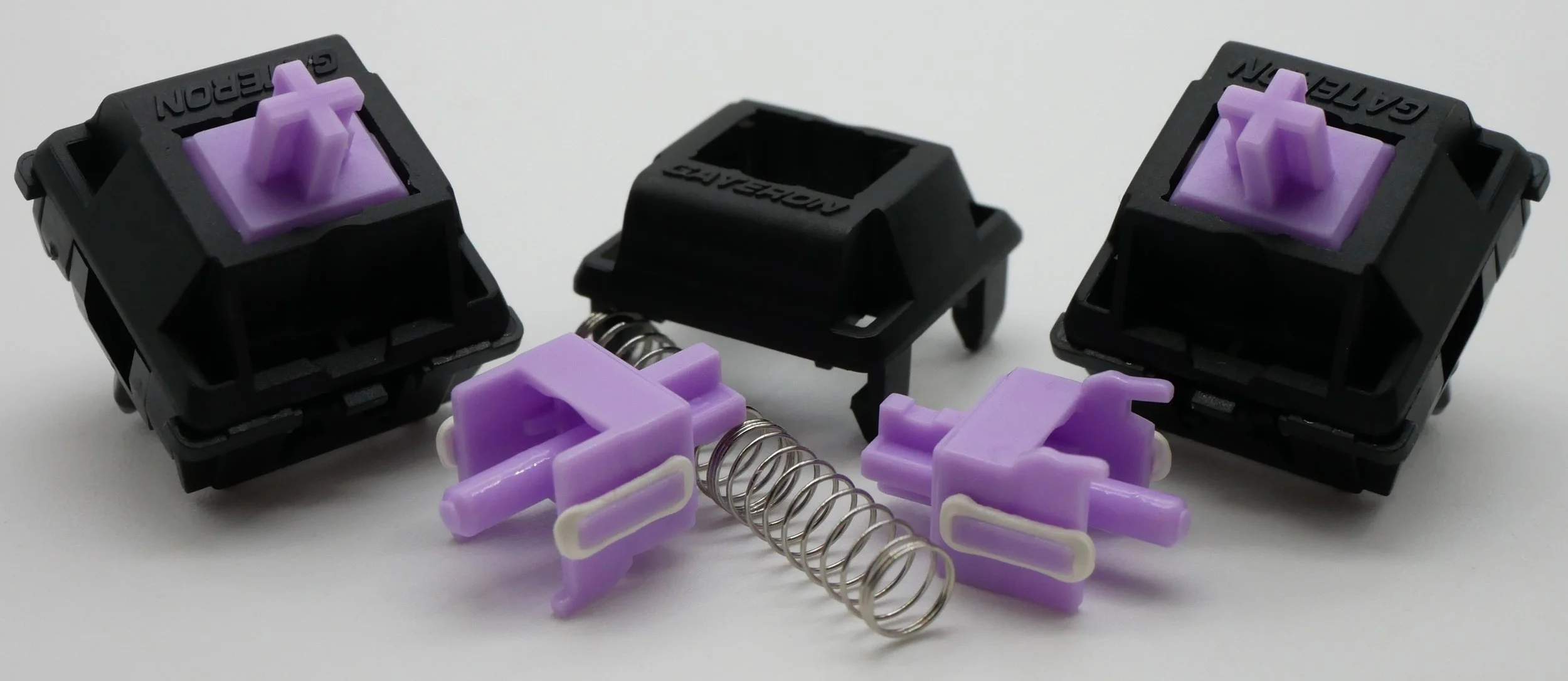
Figure 12: Oil King Silent Tactile switches and their components.
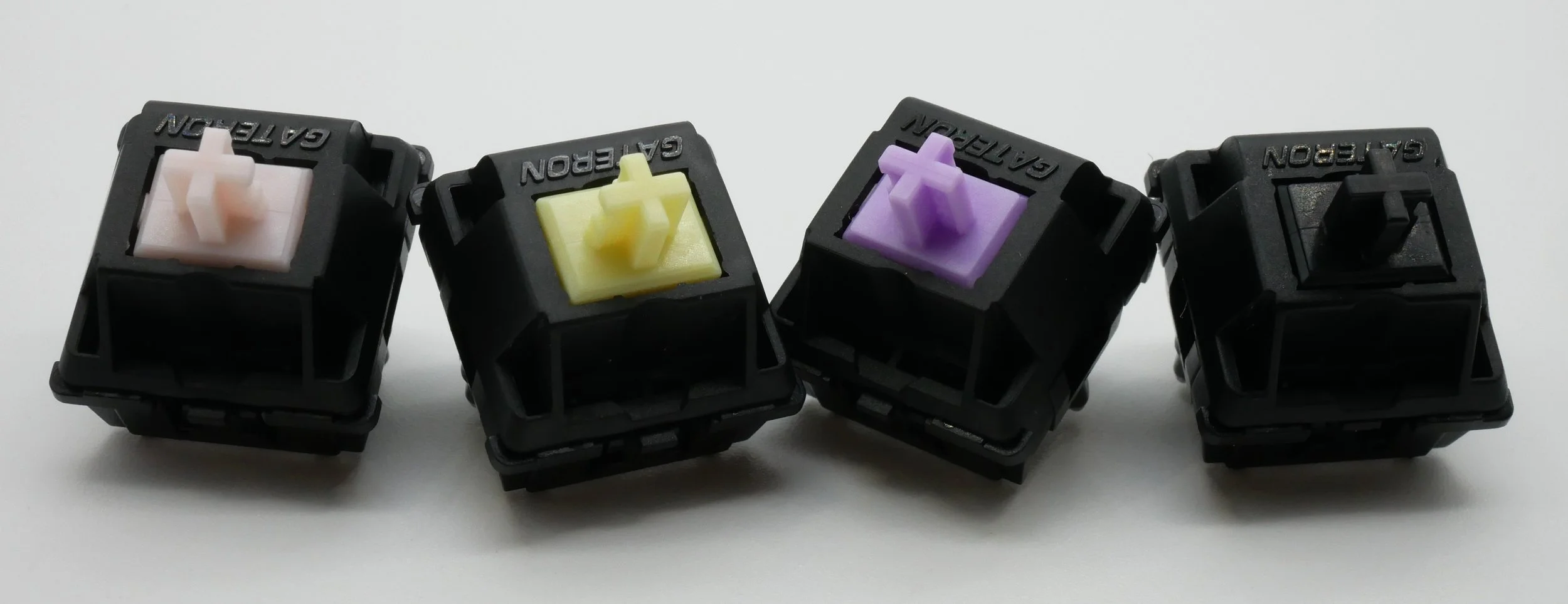
Figure 13: Oil King switch family as of mid-2026.
Looking first to the all-black, opaque nylon top housings of the Gateron Oil King Silent Tactiles, and then comparing them to my 2022 documentation of their original inspirations, I was glad to find these modern iterations to be fairly true top form recreations of the originals. Externally the housings appear largely indistinguishable from one another with new and old Oil King housings both featuring raised text, inverted ‘GATERON’ nameplates as well as long rectangular LED/diode slots with a thin bifurcating strip down the middle. As well, the Oil King Silent Tactile top housings even appear to retain a small bit of the slightly matte texturing on their surfaces that I noted in my original Oil King Switch Review. Internally, the housings also appear structurally identical as well, with all housing shapes, mold ejector marking locations, and non-performance related features effectively well preserved. That being said, though, there is at least two ultra small details which I noticed which differentiate the two. The more modern Oil King top housings appear to have slightly more shiny top housing internal lips just underneath of the bifurcation point of the LED/diode slot as well as capital letter mold markings that are oriented with the top sides to the right and bottom sides to the left. While the original Oil King molds from 2022 also have a pair of capital letter mold markings in both of their upper corners, my original photos show them to be oriented in the opposite direction (leftward facing top sides) and slightly thicker in font size. Without historical revisions of the Oil King switches from 2023, 2024, and beyond, it is certainly possible that they moved from their original designs and into these more modern ones via silent changes slowly over the years, though I can at least definitely say the top housings of these modern iterations are at least somewhat different than the true original Oil King linears.
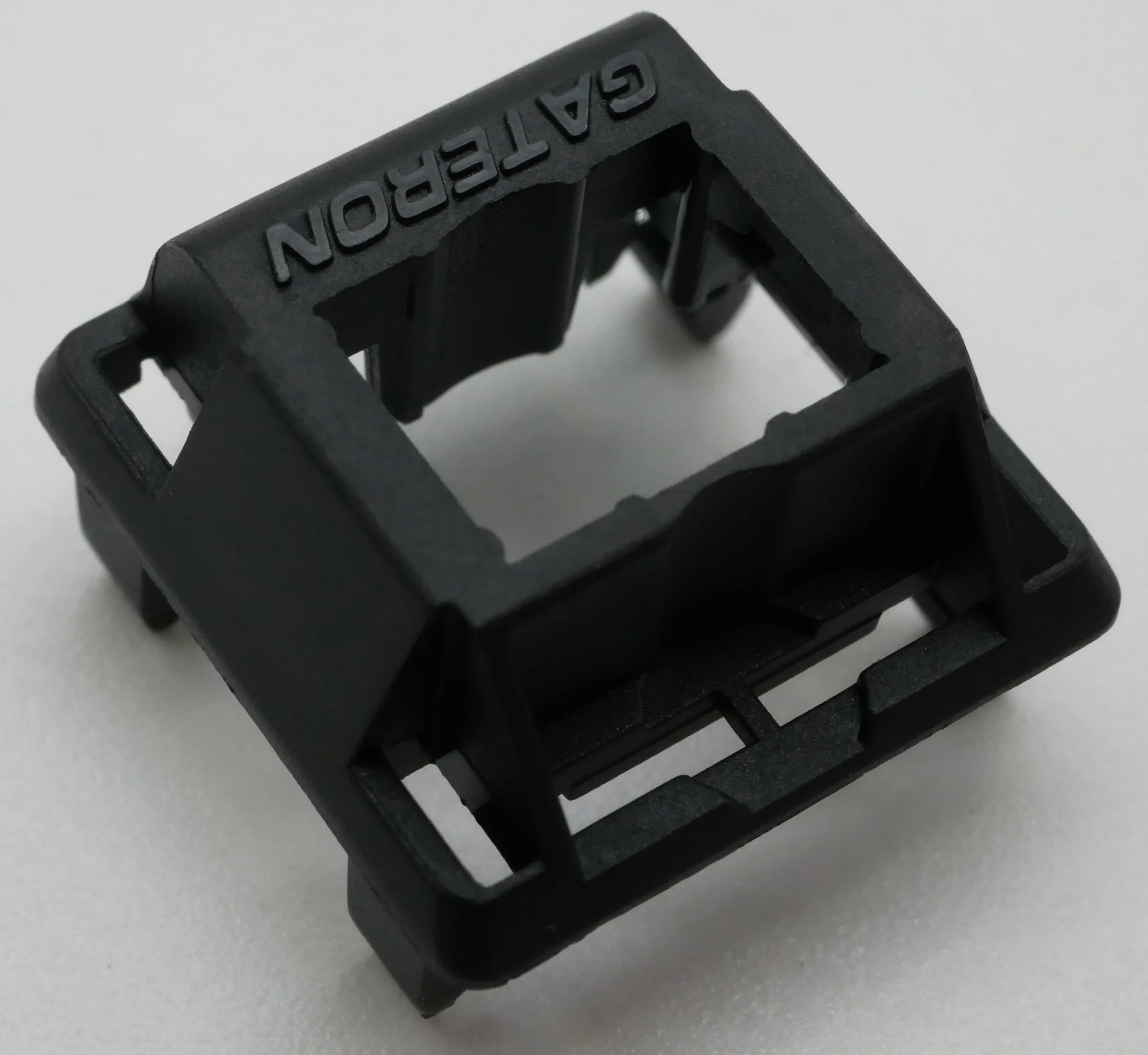
Figure 14: Gateron Oil King Silent Tactile top housing exterior featuring inverted 'GATERON' nameplate and bifurcated, long rectangular LED/diode slot.
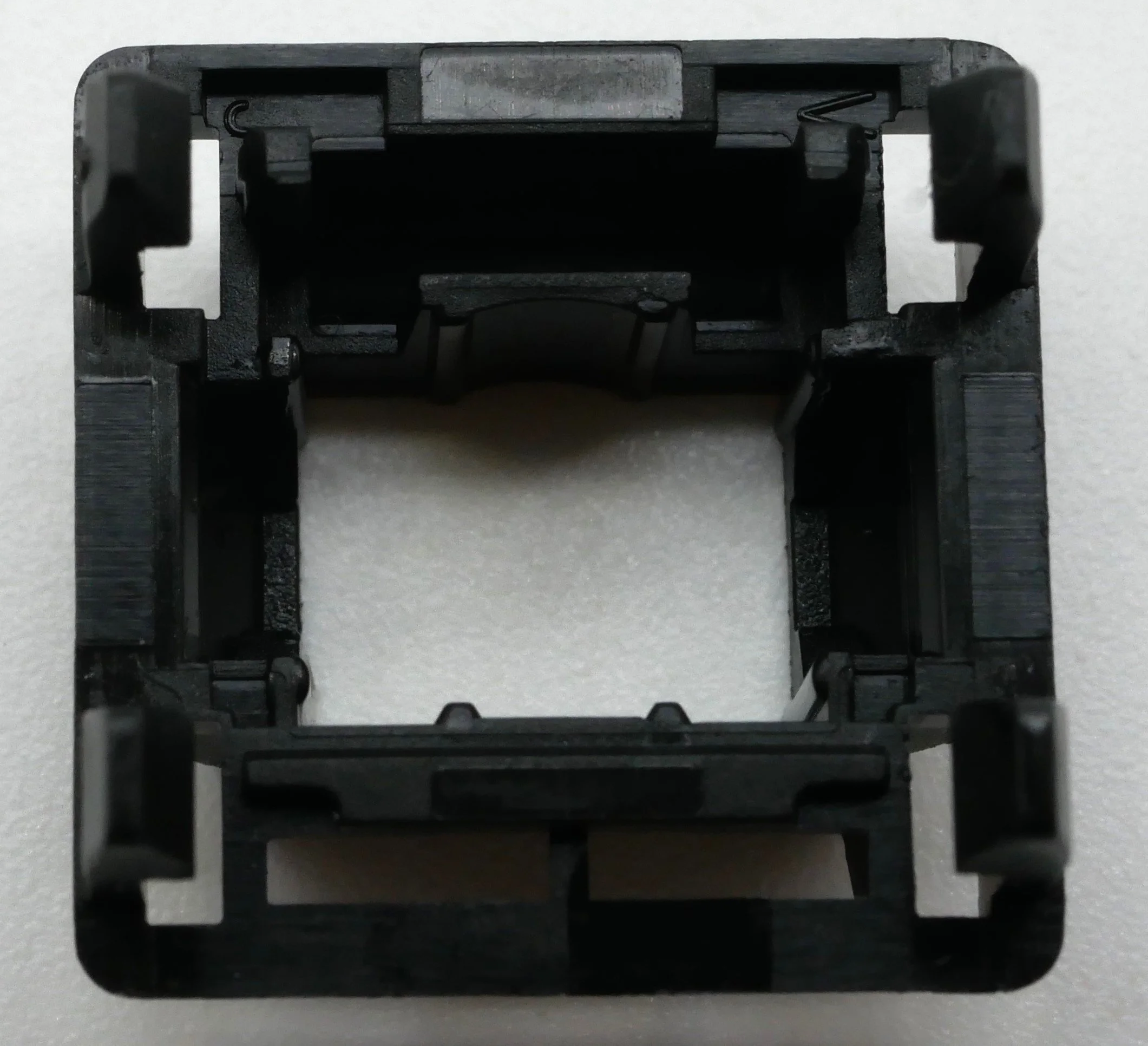
Figure 15: Gateron Oil King Silent Tactile top housing interior showing nearly identical features to original Oil King molds from 2022 with the exception of the capital letter mold markings in the upper corners being oriented the opposite direction.
Moving next to the lilac purple POM stems of the Gateron Oil King Silent Tactiles, we’re greeted with a dampening mechanism that I had described as ‘new-ish’ above not in jest nor the same sort of disdain I’ve expressed in sections above, but because it is really only a minor change from the historical standard at best. With all of the innovation that has taken place across all manufacturers to better dampen MX-style switches over the years, I anticipate that not everyone will recall that the earliest days of silent switches simply saw rubber or soft plastic pads being inserted into, behind, or really anywhere onto the sides of stems of switches such that they poked out of the top and bottom sides of the slider rails. When these silent stems would bump into either housing at topping out or bottom out, these dampening pads would squish and compress to help deaden the sound of them striking their housings and bring with them all of the associated issues classic of silent switches – a lack of actual substantial sound dampening, gumminess, squishiness, etc. While there have been a couple of various iterations to this design throughout the years, Gateron appears to have employed an entirely brand new one in the Oil King Silent Tactile stems by wrapping the entirety of the slider rails on all sides with a soft white plastic pad that wraps around the entire surface of the stem slider rail and only thinly protrudes from all edges. Despite being the first time I recall one of these pads wrapping around the entirety of the slider rail and somewhat ‘enveloping’ the sides of the stem, it effectively is still just functionally the same as those original embedded slider rails, and hence why I referred to them as ‘new-ish’. Other than this questionable amount of R&D effort to revitalize a historically substandard dampening mechanism, the stems themselves are quite plain and true to the original Oil King era – they feature no tapering on the slider rails as a result of the silencing ring enclosure, barely-tapered short center poles, and really no strong features of note. Confusingly, the Oil King Silent Tactiles did not appear to feature the same degree of gracious, heavy handed lubing that the original Oil King linears were most well known for.
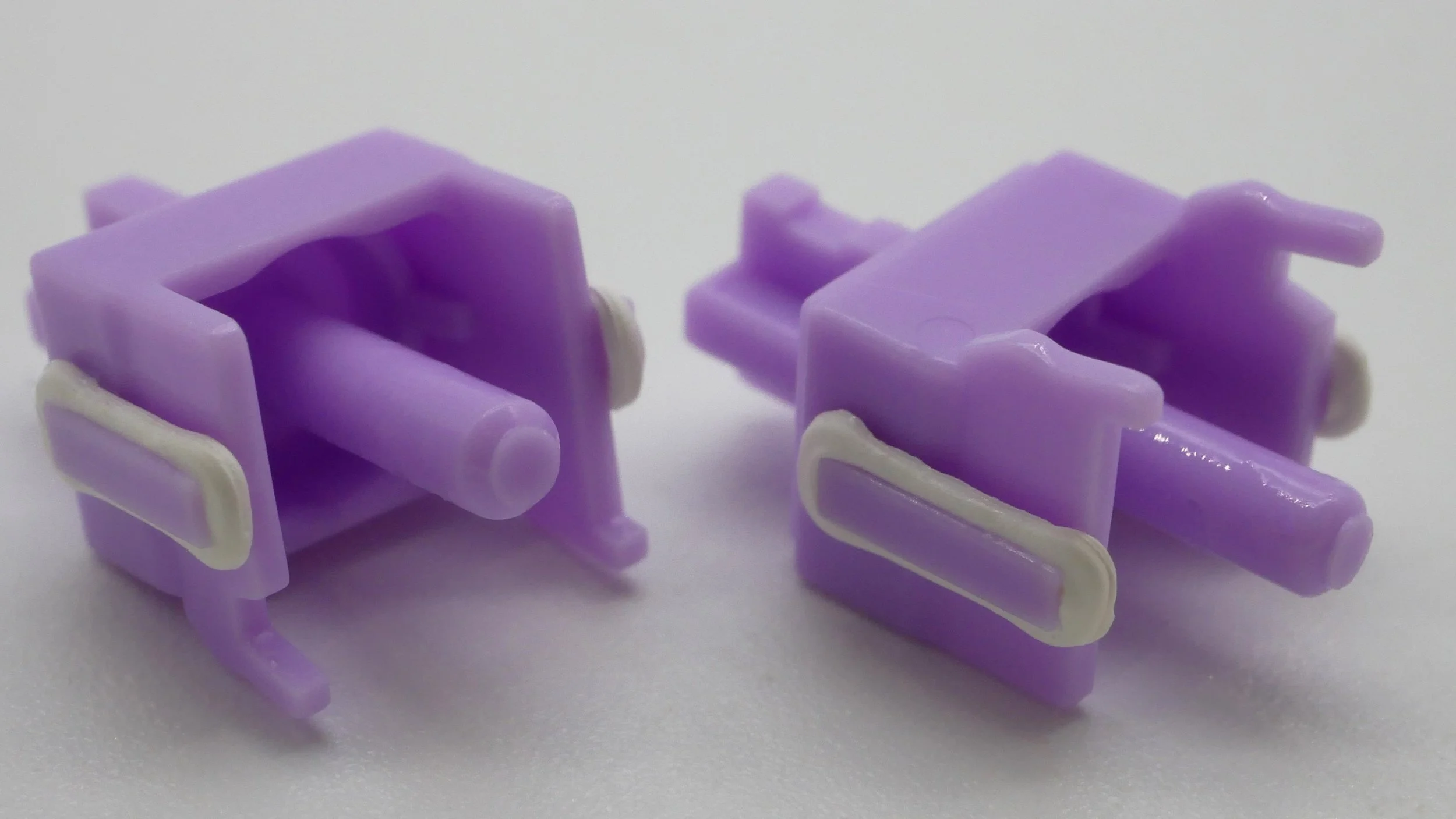
Figure 16: Gateron Oil King Silent Tactile stem front and back showing slider rail-enveloping dampening rings, short and mostly flat center poles, a general lack of factory lubing for being of the "Oil King" brand.
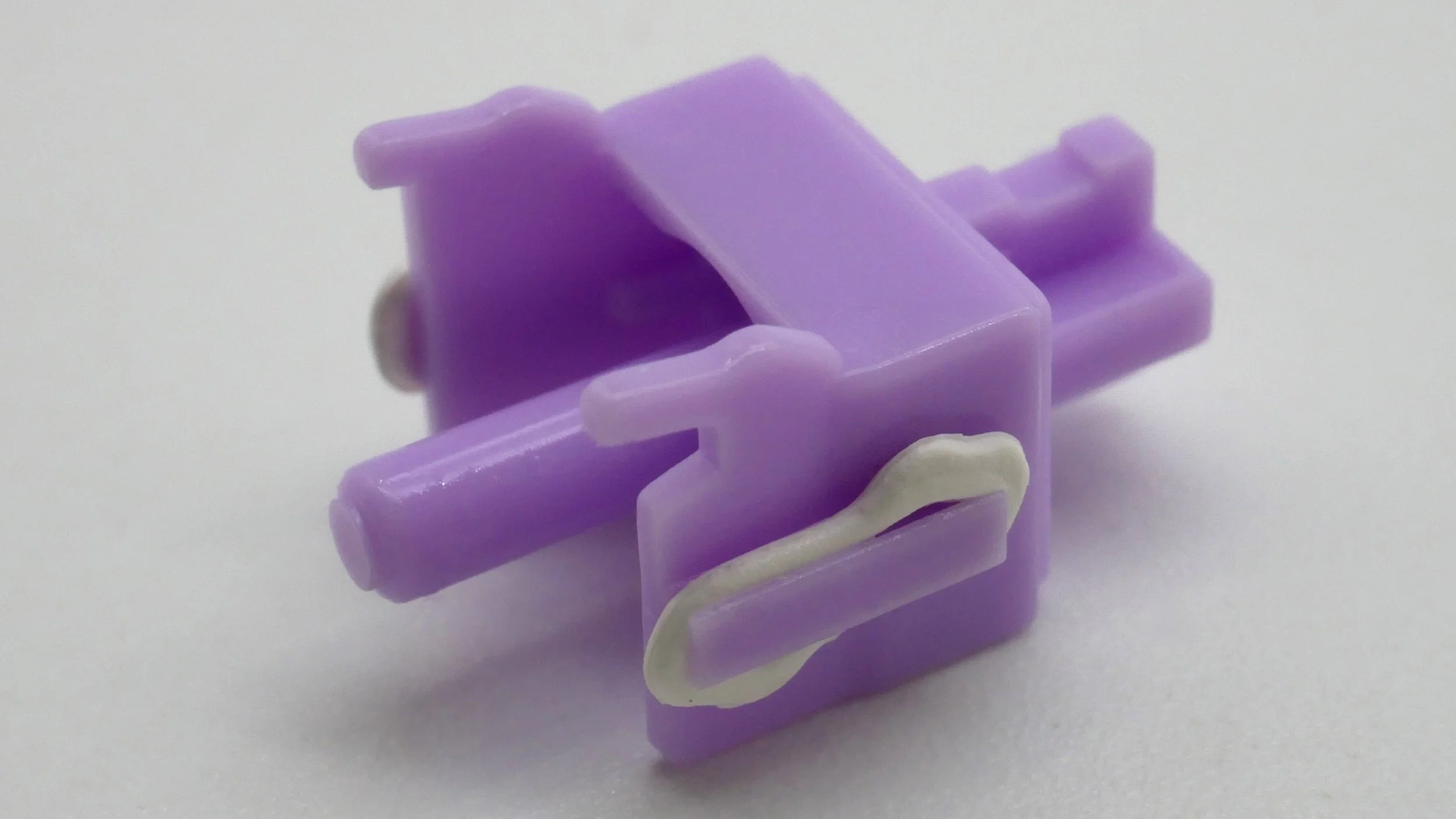
Figure 17: Unlike conventional slider rail bound dampening mechanisms for silent MX switches, these rings were especially easy to jostle with fingers when opening these switches.
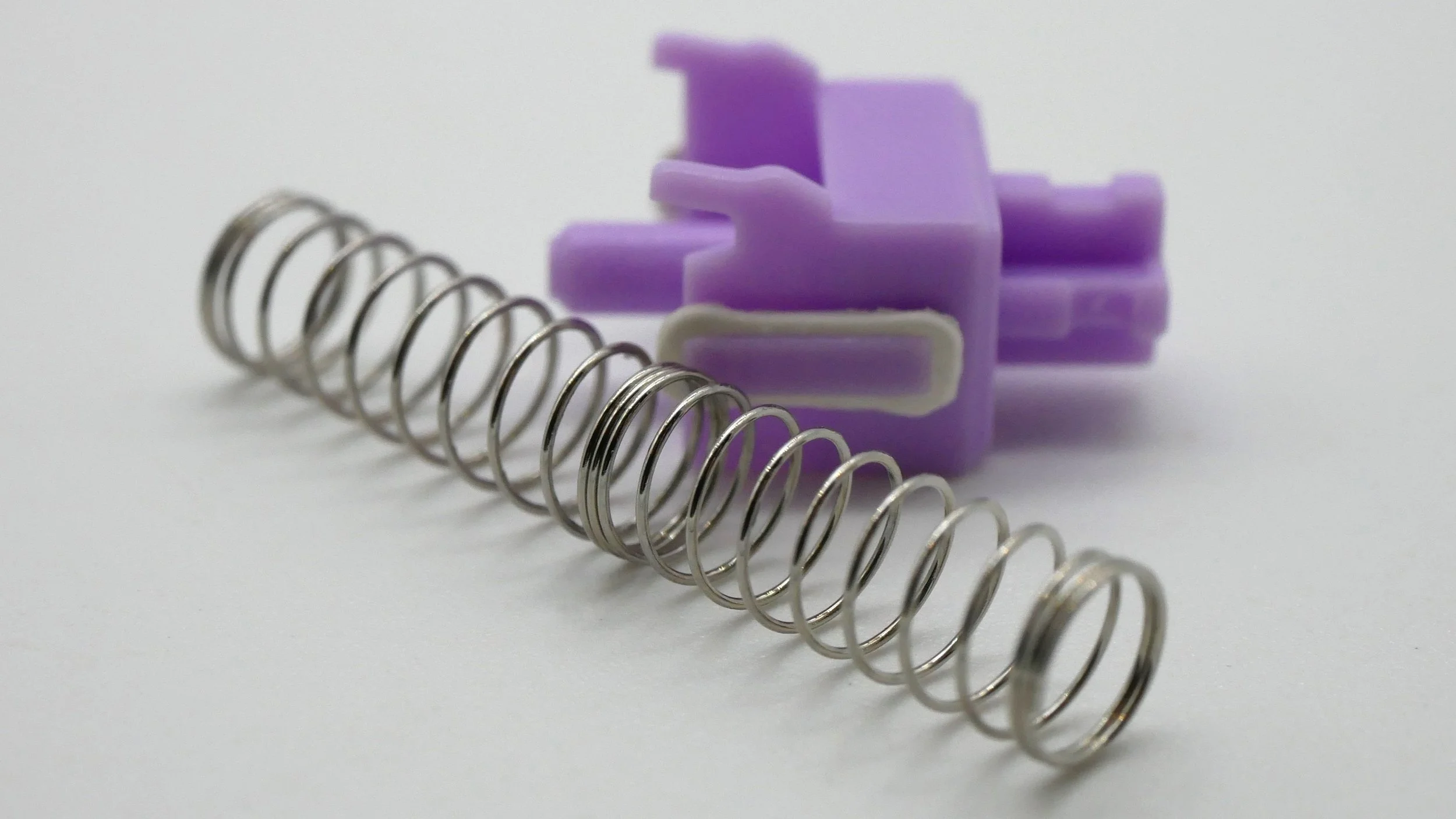
Figure 18: Note the double staged silver springs present in my batch of Gateron Oil King Silent Tactile switches - a detail explicitly counter to the marketing table above in Figure 8 that states the springs would be black.
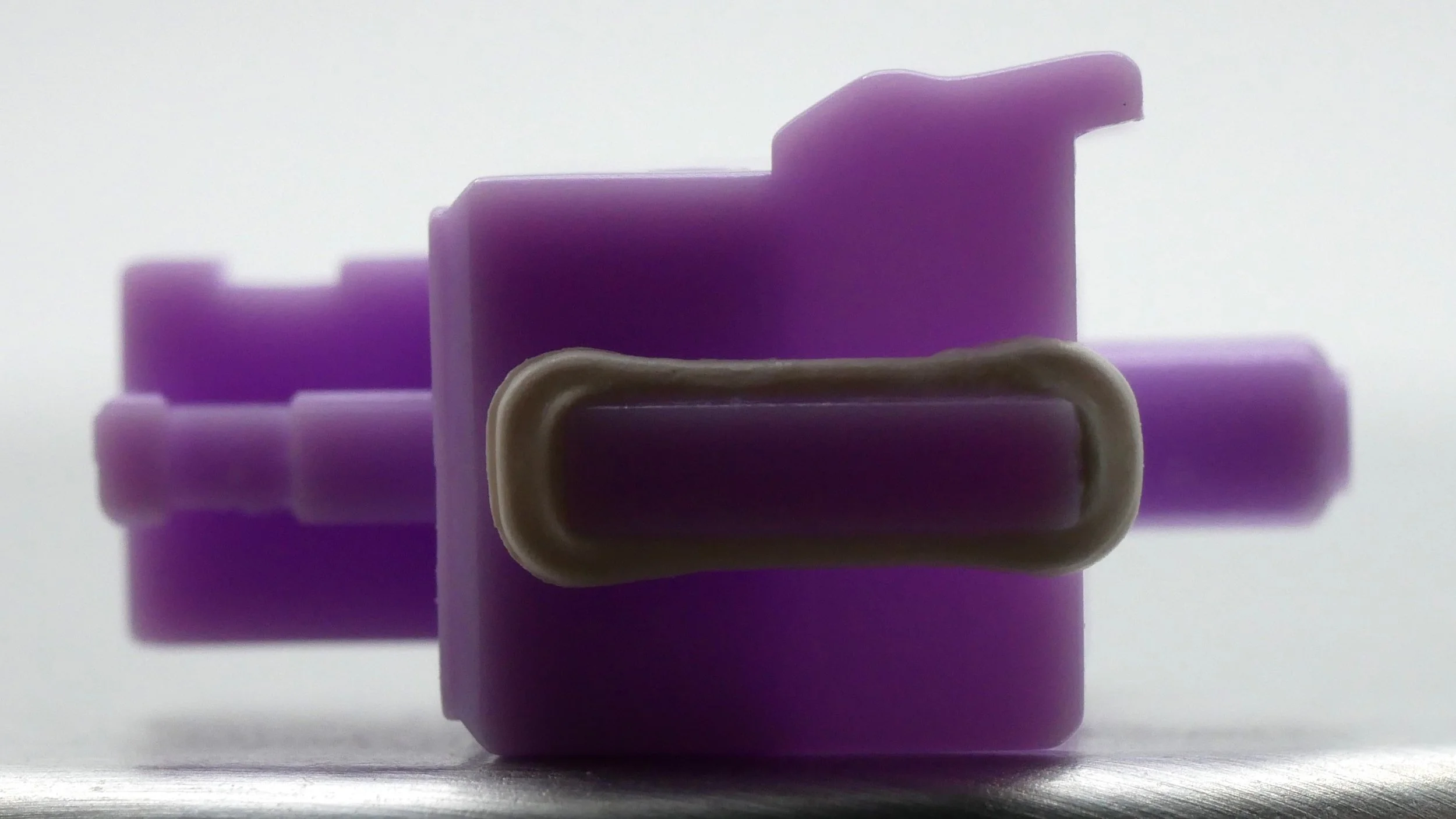
Figure 19: Side profile of the Gateron Oil King Silent Tactile switch stems.
Finally arriving to the all-black, ‘ink thermoplastic’ material bottom housings of the Gateron Oil King Silent Tactile switches, I also found that these too are fairly faithful recreations of the mold designs from the original Oil King switches. Internally these housings feature a small south side spring collar, mold ejector circles along the base of the housing, centered bumps at the base of slider rails for bottom out dampening, and even a surprising lack of factory lubing. The molds for the Oil King Silent Tactiles are even further true to form in that their LED/diode region is properly constricted in similar fashion to those original Oil King switches. Externally, the Oil King Silent Tactiles come in PCB mount/5-Pin variety and feature the pair of mold markings, underside diode symbol, and even the sideways ‘GATERON’ anticounterfeit marking that was fairly newly introduced in 2022 around the time of the Oil Kings’ release. Perhaps the only subtle difference between the modern Oil King housings and the older, more legacy ones is the modern ones are smoother, shinier, and don’t feature anywhere near the same degree of matte texturing that the undersides of the original Gateron Oil Kings had. Again, much like with the caveat towards the end of the top housing section above, this claim is made only relative to the originally released Oil Kings and not any of their more recently produced 2023, 2024, etc. counterparts. It is possible that newer and newer batches of Gateron Oil King linears also feature these smoother housings either as a result of silent mold adjustments or simple wear and tear on original molds.
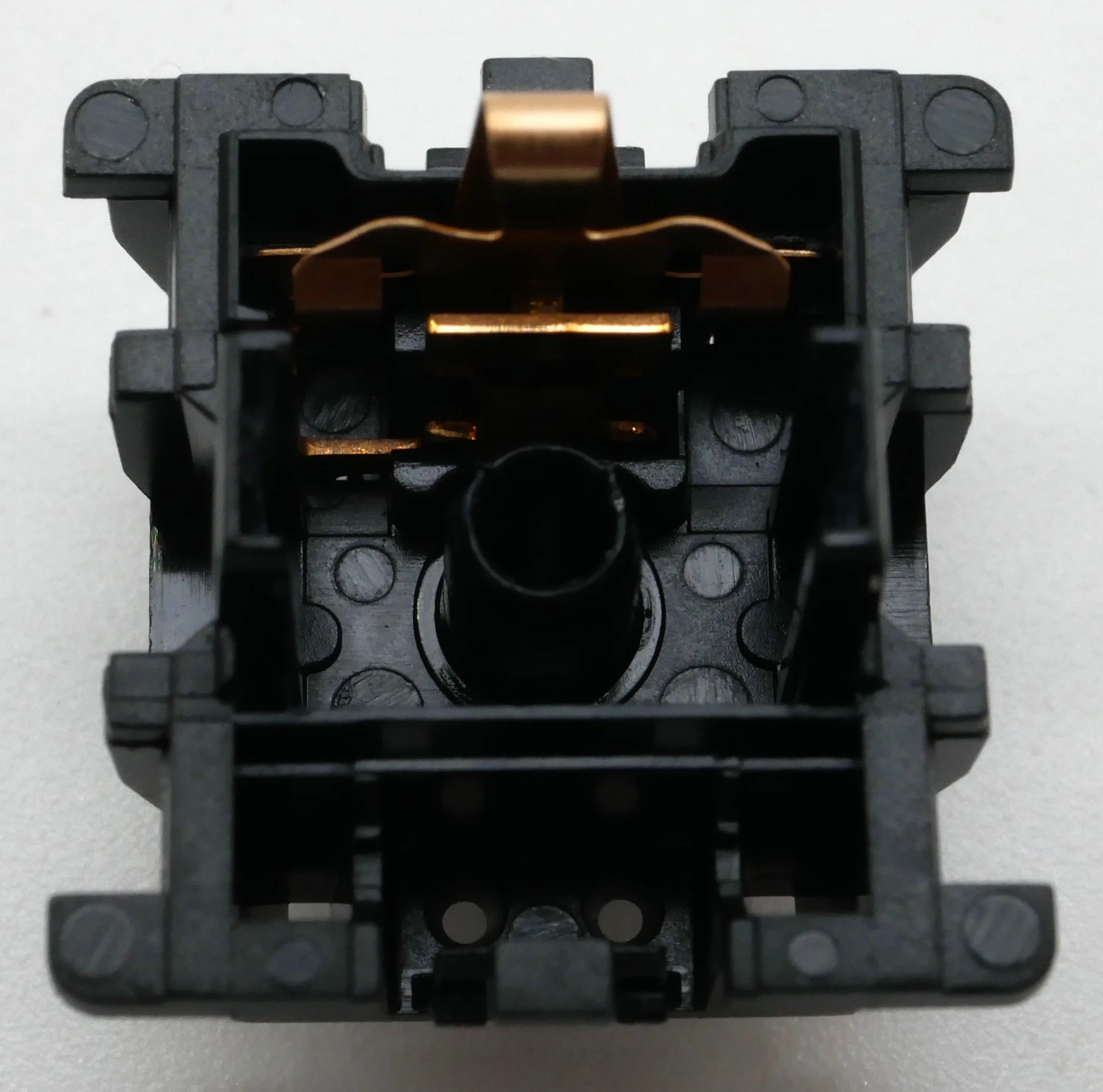
Figure 20: Gateron Oil King Silent Tactile bottom housing interior showing effectively identical feature to 2022-era Oil King molds including a small south side spring collar, dampening pads at the base of the slider rails, mold ejector circles in identical locations, and a lack of factory lubing.
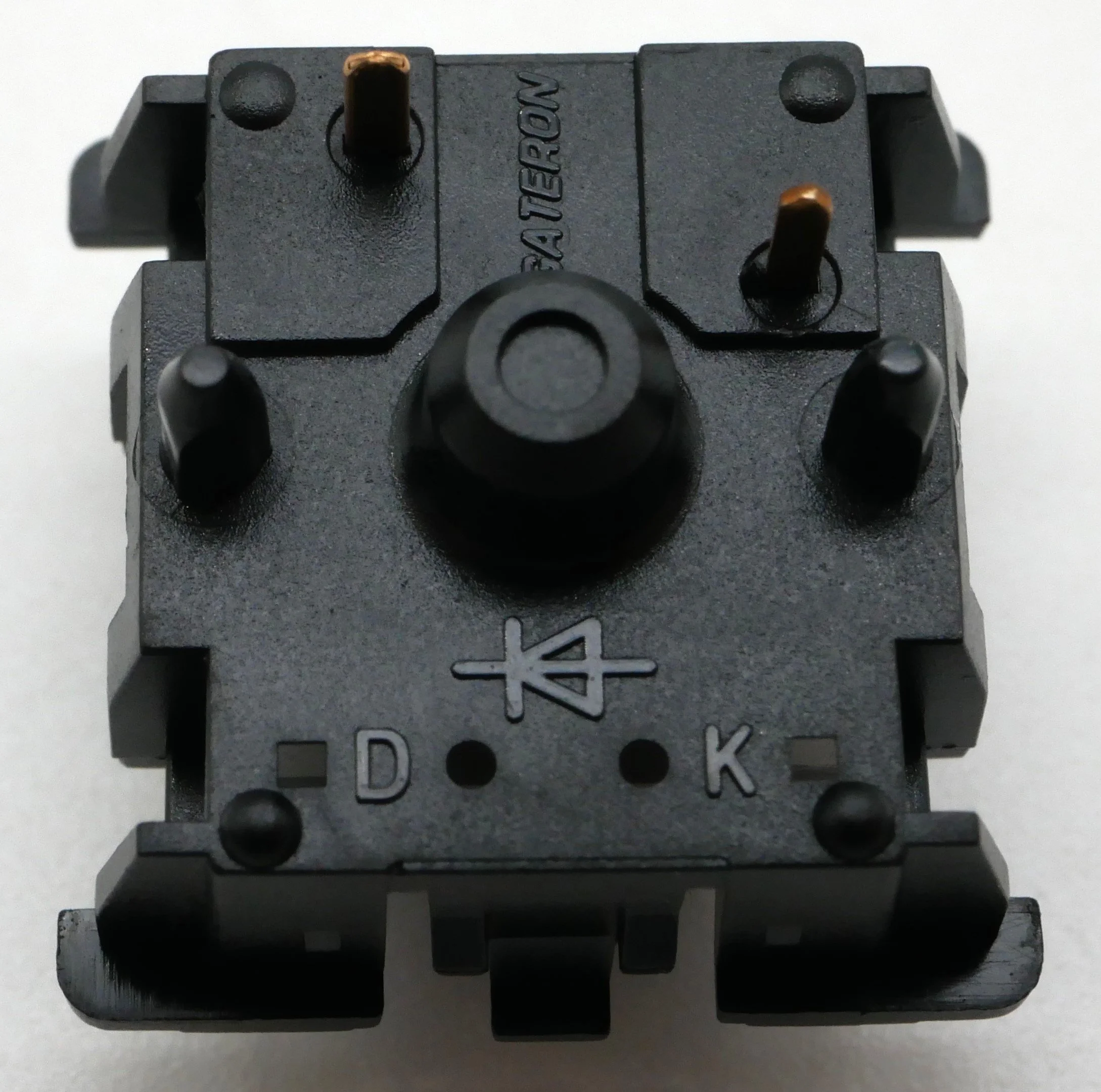
Figure 21: Gateron Oil King Silent Tactile bottom housing exterior showing PCB mounting pads, 'GATERON' anticounterfeit marking, and pair of capital letter mold markings in identical locations as the original Gateron Oil King switches.
Push Feel
For editorial sake, let’s all pretend that I would have assumed that the questionable decision making when it came to the design of the Oil King Silent Tactiles and their modern siblings was somehow only relegated to their aesthetic appearance and design choices only. With that new frame of reference in mind, I was “surprised” to find that the Gateron Oil King Silent Tactiles are really only describable as a hodge podge of backwards, questionable design features for a modern day, 2026-made Gateron silent tactile all crammed into one switch. And to be actually honest, I’m not even sure where to start. The first and most obvious of the features of a silent tactile is their tactile bumps – which come front loaded with a ton of linear pretravel, a light to moderate, rolling tactility that has barely any bite to it, and just altogether come across like a stretched out Cherry MX Brown in terms of force more than anything else. Why did Gateron not choose to emulate, I don’t know, any of the successful Keychron tactiles they made or the linear pretravel-free tactility of the Type R switches that they knew were popular enough for them to rip off off in their own Azure Dragon V4s? Hell, what about any of Punkshoo’s tactile switches like the Root Beer Floats since they’re selling his creations on their website now too? It’s clear that this kind of tactility isn’t what your modern tactile switch enjoyers are after so why are you chasing it? As for the dampening mechanisms, they were somewhat squishy as expected though completely in the opposite direction than expected in that they don’t do nearly as much dampening as the original mechanisms that inspired them. Likely due somewhat to being just flat out mechanically thinner than classic dampening pads, these cause the stems to hit much more forcefully than one would expect though still with a somewhat dampened degree. (How do you get any of the benefit the special ink thermoplastic material if your bottom outs are dampened, I wonder in post writing edits?) More perplexing than anything above is their strange, short throw stroke length that just barely crests past 3.00 mm in total. For a switch that doesn’t seem to want to emulate any of the strong qualities of the Type R tactiles that were so successful to sell, it tries to emulate this specific feature of any of them, I guess. And wouldn’t reducing the stem travel distance to force a more abrupt, sudden bottom out work to counteract the premise of dampening mechanisms? Oh hey, they’re scratchy too. In addition to visibly having less lube than the original linear Oil King switches from 2022, the 2026-made Oil King Silent Tactiles have a fine grain, low grade scratching feeling that is consistent from switch to switch but also wholly antithetical to the original Oil King legacy.
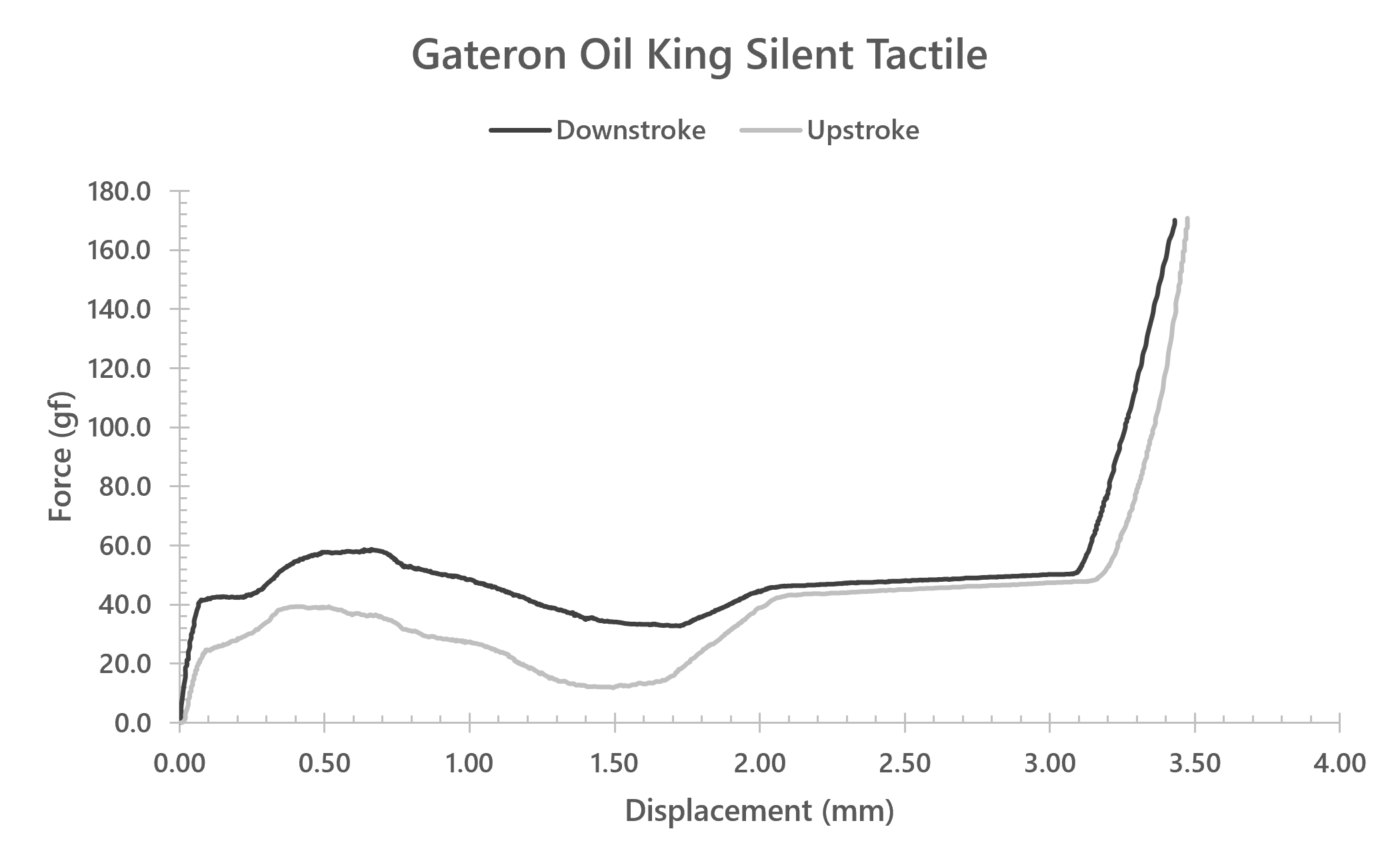
Figure 22: Force curve diagram for the stock Gateron Oil King Silent Tactile switch.
Sound
By this point in the actual first pass of writing this review, I can say that I’ve largely lost whatever degree of patience I’ve had with these switches and whatever it is that Gateron was attempting to do here. What little temper I did have remaining though was by and large destroyed though when analyzing the sound profile of the Gateron Oil King Silent Tactiles. They simply just sound like classic, old school silent switches from the 2014-2018 era before custom switch designs took off; These switches are gummy, they’ve got scratch, they move all over the place with different typing speeds, and they just sound bad by modern standards. About the only thing they could possibly be missing would be spring ping. Sure, the Oil King Silent Tactiles do have the most minor of technical redeeming points here on account of their tactile bumps sounding only scratchy because of a lack of factory lube and not pingy as a result of the stem leg/leaf contact as well as the batch-wide consistency being fairly solid, though those are low bars to clear. While I know that I have experienced increasing levels of mechanistic excellence in switches over the years (especially from manufacturers like Gateron) and in turn have likely somewhat upped my standards over time, I can’t help but think that the sound profiles of these switches wouldn’t have been impressive or even noteworthy by the standards of silent switches back in 2022 when the original Oil Kings were released. How can you revive a switch, fully missing the entire essence of both its design and execution, and not even raise the damn standard of quality for a major feature of a switch like its sound profile that is only more important today than it was back then? Literally the wobble section below is the only indication that these switches really had any attempt at doing anything better, if not at bare minimum comparable to that of the original Oil King linears.
Wobble
While the original Gateron Oil King linear switches featured a strong amount of stem wobble for a premium priced Gateron switch with brand new molds at the time, the newer iterations in the Oil King Silent Tactiles appear to be slightly better out of the box on this metric. Featuring some degree of equal magnitude N/S and E/W direction stem wobble, it is not likely that this degree will bother too many users except those that are particularly picky about stem wobble. I also can’t imagine the venn diagram intersection of enjoyers of MX style silent tactile switches with older dampening mechanism and haters of stem wobble can’t be all that populated to begin with being that there’s only a handful of switches ever made to that narrow of a specification.
Measurements
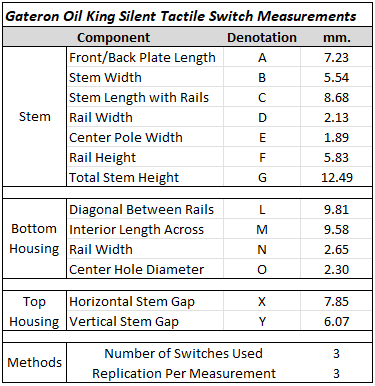
If you’re into this level of detail about your switches, you should know that I have a switch measurement sheet that logs all of this data, as well as many other cool features which can be found under the ‘Archive’ tab at the top of this page or by clicking on the card above. Known as the ‘Measurement Sheet’, this sheet typically gets updated weekly and aims to take physical measurements of various switch components to compare mold designs on a brand-by-brand basis as well as provide a rough frankenswitching estimation sheet for combining various stems and top housings.
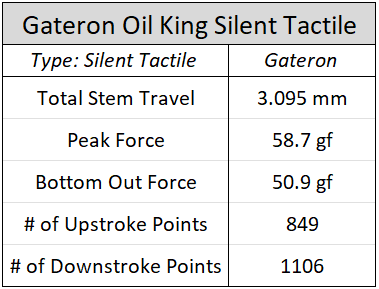
Figure 24: Numerical details regarding the force curve for the stock Gateron Oil King Silent Tactile switches.
Have you ever wanted to be bombarded with more switch data than you’ve ever seen at any point in your life before? Consider checking out the ‘Force Curve Repository’ hosted on my GitHub that contains all force curves that I take both within and outside of these full-length reviews. In addition to having these graphs above, I have various other versions of the graphs, raw data, and my processed data all available for over 2000 different switches for you to use however you see fit. Check it out via the ‘Archive’ tab at the top of this page or by clicking any of the force curve cards above.
Break In
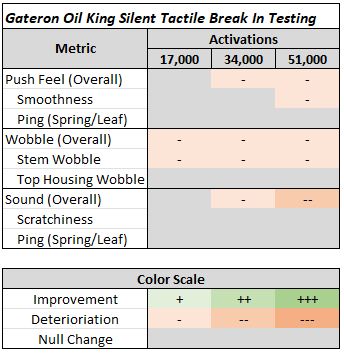
Break In Notes
17,000 Actuations
- After 17,000 actuations, the only notable change in the performance of the Gateron Oil King Silent Tactile switches was a slight increase in their N/S direction stem wobble. In fact, as the break in stages go on from here this was really the only direction in which increased stem wobble was noted. The E/W direction wobble did not increase effectively at all throughout the break in process.
34,000 Actuations
- Likely due in no small part to the poor attempt at factory lubing that was carried out on the Oil King Silent Tactiles, breaking them in to 34,000 actuations results in an increasingly gummy feeling and sound at bottom out. This louder, more grating sort of squishiness is also, of course, not consistent at all consistent between switches causing some to suffer significantly worse than others.
51,000 Actuations
- After 51,000 actuations, the changes to push feeling and sound as noted in the previous section only continue to exacerbate with now the tactile bump also increasing in volume and inconsistency of sound alongside the progressively worse bottom out. At this stage in breaking in its almost as if they were very poorly lubed from the outset and are very reminiscent of some of the earlier days of silent switches from the 2014-2018 era.
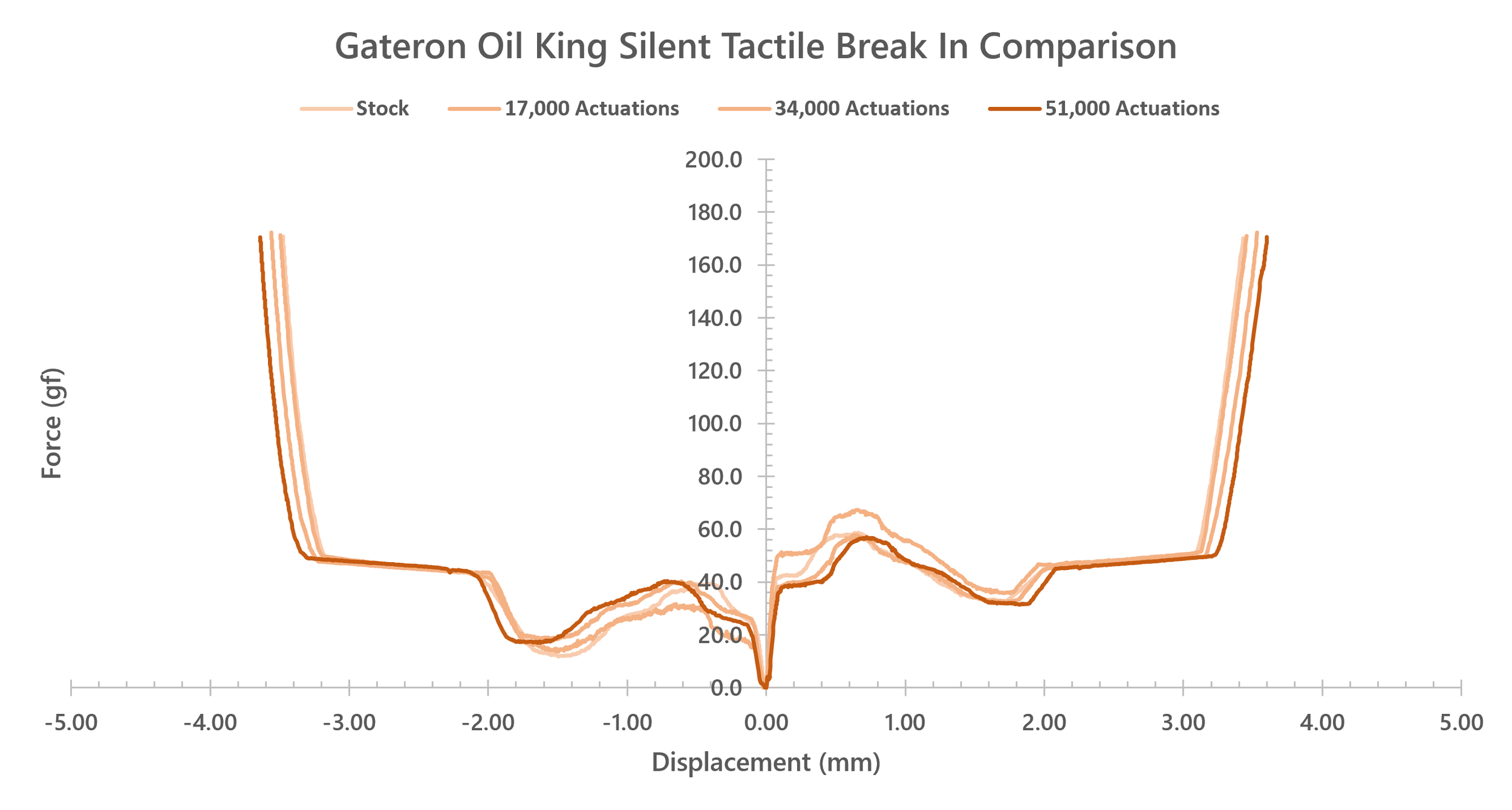
Figure 26: Comparative force curve diagram showing what I believe to be differences not related to the break in process of the Gateron Oil King Silent Tactile switches. See the next few sentences below.
While the above comparative force curves throughout the break in process do appear to suggest that there is some change that the Gateron Oil King Silent Tactiles are undergoing as part of the break in process, upon closer inspection I’m not certain that this is the case. For one, the highest peaking downstroke curve is that of 34,000 actuations whereas the lowest peaking curve is that of the 51,000 actuations. This would suggest non-linearity in the trend of change, something which is less indicative of a process-based impact and more so of the seer variability in force curves available in these switches. Furthermore, the fact that the peak actuation points of the upstroke curves don’t appear to “sink” in force in the same pattern as that of the downstroke curves again suggests process variability rather than a static change caused by breaking them in.
Comparison Notes to Other Notable Silent Tactile Switches
Note – These are not aimed at being comprehensive comparisons between all factors of these switches as this would simply be too long for this writeup. These are little notes of interest I generated when comparing these switches to the Oil King Silent Tactile switches side by side.
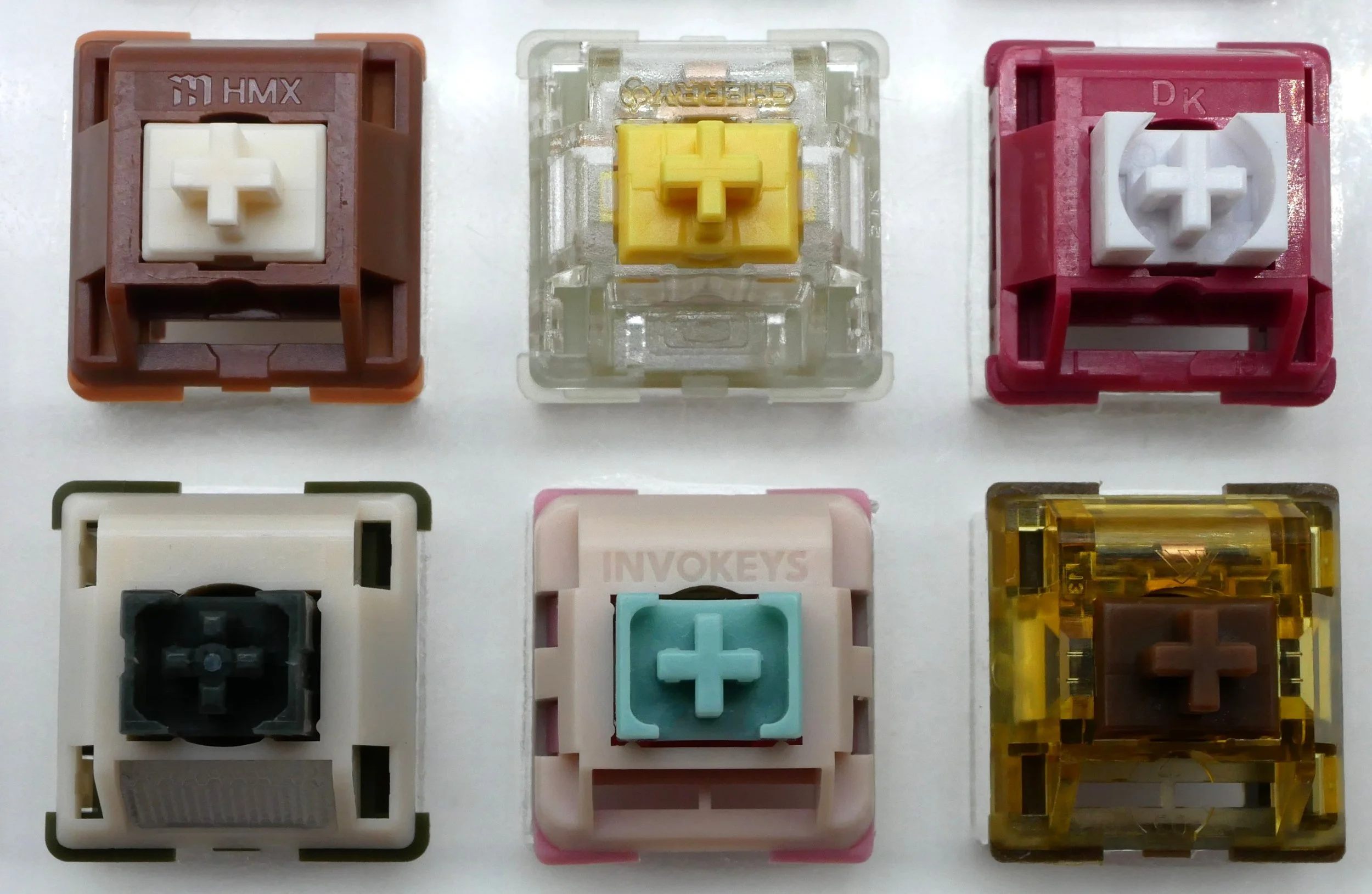
Figure 27: Switches for comparison. (L-R, Top-Bot: HMX Volume 0-T, Cherry MX Honey, Red Velvet, Kinetic Labs Turtle, Alas x Invokeys Daydreamer, and KTT ZenCha)
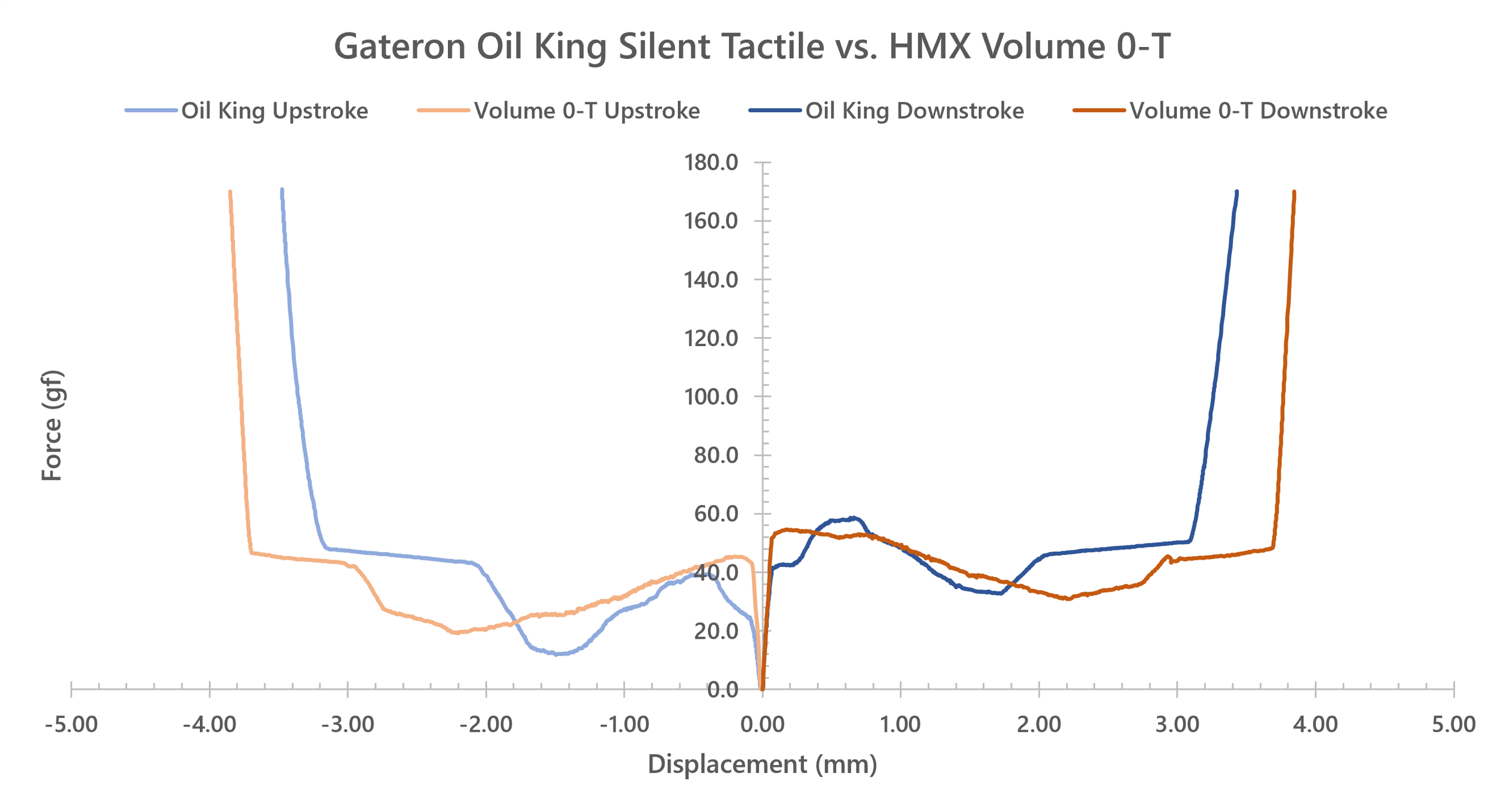
HMX Volume 0-T
- There is significantly less stem wobble in both N/S and E/W directions of the HMX Volume 0-T switches than there is in the Gateron Oil King Silent Tactiles.
- Despite the comparative force curve below suggesting that these switches have a similar peak tactile force feeling, the rapid onset of the tactile peak in the Volume 0-T switches makes them actually feel heavier, snappier, and altogether more forceful under finger than the tactile bump in the Oil King Silent Tactiles. On the flip side, though, this does cause the bump of the Volume 0-Ts to in turn make a stronger noise through their bump than the Oil King Silent Tactiles.
- In terms of their overall sound profiles, the HMX Volume 0-T switches are admittedly much louder and less true to the switch type of ‘silent tactiles’ than the Gateron Oil King Silent Tactiles, though the Volume 0-Ts just sound so much better. They don’t have the same scratch nor squishiness that the Oil Kings do here.
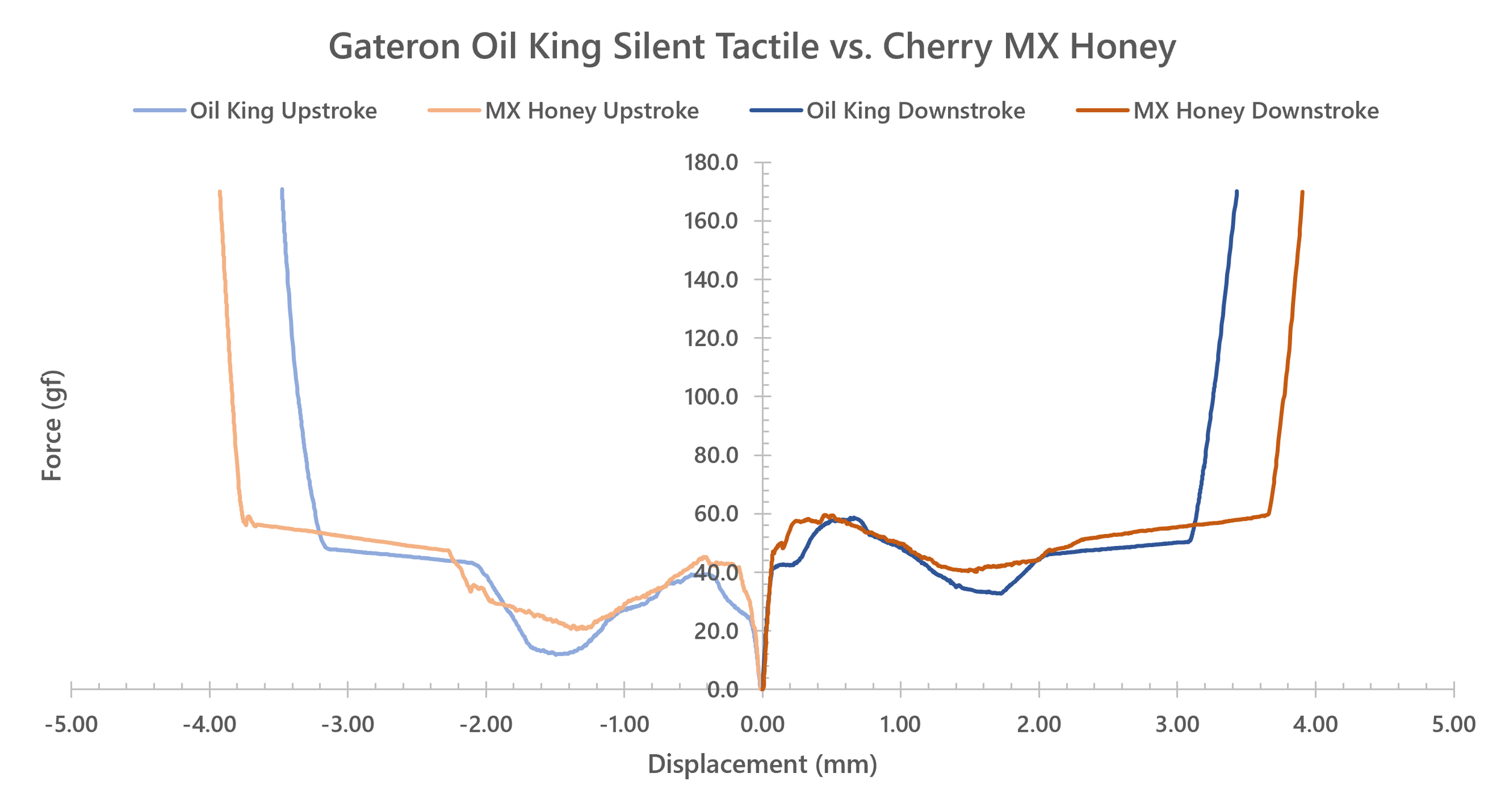
Cherry MX Honey
- The Cherry MX Honey switches are perhaps one of the only modern day silent tactile switches that could give the Gateron Oil King Silent Tactiles a run for their money in terms of just how awfully bad they sound. In addition to suffering from all of the same gumminess and volume issues that were expressed above for the Oil King Silent Tactiles, the MX Honeys also have plasticky tones that effectively make the entirety of their audible sound profile.
- The Gateron Oil King Silent Tactiles do happen to have less N/S and E/W direction stem wobble than the Cherry MX Honey switches.
- The comparative force curve between these two switches below does actually feel fairly representative of their head to head in hand testing, though for much the same reasons as with the HMX-made Volume 0-T switches above, the MX Honeys do feel ever so slightly snappier through their stroke.
- It is incredible to me just how poor the performance is on both of these switches for being recently (2024+) made silent tactile switches. It really does feel like manufacturers completely backslid in their ability to make these over the years.
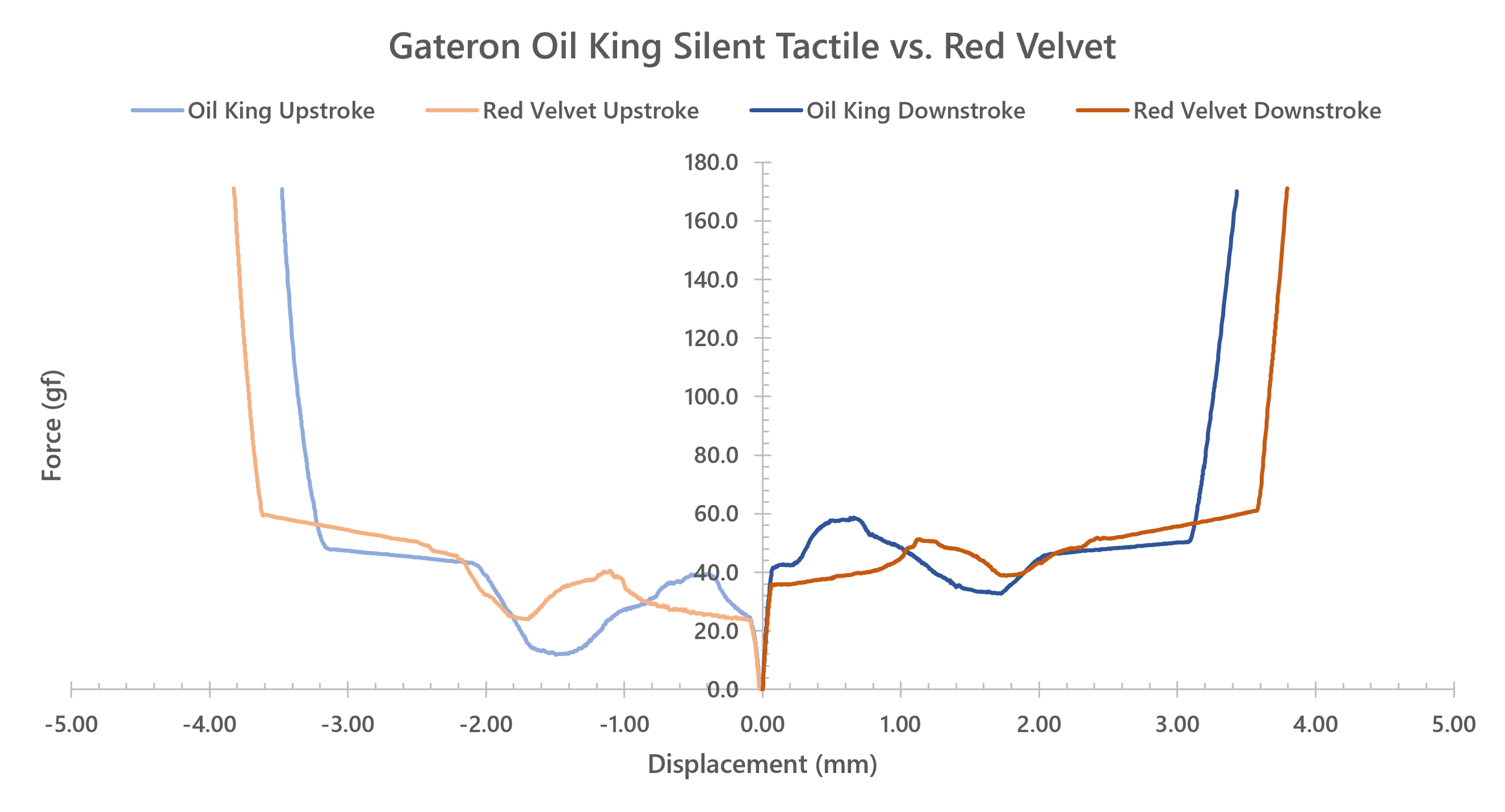
Red Velvet
- While the Gateron Oil King Silent Tactiles are ever so slightly louder than the Red Velvets on account of their stickier bottom out sound, these two switches are fairly comparable to one another in terms of overall volume. Enjoyers of how the Red Velvets sound may enjoy the Oil King silent Tactiles assuming they heavily modify them a bit.
- There is significantly less N/S and especially E/W direction stem wobble in the Gateron Oil King Silent Tactile switches than there is in the KTT-made Red Velvet silent tactiles.
- In a head to head comparison, the Red Velvet switches feel significantly lighter and almost linear-like through their tactile bump than the Gateron Oil King Silent Tactiles. Do not get me wrong, this doesn’t make it seem as if the Oil King imposters feel like Holy Pandas in hand, but it definitely emphasizes their medium-light tactility as compared to the very light tactility of the Red Velvets.
Kinetic Labs Turtle
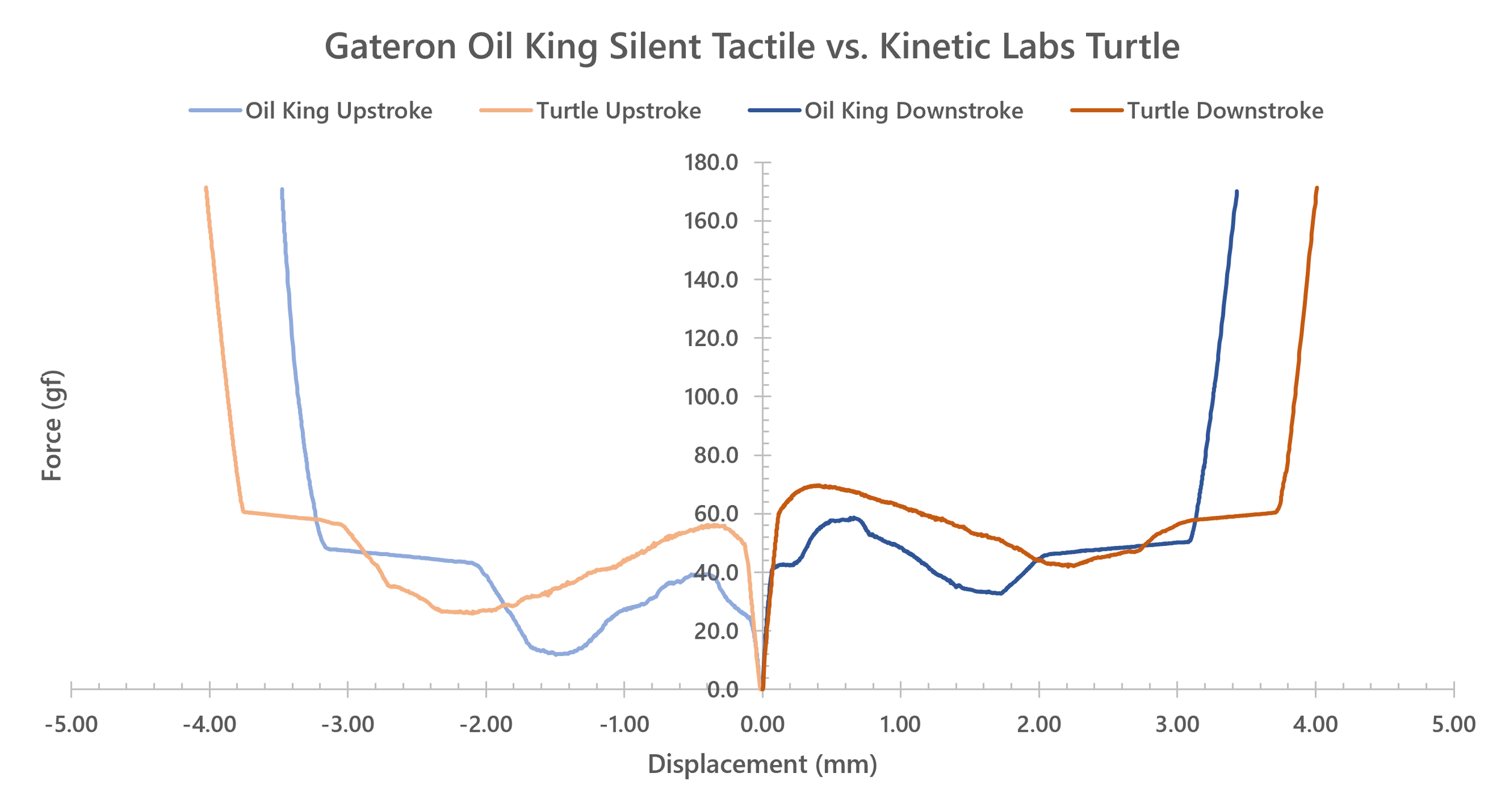
- Much like with the HMX Volume 0-T switches above, the out-of-the-gate, large tactile bump of the Kinetic Labs Turtle switches makes them feel punchier, more strong, and truly more tactile than that of the Gateron Oil King Silent Tactiles – something which I find somewhat conflicting as I’ve read online that the tactile bump of the Oil King Silent Tactiles matches that of the yellow stemmed Oil King Heavy Tactiles…
- There is quite a bit less stem wobble in both directions of the Gateron Oil King Silent Tactile switches than there is in the Haimu-made Kinetic Labs Turtle switches.
- While the Kinetic Labs Turtles have a slightly louder, consistently grainy sounding scratch feeling that is admittedly louder than the Gateron Oil King Silent Tactiles, they still do on the whole just sound better and as if they were designed to sound like that. The Oil King Silent Tactiles, on the other hand, have sound profiles that feel like mistakes or afterthoughts, at best.
Invokeys x Alas Daydreamer
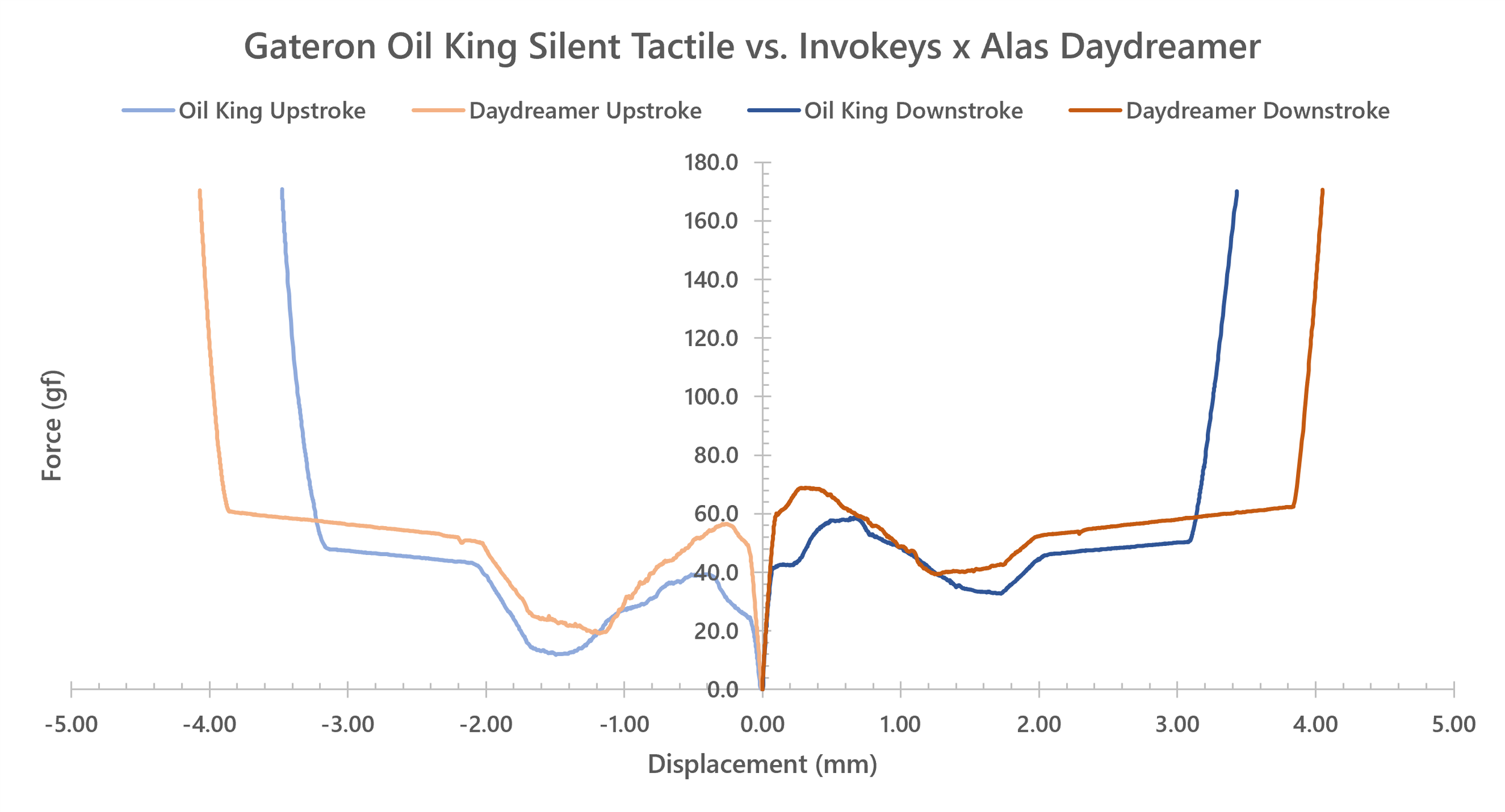
- Of all of the switches on this comparison list, the Invokeys x Alas Daydreamers are the ones that simply sound the quietest and most truly like silent tactiles. While there are some more bass heavy tones to their housing collisions than not, as well as some switch by switch inconsistencies, the Daydreamers feel tight, coherent, and are free from historical pitfalls like gumminess that the Oil King Silent Tactiles stepped squarely into.
- While the stem wobble between these two switches is somewhat comparable, the Oil King Silent Tactiles have a bit less E/W direction stem wobble than the Daydreamers and an ever so slightly less N/S direction stem wobble.
- Despite these switches having a significantly different bottom out point from one another as can be seen in the comparative force curve between these two switches below, in hand they actually feel as if they bottom out much closer to one another than that. I’m not entirely sure why this is, though perhaps it could have to do something with the ratio of their stroke length as compared to the delta in force between their peak and bottom out weights.
KTT ZenCha
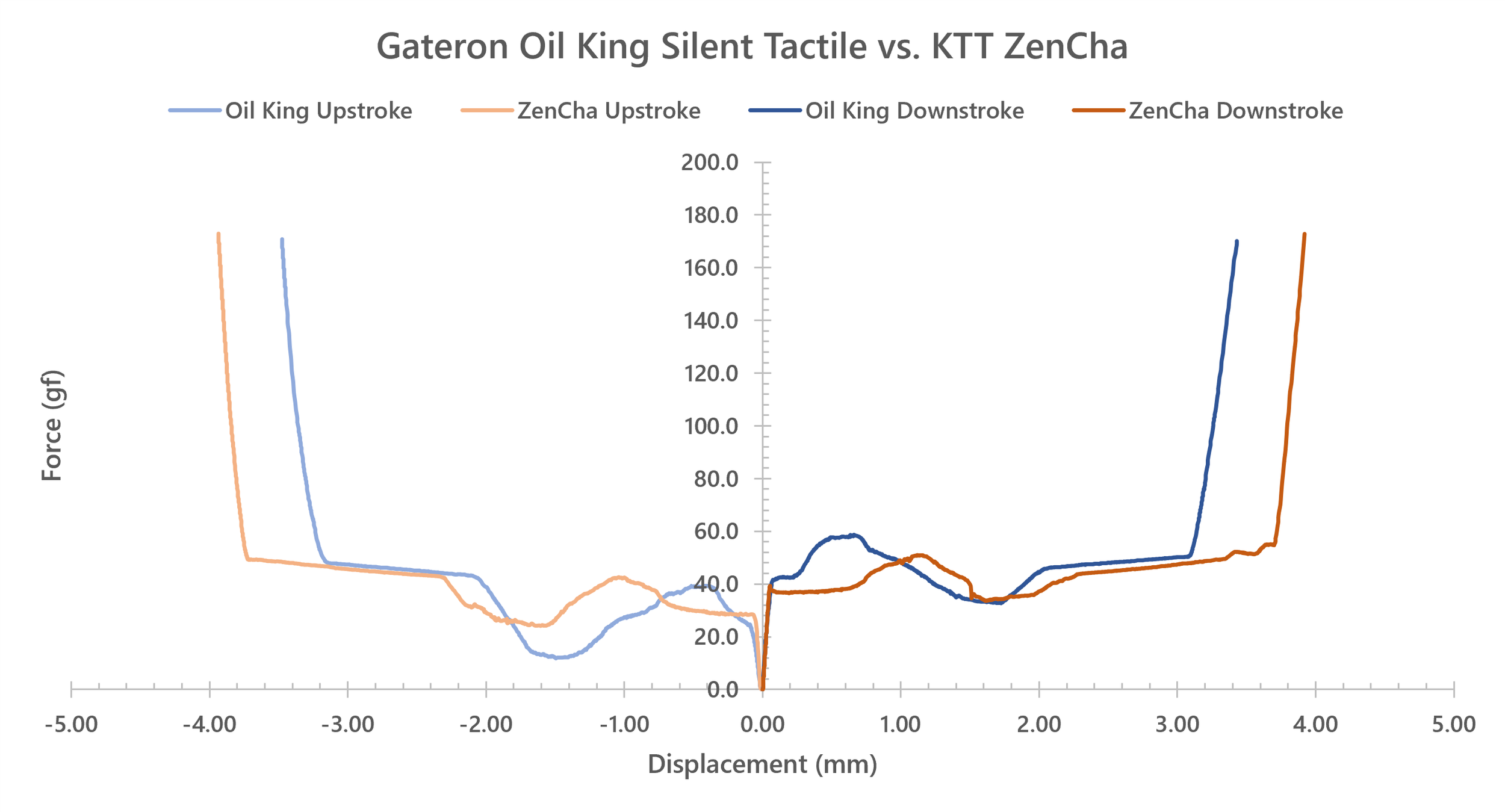
- The comparative force curve between these two switches below is surprisingly accurate to their in hand, head to head comparison. The ZenChas do feel ever so slightly lighter through their bump than the Oil King Silent Tactiles and as if their stroke extends a bit further into their housings.
- With respect to their volumes, the general lack of sound through their non-aggressive tactile bumps, and their general gumminess at bottom out, the ZenCha and Gateron Oil King Silent Tactile switches are the two that sound overall most similar to one another out of any switch on this list. This is, however, not a great metric to be compared to in either direction.
- There is a bit less N/S and E/W direction stem wobble in the KTT ZenCha silent tactiles than there is in the Gateron Oil King Silent Tactile switches.
Scores and Statistics
Note – These scores are not necessarily completely indicative of the nuanced review above. If you’ve skipped straight to this section, I can only recommend that you at least glance at the other sections above in order to get a stronger idea of my opinion about these switches.
Push Feel
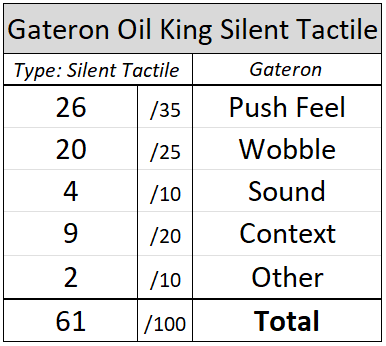
Despite being of “Oil King lineage”, the Oil King Silent Tactiles really feel like anything but that. Featuring a medium-soft tactile stroke that has a whole lot of linear pretravel, gummy housing collisions on account of a thinner version of classic stem silencing mechanisms, and a hilariously uncharacteristic lack of factory lube leading to a subtle scratchy feeling, these may as well be classic silent tactiles from 2014-2018 and not modern day reincarnations. About the only redeeming factors here are that they are fairly consistent from switch to switch and free from other of-era anomalies that we’ve not seen in years like crunch or spring ping.
Wobble
Present ever so slightly more in the N/S than E/W directions, there is a minor, likely unproblematic amount of stem wobble in these switches that is consistent across a batch.
Sound
While the Gateron Oil King Silent Tactile switches are somewhat silent on account of their dampening pads and medium-light tactile strength that doesn’t butt up against the leaves too hard, they are plagued by light grain scratching sounds and a softer, but still noticeable gumminess like conventional stem dampening mechanisms have.
Context
While the price of $0.65 per switch may be “justifiable” on account of these switches using the same premium materials as the original Oil Kings, the price per performance of these as 2026 silent tactiles just plainly isn’t there. Lack of marketing and real acknowledgment of these by Gateron also makes me wonder how long they will continue to exist in the coming years.
Other
The Gateron Oil King Silent Tactiles have mechanisms that don’t make sense, do not meet clear market interest that Gateron has established, don’t leverage the main selling point of these switches, and abuse the legacy of Oil Kings as one of the most notable modern linears ever.
Statistics
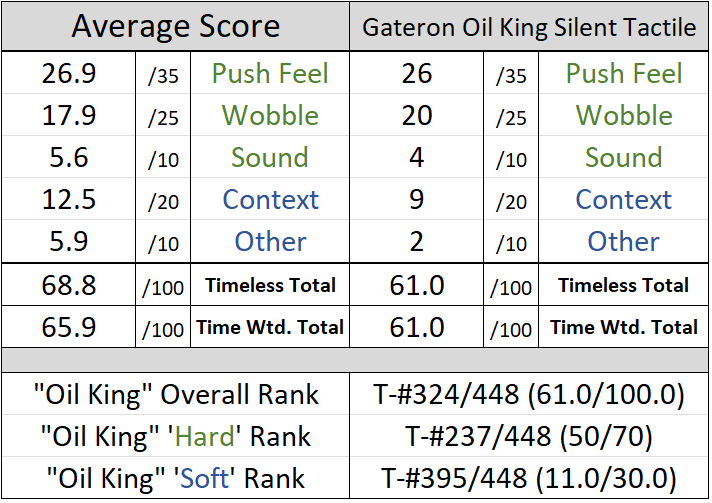
If you are looking at this statistics section and wondering what the heck ‘Timeless’ and ‘Time Weighted’ scoring is, consider checking out my short article titled ‘A Scorecard Time Change’. As a result of scoring becoming a bit anachronistic over the years, switches are now ranked in this statistics table using a “time weighted total” as opposed to their day-of scoring as discussed in that article. If you’d also like to learn about what ‘hard’ versus ‘soft’ ranks refer to specifically, I’d encourage you to head on over to my GitHub linked in the table above or at the links in the top right hand of this website to check out my database of scorecards as well as the ‘Composite Score Sheet’ which has a full listing of the rankings for each and every switch I’ve ranked thus far.
Final Conclusions
What an absolute, just barely mitigated mess of a switch. I’m really at a loss for any sort of substantial, specific, and cohesive conclusions about the Gateron Oil King Silent Tactile switches after having gone through the entire review process for them. I can definitely tell you that they are medium-light strength silent tactiles with a fair amount of linear pretravel leading into their bump, squishy housing collisions, and a strongly disappointing amount of fine grain scratch for switches being pitched as being “of the Oil King lineage”, but that is really about all that comes to mind. In place of my normal conclusions and prescriptions, I’m just left with a litany of questions about these switches. And while I could provide some editorial reprieve from the heavy tone of this article by saying that list is short and sweet, consisting only of “Who?, What?, Where?, When?, and most importantly Why?”, allow me to actually break out of the paragraph structure to properly articulate my confusion:
- Why were the Gateron Oil King Silent Tactiles made in the first place?
- Why do the Gateron Oil King Silent Tactiles have a tactile bump shape and placement that is not only dramatically different than what Gateron has seen significant commercial success with over the past couple of years but also doesn’t even line up with anything that they’ve made in a very long time?
- Why did Gateron put in the effort to half heartedly reinvent the classic stem-mounted dampening pads for silent switches if the end result didn’t really actually fix any of the problems that the original silencing pad mechanisms had?
- Why would anyone think that combining silent switch dampening pads at the contact points with nylon and ‘ink thermoplastic’ housing material collisions would do anything to really make use of that specific material combination? You know, the specific material combination that was a hallmark of the original Oil King switches’ success.
- Why are these switches just so damn dry? Why weren’t they lubed heavily to eliminate all scratch from them at the extreme least, or even more so to align with heavy factory lubing that was also a hallmark of the original Oil King switches’ success?
- Why even call these “Oil Kings” if they choose not to leverage either of the main hallmark points from the last two questions that made Oil Kings notable as a switch in the first place? If it was all just for marketing’s sake and trying to sell switches based on the legacy of another completely unconnected one, then why was there no marketing for these switches at all to begin with?
- Again, why were the Gateron Oil King Silent Tactiles made in the first place?
I certainly don’t expect to get any answers out of Gateron or their designers regarding these questions, but I just absolutely could not wrap up this review in good faith without articulating all of these questions that are still nagging me long after I finished the writing. In spite of genuinely looking forward to reviewing these switches and being excited for them to arrive, I am left disappointed at just how not great these switches simply are. Are they the worst I’ve ever experienced from a silent tactile MX switch? No, though they are wildly closer to that experience than I would have ever imagined even possible from Gateron in 2026.
Sponsors/Affiliates
Mechbox UK
- A wonderful UK based operation which sells singles to switches that I’ve used above in my comparisons for collectors and the curious alike. Matt has gone out of his way to help me build out big parts of my collection, and buying something using this link supports him as well as my content!
proto[Typist] Keyboards
- An all-things keyboard vendor based out of the UK, proto[Typist] is a regular stocker of everything from switches to the latest keyboard and keycap groupbuys. While I’ve bought things from the many times in the past, they also are a sponsor of my work and allow me to get some of the great switches I write about!
Divinikey
- Not only do they stock just about everything related to keyboards and switches, but they’re super friendly and ship out pretty quick too. Divinikey has been a huge help to me and my builds over the last year or two of doing reviews and they’ll definitely hook you up. Use code ‘GOAT’ for 5% off your order when you check them out!
ZealPC
- Do they really need any introduction? Zeal and crew kicked off the custom switch scene many years ago with their iconic Zealios switches and the story of switches today couldn’t be told without them. Use code ‘GOAT’ (or click the link above) for 5% off your order when you check them out!
MechMods UK
- A rising vendor based in the UK, Ryan and crew have been a pleasure to work with and have nearly everything you’d need to build your first or fourteenth keyboard. Go build your latest or greatest one right now with them by using code ‘GOAT’ at checkout for a 5% discount!
Dangkeebs
- A longtime supporter of the website and the collection, Dangkeebs has quite possibly the widest variety of switches of any vendor out there. Not only is their switch selection large, but it rotates and is constantly adding new stuff too. You’re going to need 5% off your order with my affiliate to save off the cost of all those switches!
SwitchOddities
- The brainchild of one my most adventurous proxies, SwitchOddities is a place where you can try out all the fancy, strange, and eastern-exclusive switches that I flex on my maildays with. Follow my affiliate code and use code ‘GOAT’ at checkout to save 5% on some of the most interesting switches you’ll ever try!
Cannonkeys
- Does anybody not know of Cannonkeys at this point? One of the largest vendors in North America with keyboards, switches, keycaps, and literally everything you could ever want for a keyboard always in stock and with an incredibly dedicated and loving crew. Follow my affiliate link above in their name to support both them and I when you buy yourself some switches!
Kinetic Labs
- One of the most well-rounded keyboard vendors out there, Christian and crew have been supporters of all my switch and switch-adjacent needs for some years now. I’m honored to have them as an affiliate and think you should check them out using my affiliate link above to support both them and I when you check out their awesome products!
Keebhut
- Want to try out some switch brands that fly under most vendor’s radars? Keebhut is always seeking out that next latest and greatest and has been super helpful in hooking me up with new brands over the past year. They are all about sharing that love as well, and want to give you 5% off your next order with them when you use code ‘GOAT’ at checkout!
Kailh
- No, you’re not mistaken – this is actually that Kailh that manufactures switches. As one of the longest running manufacturers in the hobby, they have a massive variety of switches available over on their website at any point in time. I’m lucky to be affiliated with them now, and so consider using my affiliate link above when ordering some Kailh switches to support me!
Keebz N Cables
- Australia and Oceania’s very own is now a part of the sponsor list here and I couldn’t be happier to add this long time supporter of the collection to it. They’ve always got an amazing selection of switches (and other keyboard parts) in stock and they want to share the love that they’ve shown me with you all too! Use code ‘thegoat’ for 5% off your first order when you visit!
Further Reading
Gateron’s Oil King Series Sales Page
Divinikey’s Gateron Oil King Silent Tactile Switch Sales Page
Milktooth’s Gateron Oil King Silent Tactile Switch Sales Page
Milktooth’s Gateron Oil King Series Comparison Video
Lumekeebs’ Gateron Oil King Silent Tactile Switch Sales Page