Cherry MX Lumina Brown Switch Review
There will be no need for you to have to exercise any amount of literary analysis for this review as I’m going to outright give you the overarching theme here right at the onset: Weird. For added flavor, though, the emphasis will be on a continuation of strangeness rather than this being a one-off isolated oddity. It all started out as ‘weird’ about a month ago when I dove into Gateron’s expansion of the Oil King switch legacy into a family of switches that very much weren’t really Oil King inspired. Everything continued to spiral out into strangeness two weeks ago with not just one but two Odd Switch Shorts back to back covering the Kailh Mix-7 and Co-Gain Magnetic Paragraph Axis switches. And it has arrived at the downright perplexing here in the form of the Cherry MX Lumina Browns. Not to get too ahead of ourselves here, though, I do want to step back and also point out that the unpredictable continued to happen in switches even in the weeks separating all of these articles apart. In the event that you don’t believe me, consider all of the following bizarre situations that have transpired in the last month or so of time:
- Grain Gold has came out and stated that they will no longer be making MX switches for the time being to focus on their Hall Effect/magnetic line up of switches. (This action directly killed a Keebz N Cable switch design they were in the middle of prototyping too, by the way.)
- YSY, a switch single seller based out of China that was fairly well known to the collector community is shutting its doors after years of orders and having fulfilled multiple 250+ switch orders overseas to us here in the west.
- There appears to be a steadily growing area at the center of the venn diagram of ‘Switches’ and ‘AI’ with now some western facing vendors using generative AI tools to make very poor looking design renders and a newly discovered website being uncovered that not only uses AI to write switch reviews but is entirely from the ground-up AI generated itself. (No, it’s not this one either.)
- I’ve even recently found (though not yet shared as it is still shipping over here from the presumably E-waste recycler it was rescued from in the east) proof of at least two new Key World switch colors.
Again, I want to emphasize to you that all of these things have taken place in the span of about a month in which all of these strange articles were written.

Figure 1: Imagine a world where everything you knew about mechanical keyboard switches was entirely flipped on its head. (Bonus points to those of you who recognize this still as being from perhaps the most AI-relevant Twilight Zone episode ever.)
With the modern state of America and more specifically its politics leaving many (if not all) Americans feeling as if the world has since slipped into a spiraling mess of the unexpected, I imagine that a good few of us reading this in the west will just kind of accept this as the state of how things are now. It’s even gotten down into the switches too! But you should both fear not and fear significantly more as it’s not just the switches that the unexpected has commandeered, but potentially all of the mechanical keyboard niches as well. Firstly, consider the niche of the 40% keyboard crowd. The strangeness there needs no further explanation. Next, let’s consider the niche of artisan keycaps – one which I’ve been growing quite fond of over the past couple of years as you may have seen from my many photos of my keycaps; The perplexing has occurred there recently as well. Plenty of artisan keycap makers have came and went and returned again to leave once more over the years, though one of the oldest makers in the community in ‘Clack Factory’ has been one that came, went, and has largely remained absent throughout my time in the entirety of the keyboard hobby. While they would sporadically pop up now and then with a shitpost or very evident lurking of Geekhack threads, never with anything substantial like when they were producing keycaps en masse. That is until earlier this past week when they returned to posting not just a meme-y reintroduction but also nearly a dozen photos of keycaps for the first time in over half a decade… though ones that were just a bunch of gaudy commissions from a single connoisseur with questionably large amounts of money and questionably little amounts of taste. On the scale of heartfelt return with a warm embrace of the community to one where you unceremoniously return to your old forum you used to run to beg people to subscribe to your YouTube channel of you punching walls, I’m not entirely sure where this lands but it definitely feels closer to the latter than the former. (Yes, these ends of the spectrum are both referring to very specific keyboard community situations…) I certainly don’t blame Clack for raking in the dough that I know the artisan commissioner was willing to shell out to him in order to get those keycaps made, though I have a whole slew of feelings about the situation that I both can’t and won’t go over here in this switch review. Don’t worry, I didn’t forget where I was. That being said, though, the 2026 return of Clack, if you will, certainly hasn’t helped ease the peculiar way it feels like everything has been recently. I promise you the pivot now back to the actual switch review of the Cherry MX Lumina Browns isn’t going to alleviate any of those feelings either.
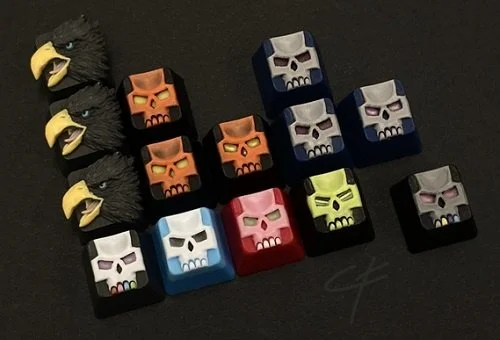
Figure 2: Shit, and these aren't even the worst of the commission caps too!
Switch Background
With the extra literary interpretation taken off of your plate for this review with me spoiling the theme at the top, I’d highly encourage you to go (re)read the background section of the Cherry MX Firefinch Switch Review before traveling deeper into this one. Before you accuse me of doing this as a mere plot to generate traffic to that article, it’s actually because of the fact that the MX Firefinches were assumedly the last switches that were going to debut from Cherry’s Auerbach, Germany production facility before it was closed up and moved to China. While we as a collective community weren’t quite sure of when this pivot in production would occur, given that the announcement took place in November of 2025 and moving production across the planet is no small feat, it seems like it more or less may be complete by roughly now, July of 2026. Without Cherry giving really any indication as to when this switch formally occurred, much like they have done with countless other decisions they have made over the years, this conclusion was reached by the fact that some distributors have been listing MX2A switches for sale that were explicitly made in China, whereas my very original set from when I first reviewed them were fresh off of a production line in Germany. And while the community has had time to further develop nuance on its opinions regarding Cherry’s move from Germany to China in the time between that January switch review and this one in July, it appears that the sentiments still largely remain the same. As first described in the MX Firefinch review, I detailed two ends of extremes from the mechanical keyboard community’s reactions to the announcement – one which takes the xenophobic claim that all Cherry is going to do is “produce shit Chinese switches” from now on and one which has some concerns that Cherry as a company and brand may be losing its core identity amidst all of their custom releases and then brand new alignment with all other switch producers by moving to China. Having then spent the rest of that background section taking a more nuanced, centrist take by pointing out how stupid the first claim was and how misguided and free of historical nuance the latter was, I’m drawing attention to them here as this review may be where I’m proven wrong about one or both of those claims. Which one(s) it is, you’ll have to keep reading to see.

Figure 3: Snippet from an article from Heise Online, dated November 26th, 2025, detailing Cherry's planned movement of production to China.
To the best of my knowledge, the very first Cherry MX switches that we can say were likely entirely produced in China following Cherry’s transition from German to Chinese manufacturing in 2026 is that of the Cherry MX Lumina Browns and Reds. This is not, for the record, because we have had any clear English (or even Chinese) marketing for these switches or any of the other stuff Cherry has been doing since their move announcement in late 2025. In fact, it’s also entirely possible that the grey/silver colored Cherry Hall Effect switches you see in the pictures below were actually the first off of the Cherry Chinese production schedule before the Luminas, though there’s even less information out there surrounding these than the Luminas. Regardless of how that historical technicality falls, though, it can be said with near certainty that the MX Luminas were produced exclusively in China and never in Germany. Coming in both Red linear and Brown tactile variants with new, never before seen MXAA-L1LB, and MXAA-G1LB part codes, respectively, the MX Luminas first started showing up for sale via eastern facing Taobao sales fronts around early to mid-March of 2026 and have yet to have either a western facing vendor champion them nor produce marketing material for such. They just kind of appeared out of nowhere and about as unceremoniously as any switch could be – something which is highly unusual for Cherry recently given the sheer volume of marketing and teasing that they had behind all of the community-inspired MX designs in the past couple of years. And while the new behavior by Cherry’s marketing team, the new part numbers off of the production line, and even the new strangely fragile packaging that the MX Luminas arrived in that was very different than the boxes they seemingly went all in on in 2025 all could be causes for community note and attention it really seems like the actual visual appearance of the switches themselves is what is driving discussion. In addition to the new release style, the new names, the new part numbers, and even the new packaging, the MX Luminas also have a bit of a new look to them. You tell me if you think that these look like the classic Cherry MX style switches that you recall seeing for well over the past decade.
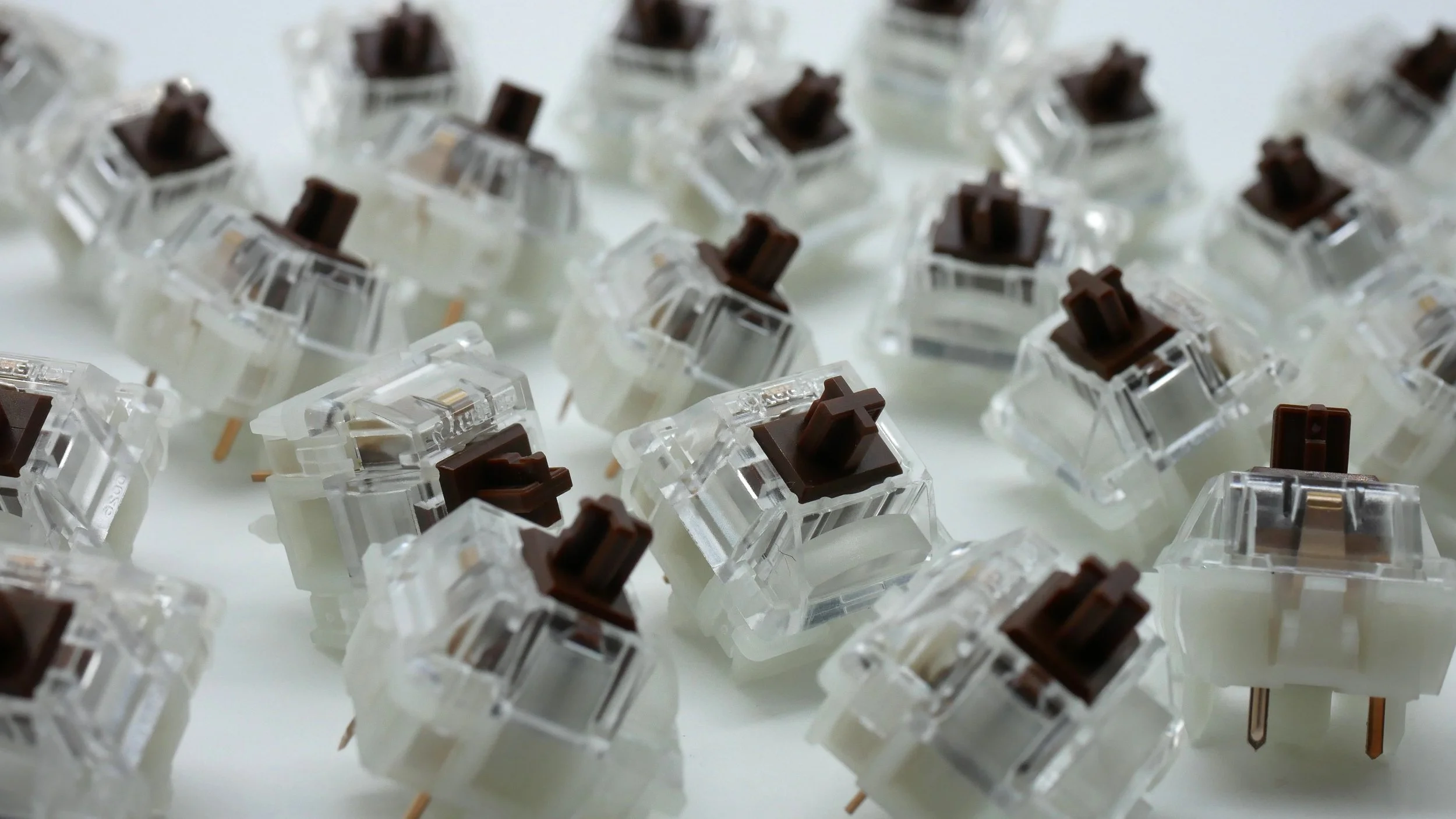
Figure 4: Behold, the Cherry MX Lumina Brown switch.
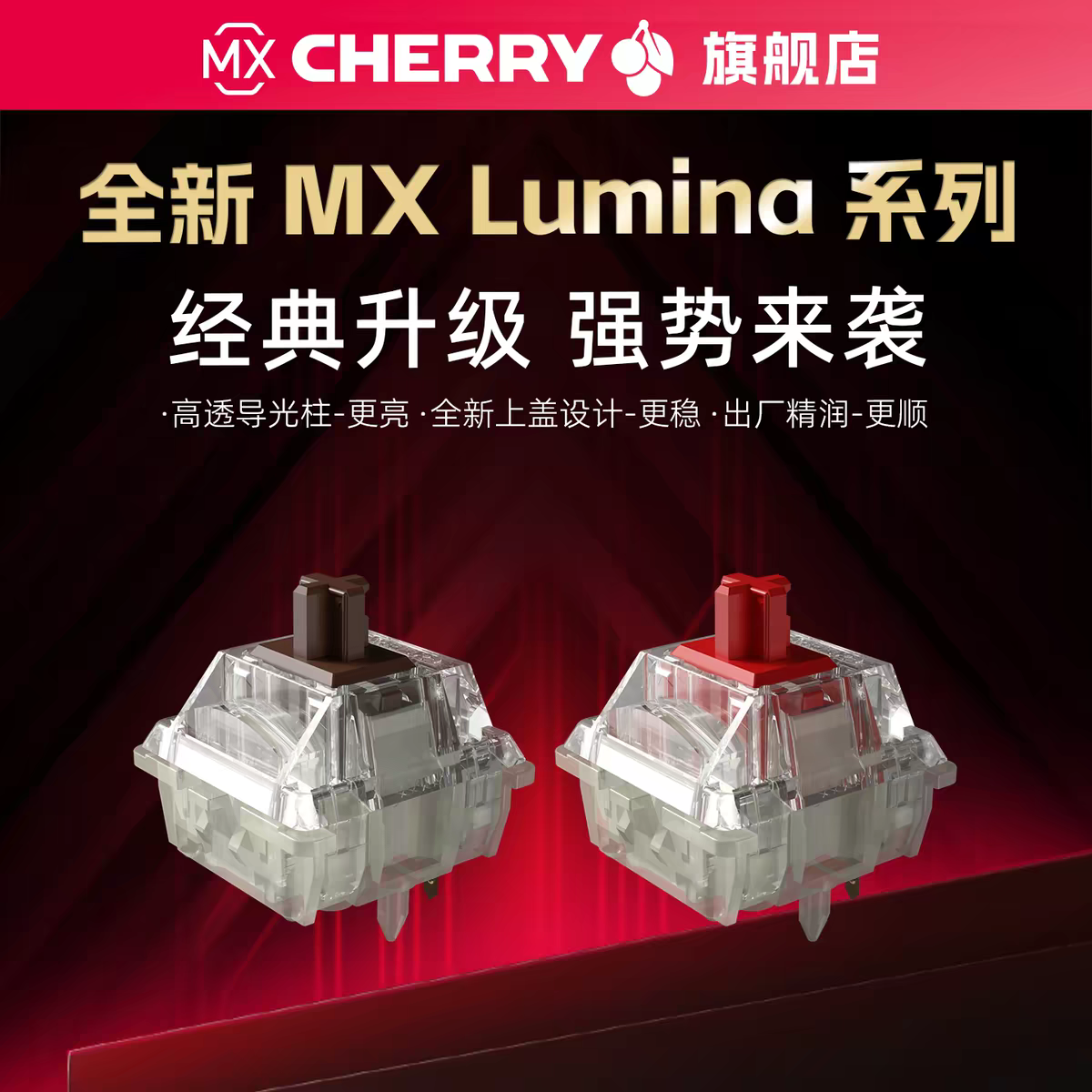
Figure 5: One of a small handful of marketing renders of the MX Lumina Brown and Red switches prior to and even after their release as of the time of writing this review.
Yeah, they don’t look so similar to me either. With exceedingly little documentation and marketing from Cherry and not a single notable reviewer of any form getting a hold of the MX Luminas to analyze prior to me writing this review, it really just leaves me with my own meandering thoughts and the little bit of community sentiment that surrounds these switches to fill out the background of these switches. Given that it would be incredibly difficult for any production facility to be broken down, moved halfway around the world, and reassembled back to production standards by a company that is very clearly and publicly hurting for cash in less than half a year’s time would be an almost unimaginable feat, it’s the combined sentiment of the western facing switch community that the MX Luminas, and likely some other portion of Cherry’s recent / future releases for the next half year or so were likely produced in conjunction with or through some other known manufacturer. Despite me personally being a bit more dubious as to the next leg of this claim, that same community I do somewhat agree with is largely of the belief that this Cherry-supporting manufacturer is both real and very much Outemu. Yes, that Outemu – the Gazzew one and the MODE switch one. That is to say that nobody is at least outwardly expressing that they think Outemu has fully absorbed the Cherry brand and is treating it like Durock/JWK did with Gateron back in 2018, rather they think that there has been some aid by Outemu in designing, molding, and/or manufacturing switches like the MX Luminas that used to be solely managed by Cherry in Germany. With equally as little documentation for them to point to as I have also pointed to here, these claims are largely carried by the weight of two sets of comparisons – one between a Cherry Hall Effect switch released somewhere in 2025 and an “Outemu Magnetic Dark Panda” and another between the LED diffuser/condenser shapes of the MX Luminas and a whole slew of them from other recent Outemu switches. Much like the last picture break, I’ll allow you to be the judge on this one again.
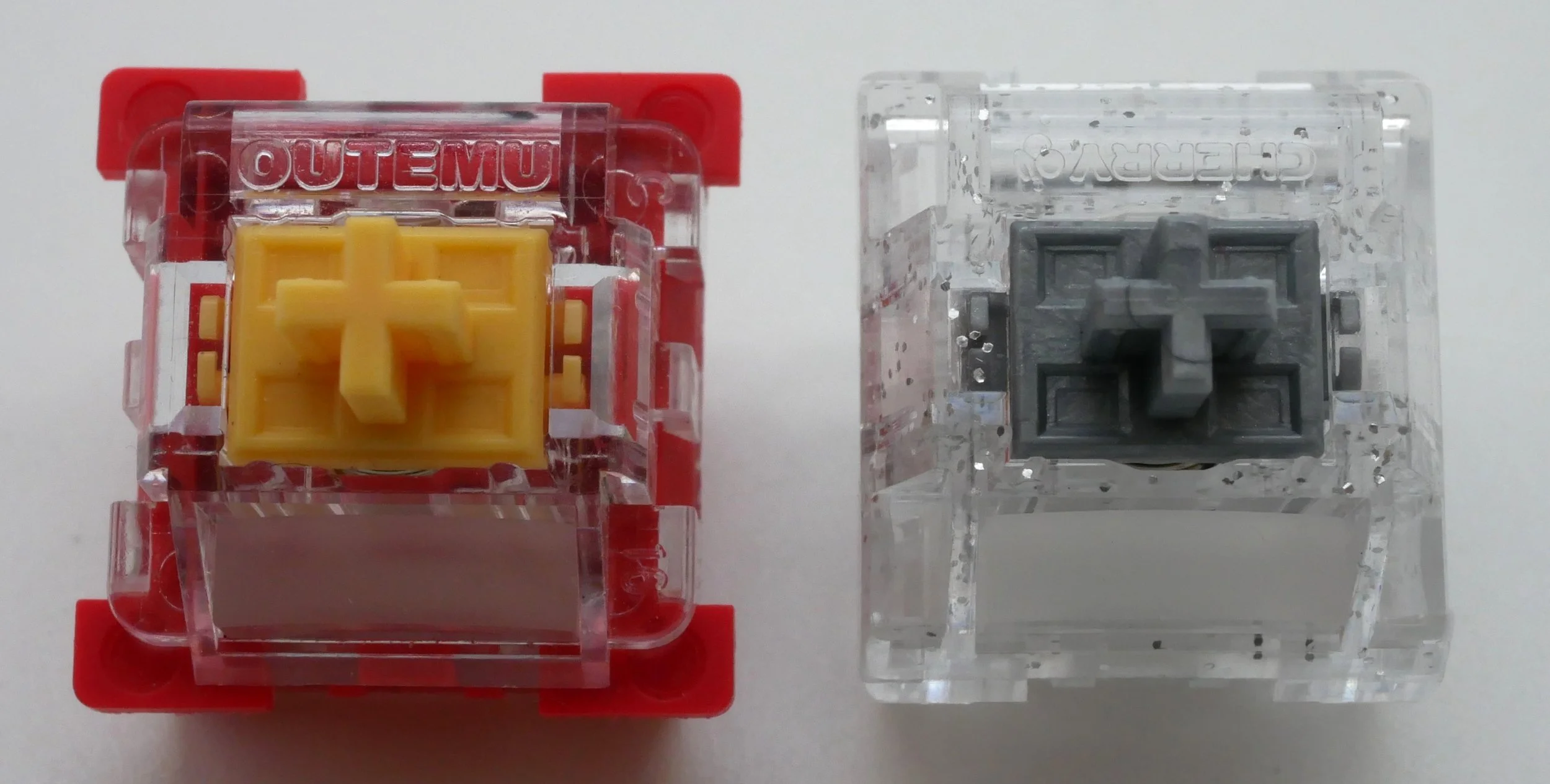
Figure 6: Outemu Magnetic Dark Panda (Left) and Cherry Hall Effect Silver (Right) compared side by side.
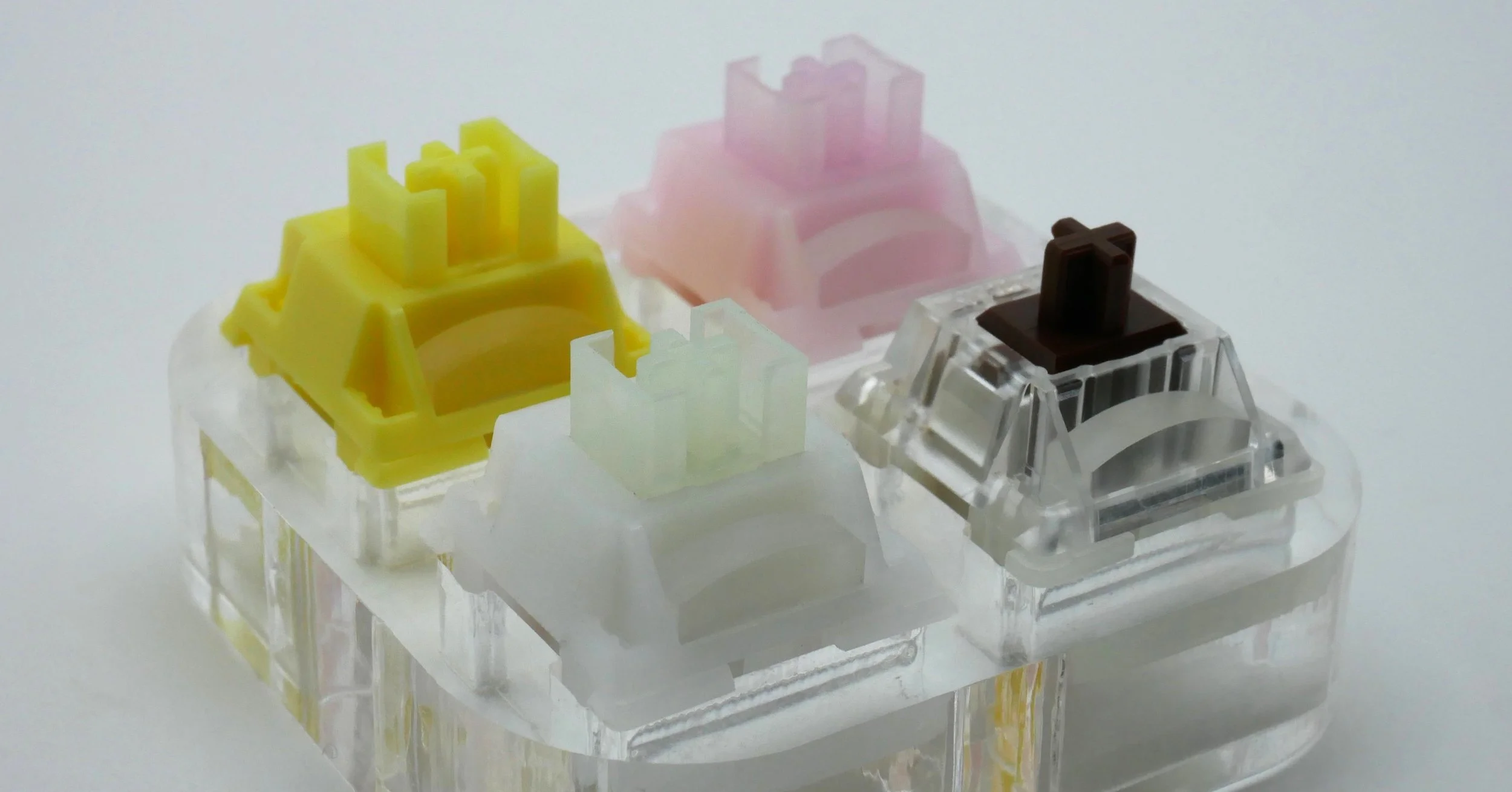
Figure 7: Cherry MX Lumina Brown (Right) and three random, recent Outemu switches with LED diffusers.
With that largely covering what little background I can construct around the secretive Cherry MX Lumina switches, I’m not sure what else I can do in this section other than transition out the normal way and into the performance of specifically the Lumina Browns. Released as a pair in early to mid-March of 2026, the MX Lumina Brown and Red switches have been entirely TaoBao-based exclusives as of the time of writing this review with no sight nor sign of any western vendor taking them on soon. Released in packs of 70 at a price point of 123 yuan, or roughly ~$18 USD, per pack, this leaves the MX Luminas at a significantly cheaper price point of ~$0.26 per switch than anything Cherry has released out of Germany over the past decade or more. While some readers will likely try and chalk this up to production “just being cheaper in China” as this price is more in line with modern budget offerings released by any other manufacturer, it more squarely points towards the ‘helped production’ narrative or towards the more ominous belief that there’s something very different about Chinese Cherry than German Cherry. Whatever the case may end up being, with all of the marketing that exists for these switches being entirely in Chinese and seemingly focusing on the same points as every other switch marketing render, there’s really not much more I can say about the MX Luminas nor their background here. Despite it being fairly common practice for Cherry to support their MX style switch releases for many, many years following their initial debut to the world, so much is already so different about the MX Luminas and the way that they are being released that I’m entirely unsure about what the future may hold for such…
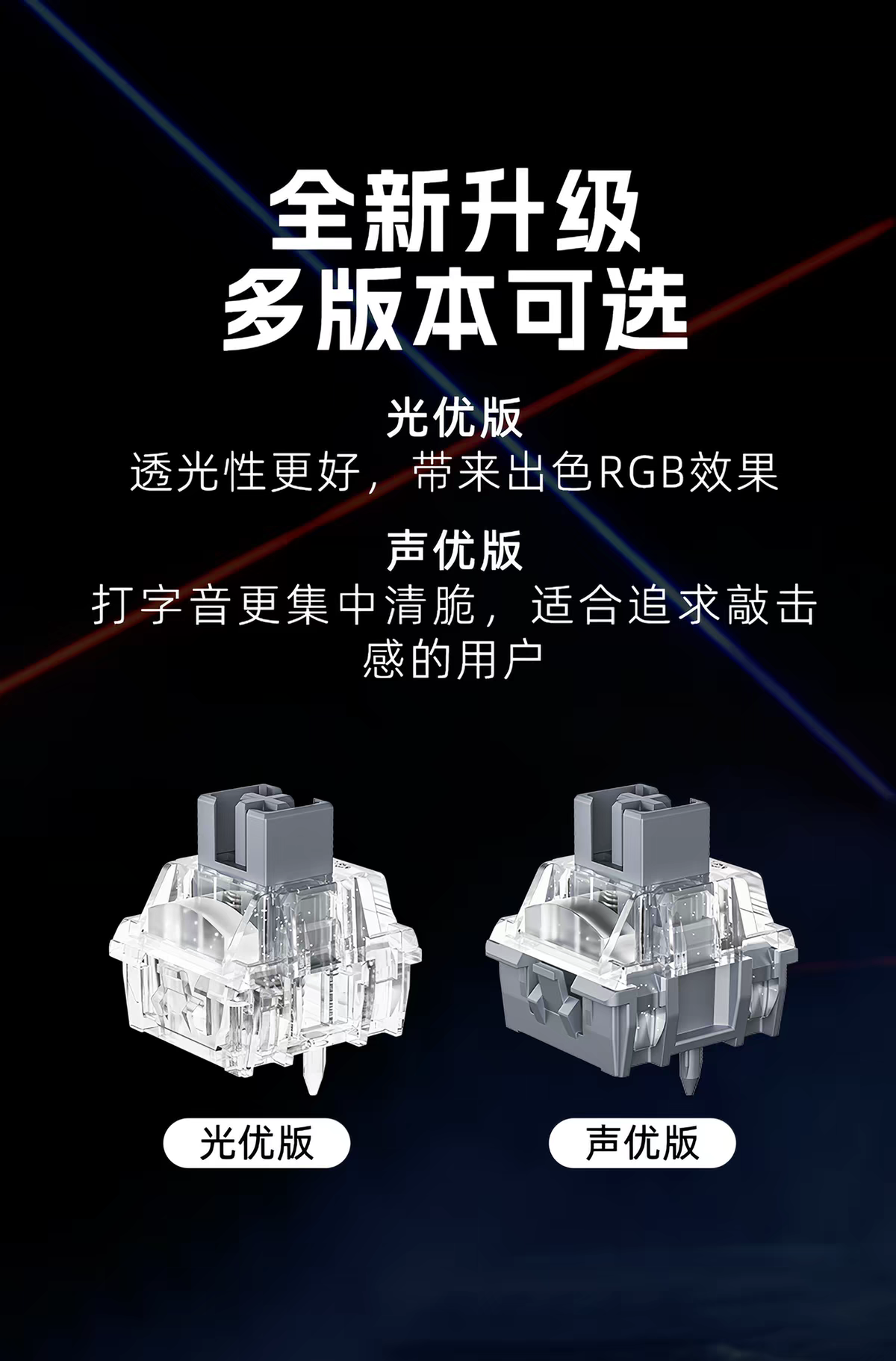
Figure 8: If I then showed you this advertisement I dredged up in the hunt for information about the MX Luminas, how would it affect your opinion of Cherry potentially losing its identity? Note that Cherry has never made an MX dustproof switch before.
Lumina Brown Performance
Appearance
At the highest level, the Cherry MX Lumina Brown switches come in a three-part color scheme that is fairly reminiscent of Cherry’s MX RGB line of switches from well over a decade ago at this point. In fact, if it wasn’t for the LED diffusers protruding from the front of the top housings that makes these switches so immediately and starkly different than anything Cherry has made previously in the MX footprint, one could likely confuse the clear top housings over milky-white bottom housings as being just another switch from that era. Likely noting the strong similarities in aesthetics between these, Cherry’s previous versions of similar switches, and all of the other RGB friendly OEM-style offerings nearly identical to these that other manufacturers also made, I personally speculate the name ‘Lumina’ was specifically chosen on theme to help them stand out. While most switch enthusiasts immediately associate the name ‘Lumina’ with a green stemmed, purple housing switch pumped out by ‘Duhuk’ and was famously known for being lubricated by hand, in this case my instincts tell me that ‘Lumina’ is a stylized abbreviation of the word ‘Il(lumina)tion’, emphasizing the RGB-friendly nature of their designs. Despite looking quite similar to other historical Cherry releases from a distance, up close there are quite a few smaller details that lead the MX Lumina Browns to be distinguishable as something entirely of their own accord. Discussion of these uniquely defining features may be found detailed in the paragraphs and photos below.
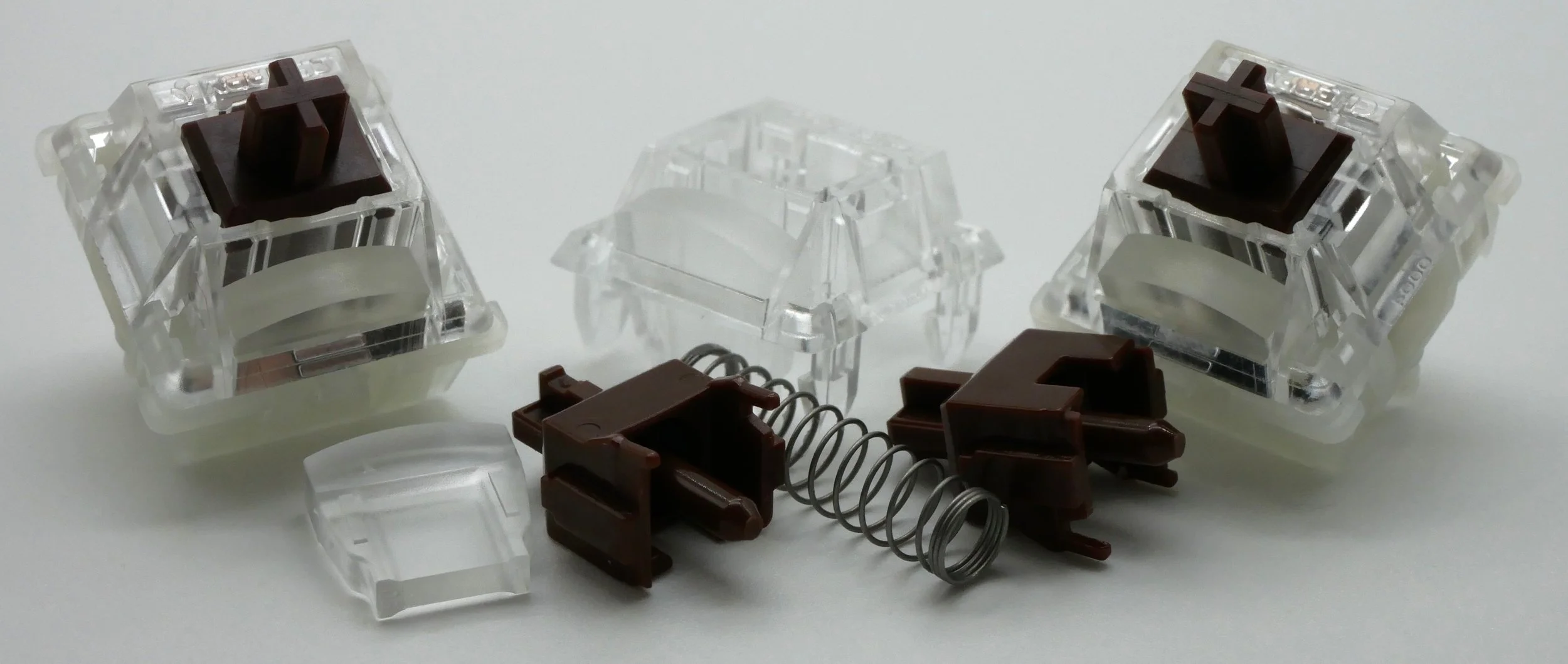
Figure 9: Cherry MX Lumina Brown switches and their components.
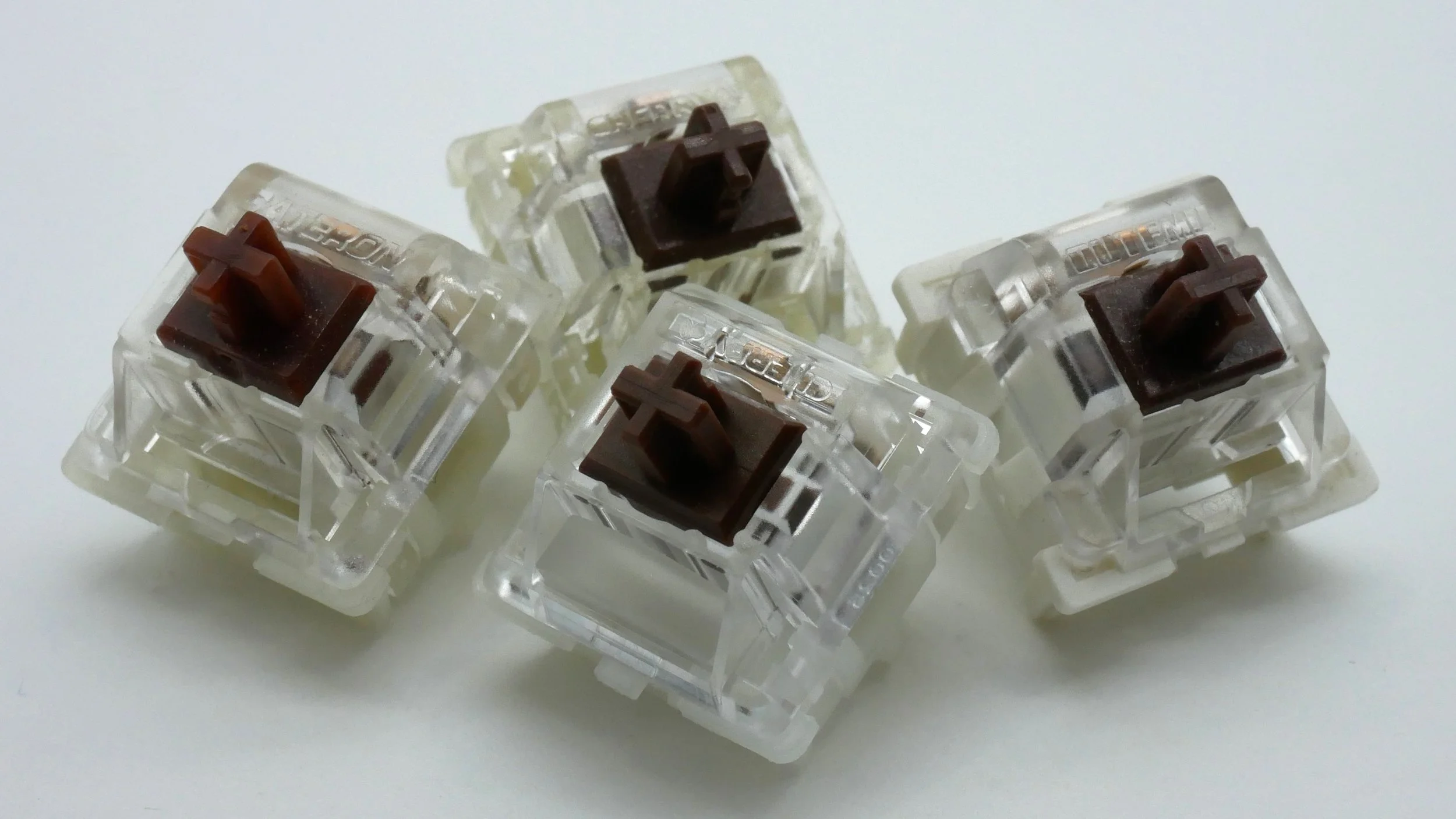
Figure 10: Cherry MX Lumina Brown (Center) as compared to other RGB-friendly OEM Brown switches from other eras/manufacturers.
Looking first to the clear top housings of the Cherry MX Lumina Brown switches, we hit the ground running full speed with an overall appearance with or without the embedded LED diffusers that is the most distinctly different from that of conventional Cherry design of any of the parts in this switch. For one, there is the aforementioned LED diffuser embedded in the front. Slightly frosted, this half height diffuser is rounded on the top edge, wedge-shaped on the underside, and is able to be removed through the top side of the housings fairly easily though while not being loose when installed in the switch. When removed, the housings look even more strange having a very wide open rectangular void which normally presents as a tightly constrained rectangle within a centered circular indentation in most other Cherry switches. The other external feature of the MX Lumina Brown top housings that is strange to see is that of an inverted ‘CHERRY’ nameplate – a feature that is a true first of its kind for a Cherry switch here. Whether or not this will be the standard nameplate design for newly developed Cherry switches following their transition to China, an exclusive to the ‘Lumina’ MXAA lineup of switches, or a transitional one-time thing is definitely not known, though I suppose this being designating of switches designed following that transition would be helpful to collectors and the community at large. Internally, the MX Lumina top housings appear fairly plain at first though do have a couple of features of note from the marketing renders that are of questionable practicality. The first is that of a set of four ‘ballpoints’ that are clearly than the surrounding plastic and located towards the base of the housing towards the four corners of the stem hole. The second is that of a set of ‘uprights’ centered in the area underneath where the nameplate is of the housing is, which appears to snugly hold the bend of the larger metal leaf in place. The only internal detail that I do actually understand the purpose of is that of the mold marking which is located on the left-hand side outer edge of the top housing interior. While this is the same location as has been seen in many other Cherry switches prior, this is the first to my knowledge to feature four numbers as opposed to three and a dot.
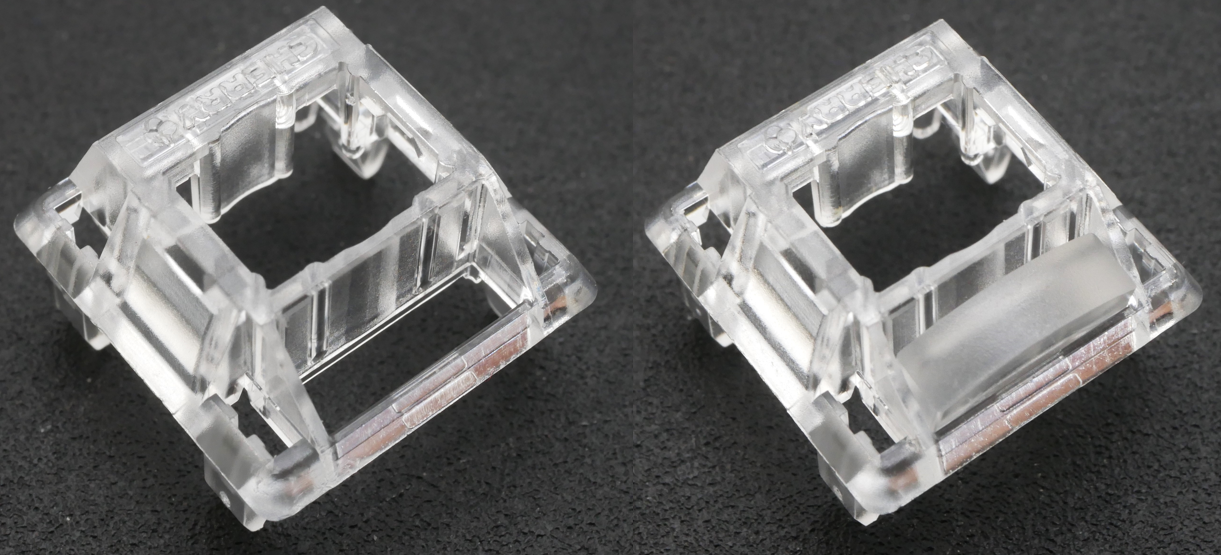
Figure 11: Cherry MX Lumina Brown top housing exterior without (Left) and with LED diffusers installed (Right). Note the inverted Cherry nameplate as an additional unexpected feature for a Cherry-made switch.
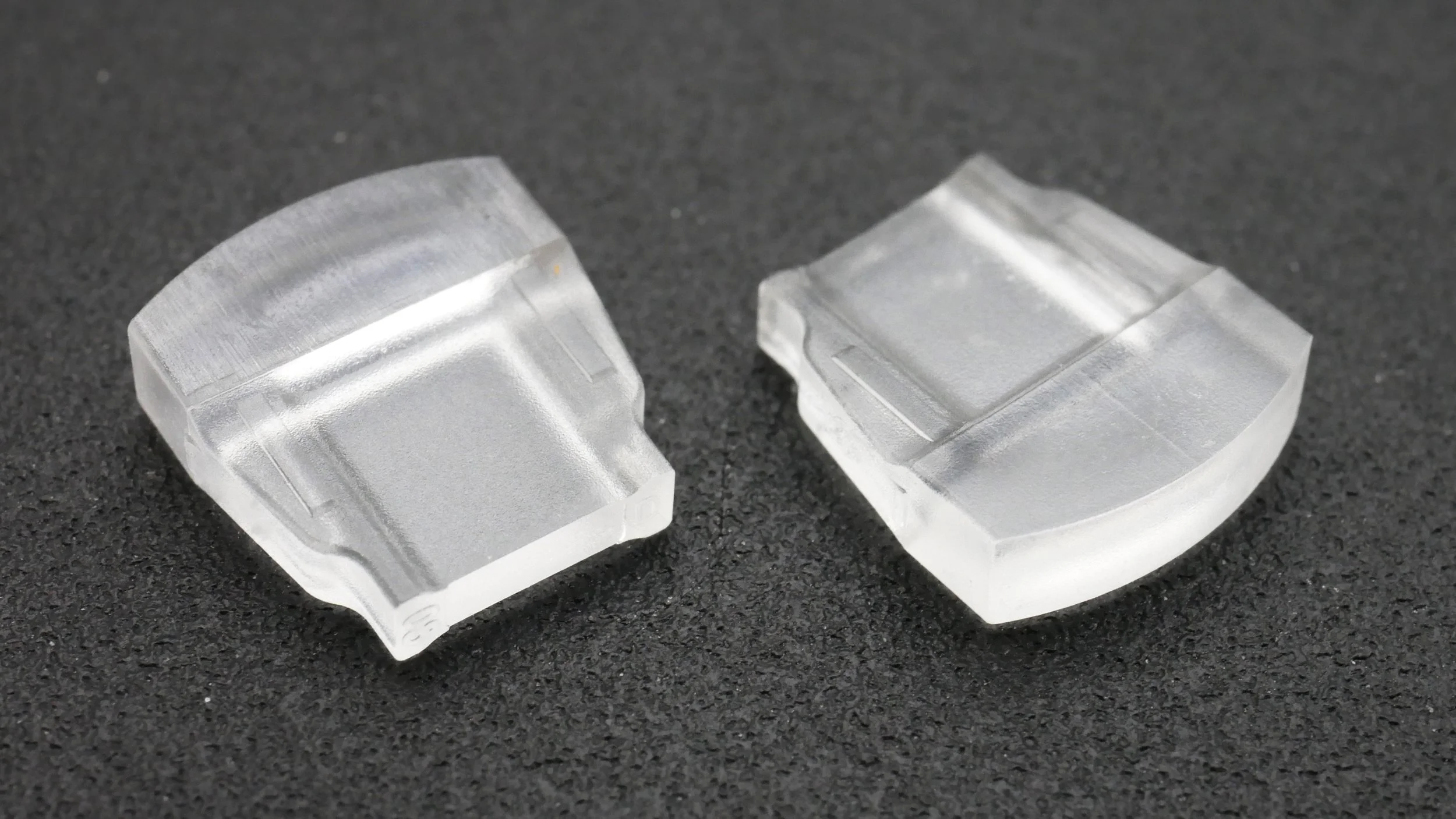
Figure 12: Front and back side of LED diffusing wedges from the Cherry MX Lumina Brown switches. Note the two-digit numerical mold marking on the underside edge as seen on the far left-hand side.
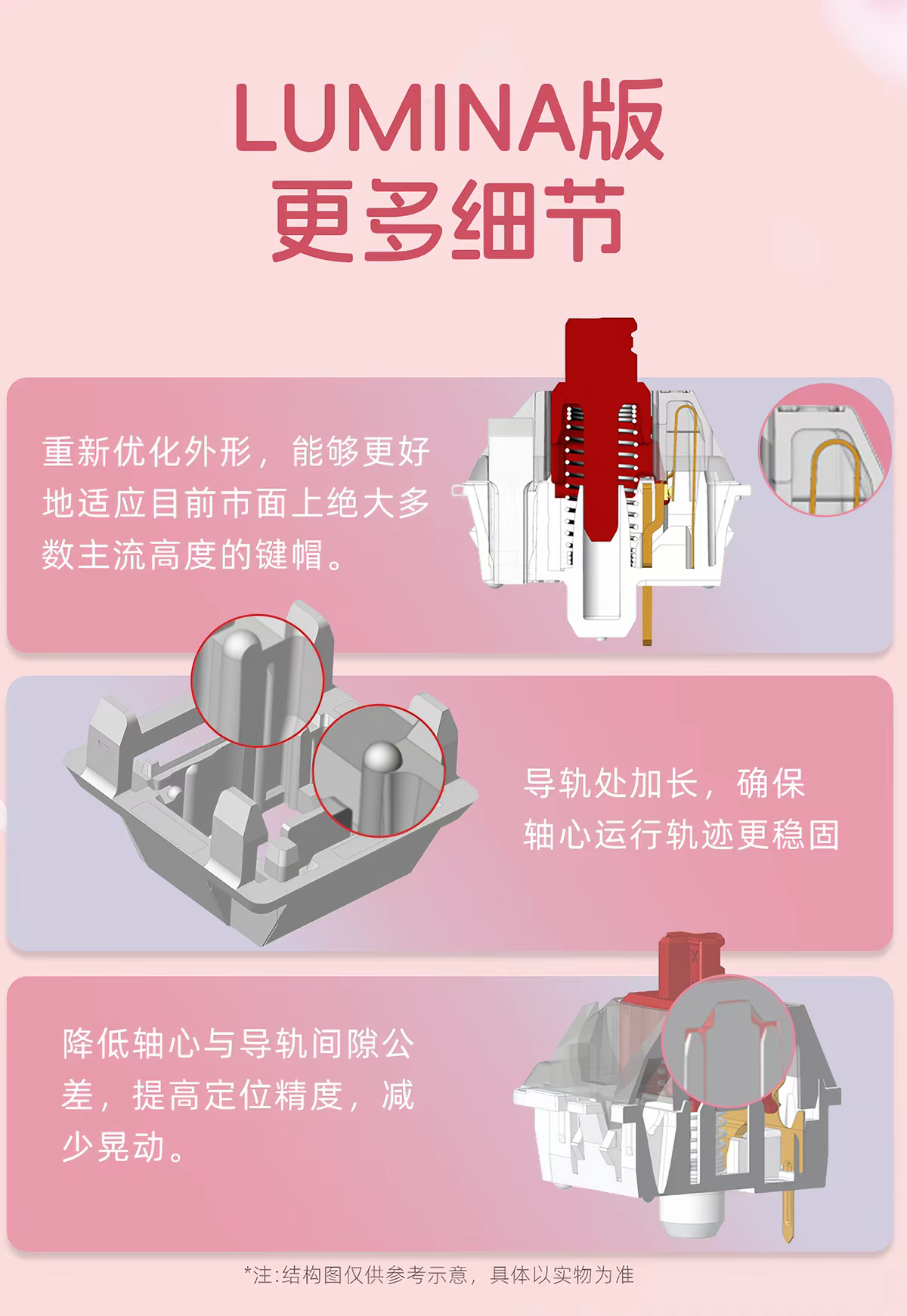
Figure 13: Cherry MX Lumina marketing renders showing slight modifications to top housing structure as described from observations above.
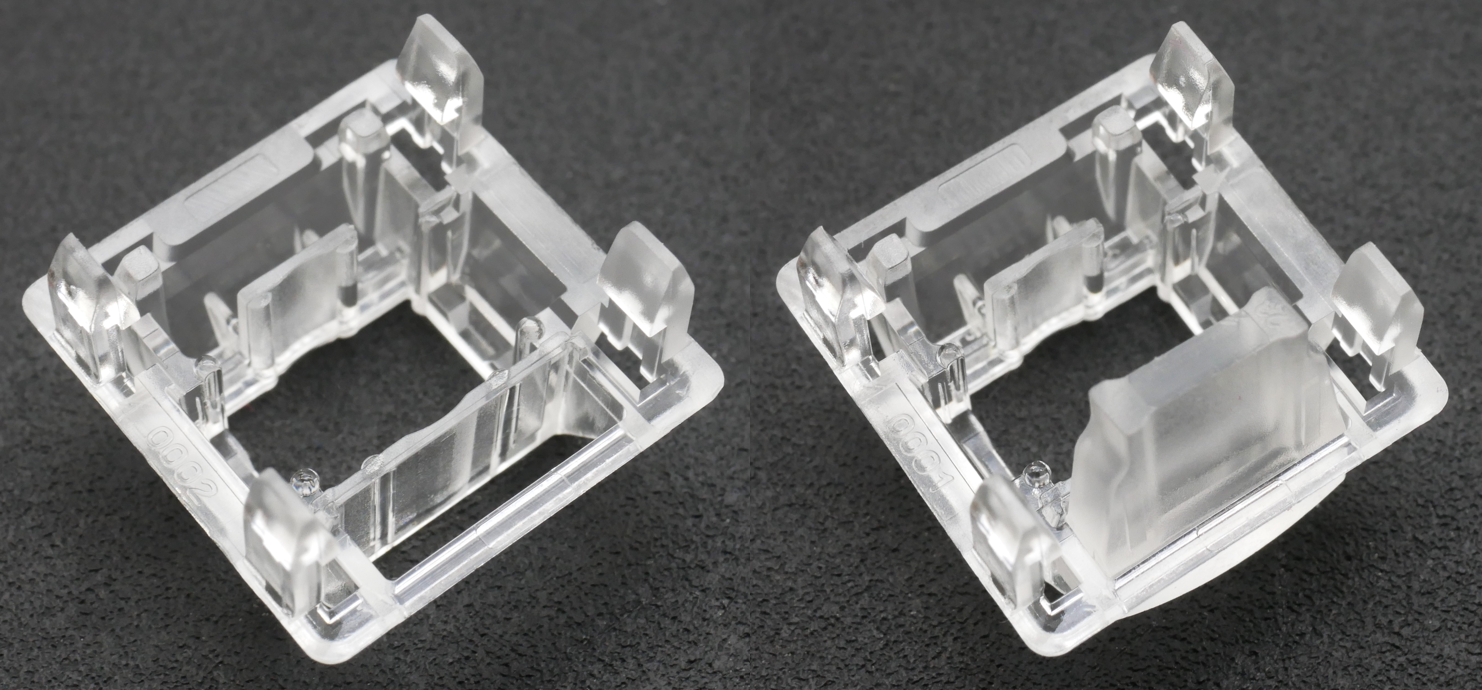
Figure 14: Cherry MX Lumina Brown top housing interior without (Left) and with LED diffusers installed (Right). Note the rails for holding the upper portion of the large leaf in place underneath the nameplate region of the housing as well as the clear balls as described in the paragraph above.
Moving next to the brown stems of the Cherry MX Lumina Browns, I am hard pressed to find any features here that are different than any other Cherry MX Brown stem produced in recent memory. Even down to the squared off backplate capes that are pretty consistently seen across Cherry’s stem designs, the MX Lumina Brown stems have all of the classic features of a switch stem – non-tapered slider rails, a barely tiered, normal length center pole, thin mold ejector circles above their stem legs, and faint traces of factory lubing on all sides of the stem. From a naked eye inspection of the stem leg profile of the Lumina Browns, even these too look to be similar to that of a conventional Cherry MX Brown switch. Without any ultra fine unique details popping out to me on inspection, I really think I’d hard pressed to identify these as being of MX Lumina Browns as opposed to any other Cherry MX Brown variant if you handed it to me blindly.
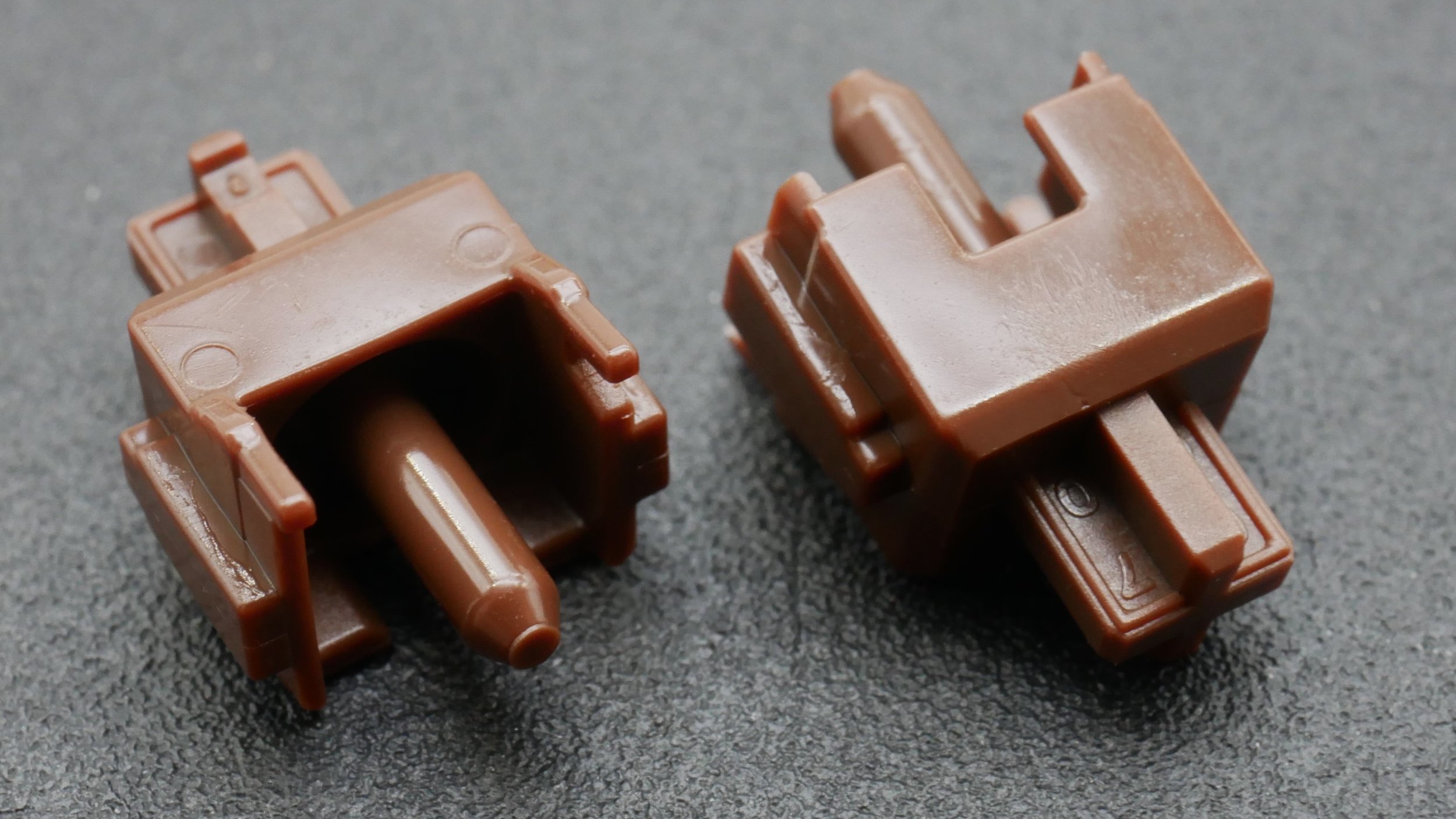
Figure 15: Cherry MX Lumina Brown stems front and back sides showing non-tapered slider rails, sloped tiers on the normal length center pole, squared off backplate capes, and trace amounts of factory lube like in any other Cherry MX Brown switch.
Finally arriving to the milky-white bottom housings of the Cherry MX Lumina Brown switches, we’re greeted with a set of details that strands these somewhere between the stems and the top housings insofar that there are some small features that seem new but largely they appear as normal. Internally, the bottom housing look effectively identical in design to that which was shown in the Cherry MX Firefinch Switch Review, with the housings having no south side spring collar, minor dampening pads at the base of the slider rails, some very small mold ejector marks in the base of the bottom housing, and even globs of undispersed factory lubing. Perhaps the only feature which seems slightly out of place to me is that of the leaves of the Lumina Browns, which appear slightly fainter, more silvery, and overall less copper-colored than what I recall normal leaves looking like. This could entirely be a figment of my imagination, however. Externally, the bottom housings come in 5 Pin/PCB mount varieties and even feature the same sideways numerical mold marking underneath the right side PCB mounting pin like that of conventional Cherry design. Likely to distinguish these molds from other conventional designs as well as to accommodate the fact that there is a giant hole in the housings that isn’t normally there, there is no diode symbol nor capital letter mold marking on the underside of the MX Lumina Browns – only a vertical four digit numerical code in place of Cherry’s normal three digit code.
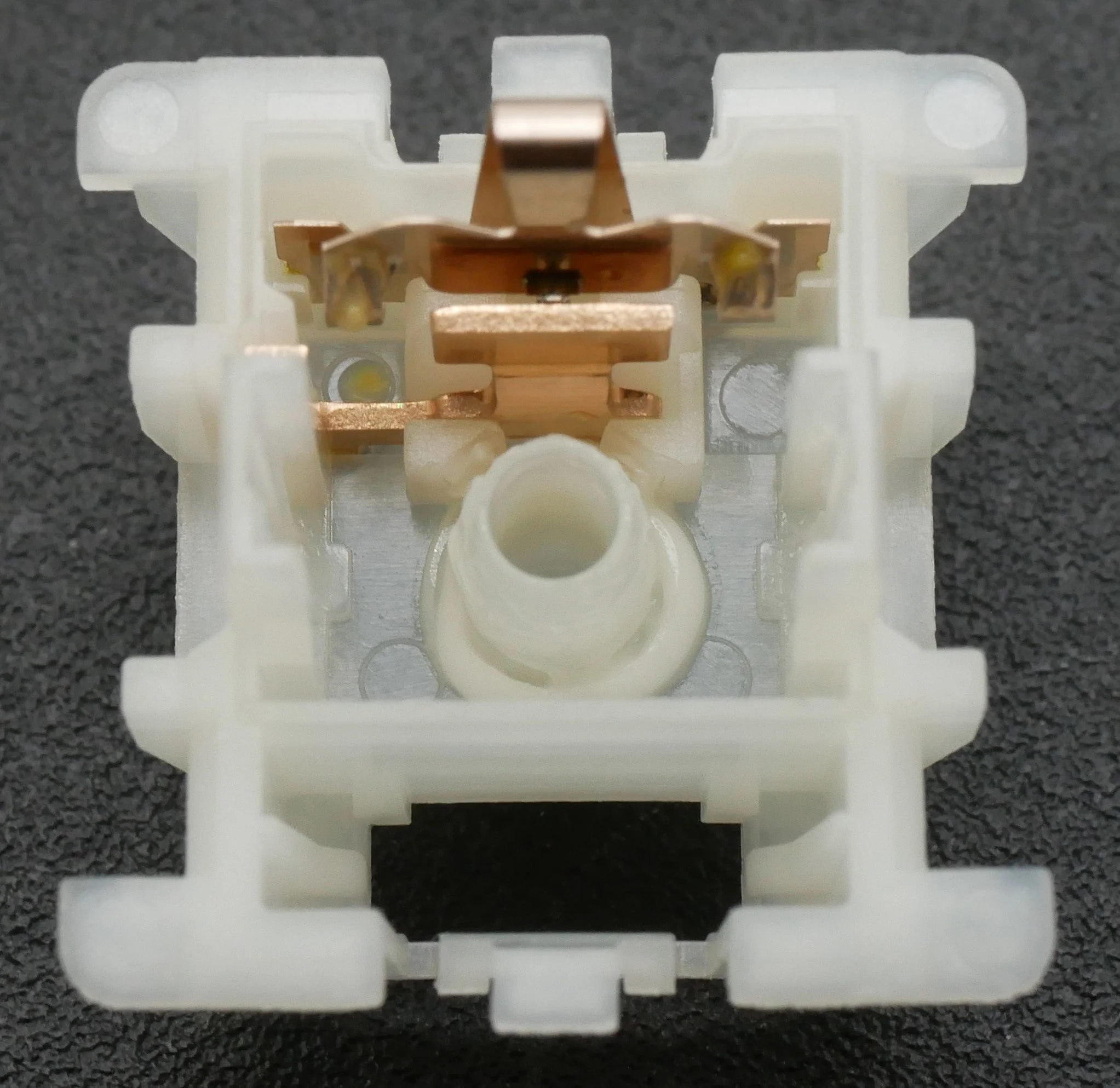
Figure 16: Cherry MX Lumina Brown bottom housing interior showing small dampening pads at the bases of the slider rails, mold ejector marks in the base of the housing, and large amounts of undispersed factory lubing that looks like a white O-ring around the base of the center pole hole.
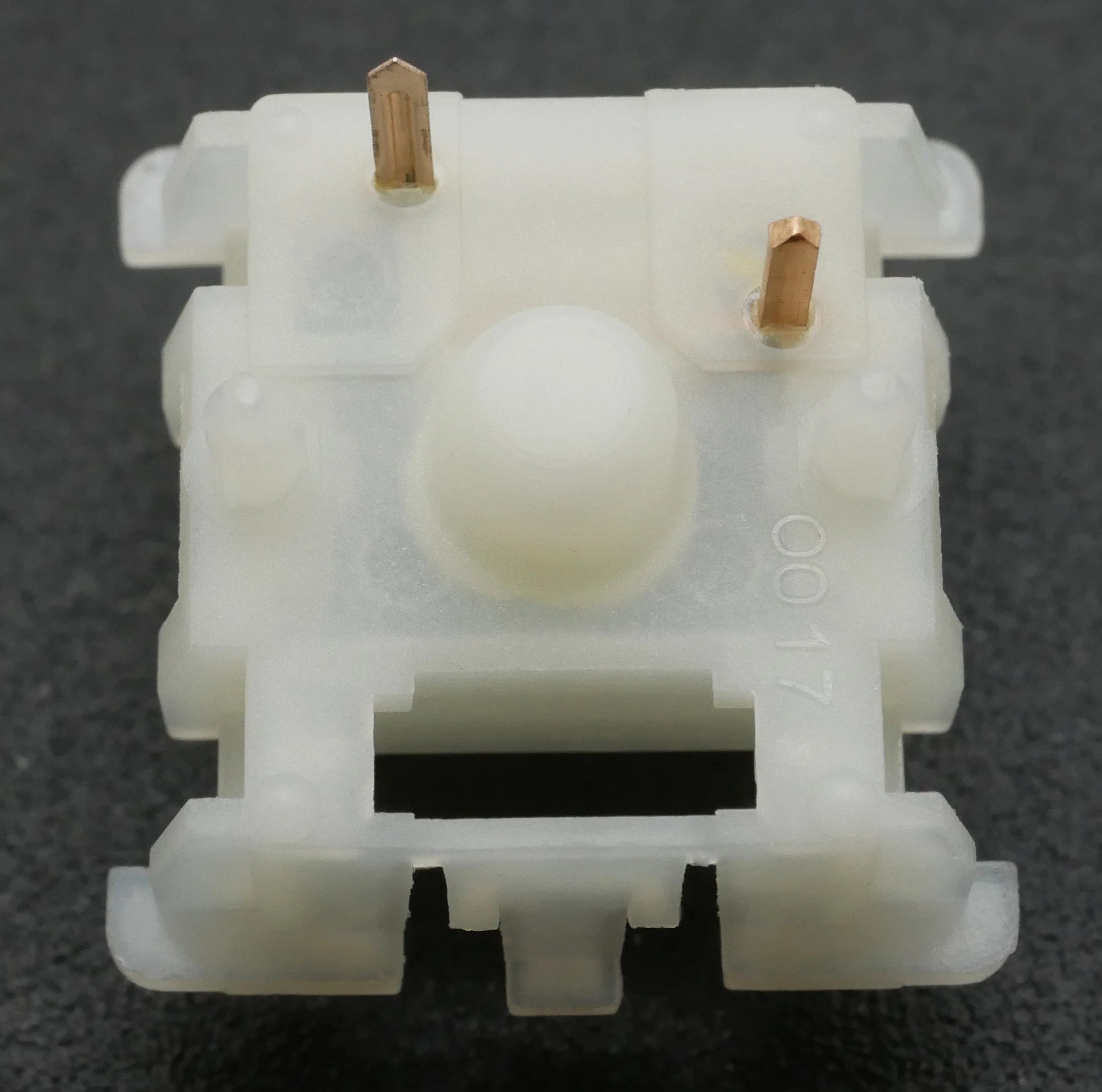
Figure 17: Cherry MX Lumina Brown bottom housing exterior showing PCB mounting pins and sideways, four digit numerical mold marking in similar location but not similar style as other Cherry switches.
Push Feel
You know, Cherry isn’t exactly a manufacturer that has maintained a lot of good will from the community over the years surrounding the feeling of their switches – and especially in post COVID-era years. While Cherry was largely the ‘Gold Standard’ for much of the modern community up until 2018, this was largely because there wasn’t much in the way of competition and the art of tuning switches was much more widely spread than it is today. People really did know how to make the most of the full nylon, black housing Cherry linears that had been around for decades leading up to then. However, the second that newer manufacturers like Durock/JWK and Tecsee stepped onto the scene in 2018, they immediately raised the bar for manufacturing quality that Cherry just never quite was able to do. Content with sustaining their business off of the OEM market alone until only just a few years ago when they branched out towards the more custom end of the mechanical keyboard community, Cherry’s ~$0.50 per switch price tag yielded okay, but neither great nor bad switches. You knew what to expect given their history. The switches from Cherry had some scratch, occasionally had ping, and weren’t exactly lubed all that well, but with a little bit of love and aftermarket modification they could be tuned to near perfection. Now keeping all of that in mind, and assuming Cherry made absolutely no improvements to their manufacturing process or quality control on account of the fact that they were hemorrhaging money enough to move production from Germany to China, what do you think half priced Cherry switches would feel like? What does $0.26 per switch worth of Cherry get you? Would the switches be just as scratchy as the originals? Would they have a more significant metallic feeling from the springs and/or leaves? What about the depth and richness of their housings – would it have half as much of the firm, thick, feeling that Cherry’s nylon housings were so well known for over the years? Well if your answer was yes to all of those things, you already deep down know how the MX Lumina Brown switches turned out.
The Cherry MX Lumina Browns may in fact be, without exaggeration, among the worst stock Cherry-made MX Brown variants that I’ve ever come across in my years as a switch collector and reviewer. While I know that there have been plenty of e-wasted, rusted, and dusted-up MX Browns that were certainly worse than these, and that the average Cherry MX Brown switch has historically been far from perfect, but these switches are rough by all uses of the word. First and foremost, the switches themselves toss around in hand like they are cheap, flimsy, and not at all of the same gauge or type of nylon that Cherry proudly sported throughout countless iterations of switches. This isn’t just an odd metric I decidedly focused on when opening the packaging either – it’s apparent the minute you press the switches too. Sandwiching a scratchy stroke with a very on-the-nose MX Brown tactile bump that somehow scrapes over the metal leaf with a feeling despite how dull of a bump it is is that of thin, sharp, and plastiky housing collisions. This is true for both bottom out and topping out. There’s no depth, no warmth, no smoothness, no subtlety, and just nothing but the harsh grind of plastic that makes me not want to bottom out or top out these switches, if typing in such fashion was even remotely possible at speed. If I at least kept them half-cocked when going both up and down through the strokes I’d only have to deal with the scratchiness that hasn’t been improved at all from their previous incarnations. You can even completely toss out the idea of consistency when it comes to the push feelings of the MX Lumina Browns as well as these arrived all over the place both from switch to switch and even across typing speeds from within each switch. Swings from sharp to soft bottom outs, differences in stroke smoothness, and even leaf ping are all more commonly found here than a consistent set of features. It’s just all bad. About the only grace I can afford the feeling of these switches is that the tactile bump strength and placement is at least exactly what one would expect of a Cherry MX Brown. If I were Outemu, I’d be upset for even conspiratorially being associated with switch performance like this.
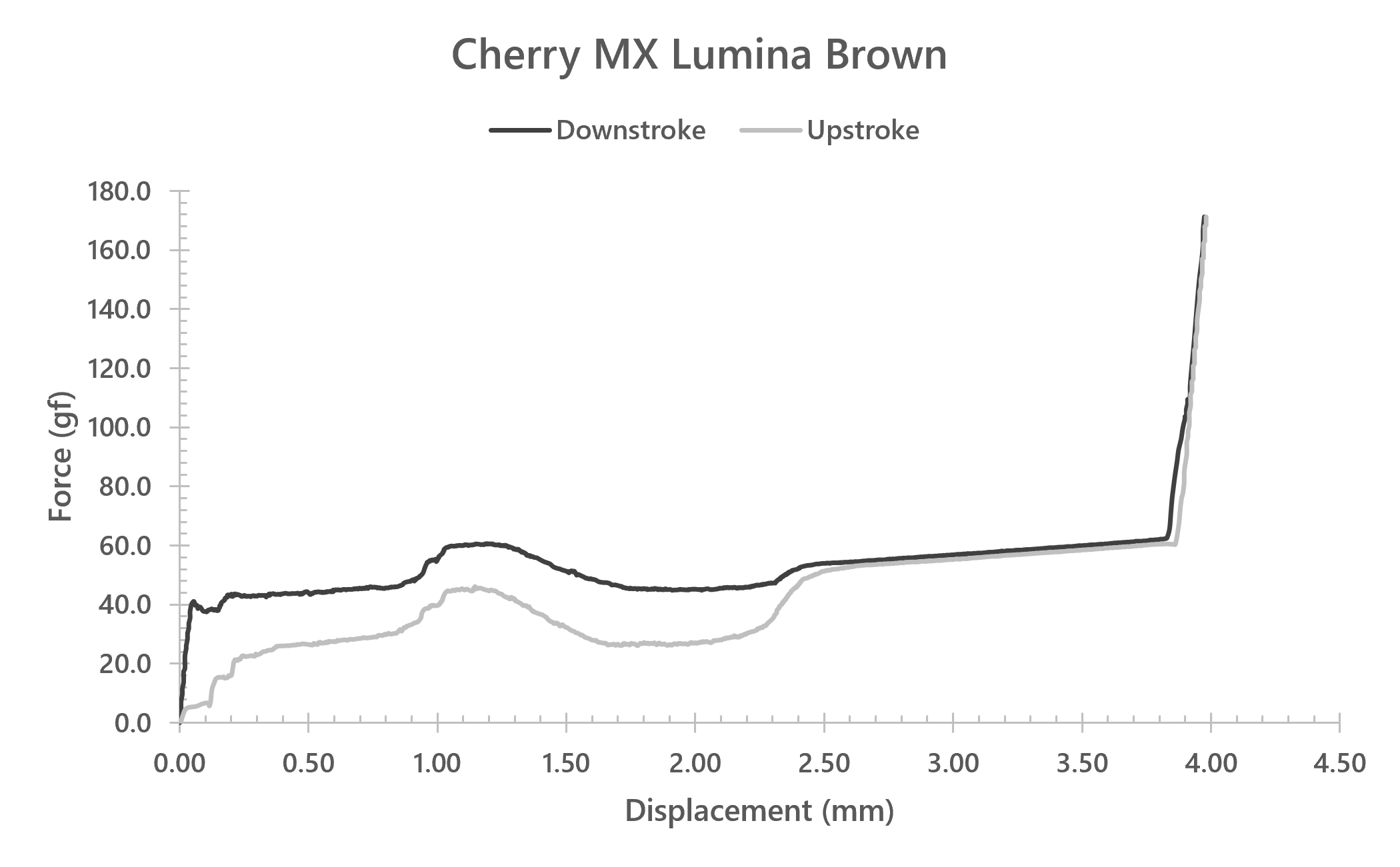
Figure 18: Force curve diagram for the stock Cherry MX Lumina Brown switch.
Sound
All of the features described above that make the Cherry MX Lumina Brown switches feel bad only make them sound even worse. The switches are the similarly softly tactile antithesis of everything Cherry has come to be known for in their switches over the years. Rather than a softly scratchy sound with deep, bassy housing collisions the Lumina Browns are loud, thin, sharp, plasticky, inconsistent, and all around unpleasant both on their own and against the countless number of switches out there today with more coherent sound profiles. As if the inconsistency in the tones wasn’t bothersome enough, either, the sounds are not sharp nor well defined either, making the portion of the community who generally enjoys higher pitched, thinner sounding, and more plasticky switches also disappointed by the fuzziness and lack of clarity in their sound. While I can recognize that Cherry’s RGB line of switches, and presumably by extension the MXAA Luminas, could never live up to the same sort of depth and bass-focused sound profiles of their iconic all nylon housings, but the results here are just so far from even modified expectations that I can’t find much to be happy with here. Some exceedingly small credit is given here on account of the leaves themselves not making nearly as much of a pinging noise as the springs do, something which I would have imagined to be the opposite given the push feeling notes above. Even at an incredibly budget friendly price point these switches are a sound profile based step backwards for Cherry.
Wobble
To be entirely honest, it doesn’t matter who produced or manufactured these switches when it comes to their stem wobble as it would be unacceptably wobbly for any manufacturer in 2026. There is not just a noticeable amount of equal magnitude N/S and E/W direction stem wobble in the MX Lumina Browns, but so much so that the stems have a sort of ‘rotating’ phenomenon when you grab their stems and shake them around. I genuinely can’t recall the last time I saw a modern switch with this much stem wobble, and every manufacturer has moved well past this sort of issue many, many years ago. Most people will be shocked by how wobbly these are.
Measurements
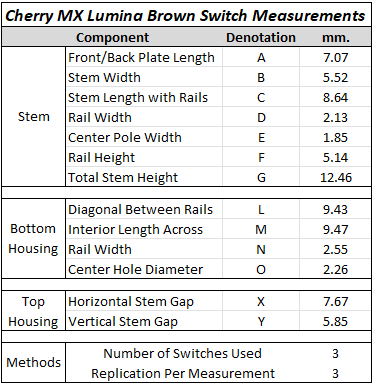
If you’re into this level of detail about your switches, you should know that I have a switch measurement sheet that logs all of this data, as well as many other cool features which can be found under the ‘Archive’ tab at the top of this page or by clicking on the card above. Known as the ‘Measurement Sheet’, this sheet typically gets updated weekly and aims to take physical measurements of various switch components to compare mold designs on a brand-by-brand basis as well as provide a rough frankenswitching estimation sheet for combining various stems and top housings.
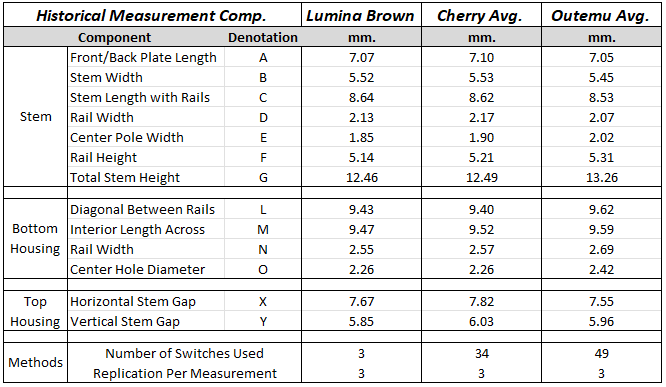
Given the thoughts by the western switch collecting community that Outemu has had some degree of influence in the design, development, and/or manufacturing of the Cherry MX Lumina Browns, I figured I would compare their measurements collected above against the historical averages of Cherry and Outemu switches that I’ve measured over the years. As can be clearly seen, the values more closely align with those of the historical average of Cherry switches.
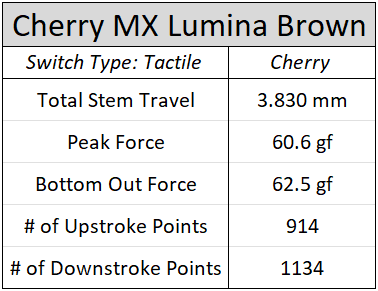
Figure 21: Numerical details regarding the force curve for the stock Cherry MX Lumina Brown switches.
Have you ever wanted to be bombarded with more switch data than you’ve ever seen at any point in your life before? Consider checking out the ‘Force Curve Repository’ hosted on my GitHub that contains all force curves that I take both within and outside of these full-length reviews. In addition to having these graphs above, I have various other versions of the graphs, raw data, and my processed data all available for over 2000 different switches for you to use however you see fit. Check it out via the ‘Archive’ tab at the top of this page or by clicking any of the force curve cards above.
Break In
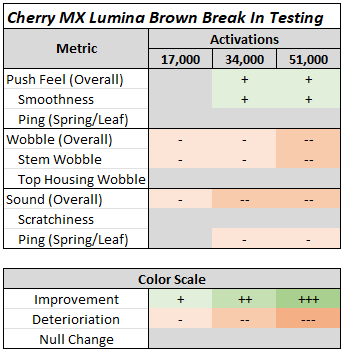
Break In Notes
17,000 Actuations
- After 17,000 actuations, the most notable change in the performance of the Cherry MX Lumina Browns comes in the form of an increased switch by switch inconsistency in sound profiles. While the stock versions of these switches certainly aren’t great on this metric, the gap between the ‘good’ and ‘bad’ Lumina Browns grew a bit throughout this breaking in.
- In spite of the fact that the Lumina Browns already have a rather substantial amount of stem wobble, they somehow managed to increase it just a tiny bit further here in both N/S and E/W directions.
34,000 Actuations
- Perhaps one of the only bright points of this review is that the MX Lumina Browns do appear to wear in like conventional Cherry switches throughout the break in process insofar that they do appear to get a tiny bit smoother after 34,000 actuations and with no factory lubing. It certainly feels like more a consolation prize than a selling point here, but it is noticeable no less.
- In addition to an increase in cross batch sound profile inconsistency, those MX Lumina Browns broken in to 34,000 actuations also began to have ever so slightly greater presences of spring ping across the board as compared to their stock counterparts.
51,000 Actuations
- After 51,000 actuations, and against all reasonable odds, the Cherry MX Lumina Browns managed to even further increase in stem wobble over that of the 17,000 actuation batch. This wobble is so more starkly evident here in these switches as compared to their stock versions that if I were to assign scores to those Lumina Browns broken in 51,000 actuations, the wobble would be at least a couple of points lower.
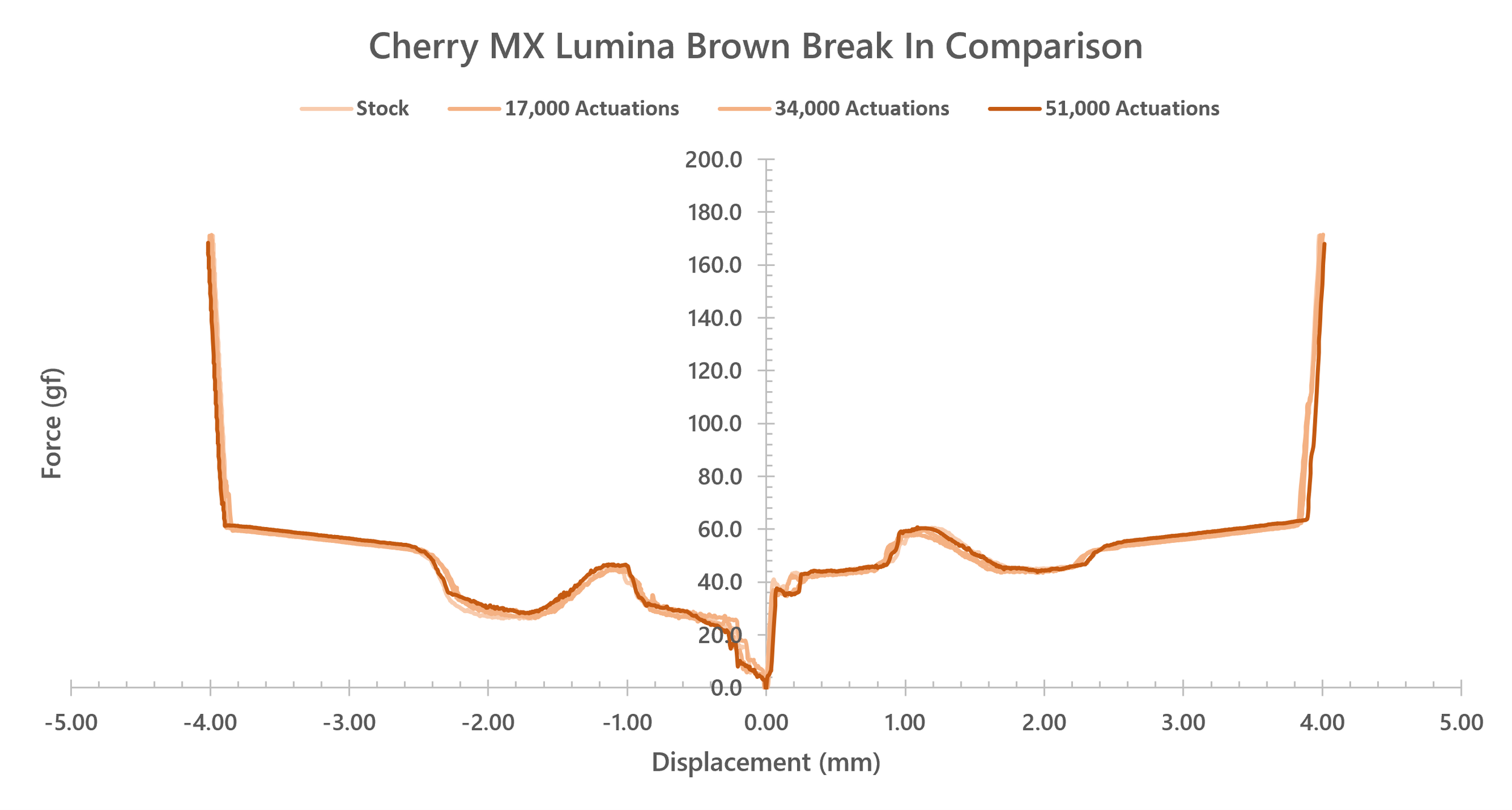
Figure 23: Comparative force curve diagram showing no substantial, consistent change in the force curves of the Cherry MX Lumina Brown switches throughout the break in process.
Other
With the release of the later custom community driven MX2A switch designs like the MX Honey, MX Petal, MX Falcon, etc., Cherry seemed to be moving towards standardized box packaging of 36 switches. Clad in black with cherry red lettering and notes, these boxes were sleek and a bit up to date for Cherry who was quite far behind similarly sized competitors like Cherry or Gateron that have been doing fanciful packaging for years. Despite assumedly being available for use, the MX Lumina Red and MX Lumina Brown switches were released in 70 count offerings with each 35 count lot being shipped in glass jars with faux wood tops and a part label ‘sealing’ these together. Images of this strange packaging arrangement can be found below.
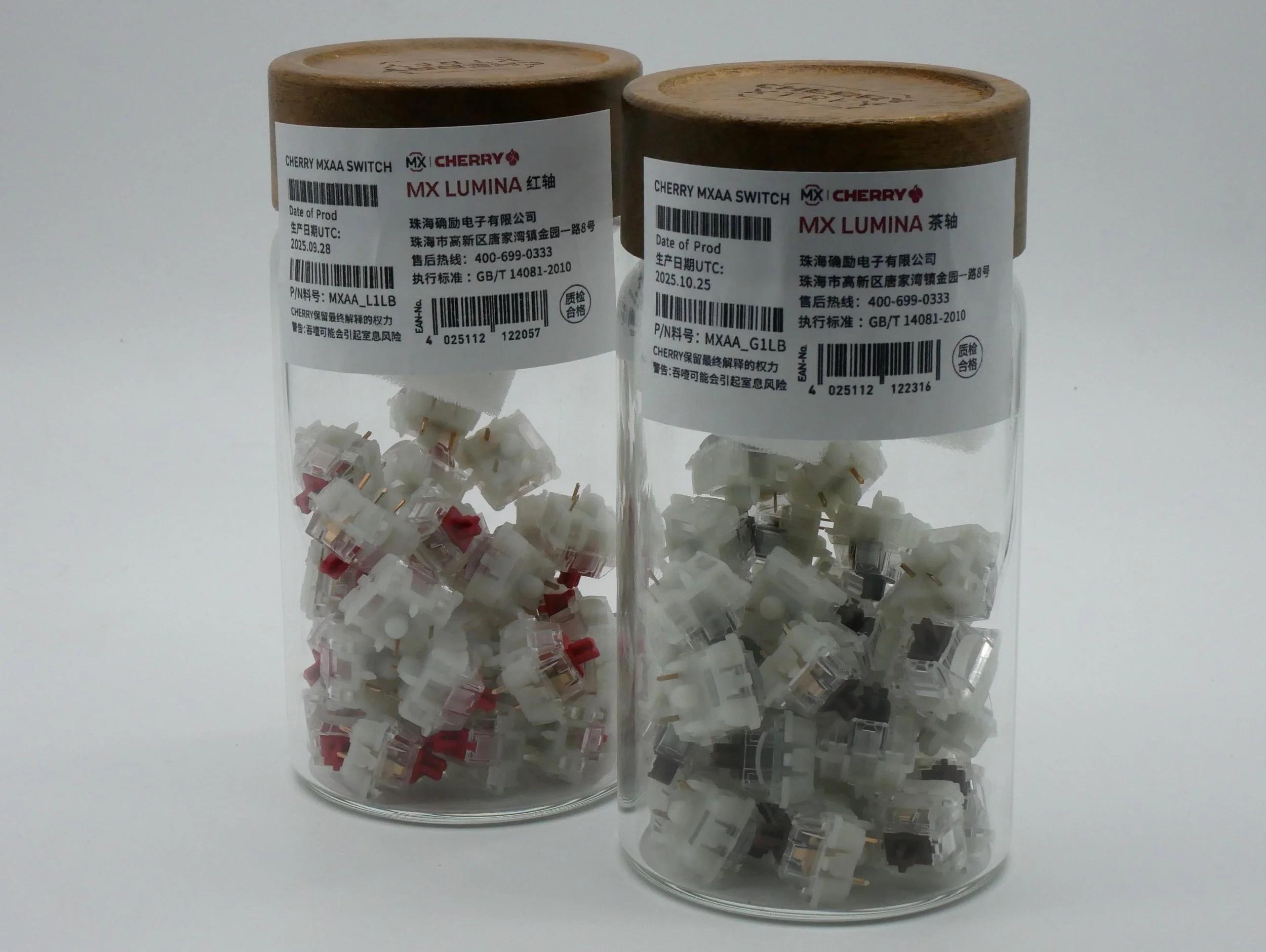
Figure 24: 36-count glass jar packaging received when purchasing Cherry MX Lumina Brown and Red switches as of the time of writing this review.
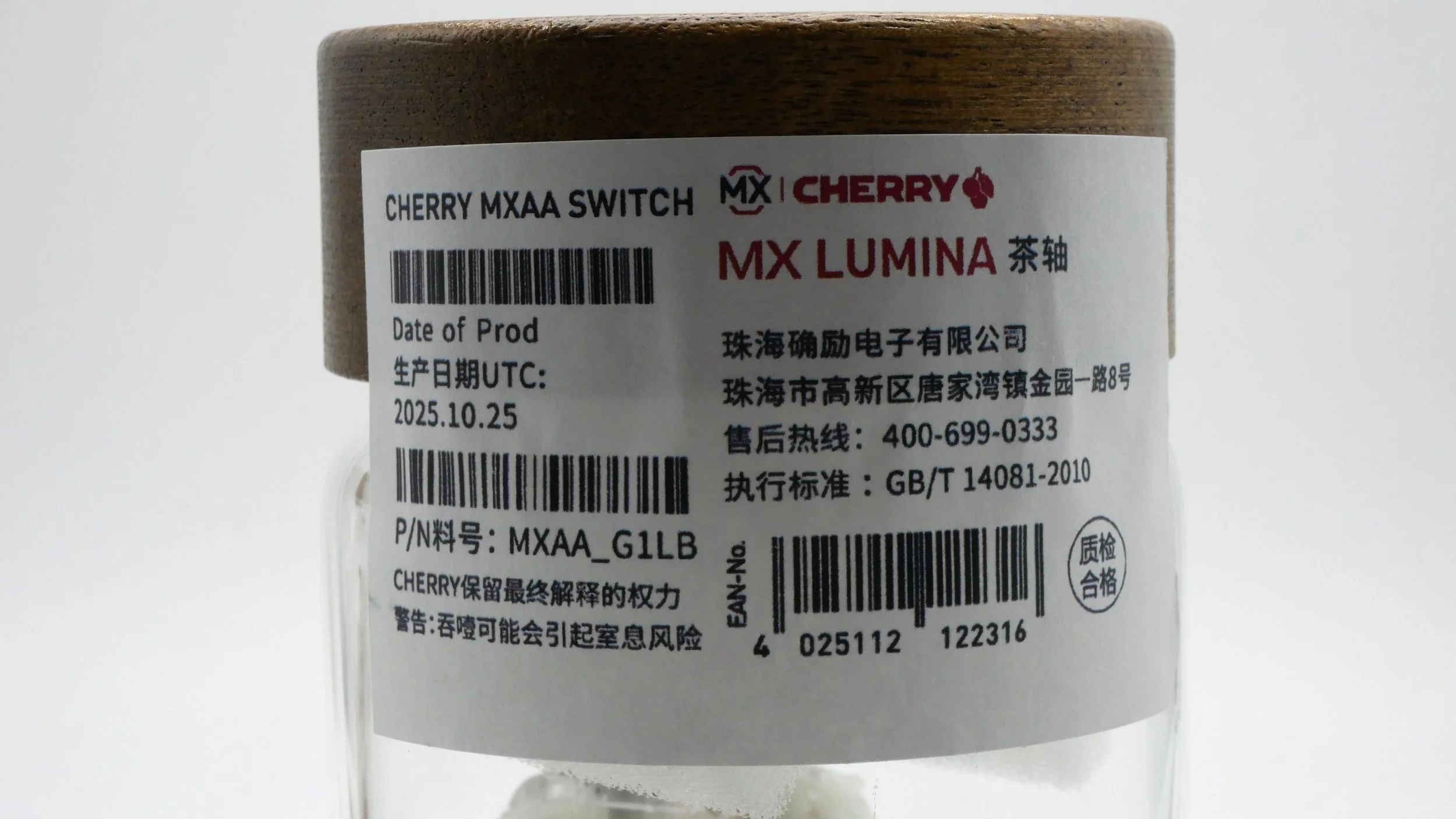
Figure 25: Close up view of the Cherry MX Lumina Brown (MXAA-G1LB) switch packaging label.
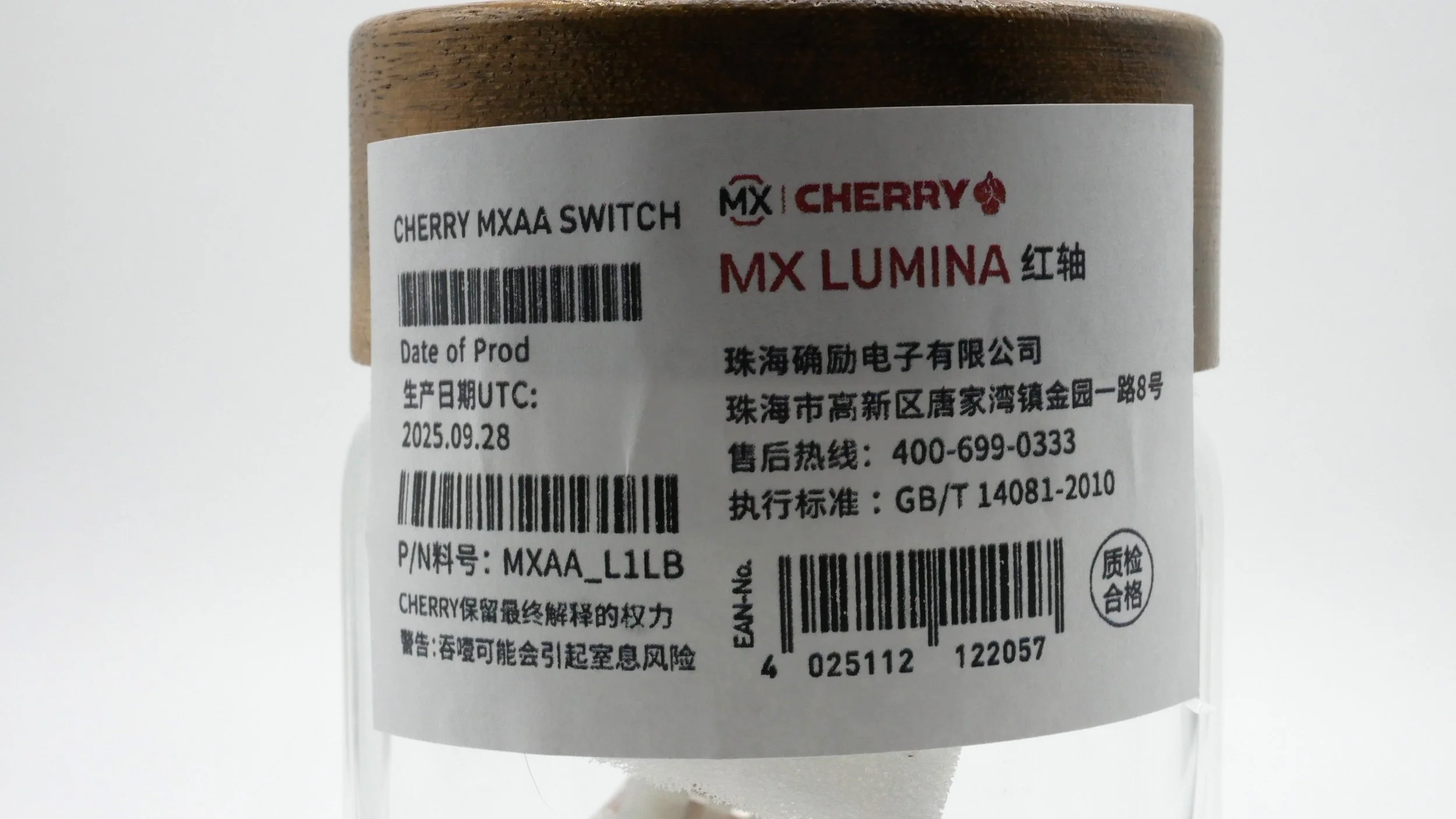
Figure 26: Close up view of the Cherry MX Lumina Red (MXAA-L1LB) switch packaging label.
Comparison Notes to Other Notable Tactile Switches
Note – These are not aimed at being comprehensive comparisons between all factors of these switches as this would simply be too long for this writeup. These are little notes of interest I generated when comparing these switches to the Cherry MX Lumina Brown switches side by side
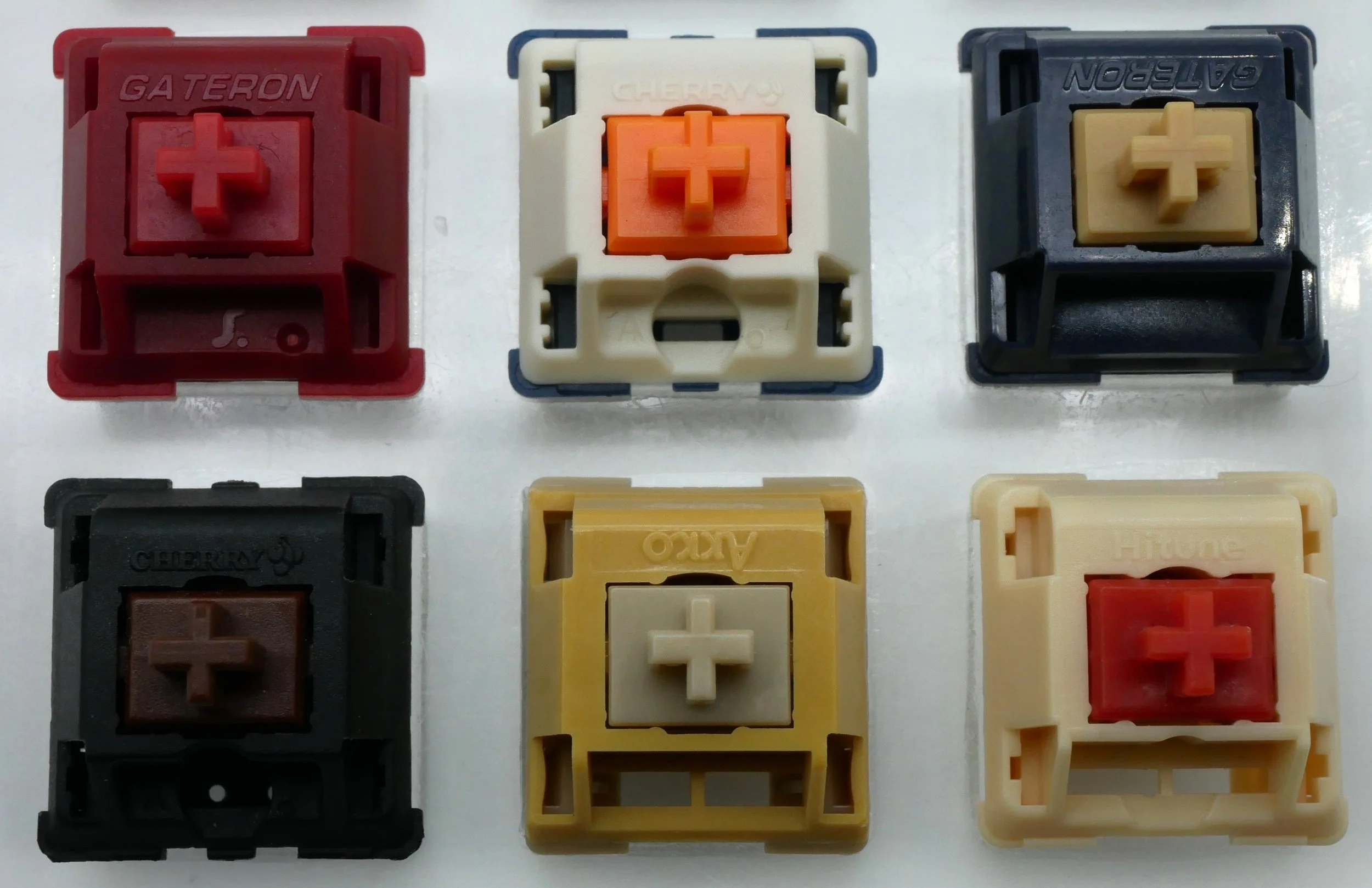
Figure 27: Switches for comparison. (L-R, Top-Bot: Sillyworks x Gateron Type R, Cherry MX Falcon, Gateron Lanes, Cherry MX Brown, Akko Bittersweet, and Wingtree BM11)
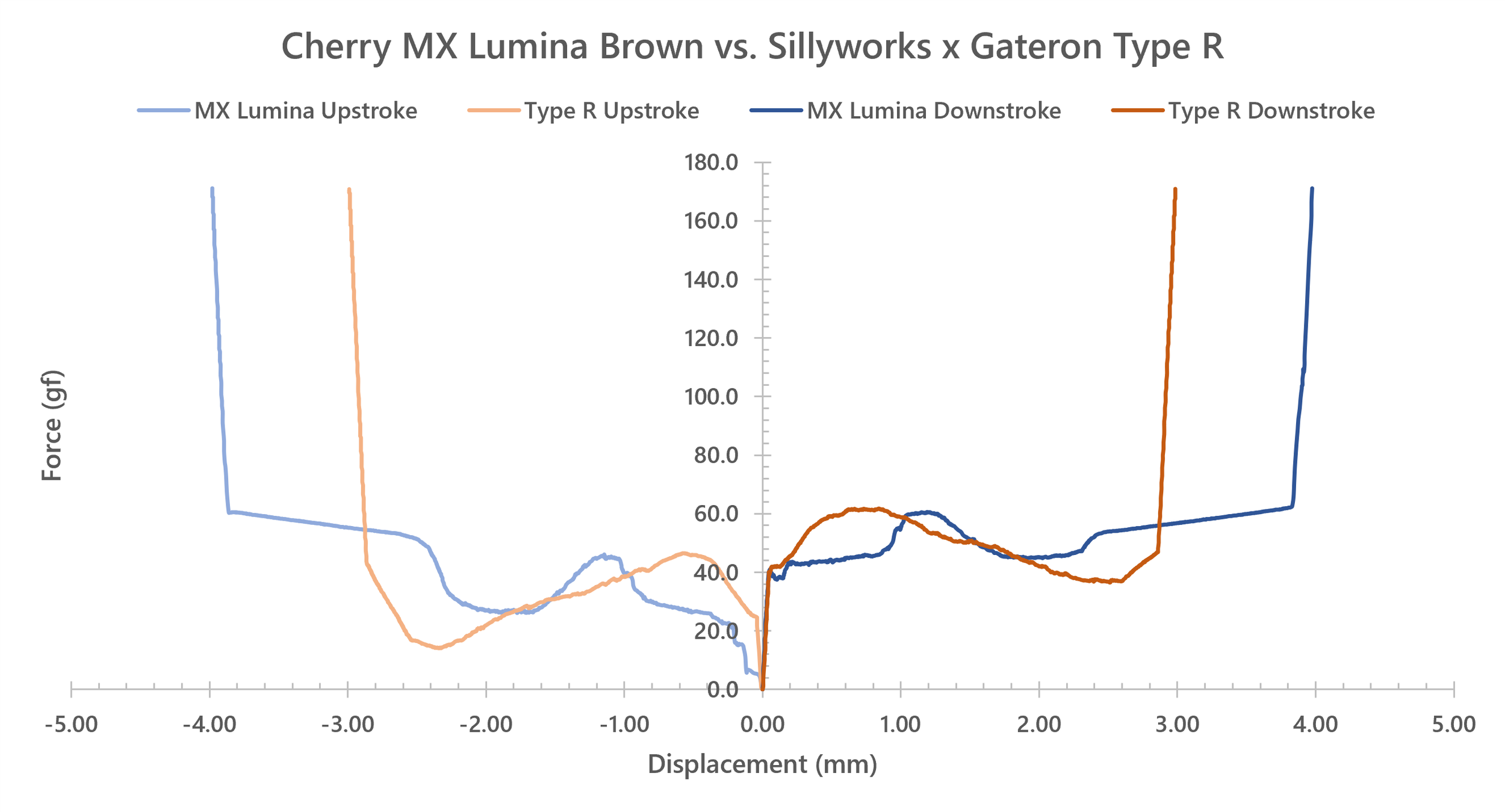
Sillyworks x Gateron Type R
- In terms of sheer price per performance, the Sillyworks x Gateron Type R switches are leagues better than that of the Cherry MX Lumina Brown switches. While they are almost three times as expensive as the Lumina Browns, the Type Rs were very clearly designed with tighter tolerances, manufactured with greater care by Gateron, and more cohesively and precisely deliver a novel typing experience whereas the Lumina Browns don’t even compare amidst other similar switches to them.
- There is significantly less stem wobble in the Type R tactiles than there is in the Cherry MX Lumina Browns.
- With respect to their overall volume, the Type R switches are quite a fair bit louder than the MX Lumina Browns on account of their punchy stem pole bottom out that collides with a firm, direct, and loud hit. The majority of the noise from the Lumina Browns, by comparison, is from the thinner and more plasticky sounding housing collisions.
Cherry MX Falcon
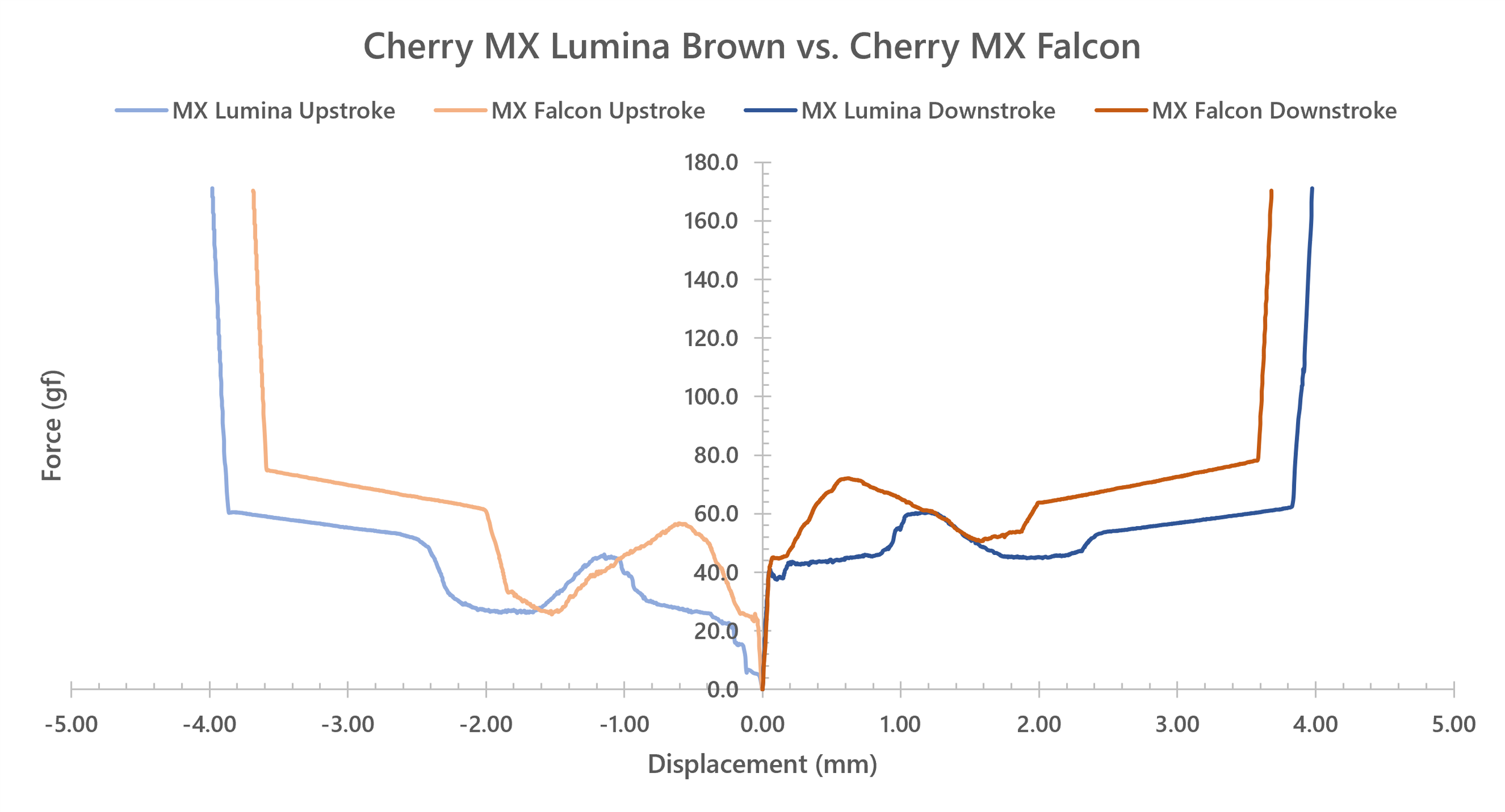
- As an also fairly recently developed tactile switch by Cherry, the MX Falcons just come across more well designed, more well executed, and more true to what Cherry has been producing for switches over the years than the Lumina Browns. What flaws are notable in the MX Falcons, such as scratch or perhaps stickier tones at bottom out are completely forgivable compared to the flaws of the Lumina Browns.
- Yes, even the MX Falcons have a bit less N/S and E/W direction stem wobble than the Cherry MX Lumina Browns.
- With respect to their volume, the MX Falcons are surprisingly quieter than the Lumina Browns despite both having a stronger tactile bump and a stronger bottom out force. Likely due to both significantly better factory lubing and different housing materials, the housing collisions (and tactile bump) of the Falcons are just more muted, bass focused, and quieter than those of the harsh, discordant Lumina Browns.
Gateron Lanes
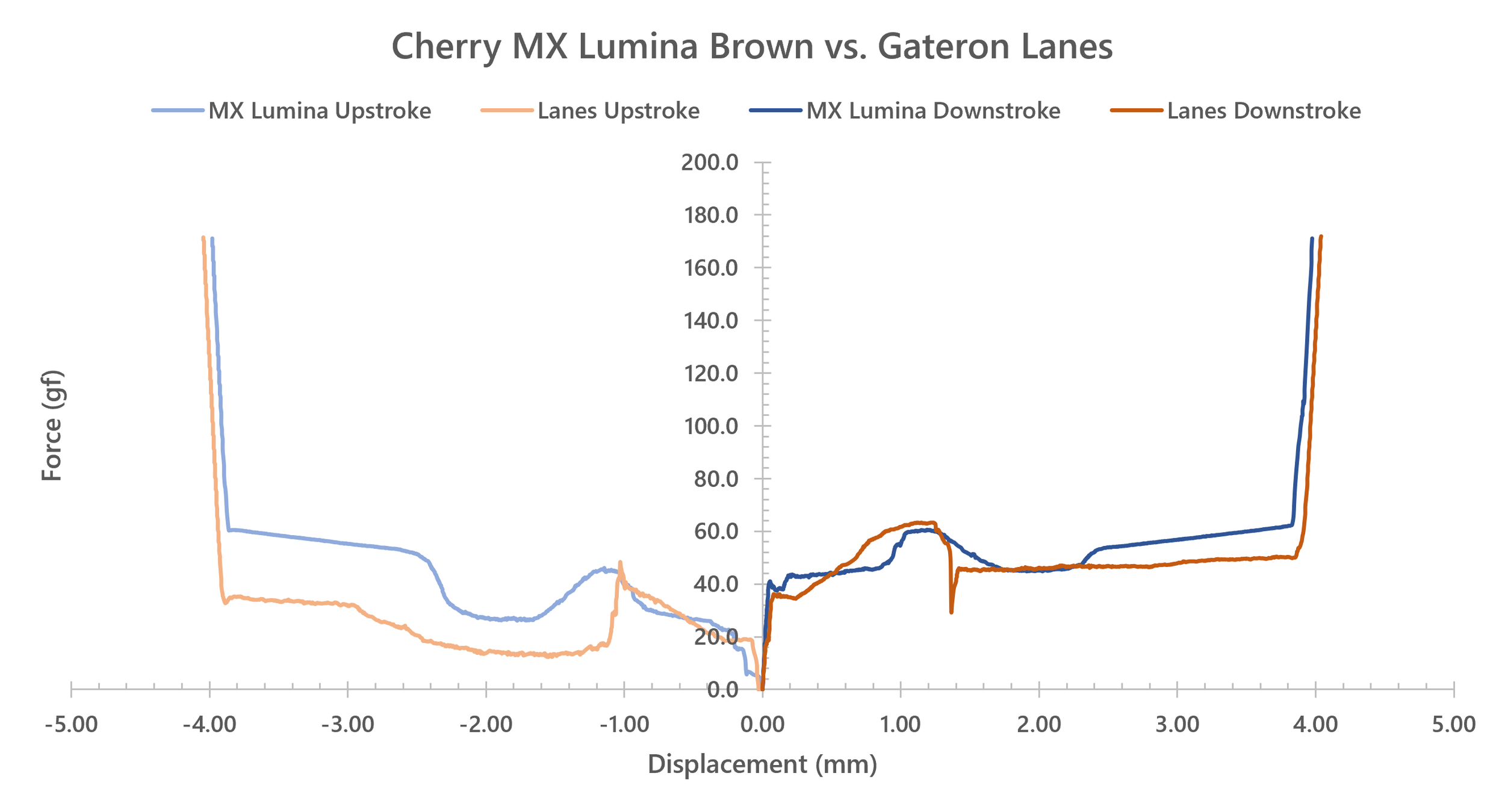
- Looking at both the comparative force curve between these two switches below as well as trying them out in hand, I was a bit shocked to see that the Gateron Lanes and Cherry MX Lumina Browns more or less have a similar tactile bump strength and placement to one another. While the lead up to the bump of the Lanes is a bit more organic and less cliff-like than the Lumina Browns, they do feel under finger as if they peak about the same distance into their downstrokes.
- On account of their tactile leaf, the Gateron Lanes switches are a bit louder than that of the Cherry MX Lumina Browns, though the sound is much cleaner, distinctive, and less chaotic than that of the Lumina Browns.
- There is a fair bit less N/S and E/W direction stem wobble in the Gateron Lanes switches than there is in the Cherry MX Lumina Brown switches.
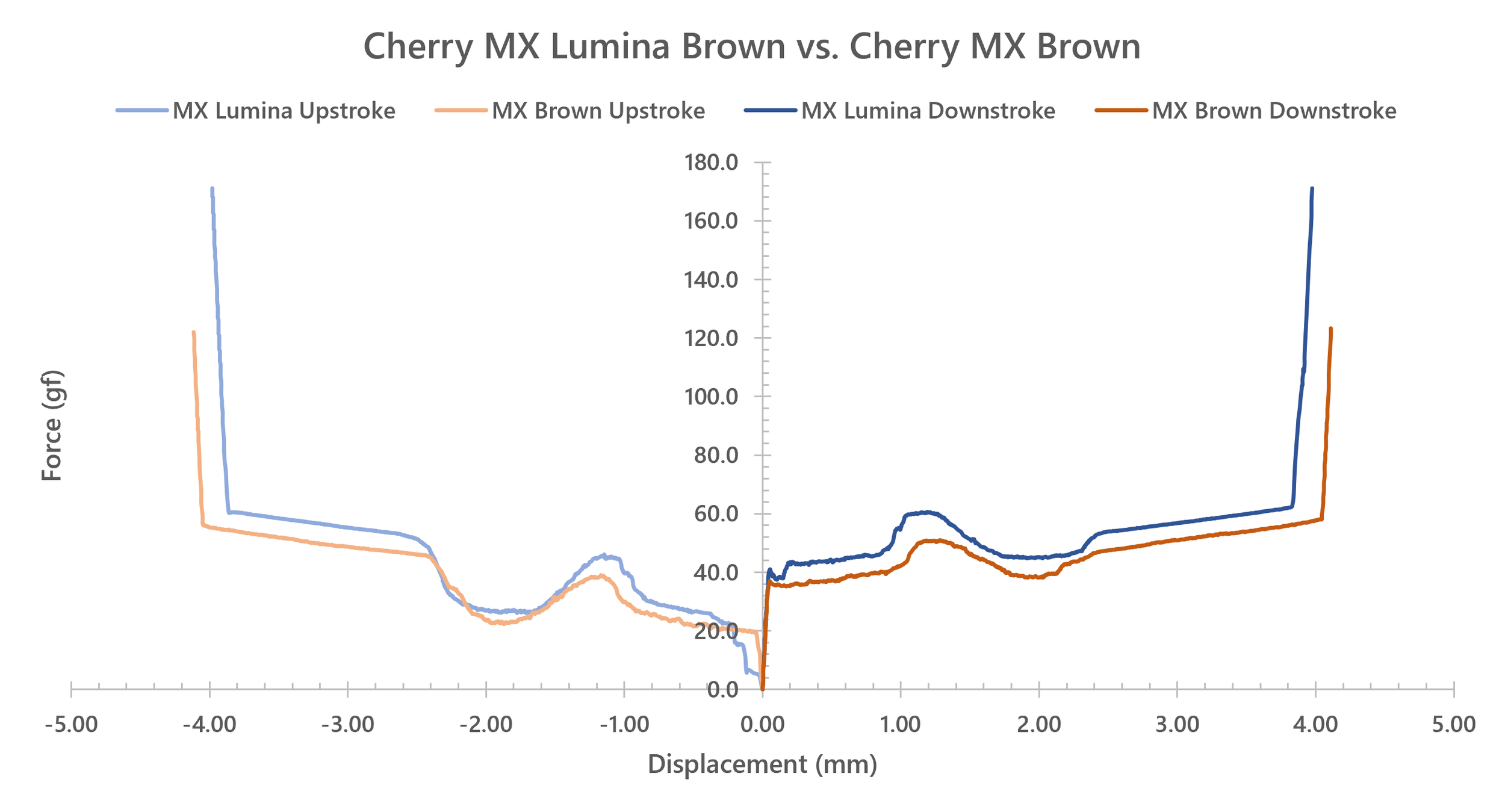
Cherry MX Brown
- While these two switches are somewhat similar to one another in terms of their scratchiness, the differences in housing collision depth and feeling is no more evident than here in a head to head comparison with the original MX Browns. It is very evident here that inferior materials were used by Cherry in the creation of the Lumina Browns.
- Noting for posterity that these specific Cherry MX Browns were received back from when I first joined the hobby around late 2017, the MX Lumina Browns do at least have a tiny bit less N/S and E/W direction stem wobble than the original MX Browns. That certainly isn’t saying much in this day and age, though, with switches having exceedingly little to almost no stem wobble regularly anymore.
- In addition to both feeling deeper, more bass focused, and heavier than the MX Lumina Browns, the original Cherry MX Browns are also quieter, with a sound profile that has scratchiness more forward in its tone. The MX Lumina Browns, by comparison, have a sound profile much more guided by their thinner, more plasticky, and less consistent housing collisions.
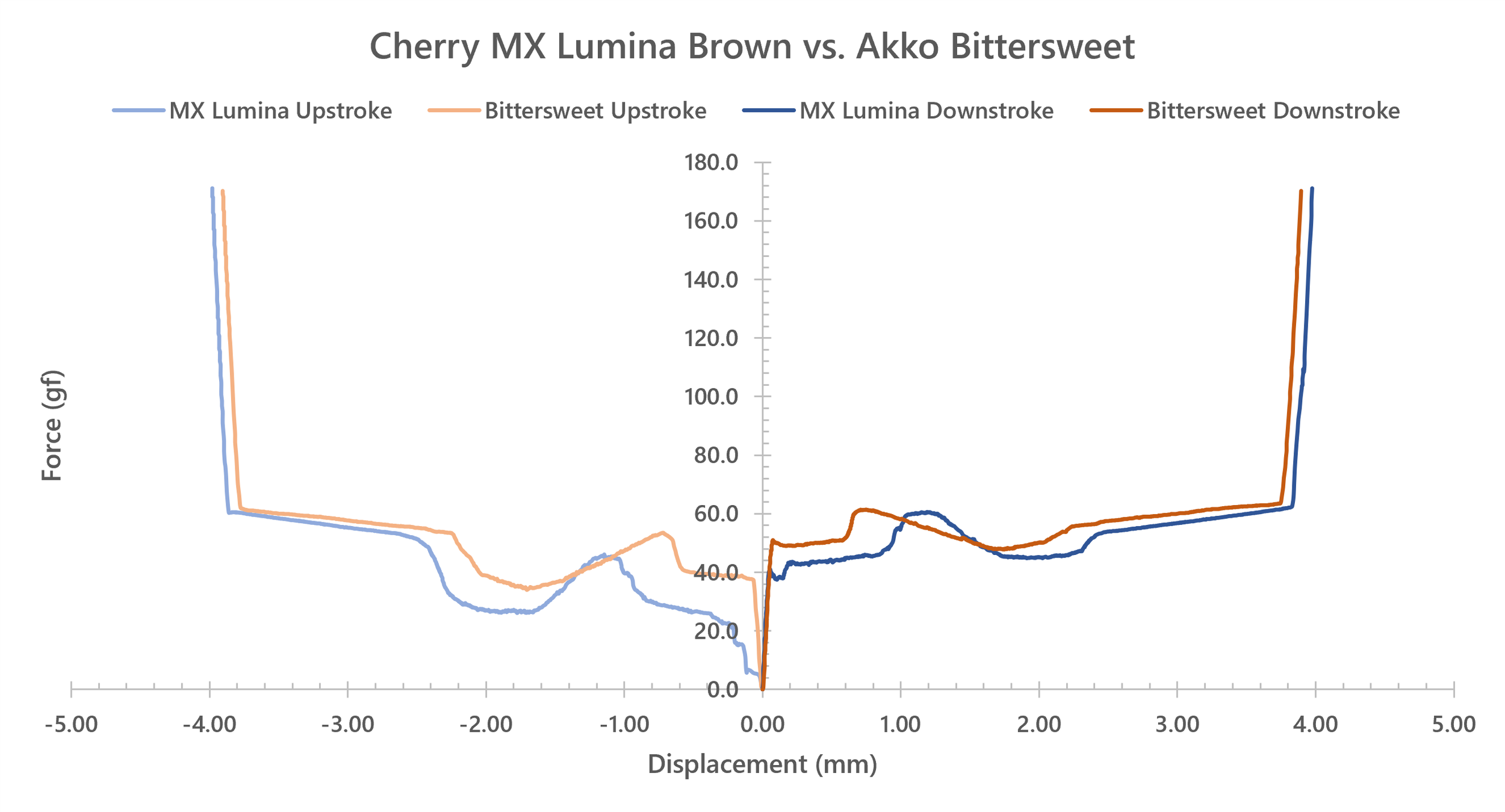
Akko Bittersweet
- In spite of what the comparative force curve between these two switches below would suggest, the Akko Bittersweet switches do feel as if they are a fair bit stronger in peak force than the MX Lumina Browns. I suspect this may have something to do with the difference in their tactile bump onset, with the MX Lumina Browns more slowly unfurling as opposed to the more aggressive acceleration in force at the start of the Bittersweets’ tactile bumps.
- There is quite a bit less N/S and E/W direction stem wobble in the Akko Bittersweet switches than there is in the Cherry MX Lumina Brown switches.
- Much like with the MX Brown and MX Falcon comparisons above, the Bittersweets have a sound profile that is cleaner, more simple, and more bass focused in its tone than that of the Cherry MX Lumina Browns.
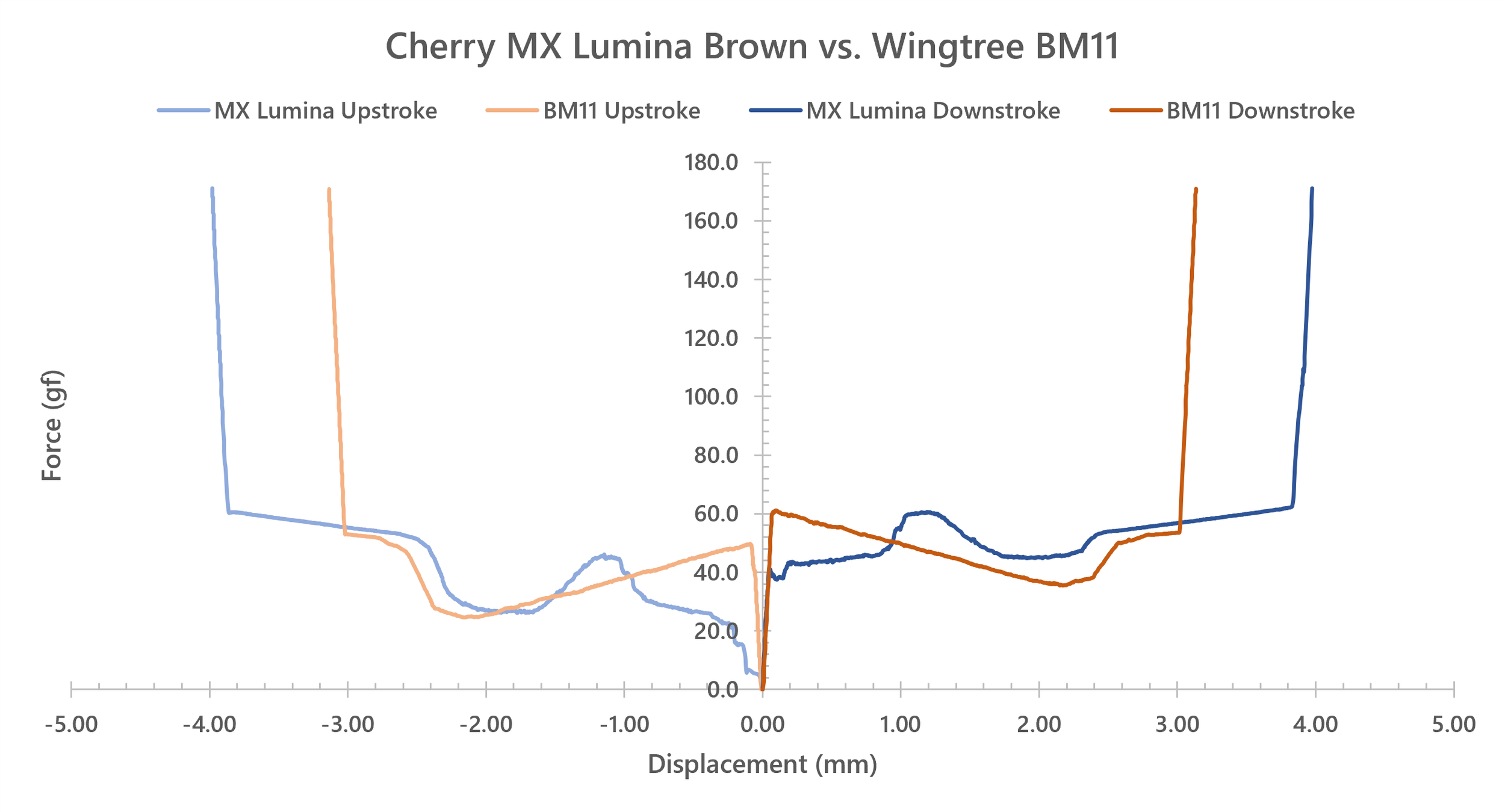
Wingtree BM11
- There is substantially less N/S and E/W direction stem wobble in the Wingtree BM11 switches than the Cherry MX Lumina Browns. The difference is so great, in fact, that these switches might as well be on different planets compared to one another.
- In similar fashion to the Sillyworks x Gateron Type R switches above, the Wingtree BM11s are significantly louder and more forceful on the ears than the Cherry MX Lumina Browns because they bottom out directly and squarely onto their stem poles.
- By similar logic of the differences in ramp up to tactile peak force causing the actual tactile bumps to feel as if they are different strengths, the BM11 switches do feel as if their tactile bump is both stronger and more narrow than that of the softer, wider MX Lumina Brown tactile bumps despite them being quite close to each other in terms of their peak tactile force.
Scores and Statistics
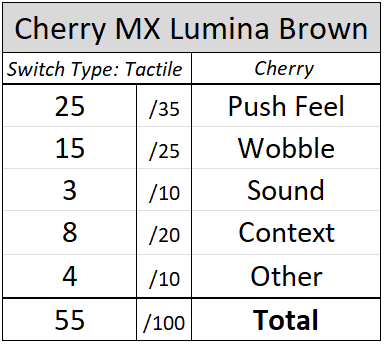
Note – These scores are not necessarily completely indicative of the nuanced review above. If you’ve skipped straight to this section, I can only recommend that you at least glance at the other sections above in order to get a stronger idea of my opinion about these switches.
Push Feel
In spite of carrying an identical mid-stroke, soft tactile bump like all other prior Cherry MX Brown variants, the MX Lumina Browns completely miss clearing the low bar for the archetype. Made with ostensibly thinner, cheaper materials than Cherry’s iconic nylon, these switches have topping and bottom outs that are thin, cheap, and plasticky feeling when consistent, and rarely consistent at that. These feel more like a cheap OEM-style Brown redo from an unknown manufacturer than the next step in Cherry’s iconic line of tactiles.
Wobble
There is a rather substantial amount of stem wobble in both N/S and E/W directions that allow the stems of these switches to nearly be able to be rotated around in the housings. I have not seen stem wobble as significant as this in many switches in the last handful of years.
Sound
While not super heavy on spring ping or leaf ping, these switches have none of the charm of classic Cherry switches that lead them to putting up with the less savory aspects. These switches are scratchy, have thin, cheap, and plasticky sounding bottom outs, and are incredibly inconsistent in tones with respect to all of these features both cross batch and across typing speeds.
Context
Even when priced at $0.27 per switch – a number which is basically ultra budget friendly in the switch world – these switches have questionable value. Combine this with the unusual release style by Cherry, lack of documentation or marketing of any form, and concerns about their future in China, there’s no telling what will become of these switches months down the road.
Other
If these truly are solely the efforts of Cherry, I can respect the attempts to modernize towards more RGB-friendly audiences, but this is a massive step back in switch performance for them.
Statistics
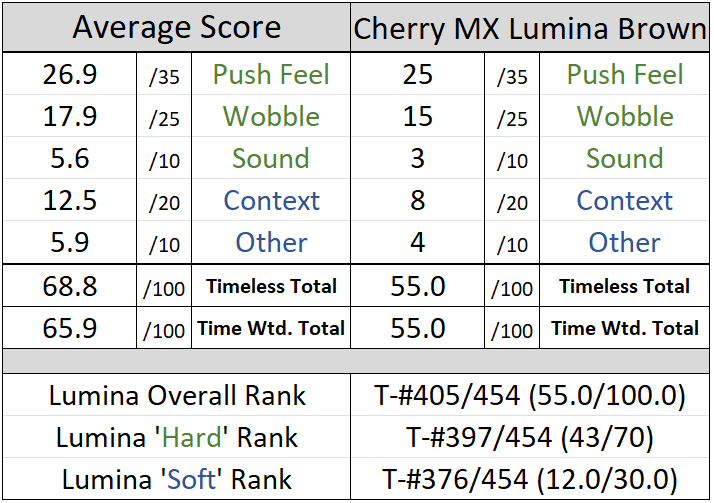
If you are looking at this statistics section and wondering what the heck ‘Timeless’ and ‘Time Weighted’ scoring is, consider checking out my short article titled ‘A Scorecard Time Change’. As a result of scoring becoming a bit anachronistic over the years, switches are now ranked in this statistics table using a “time weighted total” as opposed to their day-of scoring as discussed in that article. If you’d also like to learn about what ‘hard’ versus ‘soft’ ranks refer to specifically, I’d encourage you to head on over to my GitHub linked in the table above or at the links in the top right hand of this website to check out my database of scorecards as well as the ‘Composite Score Sheet’ which has a full listing of the rankings for each and every switch I’ve ranked thus far.
Final Conclusions
Looking back towards the extreme ends of community sentiment regarding Cherry’s move of production to China that I reintroduced towards the top end of this review, perhaps the most staggeringly ‘out-there’ fact written in this review is that somehow both of those opinions ended up being somewhat right at the same time. Taking a page right out of horseshoe theory, the Cherry MX Lumina Browns both appear to be significantly lower in quality than any switch that Cherry has put out from their Auerbach facility in the recent years proceeding this release and they appear to do so while completely losing the things that made Cherry’s MX switches iconic along the way. From one extreme end, the MX Lumina Browns are unarguably worse than any other variant of MX Browns that have been released anytime recently and it’s largely across every single metric too. The Lumina Browns have substantial and frankly unacceptable amounts of stem wobble for a switch made in 2026, a degree of scratch and inconsistent metallic pinging that is multiple steps back from the progress Cherry had been actively making in MX2A releases over recent years, and they even have thin, cheap, and plasticky feeling housing collisions. Thin, cheap, and plasticky housing collisions; On a Cherry-made switch; In 2026. In seemingly not using the same fiberglass included nylon substrate that they had built their MX switches on for decades leading up to this point, they couldn’t even hit the one single metric of housing depth and richness that Cherry’s MX switches were so lauded for over the years. How do you manage to completely miss the mark on one of the performance features that is most core to your product’s identity? Moving into those frustrations only seamlessly jumps the gap in the horseshoe to the other side where the concerns about Cherry losing its identity in moving to China were somewhat validated here too. It’s not even just the fact that the MX Lumina Browns miss the mark that Cherry had been striving to improve in recent years either – it’s in all of the designs of the switches and the extrinsic features surrounding them. It’s the LED diffusers and flipped nameplates, and moreover the lack of literally any information to explain why. There was and still is no marketing, no announcement, no western facing vendors to sell the switches, no documentation other than the stickers on the jars, and just nothing at all. All we got was a middle-of-the-night switch release on TaoBao that was well below Cherry’s historical benchmark in both price and quality. I’m obviously not happy at all with how the MX Lumina Browns performed and I’m not sure I need to atomize that horse any further. However, what is not so obvious to me is what the hell is going on with switches anymore.
Gateron’s trampling of the Oil King legacy to make some silent switches.
Kailh’s design, manufacture, release, and then erasure of the Mix-7s.
Whatever this all is from Cherry with the MX Lumina Browns.
I really hope there’s not more switches for me to review in the coming weeks with equally as questionable performances, metrics, or behaviors from their parent companies. It might actually drive me insane for real this time.
Sponsors/Affiliates
Mechbox UK
- A wonderful UK based operation which sells singles to switches that I’ve used above in my comparisons for collectors and the curious alike. Matt has gone out of his way to help me build out big parts of my collection, and buying something using this link supports him as well as my content!
proto[Typist] Keyboards
- An all-things keyboard vendor based out of the UK, proto[Typist] is a regular stocker of everything from switches to the latest keyboard and keycap groupbuys. While I’ve bought things from the many times in the past, they also are a sponsor of my work and allow me to get some of the great switches I write about!
Divinikey
- Not only do they stock just about everything related to keyboards and switches, but they’re super friendly and ship out pretty quick too. Divinikey has been a huge help to me and my builds over the last year or two of doing reviews and they’ll definitely hook you up. Use code ‘GOAT’ for 5% off your order when you check them out!
ZealPC
- Do they really need any introduction? Zeal and crew kicked off the custom switch scene many years ago with their iconic Zealios switches and the story of switches today couldn’t be told without them. Use code ‘GOAT’ (or click the link above) for 5% off your order when you check them out!
MechMods UK
- A rising vendor based in the UK, Ryan and crew have been a pleasure to work with and have nearly everything you’d need to build your first or fourteenth keyboard. Go build your latest or greatest one right now with them by using code ‘GOAT’ at checkout for a 5% discount!
Dangkeebs
- A longtime supporter of the website and the collection, Dangkeebs has quite possibly the widest variety of switches of any vendor out there. Not only is their switch selection large, but it rotates and is constantly adding new stuff too. You’re going to need 5% off your order with my affiliate to save off the cost of all those switches!
SwitchOddities
- The brainchild of one my most adventurous proxies, SwitchOddities is a place where you can try out all the fancy, strange, and eastern-exclusive switches that I flex on my maildays with. Follow my affiliate code and use code ‘GOAT’ at checkout to save 5% on some of the most interesting switches you’ll ever try!
Cannonkeys
- Does anybody not know of Cannonkeys at this point? One of the largest vendors in North America with keyboards, switches, keycaps, and literally everything you could ever want for a keyboard always in stock and with an incredibly dedicated and loving crew. Follow my affiliate link above in their name to support both them and I when you buy yourself some switches!
Kinetic Labs
- One of the most well-rounded keyboard vendors out there, Christian and crew have been supporters of all my switch and switch-adjacent needs for some years now. I’m honored to have them as an affiliate and think you should check them out using my affiliate link above to support both them and I when you check out their awesome products!
Keebhut
- Want to try out some switch brands that fly under most vendor’s radars? Keebhut is always seeking out that next latest and greatest and has been super helpful in hooking me up with new brands over the past year. They are all about sharing that love as well, and want to give you 5% off your next order with them when you use code ‘GOAT’ at checkout!
Kailh
- No, you’re not mistaken – this is actually that Kailh that manufactures switches. As one of the longest running manufacturers in the hobby, they have a massive variety of switches available over on their website at any point in time. I’m lucky to be affiliated with them now, and so consider using my affiliate link above when ordering some Kailh switches to support me!
Keebz N Cables
- Australia and Oceania’s very own is now a part of the sponsor list here and I couldn’t be happier to add this long time supporter of the collection to it. They’ve always got an amazing selection of switches (and other keyboard parts) in stock and they want to share the love that they’ve shown me with you all too! Use code ‘thegoat’ for 5% off your first order when you visit!
Further Reading
Random Sohu article on the Cherry MX Lumina Release