As was rather vaguely teased in the background section of my very recent Cherry MX Emerald Reef Switch Review, the C-Lab team at Cherry also sent me some other peculiar switches alongside of the MX Emerald Reefs. (The switches here being the peculiar ones, for the record, not the MX Emerald Reefs.) While this would immediately lead at least one of you to assume that this was done in an attempt to grease me up for a positive review of the MX Emerald Reefs, this was stated by the C-Lab team as explicitly being done in support of my collection and documentation efforts that I’ve kept up with over the years. Like all other things they’ve sent me, they rendered no obligation of me to say anything about them. In fact, I’ll go as far as to say that they actually asked me to not speak on a couple of those goodies that were sent my way as they could still be in the design phase, so it definitely wasn’t an attempt at free advertising either. So why am I going over this all here and not at the start of the MX Emerald Reef review? Well, this is not the first time that I’ve received rather notable prototypes and oddities from manufacturers before – with Gateron’s KS-1 and KS-3 prototypes being among comparable examples to these – though at the time I received them I didn’t actually have ‘Shorts’ to display that kind of information, leaving them residing disjointedly at the front of the Kinetic Labs Husky Switch Review. Even without a super large amount of context to share about each of these switches, I still find that compiling what little photos and documentation I can of these odds and ends to be incredibly important and so that is why I’m doing such here. Furthermore, I want to emphasize why I’ve always been specifically interested in switch prototypes as well because I think it also speaks to the reasons to document them; Prototypes provide an invaluable look into the design process of manufacturers and highlights the otherwise unseen thoughts, plans, and attempts that directly influenced the final product of switches that we’ve enjoyed over the years. So without much more to preface, let’s get into all of the incredible switches that were sent my way.
Cherry MX ‘Multipoint’ Switches
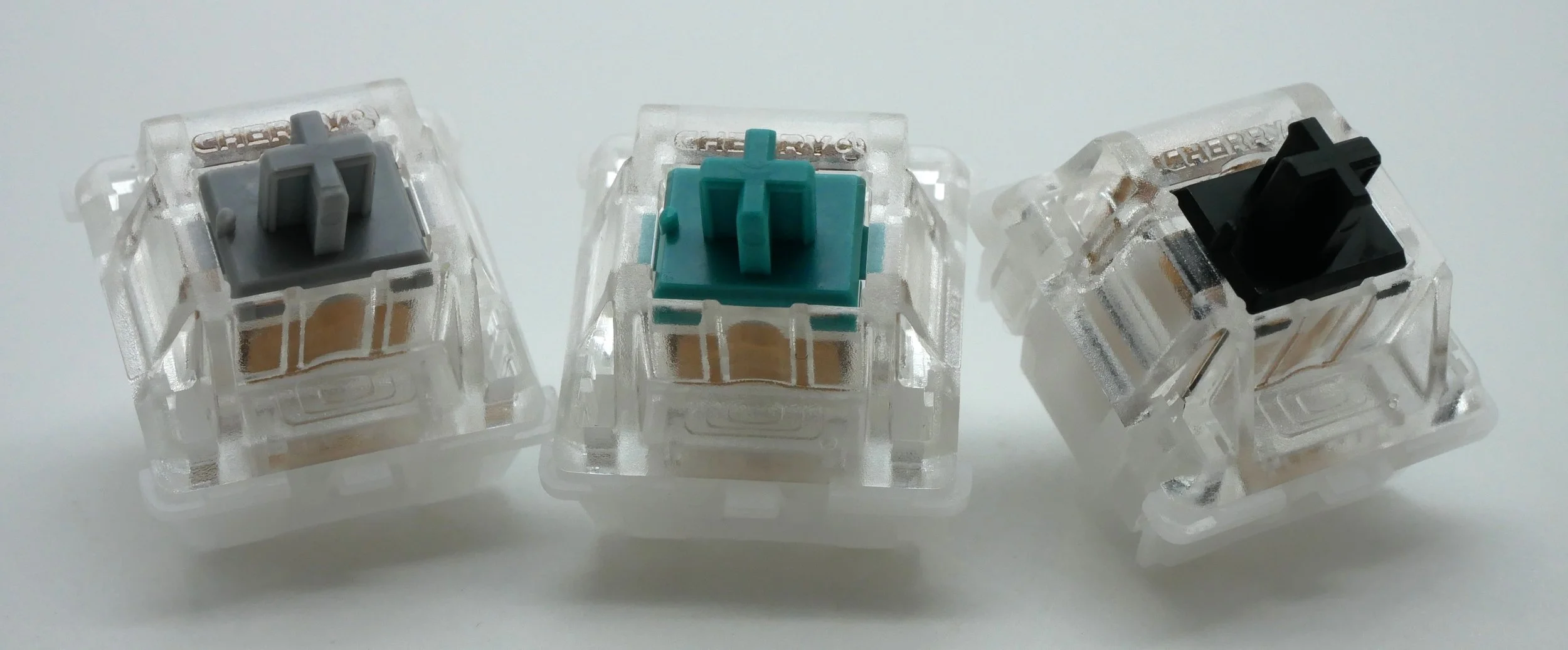
Figure 1: Cherry MX Multipoint Silver, Cyan, and Black.
Okay, okay – I know that these switches are not prototypes, but that is why I put ‘Miscellany’ in the title of this Short. First displayed by Cherry all the way back in Computex 2024 for a 2025 release, the Cherry MX ‘Multipoint’ series of switches are Cherry’s entrance into the analogue induction switch market and are currently being sold to large OEMs like Ducky and Varmilo. (These should not be confused with the inductive ‘IK’ switches which are still currently in development and aimed at large scale, non-gaming OEMs as per reports from Computex 2025.) What is displayed in the photo above is the full trio of MX Multipoint switches that Cherry has released as of the time of writing this short, with a lightly weighted Silver switch (MX1D-51NA), a heavily weighted Black one (MX1D-11NA), and a medium-weight Cyan with a progressive spring in it (MX1D-P1NA). As can also be seen in that photo, the logo-branded, copper-colored ‘box’ inside of these switches is what directly actuates the inductive mechanism, reported in marketing to “distribute the electromagnetic field created by the coil on the PCB” to determine how far down the stem has been pressed. Thankfully, as Cherry has previously sent me one of the Multipoint Silvers for my collection nestled inside of Walter’s head as shown in my original Cherry MX Northern Lights Switch Review, I’m fully able to open these up and show each of the parts of these switches below. (As a general rule of thumb as we move further into this short, I generally do not open one-off samples of switches for my collection to prevent instances of damaging or losing switch parts as well as preserving factory lube, if at all present.)
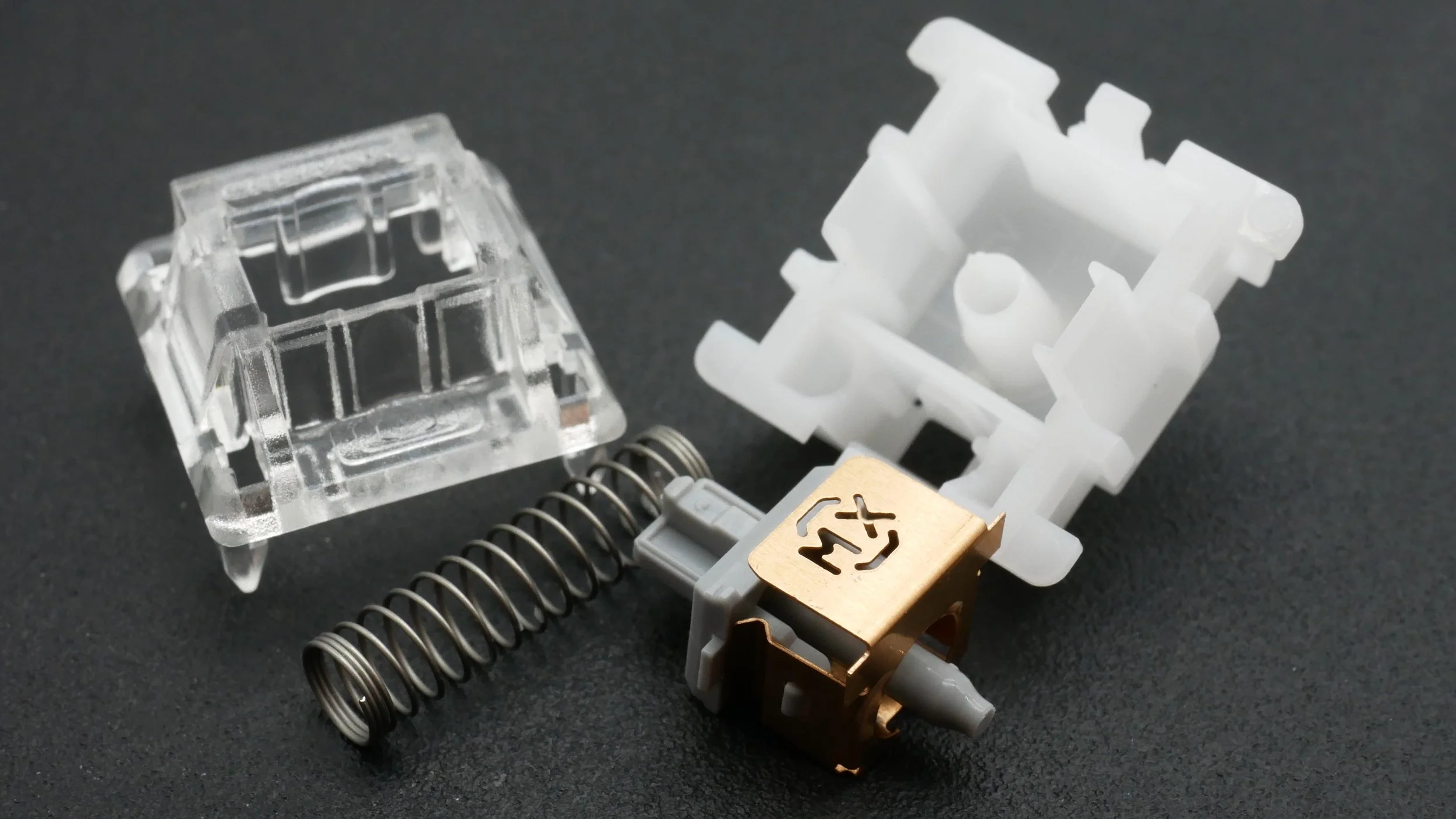
Figure 2: Cherry MX Multipoint Silver switch and its components.
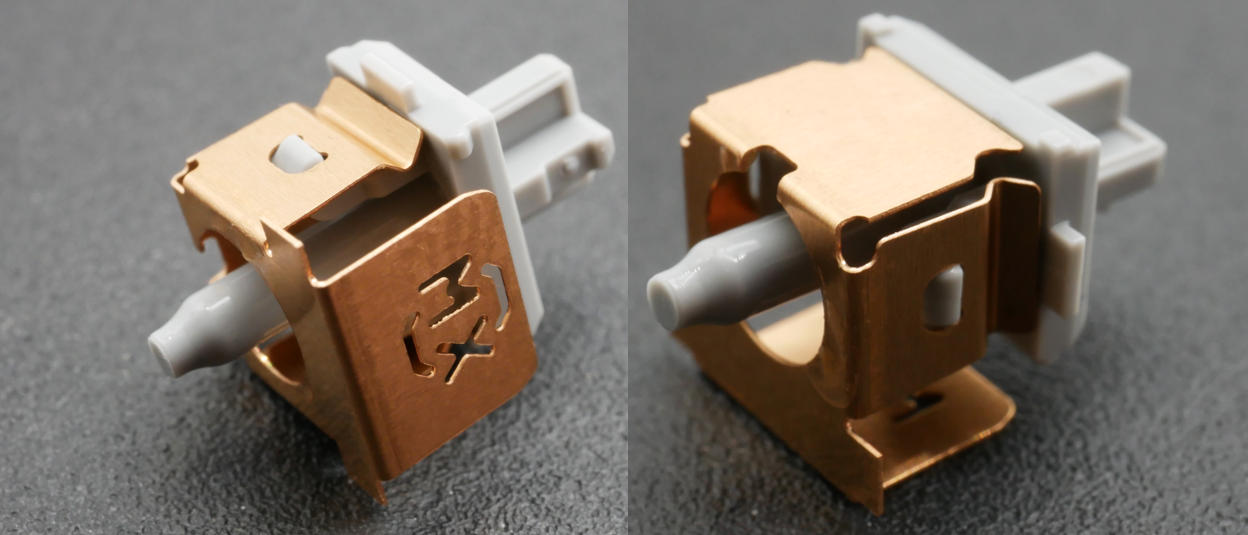
Figure 3: Cherry MX Multipoint Silver stems front and back. Note that the silver portion of the stem is similarly shaped to an MX Blue stem without the click jackets but the metal induction cube attached to such.
Cherry MX ‘ULP’ Switches
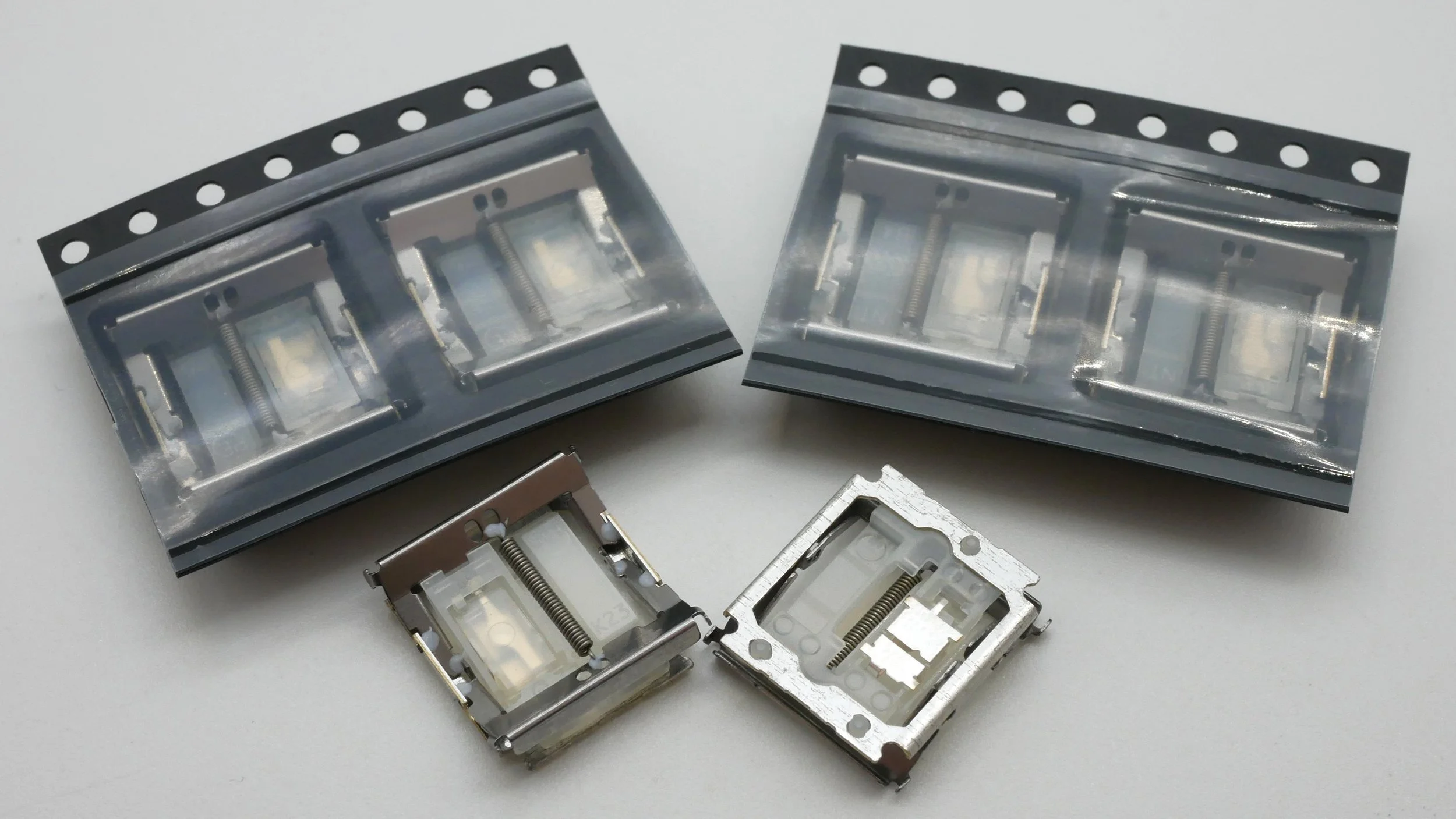
Figure 4: Cherry MX 'ULP' tactiles loose and in the bandolier style packaging they come off of the production line in.
Following up on the miscellaneous, not-quite-prototypes end of this article are the Cherry MX Ultra Low Profile ‘ULP’ switches. Described as “not dissimilar to the MX Brown” by Cherry’s sales page for them, these switches are explicitly designed for extremely low profile keyboards such as those found on laptop keyboards and even a rare few custom mechanical keyboard kits, such as a Corne-shaped version designed by Ben from Mechboards UK at 8.5 mm in total height. However, I do feel inclined to share that the photo isn’t necessarily entirely indicative of the ULP tactiles that you can currently buy from Cherry in packs of 36, though, and straddle the line between miscellany and prototypes in being an unreleased, part number-less 48g variant. These are only unreleased to date by Cherry due to a rather large MOQ being required to purchase the specific springs required for this variant and are likely to remain as such until a large enough company comes around with interest. It should also be noted that these actually add onto a pair of Cherry ULP switches that I received from Cherry a couple of years back and can be seen in last year’s switch family photo. Packaged in the same bandoliers that they rolled off of the production lines with, I have both a set of MX6C-T3NB tactiles and (otherwise unlisted) MX6C-K3NB clickies. Much like with the MX Multipoint Silver above, the C-Lab team’s generous donation of such allows me to break them out of the production packaging for a closer look that I do not believe has been done yet!
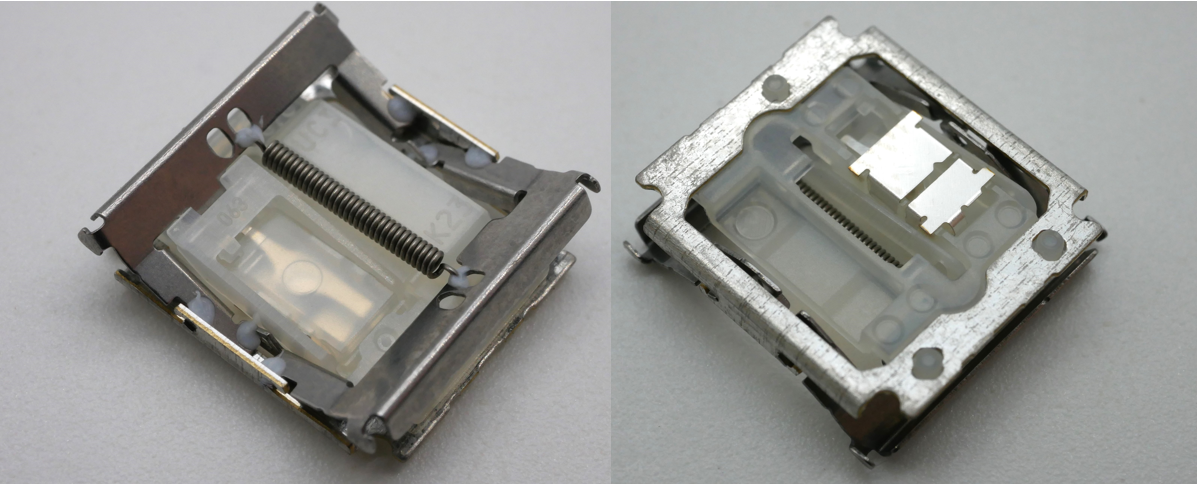
Figure 5: Up close front and back sides of the Cherry MX ULP tactiles. Note the multiple points of factory lubing as well as the butterfly-like mechanism. Rather than pressing on the clear parts, the silver portions are pushed down by the edges of the keycaps.
Cherry MX der_cyberpunk Pink
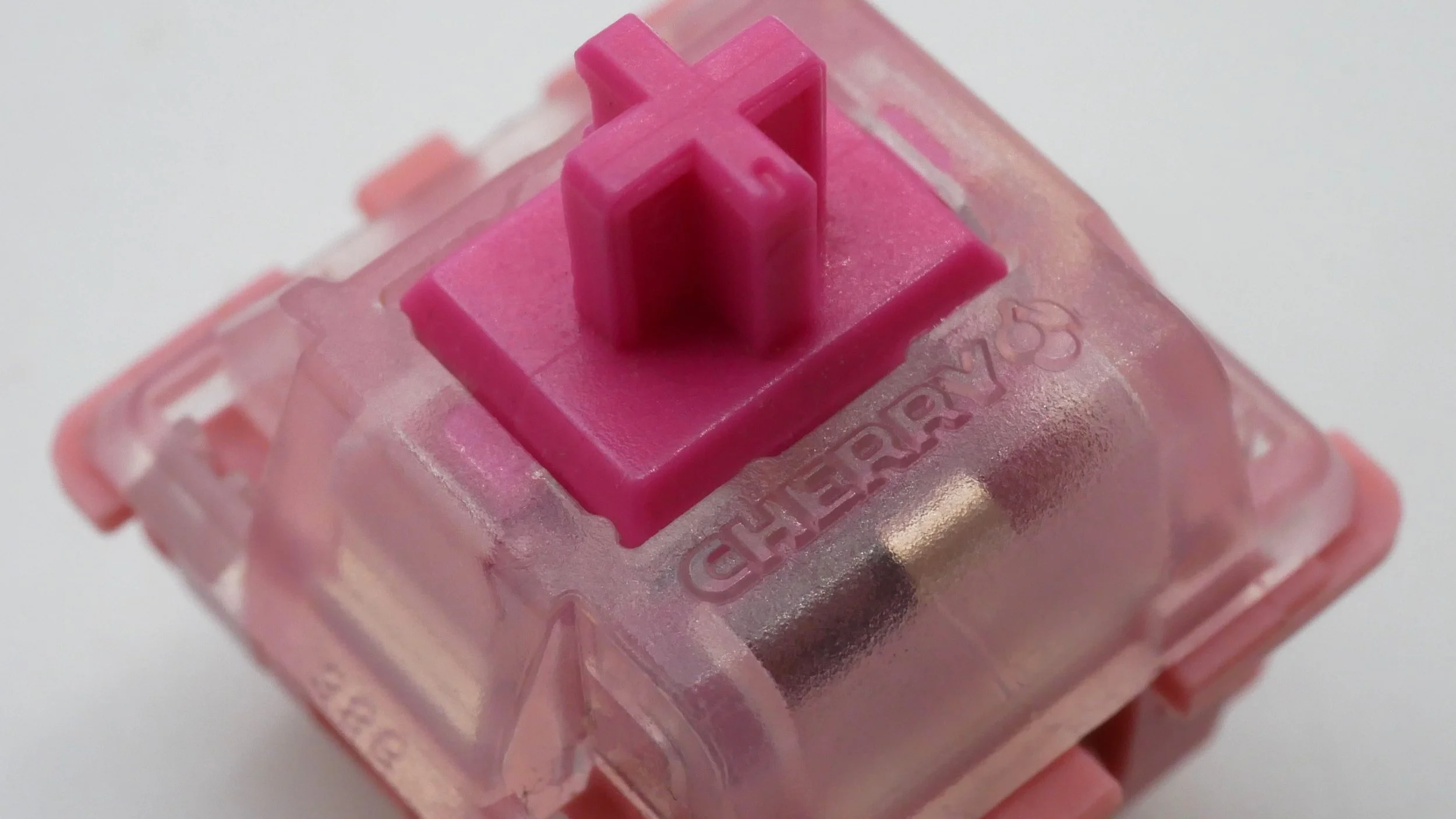
Figure 6: Cherry MX der_cyberpunk Pink switch.
Slowly inching closer to ‘prototype’ than ‘miscellany’, the lone pink colored switch above is particularly interesting as they are not actually a prototype, though can effectively be considered as such for every single person in the world, except for one streamer from Germany partnered with Cherry XTRFY – der_cyberpunk. What I’m personally referring to as the ‘Cherry MX der_cyberpunk Pink’ switches are lightweight, ~45 gf linear switches with a fairly standard stem travel around 4.00 mm and effectively just feel like quite well lubed linears from Cherry. Without much further background on these provided by the C-Lab team, a complete set were designed only for the construction of a 1-of-1 XTRFY MX 8.3 keyboard that they built specifically for der_cyberpunk. I unfortunately was not able to readily find this keyboard in any of his Twitch streams as he does a lot of gaming without a top down desk view, though posts on his social media and Cherry XTRFY’s suggest that this board makes trips with him to conventions like Mechanicon and COMPUTEX to share with the community when he attends. As a final note for the particular among you, the C-Lab team has confirmed that these never received an official part number and thus make them perhaps the only Cherry MX switches to have been produced and placed into a prebuilt keyboard without part numbers outside of their factory!
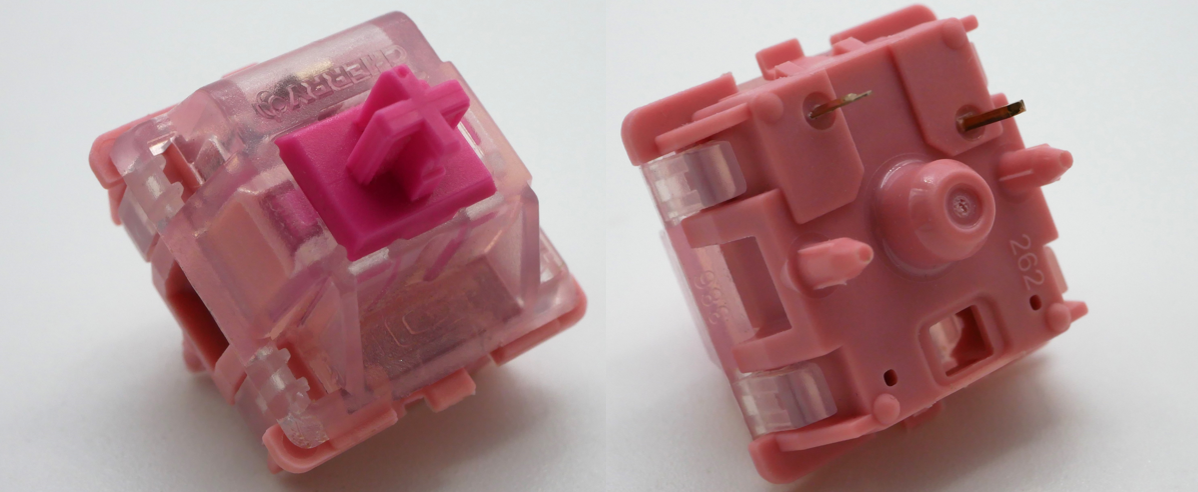
Figure 7: Front and back sides of the Cherry MX der_cyberpunk Pink linears.
Cherry MX Red Housing Prototypes
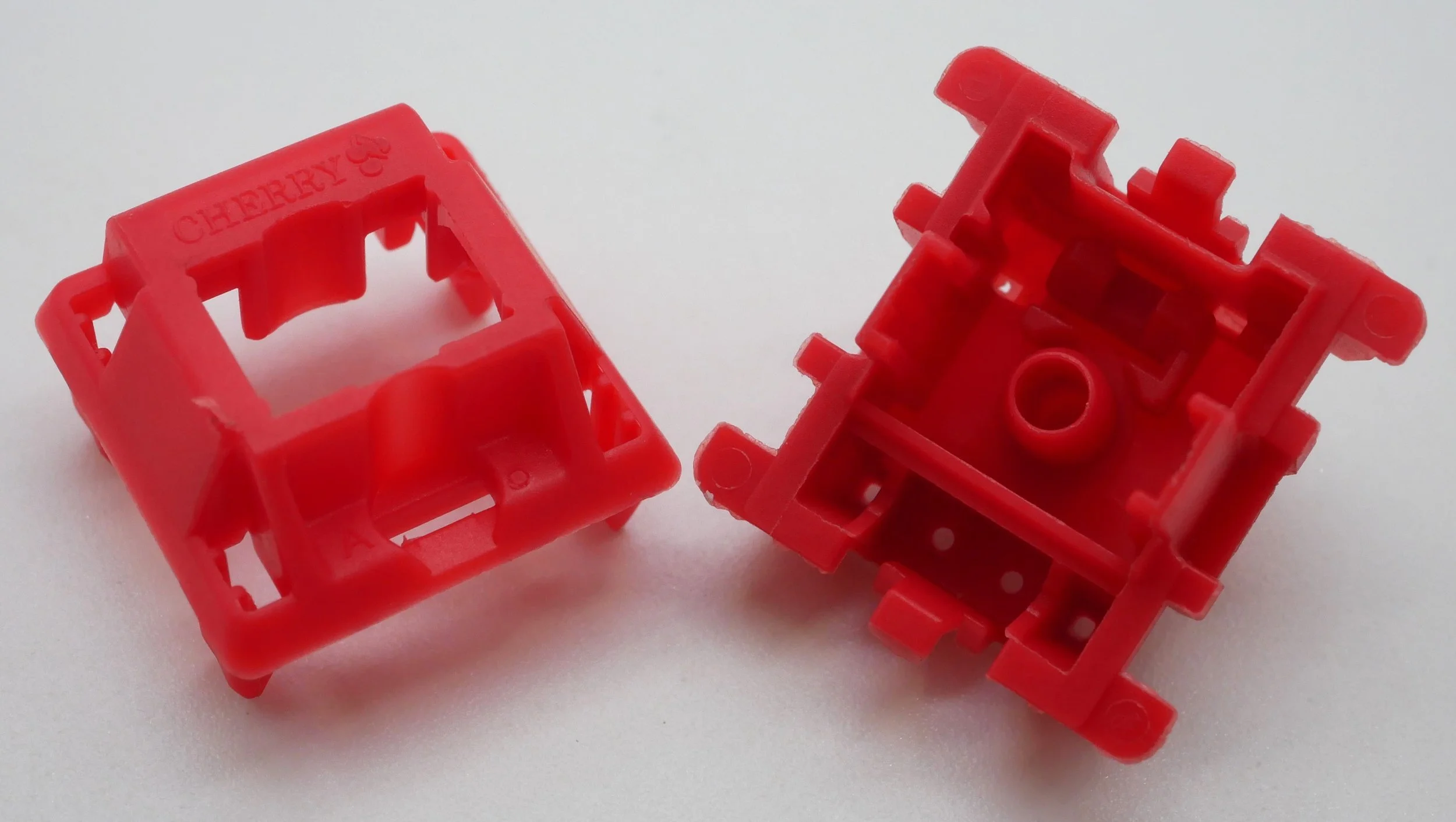
Figure 8: Classic Cherry prototype housings in bright, cherry red coloring.
Finally, some prototypes! Having shared the existence of these switches a couple of years ago in my fairly popular article ’25 Switch Details You May Not Know’, quite a few of you will recognize the above housings as the true, quintessential prototypes of Cherry’s history. While the true historical span of these bright housings from within Cherry is unknown, these housings have rarely showed up in the custom oriented community at large over the years, with them being seen in two other Cherry collectors’ collections that predate me starting this website as well as in a Cherry 2021 Easter celebratory Twitter post wherein they showed off a whole range of ‘complete’ switch prototypes with stems and all in an Easter basket. Shot in bright cherry red plastic, these housings shown above have three different details of note of increasing magnitude to me as a collector. First and foremost, the classic ‘Cherry’ nameplate is present on these housings, signifying that they’ve likely been used for prototype production for many, many years. Secondly, this is only the second bottom housing prototype that has been seen in the hands of a custom keyboard community member, with the vast majority of existing prototypes out there being top housings only. Finally, this very specific set was described by the C-Lab team as being “one of the last two housing sets from the red Hirose prototypes we had here in Auerbach”…

Figure 9: Cherry's 2021 Easter celebratory Twitter post showing full switch prototypes.
Now it’s time for some really magical switches…
‘Elephant Trunk’ Housing Prototype
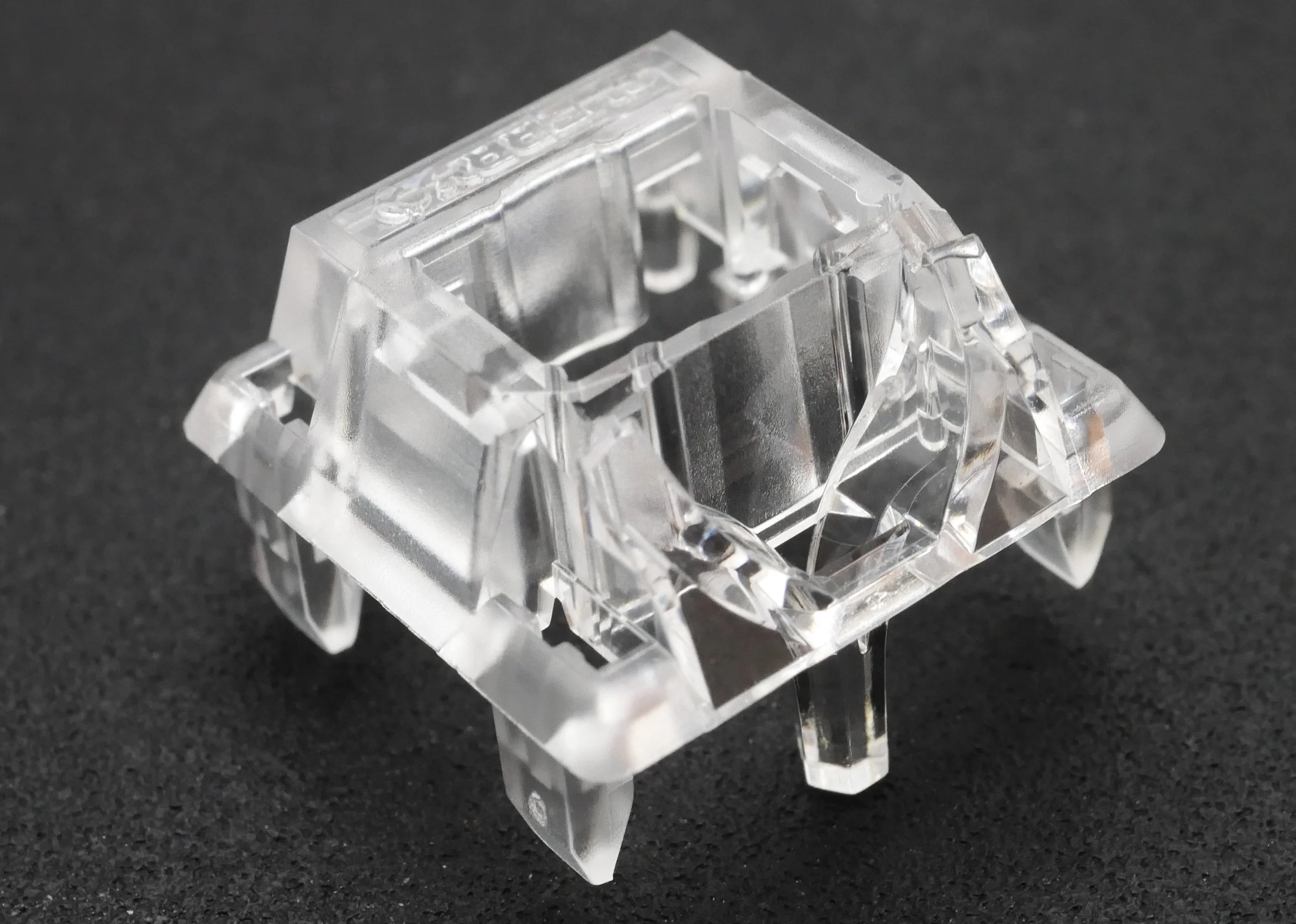
Figure 10: Cherry MX 'Elephant Trunk' top housing prototype with integrated LED diffuser.
Yes, you can completely throw what I said above about Cherry top housing prototypes being shot in Cherry red colored plastic out of the window as these are, in fact, Cherry-made clear prototype top housings. However, these are of a much more modern era – the Illuma/Lumina platform I just talked about in the Cherry MX Emerald Reef Switch Review the weekend before this one. Having found success in the MX2A platform top housings which featured closed off LED/diode slots with a raised, tiered area for diffusing light from underneath the switch, Cherry wanted to continue this built-in diffuser look into the new Illuma/Lumina platform that they were developing, but with a twist. This in turn led to what you see above – the very first prototype housings of the then newly designed Cherry MX Illuma/Lumina platform. Affectionately nicknamed the ‘Elephant Trunk’ housing by Cherry’s R&D team, this housing featured a pair of highly sloped edges that connected to the bottom in the form of a single light pipe that actually extended through the housing to touch right above where the LED would diffuse. Notably, this is the first time I recall having ever seen an MX style switch feature any part of the top housing extend so far down as to protrude out of the underside of the bottom housings. Ultimately, though, this was idea was tabled in favor of the LED diffusing wedges seen in my Cherry MX Lumina Brown Switch Review on account of this integrated diffuser style severely restricting the plastics that they could use to create such as well as requiring entirely new assembly machines.
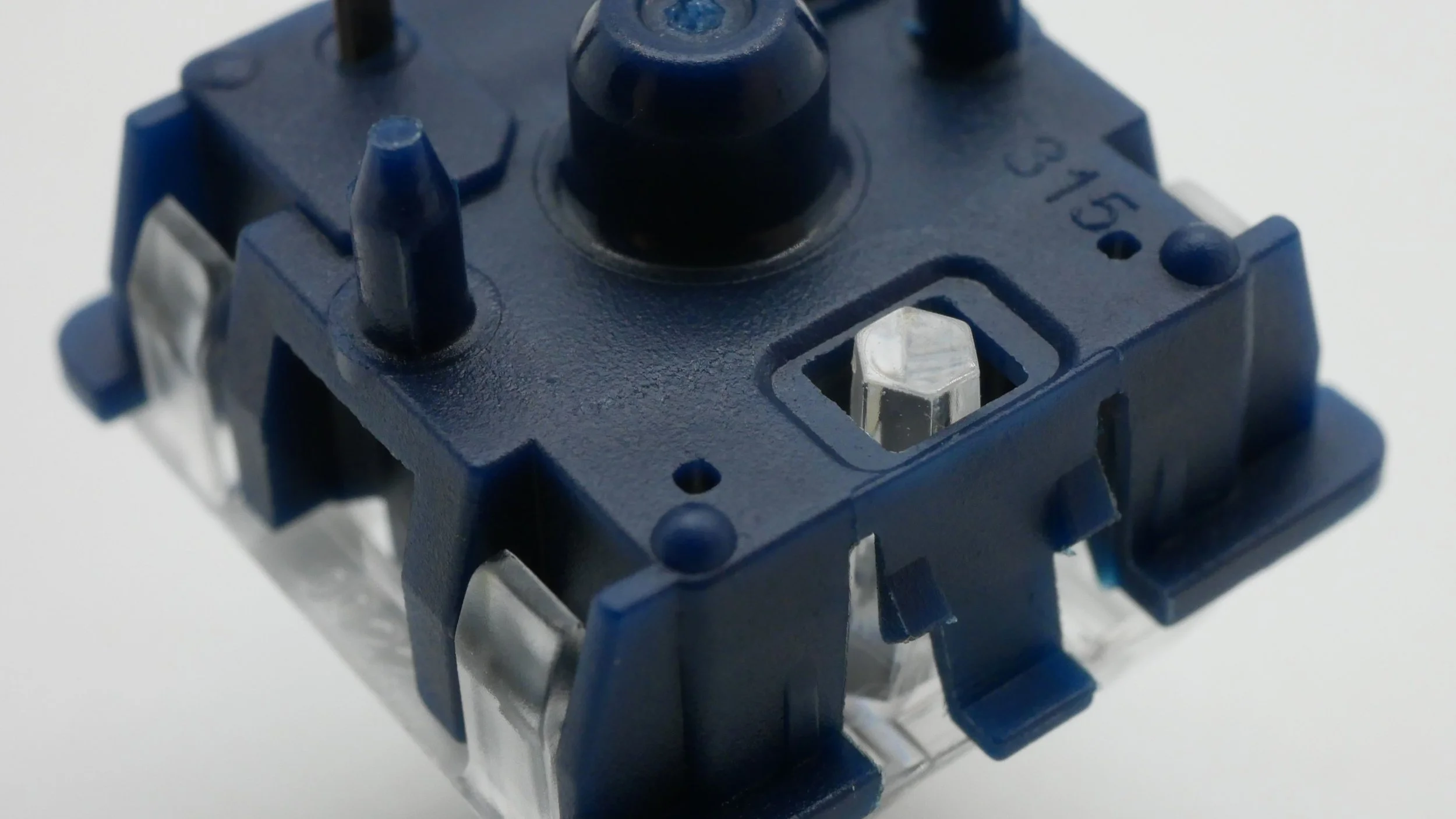
Figure 11: Underside of Cherry switch with 'Elephant Trunk' housing installed with the integrated diffuser reaching flush with the bottom of the housings.
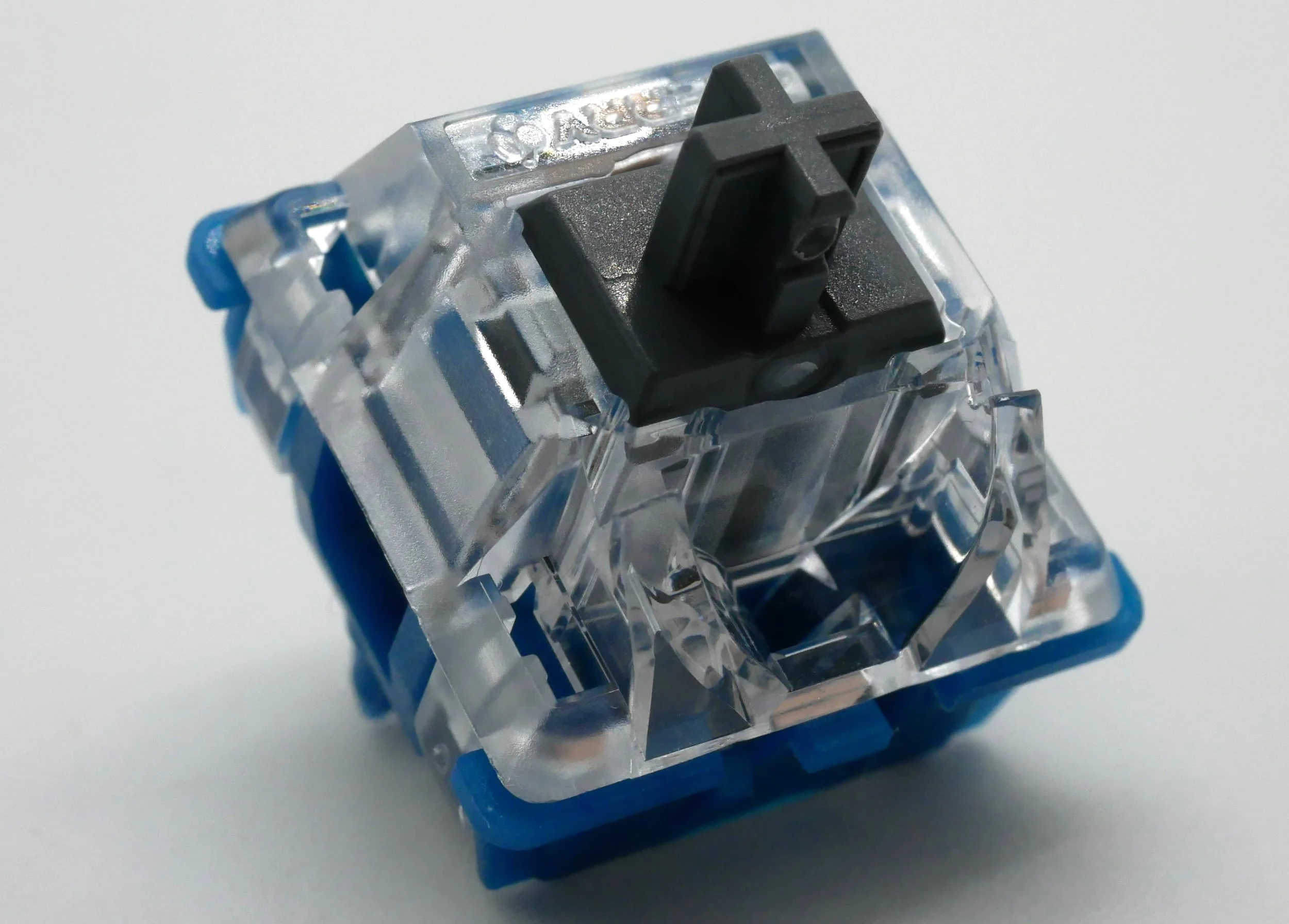
Figure 12: Cherry 'Elephant Trunk' housings swapped onto a Cherry MX Northern Light housing and stem.
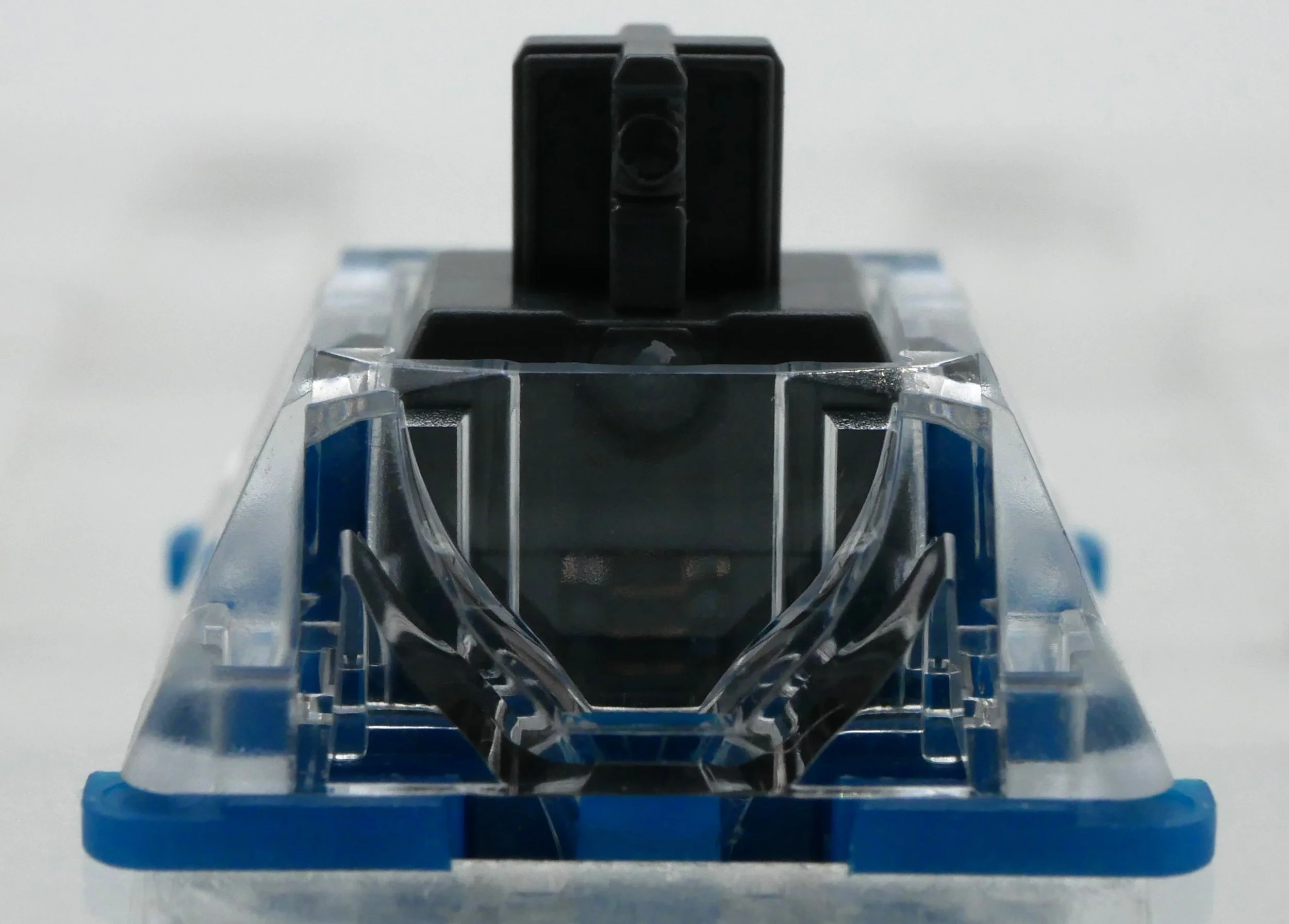
Figure 13: Front view of the Cherry 'Elephant Trunk' housings swapped onto a Cherry MX Northern Light housing and stem.
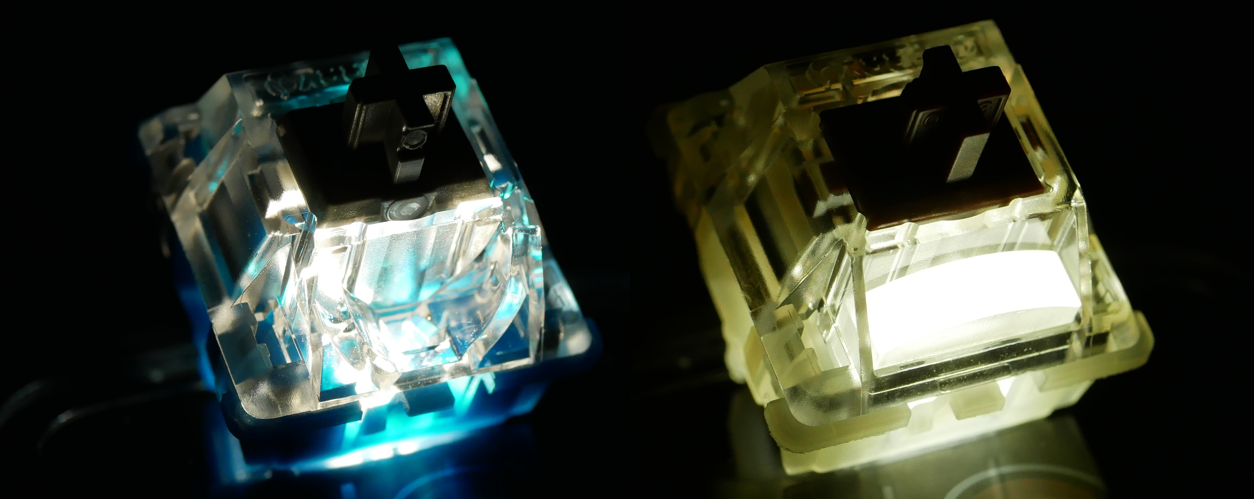
Figure 14: Side by side light diffusion comparison between the Cherry 'Elephant Trunk' housing diffusers and released Cherry MX Lumina/Illuma Brown.
Cherry MX Gold
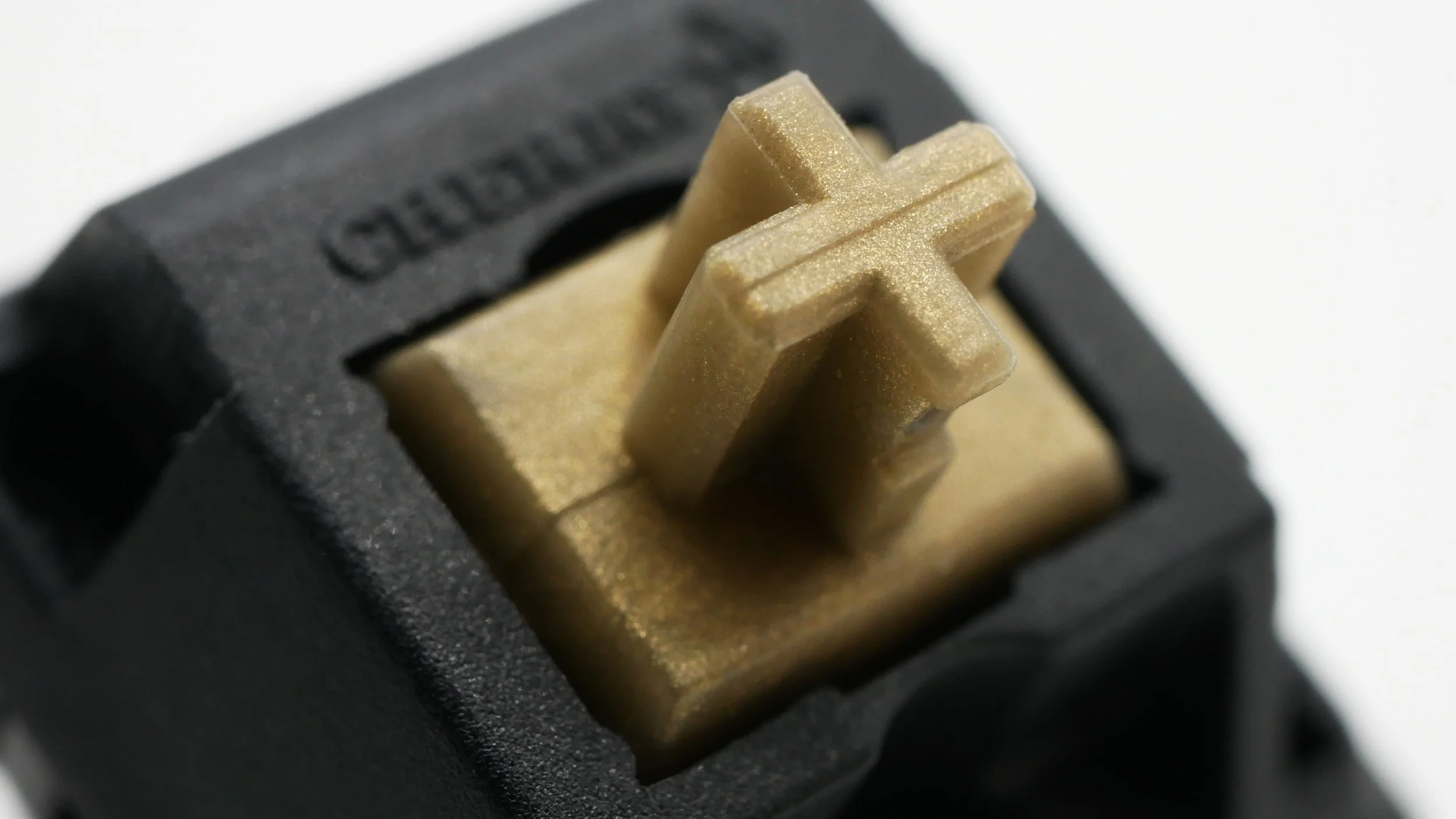
Figure 15: Cherry MX ‘Speed’ Gold switch.
This Cherry MX Gold prototype was designed to be the alternative shiny counterpart to the Cherry MX Speed Silver switches which have appeared in a couple of different forms over the years. Much like how Kailh had a couple of metallic versions of their ‘Speed’ switches, Cherry too was apparently considering as much and did produce at least a couple of these test stems in their brilliant metallic golden color. Without much more that I can say about these switches on account of them being an idea that was tabled many years ago, and thus the C-Lab team not being able to say all that much about them, I do at least want to speculate on one rather funny detail about this specific prototype. This Cherry MX ‘Speed’ Gold is heavy. Like, we’re talking closer to a Cherry MX Black style weight at ~86 gf. at bottom out, making these not only heavier than the Cherry MX Speed Silver switches by quite a large margin, but effectively all ‘Speed’ switches throughout history from what I recall. As can be seen in the force curve below, though, they still retain a similarly short distance to actuation as the other ‘Speed’ switches with the leaves fully contacting no later than ~1.20 mm into the downstrokes. This effectively makes the idea of a “Speed Heavy” switch only really oxymoronic in name as a result.
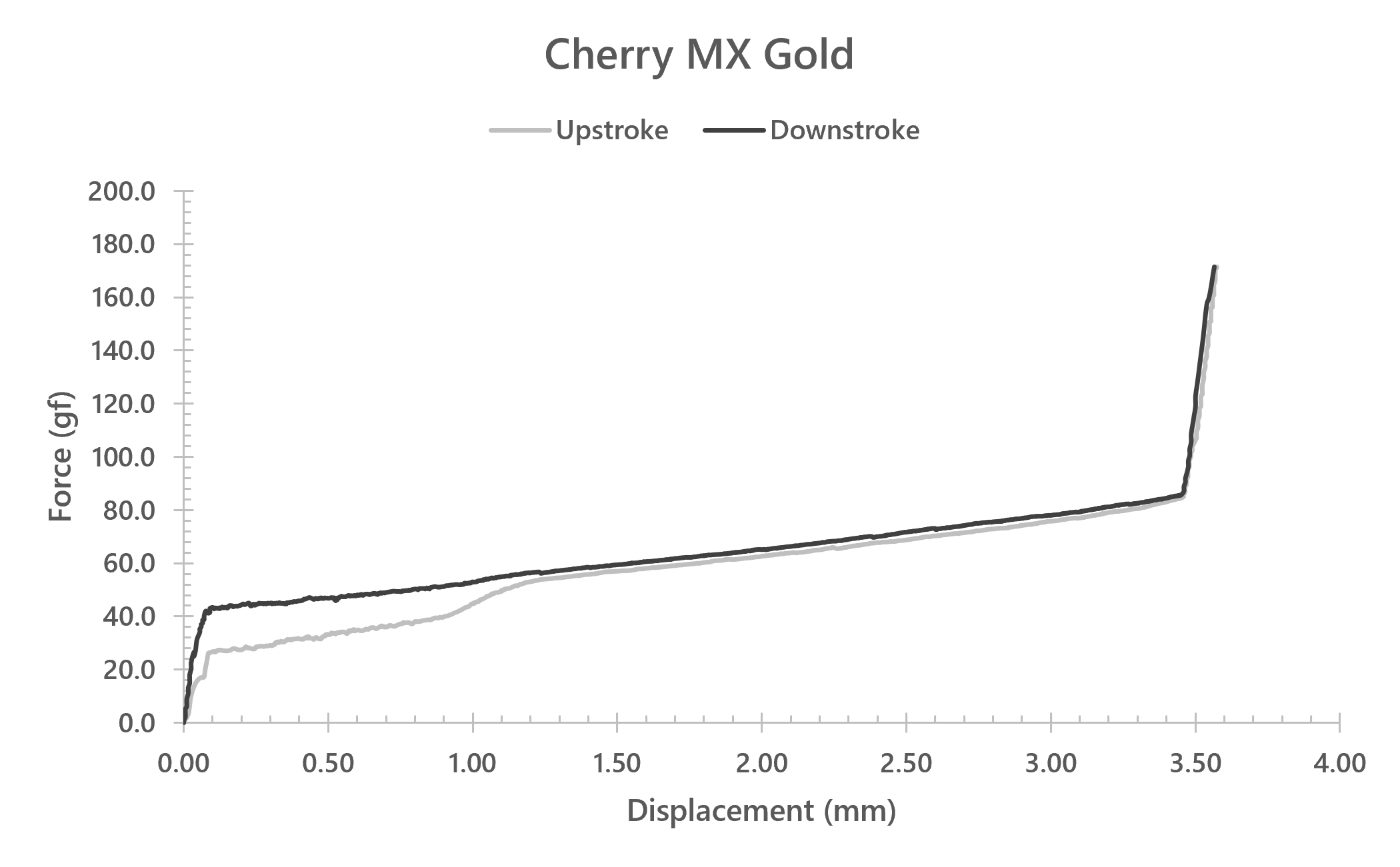
Figure 16: Force curve for the Cherry MX 'Speed' Gold prototype showing its heavy bottom out weight and short throw to leaf actuation around 1.20 mm.
Cherry MX Yellow
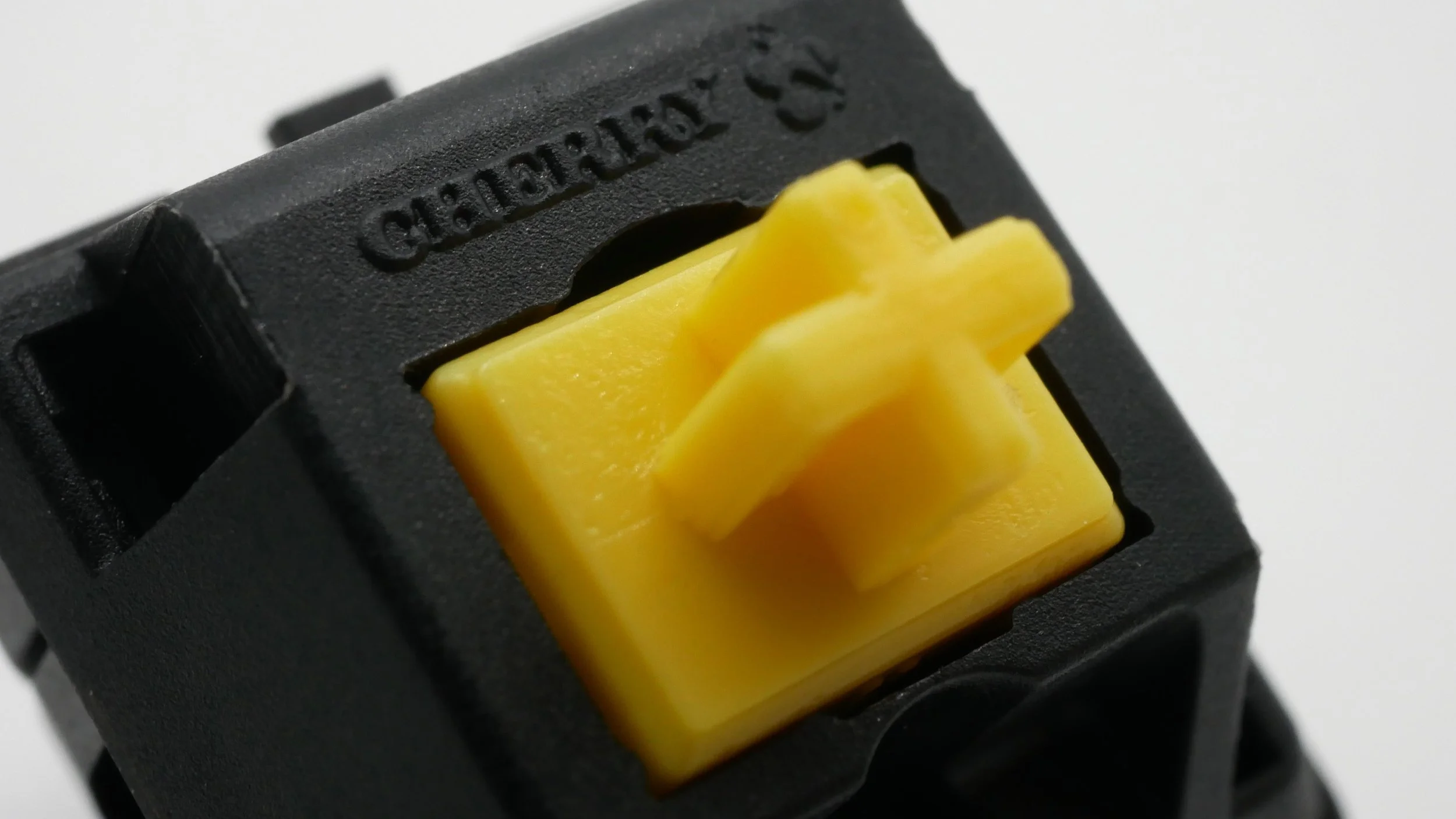
Figure 17: Cherry MX Yellow switch.
This switch is not the Deskthority-documented ‘Type A’ or ‘Type B’ Cherry MX Yellow switches that I went over in my Cherry MX Honey Switch Review background section. It also isn’t the Cherry MX Honey stem inside of an old style housing either. This is the very first, and to date only verified example of a Cherry MX Yellow linear switch – directly sent to me by Cherry’s C-Lab team. Designed as a linear switch offering that never found a specific use-case or customer by the Cherry team, the MX Yellow stem is one that is stated by the C-Lab team as never having been made for production or released to the world at large – strongly suggesting that all previous documented examples are either fakes or local Cherry decisions made without documentation long ago. While this switch may not mean nearly as much to you all and thus you are likely why I decided to save this as the ‘best for last’ following the other switches above them, you’ll have to take a second to consider that the now presumably fake Cherry MX Yellow photos are from before I started collecting switches. They were something I explicitly remember discussing with other collectors when I hadn’t even yet bought 100 different switches for my collection. Almost eight years ago now I remember looking at those photos and wondering if they would ever be real or if I would ultimately ever encountered them – a thought I had about many switches, for that matter. Cherry prototype housings, Alps Neon Greens, Alps SKCL Striped Ambers, non-orange colored Cherry Hirose switches, White Nixies, etc. all filled that list and yet I’ve somehow been lucky enough to encounter all of those. Hell, I’ve even found stuff crazier than those things that I would have never imagined. And until just a few days ago, the Cherry MX Yellow switches remained as one of the very, very few switches remaining on that list – and I’ve finally found a real one.
Honestly, there’s not much more I can say at this end of this long short other than to express my sincere gratitude to the C-Lab team at Cherry for not only allowing me to permanently home these switches in my collection but also to get to share them with you all here. With Cherry having historically been a rather guarded company which was not so in touch with the more custom focused community at large, I would have never expected they would one day be willing to share internal prototypes with the world at large. This only means that the fact that some of these never even made it out of the R&D phase all that much more astounding to realize. These are the kinds of switches that make for a true hallmark of a collection, even after having been received well after thousands upon thousands of unique offerings over the years.
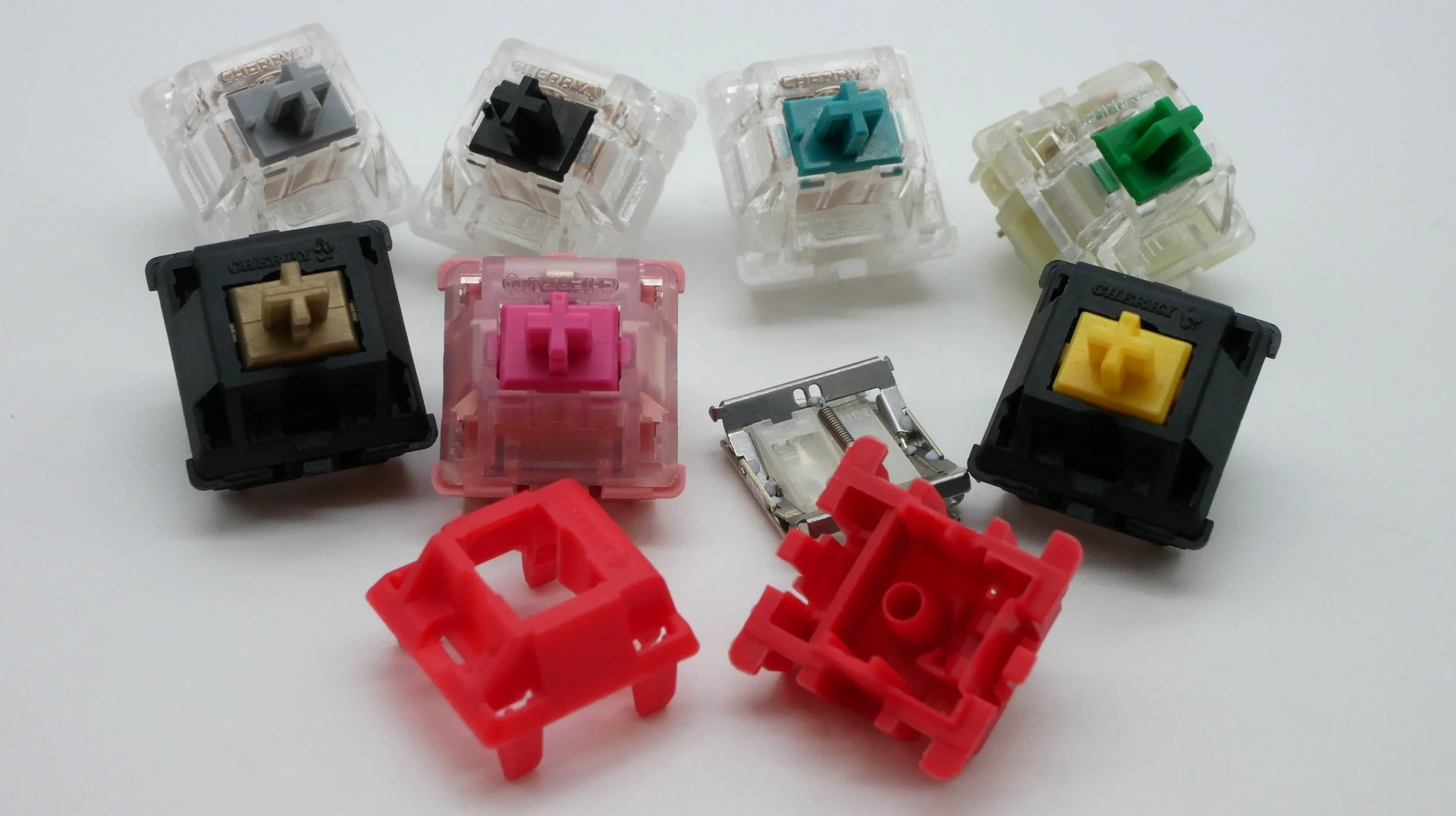
Figure 18: Cherry MX samples, one-offs, and prototypes.