Akko Creamy Yellow U1 Switch Review
Oh man, another pair of non-descript weeks have came and went since the last review, leaving me stranded at the top end of this one without much to speak to from my life yet again. While I was hardly wishing for an insane couple of weeks or some unexpected troubles to befall me, anything like a good movie or interesting night out on the town would have helped give me something worthwhile to share. I suppose that instead leaves me no choice but to share truly the only thing of note that occurred in the last couple of weeks in that I took on my very first real attempt at sculpting a face for an artisan keycap a handful of days ago. As I believe I have sprinkled into several review intros over the past year or two, I’ve been growing increasingly interested not just in artisan keycaps, but also the process that surrounds all aspects of making them and turning an idea into a solid piece of plastic to type on. In turn, I suppose I finally reached a tipping point where I wanted to give the sculpting portion of the creative process a go. I am both decently well satisfied with the initial result and considering using it as the catalyst to get the rest of the equipment together to actually make it into a proper keycap. I have no pretenses that this is just one small step down the path of me becoming some prolific maker of sorts, nor do I really think this attempt stacks up anywhere near the entirety of the collection of keycaps I’ve amassed over the past couple of years, but it’s definitely a different creative side of the hobby that I’ve not really explored until now. Perhaps as I continue down this path a little bit more and actually get some full experience under my belt that it will lead me to some opportunities to write about artisans – both mine and others – in the near future as well. Despite being a rather different facet of the hobby than switches and switch collecting, and those who occupy those two circles rarely, if ever, overlap with one another, I think many people would be surprised at the unique perspective and appreciations that really do only exist in that intersection. Or at the extreme least the amount of writing that is done about artisans from both a collector and maker end are extremely limited and giving the community more of that content to work with may be of some benefit. Anyhow, I guess I just wanted to share those thoughts as they’ve been on my mind quite a bit and have been the only tangible result of anything that has taken place in the Goat household over the past couple of weeks. Oh you wanted a picture of the pour soul that I’ve now trapped in a keycap sculpt forever? I guess I’ll share it. Maybe one day in the far flung future we’ll be able to look back on this little guy and this intro with a completely different perspective if I really do slip and fall into the artisan keycap making rabbit hole…
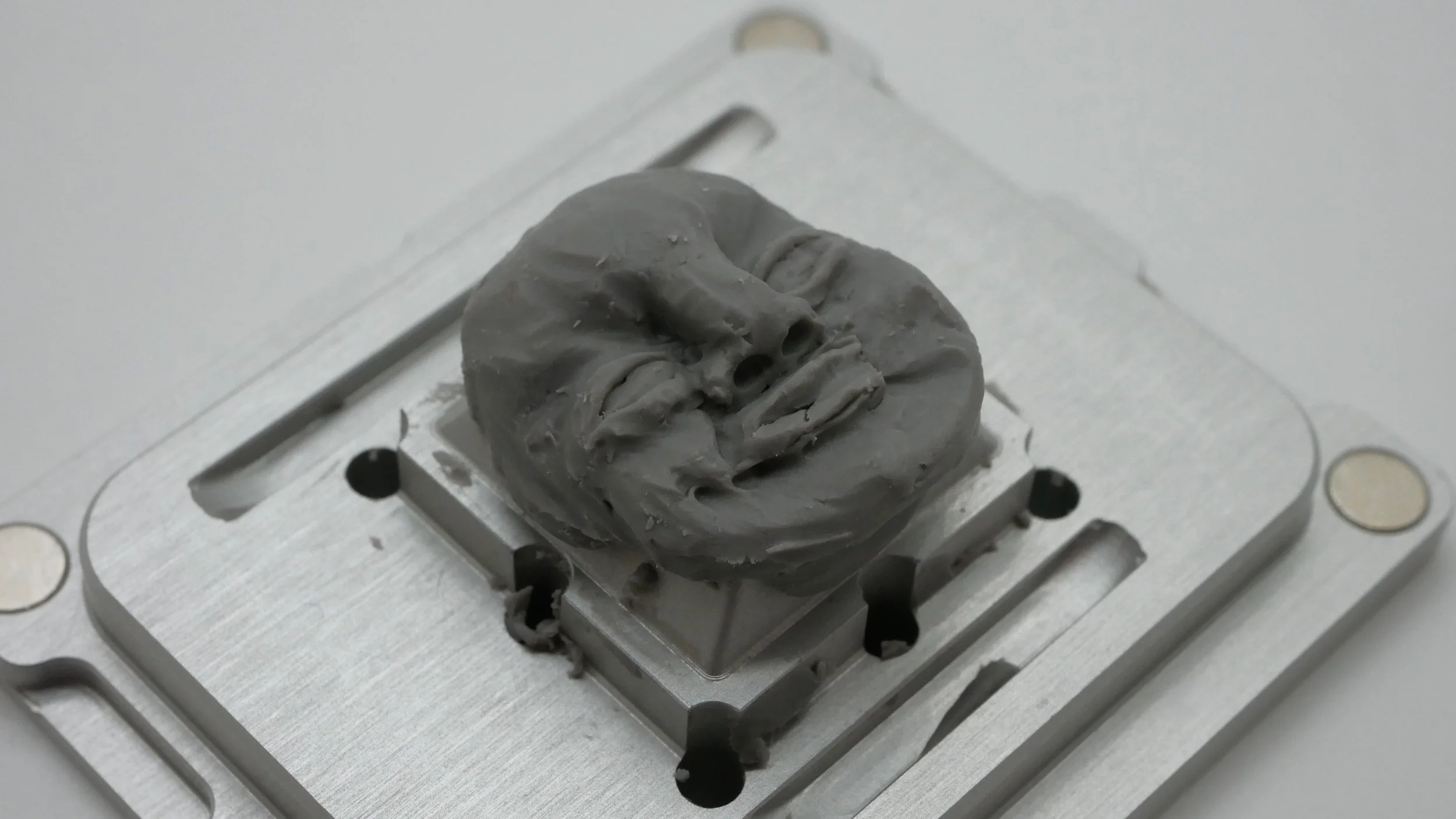
Figure 1: Alright, I have to admit that it looks a lot worse in a blown up photograph than it does in person… Perhaps there is more work to be done on this one.
Switch Background
Despite the past year of switch releases not being nearly as star studded as the year before that, and in turn not being filled with as many ground breaking reviews, it doesn’t mean that there still hasn’t been a whole hell of a lot that has occurred in that span of time. And in trying to catch the bits and pieces of these larger arcs in switch history such as the BSUN Identity Crisis, Cherry moving on to Chinese production, and new brands like Wingtree and K2 making headwinds into a competitive switch market like no other, I have admittedly been missing developments from some of the more well known, established brands. Take Akko, for instance – it has been a bit over a year since I last covered them in the Akko Cilantro Switch Review and only a handful of months longer than that since I first went into their history by way of the Akko Mirror Switch Review. Even with the lack of coverage of them from my end, they haven’t by any means disappeared nor slowed their spread of influence on the broader community than as it was described in that first pairing of reviews. To cut a long story short, as if I am actually capable of such a thing, Akko has continued where we left off with them in the review of the Cilantros wherein they’re continuing to build out a large profile of budget level offerings from a decent range of manufacturers while continuing to slowly rotate out older offerings for newer, fresher ones that try and turn entry level enthusiasts into loyal, long time customers. You know, what every brand selling customized switches should be aiming for. Perhaps the only change to this game plan from Akko recently has been that they haven’t seemed as preoccupied with trying to release groups or series of specific switches all at one time. (That is until now, at least.) Unlike the groupings of the Akko Creamy series, or the full-POM trio of releases from Kailh, or the original red, green, and blue Akko CS trio, or their original set of four OEM-styled Huano switches, or, or, or, Akko has been one-offing releases that are filling gaps in their existing repertoire and are continuing tried and true favorites. These recent releases have included small forays into the Hall Effect switch space with the Flash Magnetic, Astrolink, and most recently the AstroAim switches, a pair of V5 releases in the Creamy Yellow and Blue Pros that conveniently forget the existence of the number ‘4’, and one-offs like the Akko Starlits, Monsgeek-collaborations in the Fogs, and the Fairy silent linears. Even though Akko hasn’t rolled out as much of a marketing red carpet behind each of these releases as some of their more dedicated sets of switches in the past, nearly all of them still seem to be reaching their target audience and have continued to be appreciated and well spoken about by the community at large. However, old habits apparently don’t just die hard for individuals but also brands too; These very Creamy Yellow U1 switches that have brought us here today were a return to form for Akko and their series of switches release style.
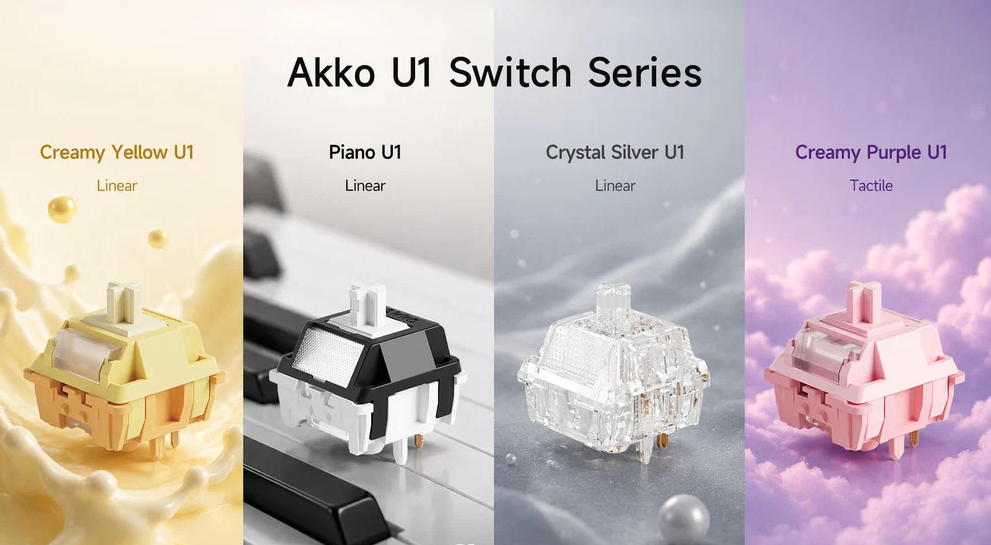
Figure 2: Family marketing render of the new Akko 'U1 Switch Series' from Akko’s website.
Not able to hold back from their historical instincts, Akko broke from their recent scattering of offerings on June 5th, 2026 by way of the debut announcement of their new “U1 Switch Series”. Billed as being built for “smoothness, sound, and diversity”, Akko not only headlined these switches across all of their various social media pages but even by way of a blog directly on their website that makes my job as a documentarian incredibly easy, for once. (Perhaps they really appreciated all of the effort that went into logging their convoluted history across the Akko Mirror Switch Review and thought it to be a good idea to write some of their future plans down for people to look back on!) In the U1 Switch Series announcement blog post, Akko rolled out a fairly standard set of marketing points that more or less could be paraphrased in similar fashion as all other brands and/or vendors releasing new switch designs as “while we’ve made good switches in the past, we’re listening to our audience and pushing for new switches that not just take their feedback into account, but make them smoother, more consistent, better sounding, and all around better.” (This is a paraphrase, but feel free to go ahead and read their entry level blog post and tell me if you think it can’t effectively be summarized as such.) Alongside the expected marketing fluff, the introductory set of the Huano-made U1 Switch Series was announced as consisting of three linears and one tactile, with the linears being the Creamy Yellow U1, Piano U1, and Crystal U1, and the lone tactiles being the Creamy Purple U1s. While seemingly a disparate set of colors and designs to those not familiar with Akko’s full history of offerings, each of these colors/designs were ones sold in previous iterations of popular Akko switches over the years. With respect to the feature that differentiate each of the linear offerings, they are about as varied as the names and colorways for the switches themselves which each one of the Piano, Creamy Yellow, and Crystal Silver switches featuring different combinations of housing materials, a different total stem travel, and a differently weighted spring at bottom out as well. While the Creamy Purple U1s were the only tactile to be released to the U1 family as of the time of their debut, and thus were obviously differentiable from the rest, days before this review was posted Akko announced the release of the next switch in the U1 family in the form of the Blue U1 tactiles, which like the set of linear switches, featured different housing materials and weighting than the Creamy Purple U1s. Beyond these details though, which are actually best summarized in a snippet of details from Akko’s blog post below, there isn’t much else to the actual post itself that isn’t switch specs and a sales pitch. They didn’t even bother to explain what the ‘U’ in the ‘U1’ switch family name stands for!
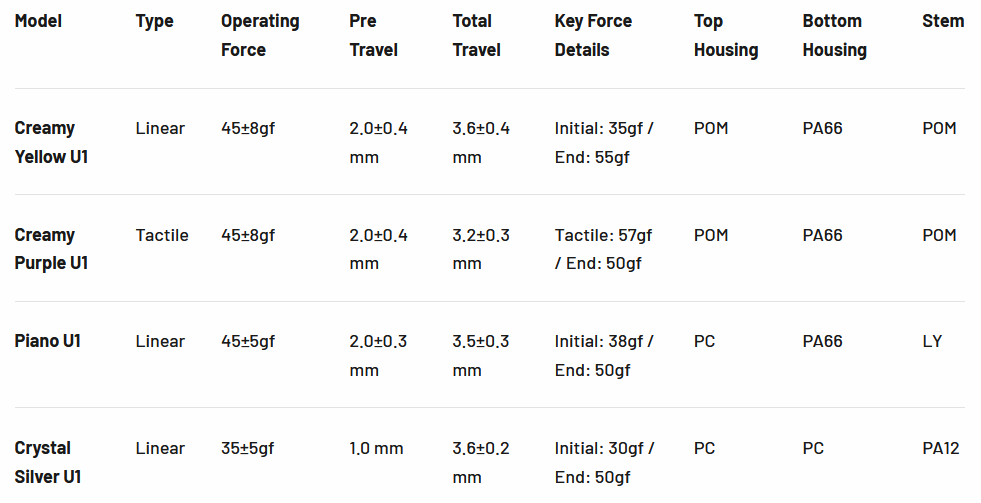
Figure 3: Table of switch specifications from Akko's U1 Switch Series introductory blog post.
Within the introductory blog post from Akko detailing the Creamy Yellow U1 linear switches, as well on the specific sales page for these switches, they make it quite clear that these were the first of the switches to be designed for the U1 family and as a direct continuation of one of Akko’s most popular switch offerings – their “creamy” yellow linears. The Creamy Yellow U1s, however, were not described as having new bells or whistles than the previous four iterations of these switches (V1-3 and V5), but instead a distillation of their customer’s favorites about the switch – cleaner acoustics, a “more focused bottom out”, improved versatility across boards (?), and even no frills, 100-count packaging that did away with the fancy boxes Akko had become known for in the past couple of years. Every aspect of the Creamy Yellow U1 switches was directly modified in response to customer feedback. More specifically, the Akko Creamy Yellow U1s come in as the shockingly heaviest linear of the U1 Switch Series, featuring a 55 gf. bottom out spring closed between a POM top housing and nylon bottom housing and propping up a nylon-material stem. Priced at an impressively low cost of $0.20 per switch, the Creamy Yellow U1 switches were only made available from Akko in packs of 100 at a price point of $19.99 for that pack, though are able to be purchased in smaller quantities on some non-Akko storefronts selling these offerings. While the U1 Switch Series is an entirely new chapter of Akko’s long history of switch offerings, and thus obviously carries with it a degree of uncertainty as to their long term future, based on how Akko has handled their previous runs of switches I imagine that these will be made, stocked, and sold for at least a couple of years into the future and likely iterated upon once or twice as they eventually end up getting sunset.
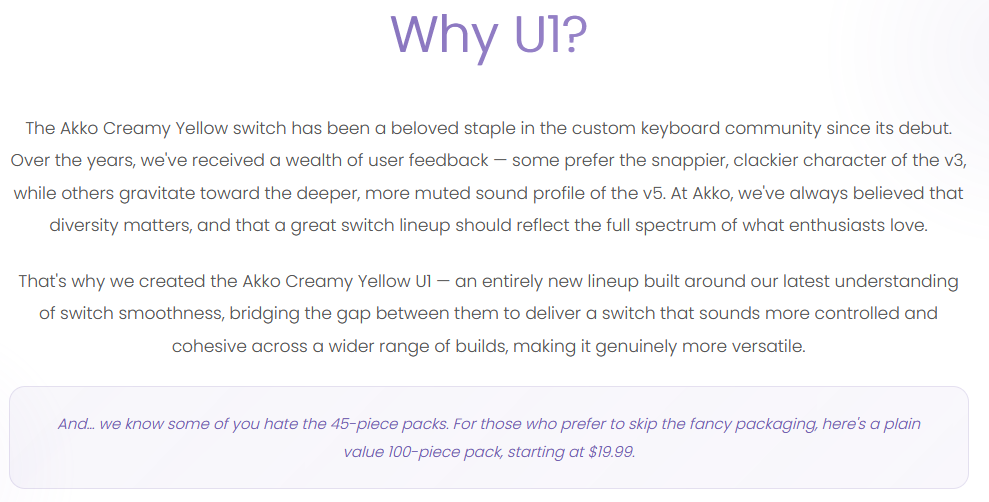
Figure 4: The paragraphs underneath the 'Why U1?' header really elicit a "WOAH you spelled Garfield really wrong" type of response in my brain.
Creamy Yellow U1 Performance
Appearance
At the highest level, the Akko Creamy Yellow U1 switches are ironically not as recognizable as being of Akko design as they break away from the color scheme of the tried and true fan favorite Creamy Yellow switches that inspired their design. While previous iterations of the Akko Creamy Yellow switches featured translucent yellow top housings with solid yellow stems and bottom housings that matched one another, the U1 iteration of these linears features yellow in three tones with the stems being a pale, easter-like yellow color, the top housings being a richer, more vibrant yellow color, and the bottom housings being a deeper, goldenrod-yellow color. As well, the Akko Creamy Yellow U1 switches are structurally a bit different than their predecessors on account of being made (most likely) by Huano, which has more recently been employing the squared off, edge guarded LED diffusers as can be seen below, rather than Outemu/KTT’s slotted LED/diode region as seen in the V1-5 of the Akko Creamy Yellows. However, close enough inspection of these switches will make it clear that they are of Akko origin on account of the fact that they bare an Akko nameplate, and furthermore one like their more recent switch releases rather than the original, stylized Akko logo used on their very original Huano-made offerings from 2021. On account of Akko returning full circle back to Huano as a switch manufacturer, as well as Huano having grown quite a bit as a manufacturer since they made the Akko V1 Orange, Purple, Pink, and Blues in 2021, there’s quite a few details of note in the design of these switches. These details of note are described and documented in the paragraphs and photos below.
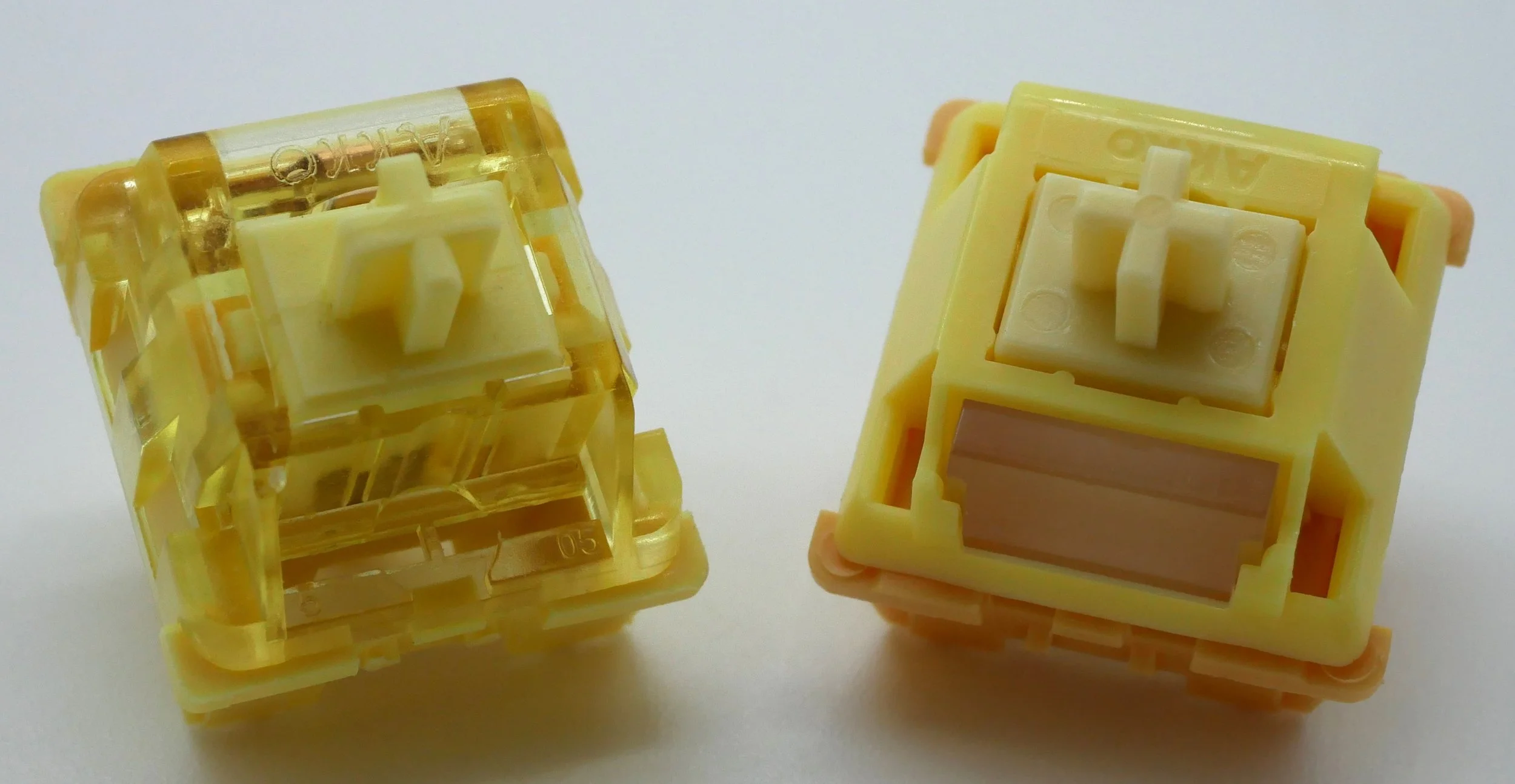
Figure 5: Color (and nameplate) comparison between the Akko Cream V3 Yellow (Left) and the Akko Creamy Yellow U1 (Right) switches.
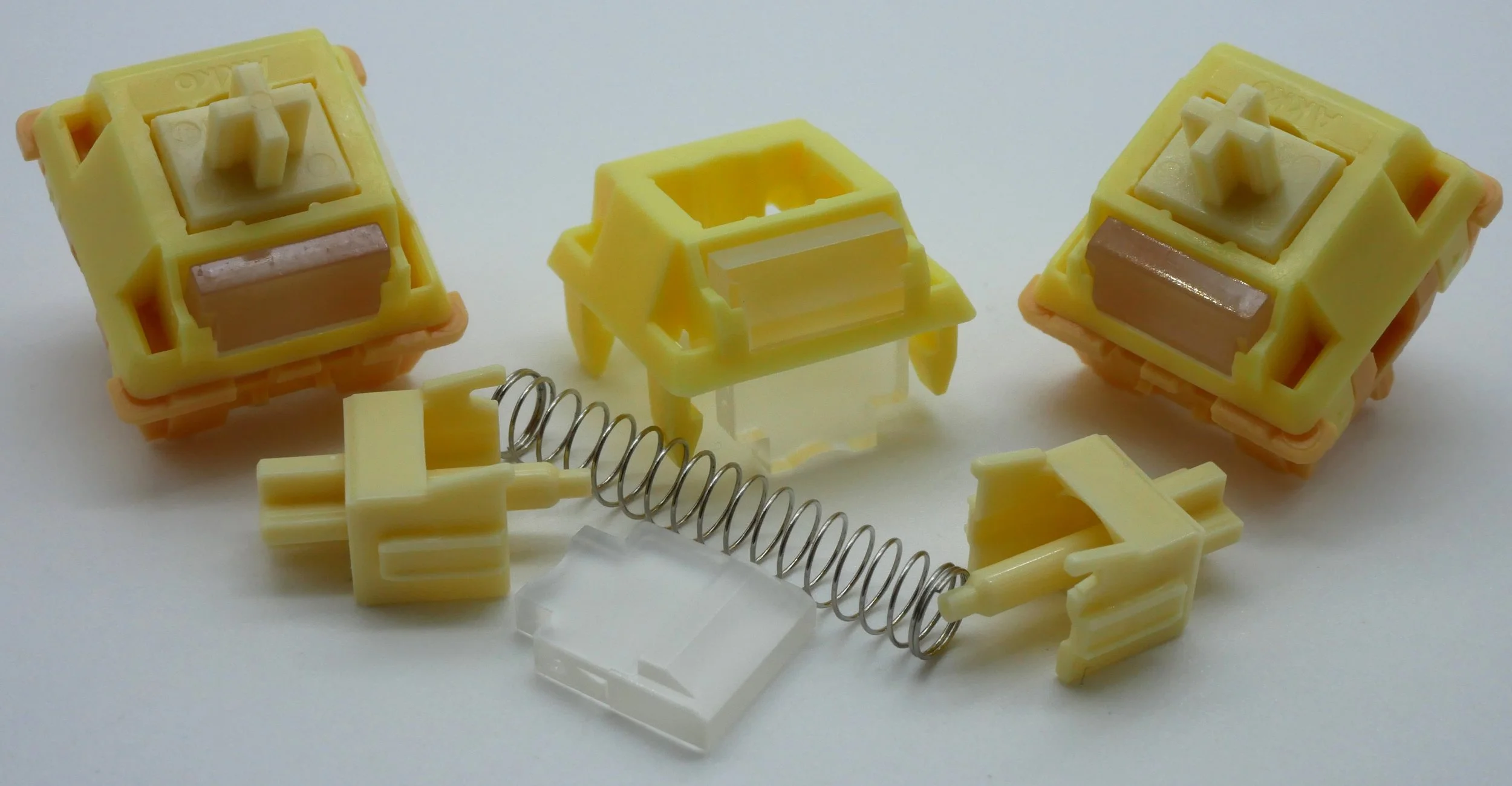
Figure 6: Akko Creamy Yellow U1 switches and their components.
Looking first to the vibrant, lemony yellow POM top housings of the Akko Creamy Yellow U1 switches, these are the singular parts of the switch which most obviously denote them of being of Huano origin and of Akko design. The most obvious of the features pointing to their Akko origin is that of the inverted, plain text ‘Akko’ name inside of a textured nameplate rectangle – the same exact design that was employed in the HMX-made Akko Mirror and Cilantro switches, though in a different direction and with slightly smaller text. The most obvious external feature of the Creamy Yellow U1s that points to their Huano origin of manufacturing is that of the rather blocky, rectangular LED diffusers that have small edges cropping up from the top housing to guard them and help hold them in place on the front. While LED diffusers come in nearly all shapes and sizes in 2026, Huano is the only manufacturer to my knowledge which readily opts for these over a variety of designs and/or more rounded, smaller height LED diffusers. Internally the top housings largely have all of the expected features, though with some extra design features crammed into specific spaces that normally aren’t occupied by such. The two locations which most prominently show these extra features are that of directly underneath the nameplate of the housing, which features two extra thicker rectangular patches in each corner of this space, as well as in the guider rail regions where the stems top out, which feature a step going from the top of the housing down to the edge that meets the bottom housing. While neither of these smaller details are likely to substantially impact how the switch feels or performs under use, they are at least notably different features than other Akko brand switches. As well, I feel it should be notable that I cannot find mold-specific markings or numbers anywhere inside or outside of these housings.
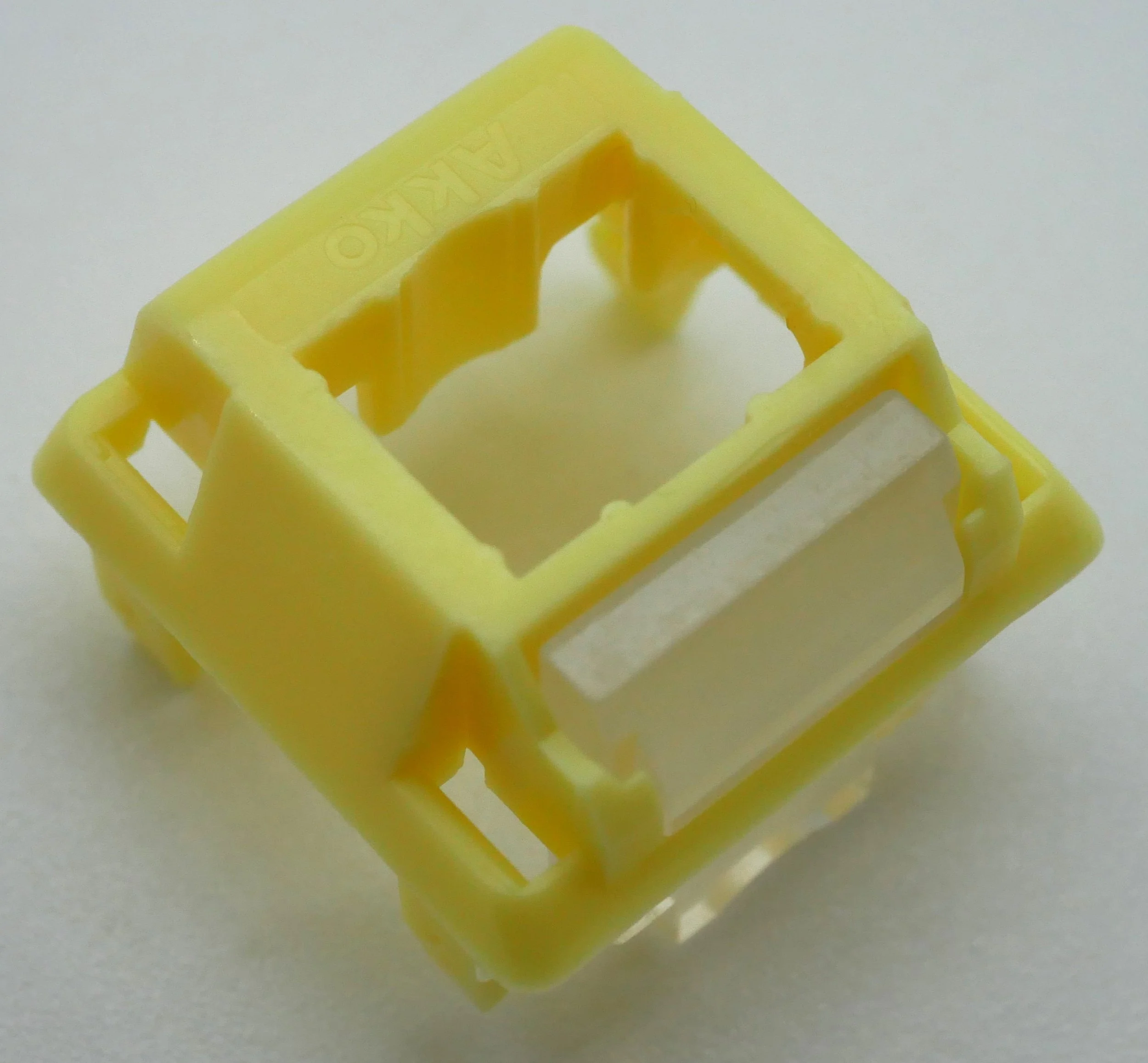
Figure 7: Akko Creamy Yellow U1 top housing exterior showing inverted, modernized 'Akko' nameplate and embedded, rectangular Huano-style LED diffuser. Note that the diffuser is able to be removed by pressing upwards from the bottom side of it.
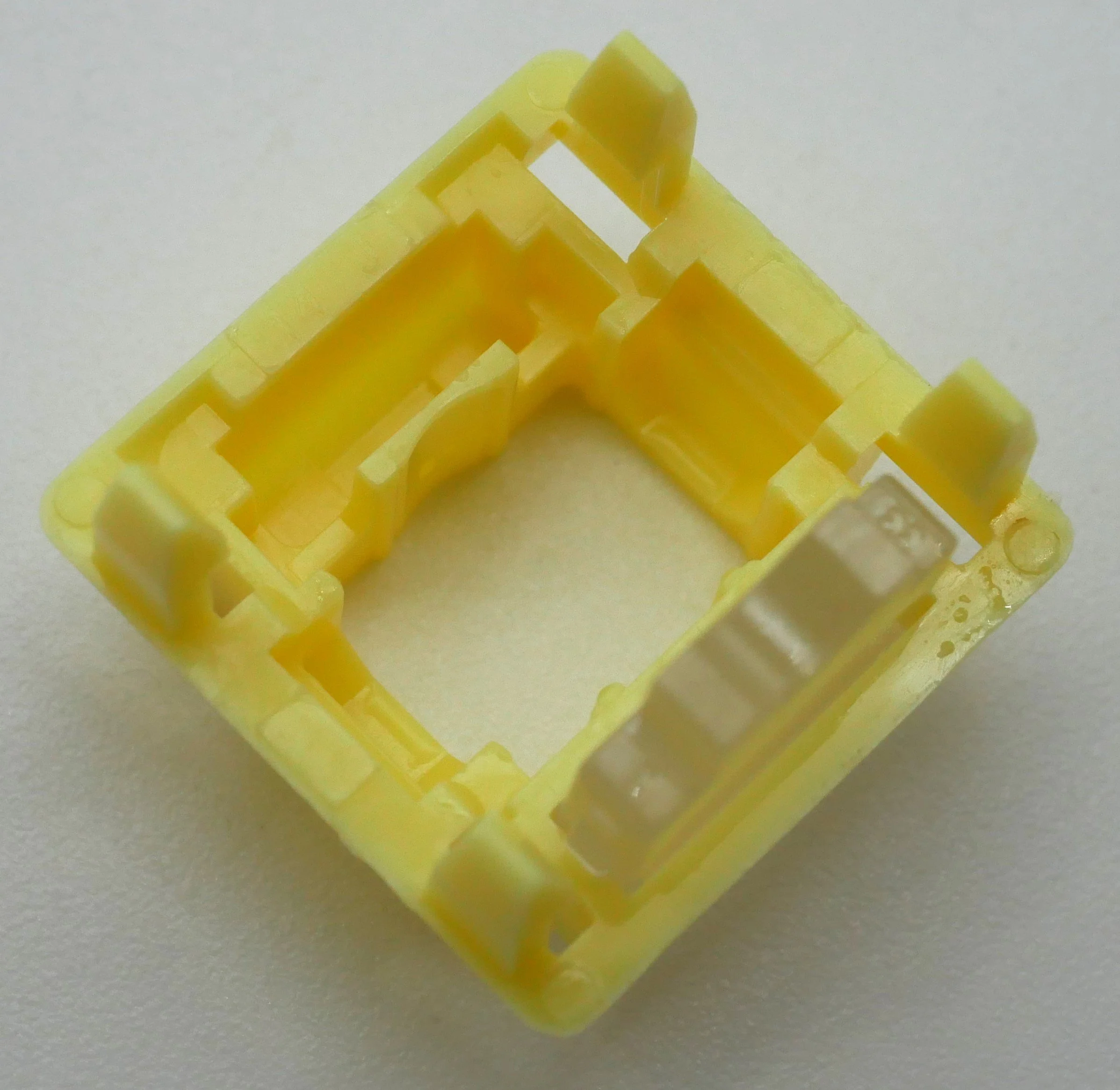
Figure 8: Akko Creamy Yellow U1 top housing interior showing traces amounts of factory lubing as well as extra reinforced regions where the stem tops out as well as underneath the nameplate region of the housing.
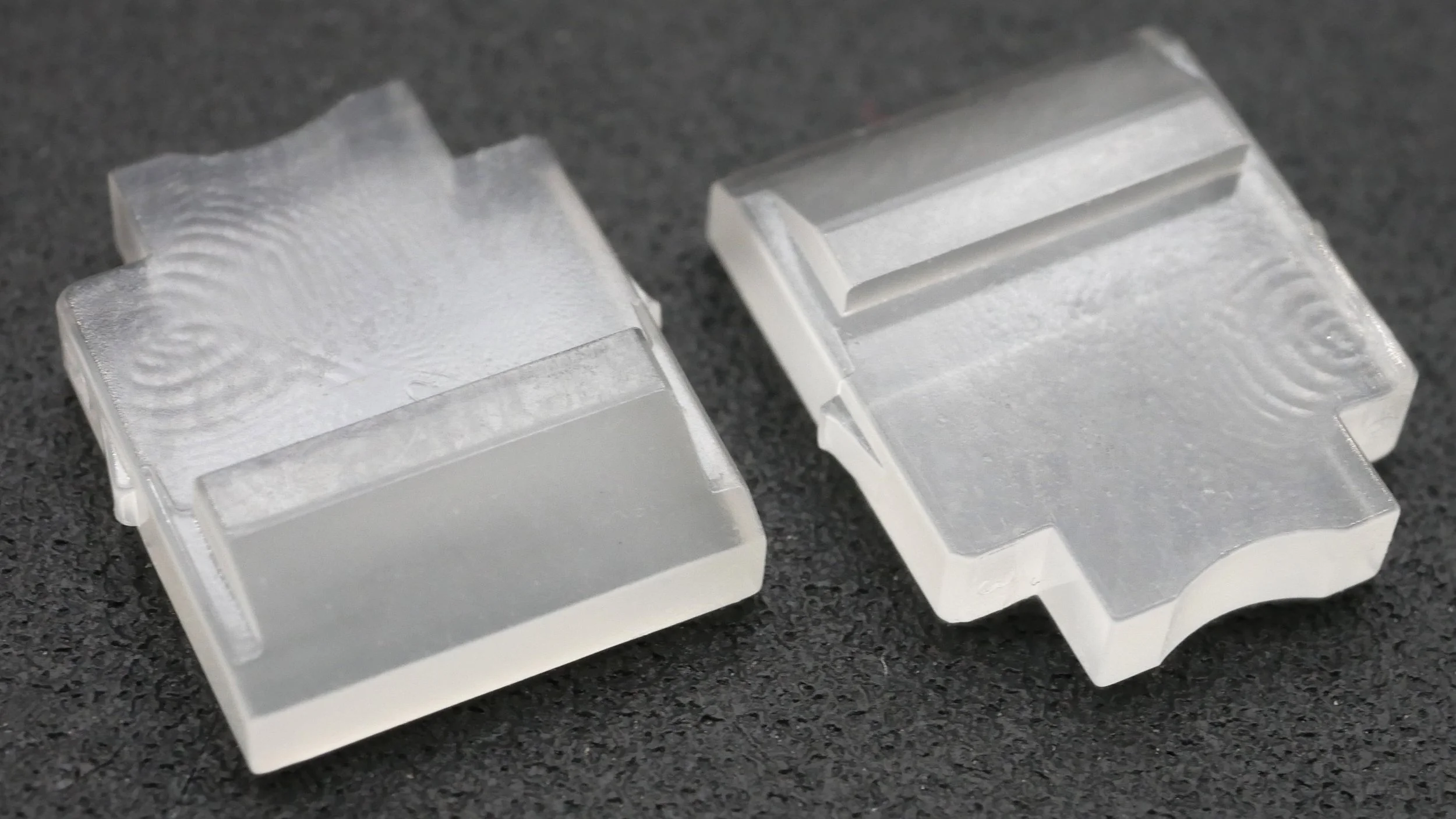
Figure 9: Multiple views of the Akko Creamy Yellow U1 top housing LED diffusers removed from the housing. Note that the spiral patterns are not visual artifacts and are present in the diffusers themselves, presumably being caused by the injection molding process that made them.
Moving next to the paler yellow nylon stems of the Akko Creamy Yellow U1 switches, we’re greeted with a relatively normal, as expected linear stem. In fact, upon opening these switches for inspection, the most notable part of inspecting the stems was handling the generous, but not overly gloopy or spottily applied factory lubing that was applied on all four sides of the stems. Wiping this away so that the stem could be better held and inspected, the stems feature pretty standard features – full length, non-tapered slider rails, a slightly longer, strongly tiered center pole, and normal leaf-actuating legs and front and back plates. The only real deviation from normalcy here comes from the slight raised edges on the sides of the slider rails on the stems. Presumably to help reduce the area of contact between the stems and the bottom housings in a bid to reduce scratchiness in the complete switch, this is a feature that Huano has employed elsewhere to similar effect before, such as with the Huano Caramel Lattes. This is not, however, a design feature that I believe to be historically exclusive to Huano, however.
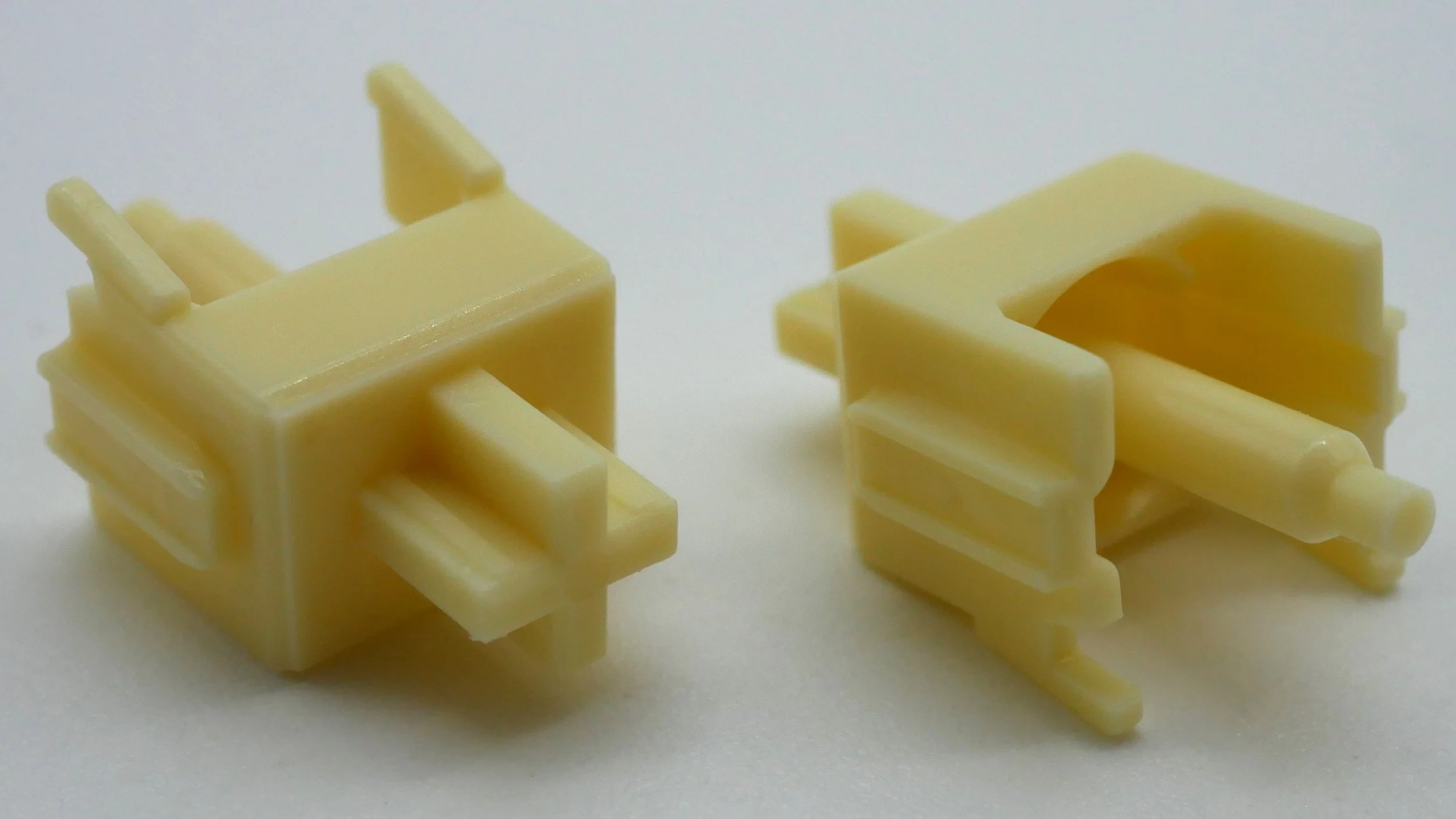
Figure 10: Front and back sides of the Akko Creamy Yellow U1 stems showing slightly longer, strongly tapered center pole and slider rails with raised edges. Not well pictured are sets of mold ejector circles on the top sides of the stem where they contact the keycap that are commonly seen in other Huano-made switch stems.
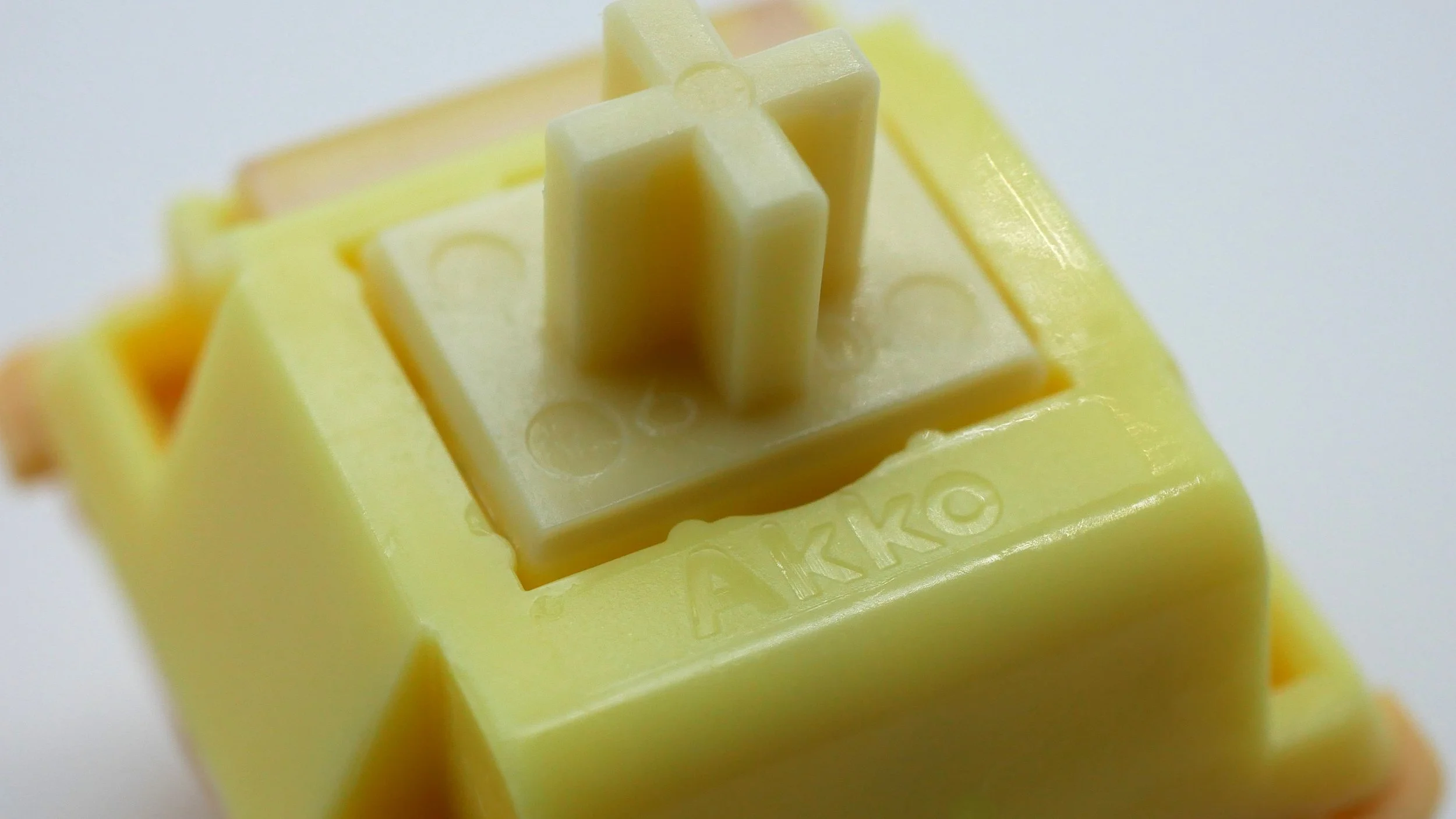
Figure 11: Those aforementioned mold ejector circles on the top sides of the stem are, however, well pictured here.
Finally arriving to the goldenrod yellow, POM bottom housing of the Akko Creamy Yellow U1 switches, we’re greeted with at least one more feature that denotes these of strongly being of Huano origin. (However this is on the outside of the housing, so give me a second.) Internally, the Creamy Yellow U1 bottom housings feature a flat south-side spring collar, dampening pads at the base of each slider rail, completely flat, normally shaped slider rails, and trace amounts of factory lubing from the stem that cling to all of these features. All in all, a fairly standard looking bottom housing. On the outside of the bottom housings, the through-switch LED hole that aligns with the large LED diffuser embedded in the top housings is small, just barely not square in shape, and with angled interior edges that almost identically match that of other Huano-made switch designs. Other features such as the small square holes on either side of the diffusion hole, the slight bottom housing lip that exists on the interior side of it, as well as the circular indentations around the metal PCB pins on the other end of the housing exterior all also closely align with other Huano-made housing designs. The only feature which does appear to be somewhat special in the Creamy Yellow U1 switches, though, is their mold markings which are found stacked in inverted, number over letter form in between the metal PCB pins as opposed to on either side of the large, square-ish LED diffusing hole in the bottom housing where they are commonly seen on other Huano-made housings. It is also worth noting that the Akko Creamy Yellow U1 bottom housings only come in PCB mount / 5-Pin variety.
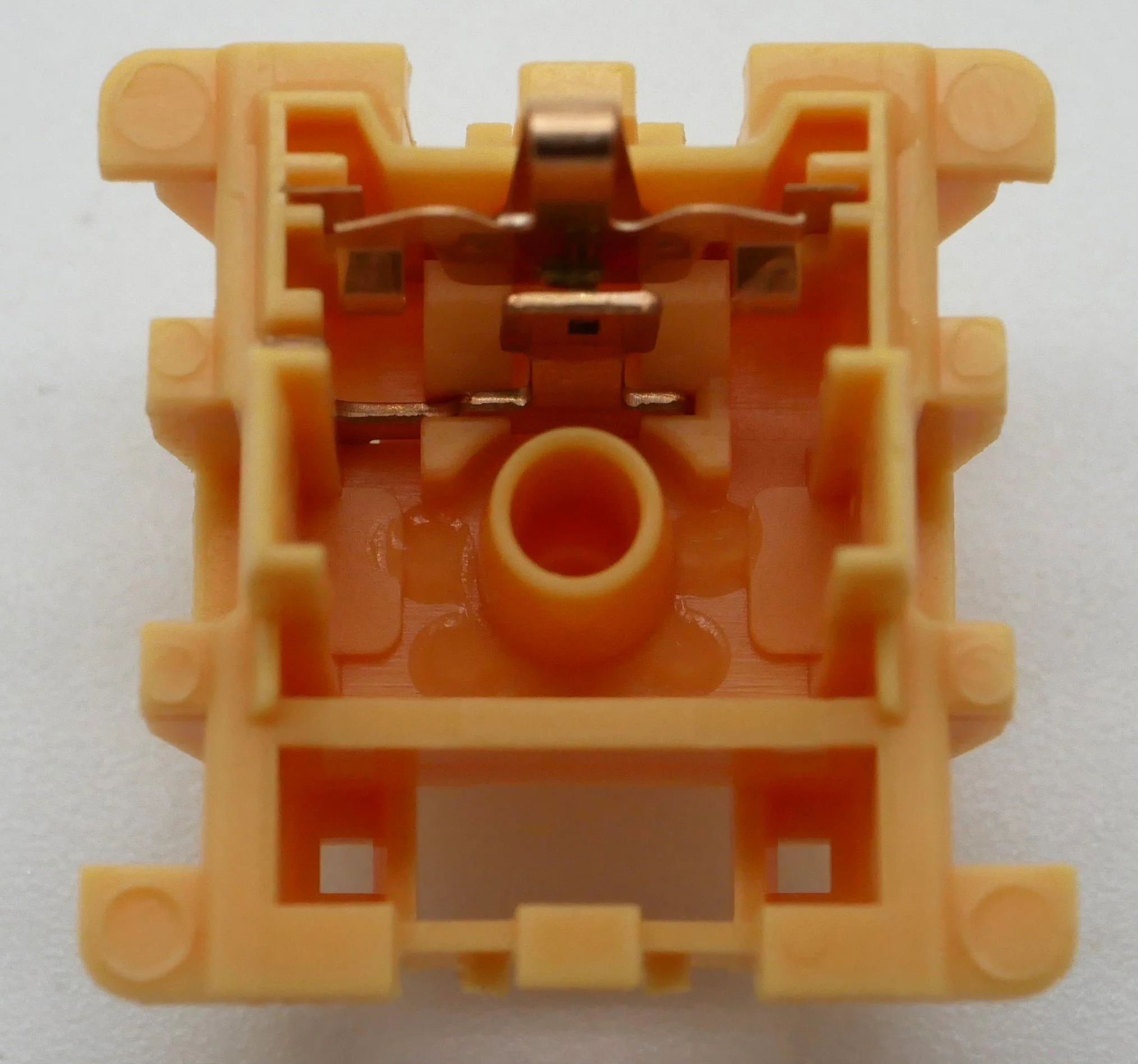
Figure 12: Akko Creamy Yellow U1 bottom housing interior showing a flat south side spring collar, dampening pads at the base of the slider rails, and trace amounts of factory lubing present in the base of the housing.
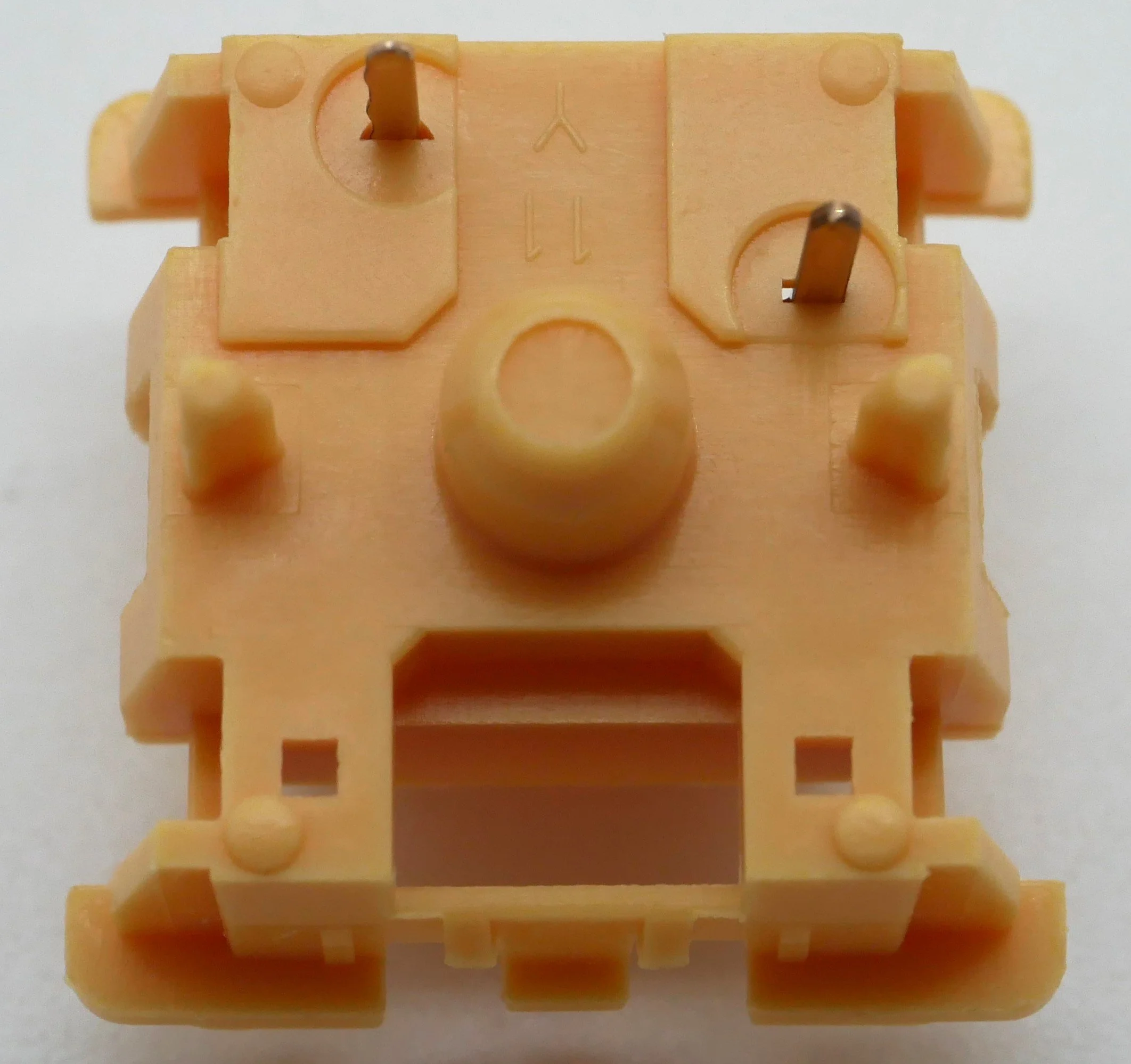
Figure 13: Akko Creamy Yellow U1 bottom housing exterior showing PCB mounting pins, inverted mold markings between the metal PCB pins, and a not quite square through-switch hole for LED lighting that is common in shape and size to that of other Huano-made switches.
Push Feel
Generally speaking, linear switches that are fairly standard in their designs are the ones that make this section the hardest to fill out as there really isn’t all that much to say about them. The Akko Creamy Yellow U1 switches, despite being new to Akko and Huano, are very squarely within that range of ‘fairly standard on’ account of them being some combination of nylon and POM parts that sandwich a long, medium-light weight spring and a slightly long stem pole that bottoms out equally slightly soon. Thankfully, though, linear switches which have a reference point for their designs, such as a predecessor that drove their development, often at least have soft points of reference for me to draw against here, or at least something to say that this new switch is “more than” or “less than” in some ways. You know, the concept of comparatives. If the opportunity strikes wherein I have a whole family of switches to compare against, I may even get the opportunity for a superlative, if I am the luckiest. And while you would think I would in this case be the most lucky and get to use superlatives to compare the Creamy Yellow U1s against their V3 and V5 older siblings, the problem is that the entirety of the marketing for the Akko Creamy Yellow U1s is relative and non-specific. There’s not a single ounce of the marketing for these switches that establishes a singular goal for these switches as being of ‘X’ feeling or having ‘Y’ characteristic, and that’s despite them circling the matter multiple times over. On the very sales page that I bought the Creamy Yellow U1s from, Akko refers to them about as concretely as they do anywhere in their marketing as trying to bridge the gap between the “snappier, clackier character of the V3…and the deeper, more muted sound profile of the V5”, and despite those being sound descriptors more than they are push feeling notes, they couldn’t be any further apart as reference points. It’s like asking someone to pick a town in the middle of the United States where the middle is defined as anywhere between New York and San Francisco. To this end, the Akko U1s I can really only describe as a singular switch of their own.
Through testing I found the Akko Creamy Yellow U1 switches to be all of the things that Akko had tried to tease out in their relative comparisons to Yellow switches in the past, though ultimately not quite to the degree that their comparisons would have suggested. For example, the switches are smooth, and unarguably so, though there is still a small amount of fine grain, dull scratch that can be throughout the batch that I received with some degree of variability from switch to switch. While some switches are obviously a bit more generously lubed than others, and some definitely are a bit heavier through their stroke and drag a bit more under finger, it’s not enough of a difference to really warrant cherry picking of matching Yellow U1s for a specific keyboard build. It’s just a difference that is somewhat noticeable enough. As for the housing collisions, they are both mildly pokey feeling, though overall firm and solid in their collisions. Of the two, the bottom outs are definitely more noticeable and have a very small footprint of a collision that gives an ever so slight popping snap that is far from being harsh or carrying any degree of sharpness, and even at faster typing speeds as well. And in turn, the topping outs are dampened and a bit more softened feeling on account of not having as singular of a point of collision, though the slightly thinner than expected feeling nylon does make for a more prominent topping out than one would normally expect. While this is perhaps a bit unfair of me to try and shoehorn into such an objectively aimed section, the rougher edges around the finer details of the Akko Creamy Yellow U1s really do feel like they well fit the ‘strong budget bin’ price point of these switches. I’ve for sure tried switches that are simultaneously more expensive and lower quality than the Creamy Yellow U1s, but I can’t help but think these issues I’ve noted are reasonable quips to have with any switch at this price point. Any higher expectations of Akko and/or Huano here would have clearly driven the price per switch up through whatever remediation would have had to been done to iron out the small smoothness issues or in trying to seek out a more unique, distinctive feeling combination of housing materials.
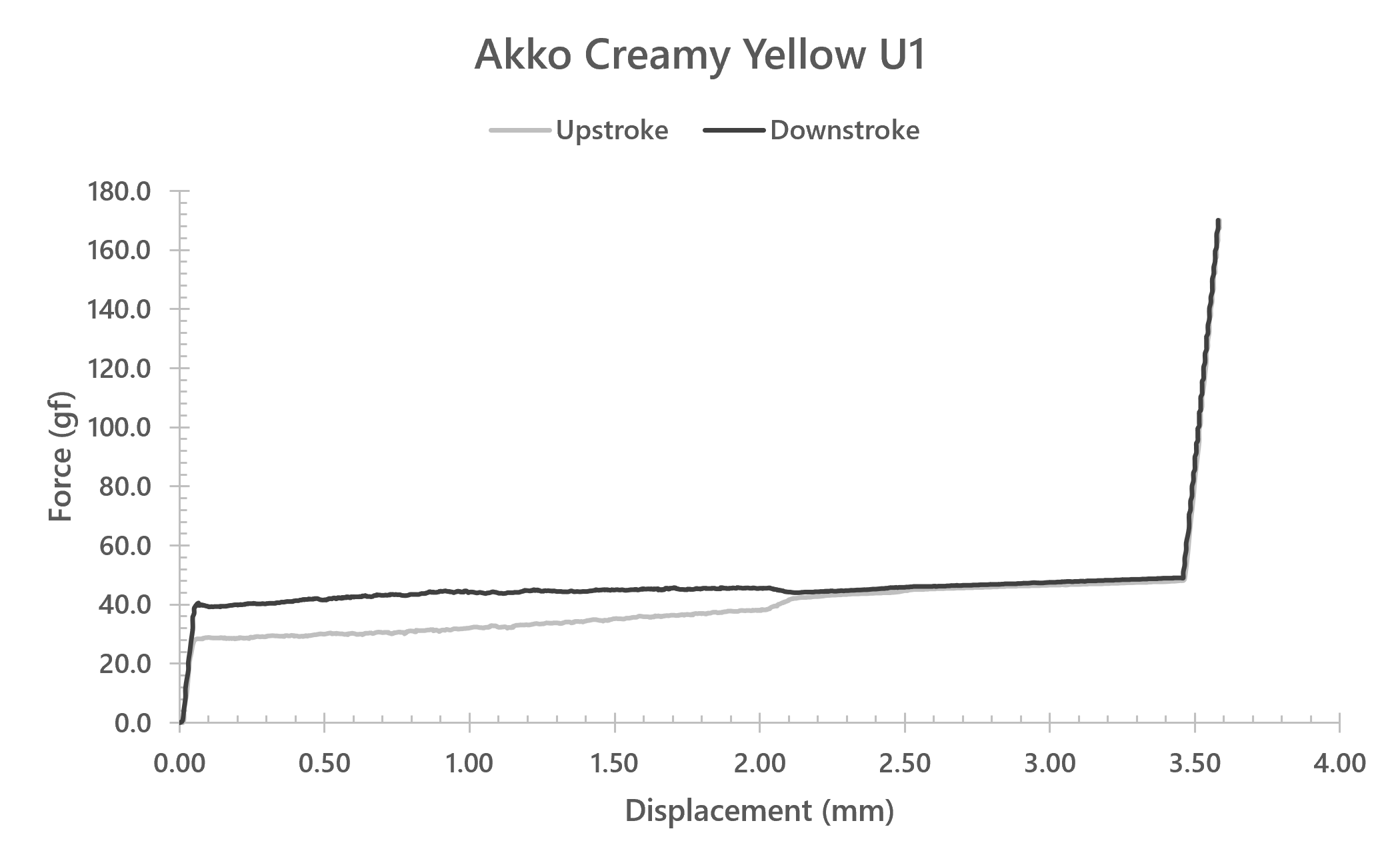
Figure 14: Force curve diagram for the stock Akko Creamy Yellow U1 switch.
Sound
Despite all of the marketing fluff describing the Akko Creamy Yellow U1 switches relative to their predecessors along sound profiles notes, denoting these as trying to straddle the margins between their snappier, ‘clackier’ and deeper, more muted siblings, they really just come across as somewhat non-descript in their sound profiles. What’s worse is that the Creamy Yellow U1s are not just commonplace in terms of their good aspects, but that they also carry commonplace minor flaws as well like with the push feeling notes above. On the whole, the switches are rather quiet, with normal typing speeds really only occasionally popping up with the flat, slappy sound of the nylon stems colliding with their POM housings at the point of bottom out. While this bottom out does have some degree of snappiness, it’s not all that much and really doesn’t give these any sort of bite or even volume at this housing collision either. The topping outs of the Creamy Yellow U1s are so muted that they may as well not exist and can only sometimes be heard following the bottom out pop and the sporadically subtly scratchy sounding upstroke returns for some switches. Most Yellow U1s don’t carry this scratch sound in similar fashion to the push feeling notes above, and instead are silent though with a depth and muted solidness that makes these switches feel more substantial than hollower, thinner counterparts. All of this is to say, though, that there’s not much in the way of stand out personality in the sound profile of the Akko Creamy Yellow U1 switches. I fully well recognize that Akko wasn’t aiming for these switches to be unprecedented in their sound profiles, and really were just trying to straddle not just two popular switches but therein two groups of opinions from entry level enthusiasts with little in the way of refined switch tastes, but the switches just kind of sound plain. By ‘plain’, I mean that I could probably poll fifteen different seasoned switch collectors in a blind test and get fifteen different answers as to what this switch is with those possibilities spanning at least a dozen different manufacturers. But hey, if the complaint is that they are straight-forward and without much that makes them stand out for better or for worse, I’m not so sure that’s a problem in a switch that is supposed to be built from the combined opinions of the masses to be sold back to the masses.
Wobble
Present ever so slightly more in the N/S direction than the E/W direction, the Akko Creamy Yellow U1 switches have a noticeable, but not likely to be problematic amount of stem wobble. Without pulling up every switch I’ve ever scored or comparing them against much else while writing this section, it definitely strikes me as better than the historical average though only by a fairly tiny amount. Most users won’t have an issue with this unless they’re particularly picky.
Measurements
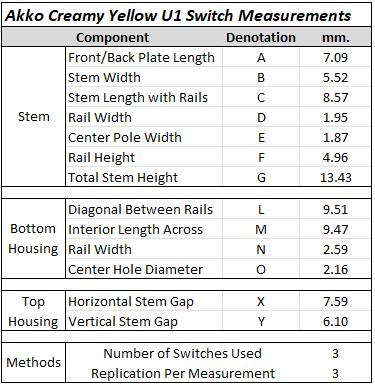
If you’re into this level of detail about your switches, you should know that I have a switch measurement sheet that logs all of this data, as well as many other cool features which can be found under the ‘Archive’ tab at the top of this page or by clicking on the card above. Known as the ‘Measurement Sheet’, this sheet typically gets updated weekly and aims to take physical measurements of various switch components to compare mold designs on a brand-by-brand basis as well as provide a rough frankenswitching estimation sheet for combining various stems and top housings.
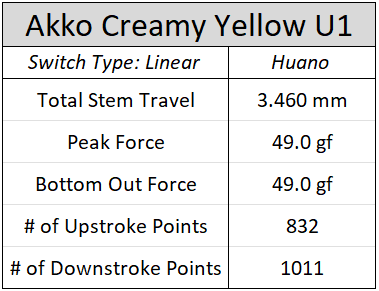
Figure 16: Numerical details regarding the force curve for the stock Akko Creamy Yellow U1 switches.
Have you ever wanted to be bombarded with more switch data than you’ve ever seen at any point in your life before? Consider checking out the ‘Force Curve Repository’ hosted on my GitHub that contains all force curves that I take both within and outside of these full-length reviews. In addition to having these graphs above, I have various other versions of the graphs, raw data, and my processed data all available for over 2000 different switches for you to use however you see fit. Check it out via the ‘Archive’ tab at the top of this page or by clicking any of the force curve cards above.
Break In
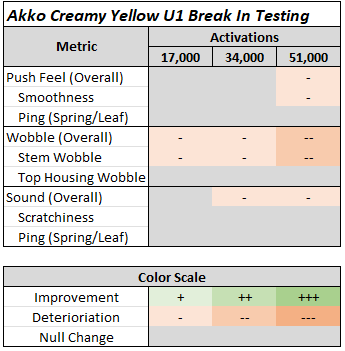
Break In Notes
17,000 Actuations
- After 17,000 actuations, the only notable change in the performance of the Akko Creamy Yellow U1 switches is a slight increase in both their N/S and E/W direction stem wobble. However, since the stock switches are asymmetric with respect to this feature, the increased wobble is much more apparent in the E/W direction.
34,000 Actuations
- Once the Akko Creamy Yellow U1 switches reached 34,000 actuations, they also picked up some increased variation in their sound profiles as compared to their stock counterparts. While somewhat inconsistent and definitely not noticeable in every switch and/or every stroke of the switches where it is present, some Yellow U1s broken in to this degree had slightly sticky, popping sounding bottom outs as if factory lube migrated into the bottoms of their housings during this break in process.
51,000 Actuations
- Factory lube migration is further noted in the Akko Creamy Yellow U1 switches broken in to 51,000 actuations in the form of some switches also noticeably feeling a bit scratchier throughout their strokes in addition to the increased popping and/or sticky tones at bottom out.
- In addition to continued factory lube migration, these Creamy Yellow U1 switches also showed further increased N/S and E/W direction stem wobble than their lesser broken in counterparts.
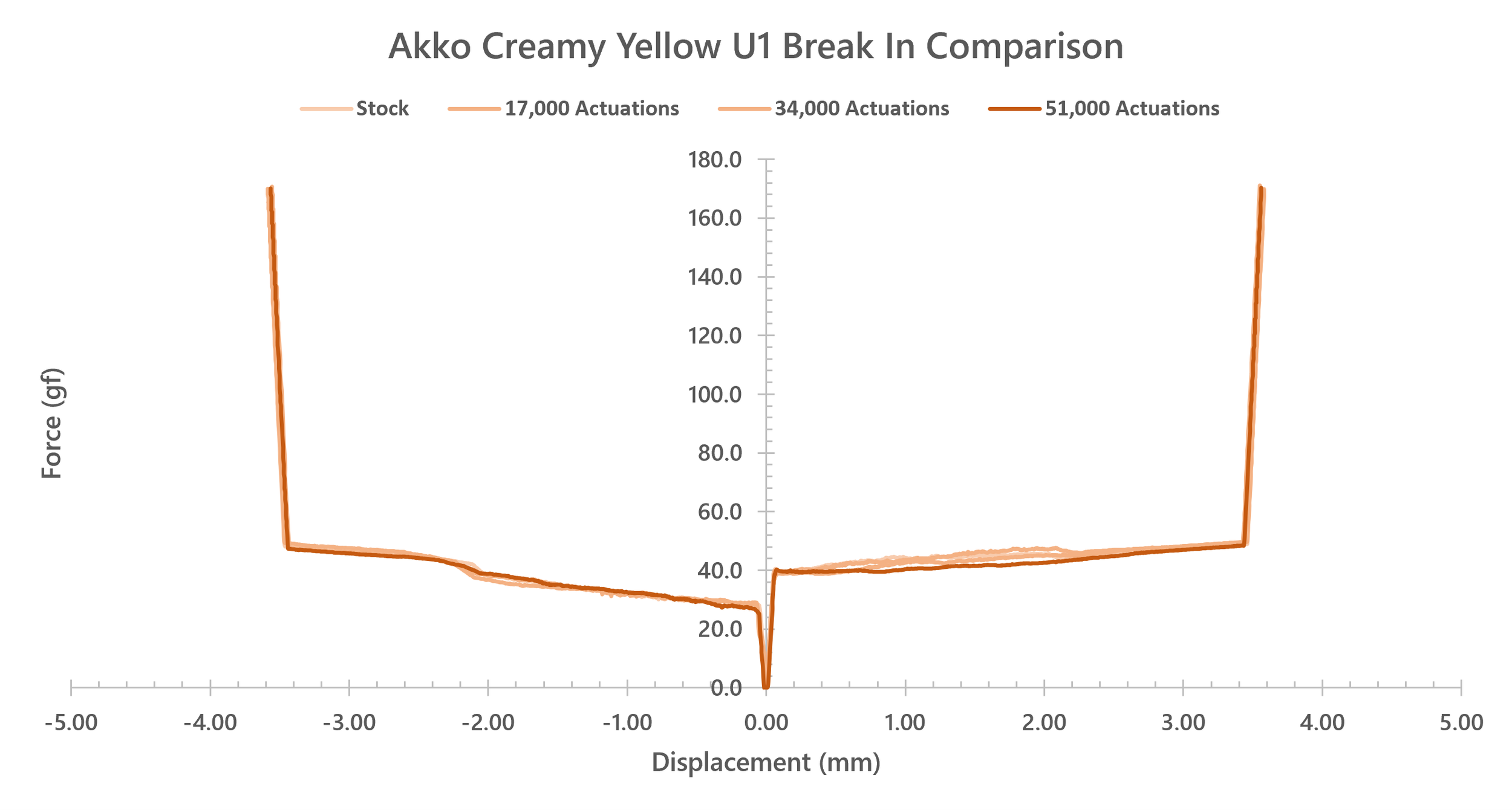
Figure 18: Comparative force curve diagram showing no substantial, consistent change in the force curves of the Akko Creamy Yellow U1 switches throughout the break in process.
Other
As stated in some of the marketing material for the new U1 Switch Series, the Akko Creamy Yellow U1 switches come in 100-count jars with a decorative outer cardboard box that moves away from the 45 count, reusable white plastic boxes that Akko had so strongly pushed in recent years. According to this marketing material, this was due in large part to customer complaints about the “odd” pack sizing of 45 switches, and while I can understand that frustration at the surface level, I really think it doesn’t hold up much to scrutiny. Sure, with packs of 45 switches you can realistically only get 45 / 90 / 135 for your keyboard that might have up to 110 switches needed for it, but if you need any single switch more than 100 you’ll end up with significantly more excess than the packs of 45. Notwithstanding the mathematical confusion this poses, I also think that Akko’s audience really shouldn’t have been complaining in the first place about the 45-count packs as the packaging was absolutely stunning at the price point the switches were being sold at. The white plastic boxes that my Akko Mirror and Cilantro switches arrived in were of a great quality, held up well, stacked and organized nicely, and could hold way more switches than the 45 that came with it if you tossed the plastic trays holding up the switches. These 100-count jars, on the other hand, are packed to the brim. While I can understand Akko wanting to meet their customers where they are at to continue selling product, this is one of those rare moments where I think the customers are genuinely wrong.
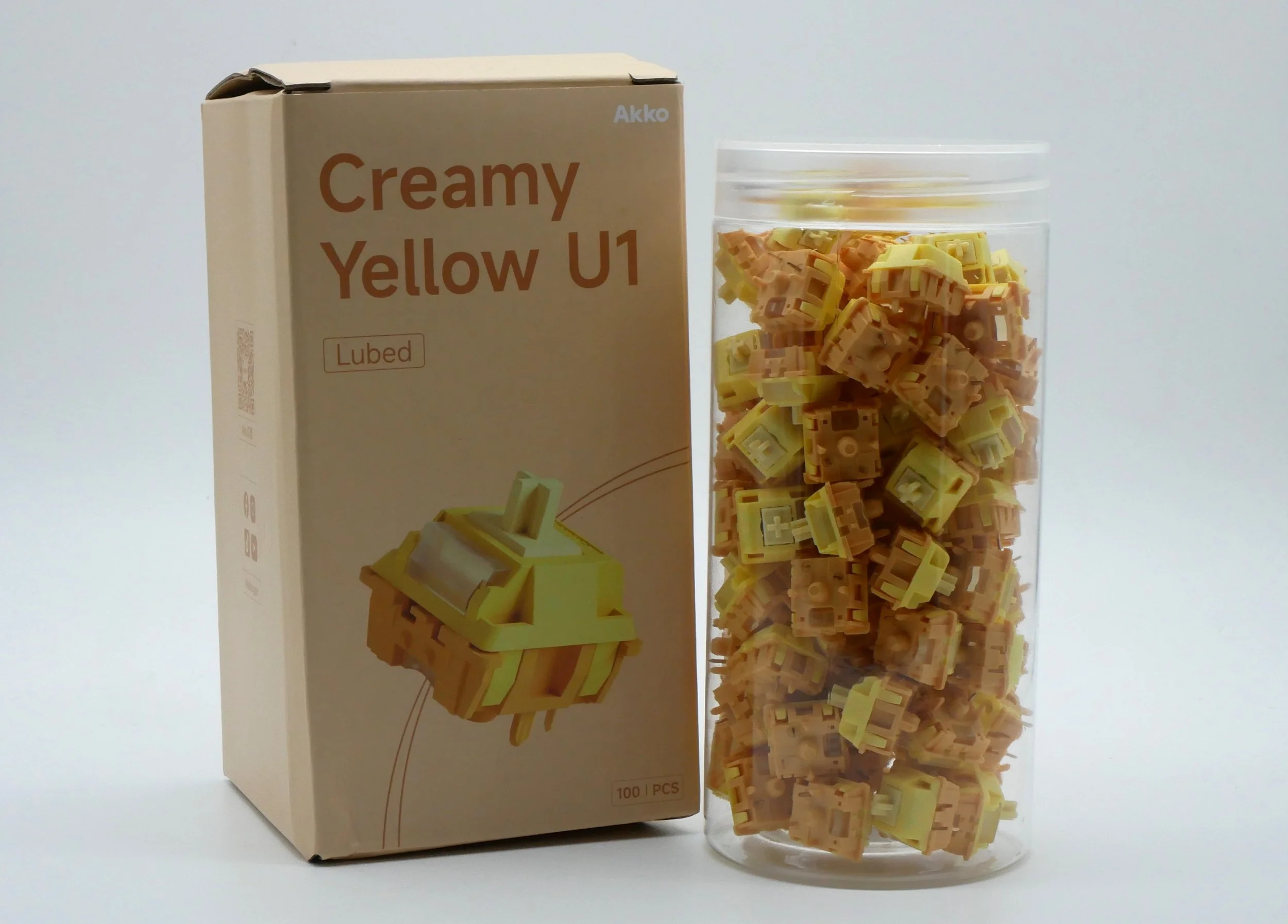
Figure 19: Akko Creamy Yellow U1 switches in 100 count packaging jar with outer box front.
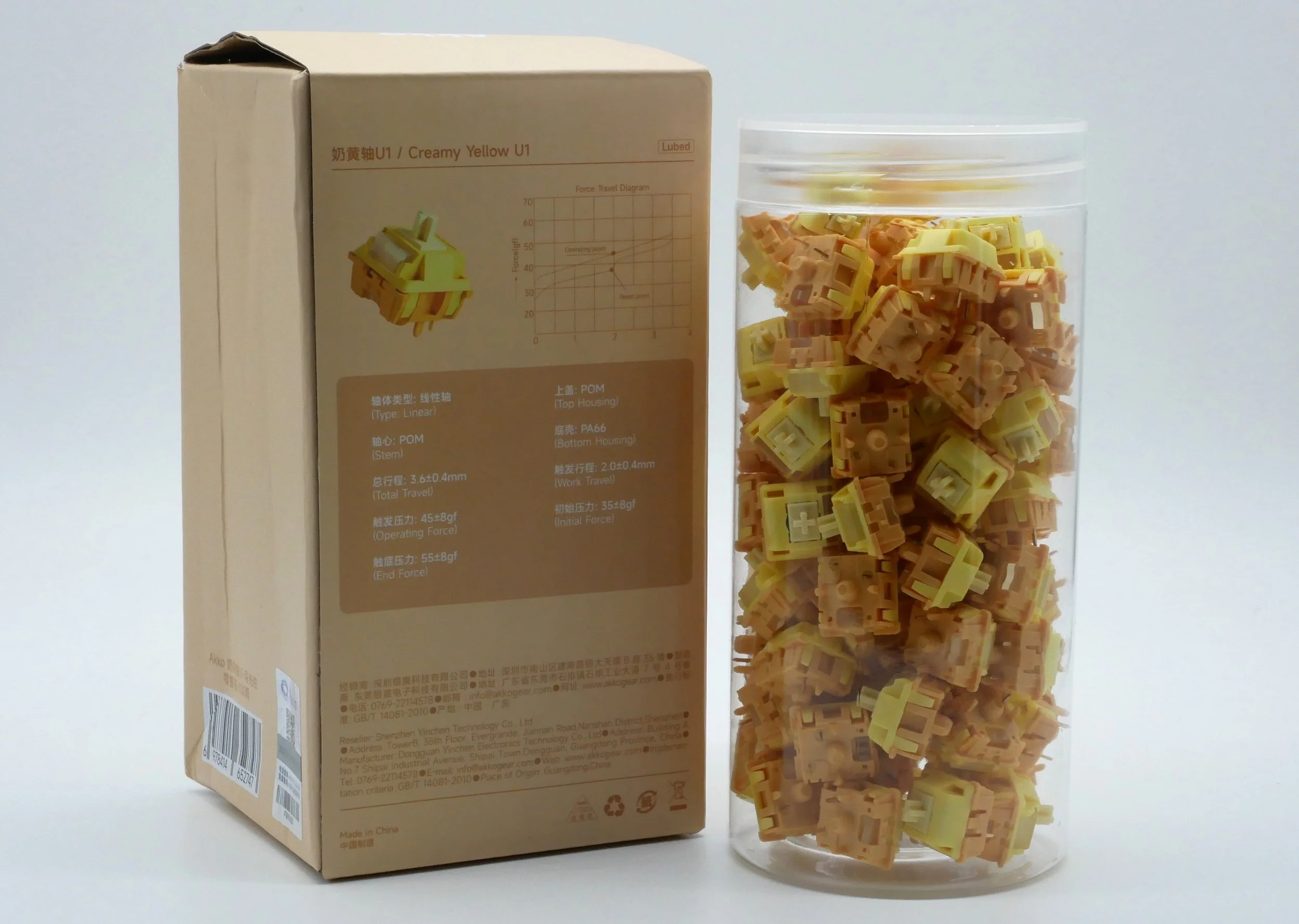
Figure 20: Akko Creamy Yellow U1 switches in 100 count packaging jar with outer box back.
Comparison Notes to Other Notable Linear Switches
Note – These are not aimed at being comprehensive comparisons between all factors of these switches as this would simply be too long for this writeup. These are little notes of interest I generated when comparing these switches to the Akko Creamy Yellow U1 switches side by side.
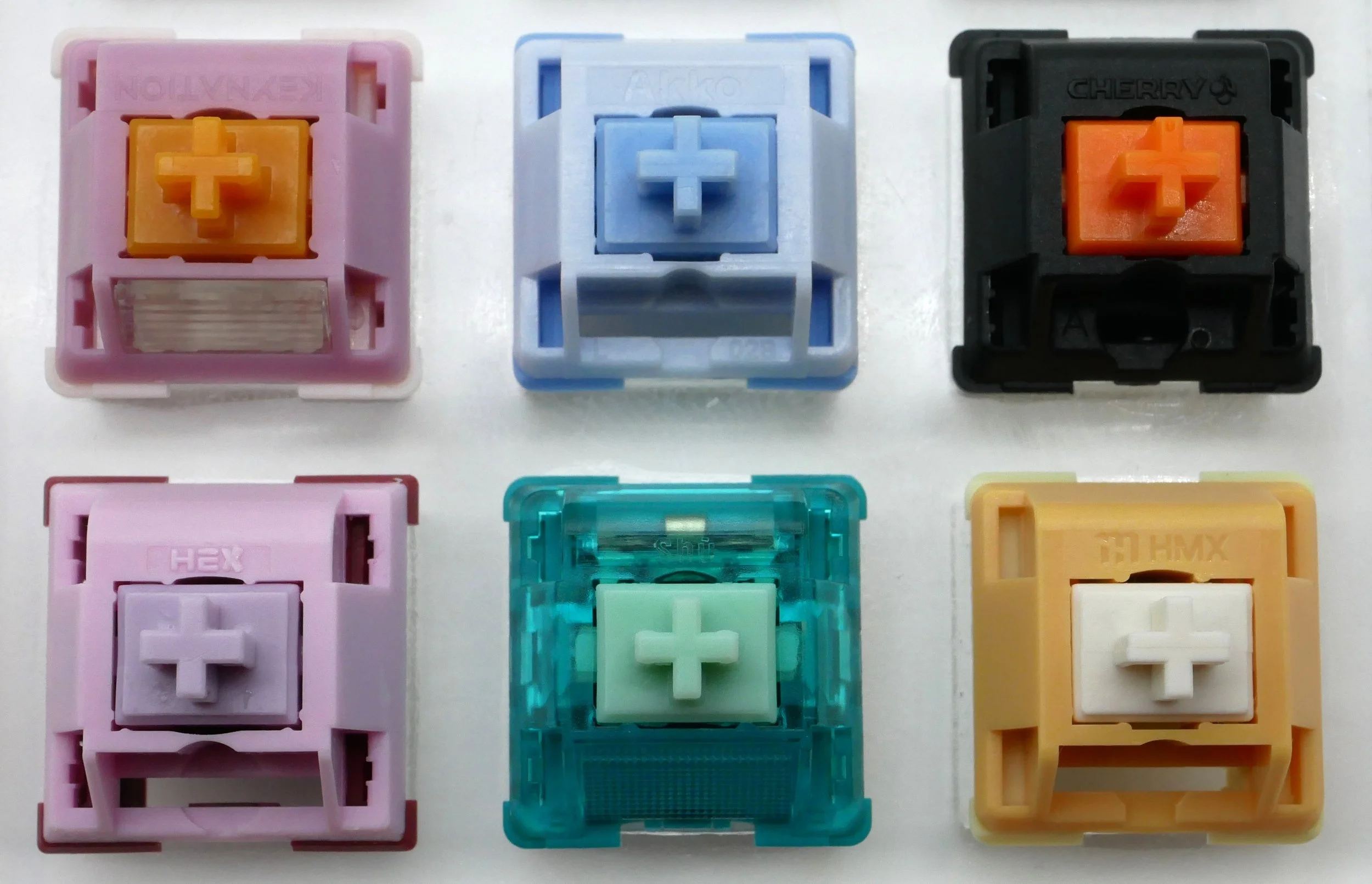
Figure 21: Switches for comparison. (L-R, Top-Bot: Taro N Sweet Potato V2, Akko Mirror, Cherry MX Orange, Keygeek Muse, Wingtree Jadeite, and HMX Egg Yolk)
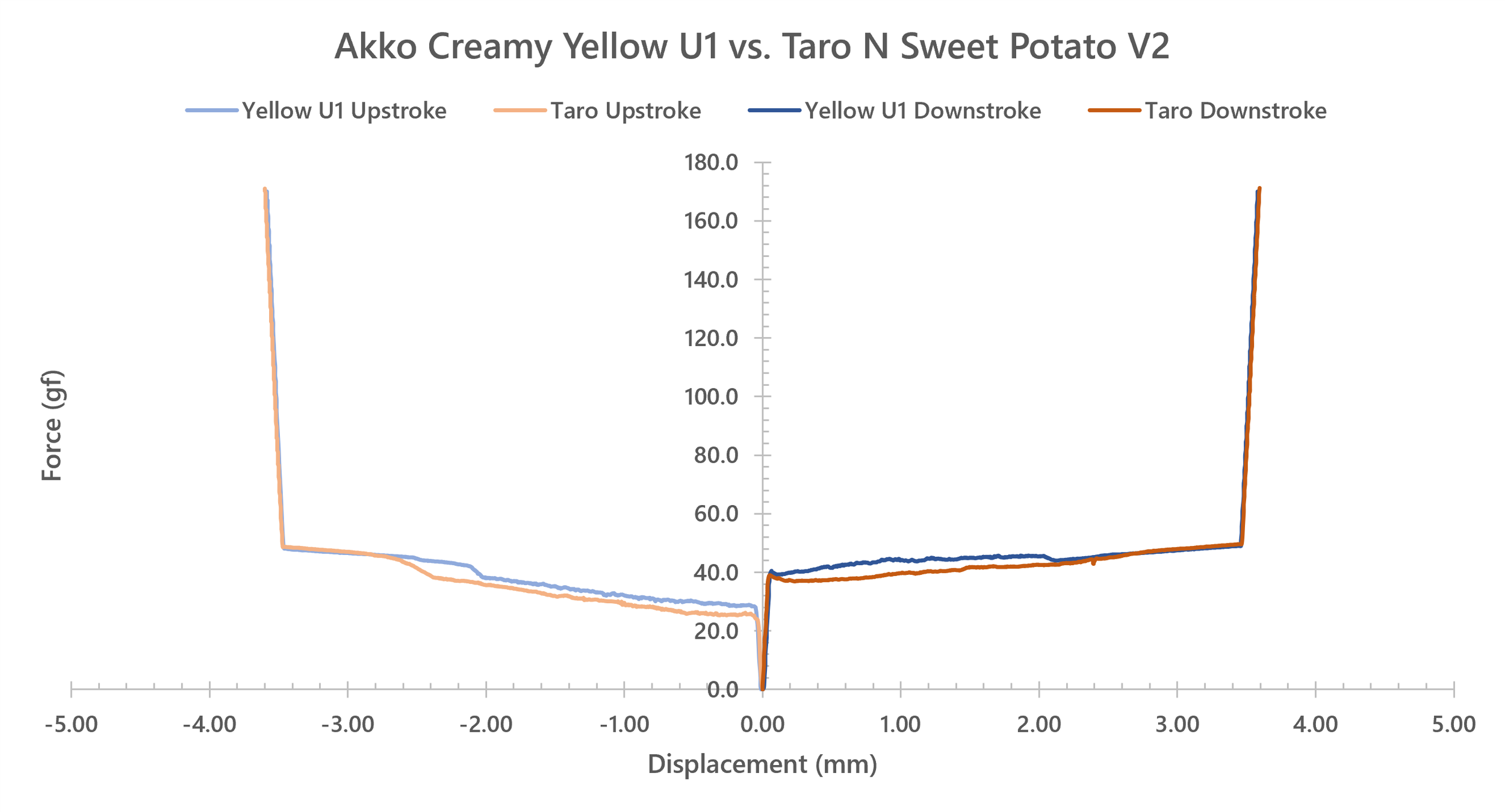
Taro N Sweet Potato V2
- There is noticeably less N/S and E/W direction stem wobble in the Taro N Sweet Potato V2 switches than there is in the Akko Creamy Yellow U1 switches.
- With respect to their sound profiles, while by no means are the Akko Creamy Yellow U1s bad or deficient in any significant way, they just don’t have as tight and coherent of a sound profile as the Taro N Sweet Potato V2s. The Taro N Sweet Potato V2’s sound profile is very clearly and singularly focused on their stem pole bottom out which pops out amidst an otherwise firm, muted backdrop. The Creamy Yellow U1s, by comparison, don’t have as prominent of a stem pole bottom out nor depth that envelops and accents this feature.
- The BSUN-made Taro N Sweet Potato V2 switches are slightly better lubed from the factory than the Akko Creamy Yellow U1s, coming across both smoother and more consistently smooth than the Huano-made U1s.
Akko Mirror
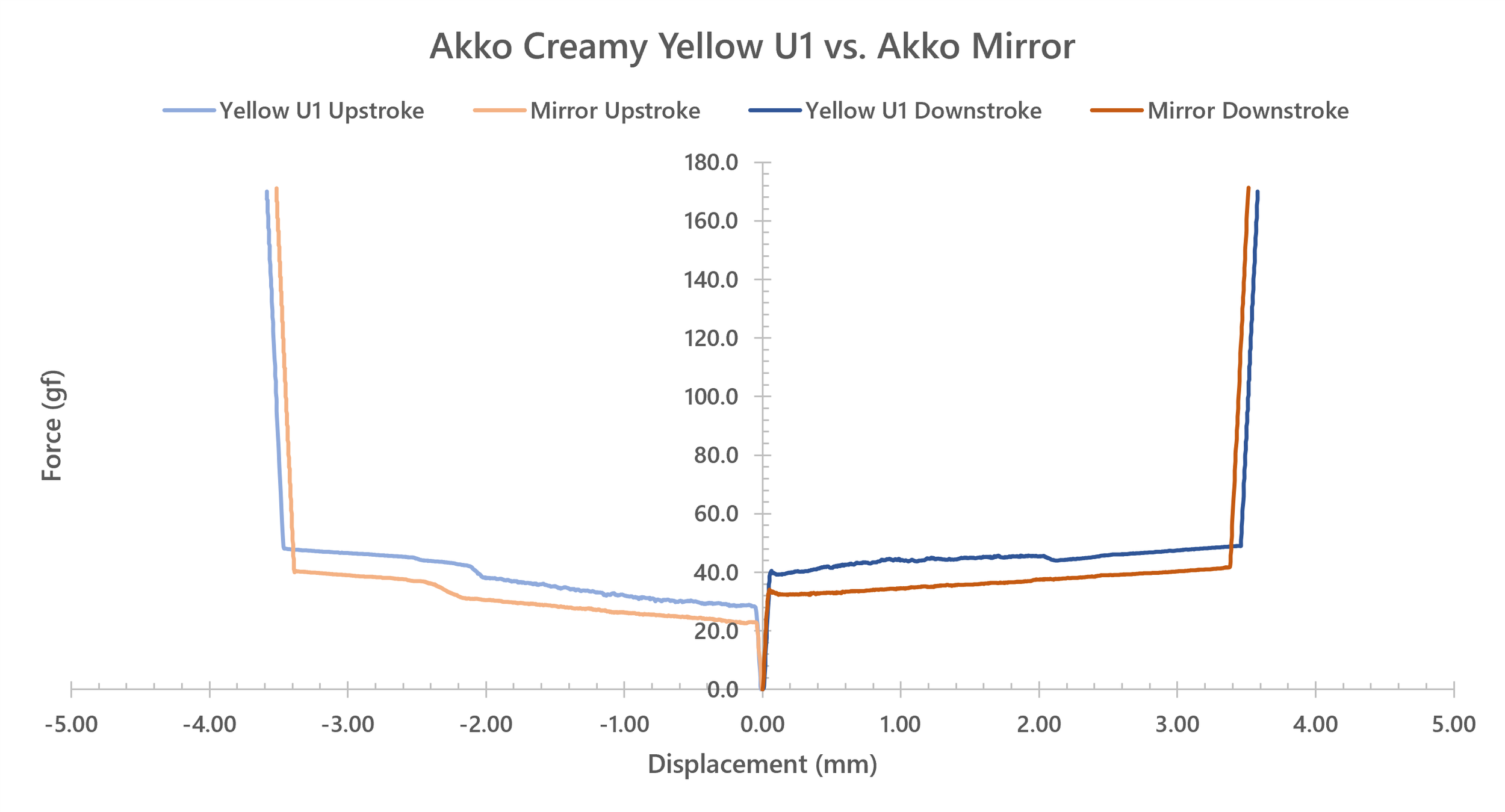
- Despite being only $0.06 more per switch at their time of release, the Akko Mirrors are significantly better than the Akko Creamy Yellow U1s in literally every single metric that they could be compared against. The difference between these purely comes down to manufacturer quality control, with the mirrors being made at arguably the peak of HMX’s ability and switch making capabilities as opposed to current day Huano.
- Compared head to head, the Mirrors are the louder of these two linears with a stem pole bottom out that is brighter, a bit higher pitched, and all around more consistently noticeable from switch to switch and stroke to stroke than the bottom outs of the Akko Creamy Yellow U1s.
- While it is admittedly subtle, I am able to feel the differences in stroke weights between these two switches that is so clearly highlighted in their comparative force curve below. The Creamy Yellow U1s just feel ever so slightly heavier and as if they have a more resistive downstroke than the cleanly gliding Akko Mirrors.
Cherry MX Orange
- Despite being lubed with Cherry’s most up to date designs from their now late German production facility in the form of the MX2A platform, the Cherry MX Oranges are a bit more scratchy and consistently so across their batch than the Hunao-made Akko Creamy Yellow U1 switches.
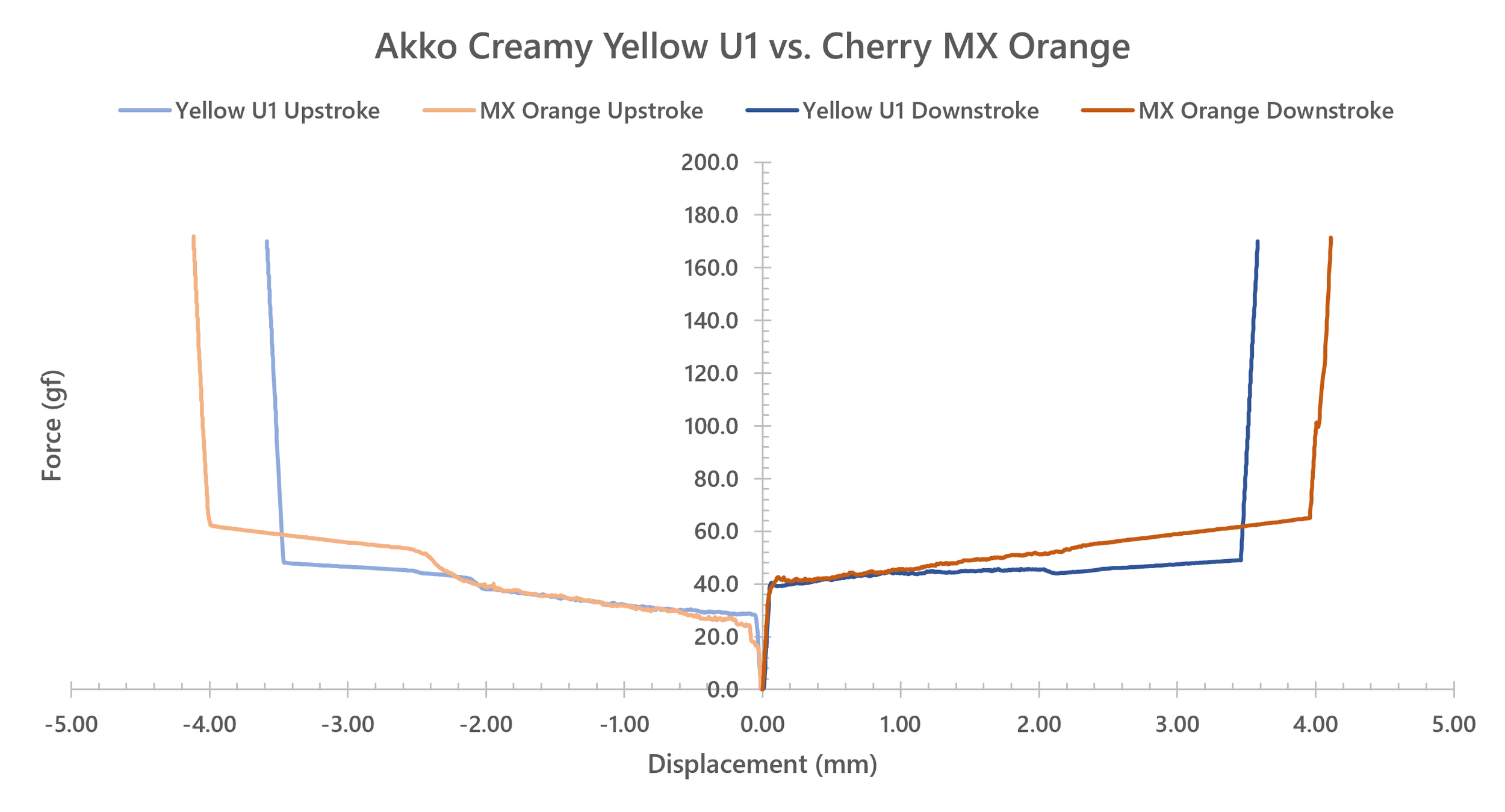
- Considering the comparative force curve between these two switches below, the quite noticeable difference in their total stroke length is also able to be felt in hand when testing out these switches side by side. The MX Orange switches definitely feel as if they plunge further into their bottom housings and take longer to bottom out than the Akko Creamy Yellow U1 switches.
- Of all of the switches on this comparison list, these are the two that are most similar to one another in terms of their overall volume, though their sound profiles are quite different. As is surely expected by you all, the sound profile of the Cherry MX Oranges is more scratchy has more of a grainy texture to its upstrokes and downstrokes than the smoother, less scratchy sounding Creamy Yellow U1s.
Keygeek Muse
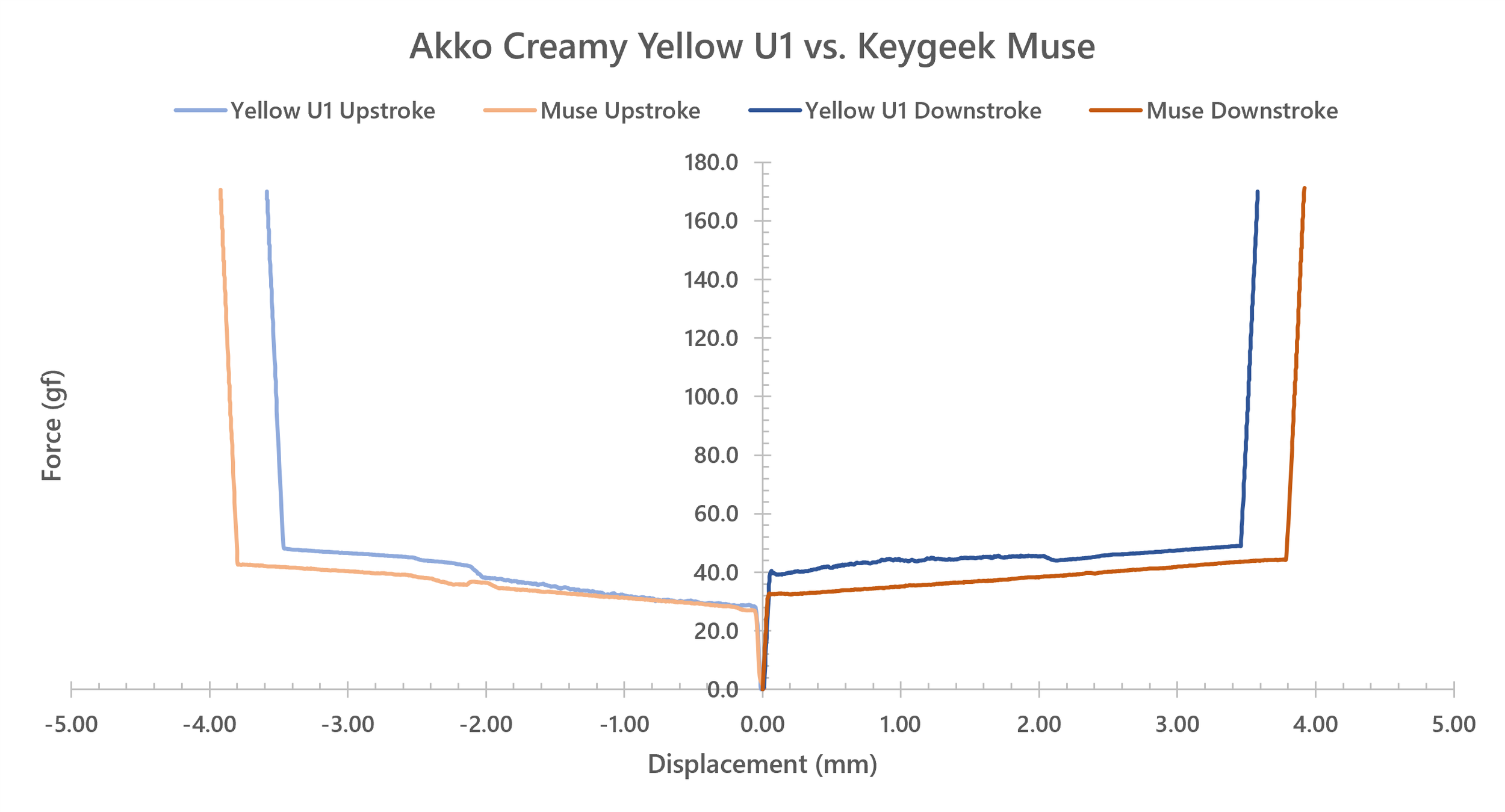
- While the Keygeek Muses have equal magnitudes of stem wobble in the N/S and E/W directions, their wobble is comparable to that of the N/S direction wobble magnitude of the Akko Creamy Yellow U1s. For those of you too lazy to scroll either back up or down from here, there is less E/W direction wobble in the stock Yellow U1s than N/S direction.
- The overall sound profile of the Huano-made Akko Creamy Yellow U1 switches is one that is more consistent from stroke to stroke and across an entire batch of switches than the sound profile of the Keygeek Muses. Most notably, this inconsistency in sound profile was the largest issue with the performance of the Keygeek Muses.
- The downstrokes and upstrokes of the Keygeek Muses are simply smoother, more uniform, and more effortlessly progressing than those of the ever so slightly scratchier, less smoothly lubed strokes of the Akko Creamy Yellow U1 switches.
Wingtree Jadeite
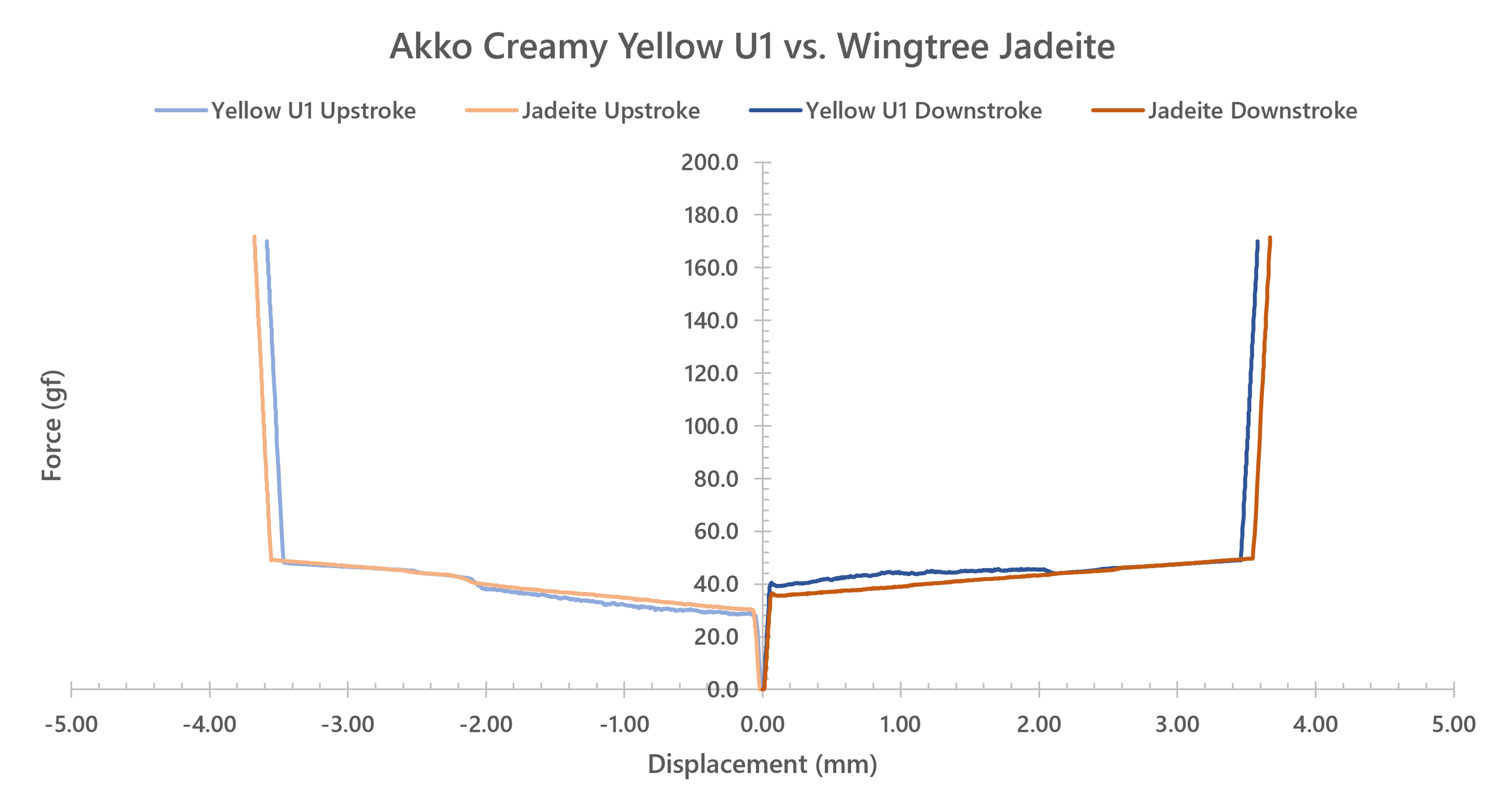
- The Wingtree Jadeite and Akko Creamy Yellow U1 switches are similar to one another in terms of their overall volume, though the bottom outs of the Creamy Yellow U1s are a bit more poppy and noticeable sounding, whereas the bottom outs of the Jadeites are a bit more subdued and melt into the switch’s otherwise deep backdrop.
- There is significantly less N/S and E/W direction stem wobble in the Wingtree Jadeite switches than there is in the Akko Creamy Yellow U1 switches and the comparison is hardly fair on this metric. Of all of the switches on this list, the Jadeites are most similar to that of the Akko Mirrors with respect to stem wobble, effectively elevating them over everything else, Akko Creamy Yellow U1s included.
- Both the Jadeite and Creamy Yellow U1 switches suffer from similar issues with respect to their push feelings in that they both have light shuffling scratches that occasionally peak through in their strokes as well as bottom outs that do vary in intensity and feeling across the batch and across different typing speeds. In that respect, these provide surprisingly similar linear performance to one another despite being from such radically different manufacturers.
HMX Egg Yolk
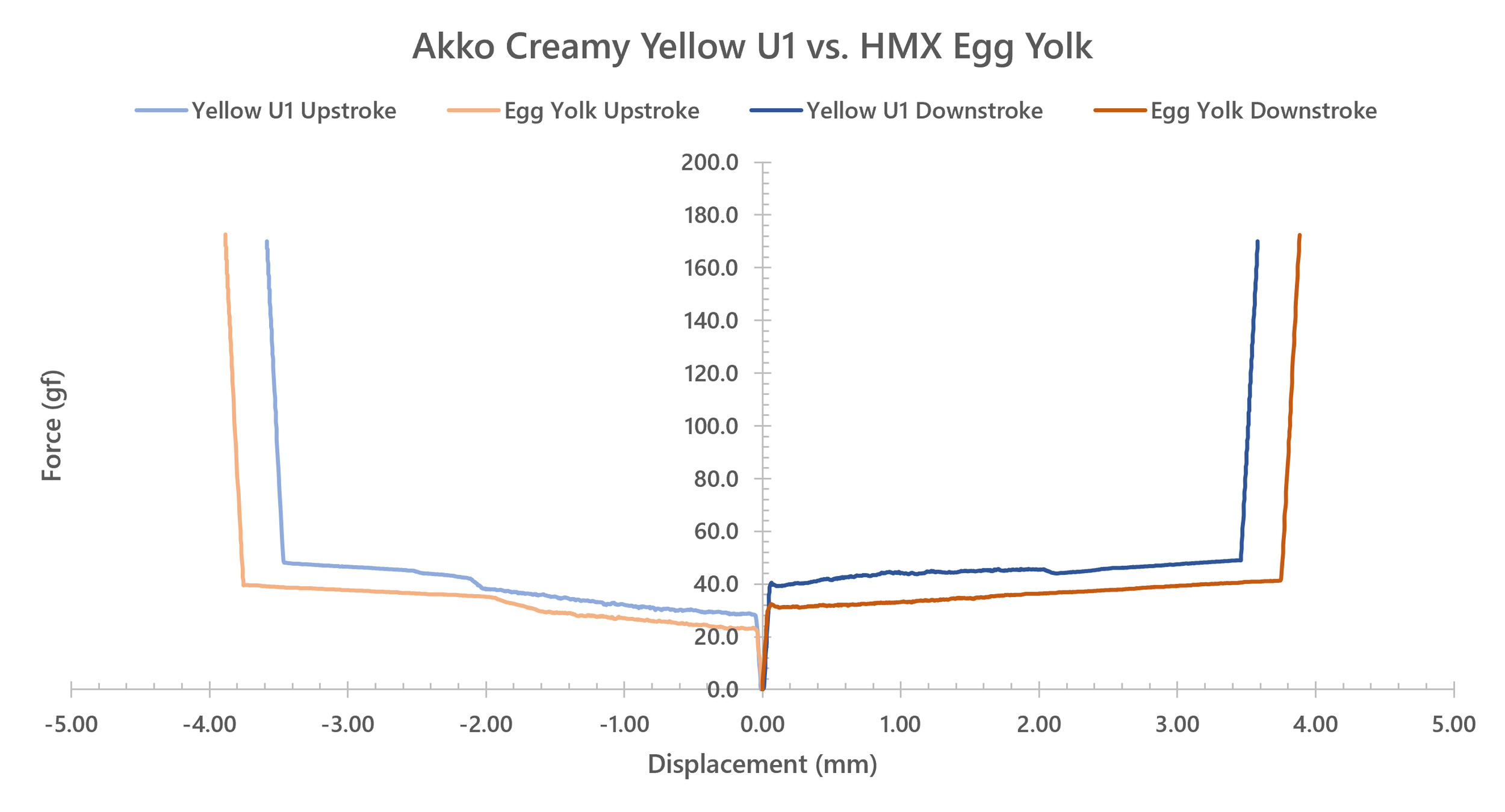
- The HMX Egg Yolk and Akko Creamy Yellow U1 switches have similar stem wobble insofar that it is noticeable more so in the N/S direction than the E/W direction, though not likely to be bothersome to many users unless they’re particularly picky about this metric.
- In both push feeling and sound profile, the HMX Egg Yolk switches have bottom outs that are brighter, more in your face, and clearly designed to be the stars of the show than the Akko Creamy Yellow U1 switches. This really shouldn’t be that surprising of a comparison, however, as the Creamy Yellow U1 switches were designed to be mass-appealing switches that are roughly similar to Akko’s other all-pleasing linear switches while the Egg Yolks were designed to primarily show off HMX’s then newest hybrid molding system.
- While I’m sure there are other switch pairs that could draw this comparison across the years, these two look hilariously similar to one another in terms of their color schemes without being identical matches to a known colorway. It really does come across as if these two switches are alternative universe versions of one another not just with respect to their color but also their performance and design aims as well.
Linearity
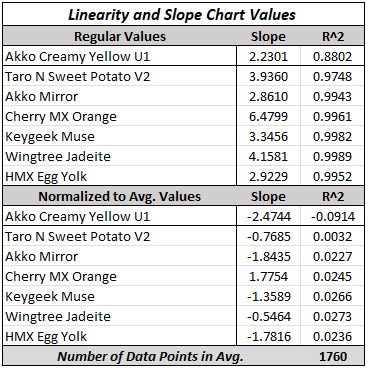
Figure 28: Absolute and relative Linearity and Slope values for each switch in the main comparison section.
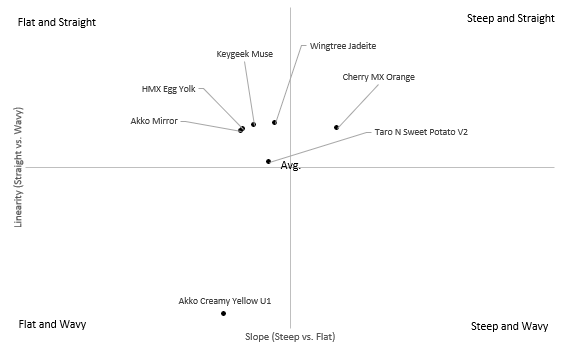
Figure 29: Qualitative comparison of the normalized Slope and Linearity for each switch in this comparison section.
If you are just now seeing this section for the first time and are a bit confused as to what I am talking about when discussing ‘Slope’ and ‘Linearity’, I highly suggest checking out my article titled ‘On Differences in Linear Switches’ where I explain what this section is for and how it came to be! For a bit of a shorter answer, know that this is part of my ongoing attempt to better quantify and articulate differences between linear switches which have historically not been captured in discussions about them.
Scores and Statistics
Note – These scores are not necessarily completely indicative of the nuanced review above. If you’ve skipped straight to this section, I can only recommend that you at least glance at the other sections above in order to get a stronger idea of my opinion about these switches.
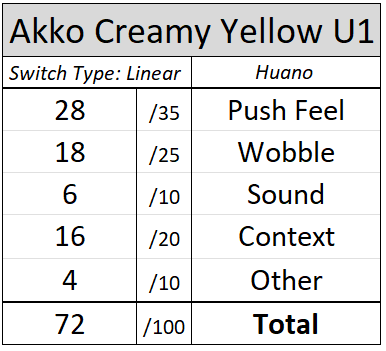
Push Feel
Featuring a 3.500 mm-long stroke that ends in a medium-light, 55 gf. bottom out weight on the back of a long spring and a nylon-on-nylon collision, the main driver of the feeling in the Akko Creamy Yellow U1s are their rounded, occasionally snappy stem pole bottom outs. However, beyond this there’s not much that really distinguishes these linears for better or for worse. They are generally smooth, but with some occasional small grain scratchiness, they bottom out as described, though mildly inconsistently from switch to switch, and just kind of are down the middle, as expected linears without many twists or flairs.
Wobble
Present more so in the N/S direction than the E/W direction, there is small, likely to be unproblematic amount of stem wobble in the Akko Creamy Yellow U1 switches that won’t bother most users except those particularly picky about this metric.
Sound
The sound profile of the Creamy Yellow U1s is similar to the push feeling notes above insofar that it is driven by the soft, somewhat snappy stem pole bottom outs sometimes, occasionally is accented by subtle leathery scratch tones, and is altogether somewhat unremarkable. These quiet linears don’t offer too much offensive and realistically could be suitable for any user.
Context
Priced at about as cheaply as you can price modern day switches at $0.20 per switch, the subtle flaws and lack of standout character are almost hard to complain too much about in the Creamy Yellow U1s at this price point. Additionally, they have almost an almost guaranteed longer shelf life and wider community availability on account of Akko and their reputation with switches.
Other
While I can empathize that these were not made to take big strides or do anything other than fall in line with other Akko Creamy Yellow switches, these ultimately do just feel a bit… plain.
Statistics
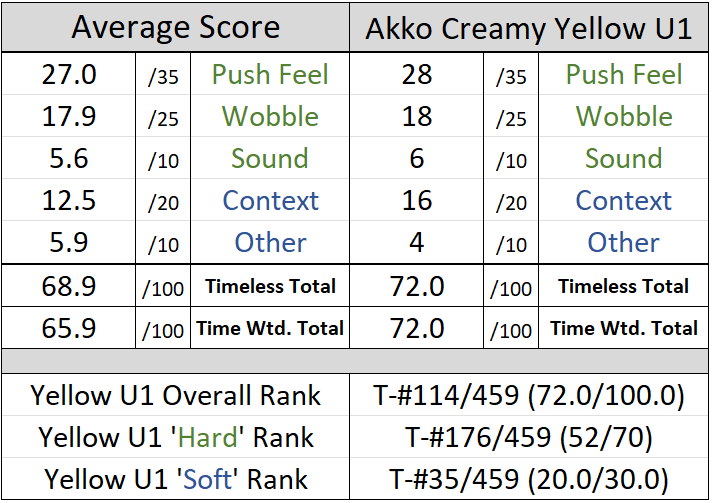
If you are looking at this statistics section and wondering what the heck ‘Timeless’ and ‘Time Weighted’ scoring is, consider checking out my short article titled ‘A Scorecard Time Change’. As a result of scoring becoming a bit anachronistic over the years, switches are now ranked in this statistics table using a “time weighted total” as opposed to their day-of scoring as discussed in that article. If you’d also like to learn about what ‘hard’ versus ‘soft’ ranks refer to specifically, I’d encourage you to head on over to my GitHub linked in the table above or at the links in the top right hand of this website to check out my database of scorecards as well as the ‘Composite Score Sheet’ which has a full listing of the rankings for each and every switch I’ve ranked thus far.
Final Conclusions
Those of you who thought this concluding section wouldn’t have a thematic tie in with the pre-review introduction like I’ve been trying so hard to do over the past couple of months will be left sadly mistaken here. Doubling down on the sadness, though, I want to emphasize that this wasn’t editorially planned and I didn’t even think it would happen either! Despite being a new linear switch dreamed up from a 2026 Huano and Akko collaboration, the Akko Creamy Yellow U1 switches are about as non-descript as the past couple of weeks that I’ve mentioned at the top end of this review. While I was genuinely excited by the announcement of the U1 Switch Series and had a solid degree of anticipation for the newest iteration of switches from Akko which promised a refinement of all the features that made them so sought after over the past couple of years, I am instead left here with switches that just seem like they are trying to be likeable to the masses rather than refined from any source of inspiration. The Akko Creamy Yellow U1s are rather plain in design, featuring a POM over nylon housing with nylon stem material combination that is propelled by a long, medium-light 55 gf. spring that highlights the slight stem pole bottom out that these switches have at 3.50 mm of stroke length. And that’s it. That is really all you get from the Creamy Yellow U1s. The switches are fairly smooth, thought somewhat subtly scratchy in some switches across the batch, have a snappy, noticeable stem pole bottom out that isn’t too loud or too sharp, and overall just have features that are not too much of anything one way or another when using these switches. Even the stem wobble of these switches isn’t too good or really too bad, it just kind of is average at best. Perhaps the only intrinsic or extrinsic feature that stands out about the Akko Creamy Yellow U1 switches is their $0.20 per switch price point, but even at that they are lacking a singular defining characteristic that really would compel consumers to buy them. Me, personally, I’d rather buy a switch at a higher price point even if it had more notable drawbacks to its performance just so long that it had upsides that made seeking it out worthwhile. Switches which are dead down the middle in their delivery without too much in the way in flaw or flair are great and all, but they are clearly meant to be popular switches sold on a popular marketplace to people who just want good, cheap switches. To that end, the Akko Creamy Yellow U1 switches definitely fulfill their purpose, though without being for people like me or likely many of you who read these reviews. Leaning into the mystery of what exactly the ‘U’ in the Akko Creamy Yellow U1 switch stands for, my experience thus far could be summarized with all of the following guesses:
Universal more so than unique, but ultimately underwhelming to me.
Sponsors/Affiliates
Mechbox UK
- A wonderful UK based operation which sells singles to switches that I’ve used above in my comparisons for collectors and the curious alike. Matt has gone out of his way to help me build out big parts of my collection, and buying something using this link supports him as well as my content!
proto[Typist] Keyboards
- An all-things keyboard vendor based out of the UK, proto[Typist] is a regular stocker of everything from switches to the latest keyboard and keycap groupbuys. While I’ve bought things from the many times in the past, they also are a sponsor of my work and allow me to get some of the great switches I write about!
Divinikey
- Not only do they stock just about everything related to keyboards and switches, but they’re super friendly and ship out pretty quick too. Divinikey has been a huge help to me and my builds over the last year or two of doing reviews and they’ll definitely hook you up. Use code ‘GOAT’ for 5% off your order when you check them out!
ZealPC
- Do they really need any introduction? Zeal and crew kicked off the custom switch scene many years ago with their iconic Zealios switches and the story of switches today couldn’t be told without them. Use code ‘GOAT’ (or click the link above) for 5% off your order when you check them out!
MechMods UK
- A rising vendor based in the UK, Ryan and crew have been a pleasure to work with and have nearly everything you’d need to build your first or fourteenth keyboard. Go build your latest or greatest one right now with them by using code ‘GOAT’ at checkout for a 5% discount!
Dangkeebs
- A longtime supporter of the website and the collection, Dangkeebs has quite possibly the widest variety of switches of any vendor out there. Not only is their switch selection large, but it rotates and is constantly adding new stuff too. You’re going to need 5% off your order with my affiliate to save off the cost of all those switches!
SwitchOddities
- The brainchild of one my most adventurous proxies, SwitchOddities is a place where you can try out all the fancy, strange, and eastern-exclusive switches that I flex on my maildays with. Follow my affiliate code and use code ‘GOAT’ at checkout to save 5% on some of the most interesting switches you’ll ever try!
Cannonkeys
- Does anybody not know of Cannonkeys at this point? One of the largest vendors in North America with keyboards, switches, keycaps, and literally everything you could ever want for a keyboard always in stock and with an incredibly dedicated and loving crew. Follow my affiliate link above in their name to support both them and I when you buy yourself some switches!
Kinetic Labs
- One of the most well-rounded keyboard vendors out there, Christian and crew have been supporters of all my switch and switch-adjacent needs for some years now. I’m honored to have them as an affiliate and think you should check them out using my affiliate link above to support both them and I when you check out their awesome products!
Keebhut
- Want to try out some switch brands that fly under most vendor’s radars? Keebhut is always seeking out that next latest and greatest and has been super helpful in hooking me up with new brands over the past year. They are all about sharing that love as well, and want to give you 5% off your next order with them when you use code ‘GOAT’ at checkout!
Kailh
- No, you’re not mistaken – this is actually that Kailh that manufactures switches. As one of the longest running manufacturers in the hobby, they have a massive variety of switches available over on their website at any point in time. I’m lucky to be affiliated with them now, and so consider using my affiliate link above when ordering some Kailh switches to support me!
Keebz N Cables
- Australia and Oceania’s very own is now a part of the sponsor list here and I couldn’t be happier to add this long time supporter of the collection to it. They’ve always got an amazing selection of switches (and other keyboard parts) in stock and they want to share the love that they’ve shown me with you all too! Use code ‘thegoat’ for 5% off your first order when you visit!