PantheonKeys x TTC PT Black Switch Review
As I stated in the Meta Update VIII just a couple of weeks ago, I’ve really been considering branching out on the written keyboard content and delving a bit into things other than just switches and switch reviews. Taking my rather successful short article ‘Have You Ever Seen A Keyboard Shaped Waffle?’ from last year as a solid point of inspiration, the thought would be to not substantially replace any of the reviews or content you’ve all come to love and read over the years here, but rather expand upon what I have to offer and to give myself a chance to shared some of the gained knowledge and appreciation for other parts of the community that I’ve picked up over the years. One good example of something keyboard related but not directly about switches would short stories or some of my own meandering thoughts on artisan keycaps, otherwise shortened as the word ‘artisans’ to describe those decorative, resin casted keycaps featuring faces, creatures, food, and everything in between. While switches are still my true love and I look forward to writing these reviews week in and out, during the weeks of preparing for these reviews or conducting measurements on switches, I’ve increasingly found myself entertained by raffles for and discussions surrounding artisans and I’ve grown quite a bit of a box to be impressed by, if I do say so myself. And just like with the switches I’ve been so lucky to amass over the years, all of that colorful plastic I’m pulling in in the form of keycaps have stories, tales, thoughts, and deep sentiments I hold about the hobby all wrapped up into them as well. These are the same sort of sentiments that keep me writing about switches after all of these years. Though to be entirely honest, I really don’t have a great way in mind to go about doing that, rather I’m just using this introductory paragraph as a sort of ‘thinking out loud’ space about something that has been present in my mind, my interests, and my discussions over the week leading up to this review. I even think there could be fun, non-written content surrounding artisans that would be worth sharing as well, such as taking photos of them next to colorways or themes of switches that I have embedded in my collection over the years – something just a bit different than what I have been doing over the past few years as well as all of those other artisan collectors out there. After all, I know for a fact that there’s not a collector out there that can as seamlessly find a matching set of switches to stack up next to their favorite caps!
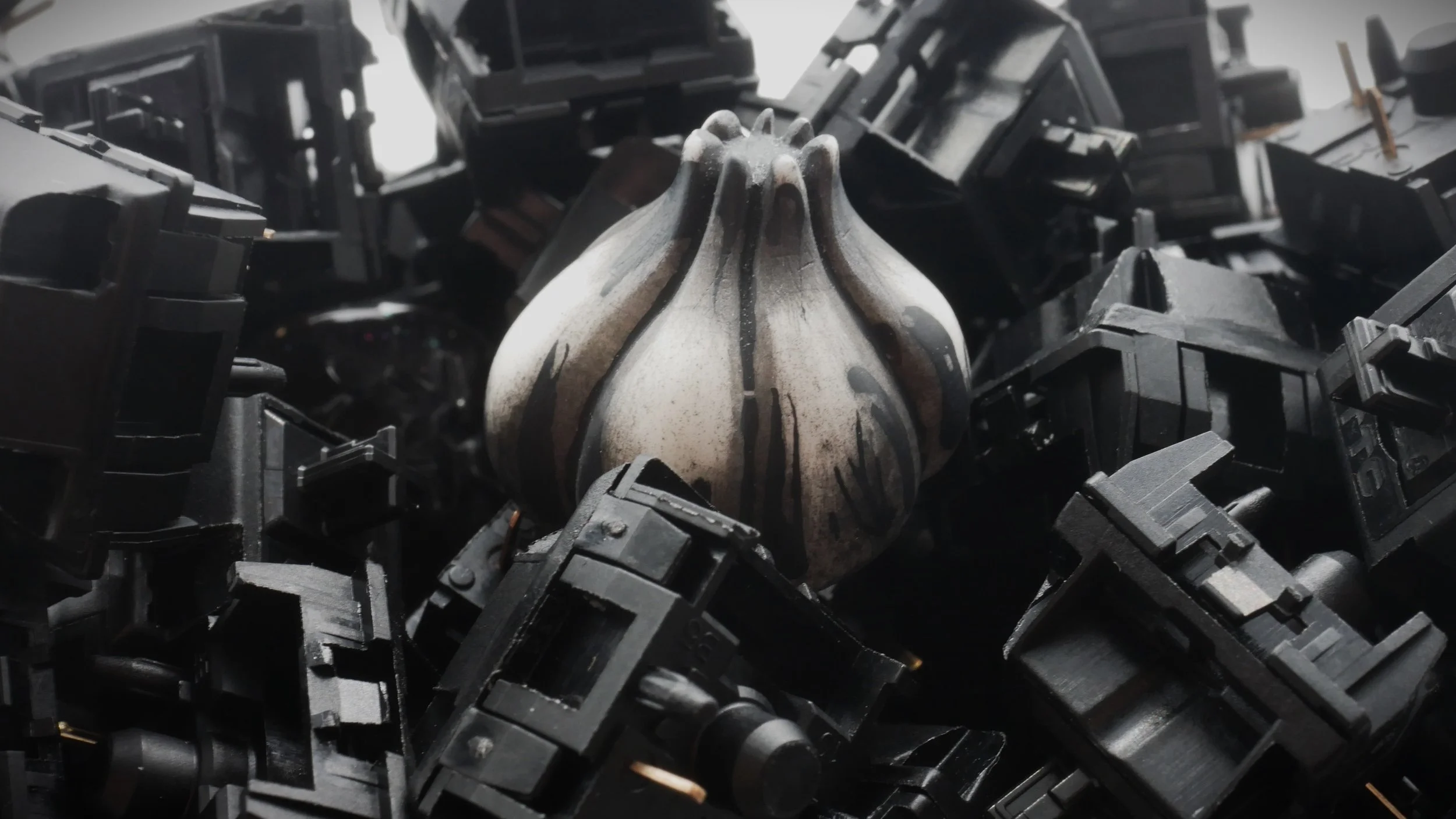
Figure 1: Something like this for example! PantheonKeys x TTC PT Blacks with one of my favorite Garlic caps from Nightcaps/ETF.
Switch Background
While the very top end of this article clearly shows that I have my mind pointing forward and thinking hard about the future, my deep dive into the background of the PantheonKeys x TTC PT Blacks has shown me that PantheonKeys has been thinking pretty steadily in the other direction. And that focus on the past has been for quite some time. As per a lengthy discussion I had with them regarding the origin of these switches, as there wasn’t much in the way of marketing or pre-release interest checks to drum up history surrounding these switches, all of this has spun out of a hard stuck fascination on one very specific iteration of one very specific switch – Cherry’s MX ‘Hyperglide Blacks’. No seriously, I actually mean those ‘Hyperglide Blacks’. After having directly asked them what the top level inspiration was behind these switches and what led to them turning out the way that they did, I was met with no less than a half dozen different ways to address their feelings about this specific iteration of Cherry’s famous linears. Not all Cherry MX Blacks, and not just ‘Vintage’ or ‘Retooled’ MX Blacks, either. For those of you who are unaware why this fact is so surprising to me and other more long running switch enthusiasts, the Cherry MX ‘Hyperglide’ series of switches was one that was released over half a decade ago in mid to late 2020 as an “upgraded” version of their MX1A switches, featuring new, polished, and refined molds and a purported factory lubrication method. In a way, these were effectively the peak-COVID “MX2A” style retake on the classic MX Black switches that Cherry was announcing to leverage the new surge of interest in the custom keyboard community though without the more extensive R&D efforts that went into the later upgrades to these switches in the actual form of the MX2A product line launch. With all of the new switches and variants thereof that Cherry has released in the years following the Hyperglides, I kind of hate to admit that I really had forgotten they had existed in the first place. Initially suggested as being for OEM keyboard manufacturers only, for then to be sold in the bulk in the community with endless hype cycles, it was actually the then further iteration upon this by vendors selling broken-in and hand lubed variants known as “Ultraglides” that really did make it all feel a bit too much for me to keep up with at the time as a then budding collector. As it turned out, there’s was too many releases for me to really ever go back and give those already modified and enhanced versions of manufacturer modified and enhanced switches much attention at all. And this was even without me considering trying (in vain, like everyone else for that matter) to find the subtle differences and ‘identifiable marks’ between them, original MX1A Blacks, ‘Vintage’ MX Blacks, ‘Retooled’ MX Blacks, ‘Pretooled’ MX Blacks, and every other false familiarity between them. Though despite my own personal avoidance of the topic and those switches as a whole, it’s clear by their mentioning of them by PantheonKeys in 2026 that they made quite an impression on the community and very much still maintain cult status to this day.
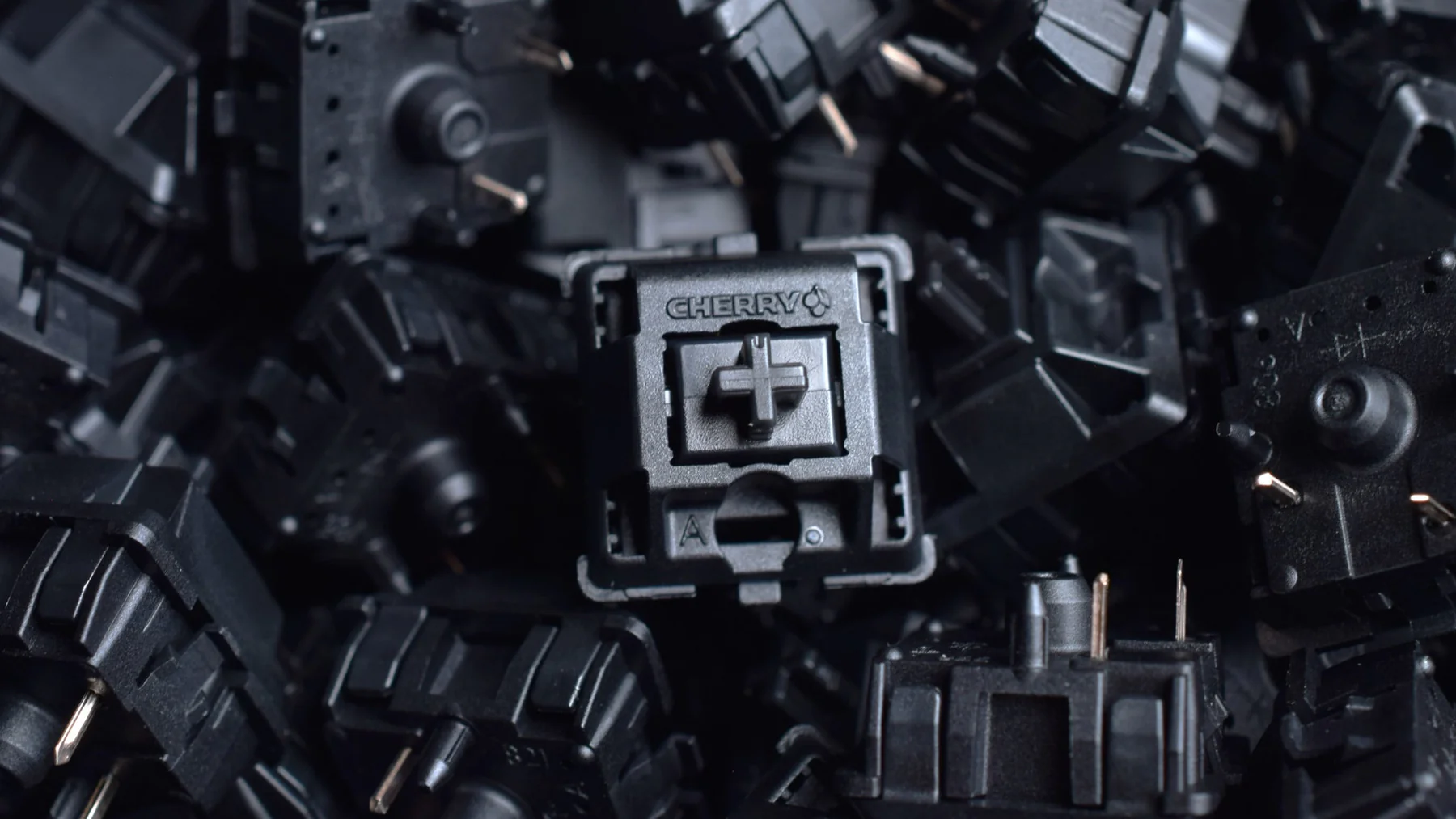
Figure 2: Yes I'm aware they don't look any different than modern Cherry MX Black switches, but a decorative photo of MX1A Hyperglide Blacks from Daily Clack's sales page.
Loving all things Cherry MX Blacks, but in particular the improved smoothness and very specific topping out feeling and sound of Cherry’s MX Hyperglide Black switches, PantheonKeys was an early adopter of them as a vendor as much as they were personal enjoyers of them. Unfortunately for them, though, like with all things Cherry – vintage, modern, futuristic, or otherwise – this love was far from unconditional and always had some caveated issues around the edges. While individual Hyperglide Black switches could be smooth, and especially those sold in the earliest batches of them, later iterations of them returned to the same inconsistency that their original MX1A inspirations had – coming across scratchy, pingy, or somewhere in between in both their strokes and their springs over the years. And so in turn, in order to make their beloved Hyperglide Black switches “endgame viable”, enthusiasts like the owner of PantheonKeys had to go through a rigorous routine of aftermarket care to make them usable, “fixing inconsistent scratch across batches and then the stock springs that everyone just throws out the day they get them”. As they grew as a vendor in time, the idea had always kind of lingered in the back of their heads on fixing these perceived issues with their most cherished switches – something which did come up multiple times over the years though without amounting to much other than a pipe dream. However, in 2025 it all changed when the owner of TTC just so happened to be visiting Singapore, the home location of PantheonKeys, following some discussions they had had vaguely surrounding switch offerings. Sitting down over dinner, the conversation between PantheonKeys’ and TTC’s owners didn’t revolve around futuristic technology for switches or some world-breaking aesthetic concept, but rather seemed to continuously circle back to their own appreciation for and annoyance with Cherry’s MX Hyperglide Blacks. The night ended with an agreement between the two to try and make a better version of these switches. Starting mid-way throughout the year, this agreement spawned a 7-round prototyping iterative loop within TTC that led to engineers coming up with everything from various types of lubricant to even new blends of nylon to try and specifically replicate and then improve upon Cherry’s strokes and topping outs. With each of these seven iterations also varying stem lengths, spring weights, and even some leaf materials, they effectively explored every possible switch option TTC could physically make – even going so far as to suggest a dry switch rather than a lubed one, something which TTC had never done before up to that point. (In fact this request was so far out in left field for TTC’s engineers that PantheonKeys remembered getting a direct phone call late one night to confirm that they had actually wanted that specific prototype round to be a “dry” switch, as the engineers had assumed it to be a translation error!) After multiple rounds of these iterations, which I did unsuccessfully ask to acquire for this review and definitely not my own personal collection, the “PT” black switches were born in early 2026, a TTC developed, PantheonKeys-inspired take on the Cherry MX Hyperglide Black switches.
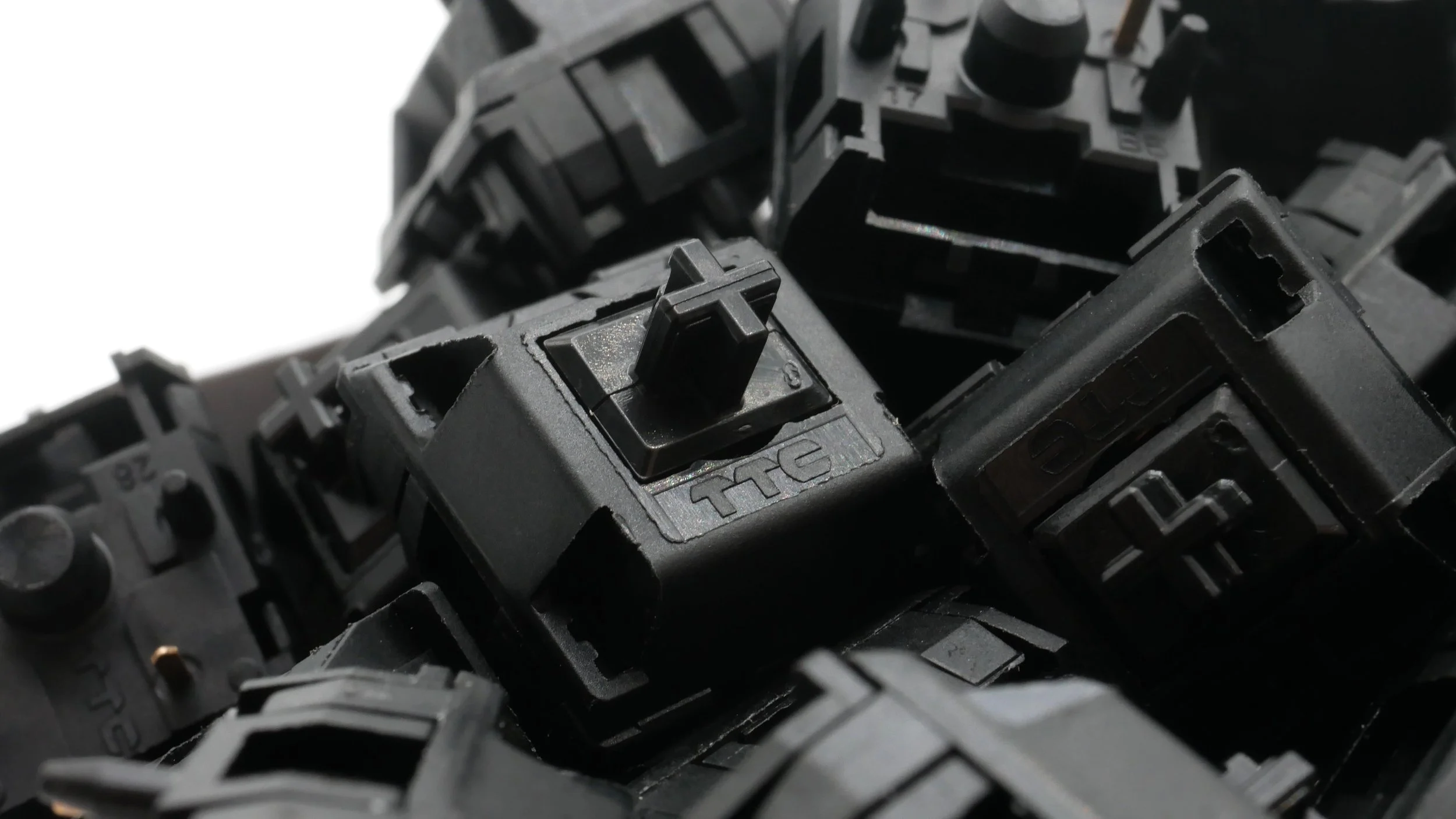
Figure 3: PantheonKeys x TTC PT Blacks. (In case you hadn’t guessed by now, the 'P' and 'T' stand for PantheonKeys and TTC.)
Seeing the PT Black switches as more of a modern take on Hyperglide Black switches should feel and perform in 2026 rather than a true, one-for-one faithful recreation of the famous-ish Cherry switches, our conversations led me to believe that PantheonKeys truly views these as slotting into a unique category amongst their offerings despite their initially plain looking marketing and appearances. Among the five switches they’ve designed and/or flagshipped to date – including the Haimu Benevolence, Haimu Malice, Meirun Purity, Keygeek TSIC, and HMX SquisHE – the PT Blacks very clearly hit more close to home and were more deeply personally inspired. And as much as they were doing it for themselves, they also clearly felt that this release of switches specifically fulfilled a (still surprisingly active) niche that they were they themselves were a part of in modern day enthusiasts of Cherry’s Hyperglide Blacks. Not wanting to just out switches for the sake of new switches, citing the “sheer saturation of switches in the market in 2026”, PantheonKeys really didn’t see any other linears from manufacturers like Haimu, HMX, or anyone else in between really as closely hitting that target of design as TTC’s engineers were able to do. (Of course with enough iterations of prototypes that led them to be concerned that the engineers may have begin to start personally hating PantheonKeys after awhile.) Further driving home the point that the PT Blacks were designed specifically for a niche and to fill a hole in the market rather than to launch a new multi-series lineup of switches, they even had shared that they weren’t even super sure if they’d consider making a “PT Brown” switch at some point in the future to try and improve on the tactile front runner of Cherry’s Hyperglide family of switches, even though they have had multiple customers who have asked for such following the release of the PT Blacks. These really were an effort to put out a perceived higher quality, singular switch release with as much intentionality as I’ve seen any vendor take on in recent years.
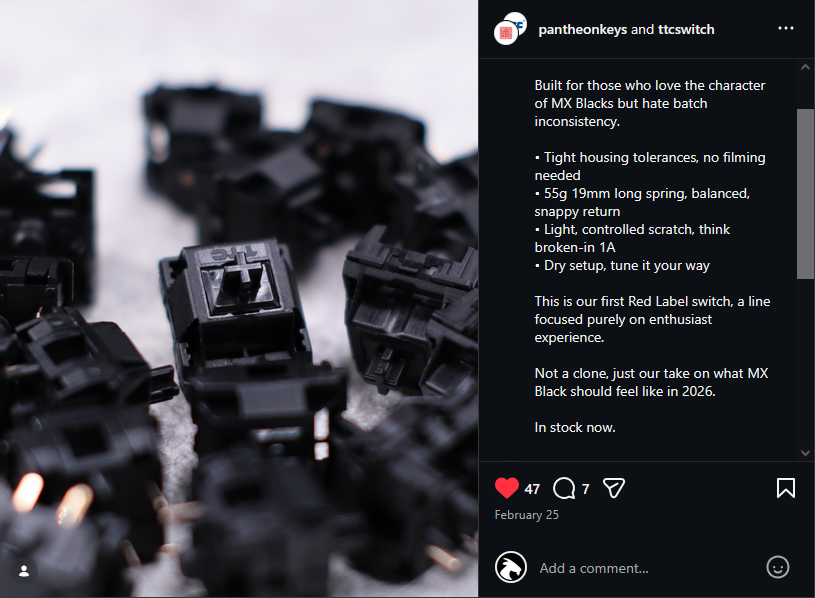
Figure 4: PantheonKeys' PT Black Instagram announcement from February 25th, 2026.
As for the PantheonKeys x TTC PT Blacks, specifically, following their months-long iterative design cycle and staging for production and release, they finally made their debut onto the market on February 20th, 2026. As stated in PantheonKeys’ Discord announcement for such, starting out from conversations with TTC about their enjoyment of Cherry’s MX Blacks as well as their shortcoming, the PT Blacks were this duo’s attempt at improving on the still present issue with these Cherry linears. Emphasizing marketing points of ‘tighter housings’, ‘almost dry feeling out of the box’, and a ‘light, controlled scratch’, they round off the announcement by hitting the same point they stressed in their conversation with me multiple times over – these are not an attempt at making a clone, “Just our take on MX Blacks, as they should feel in 2026”. Available in packs of 10, the PT Black switches were listed for sale at a price of ~$0.31 per switch in their stock form as well as a flurry of higher priced, aftermarket modified versions including filmed, lubed, and otherwise – a core practice of PantheonKeys for all of their switch offerings. Also marketed for sale on TTC’s website in addition to PantheonKeys, it doesn’t appear as if the PT Blacks have made their way to any other vendors yet as of the time of writing this review, though this certainly isn’t indicative of their reach at all. (Being such a tightly collaborative iteration, I wouldn’t be surprised if thye only chose to sell it between the two of them unless demand exponentiated.) Further on the point of being a tightly collaborative offering between PantheonKeys and TTC, I wouldn’t be shocked to see these swithces still available for months or years into the future despite no explicit plans being stated by either company about such. After all, manufacturers don’t tend to go down a seven-iteration loop of designs and prototypes just to release a single version of a switch once before shelving it forever…
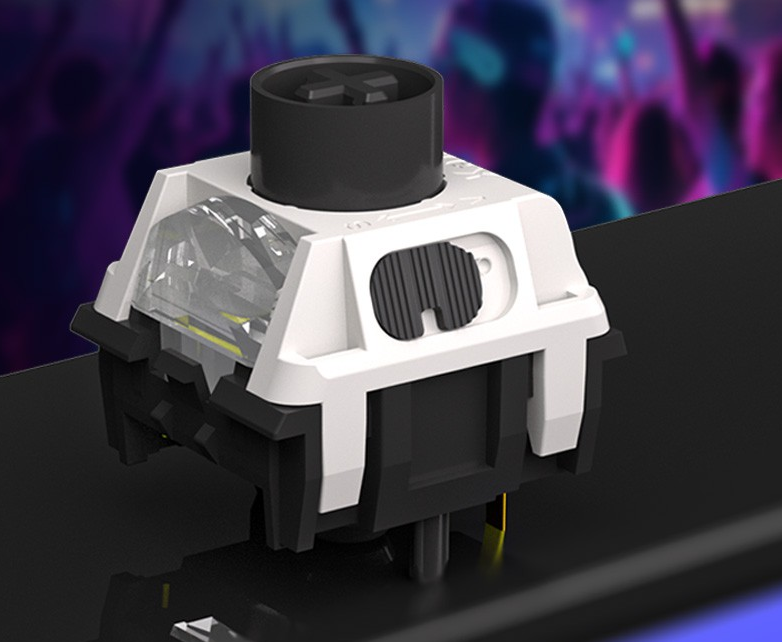
Figure 5: This is of course unless you are Kailh, who seemingly loves to pour money and R&D effort into switches they very quickly thereafter shelve forever.
PT Black Performance
Appearance
At the highest level, the PantheonKeys x TTC PT Black switches come in a full black, nylon housing construction with matching black stems that not only closely match the design of the Cherry MX Hyperglide Blacks that inspire them, but also those of TTC’s earliest lineup of nylon switches themselves. While modern enthusiasts have been spoiled by switch options that are all colors of the rainbow and then some, the original OEM-style lineups from most of the major manufacturers looked just like these, featuring stems that identified the typing and weight of the switch and matte black, full nylon housings that were as uniform as they could come. Despite perhaps being a bit boring in the grander scheme of modern mechanical keyboard switches, and certainly well below TTC’s technical capabilities as a switch manufacturer that has pushed aesthetics quite far before, I personally think keeping these as close to their source of inspiration as possible makes for a better homage than not. From a distance and even up close I imagine quite a few enthusiasts could confuse the PT Black switches with their significantly older, less refined predecessors from TTC, though there are some very subtle details that I think make these a bit more recognizable as modern by all standards. Identification of these details comes at the part and sub-part level and is featured in the paragraphs and photos below.
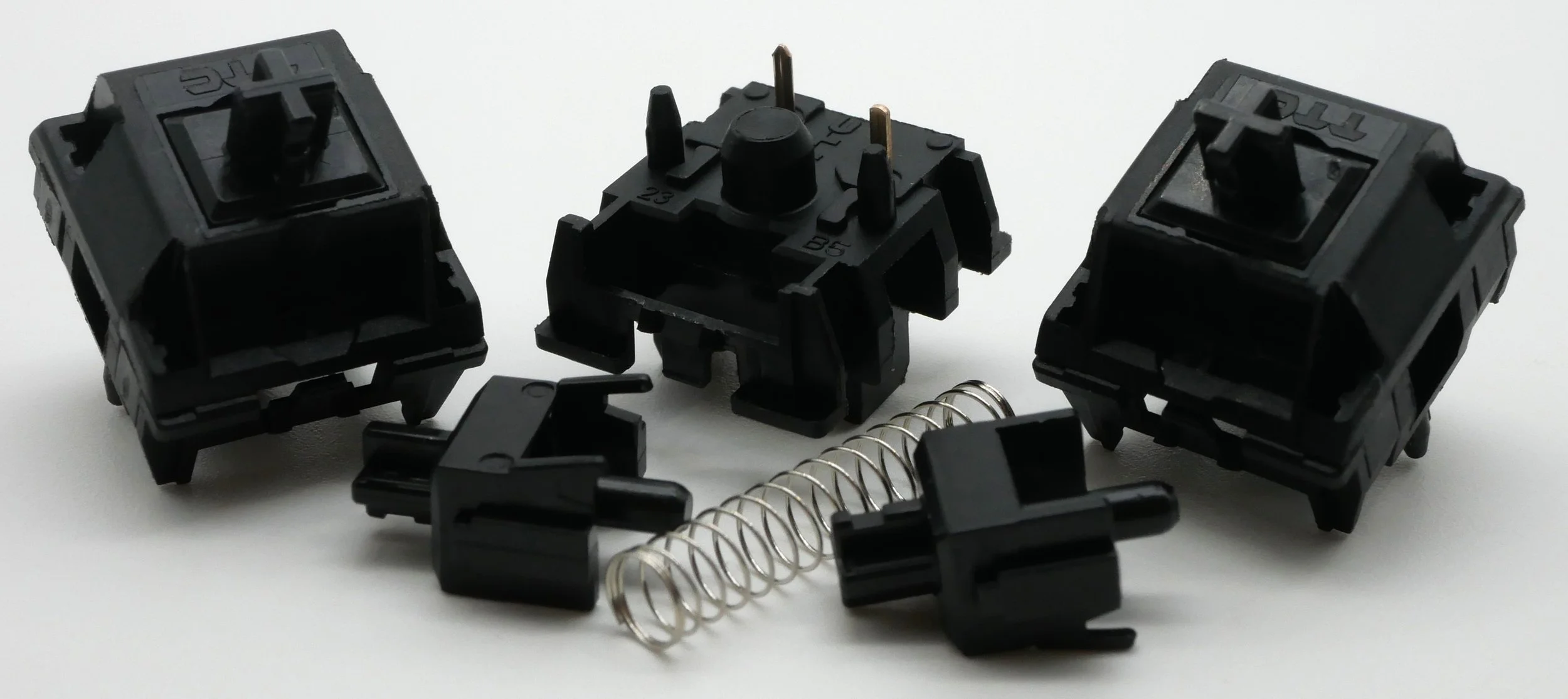
Figure 6: PantheonKeys x TTC PT Black switches and their components.
Looking first to the black, ‘modified nylon’ top housings of the PantheonKeys x TTC PT Black switches, we’re greeted with a slew of faintly familiar yet also modernly foreign features that could be used to distinguish these from their familial predecessors. (Yes, I did try for a lot of ‘F’ words in that sentence intentionally.) While one might think that the ‘inverted’ TTC nameplate in its sunken rectangular cutout at the nameplate region must be a more modern design decision like with Gateron, even the oldest “KS4” TTC nylon switches actually featured these inverted nameplates. The differences between these new and old switches, though, comes in the sharpness of the TTC logo and differences in glossiness between the log and the rectangle; The PT Black switches have crisper, cleaner edges to the lettering of the TTC logo as well as matte lettering over a significantly more glossy, shiny rectangle than the original KS4 TTC switches. The decision to include a long, rectangular LED/diode slit with a thin bifurcation strip in the PantheonKeys x TTC PT Black switches is also a new design choice, with the older models featuring only thin cutouts centered within a circular indentation at the front end of their switch. Internally, the structures of the PT Black switches seem largely similar to their predecessors, with only the left-hand side, raised text mold marking on the edge of the housing being the newer feature that stands out more. Perhaps, though, this may be found on newer OEM-style TTC switches as opposed to the older ones in my collection that I first brought on sometime around 2018.
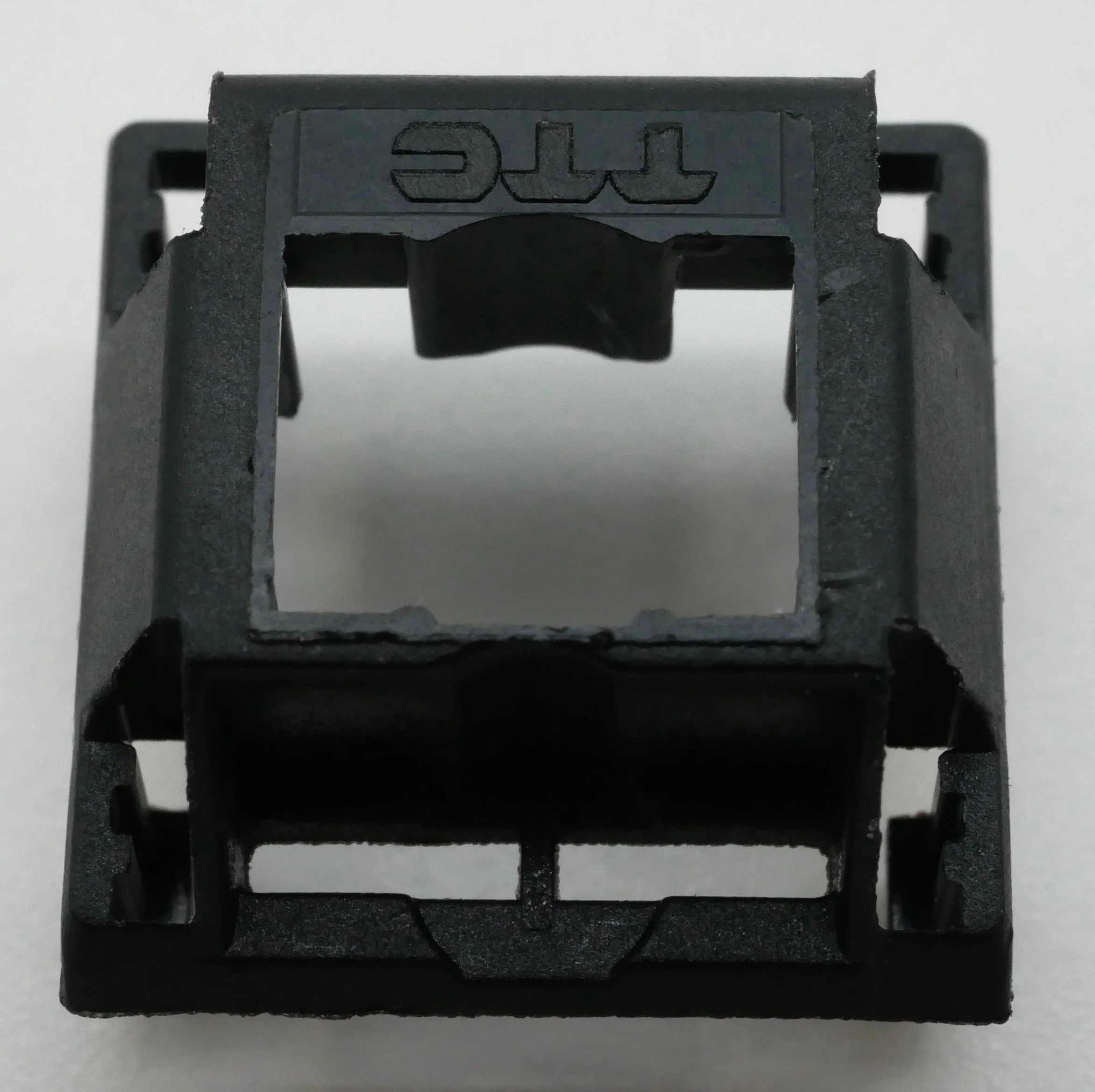
Figure 7: PantheonKeys x TTC PT Black top housing exterior featuring inverted TTC nameplate in glossy black sunken rectangle and a thinly bifurcated long, rectangular LED/diode slot.
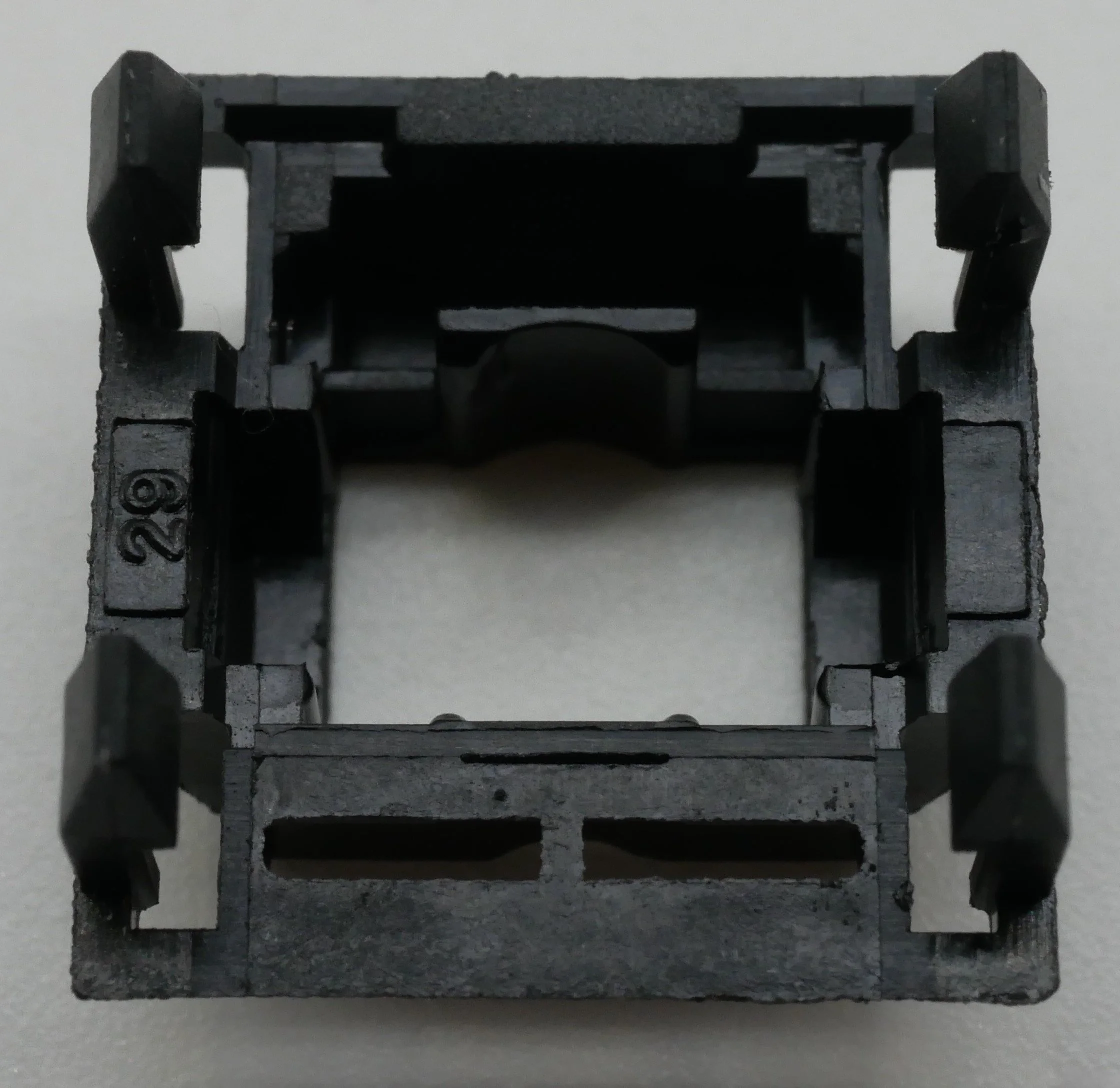
Figure 8: PantheonKeys x TTC PT Black top housing interior featuring a mold marking on the left-hand side, no traces of factory lubing, and features in line with most other common MX-style TTC made housings.
Moving next to the equally black POM stems of the PantheonKeys x TTC PT Black switches, this is where we really see these two return the true roots of switch design. Pulling absolutely no punches in favor of softer, more subtle edges or an even slightly more modern stem design, the PT Black stems look like they’re straight out of the 2017 OEM switch era when TTC first hit the market. Non-tapered slider rails, a short, rounded off stem center pole, and mold ejector circles right above the stem legs make for a sight that I’ve not seen in this fashion in quite a long time. These stems even have the subtle vertical seam down the center of the guider rails that both assuredly does not help their initial stroke smoothness over time and makes these clearly inspired by the way that switches were back in the day. About the only thing that is missing from these stems that could further endear them to the classic Cherry MX Black switches which inspired them would be a squared off backplate cape to the stems. Only the thinnest amount of factory lubing was able to be felt on the stems after opening these switches, focused primarily on the stem legs to reduce the scratchiness as they interact with the leaves of these switches.
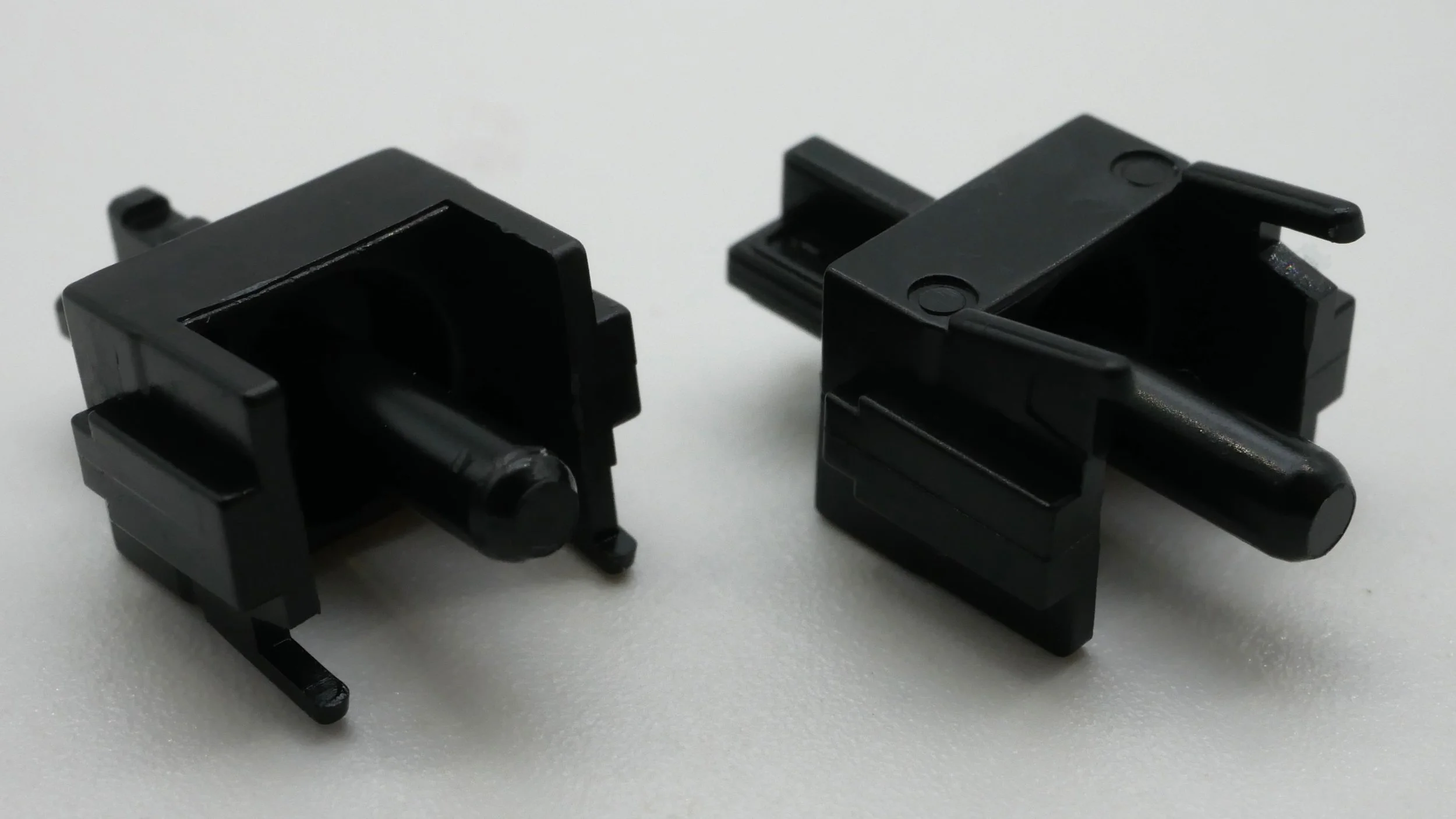
Figure 9: PantheonKeys x TTC PT Black stems front and back featuring non-tapered slider rails with center seam, mold ejector circles on the front plate, and a "short", normal length stem with rounded bottom point.
Finally arriving at the black, ‘modified nylon’ bottom housings of the PantheonKeys x TTC PT Black switches, these too seem as sharp, polished, and freshly out of the molds as the top housings do when seen side by side with older, full nylon switches. Internally, the housings are fairly barren featuring a fairly tight, compact inner space with no dampening pads at the base of the slide rails, no internal mold ejection markings, and only a south side spring collar and ring around the stem pole hole area to give these switches anything fanciful. On the underside, the PT Black switches are much more decorated than their predecessors. In addition to featuring PCB mounting pins as well as raised rectangles next to those mounting pins that are iconic of TTC and their switches, these also feature a raised TTC logo between the metal PCB pins and not just one but two mold markings, one below each of the PCB mounting pins. While I only recall having seen one mold marking on the older TTC switches rather than two, much like with the inverted nameplate on the housing the logo on the bottom side is surprisingly old despite being reminiscent of more modern switches from manufacturers like Gateron. In switches as old as some of the TTC-made Razer switches, this embossed logo can be found on the underside of TTC’s full nylon housing switches.
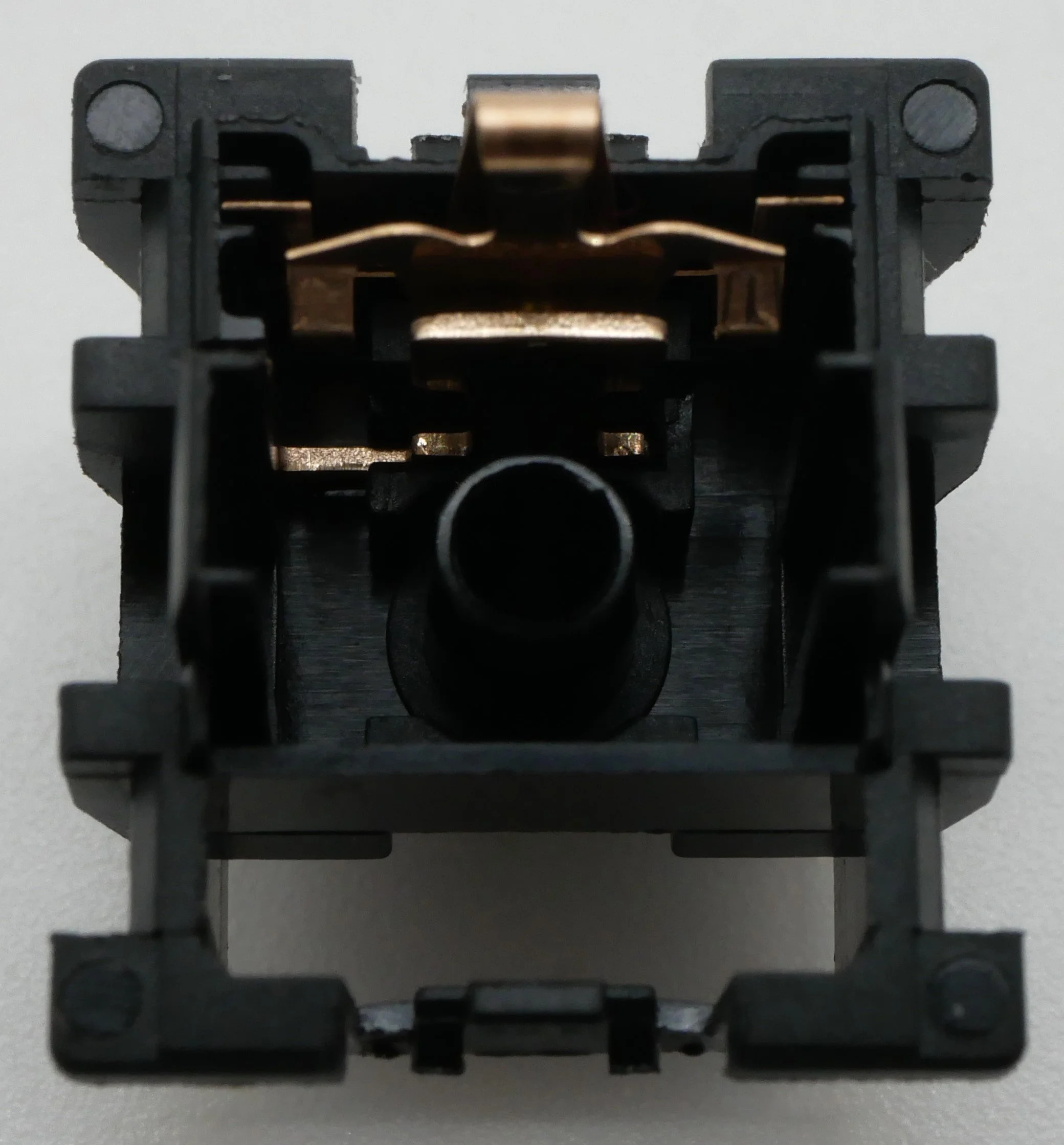
Figure 10: PantheonKeys x TTC PT Black bottom housing internals featuring non-dampened slider rails, a medium-strong south side spring collar, and a ring around the base of the center pole hole. Note the ever so faint factory lubing that can be seen on the leaves of the housing.
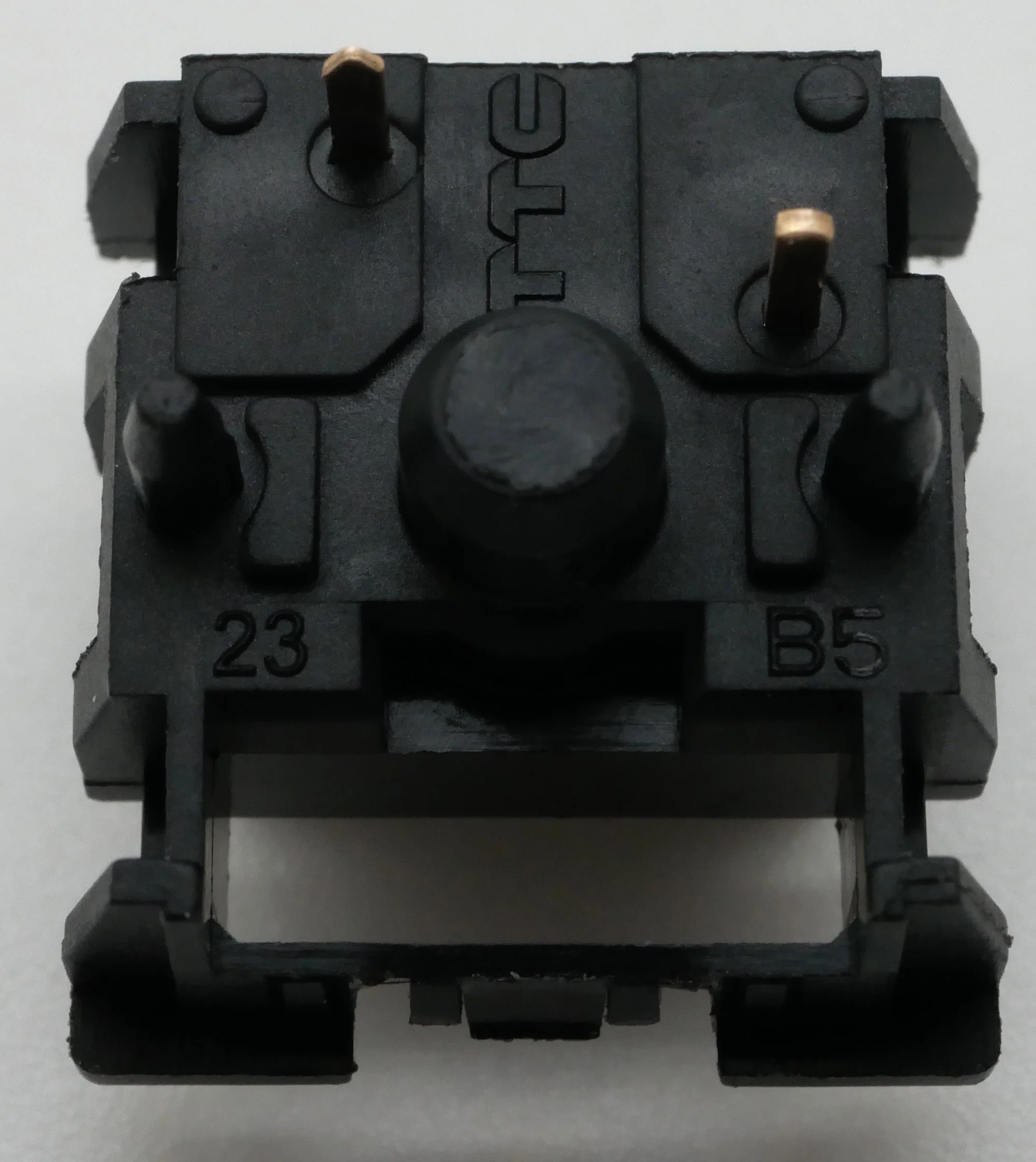
Figure 11: PantheonKeys x TTC PT Black bottom housing externals featuring PCB mounting pins, two mold markings underneath each pin, a sideways 'TTC' logo between the metal PCB pins, and raised rectangular edges in the center of the housing that are iconic for TTC-made switches.
Push Feel
On account of the PantheonKeys x TTC PT Black switches not aiming to be true, faithful one-for-one recreations of the Cherry MX Hyperglide Black switches that inspired them, I did go out of my way to not try any Hyperglide Blacks in preparation of this review as to not poison the well for as long as I could. After all, these are supposed to be what those switches would feel like in 2026, right? To that end, in hand I am surprised at just how much the PT Black switches remind me of the classic, full nylon housing OEM style switches that were ever present when I first joined the hobby – for all of the good and the bad reasons combined. For the better end of things, the housing collisions of the PT Blacks really do just carry a more substantial and firm depth to them through the modified nylon formula of the housings that seemingly all of the other “deep” sounding material mixes used in modern switch bottom housings just can’t seem to replicate. Sure the bottom out and topping outs onto these housing come across a bit slappy and light on account of the extremely thin and barely present factory lubing, though you’d be hard pressed to find anyone who could honestly say that they feel ‘thin’ or ‘cheap’. The PT Blacks even feel more so like the switches of older days on account of their topping outs do feel thinner than their bottom outs, though as if it is due to them just being mechanically thinner in gauge rather than due to just a material difference. As for the less good end of things, the PT Black switches are scratchy, though in a way that only somewhat reminds me of classic Cherry switches. Rather than having an overbearing, grainy, and inconsistent scratch feeling like classic Cherry linears, the PT Black switches have an incredibly fine grit scratch to them that is incredibly consistent not just within each switch but throughout the batch that I received. (This is a scratch, by the way, that 100% goes away with barely any aftermarket lubing as well.) In fact the bad end of things almost horseshoes around into the good end again on account of the fact that these subtle inconsistencies in scratch are almost so otherworldly consistent across the batch that I received that its hard to interpret this as a production defect rather than intentionally design choice. There’s certainly no cherry picking required with the PT Blacks to get a set of uniform switches for your build.
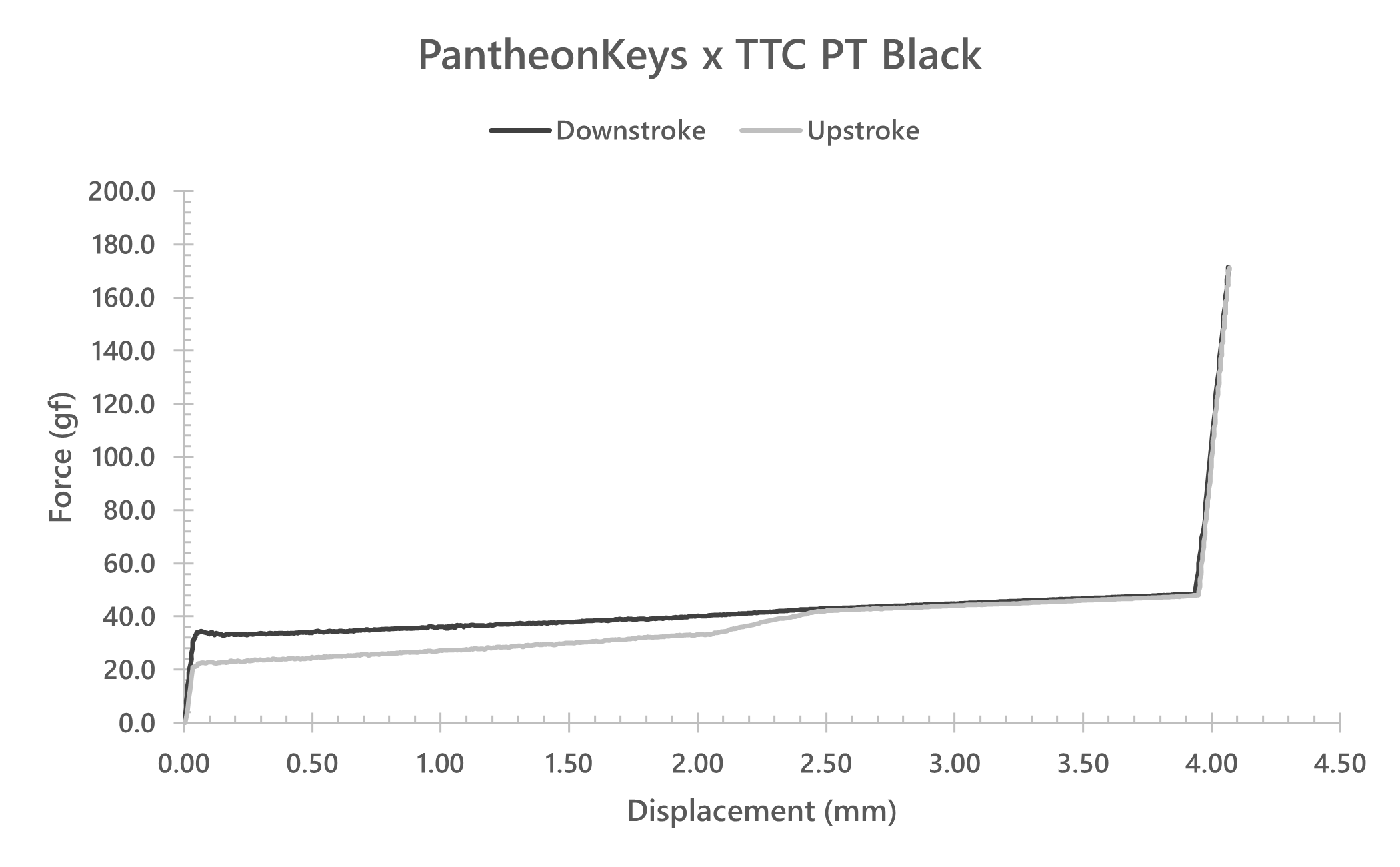
Figure 12: Force curve diagram for the stock PantheonKeys x TTC PT Black switch.
Speaking specifically about the fine grain scratch of the PantheonKeys x TTC PT Blacks, though, I suppose I don’t entirely understand why it is here in these switches at all on account of them being marketed as the 2026-made improved versions of the Cherry MX Hyperglide Black switches. I would imagine that any enthusiast who would try reimagining switches from the peak of COVID era today would imagine them in a way in which they were more consistently lubed, more smooth, and focused more so on the features that made those switches memorable from all those years ago, like deep, bassy housing collisions for Cherry. Instead, these feels as if they were more precisely designed to precariously balance on the exact sort of scratch that of-era Cherry switches had rather than improving on them, leaving them just as susceptible to needing aftermarket modifications as the originals. (Though I suppose it may not be completely unreasonable to expect Cherry enthusiasts to somewhat enjoy an ever so slightly scratchy housing that does break in and wear smooth over time?) As well, I couldn’t help but notice that the bottom out weights of these switches were significantly lighter than that of the classic Cherry MX Black switches. When thinking of linears from Cherry back then, MX Blacks were always your ‘heavy’ linears, clocking at bottom outs in the 70-80 gf. range whereas the lighter bottom out weights in the 40-50 gf range were reserved for Cherry MX Reds. Sure, I can recognize that PantheonKeys’ perception of how Hyperglide MX Blacks felt was likely slightly skewed by the fact that they admitted to tossing out the springs from those switches on day one and replacing them, though I would think the heavy handedness of any MX Black switch is one of its more defining features than not. I can’t really imagine a more futuristic, improved take on any heavy switch from the past being ‘better’ on account of them using lighter springs in my mind.
Sound
Despite my hardest attempts to groove with it as someone who has used a stock, unmodified MX Black switch board before myself, the sound of the stock, unmodified PT Black switches is just something I am struggling to enjoy on the sheer fact that they really do sound exactly like the scratchy, occasionally ping linears that were around when I joined the hobby. You know, the very same switches that led me to seek out my very first switch testers that launched me into switch collecting! Present way more on the ears than on the fingers, the ultra-fine grain scratch of these barely factory lubed switches gives the PT Blacks a medium pitched, loud shuffling sound that grounds out into housing collisions that are equally as noisy despite their firmness and material choices. Hitting with flat, fuzzy edges, these switches just sound louder than the rich, enveloping depth of housing collisions that everyone thinks of when they imagine ideal Cherry MX housing collisions. Is it fair that this idealized state is almost certainly constructed from sound tests and typing experiences built upon heavily modified MX Blacks? No, not really. However, most people forget what stock, unmodified Cherry MX Blacks sound like and thus even an ‘improved’ attempt at recreating them feels much more jarringly out of place than it should. At least they do have some slight occasional spring ping like the classic Cherry switches though! To give the PT Blacks credit where credit is due, though, despite their less than stellar stock performance, they really do well in sounding extremely consistent and have a little bit of those more pointy, prickly edges of the traditional MX Black feelings worn a bit more smooth with some nice modern polish.
Wobble
Present in equal magnitude in both N/S and E/W directions, the PT Blacks have a small and unlikely problematic amount of stem wobble to them that certainly won’t bother most users. Definitely being better than average, these switches also earn a tiny bit of credit here for also being quite consistent on this metric across the entire batch that I received, much like all of their other points above. As well, none of the switches that I tried had any housing wobble to them and thus in turn don’t require any filming as plainly stated in the marketing for them.
Measurements
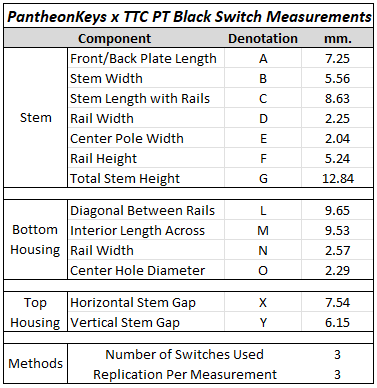
If you’re into this level of detail about your switches, you should know that I have a switch measurement sheet that logs all of this data, as well as many other cool features which can be found under the ‘Archive’ tab at the top of this page or by clicking on the card above. Known as the ‘Measurement Sheet’, this sheet typically gets updated weekly and aims to take physical measurements of various switch components to compare mold designs on a brand-by-brand basis as well as provide a rough frankenswitching estimation sheet for combining various stems and top housings.
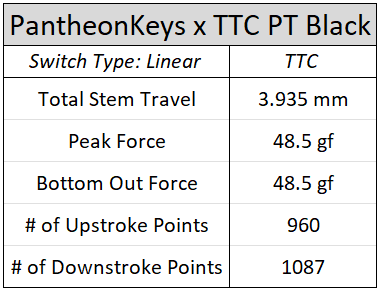
Figure 14: Numerical details regarding the force curve for the stock PantheonKeys x TTC PT Black switches.
Have you ever wanted to be bombarded with more switch data than you’ve ever seen at any point in your life before? Consider checking out the ‘Force Curve Repository’ hosted on my GitHub that contains all force curves that I take both within and outside of these full-length reviews. In addition to having these graphs above, I have various other versions of the graphs, raw data, and my processed data all available for over 2000 different switches for you to use however you see fit. Check it out via the ‘Archive’ tab at the top of this page or by clicking any of the force curve cards above.
Break In
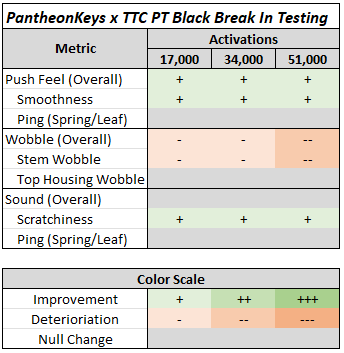
Break In Notes
17,000 Actuations
- At 17,000 actuations, the PantheonKeys x TTC PT Blacks demonstrate one of the best features of any well designed full nylon housing switch – their sheer ability to improve in quality through use. After only the first stage of the breaking in process these switches feel smoother, more consistent, and both audibly and physically have less of that slappy, light feeling to them that plagued their stock forms.
- After 17,000 actuations there was a slightly increase in both N/S and E/W direction stem wobble of the PT Black switches, though it wasn’t super significant relative to their stock form.
34,000 Actuations
- Surprisingly, the batch of PT Black switches that was broken out to 34,000 actuations wasn’t differentiable at all from the batch broken out to 17,000 actuations. These were just that tiny bit smoother and more balanced feeling than their stock counterparts as the 17,000-actuation batch.
51,000 Actuations
- After 51,000 actuations, the only notable change in the PT Black switches from their previous break in stages was a further slight increase in N/S and E/W direction stem wobble. There was no further in change in the push feeling and/or sound of these switches, though based on the fact that Cherry MX Blacks are often broken in by more dedicated modders out to 250,000+ actuations, I suspect that these have quite a bit more room that they could move through sheer usage. As well, adding some aftermarket lube to these switches would also do a world of good as to improve their characteristics further.
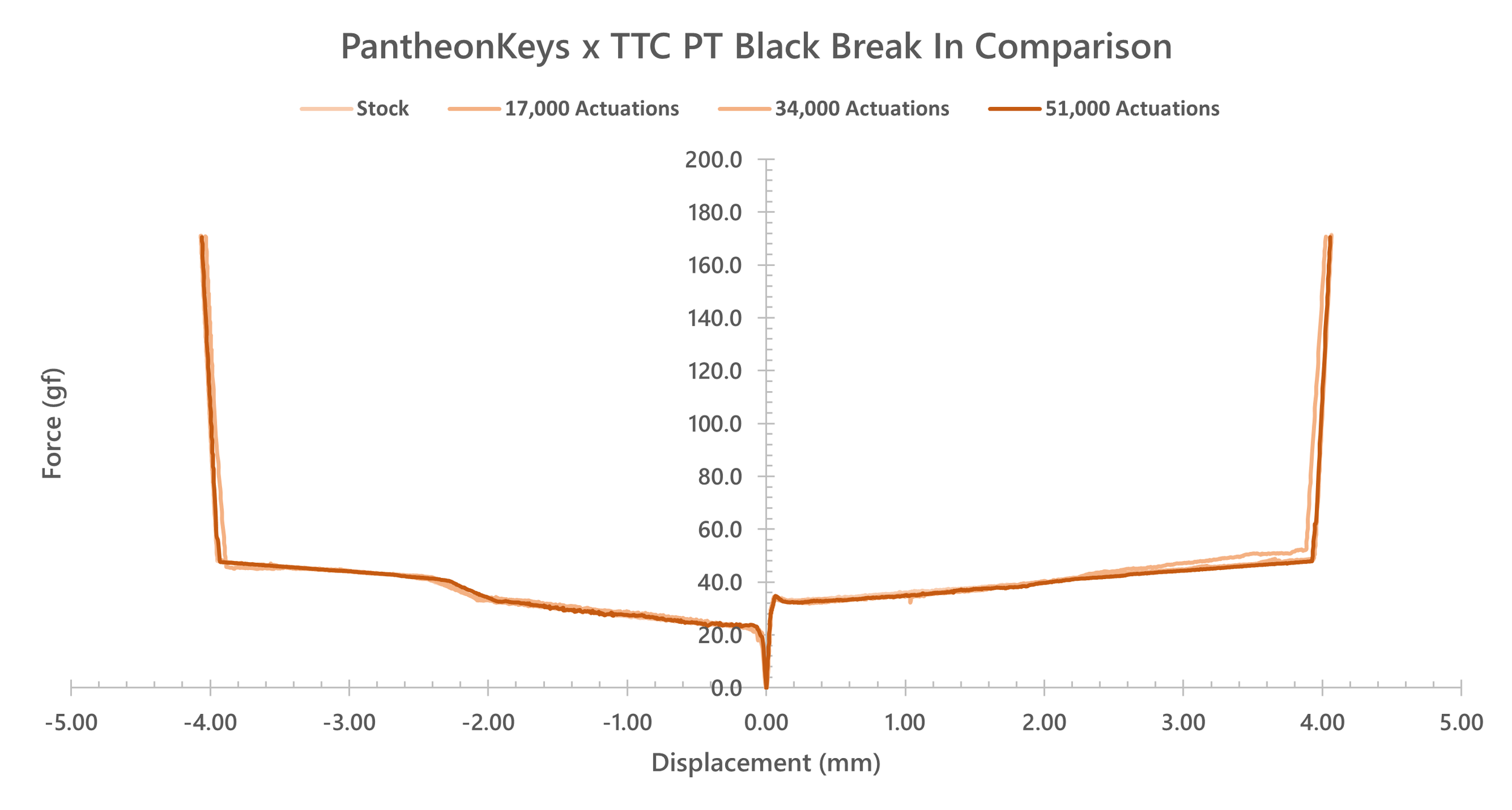
Figure 16: Comparative force curve diagram showing no substantial, consistent change in the force curves of the PantheonKeys x TTC PT Black switches throughout the break in process.
Comparison Notes to Other Notable Linear Switches
Note – These are not aimed at being comprehensive comparisons between all factors of these switches as this would simply be too long for this writeup. These are little notes of interest I generated when comparing these switches to the PantheonKeys x TTC PT Black switches side by side.
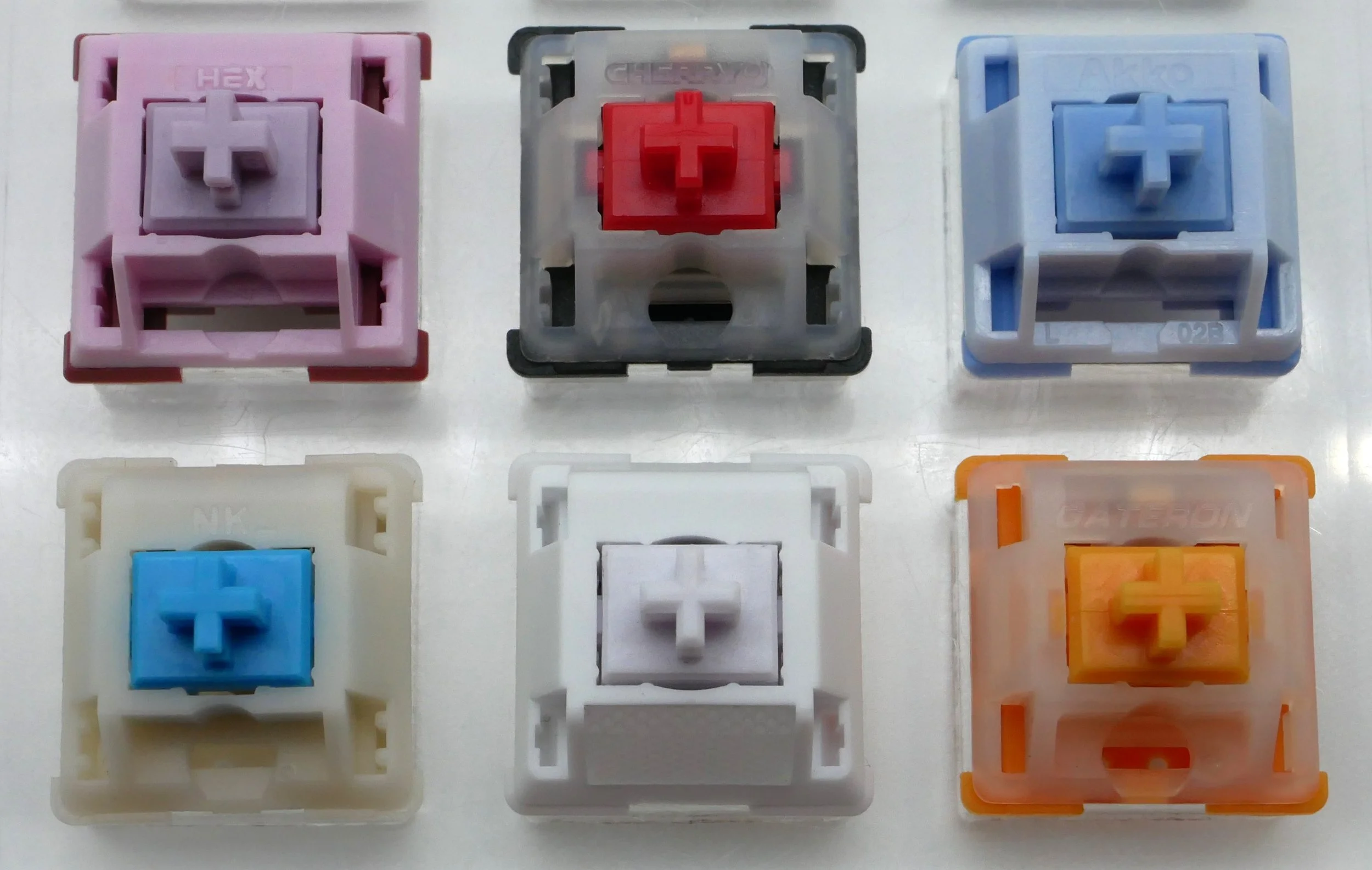
Figure 17: Switches for comparison. (L-R, Top-Bot: Keygeek Muse, Cherry MX Firefinch, Akko Mirror, Novelkeys Classic Blue, Wuque Studio Morandi, and Gateron X V3)
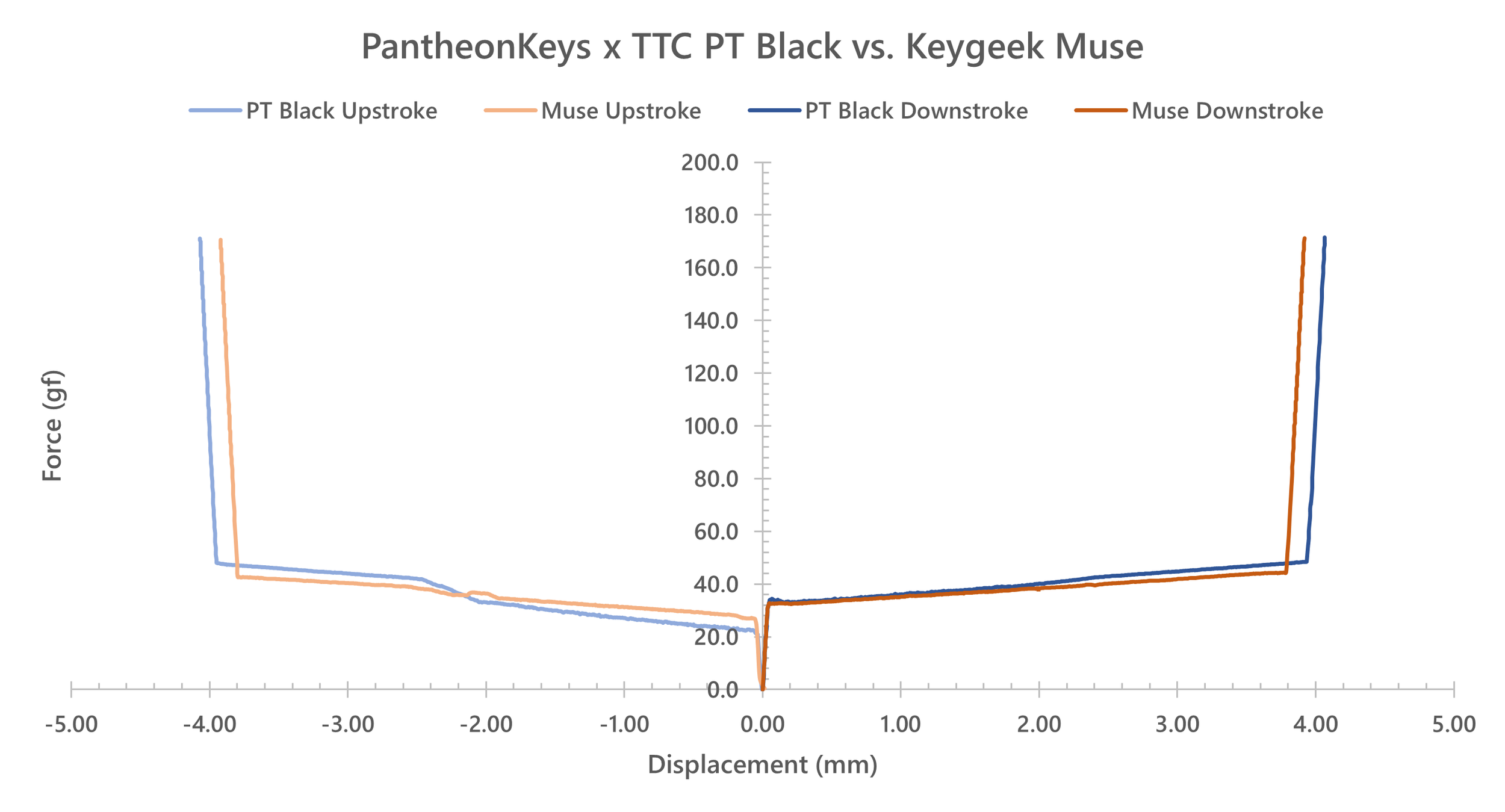
Keygeek Muse
- The Keygeek Muses and the PantheonKeys x TTC PT Black switches have a comparable amount of N/S and E/W direction stem wobble to one another.
- In terms of push feeling, while the PT Black switches are much more consistent than the Keygeek Muses, they also carry a noticeably greater amount of scratch and slappy, not-so-great feeling housing collisions in their stock form. While the PT Black switches definitely come out way smoother and deeper feeling in their housing collisions than the Muses with just a tiny bit of break in and aftermarket lubing, in their stock form they’re just not as good.
- In stock form, the Muses are definitely the quieter of these two switches, having deep, bassy housing collisions that are medium-light in volume compared to the higher pitched, more ‘sticky’ sounds of the stock PT Black switches.
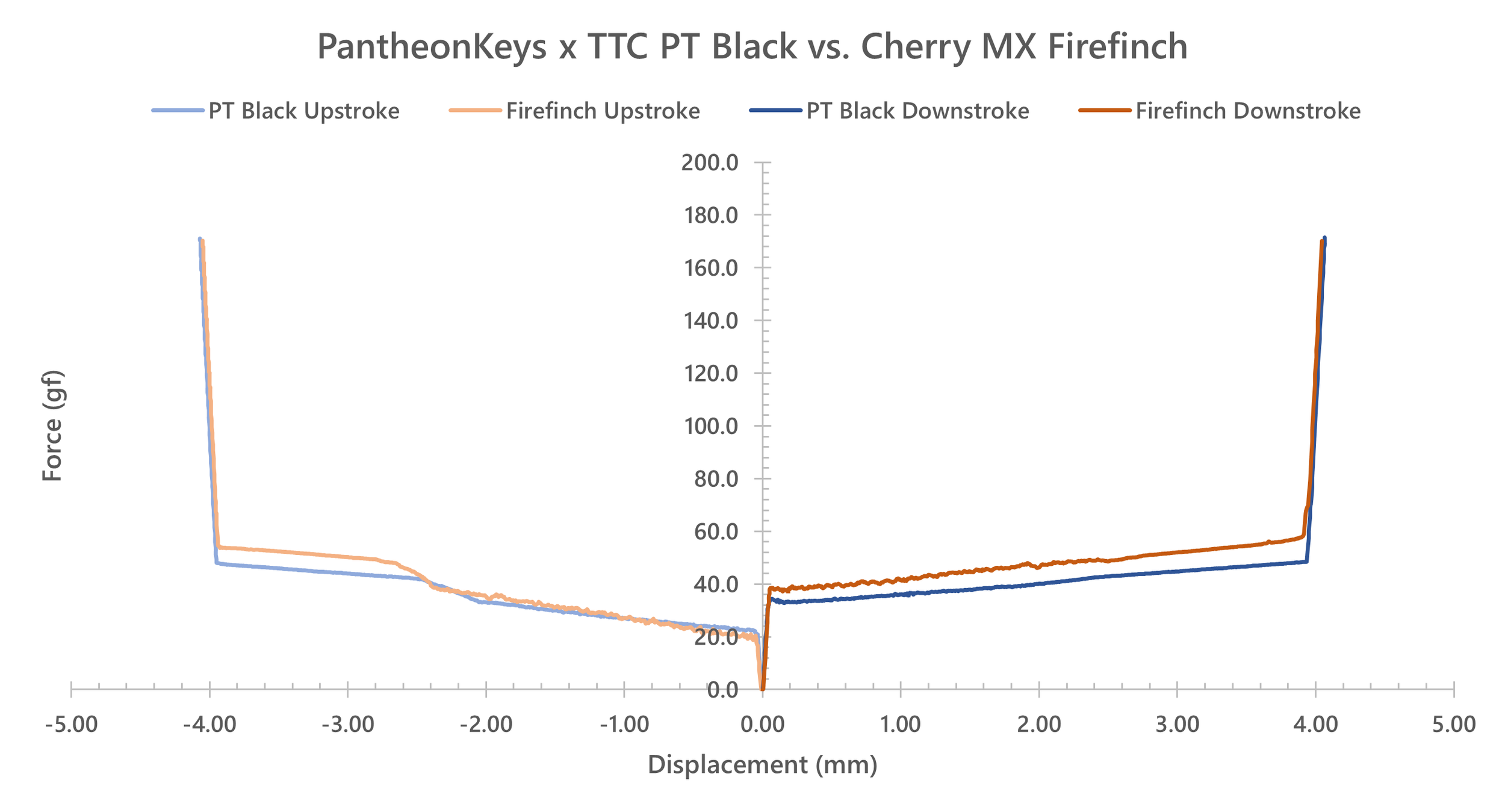
Cherry MX Firefinch
- In their stock form, the PT Black switches feel quite similar to that of the unlubed Cherry MX Firefinch switches, which were designed on Cherry’s MX2A switch platform. Both of these switches share that same sort of fine grain scratch that permeates throughout their stroke and is caused by the same lack of lubrication that causes their housing collisions to feel more airy and light than when lubed and broken in.
- At the point of bottom out, though, the unlubed Cherry MX Firefinches do happen to be a little less coherent and ‘fuzzy’ feeling than the PT Black switches.
- In terms of their stem wobble, the Cherry MX Firefinch switches, and likely by extension the majority of Cherry’s new MX2A switch platform, have a tiny bit less stem wobble than the PantheonKeys x TTC PT Black switches.
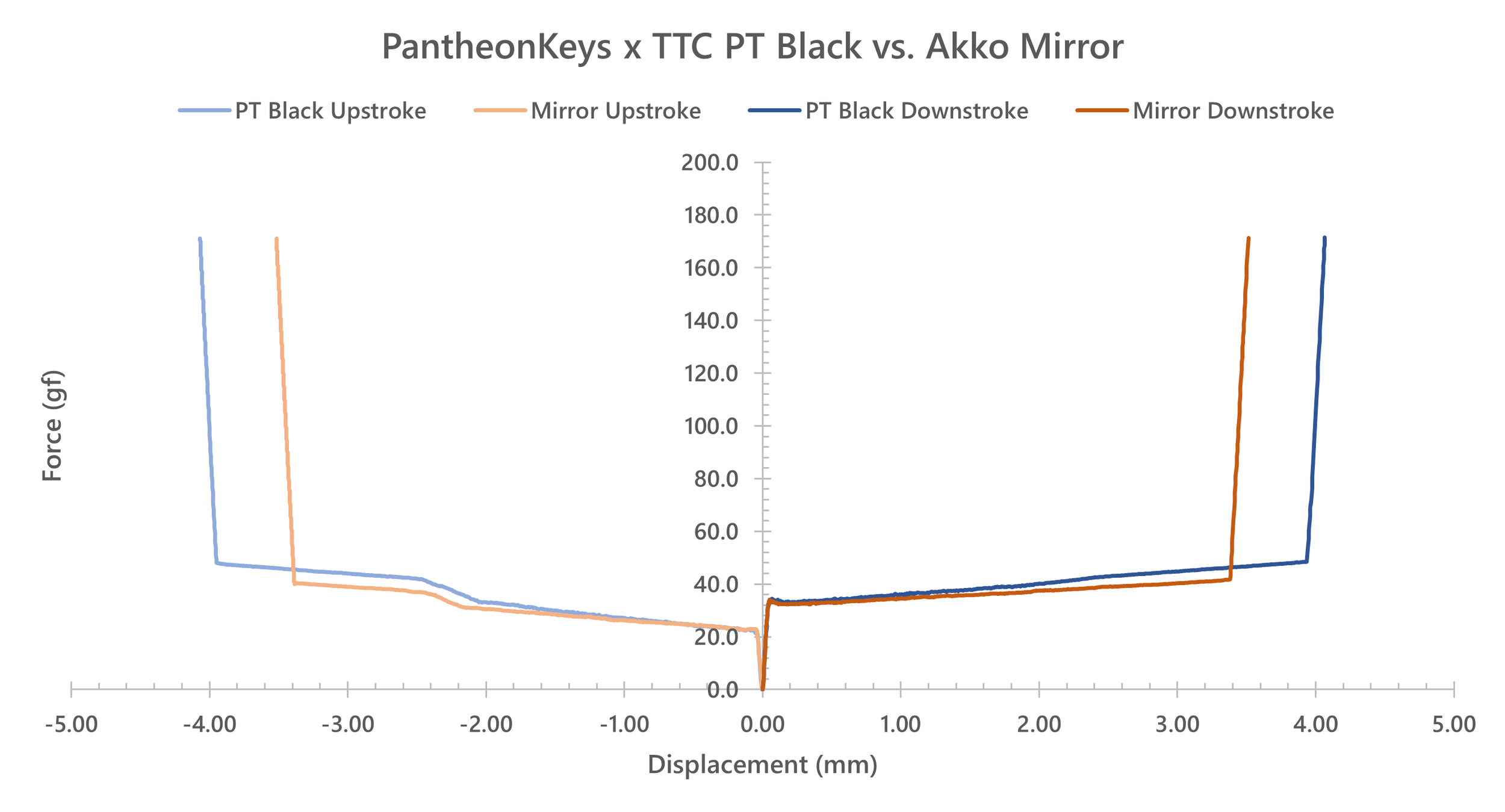
Akko Mirror
- On the whole, the Akko Mirror switches are just an all-around better linear switch than the stock PT Black switches – they’re smoother, with less stem wobble, have less errant sounds to them, and are definitely more usable right out of the box. With a little bit of care and aftermarket modifications, though, it is completely possible that an average switch modder could get their PT Blacks within the same realm as the Akko Mirrors.
- The one comparable point between these two switches is the volume of their bottom out, with both of them featuring louder, more-in-your-face bottom outs than their more broken in and/or well lubed counterparts. The bottom out sound of the Mirrors is a bit more singular, focused, and less airy sounding than the PT Blacks though.
- Despite the similarity that their comparative force curve below would suggest, I could swear that that Akko Mirror switches feel as if they’re just the tiniest bit more forceful than the PT Blacks and have almost a tiny bit of ‘drag’ to their strokes as a result of their factory lubrication.
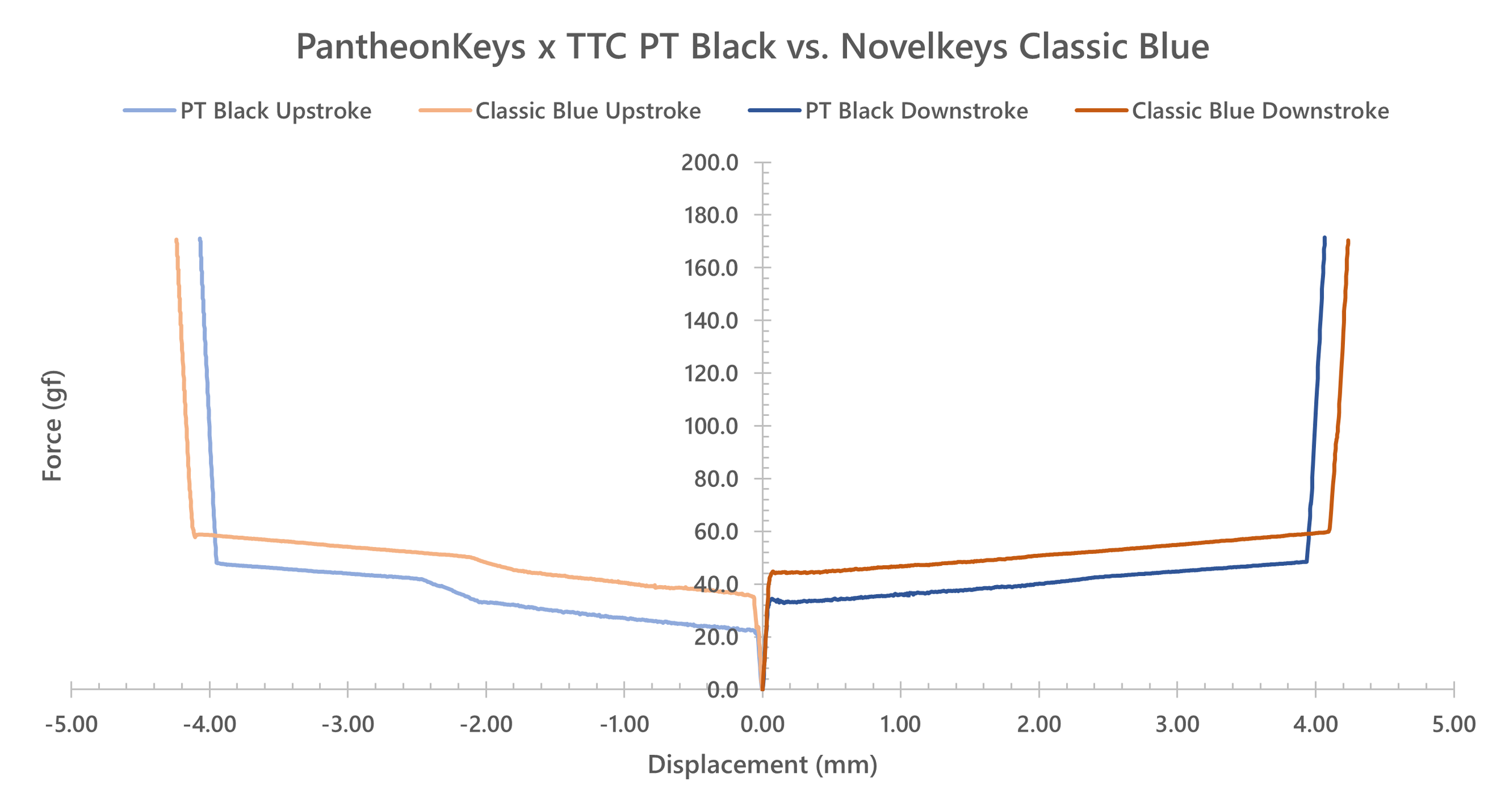
Novelkeys Classic Blue
- The Novelkeys Classic Blue and PantheonKeys x TTC PT Black switches both share a similar stock scratchiness to them that is small in grain, incredibly consistent both within each switch and across the batch, and easily removed through aftermarket care. The scratch of the PT Black switches, though, does feel a bit more “deep” and as if it has more substantial material underpinning it than the Classic Blue switches, though.
- The Novelkeys Classic Blue switches have noticeably less N/S and E/W direction stem wobble than the PT Black switches.
- With respect to their sound profiles, these two switches are the most similar to each other of any of the comparisons on this list when it comes to their bottom out volumes but not the tone, itself. While both are a bit medium-loud at bottom out, the stock Classic Blue switches are more coherent, singular, and snappy than the fuzzier, slappier sounding PT Black switches.
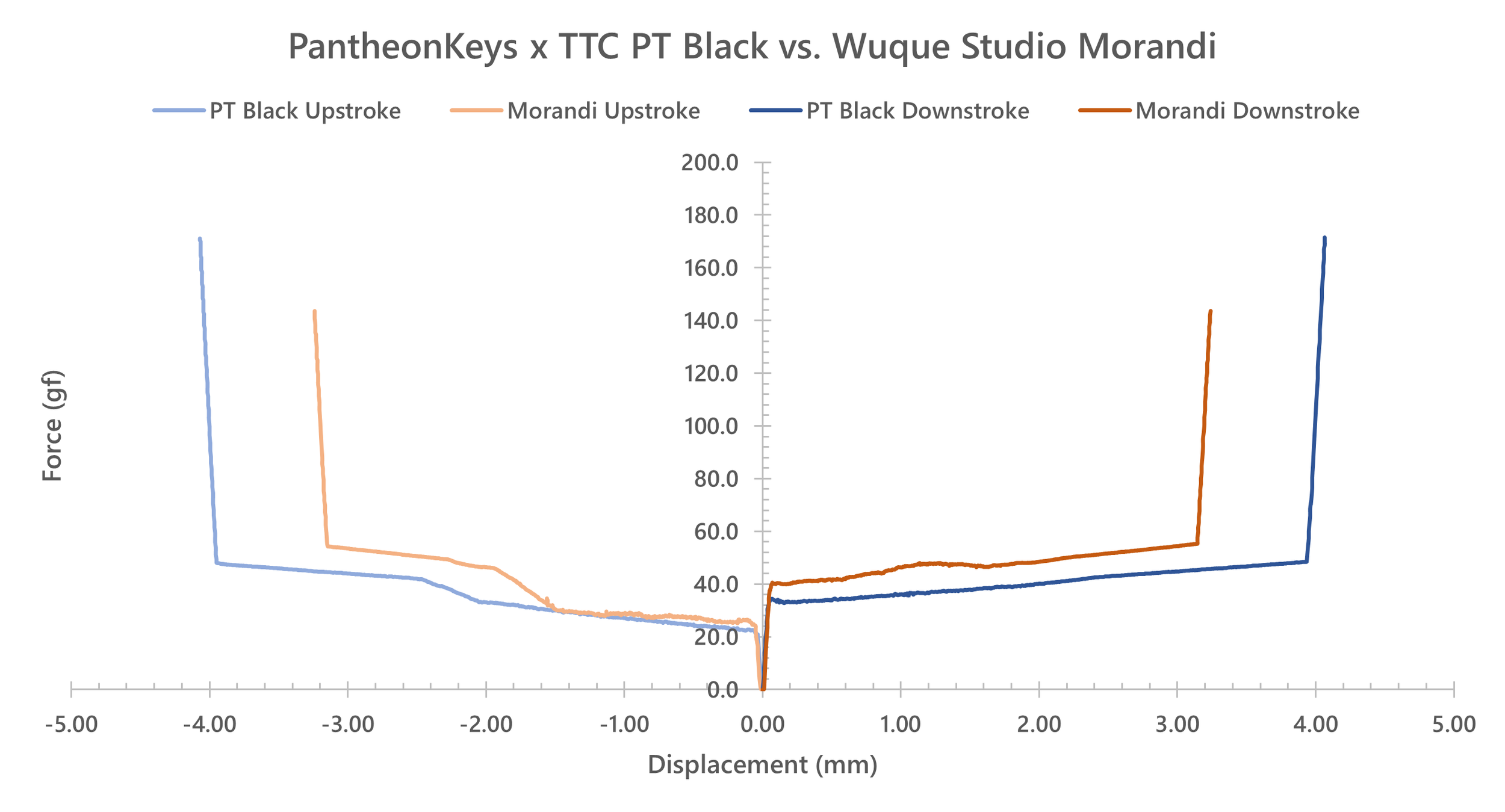
Wuque Studio Morandi
- In their stock forms, the Morandi switches have a bottom out that not only feels heavier and more firm than the PT Black switches, but also sounds more bassy, chalky, and full feeling. While modified PT Black switches do definitely get in the same range of depth as the Morandis after a bit of break in and aftermarket lubing, it is still notable effort that is just not required in the Morandi switches.
- While these two switches have comparable E/W direction stem wobble to one another, the Morandi switches are asymmetrical and have much less N/S direction stem wobble than the PantheonKeys x TTC PT Black switches.
- In their stock form, the Morandi switches are noticeably more quiet and bass heavy than the more airy, higher pitched, and louder PT Black switches.
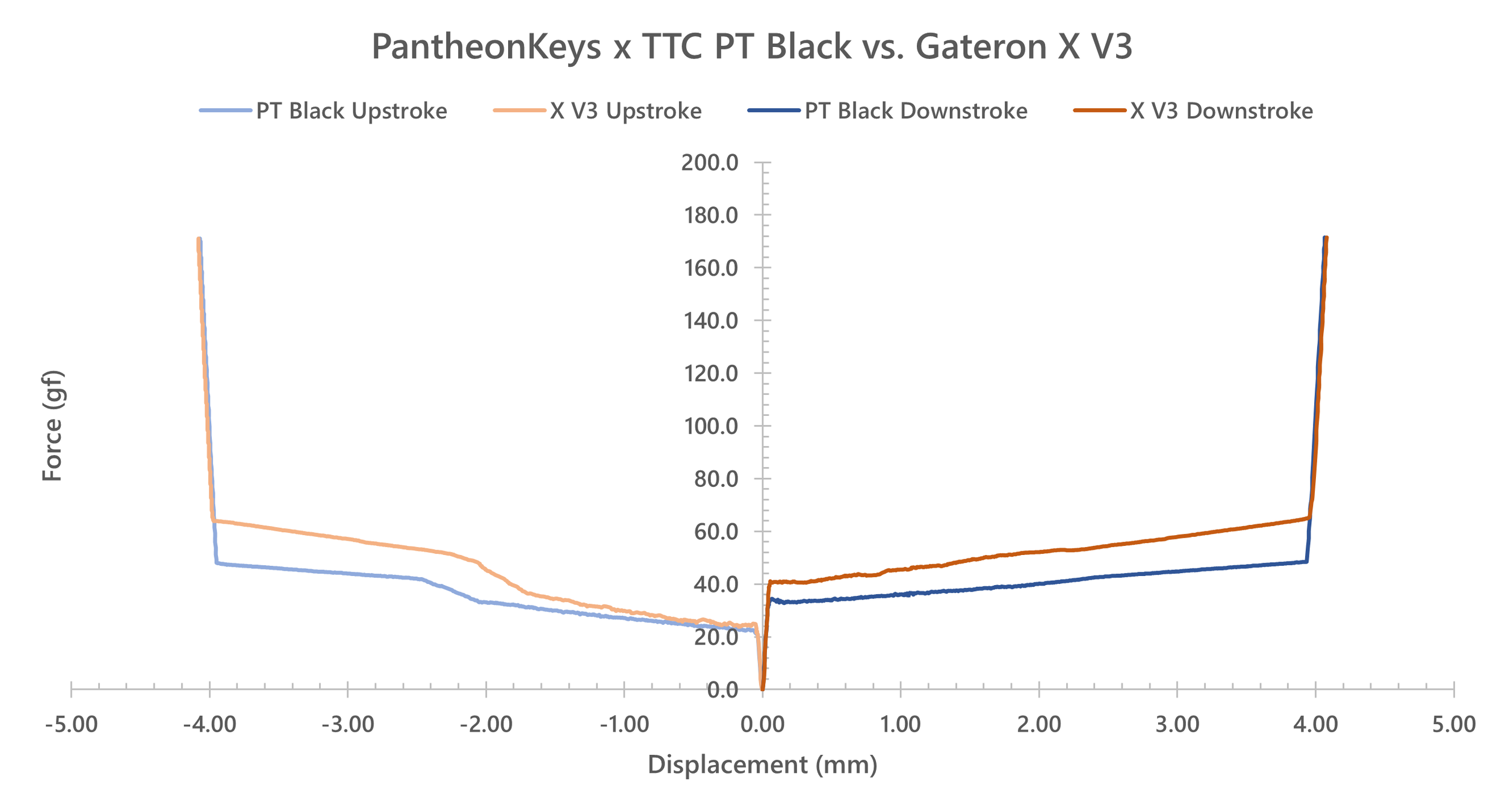
Gateron X V3
- With respect to their sound profiles, these two switches are the most similar to each other of any of the comparisons on this list when it comes to their bottom out tones, but not their volume. In stock form both of these switches have a light, slappy sound to them, though the PT Black switches are just a little bit more loud and grating on the ears.
- Both of these switches are fairly comparable to one another in terms of both their N/S and E/W direction stem wobbles.
- In their stock forms, the Gateron X V3 switches do not nearly have the same degree of fine grain scratch sound to their strokes that the PT Blacks do, though they do sound as if they suffer more from ‘start and stop’ sounds, wherein rapid changes in direction and speed of the X V3 switches causes them to sound sticky, in a way.
Bonus Round
You can’t exactly tell me 15 times in the span of an hour that a switch is directly inspired by the Cherry MX Hyperglide Black switches and expect me not to make a comparison to them here.
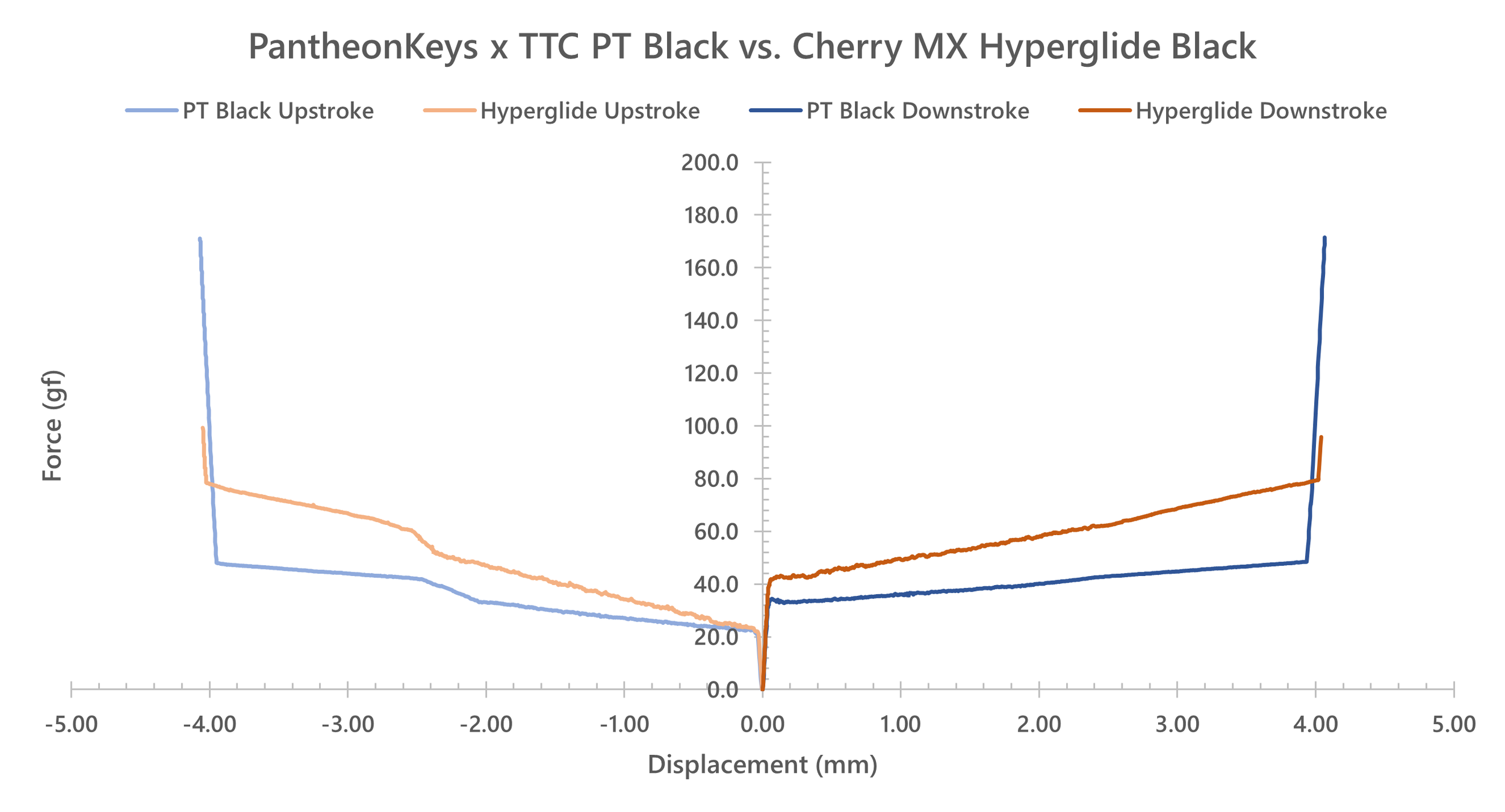
Cherry MX Hyperglide Black
- In a head to head comparison, notably one that I did not make until after I had completed this review to remain as unbiased as possible, I am shocked at how spot on the fine grain, fully permeated scratch is in the PT Black switches. They feel almost too much like Hyperglide Blacks to the point that I feel like PantheonKeys may have missed the mark in making them “improved”, 2026-coded versions of the Cherry MX Hyperglide Blacks.
- While the comparative force curve between these two switches below more than makes the difference in weighting evident, it isn’t nearly as oppressively different when trying them out side by side in hand. Perhaps my fingers are just fatigued after having cranked out over 8000 words in a single night for this review, though I would have expected the difference in their bottom out weights to feel much more different.
- While the PantheonKeys x TTC PT Black switches are a tiny bit brighter and higher pitched sounding than the original Cherry MX Hyperglide switches, overall they do have very similar volumes and tones as one another.
Linearity
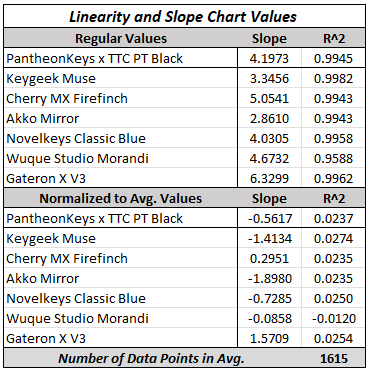
Figure 25: Absolute and relative Linearity and Slope values for each switch in this comparison section.
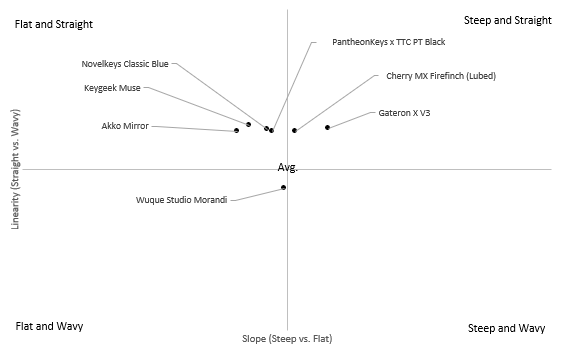
Figure 26: Qualitative comparison of the normalized Slope and Linearity for each switch in this comparison section.
If you are just now seeing this section for the first time and are a bit confused as to what I am talking about when discussing ‘Slope’ and ‘Linearity’, I highly suggest checking out my article titled ‘On Differences in Linear Switches’ where I explain what this section is for and how it came to be! For a bit of a shorter answer, know that this is part of my ongoing attempt to better quantify and articulate differences between linear switches which have historically not been captured in discussions about them.
Scores and Statistics
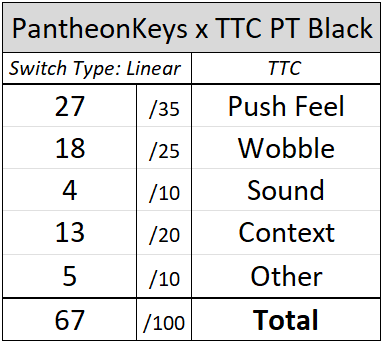
Note – These scores are not necessarily completely indicative of the nuanced review above. If you’ve skipped straight to this section, I can only recommend that you at least glance at the other sections above in order to get a stronger idea of my opinion about these switches.
Push Feel
The PantheonKeys x TTC PT Black switches were designed and marketed as a 2026-minded, TTC-made reimagination of the classic Cherry MX Hyperglide Black switches and despite their lighter bottom out weight ~50 gf, they are fairly close to that for better and for worse. While these have the same deep, firm housing collisions that Cherry switches do, they have a fine grain scratch that permeates the entirety of their strokes and only goes away with break in or aftermarket lubing. These switches are incredibly consistent across the batch, however.
Wobble
There is an equal magnitude, likely not too problematic amount of N/S and E/W direction stem wobble to the PT Black switches that would only bother users super picky about this metric.
Sound
Like all classic full-nylon housing, OEM-styled switches the TTC PT Black switches simply suffer greatly in their stock forms until they are broken in. While the fine grain scratch in these switches doesn’t sound grainy, it coats the entirety of the strokes as well as the housing collisions in a high pitched airy noise that makes everything feel not as deep, nor bassy as the underlying housing materials can clearly provide. Any degree of break in or aftermarket lubing can and will substantially alter the sound of these switches.
Context
Priced below $0.35 per switch, these are absolutely great options from PantheonKeys for those looking for the experience of modding ideal old school Cherry switches out of the box. However, despite multiple rounds of prototyping, as well as TTC’s best efforts, they still suffer quite a bit in their stock forms from the same things that the Cherry switches that inspired them did.
Other
Despite a good premise and decent execution, this switch’s score is punished because it is based on stock performance. Literally any care for these moves this score upwards by 5+ points…
Statistics
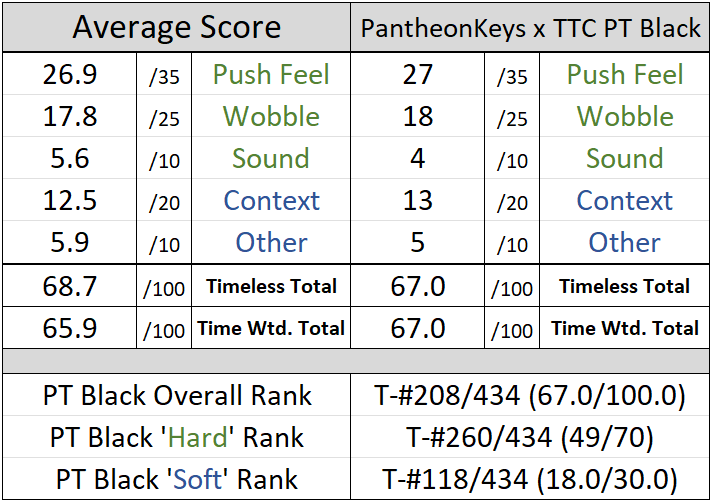
If you are looking at this statistics section and wondering what the heck ‘Timeless’ and ‘Time Weighted’ scoring is, consider checking out my short article titled ‘A Scorecard Time Change’. As a result of scoring becoming a bit anachronistic over the years, switches are now ranked in this statistics table using a “time weighted total” as opposed to their day-of scoring as discussed in that article. If you’d also like to learn about what ‘hard’ versus ‘soft’ ranks refer to specifically, I’d encourage you to head on over to my GitHub linked in the table above or at the links in the top right hand of this website to check out my database of scorecards as well as the ‘Composite Score Sheet’ which has a full listing of the rankings for each and every switch I’ve ranked thus far.
Final Conclusions
I’m not entirely certain how I’m supposed to feel when a switch is so simultaneously on the mark and off of the mark of its own marketing at the exact same time? In PantheonKeys’ and TTC’s big to make a switch that is reminiscent of Cherry MX Hyperglide Blacks, but not an exact identical clone of the linears popularized almost six years ago now, they ended up making a switch almost too true to its origins. While there are some improvements to the switch by switch consistency of the PT Blacks, and they do have a more uniform, finely grit scratch than the vast majority of Cherry’s linears from over the years, so did the original runs of Hyperglide Blacks that inspired them. In fact narrowly comparing those two very specific iterations of switches makes it more than easy to overlook these subtle differences and improvements that the switches were marketed around. Despite the little marketing fluff that exists for the PT Blacks, as well as the real, tangible changes that they did make in the design (via an entirely new manufacturer too, for that matter), I’m not certain that they read as all that substantially different from the Hyperglide Blacks in anything other than pricing, where the PT Blacks are significantly cheaper at $0.31 per switch than the Cherry MX Hyperglide Blacks are to this day. Scoring really be damned here as well – both the PantheonKeys x TTC PT Blacks and the Cherry MX Hyperglide Blacks that practically mirror them would both suffer here in my full length reviews on account of the fact that they are both switches which are infinitely better when improved for, cared for, and slightly modified when pulled out of the box. These are not switches that are competitive in their stock forms. While the PT Black switches are harshly graded in their stock form by the same standards that I’ve graded every other switch on this website, they’re one of the exceedingly rare few that get better quickly with even the most minor amounts of effort and care. To the laymen that want to use the PT Black switches out of the box, I think this scoring is quite accurate. Though to the cult-like fans of the Hyperglide Black switches that are still clearly out there in the community, I imagine this score may be a bit upsetting, if not downright insulting as the effort they can and would put into to them would easily raise the score five or more whole points. These are exactly the kind of switches that Cherry switch enthusiasts are looking for in a cheaper, more easily modifiable, and just cleaner template to build a full nylon linear switch keyboard but are also at the same time exactly what most users who aren’t fans of Cherry to this day have steered clear of for all these years. Well done PantheonKeys, I don’t think I’ve ever been so internally divided about as true to form of a recreation as the PT Black switches are.
Sponsors/Affiliates
Mechbox UK
- A wonderful UK based operation which sells singles to switches that I’ve used above in my comparisons for collectors and the curious alike. Matt has gone out of his way to help me build out big parts of my collection, and buying something using this link supports him as well as my content!
KeebCats UK
- A switch peripheral company based out of the UK which sells everything switch adjacent you could ask for, they’ve been a huge help recently with my film and lube supply for personal builds, and they want to extend that help to you too. Use code ‘GOAT’ for 10% off your order when you check them out!
proto[Typist] Keyboards
- An all-things keyboard vendor based out of the UK, proto[Typist] is a regular stocker of everything from switches to the latest keyboard and keycap groupbuys. While I’ve bought things from the many times in the past, they also are a sponsor of my work and allow me to get some of the great switches I write about!
Divinikey
- Not only do they stock just about everything related to keyboards and switches, but they’re super friendly and ship out pretty quick too. Divinikey has been a huge help to me and my builds over the last year or two of doing reviews and they’ll definitely hook you up. Use code ‘GOAT’ for 5% off your order when you check them out!
ZealPC
- Do they really need any introduction? Zeal and crew kicked off the custom switch scene many years ago with their iconic Zealios switches and the story of switches today couldn’t be told without them. Use code ‘GOAT’ (or click the link above) for 5% off your order when you check them out!
MechMods UK
- A rising vendor based in the UK, Ryan and crew have been a pleasure to work with and have nearly everything you’d need to build your first or fourteenth keyboard. Go build your latest or greatest one right now with them by using code ‘GOAT’ at checkout for a 5% discount!
Dangkeebs
- A longtime supporter of the website and the collection, Dangkeebs has quite possibly the widest variety of switches of any vendor out there. Not only is their switch selection large, but it rotates and is constantly adding new stuff too. You’re going to need 5% off your order with my affiliate to save off the cost of all those switches!
SwitchOddities
- The brainchild of one my most adventurous proxies, SwitchOddities is a place where you can try out all the fancy, strange, and eastern-exclusive switches that I flex on my maildays with. Follow my affiliate code and use code ‘GOAT’ at checkout to save 5% on some of the most interesting switches you’ll ever try!
Cannonkeys
- Does anybody not know of Cannonkeys at this point? One of the largest vendors in North America with keyboards, switches, keycaps, and literally everything you could ever want for a keyboard always in stock and with an incredibly dedicated and loving crew. Follow my affiliate link above in their name to support both them and I when you buy yourself some switches!
Kinetic Labs
- One of the most well-rounded keyboard vendors out there, Christian and crew have been supporters of all my switch and switch-adjacent needs for some years now. I’m honored to have them as an affiliate and think you should check them out using my affiliate link above to support both them and I when you check out their awesome products!
Keebhut
- Want to try out some switch brands that fly under most vendor’s radars? Keebhut is always seeking out that next latest and greatest and has been super helpful in hooking me up with new brands over the past year. They are all about sharing that love as well, and want to give you 5% off your next order with them when you use code ‘GOAT’ at checkout!
Kailh
- No, you’re not mistaken – this is actually that Kailh that manufactures switches. As one of the longest running manufacturers in the hobby, they have a massive variety of switches available over on their website at any point in time. I’m lucky to be affiliated with them now, and so consider using my affiliate link above when ordering some Kailh switches to support me!
Keebz N Cables
- Australia and Oceania’s very own is now a part of the sponsor list here and I couldn’t be happier to add this long time supporter of the collection to it. They’ve always got an amazing selection of switches (and other keyboard parts) in stock and they want to share the love that they’ve shown me with you all too! Use code ‘thegoat’ for 5% off your first order when you visit!
Further Reading
PantheonKeys’ PT Black Switch Sales Page
TTC’s PT Black Switch Sales Page
TTC’s PT Black Switch Announcement Post on Twitter
PantheonKey’s PT Black Instagram Switch Announcement
PantheonKeys’ PT Black Switch Typing Test
Rishav’s PantheonKeys x TTC PT Black Switch Typing Test