HMX Cthulhu Switch Review
Well, hello there dear readers. It’s been a short while since we last gathered here for a switch review, but don’t worry, I’ve not forgotten how to make them nice and long like you’ve grown accustomed to over the years. For those of you who did not catch my passing update on social media a couple of weeks ago, instead of the normal review that was supposed to drop on September 13th, I opted to take a “mental health weekend” to try and focus on myself and recovering from all of the stresses that are plaguing me right now. Life, the (relatively new) job, and even a former neighbor who did threaten harm against me in such a way as to accrue real criminal charges recently deciding to stalk me on social media have all weighed on me greatly and the reviews just were not going to suffice as an escape from it all like they normally have over the years. (Don’t worry, while that ex-neighbor is just barely lukewarm enough to know how to look me up by my government name, I highly doubt they’ve got the stamina to read through full sentences of a review like this if they’ve discovered the website.) While I can not go too much further on the backstory of all of that, I can however share a bit as to what exactly a mental health weekend looks like that tries to erase all of those things – it contains a surprisingly spontaneous (by my standards) trip to the very southern end of Arizona to catch the trailing ends of hummingbird migration season. Believe it or not, Sierra Vista, Arizona, a very small town that just barely sits out of the line of sight of the US-Mexico border houses various canyons and forests that serves as one of the most natively dense places for hummingbirds year-round as well as a crossroads where the more migratory variants of them transit across twice a year. While the birding girlfriend and I were not quite able to see all 15 potential hummingbird species that have been reported there over the years, we were lucky enough to catch a glimpse of 8 of those species as well as one very special hummingbird (which I’ve shared a photograph she took of it below) and several dozen new ‘lifers’ for her perpetually growing bird list. I could easily spend the rest of this article’s normal length detailing all of journeys through grasshopper infested grasslands, steep rocky mountains, and hellishly hot trails through the desert that we took in pursuit of those birds but given that pictures are worth a thousand words, I figured it would be just as well to fill out that word count with some of those. Know that it does feel good to be back and writing these reviews, too.

Figure 1: View from the bottom of the Ramsey Canyon trailhead.

Figure 2: View from the top end of the Ramsey Canyon trailhead overlooking the Huachuca Mountains.

Figure 3: One of my personal favorite photos from the trip, pulled over on the side of the road with an impending once-in-a-decade storm for a photo of a tarantula. Yes those mountains you see above are hiding behind those clouds on the left…

Figure 4: Photo of an Anna's Hummingbird in flight in front of a rather pretty flowered bush.

Figure 5: A very inquisitive looking Broad-Billed Hummingbird posing for the camera.
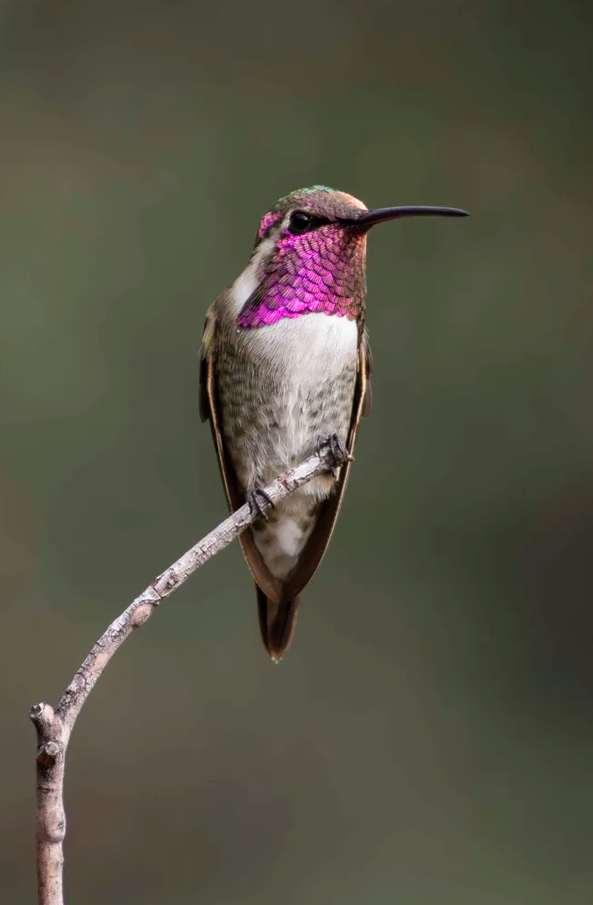
Figure 6: The far and away best single shot of the trip - an exceedingly rare hybrid hummingbird that is a cross between a Lucifer's Sheartail and Costa's Hummingbirds.
Switch Background
While the trip to go out traipsing around the surprisingly numerous climates of Arizona did do wonders to improve my overall mental health, that does come with the caveat that it did not do much to impact my recently shared attitudes towards the state of modern mechanical keyboard switches. Yes, I am still in fact the same magnetically doomerist Goat that you all saw previously spiral out about the gradual loss of the MX switch platform in the Kailh Xuan Switch Review about a month ago. My ‘sticking to my guns’ stance about this though is largely because the very trends that I first pointed out there haven’t really changed trajectory at all in a month’s time – something which it turns out hummingbirds and scenic views alone won’t fix. And so while there is still that huge mass of looming magnetic switches sitting there ominously ever present, it is somewhat silver lined by the fact that the small nuggets of positivity that I did share in that background section also appear to be largely holding true as well. Unikeys, among them, being the still stellar example of a vendor that is single-handedly pumping out the majority of the westward-facing supply of HMX, WEKT, Wingtree, and Keygeek switches over the past year or so. In parallel to Unikeys slowly growing to occupy this large part of the switch market over time, I’ve also seen quite a few US-based enthusiasts who used to exclusively source from domestic vendors slowly grow to incorporate them into parts of their regular switch purchases. However, this transition has seamlessly been done without much conscious consideration on their part as to why this change is occurring and why it seems like Unikeys is on the cutting edge of offerings that others aren’t. Whereas canonical titans of the domestic market like Cannonkeys or Novelkeys have largely headlined their switch offerings with a range of selections from one specific manufacturer that they were closest with, such as Haimu or Kailh, respectively, Unikeys is clearly shirking that model by doing it with three, if not arguably four manufacturers all at once. The secret to their selection is that rather than chasing down one specific manufacturer and using them to beat their customers over the head with numerous amounts of barely variegated linear switches, Unikeys seems to be following specific switch designers based in China and stocking each successive iteration of their offerings. And while there are quite a bit of these designers which exist in private QQ groups where westerners like me have a hard time accessing, thankfully a good number of the designers that Unikeys follow tend to be those that post on ZFrontier – a Chinese based technology platform that we can read and easily access here. Much like with the brand ‘Four of Diamonds’ or FOD which I introduced in my Unikeys-purchased BSUN Golden Apple Switch Review, the HMX Cthulhu’s are also one of those Unikeys backed switches intertwined in the history of a ZFrontier-based Chinese switch designer – SULAB.

Figure 7: This SULAB, specifically.
First popping up on ZFrontier by way of an interest check for the Keygeek-made “SULAB Micro-Red” switches in September of 2024, SULAB, sometimes also referred to as SuLab due to suggestive kerning seen on their switch packaging, is a Chinese based designer that has made a not insignificant amount of switches that have graced the sales pages of Unikeys (and by extension our keyboards over here) over the past couple of years. In the event that you’re not fully convinced of the claim that the brand that pushed out whatever the ‘Micro-Red’ switches are has had an impactful repertoire, I’d be willing to bet a sizable portion of the farm that you’ve at least heard of one of these HMX-made switches: Agave, Dune, Aperol, and the Cthulhu. (I should have bet the whole farm as you definitely know about the Cthulhu’s as you’re here!) All of those, and some more below, were designed by SULAB. Unfortunately, though, beyond the switches that they’ve released there isn’t all that much to say about the individual(s) beyond the brand. Unlike other brands that have been covered here like FOD or Sillyworks that fill their IC and GB posts with details as if they’re trying to compete with me in word count per switch described, SULAB keeps all of their posts quite tight and to the point. There’s very little in the way of introduction, not a whole lot that tips their hand as to why they chose the specific materials or designs they did, and only a straightforward list of the specifications of the switches at hand. I kind of have to respect the conciseness of it all, and perhaps so with a bit of envy. In spite of their lack of dramatic prose and flair for writing, though, SULAB does have some evident personality quirks insofar that they have a tendency to push two or three posts per switch they released, including an “interest check” announcement, a quickly followed groupbuy page, and almost always a follow up sale or restock within a couple of months after – something which they seem doggedly more devoted to than many other designers I’ve seen on ZFrontier. While this could just mean that they only design switches that are absolute bangers and have people begging in the DMs for more, its more so likely that they set out with this as a goal to make sure their switches have some community longevity beyond the first couple ten thousand or so. Having started with Keygeek, transitioning primarily to HMX, and landing today, two years later, with a hybrid of HMX and Wingtree-based switches, SULAB has released at least 10 switches to date, making it pretty clear why they’ve popped up on Unikeys so many times since their debut. (Or perhaps it’s a “chicken and the egg” situation wherein they’re the ones pumping up Unikeys’ high release rate rather than the other way around…) In wanting to keep with the SULAB style of things and spin their short, three-act summaries of switches into multiple paragraphs each, I’ll suffice to introduce you to the switches they’ve posted about on ZFrontier over the years:
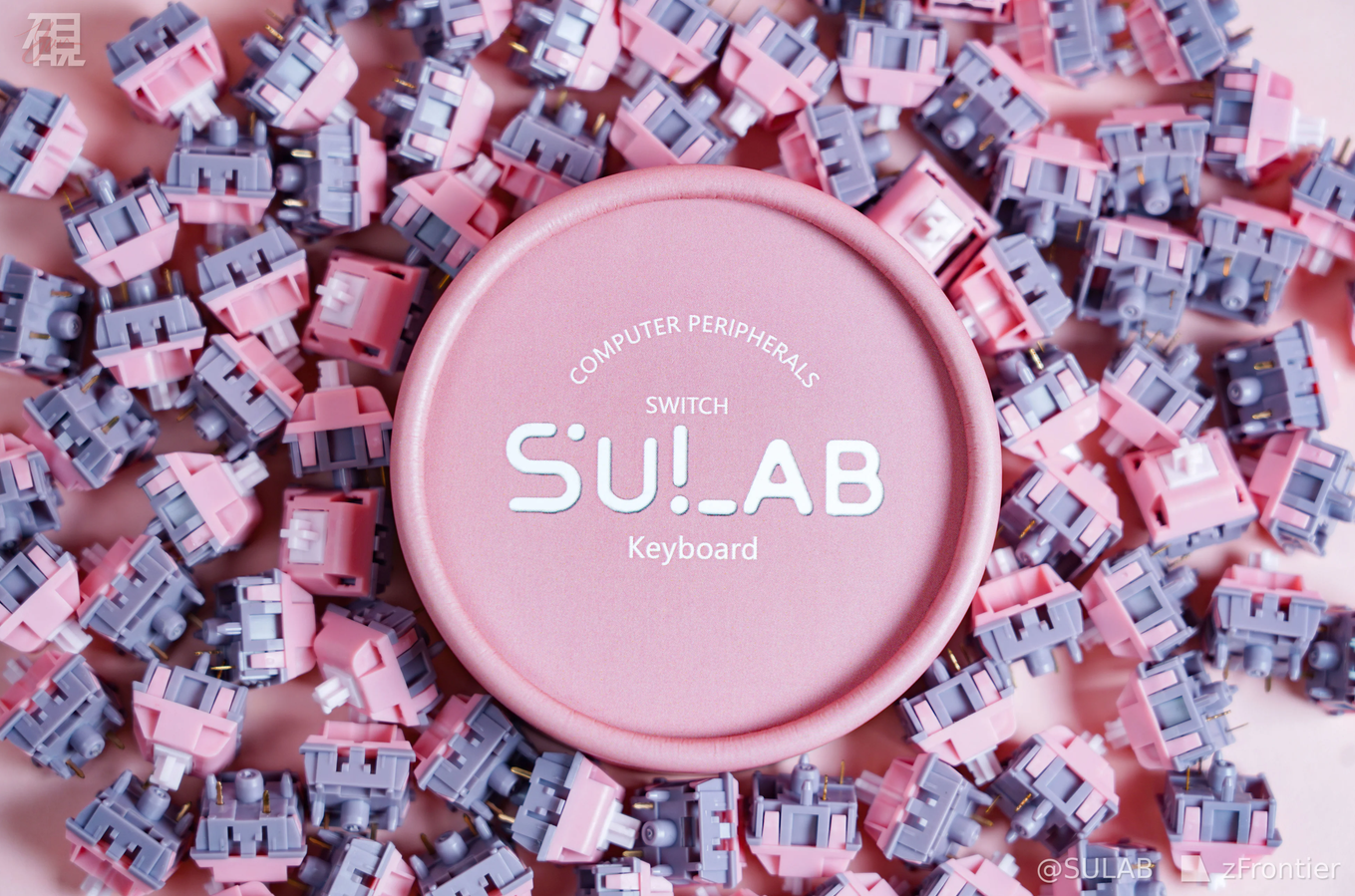
Figure 8: Debuted on August 9th and sold on October 25th of 2024, the Micro-Red switches were SULAB’s first release and were Keygeek-made linears in 37g and 45g variants with a U4 over nylon housing combination with L4 stems. Priced at 1.8 yuan/switch, the first sale was for 30,000 switches and saw no second batch released.
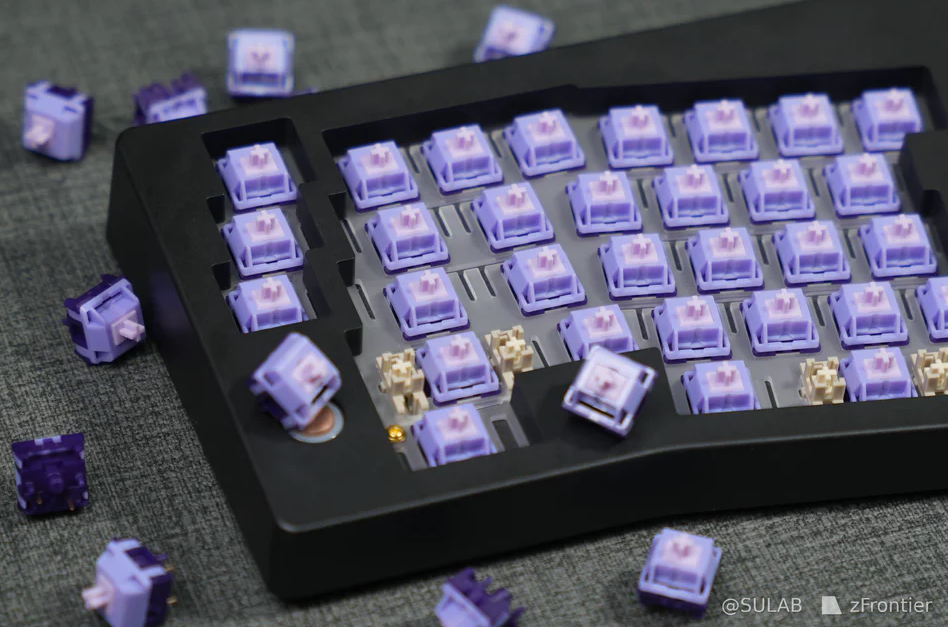
Figure 9: Debuted on November 26th and sold on December 9th of 2024, the Agave were SULAB’s first collaboration with HMX and resulted in a POK stem inside of nylon housing medium weight (49g) linear that utilized first of its kind improved factory lubing from HMX. Priced at 1.8 yuan/switch, these did not enjoy a second batch release either.
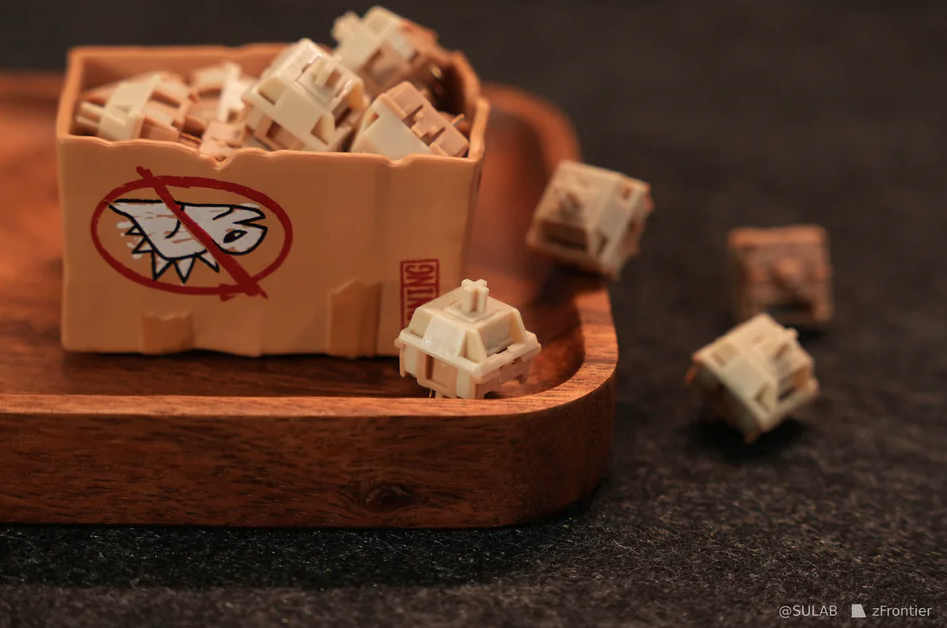
Figure 10: First teased on August 7th for an initial sale on August 21st of 2025, SULAB’s second collaboration with HMX came in the way of the Dune switches which featured a more conventional polycarbonate over nylon housing construction but three different weightings at the time of release – 36g, 50g, and 58g of bottom out force. Priced at 1.7 yuan/switch, these were also SULAB’s first switch to receive a documented re-release with the “fourth” batch hitting Taobao on December 14th, 2025.
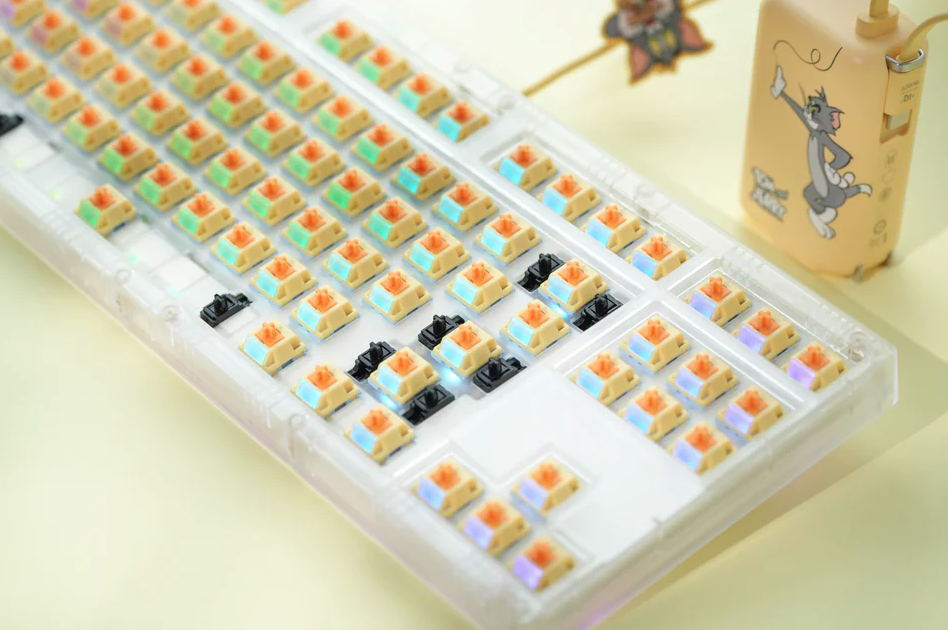
Figure 11: First appearing on September 29th and sold on October 15th of 2025, the HMX Lulu (Silents) were SULAB’s first silent switch featuring a similar HMX-made polycarbonate over nylon housing construction as the Dunes but with subtly tweaked release weights of 37g, 43g, and 52g of bottom out force. Priced at 1.98 yuan/switch presumably due to the added complexity of the stem molds, these saw a documented re-release again on December 11th, 2025, shortly before the Dunes did.
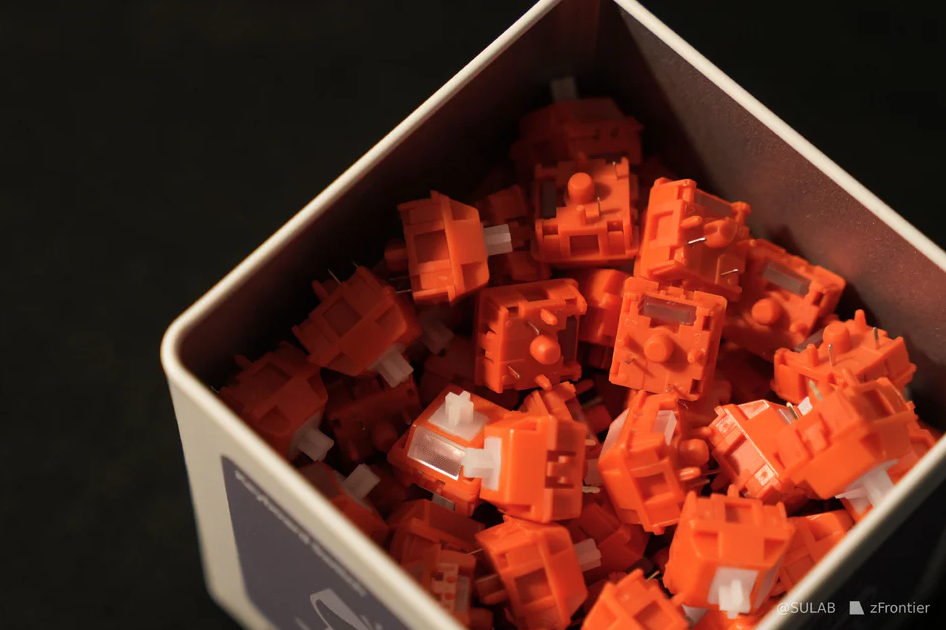
Figure 12: Debuting on November 14th and sold only weeks later on December 24th, 2025, the HMX Aperol were a wide number of firsts for the brand. In addition to being the first release wherein they detail a lengthy development period stretching back to October of 2024 wherein these were initially designed to be magnetic switches, these feature the first ‘P7’ bottom housing material used by HMX as well as the first LED diffuser to be included in a switch by SULAB. Sold at 1.8 yuan/switch, these inevitably received a listed “third” batch on May 11th of 2026.
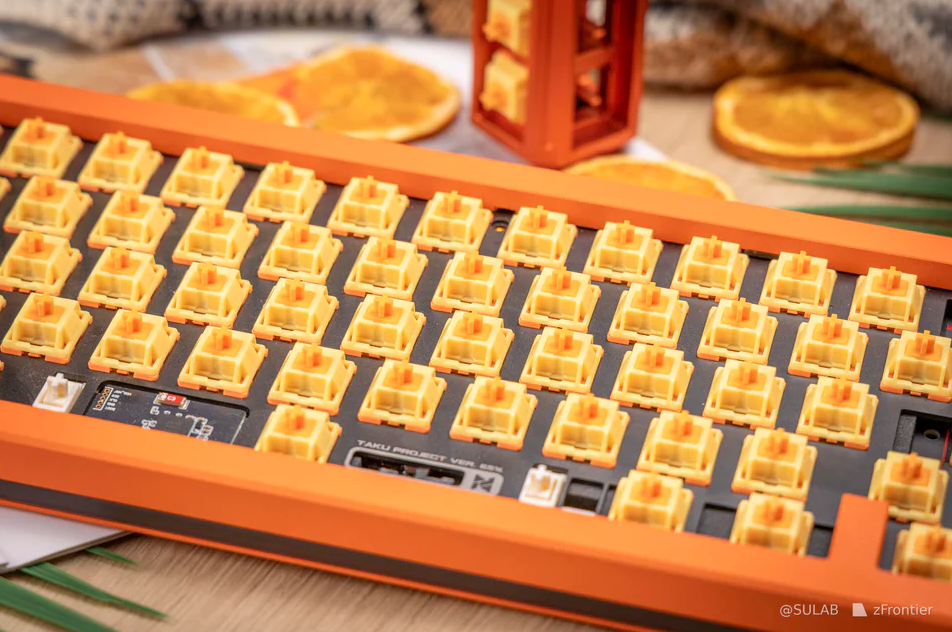
Figure 13: These orange colored switches, which I presume have a translated name of ‘Hexagonal Warrior’ were first shown on November 13th and sold on November 24th of 2025, featuring nylon over N2 bottom housing materials from HMX as well as a modified POM stem in three different weights – 37g, 43g, and 52g of bottom out force. Sold at 1.75 yuan/switch, these appear as one of the more forgotten about offerings from SULAB sandwiched in between the Aperols, Pu’er Tea, and Cthulhus.
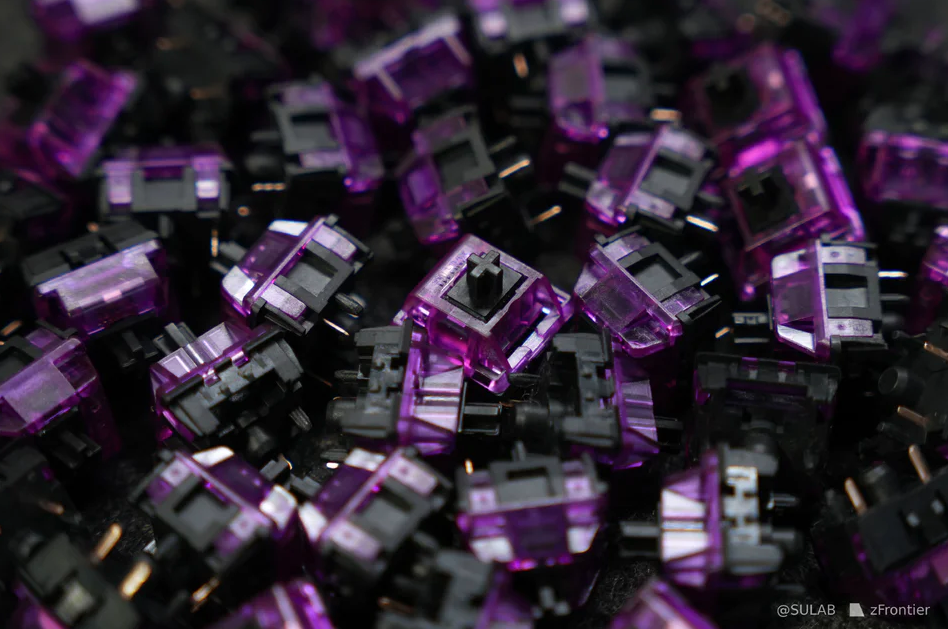
Figure 14: First appearing on January 12th and first sold on January 20th of 2026, the HMX Cthulhus feature polycarbonate over P7 (50% fiberglass reinforced nylon) bottom housings, a modified M1-POM stem, and three different weightings of 42g, 50g, and 56g of bottom out force at 1.75 yuan/switch. Tacking on a March 24th restocking of 60,000 switches, this is also the first posting wherein a ‘rebate’ is offered to users of 0.1 yuan/switch for posting tagged reviews of the switches to other social media platforms.
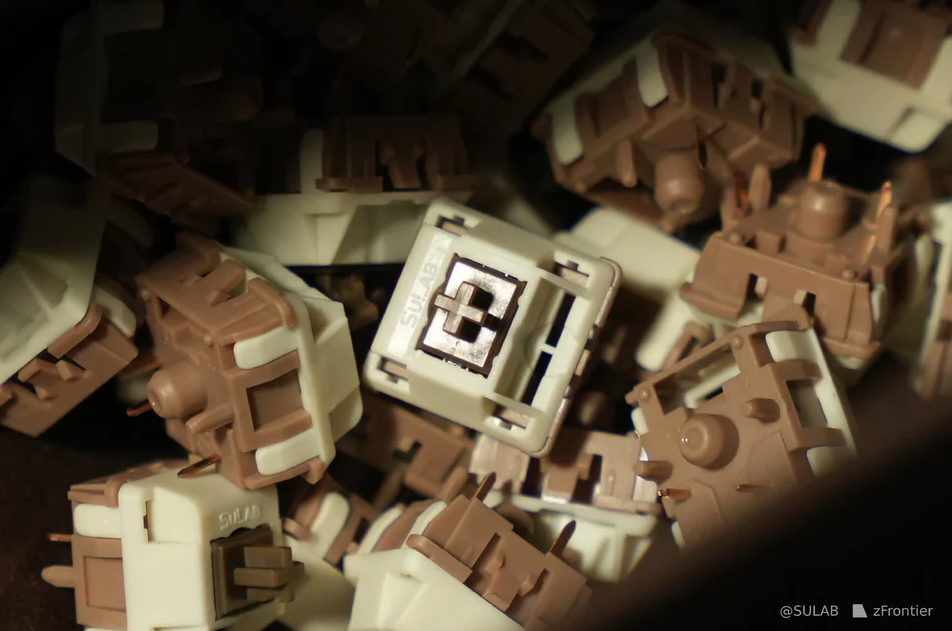
Figure 15: Billed as the first custom switch designed by Wingtree, the Wingtree x SULAB Pu’er Tea switches were SULAB’s first tactile switch and featured a presumably brown-like tactile bump inside of fiberglass reinforced housings and in three different weights of 48g, 52g, and 58g of bottom out force. Debuted on December 8th, 2025, sold on December 21st, 2025, and restocked on April 4th, 2026, these maintained a good amount of community attention both in China as well as abroad.
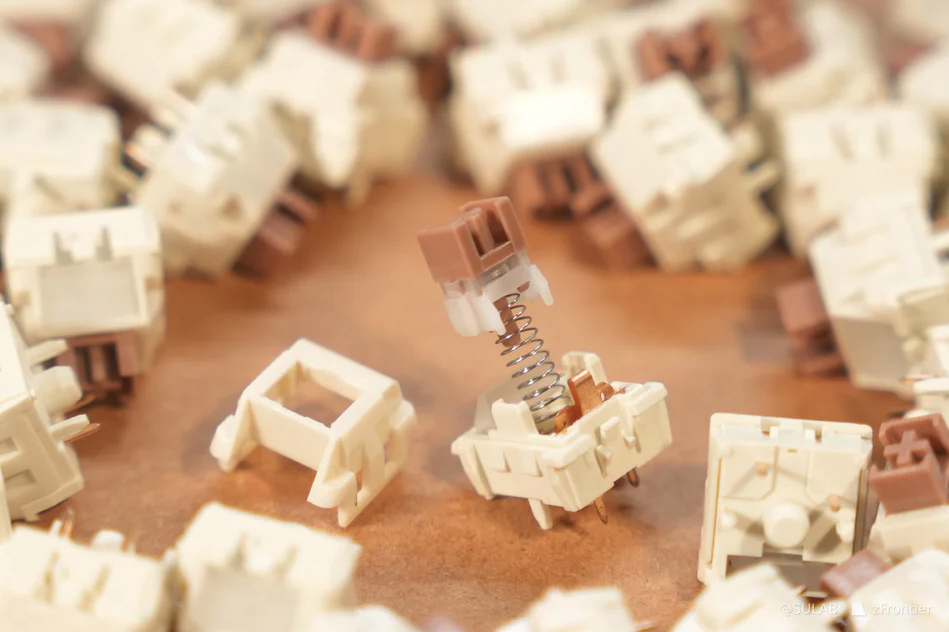
Figure 16: Riding on the success of their first tactile collaboration with Wingtree, SULAB leaned into what Wingtree has been doing best and moved this same tactility into a LICHICX-style silent tactile with the Pu’er Tea Mute switches, first sold in polycarbonate over nylon constructions on April 23rd, 2026, at 2.18 yuan/switch following an April 8th debut. These are notable as SULAB’s first silent tactile, their second switch to feature an LED diffuser, and their most expensive switch released to date.
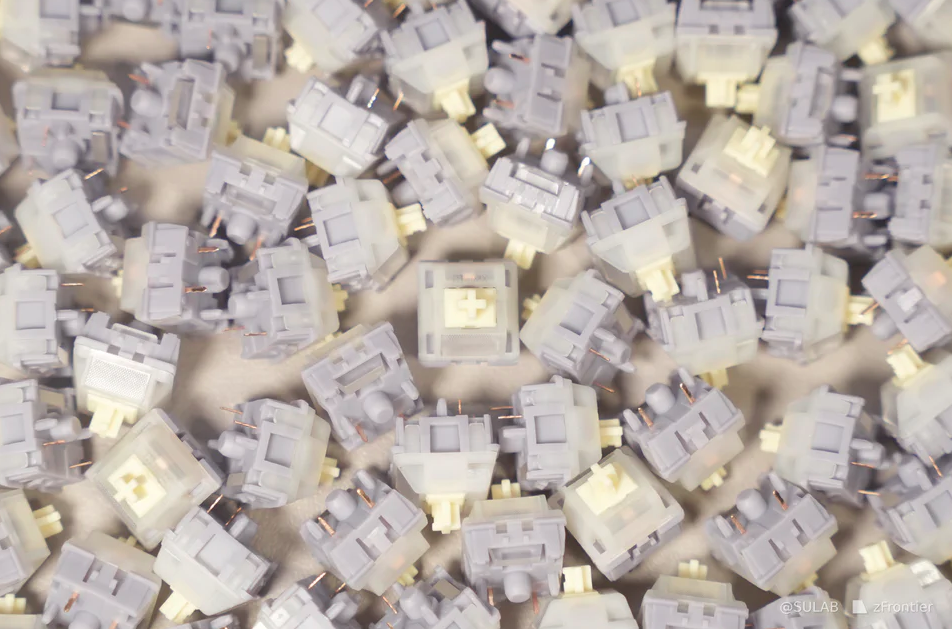
Figure 17: Showing continued evolution of release style, the Cold Moon / Moonlight switches were debuted on May 11th, 2026, for a May 23rd sale date and were designed as being HMX made silent versions of the Dune switches that were popular previously. Unlike the Dunes, though, these feature minor tweaks including a slightly different set of weights released, an LED diffuser, and a slightly higher price point of 1.98 yuan/switch.
Debuting by way of a January 12th, 2026, interest check on ZFrontier, the Cthulhu switches hit the screen with one and only one line of marketing at their header followed by the list of their technical specifications and sale prices. Sprinkling in just enough photographs to likely hit the post length minimum on ZFrontier, I am truly envious of their level of efficiency. A translation of this sentence as well as the technical specifications below such share that the Cthulhus are a combination of HMX’s then newest hybrid nylon housing blend ‘P7’ (50% fiberglass reinforced nylon) bottom housings, like the Aperols before them, a polycarbonate top, and M1 modified POM stems to achieve a thinner, sharper, and overall higher pitched sound than other linears on the market. Coming in three variations differentiated by their spring weights, with combinations of actuation and bottom out weights of (37-42g), (45-50g), and (50-56g), were all achieved with a 3.5 mm total stem travel distance and a 22-mm long, single stage silver spring. Initially priced at 1.65 yuan ($0.25) per switch during the initial sale phase, long term in-stock prices would increase to 1.75 yuan ($0.26) per switch as is fairly common to see for ZFrontier listings. (What is not as common to see, however, is a small blurb at the bottom of the first Cthulhu post which suggests a 0.1 yuan/switch ‘rebate’ of sorts for buyers posting reviews of the switches across various social media platforms.) Available for sale on January 20th, the initial batch size of Cthulhus released was not known, though presumably on the same rough size as the second batch that was made available on March 24th of 60,000 additional switches. Following their release in the east, the Cthulhu switches slowly trickled into the western switch scene and became available not just on Unikeys but through other vendors like SoupKeys, LumeKeebs, Milktooth, KeyBay, KTechs, and more. This, in turn, resulted in an even larger number of content creators picking them up as well in the months between then and now. With reviews stretching from February to as recently as a couple of weeks ago, it largely appears that the general consensus around these switches is quite positive. The sheer popularity of these switches, and not just their pretty color and difficult to spell name, as a non-magnetic, HMX-made linear in 2026 is one of the larger reasons I sought these out for a review. While still available for purchase in various storefronts at various price points ~$0.35 per switch as of the time of writing, it is uncertain if these will continue to be restocked again. Beyond two dubiously translated ZFrontier posts on May 11th, 2026, which suggests that the HMX Aperols received a third batch of releases and the HMX Dunes received a fourth batch of releases, SULAB hasn’t demonstrated a tendency to do more than one re-run of switches per release. However, it is arguable that they’ve also not produced a switch with as much sustained attention as these yet either.
Cthulhu Performance
Note: As described in the last paragraph above, the Cthulhus were made available by SULAB in three weighting variations – (37-42g), (45-50g), and (50-56g) which denote their actuation and bottom out weights. Unikeys, where I purchased these switches, only had the latter two options and I selected the (50-56g) variant for all technical dissections below. Any references made to the (45-50g) variants of the Cthulhus will be explicitly listed where they occur.
Appearance
At the highest level, the HMX Cthulhu switches come in a two-part colorway featuring translucent, deeply purple top housings with matching opaque black stems and bottom housings that come across not quite as Lovecraftian as I would have imagined. I suppose I’m largely being influenced here by all of the water drenched, semi-decomposed green, and not purple, renders that I’ve seen of Cthulhu over the years, though then again the Great Old Ones weren’t exactly the most rational of concepts for humans to try and explain anyhow, so… I guess why not purple then? They are at least visually striking enough for me to have preemptively posted a mailday post for them on social media while not considering that I had picked them up with the intention of reviewing them, so perhaps the colorway is Lovecraftian enough if the visuals overrode my more logical planning surreptitiously. While definitely unique in appearance from all of the other purple switches which have been made over the years and likely easy enough to identify based on that, up close there aren’t too many details that could help beyond the colorway, as the Cthulhus feature standard modern HMX nameplates and not any SULAB-specific ones as seen on some of their other releases like the Wingtree Pu’er Tea tactiles. All of the interesting details of the HMX Cthulhus, it seems, exist at the sub-part level and are not readily apparent in their fully constructed form. (It should be noted here, as well, that there appears to be no macro- nor micro-level details that visually distinguish the different weightings of Cthulhu switches from one another.) These details of note are described and documented in the paragraphs and photos below.
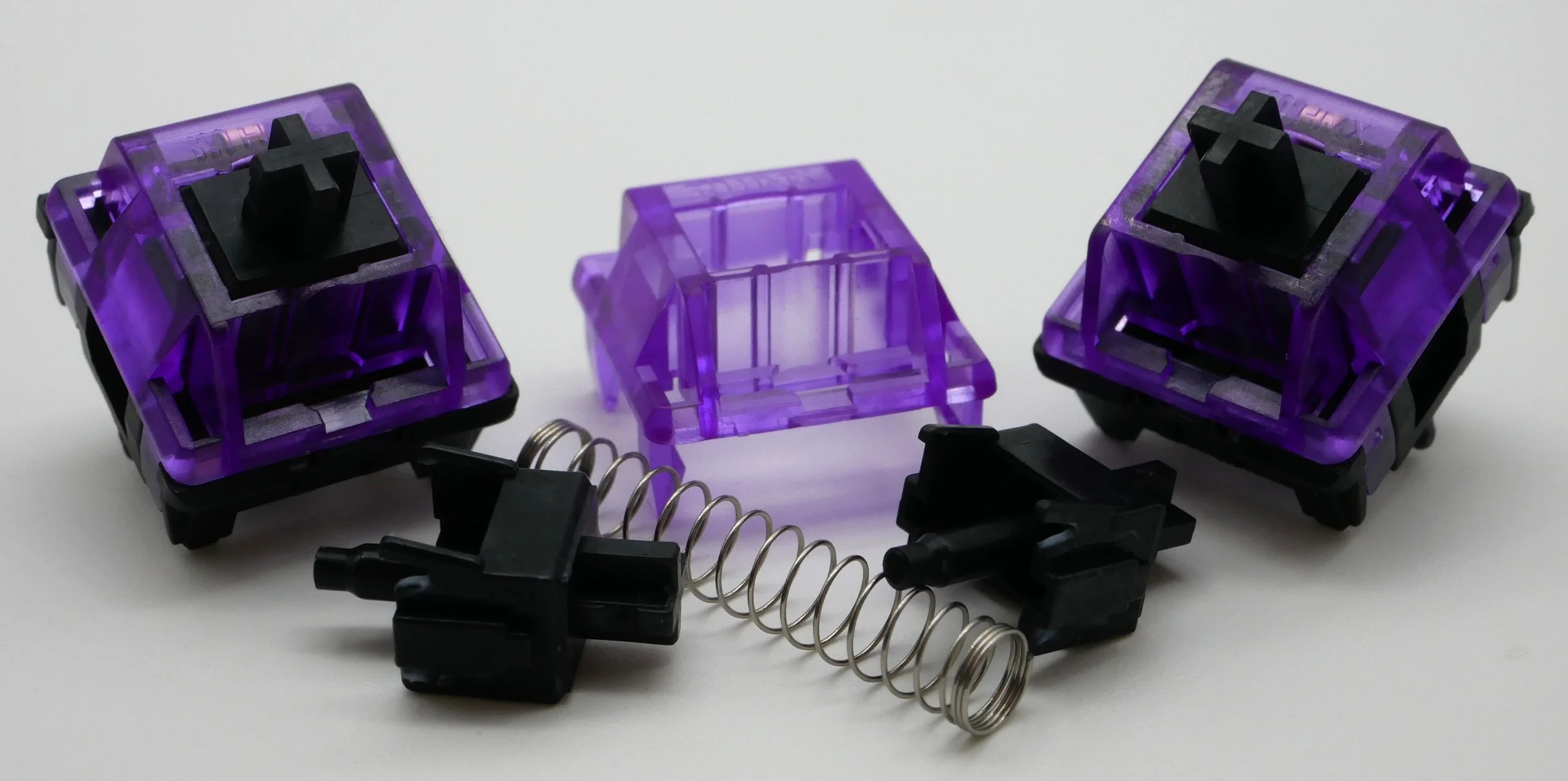
Figure 18: HMX Cthulhu switches and their components.
Looking first at the translucent purple, polycarbonate top housings of the HMX Cthulhu switches, these are perhaps the least interesting of the components of the switch and those most in line with other modern HMX-made releases. Externally, the housings come in four pin attachment style and feature a long, rectangular LED/diode region with centered circular indentation and no markings on such. Similar to those of the many HMX-made 80Retros’ brand releases, the Cthulhus feature a modern HMX nameplate with its three-letter monogram followed plainly by ‘HMX’ in all capital letters. Internally the housings are also rather plain and feature very little in the way of notable features or modifications that would reasonably impact the performance of the switches. Perhaps that only notable point of interest is that of the very small, single number mold marking located in the upper left-hand corner of the housing just on the outer edge of the underside of the nameplate region of the housing. While this isn’t quite the exact same placement as other brands, this area generally tends to be where those markings are found on the inside of top housings.
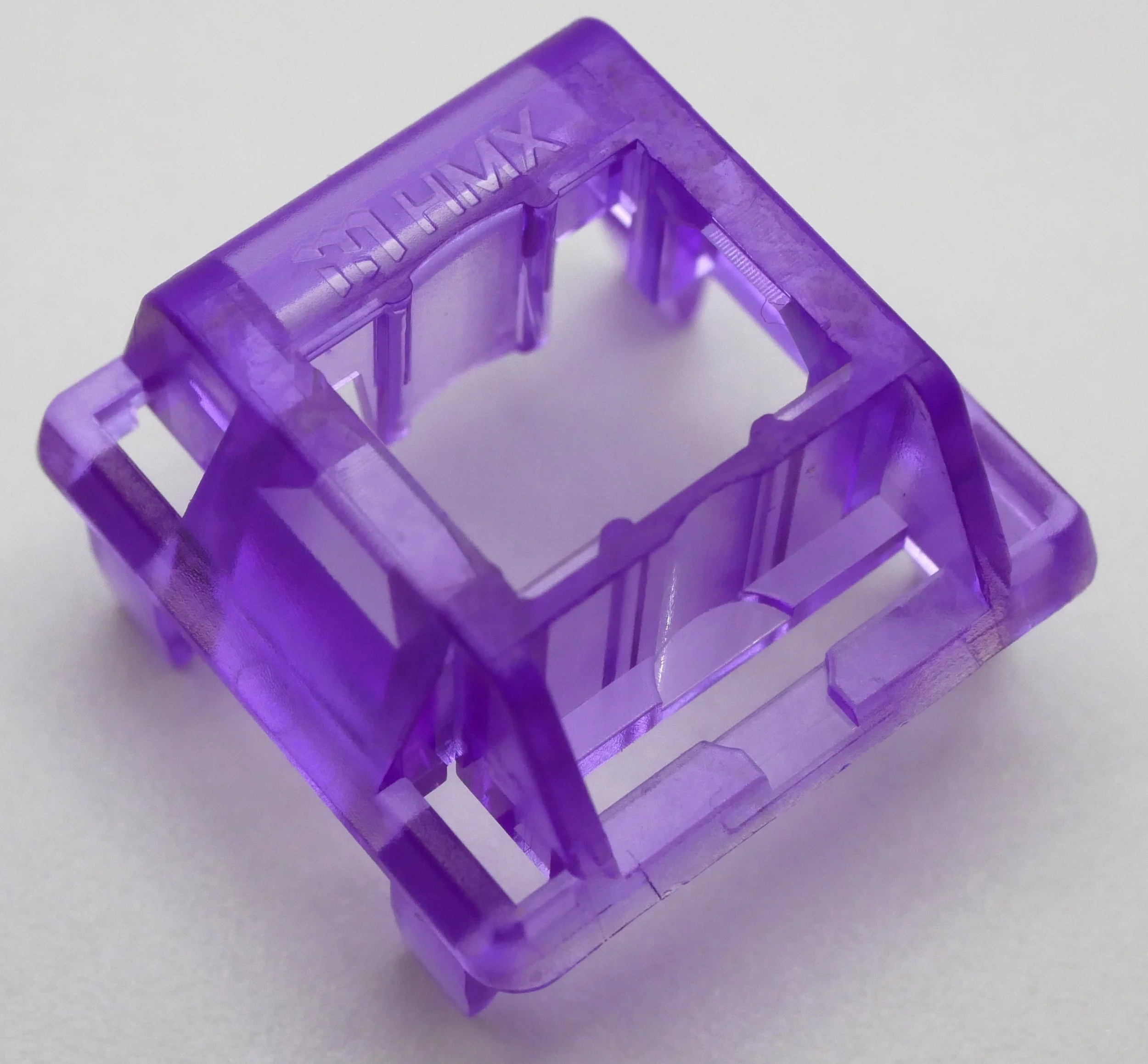
Figure 19: HMX Cthulhu top housing exterior showing modern HMX nameplate, four pin attachment style, and wide rectangular LED/diode slot with centered circular indentation.
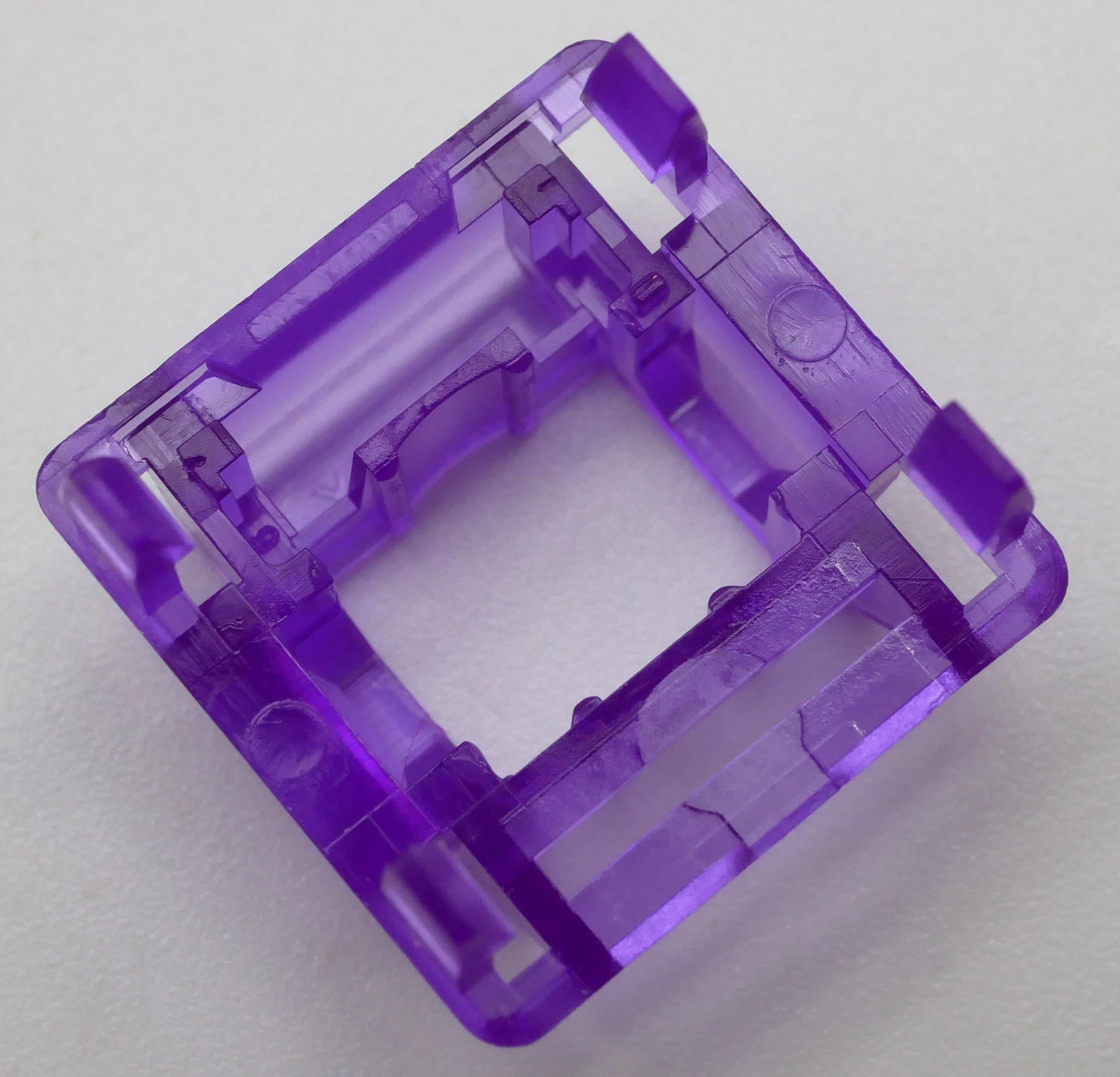
Figure 20: HMX Cthulhu top housing interior showing rather commonplace features as well as a small, single number mold marking just to the left of the underside of the nameplate of the housing.
Stopping next to inspect the opaque black, modified POM M1 material stems of the HMX Cthulhu switches, I was immediately struck by their appearance upon opening these switches due to the sheer amount of factory lubing present on them. While these are certainly far from the most generously lubed switches I’ve seen come from a manufacturer over the years, the fact that the white lubing contrasted so strongly visually against the black stems made it absolutely jump out when first seeing them. As a result of this contrast, I can accurately describe the lubing pattern of the stems, for once, with the front plates containing two small vertical ribbons, the black plates being completely barren, and the sides of the stems being especially coated, with the corners of the stems near the bottom of the slider rails having a thicker application than the rest of the sides. Beyond this factory lubing, the Cthulhu stems are rather normally designed by HMX standards with non-tapered slider rails, a decently tiered center pole, and small mold ejector marks above the PCB interfacing legs on the front of the stems. By measurement these features and by visual inspection the factory lubing on these stems all appear to be fairly consistent across multiple switches that I opened to inspect form my batch.
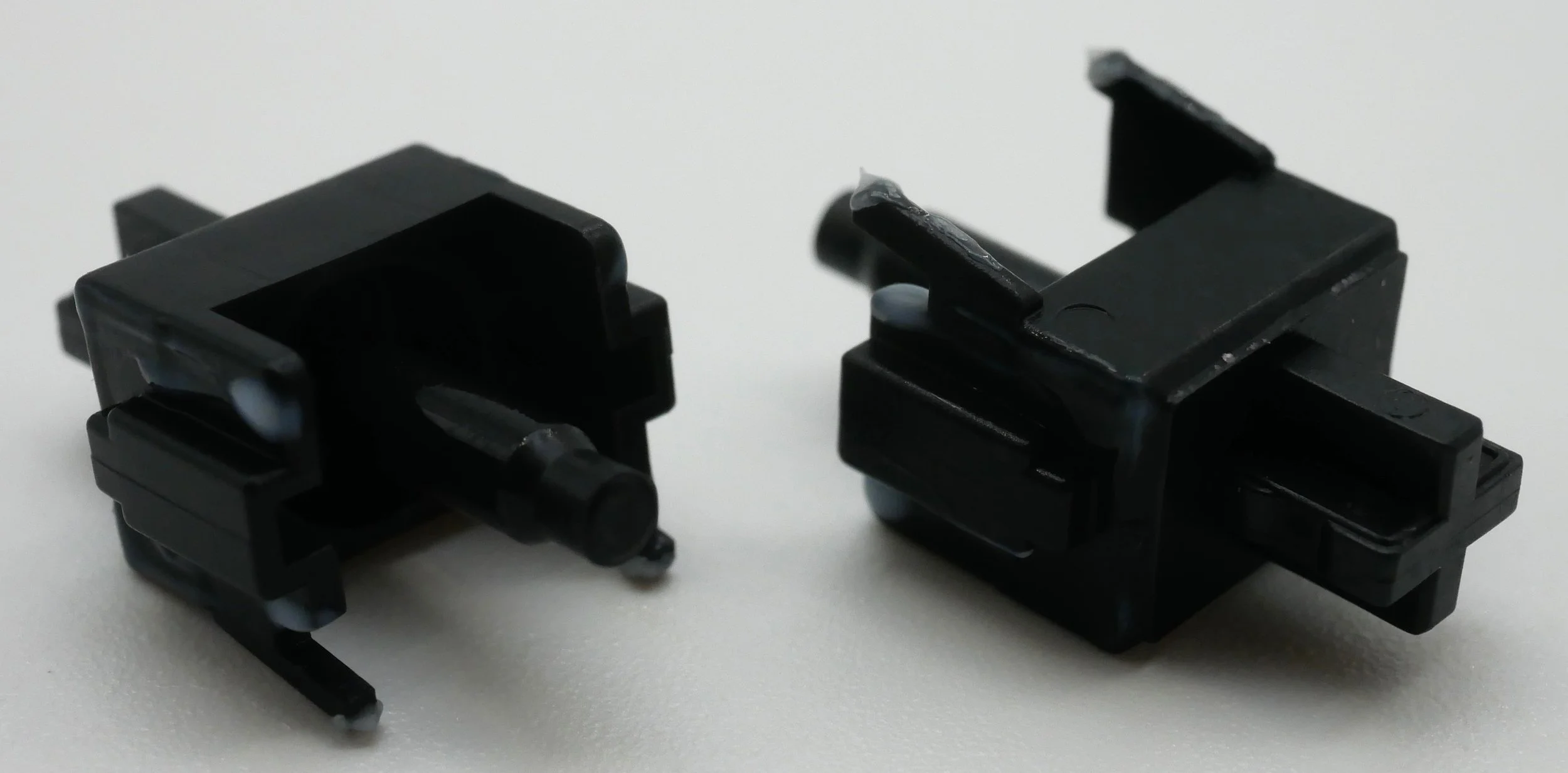
Figure 21: Front and back side of the HMX Cthulhu stems showing non-tapered slider rails, strongly tiered center pole, and copious amounts of factory lubing.
Finally arriving to the opaque black, P7 material (50% fiberglass reinforced nylon) bottom housings of the HMX Cthulhu switches, these feature a decent blend of features of the previous two paragraphs of breakdowns above. And by this, I mean a blend of factory lubing and relatively normal, expected HMX designs. Internally, the housings are fairly standard and feature a wide south side spring collar, large dampening pads that are a bit complex in their shape, and plenty of residual factory lubing in their slider rails. Much like with the contrast between the lube and the stems noted above, from across my desk I can visually see the factory lubing in the bottom housing rails of the Cthulhus. Externally, the Cthulhu bottom housings come in PCB mount/5-Pin variety and feature a rather matte appearance on the underside with the exception of shiny, glossy rings around these PCB mounting pins. The only other features of note on the Cthulhu bottom housing exterior is that of the two inverted mold markings located below each of those PCB mounting pins, with similar character and number combinations seen in other previous HMX-made switches.
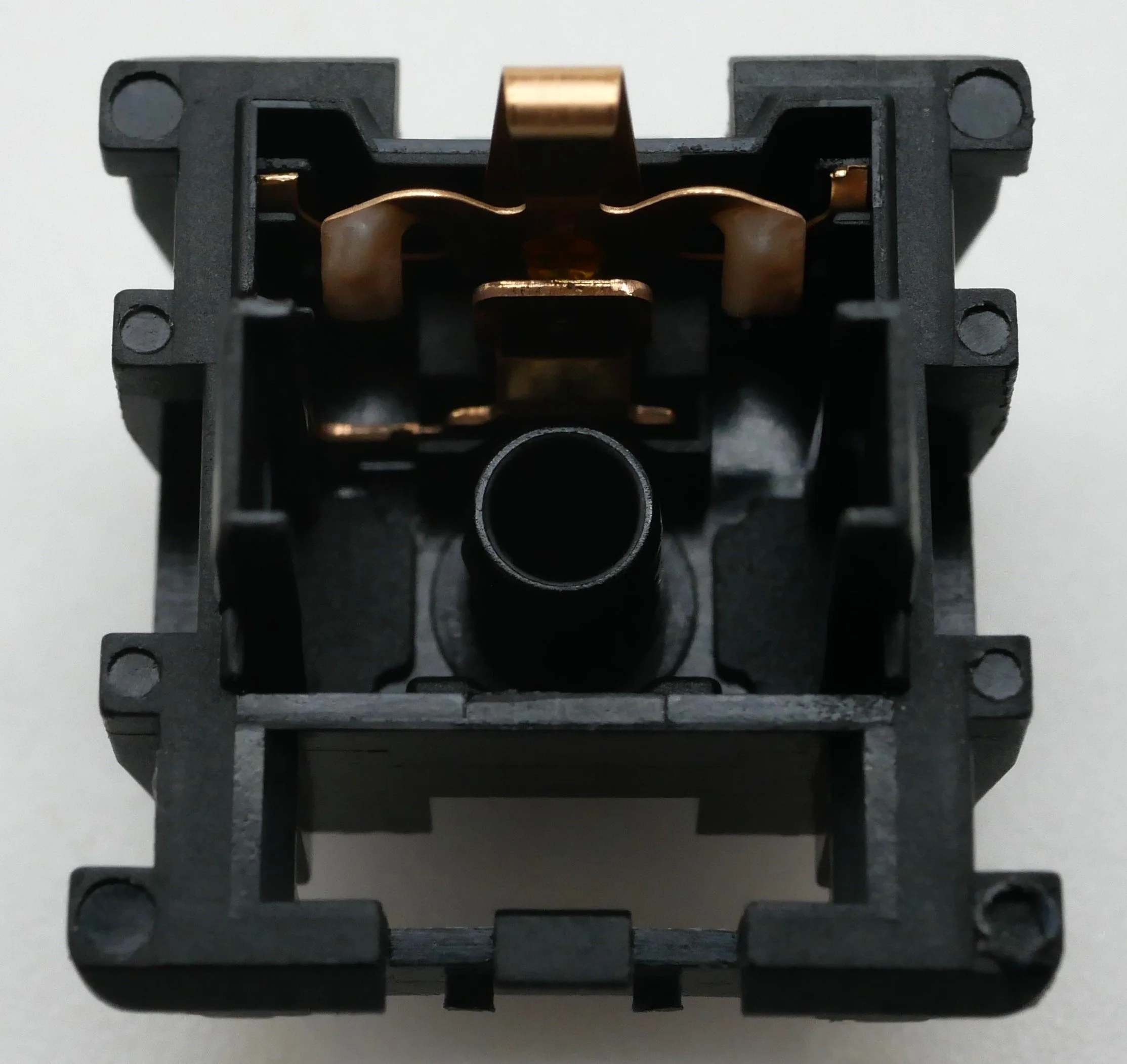
Figure 22: HMX Cthulhu bottom housing interior showing south side spring collar, dampening pads at the base of the slider rails, and trace amounts of factory lubing on both those slider rails and the leaves of the switch.
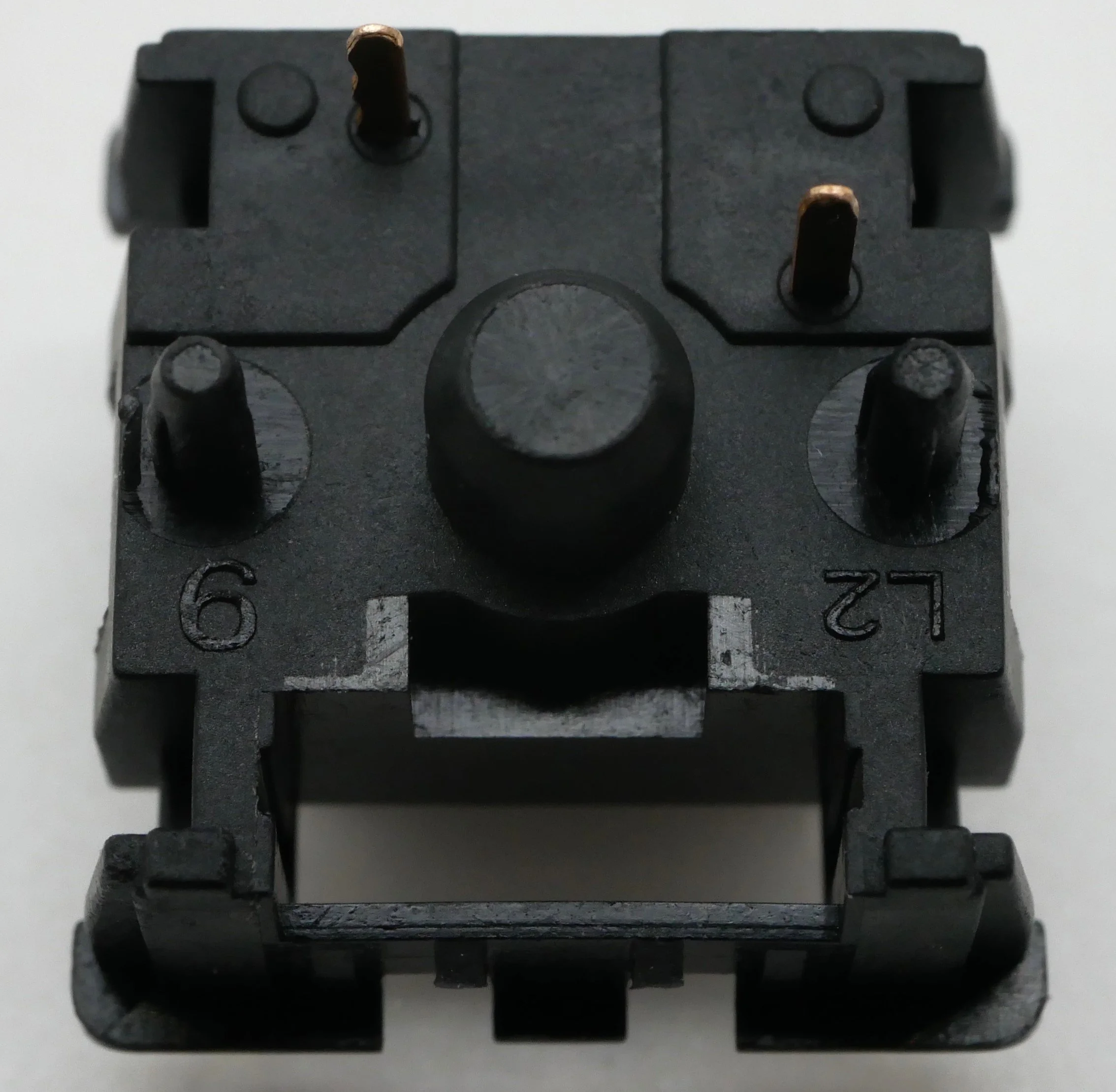
Figure 23: HMX Cthulhu bottom housing exterior showing matte surface features, PCB mounting pins, and inverted mold markings underneath both mounting pins.
Push Feel
The HMX Cthulhu switches feel quite true to the specifications that they were marketed under by SULAB and even more true to what I could visually see above in my appearance section breakdown of the switches. And by what I described above, I mean a whole lot of factory lubing. Unlike the vast majority of linear switches that I’ve tried over the course of the past year or two, the HMX Cthulhus are among the first wherein I can truly say that I feel the factory lubing and the direct influence it has on the strokes of these switches. I’ve fairly regularly invoked the idea of a ‘spectrum of smoothness’ when it comes to linear switches to describe that while switches can be smooth, that there’s usually a range in that smoothness from switches that are lightly and delicately, yet perfectly lubed versus those that have a large enough amount to give a bit of drag to the downstroke that hugs the fingers of the users a bit more. These Cthulhu switches call back to a kind of smoothness that was much more common towards the peak of COVID and shortly thereafter where the linears were smooth and had a weightiness to their feeling and progression as a result of this. (While perhaps mentioning Durock/JWK as exemplary of this kind of factory lubing may rub some users the wrong way, these really did refire those rarely used neurons in my brain upon testing these switches out.) Beyond the thick, but not overly heavy linear strokes of the HMX Cthulhus, the housing collisions are about as expected with the bottom outs being quite dampened and almost entirely softened unless typed on with some force to push the stems into the housings and the topping outs being thinner and with a bit more of a popping feeling. Generally, I have never been a fan of polycarbonate over nylon or nylon-adjacent housing designs as a result of this exact kind of asymmetry posted here, though it is more a feature than a bug of the Cthulhu switches and their design when you recall that they were marketed around a sound profile that emphasizes these kinds of things. Even not being my personal favorite, it’s hard to take issue with switches that nail the design intent that they are going after. It is worth noting, though, that this asymmetry does fall away a bit if the HMX Cthulhu switches are typed on with some degree of force or speed. At faster rates, the stems more squarely contact the bottom housings and give a small footprint snapping feeling that doesn’t perfectly match the topping out but gives a sort of one-two punch that is complementary in the opposite direction from the softened, muted bottom outs. While both of these feelings are certainly reasonable and actually decently well done within the HMX Cthulhus, the enjoyment of either one of them is really going to come down to how consistently someone types on them, be it both in terms of force and speed. The sound of the Cthulhus even more so hinges on this consistency.
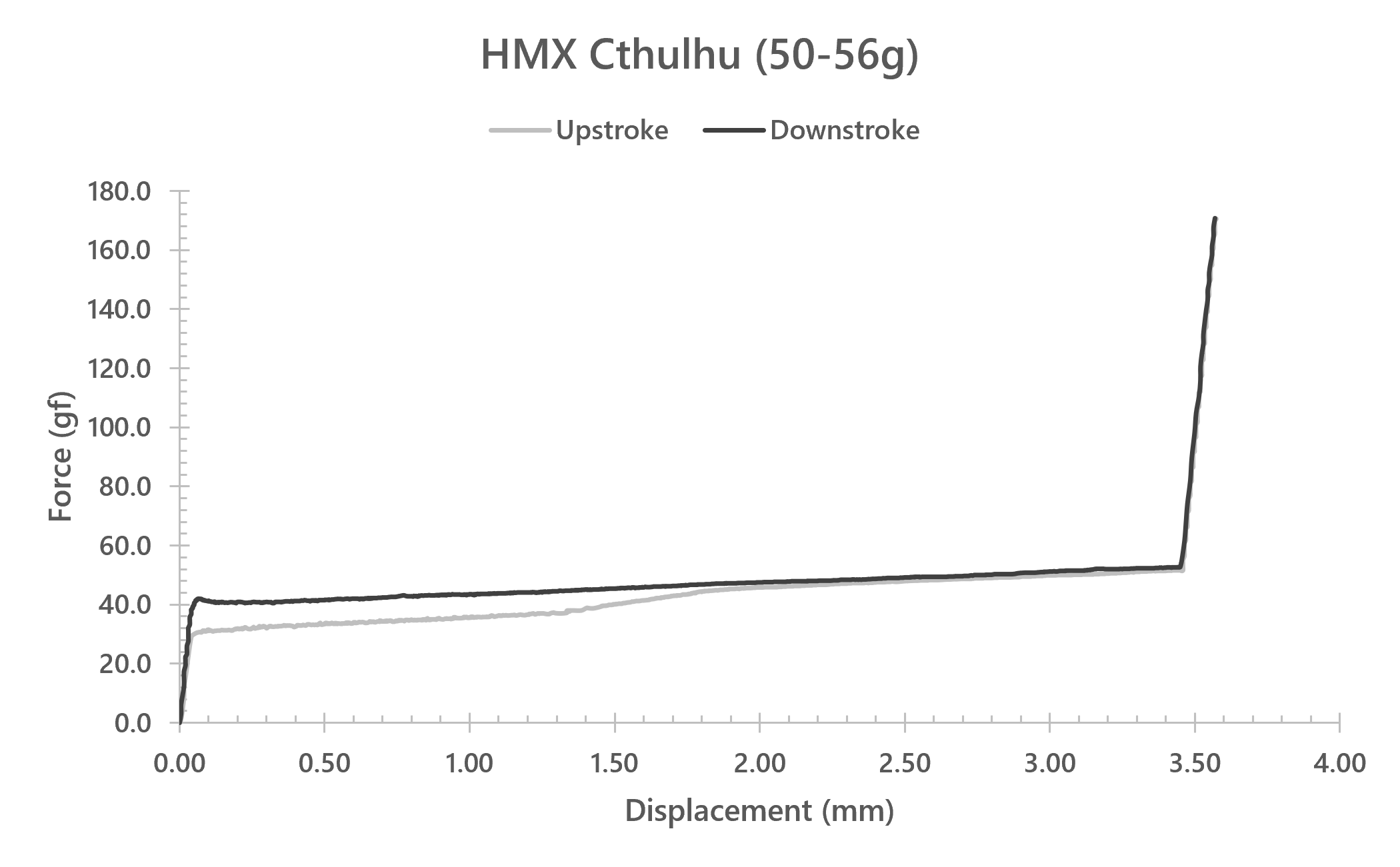
Figure 24: Force curve diagram for the stock HMX Cthulhu switch.
Sound
The HMX Cthulhu switches are linears where the push feeling notes above almost perfectly overlap with those of their sound profile notes here, and in turn this paragraph continues the discussion of consistency to posit that the performance of their largest selling point is largely based in how you use them. Are you a consistently light, smooth, and/or slow typer? Well, then you’ll have one uniform presence in your Cthulhu switches wherein you get a subtle, lightly popping medium volume topping out with a fair bit of its sharper corners rounded off by the same factory lubing that creates an otherwise silent, muted backdrop throughout the stroke and at bottom out. If you’re a consistently heavy, faster, or more aggressive typer, though, you’ll get a different experience. The sound of your Cthulhus will be similar to that described above, though accented with a breakthrough, small footprint snappy stem pole bottom out that gives a slightly louder volume pop that is a bit sharper and with more bite than the topping out sound. With the generous factory lubing of these switches doing a stellar job of sanding off the harsher edges and filling in what might be gaps in the conventional sound of modified nylon or polycarbonate housing materials with rounder, more warm tones, I’m not sure either of these sound profiles you could get are necessarily bad by any reasonable metric. I even surprise myself by saying as much as I historically both don’t like switches that have polycarbonate over nylon constructions nor ones that are not as consistent in their sound profiles across typing speeds. However, I have to think that these issues of differing sounds as a result of modulating between different typing speeds may not be all that prevalent to most users based on the generally positive sentiment that surrounds these switches right now. Beyond these notes, though, there’s really nothing else that pops out about the sound profiles of the HMX Cthulhus; They’re entirely free of ping, scratch, or switch by switch consistency at fixed typing speeds.
Wobble
The HMX Cthulhu switches have extremely little stem wobble that is also notably consistent from switch to switch across the batch that I tested. With almost no wobble at all in the E/W direction, there’s only a tiny bit more in the N/S direction that leaves these switches without reasonable complaints from anyone with respect to this metric and in within a short throw of manufacturing tolerance perfection. While I can’t say that I’ve used HMX’s newest “L3” molds before, if this is an indication of their general tolerances and consistency I need to find me some more of them.
Measurements
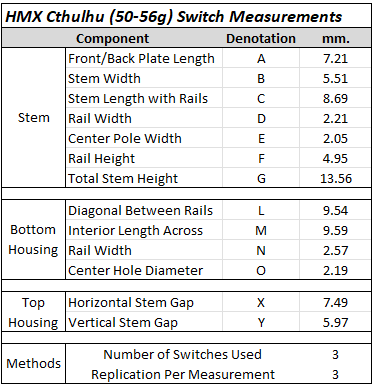
If you’re into this level of detail about your switches, you should know that I have a switch measurement sheet that logs all of this data, as well as many other cool features which can be found under the ‘Archive’ tab at the top of this page or by clicking on the card above. Known as the ‘Measurement Sheet’, this sheet typically gets updated weekly and aims to take physical measurements of various switch components to compare mold designs on a brand-by-brand basis as well as provide a rough frankenswitching estimation sheet for combining various stems and top housings.
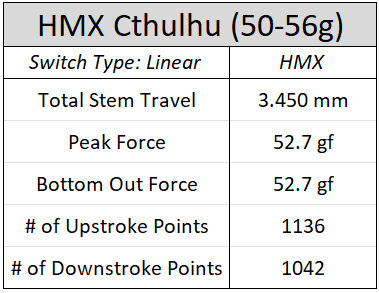
Figure 26: Numerical details regarding the force curve for the stock HMX Cthulhu switches.
Have you ever wanted to be bombarded with more switch data than you’ve ever seen at any point in your life before? Consider checking out the ‘Force Curve Repository’ hosted on my GitHub that contains all force curves that I take both within and outside of these full-length reviews. In addition to having these graphs above, I have various other versions of the graphs, raw data, and my processed data all available for over 2000 different switches for you to use however you see fit. Check it out via the ‘Archive’ tab at the top of this page or by clicking any of the force curve cards above.
Break In
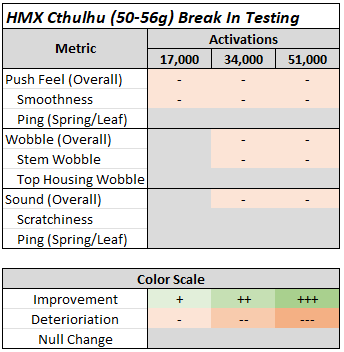
Break In Notes
17,000 Actuations
- After 17,000 actuations on the break in machine, the HMX Cthulhu switches began to develop some ‘thin’ spots in the factory lubing that certainly didn’t make them feel scratchy, though definitely did make them not feel as uniformly smooth as their stock counterparts. As can be seen in the chart above, this is a fairly consistent change though and successive rounds of breaking in don’t appear to cause the switches to develop fully dry or scratchy spots in their strokes.
34,000 Actuations
- After 34,000 actuations, some additional inconsistencies began to show up in the HMX Cthulhu switches in the form of their housing collisions not sounding uniformly pitched or loud across the batch broken in. Presumably due to the same factory lube migration that caused the change in the push feeling of the switches after 17,000 actuations, this caused some switches to top out a fair bit louder and bottom out a tiny bit squishier than their stock counterparts.
- There was a very tiny increase in both N/S and E/W direction stem wobble of the HMX Cthulhu switches broken in to 34,000 actuations, though I will admit that the difference is just small enough that it definitely borders being included as a point versus not being included as a point on the chart.
51,000 Actuations
- While the HMX Cthulhu switches broken in to 51,000 actuations did begin to more fully grow into their full point deduction for stem wobble first seen after 34,000 actuations, the rest of the switches’ performance remained unphased through this last stage of testing. This is definitely one of the more resilient switches I’ve reviewed in some time when it comes to changes throughout the break in process.
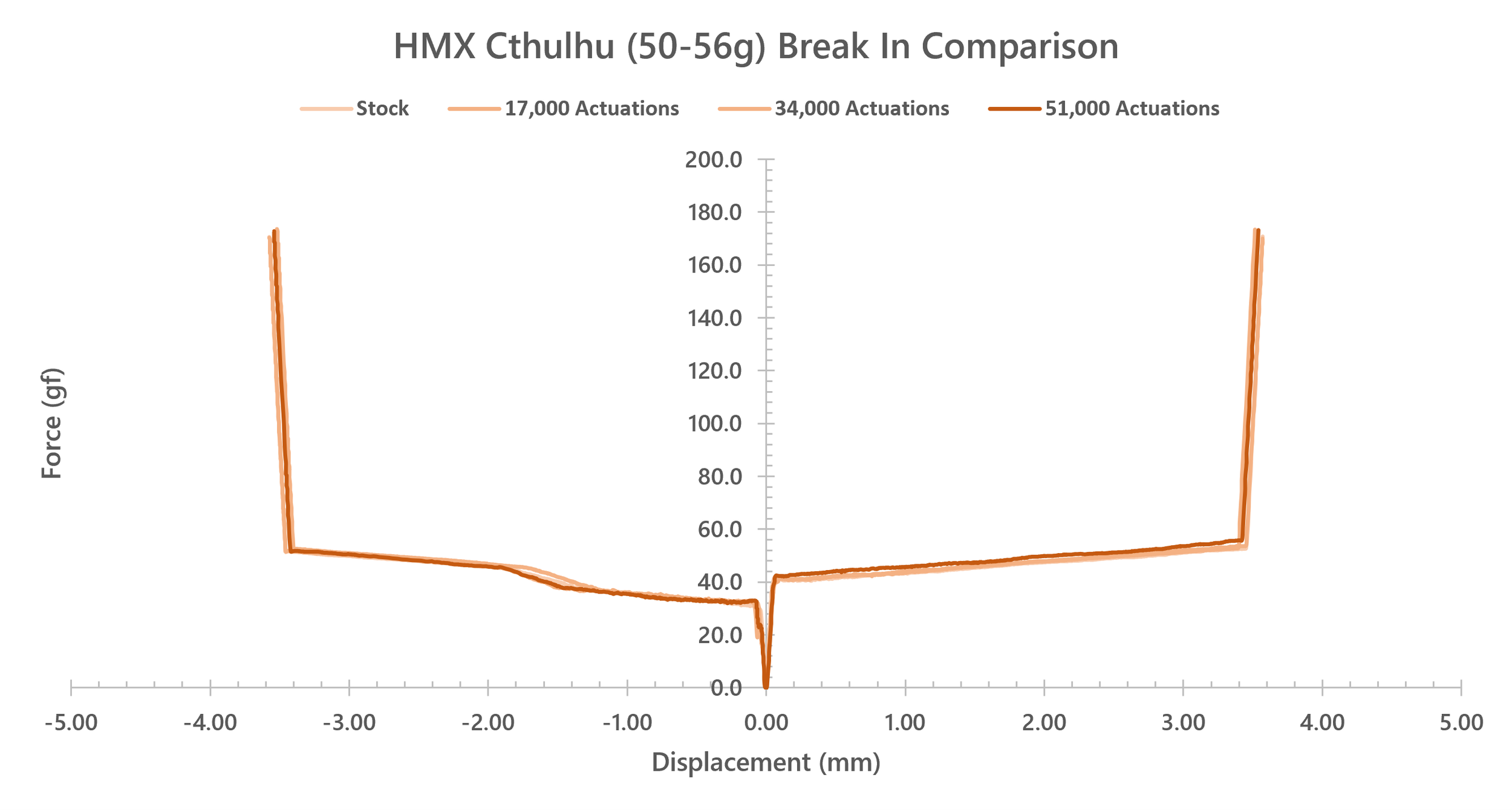
Figure 28: Comparative force curve diagram showing no substantial, consistent change in the force curves of the HMX Cthulhu switches throughout the break in process.
Comparison Notes to Other Notable Linear Switches
Note – These are not aimed at being comprehensive comparisons between all factors of these switches as this would simply be too long for this writeup. These are little notes of interest I generated when comparing these switches to the HMX Cthulhu switches side by side.
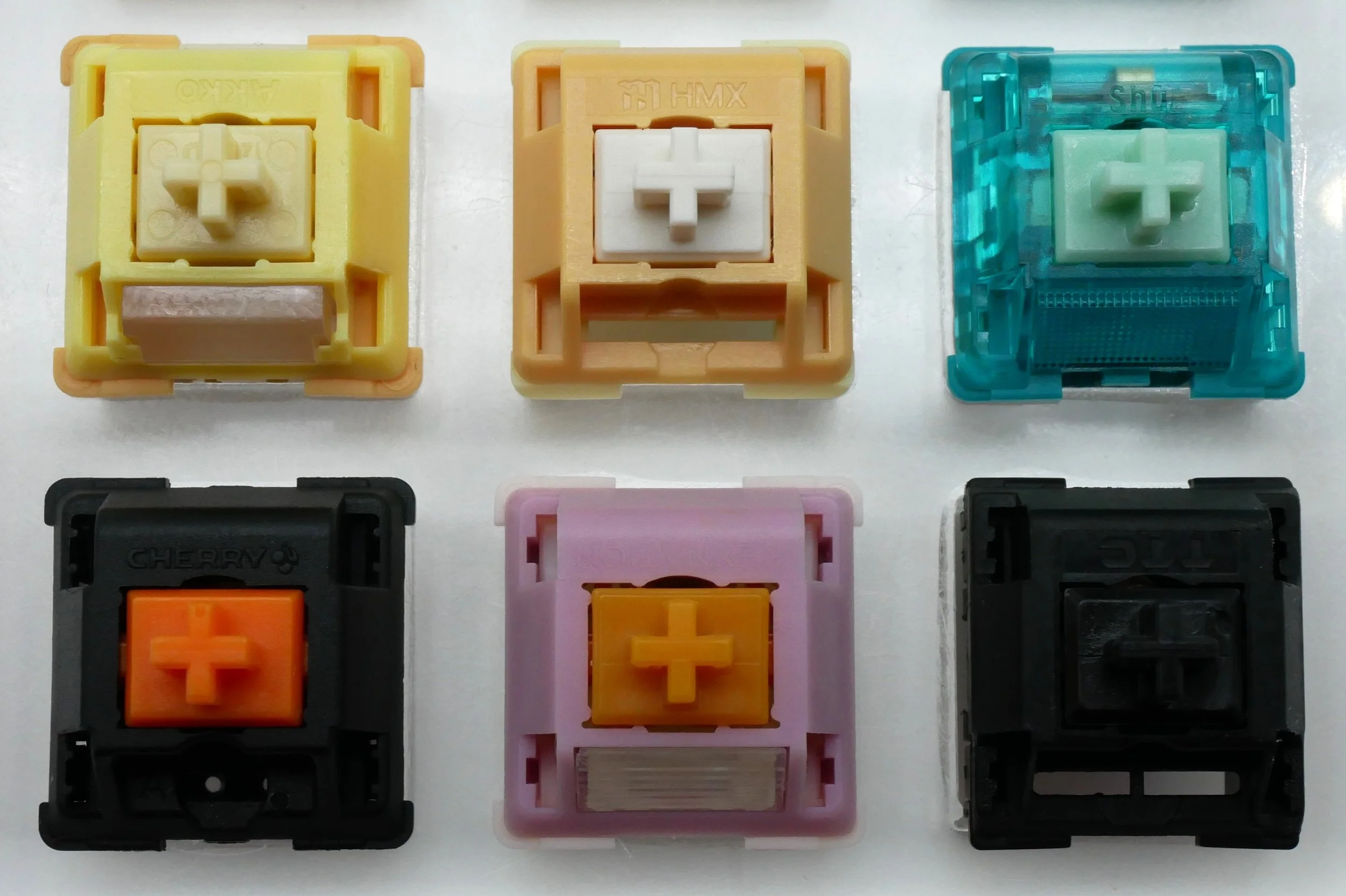
Figure 29: Switches for comparison. (L-R, Top-Bot: Akko Creamy Yellow U1, HMX Egg Yolk, Wingtree Jadeite, Cherry MX Orange, Taro N Sweet Potato V2, and Pantheonkeys x TTC PT Black)
Akko Creamy Yellow U1
- There is a notable gap in between these two switches when it comes to their stem wobble, with the HMX-made Cthulhu switches absolutely blowing the Huano-made Yellow U1 switches out of the water with respect to such. As we progress further down this comparison list, just know that this is a(n almost) continued trend that is more so the product of the Cthulhu switches than the other linears they’re being compared to.
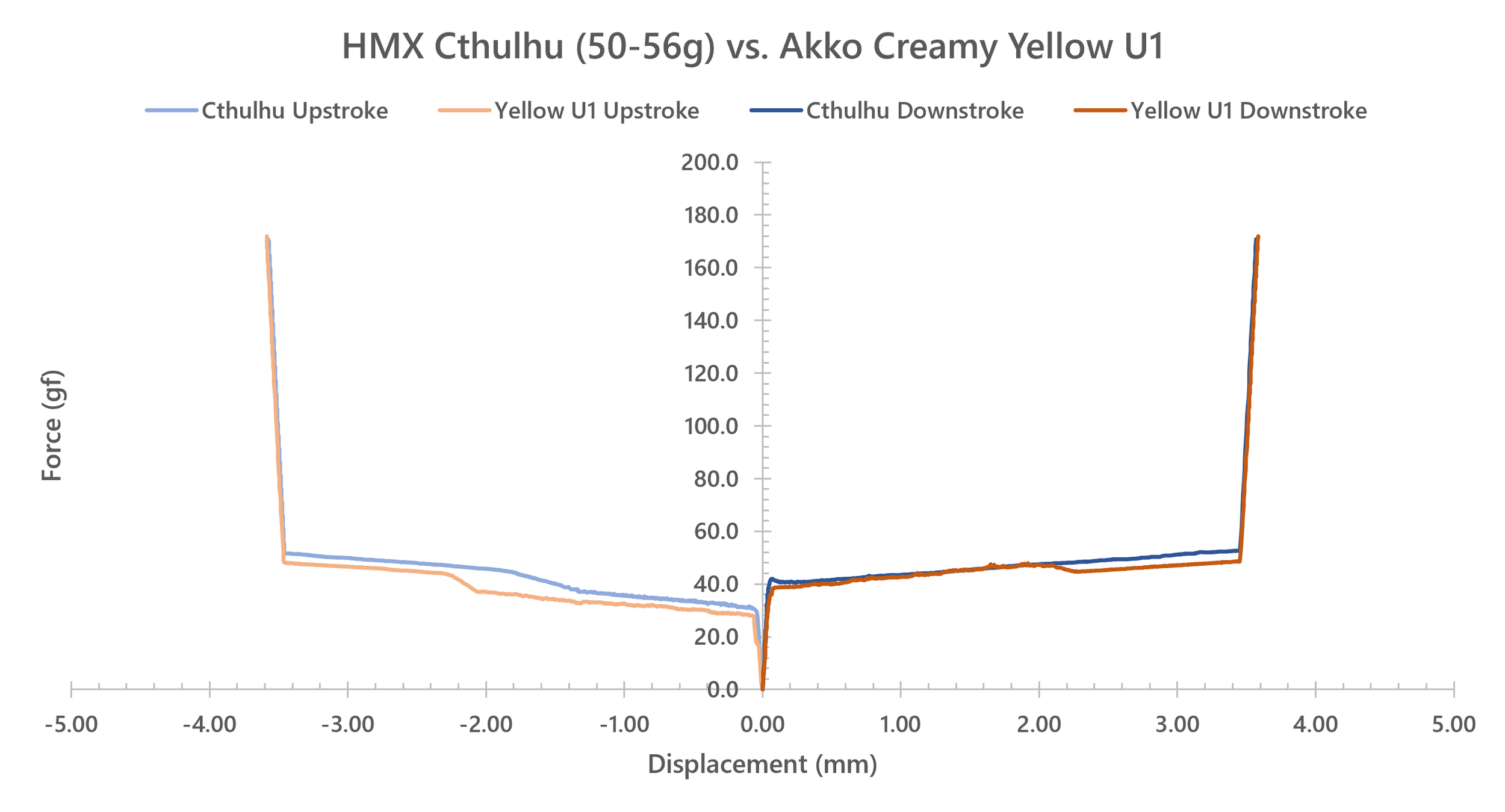
- In a head to head comparison, the HMX Cthulhu switches are definitely the smoothest of these two linears, with the comparative lack of factory lubing in the Akko Creamy Yellow U1 switches giving them a small grain scratch throughout their strokes that simply isn’t there in the strokes of the Cthulhus.
- When the Cthulhu switches are actuated quickly or with a noticeable amount of force, they have a bottom out that is similar in terms of its size to that of the stem pole bottom outs of the Yellow U1s, though they are a bit louder and a tiny bit sharper. By comparison, bottom outs of the Yellow U1 switches are more rounded, a bit snappier, and a bit lower in volume than the Cthulhus.
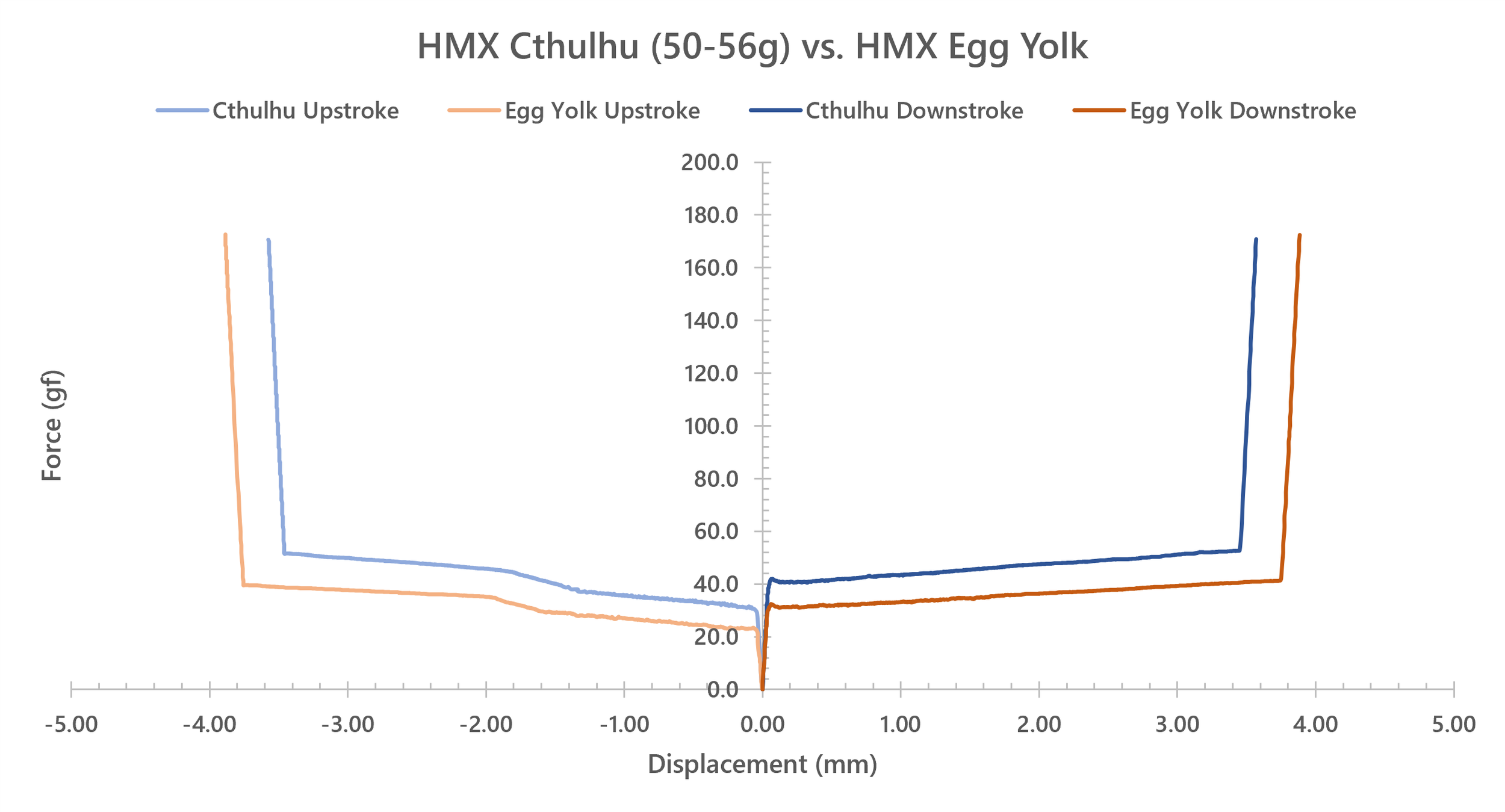
HMX Egg Yolk
- Despite being differently weighted than one another and each switch having a different bottom housing material than one another, with the Cthulhus featuring 50% fiberglass reinforced nylon (P7) and the Egg Yolks featuring 10% fiberglass reinforced nylon, they are the most similar to one another out of any switch on this comparison list. That being said, though, the Cthulhus are a fair bit louder when struck forcefully and also inconsistent across different typing speeds unlike the EggYolks which are fairly consistent.
- Of the batches that I received, the HMX Cthulhu switches both have a bit less N/S and E/W direction stem wobble than the HMX Egg Yolks and are also more consistently less wobbly across a batch.
- The most notable difference in the head to head performance of these two HMX switches comes down to their factory lubing, with the Cthulhu switches having a thicker, more heavily applied lube that can be felt throughout the downstroke whereas the lubing on the Egg Yolks is just barely present enough to keep them smooth while not hiding the interaction of the specific materials chosen in its design.
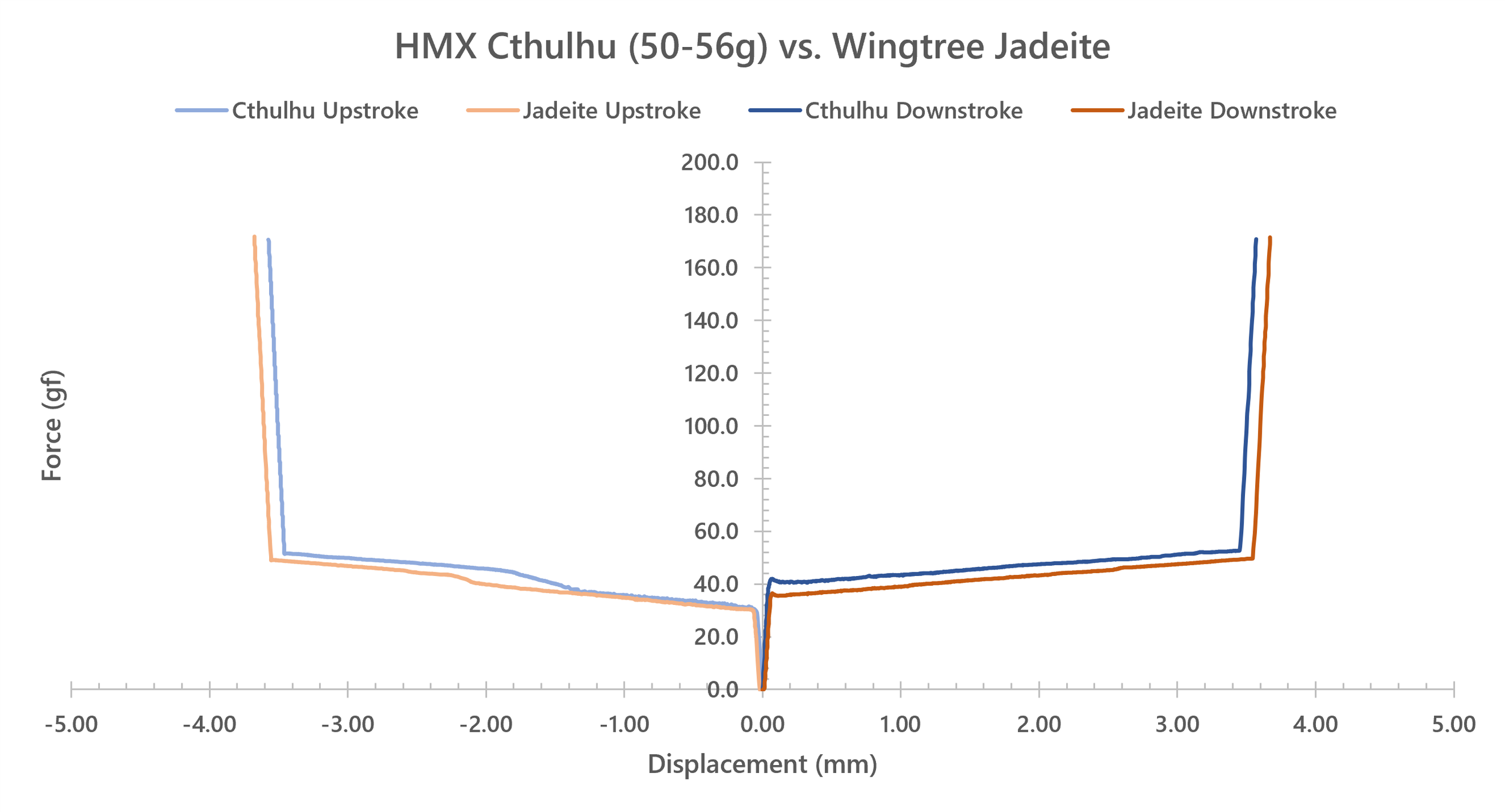
Wingtree Jadeite
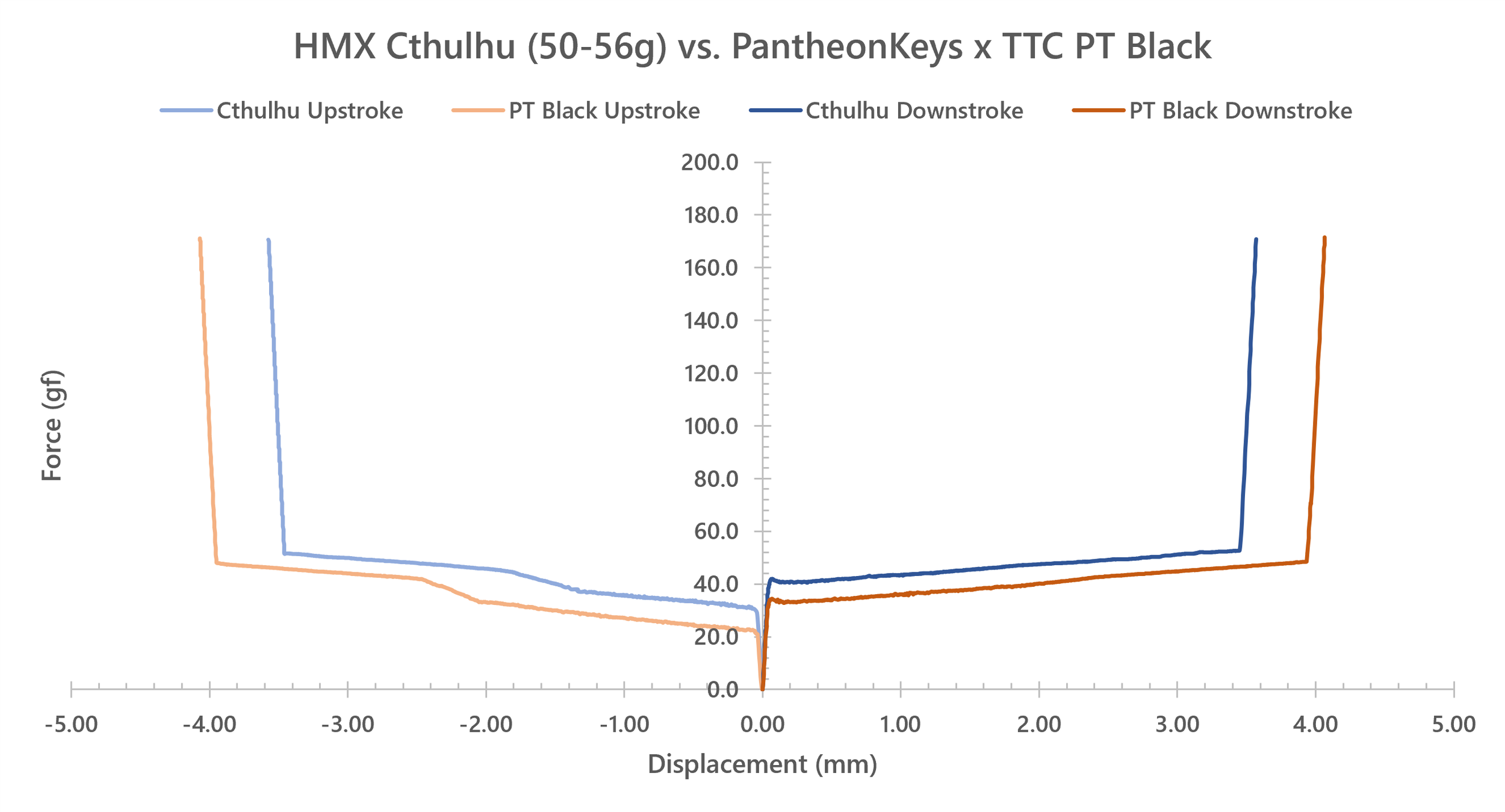
- Irrespective of the perceived similarity in feeling that the comparative force curve between these two switches below would suggest, the Jadeites actually feel as if they sink a bit deeper into their housings than the Cthulhus and in turn feel like they bottom out much closer to 4.00 mm in depth than the measured, approximately 3.50 mm bottom out of the Cthulhus.
- While both of these linear switches are smooth, they exist on fairly disparate ends of the factory lube smoothness spectrum with the Cthulhus being more thickly and heavily lubed and the Jadeites being more thinly and freely lubed. This, in turn, causes a lot of the sounds from the Jadeites to retain their sharper and more pointed edges that would otherwise be rounded out and dampened in factory lube seen in the Cthulhus.
- Of all the switches on this comparison list, the HMX Cthulhus and the Wingtree Jadeites are most similar to one another with respect to their stem wobble, or rather lack thereof. The only real difference noted here is that the Jadeites are a bit more symmetrical in their slight wobble whereas the majority of the wobble is focused in the N/S direction of the Cthulhus.
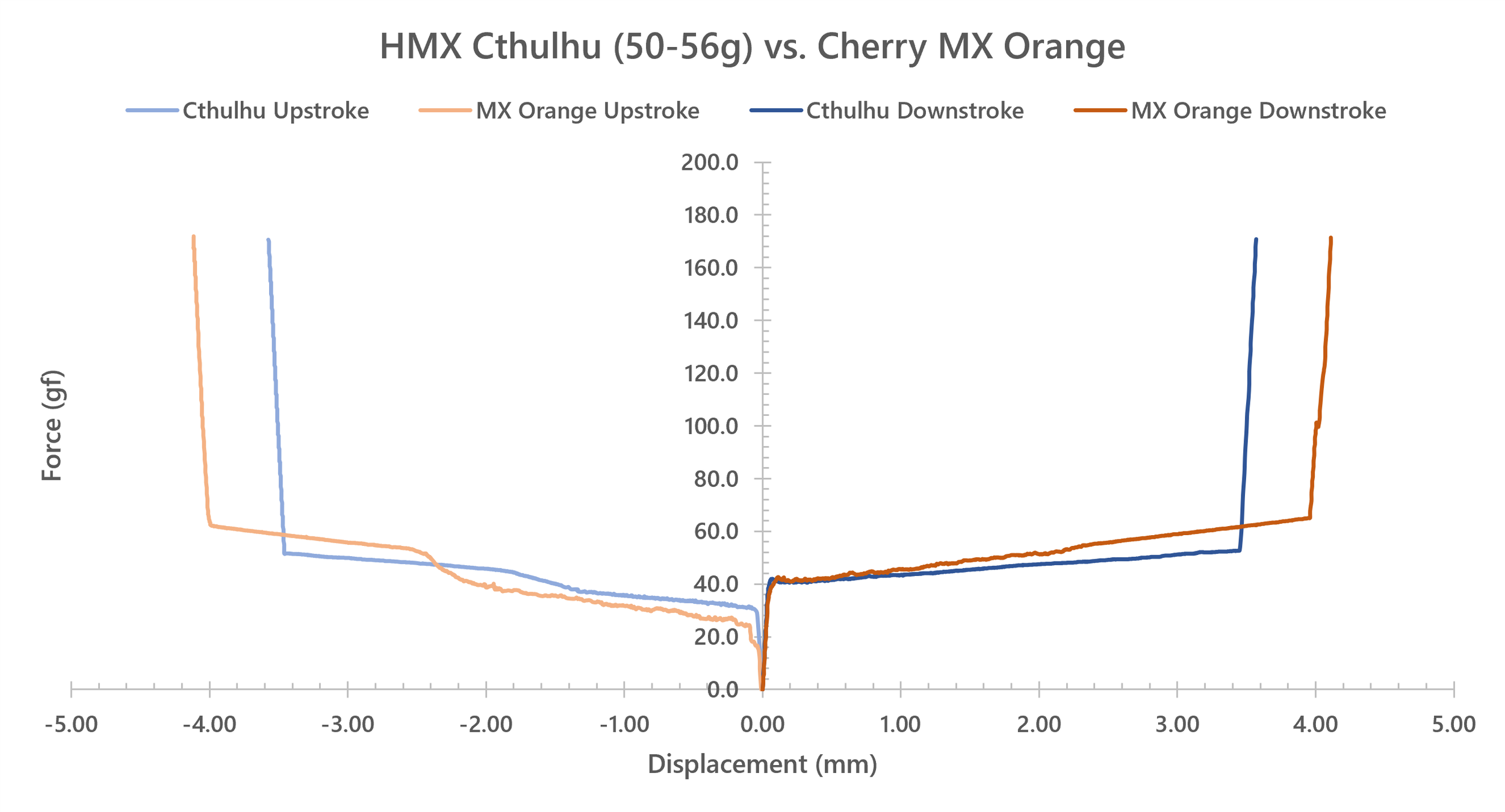
Cherry MX Orange
- Even despite the Cherry MX Oranges being built upon Cherry’s MX2A platform which did include better factory lubing than their older MX counterparts, they don’t stand a chance at being anywhere near as smooth as the heavily greased HMX Cthulhu switches.
- While these two switches have fairly similar overall volumes to one another, the Cherry MX Orange switches have a more scratch-forward tone that is the primary driver of their sound profile whereas the snappier bottom out (and potentially top out) of the Cthulhus is the primary driver of their sound profile (depending on how you type on them).
- In an overall sense, the scratchiness and lack of factory lubing in the MX Oranges simply gives them a fuzzier, less coherent vibe than the HMX Cthulhus. Even though the factory lubing on the Cthulhus very much does round out some of their more pointed features, they still just feel much more refined, singular, and cohesive in their execution than the MX Oranges do.
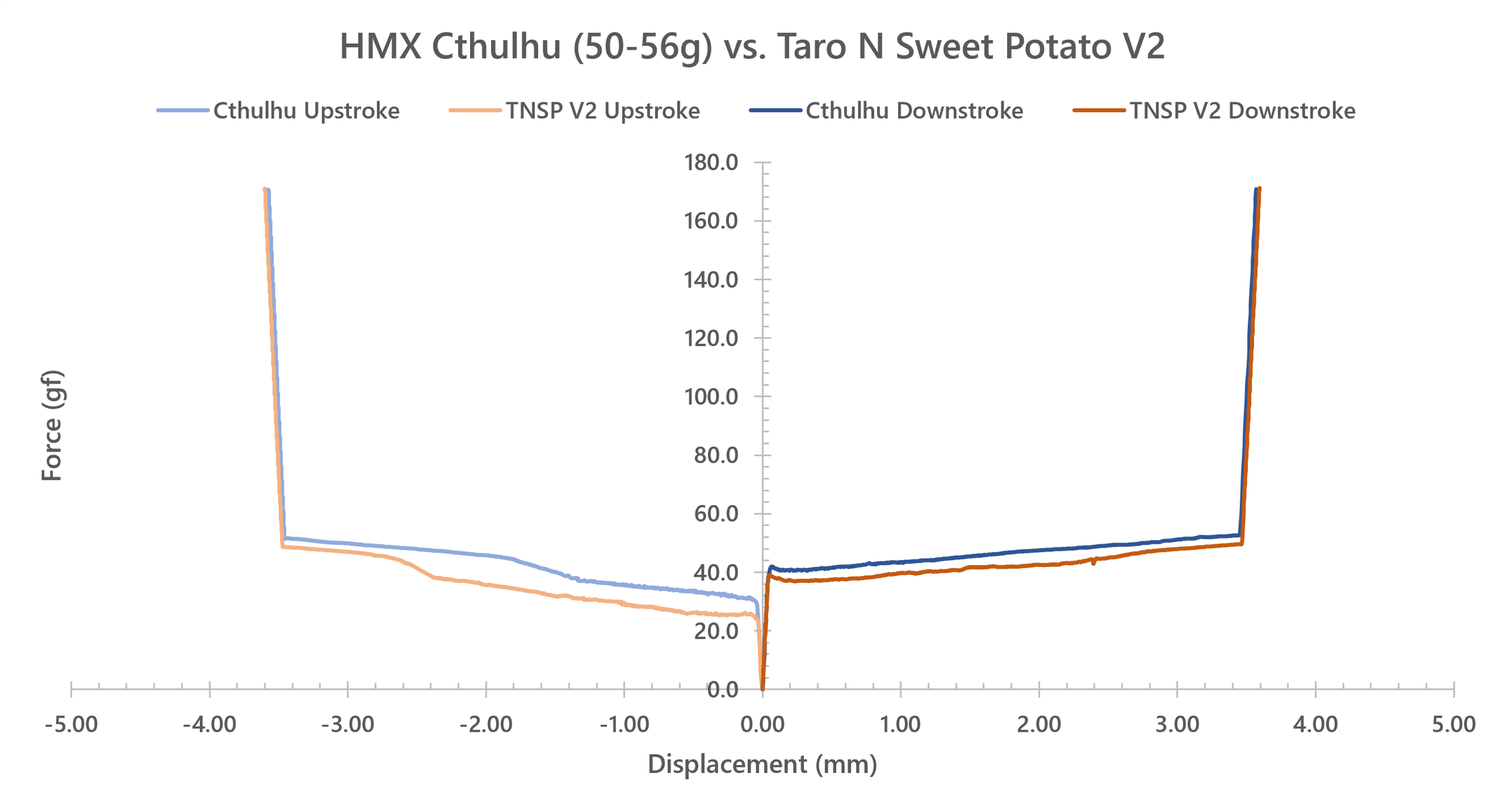
Taro N Sweet Potato V2
- While this difference is only by the slimmest of margins, I can’t help but notice that the stem pole bottom outs of the Taro N Sweet Potato V2 switches are just a tiny bit louder and more rounded than those of the HMX Cthulhu switches. I suspect that this difference could be due to the influence of their respective factory lubing amounts on their stems at this bottom out point where lube tends to settle over time.
- The factory lubing is just a tiny bit more generous in the HMX-made Cthulhu switches as opposed to the BSUN-made Taro N Sweet Potato V2 switches, which in turn makes the Cthulhus both feel and sound a bit more solid and insulated by comparison.
- Despite the Taro N Sweet Potato V2 switches having strangely good stem wobble for a BSUN-made switch in recent years, they simply can’t hold a candle to the lack of stem wobble seen in the HMX Cthulhu switches.
PantheonKeys x TTC PT Black
- In a similar comparison to the Cherry MX Orange switches above, the comparative lack of factory lubing in the PT Black switches makes them feel and sound both scratchier and a bit fuzzier than the refined, yet still rounded and dampened HMX Cthulhu switches.
- The comparative force curve between these two switches shown below feels relatively true to form as the PT Black switches both feel as if they have a freer, less encumbered down stroke and a much longer one that bottoms out deeper into the switch than the HMX Cthulhu switches and their rather thick factory lubing.
- Ignoring differences in sound due to scratchiness, the housing collisions of the PT Black switches do come across a bit more vibrant and snappy sounding than the HMX Cthulhu housing collisions. I suspect this is purely a difference in amount of factory lubing, with the significantly greater amount present in the Cthulhus dampening down these details in those switches.
Linearity
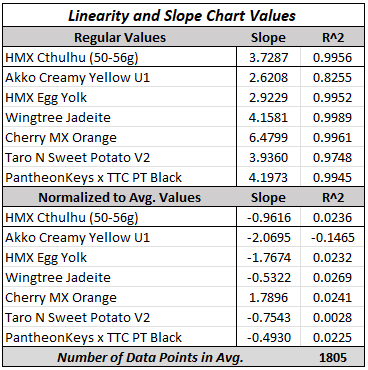
Figure 36: Absolute and relative Linearity and Slope values for each switch in the main comparison section.
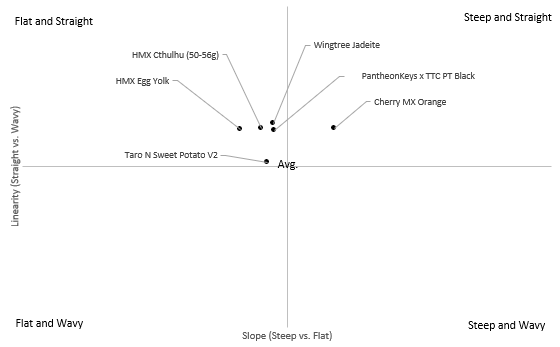
Figure 37: Qualitative comparison of the normalized Slope and Linearity for each switch in this comparison section.
If you are just now seeing this section for the first time and are a bit confused as to what I am talking about when discussing ‘Slope’ and ‘Linearity’, I highly suggest checking out my article titled ‘On Differences in Linear Switches’ where I explain what this section is for and how it came to be! For a bit of a shorter answer, know that this is part of my ongoing attempt to better quantify and articulate differences between linear switches which have historically not been captured in discussions about them.
Scores and Statistics
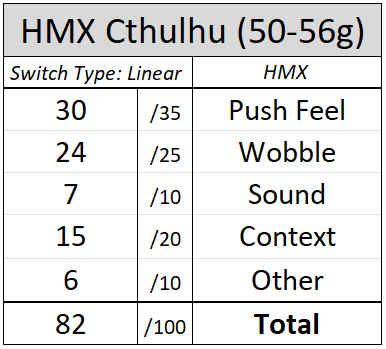
Note – These scores are not necessarily completely indicative of the nuanced review above. If you’ve skipped straight to this section, I can only recommend that you at least glance at the other sections above in order to get a stronger idea of my opinion about these switches.
Push Feel
Bringing back some old school heavy handedness with the factory lubing, the HMX Cthulhu switches have a warm, fully embracing linear stroke that is capped off at the top end by a somewhat thin, but still poppy topping out. At slower actuation speeds the P7 (modified nylon) material bottom housings of these switches are dampening and give a soft, muted bottom out that gives way to snappy, rounded stem pole bottom out with a small footprint as typing speeds pick up. Irrespective of the two different typing modes that can be achieved on these switches, they are otherwise strongly consistent across all of these metrics for all switches.
Wobble
With only the tiniest amount of N/S direction stem wobble and virtually no E/W direction wobble, these switches are on the cusp of manufacturing perfection in terms of both their precision and cross batch consistency. You won’t have an issue with these.
Sound
Medium in volume and full of well-rounded collisions as a result of the strong factory lubing, the HMX Cthulhu switches are linears driven by their subtly poking topping outs at slower actuation speed and the 1-2 punch of their snappier, more forceful bottom outs before those topping outs at higher actuation speeds. It should be noted, though, that these collisions are a bit asymmetrical with the topping out being thinner and a bit higher pitched than the bottom out.
Context
Priced at $0.35 per switch and sold at a whole wide range of vendors through not just release but a restock, the Cthulhu switches have strong contention for being among the most recognized linears of 2026, though with uncertain long term availability by their designer SULAB.
Other
Despite being made by HMX in 2026, these eloquently and cleanly mimic the heavily lubed and firmly dampened linears of the COVID peak in a way new and old enthusiasts will enjoy.
Statistics
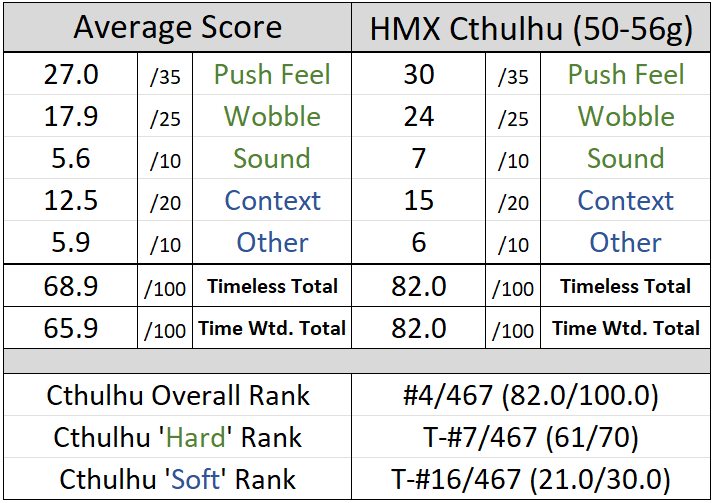
If you are looking at this statistics section and wondering what the heck ‘Timeless’ and ‘Time Weighted’ scoring is, consider checking out my short article titled ‘A Scorecard Time Change’. As a result of scoring becoming a bit anachronistic over the years, switches are now ranked in this statistics table using a “time weighted total” as opposed to their day-of scoring as discussed in that article. If you’d also like to learn about what ‘hard’ versus ‘soft’ ranks refer to specifically, I’d encourage you to head on over to my GitHub linked in the table above or at the links in the top right hand of this website to check out my database of scorecards as well as the ‘Composite Score Sheet’ which has a full listing of the rankings for each and every switch I’ve ranked thus far.
Final Conclusions
This was entirely unexpected. During my preparation for this review as I was searching the internet for references regarding SULAB and the HMX Cthulhus, I remember passing by a google suggestion for a random comment on r/mechanicalkeyboards that said something to the effect of “HMX Cthulhus have easily been my switch of the year”, and it kind of lodged itself in the back of my brain until here, now at the end of this article. Not knowing who it was that uttered those praises, I can say that I’ve seen this exact sentiment espoused by countless numbers of enthusiasts about countless numbers of switches over the years, and inevitably when I get around to trying them I find rather notable flaws or them just not living up to the hype of ‘best switch’ of any given length of time. Yet, this is perhaps one of the only times over my decade or so in the hobby where I feel like a random r/mechanicalkeyboard user may have nailed that sentiment correctly. The HMX Cthulhus are linears that masterfully reincarnate the kind of thickly lubed, moderately resistive stroke that was popular during the peak COVID era and refine it with more modern sensibilities like specialized material combinations in parts of the switch, an (optional) stem pole bottom out, and a thinner, brighter sounding polycarbonate topping out that isn’t sharp or plasticky or frail like so many other switches from that bygone era would sound. These switches have technical precision when it comes to their molds, rather strong consistency across all metrics, and even have a generally better than average resilience to being broken in and abused. It’s no wonder that these switches were picked up by so many vendors and enjoyed by even greater numbers of hobbyists in 2026. I’m just surprised by it all, for a lack of any better wording, on so many fronts. I’m surprised that HMX, a manufacturer that is old by modern standards and has recently been getting outpaced on many fronts by Wingtree lately, is the one that pulled these out of their back pockets after so many other releases. I’m surprised to encounter a linear switch that leans into a type of feeling that made me fall in love with them so long ago while also making me contend with and accept that there is a really good (to me) way that asymmetrical housing collisions and a generally polycarbonate over nylon construction can be accomplished in a stock switch. And above all I’m surprised that these came out now when it feels like the MX platform hasn’t been getting the love or attention I truly feel like it deserves lately. Never mind that these switches actually came out at the start of this year and I’m the one late to the game, it’s still unexpected of them to have found me in the here and now. Kudos to both of you SULAB and HMX, you all knocked the HMX Cthulhus out of the park.
Sponsors/Affiliates
Mechbox UK
- A wonderful UK based operation which sells singles to switches that I’ve used above in my comparisons for collectors and the curious alike. Matt has gone out of his way to help me build out big parts of my collection, and buying something using this link supports him as well as my content!
proto[Typist] Keyboards
- An all-things keyboard vendor based out of the UK, proto[Typist] is a regular stocker of everything from switches to the latest keyboard and keycap groupbuys. While I’ve bought things from the many times in the past, they also are a sponsor of my work and allow me to get some of the great switches I write about!
Divinikey
- Not only do they stock just about everything related to keyboards and switches, but they’re super friendly and ship out pretty quick too. Divinikey has been a huge help to me and my builds over the last year or two of doing reviews and they’ll definitely hook you up. Use code ‘GOAT’ for 5% off your order when you check them out!
ZealPC
- Do they really need any introduction? Zeal and crew kicked off the custom switch scene many years ago with their iconic Zealios switches and the story of switches today couldn’t be told without them. Use code ‘GOAT’ (or click the link above) for 5% off your order when you check them out!
MechMods UK
- A rising vendor based in the UK, Ryan and crew have been a pleasure to work with and have nearly everything you’d need to build your first or fourteenth keyboard. Go build your latest or greatest one right now with them by using code ‘GOAT’ at checkout for a 5% discount!
Dangkeebs
- A longtime supporter of the website and the collection, Dangkeebs has quite possibly the widest variety of switches of any vendor out there. Not only is their switch selection large, but it rotates and is constantly adding new stuff too. You’re going to need 5% off your order with my affiliate to save off the cost of all those switches!
SwitchOddities
- The brainchild of one my most adventurous proxies, SwitchOddities is a place where you can try out all the fancy, strange, and eastern-exclusive switches that I flex on my maildays with. Follow my affiliate code and use code ‘GOAT’ at checkout to save 5% on some of the most interesting switches you’ll ever try!
Cannonkeys
- Does anybody not know of Cannonkeys at this point? One of the largest vendors in North America with keyboards, switches, keycaps, and literally everything you could ever want for a keyboard always in stock and with an incredibly dedicated and loving crew. Follow my affiliate link above in their name to support both them and I when you buy yourself some switches!
Kinetic Labs
- One of the most well-rounded keyboard vendors out there, Christian and crew have been supporters of all my switch and switch-adjacent needs for some years now. I’m honored to have them as an affiliate and think you should check them out using my affiliate link above to support both them and I when you check out their awesome products!
Keebhut
- Want to try out some switch brands that fly under most vendor’s radars? Keebhut is always seeking out that next latest and greatest and has been super helpful in hooking me up with new brands over the past year. They are all about sharing that love as well, and want to give you 5% off your next order with them when you use code ‘GOAT’ at checkout!
Kailh
- No, you’re not mistaken – this is actually that Kailh that manufactures switches. As one of the longest running manufacturers in the hobby, they have a massive variety of switches available over on their website at any point in time. I’m lucky to be affiliated with them now, and so consider using my affiliate link above when ordering some Kailh switches to support me!
Keebz N Cables
- Australia and Oceania’s very own is now a part of the sponsor list here and I couldn’t be happier to add this long time supporter of the collection to it. They’ve always got an amazing selection of switches (and other keyboard parts) in stock and they want to share the love that they’ve shown me with you all too! Use code ‘thegoat’ for 5% off your first order when you visit!
Further Reading
SULAB’s ZFrontier Profile Page
Unikeys’ HMX Cthulhu Switch Sales Page
Milktooth’s HMX Cthulhu Switch Sales Page
Lumekeeb’s HMX Cthulhu Switch Sales Page
Mechland’s HMX Cthulhu Switch Sales Page
SoupKey’s HMX Cthulhu Switch Sales Page
KeyBay’s HMX Cthulhu Switch Sales Page
KTech’s HMX Cthulhu Switch Sales Page
Danyam’s HMX Cthulhu Switch Sales Page
Keeb Taro’s HMX Cthulhu Review Video